Wilting on Aparajita: Causes, Checks & Fixes
Quick answer
Wilting on Aparajita usually means the vine cannot move enough water to its leaflets-either because the soil is too dry, roots are damaged in wet mix, or midday heat outpaces uptake. First step: check soil at 3 cm depth and pot weight before adding or withholding water.
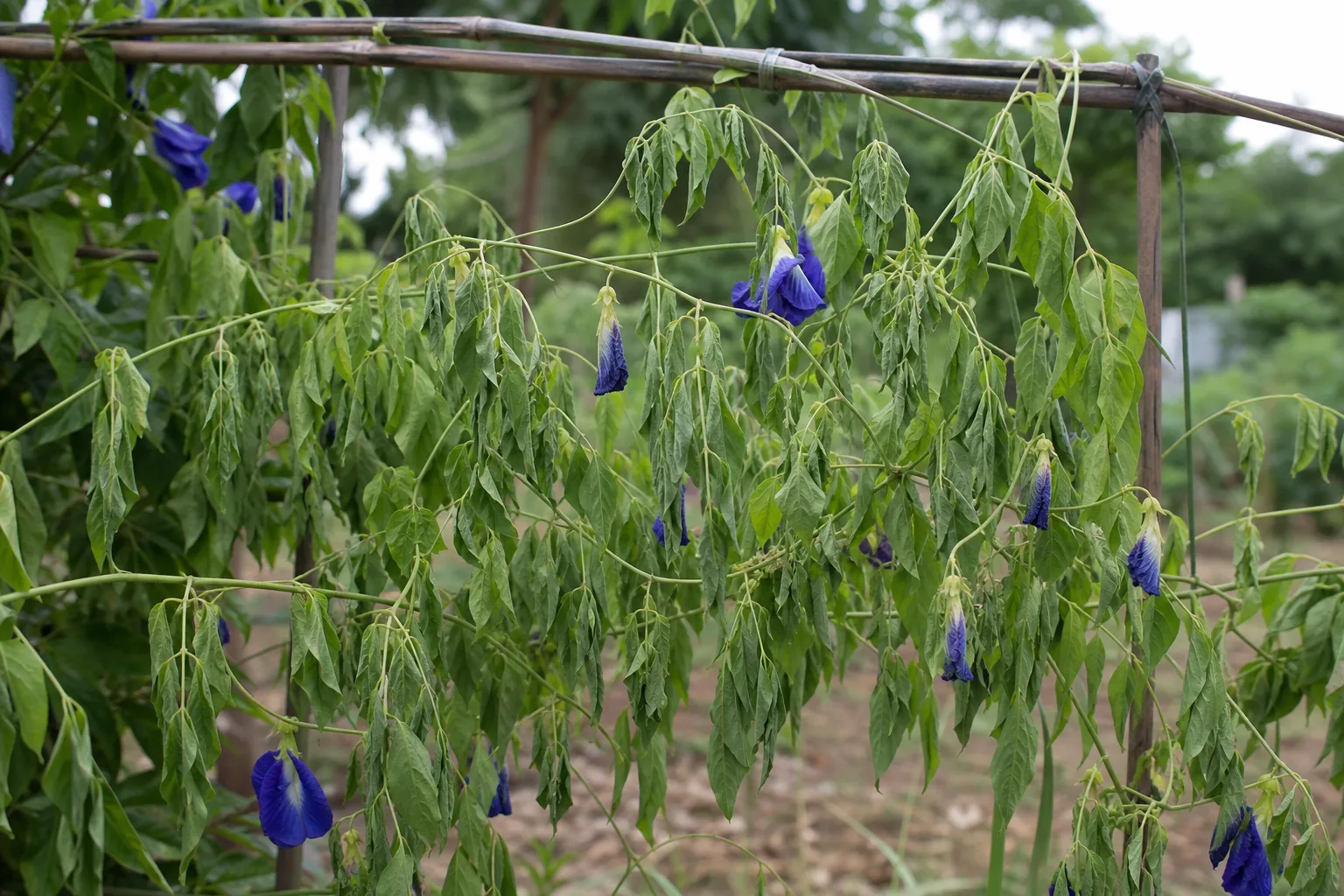
Wilting on Aparajita: Causes, Checks & Fixes
This guide covers wilting on Aparajita. See also the general Wilting guide, watering, and light pages for this plant.
Wilting on Aparajita: Causes, Checks & Fixes
Quick answer
Wilting on Aparajita (Clitoria ternatea, butterfly pea) means the vine lost turgor-compound leaflets fold, twining stems go limp, and flower buds may abort before you see much yellowing. The symptom looks dramatic on a fast-growing legume in Aparajita light guide, but wilt is a signal, not a diagnosis.
First step: check soil moisture at 3 cm depth and lift the pot before you change anything. Dry, crumbly mix with a light container points to thirst. Cool damp mix with a heavy pot points to root stress from overwatering on Aparajita or poor drainage-even though the leaves look thirsty. Wilted foliage can mean soil that is too dry or too wet when roots have failed. Match your first fix to what the soil actually shows, not to how sad the vine looks.
What wilting looks like on butterfly pea
Butterfly pea is a twining legume in the bean family with pinnately compound leaves-several oval leaflets on each leaf stalk. When water movement stalls, the whole display softens quickly.
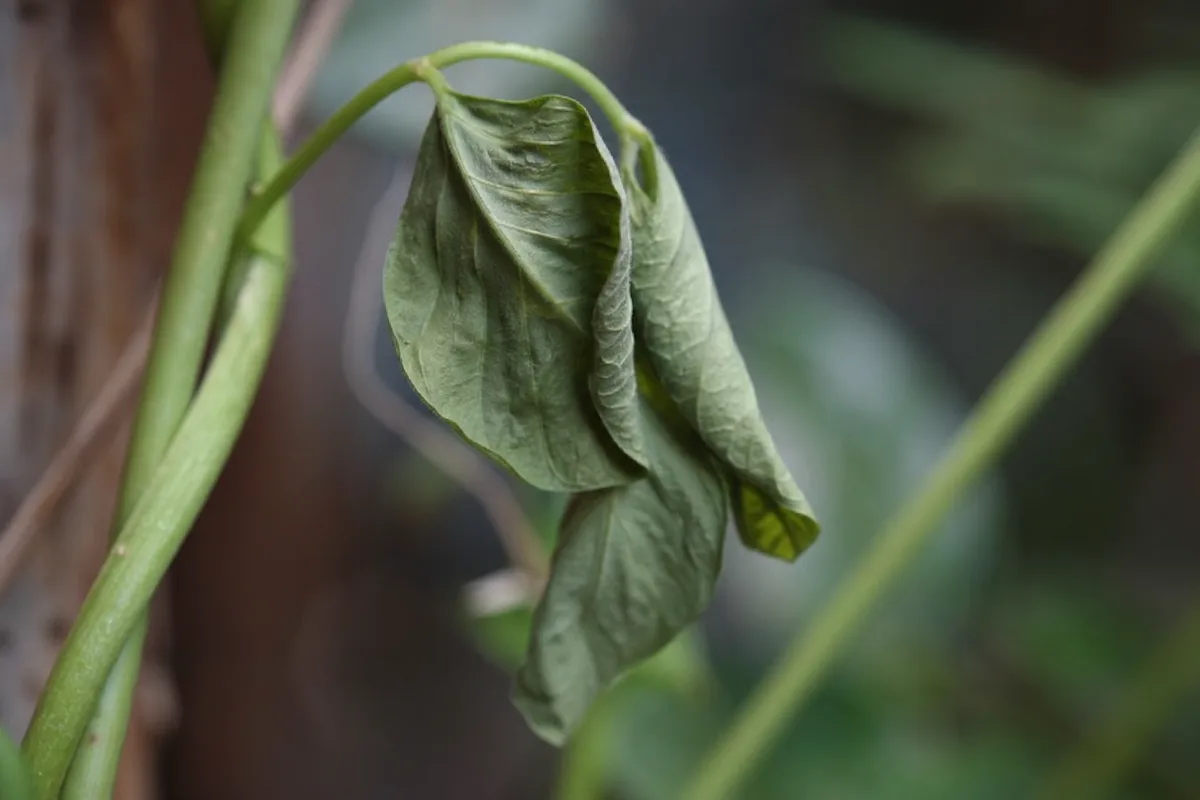
Wilting symptoms on Aparajita - compare with healthy tissue on the same plant.
Typical wilt patterns on Aparajita:
- Limp or drooping twining stems, often worst at the growing tips first
- Compound leaflets that fold lengthwise, feel thin, or dull from rich green to gray-green
- Flower buds that form and drop before opening-often an early moisture-stress signal
- A vine that looks collapsed by midday on a hot balcony but may partially recover by evening if soil is still moist (heat stress, not thirst)
- Dry soil pulling slightly from the pot wall with a noticeably light container (thirst wilt)
- Wet, heavy mix with sour smell and soft stems at the soil line (root failure wilt)
What wilt is not: A few pale lower leaflets on an otherwise firm vine usually means light or nitrogen stress, not acute wilt. One branch collapsing while others stay turgid suggests localized stem damage, not a whole-pot water problem.
Why Aparajita wilts - main causes
Wilting always comes down to a water-pathway failure: roots cannot deliver enough moisture to leaflets, or the plant temporarily closes stomata to survive heat. On butterfly pea, four causes cover most home-growing scenarios.
underwatering on Aparajita and fast dry-down in full sun
Aparajita wants full sun-six or more hours of direct light daily for heavy flowering. More light drives more transpiration through compound leaves. A sunny balcony container can go from moist to bone dry in a single hot afternoon, especially in small pots or root-filled containers.
The species has a reputation for drought tolerance but performs best with consistent watering. Growers often read “drought tolerant” as “water rarely.” The vine may stay alive while quietly dropping buds. By the time stems wilt dramatically, dryness has often lasted days.
Overwatering, poor drainage, and root rot on Aparajita
Butterfly pea needs well-drained soil that stays dry to slightly moist, not waterlogged. Legume roots need oxygen between soaks. When mix stays saturated-sealed cachepots, blocked drainage holes, heavy clay, or panic watering after a dry spell-fine roots die.
Damaged roots cannot take up water. The paradox is familiar: wet soil, wilted leaves. Adding more water makes decay worse.
Heat stress wilt on moist soil
On a well-watered vine in extreme midday sun, temporary limpness can be a protective response. Stomata close, transpiration drops, and stems soften until temperatures ease. If soil at 3 cm is still cool and damp and the vine firms overnight, you witnessed heat stress-not a call for another soak.
This pattern is common on metal trellises, west-facing balcony rails, and dark containers that heat the root zone. Do not confuse it with underwatering without a morning soil check.
Pests and disease that mimic wilt
Butterfly pea is susceptible to spider mites and bacterial soft rot when foliage stays wet in warm humid air. Mite stippling plus fine webbing on leaflet undersides drains the plant while soil moisture looks normal. Soft rot shows mushy stems and a sour smell-not simple turgor loss.
Heat-stressed, drought-stressed vines attract mites faster. When wilt appears, check both soil and leaf undersides.
How to confirm the cause - wet vs. dry decision path
Work through these checks in order. The goal is one confirmed cause before you treat.
- Finger test at 3 cm - Push to the second knuckle. Dry, crumbly soil → thirst path. Cool damp soil → stop watering path, even if leaflets look soft in afternoon heat.
- Pot-weight test - Lift the container. Learn the heavy baseline right after a full watering. A dramatically light pot on dry soil confirms underwatering. Lifting small pots is a quick moisture guide. A heavy pot on damp mix with wilt points to root uptake failure.
- Wilting timing - Afternoon limpness that recovers by evening on moist soil suggests heat stress. Limpness that persists overnight on dry soil confirms thirst. Limpness overnight on wet soil confirms root stress.
- Smell at the soil line - Neutral or dusty odor fits dry thirst. Sour or swampy odor with wet mix suggests rot or anaerobic soil.
- Bud and leaflet pattern - Bud drop with dry light pot strongly points to moisture shortage. Bud drop on wet heavy mix points elsewhere.
- Optional root peek - Slide the plant partly out only if symptoms persist after the correct first fix. Firm pale tan roots support recovery. Brown mushy roots with sour-smelling wet soil need drainage correction and trimming, not another deep soak.
Symptom lookalike quick reference
| What you see | Soil at 3 cm | Most likely cause | First move |
|---|---|---|---|
| Limp tips, dull leaflets, light pot | Dry, crumbly | Underwatering | Deep base soak, drain saucer |
| Whole vine limp, heavy pot, sour smell | Wet, cold | Root rot / overwatering | Stop watering; improve drainage |
| Afternoon limpness, firms by evening | Cool, damp | Heat stress | Shade briefly; recheck next morning |
| Stippling, webbing on undersides | Variable | Spider mites | Rinse undersides; treat pests |
| Mushy stem base, foul odor | Wet | Bacterial soft rot | Remove affected tissue; dry out mix |
If soil is dry at 3 cm and the pot is light, confirmed thirst-water deeply at the base. If soil is wet and cold while the vine wilts, rotting roots cannot transport water-withhold water and address drainage instead.
First fix by confirmed cause
One correction at a time so you can read the plant’s response over the next week.
Dry soil confirmed - underwatering: Water thoroughly at the soil line until excess drains from the bottom, then empty the saucer within thirty minutes. Use a narrow-spout can directed at the base-not an overhead shower that wets compound leaves on humid nights. If water races through without wetting the center, bottom-wick the pot in a shallow tray for twenty to thirty minutes, then drain fully.
Wet soil confirmed - root stress: Stop watering immediately. Empty saucers and cachepots. Move the vine to brighter airflow if it was sitting in deep shade with evaporation blocked. Let the top third of the mix dry before any next soak. Do not repot, prune heavily, or fertilize on the same day.
Heat stress on moist soil: Provide brief midday shade or move the pot off a hot surface until stems firm. Recheck soil at 3 cm the next morning before watering. If dry then, soak; if still damp, wait.
Spider mites confirmed: Rinse leaflet undersides with lukewarm water, correct any drought stress that invited mites, then apply horticultural oil or insecticidal soap labeled for mites. Spider mites are tiny arachnids that feed on leaf undersides. Wilt from pest damage eases only after the population drops.
Soft rot at the crown: Cut away mushy tissue with clean shears, improve airflow, and let the mix dry. Severe crown collapse may not be recoverable-focus on saving firm growth above the rot line.
Recovery timeline
Simple thirst on healthy roots: Turgor often returns within six to twenty-four hours after one proper soak. New tendrils may resume within a few days.
Heat-stress afternoon wilt: Recovery the same evening or by the next morning is normal when soil moisture was adequate. No extra watering needed if the morning finger test says wait.
Root damage from overwatering: Improvement takes one to three weeks if enough firm root tissue remains. Judge success by new growth and fresh buds, not by old limp leaflets-they may not fully re-turgidize.
Chronic drought–flood swings: Fine root loss can leave the vine limp on moist soil for forty-eight hours or longer even after you correct watering. Persistent limpness beyond forty-eight hours on confirmed appropriate moisture warrants a root inspection.
Pest-related wilt: Expect several days to two weeks of gradual firming as mite damage heals and new leaflets expand-after active pest control begins.
What not to do
Do not water automatically because leaves look limp-half of wilt cases on butterfly pea are wet-soil root failure, not thirst.
Do not follow one dry spell with daily shallow drinks. Sips dampen the surface while the root ball stays dry; the next heat wave wilts the vine again.
Do not fertilize a wilted vine before you confirm the cause and see new growth. Salts on stressed or damaged roots burn tissue.
Do not stack Aparajita repotting guide, heavy pruning, and pesticide on the same stress day. Make one care correction at a time so you can interpret the plant’s response.
Do not overhead-water at dusk on humid nights. Wet compound leaves plus warm air invite bacterial soft rot on butterfly pea.
Do not place a flowering vine in “bright indirect light” hoping wilt will stop-Clitoria ternatea needs full sun for healthy transpiration balance and bloom. Shade reduces evaporation but also weakens the vine long term.
How to prevent wilt next season
Build a habit around soil checks, not calendar dates. Water when the top 3 cm feels dry, then soak at the base until drainage runs clear. In peak summer on a sunny balcony, that may mean every two to four days; in cool winter slow growth, seven to fourteen days between checks is common.
Use containers with drainage holes and empty saucers after every watering. Match pot size to the root mass-a vine that dries out twice daily in a small pot needs a larger home, not more panic watering.
Give full sun with airflow on a trellis. Windy balcony corners and hot metal rails dry pots faster-adjust checks after any placement change.
After repotting, travel, or a heat wave, re-learn dry-down speed for two weeks before trusting an old schedule. Consistent watering supports the best performance even though the species survives brief dry intervals.
When wilting is urgent
Treat as urgent when the entire vine collapses with bone-dry soil in extreme heat, or when wet heavy soil smells sour and the crown feels soft. Rehydrate immediately on confirmed dryness; stop all watering and inspect roots on confirmed wet rot.
Also act quickly if the vine stays limp more than forty-eight hours after the correct fix for the confirmed cause-thirst corrected with a deep soak on dry soil, or drainage corrected on wet soil. That pattern suggests significant root loss, not a simple missed watering.
Lower urgency fits temporary afternoon wilt on moist soil that firms overnight, or slight tip limpness on a light dry pot caught early before leaflets crisp.
Conclusion
Wilting on Aparajita is a wet-vs-dry fork disguised as an emergency. Butterfly pea’s dramatic compound leaves and full-sun metabolism make every water mistake visible within hours-but the fix depends on reading the pot, not reacting to limp stems. Check dryness at 3 cm, weigh the container, note whether afternoon limpness fades by evening, and apply one targeted correction. Thirst wants a deep base soak; wet-soil wilt wants drainage and patience; heat stress wants a morning recheck, not a reflex pour. When new tendrils firm and blue buds return, the vine is telling you the pathway is open again.
When to use this page vs other Aparajita guides
- Aparajita watering guide - Use for routine moisture checks before assuming wilting is the main issue.
- Aparajita problems hub - Browse all 16 common issues on this species.
- Underwatering on Aparajita - Different entry point when symptoms overlap with wilting.
- Overwatering on Aparajita - Different entry point when symptoms overlap with wilting.
- Root Rot on Aparajita - Different entry point when symptoms overlap with wilting.