Yellow Leaves on Aparajita: Causes, Checks & Fixes
Quick answer
Yellow leaves on Aparajita (butterfly pea) usually mean overwatering, waterlogged roots, or cold wet soil-not nitrogen deficiency. First step: stop watering until the top 3 cm of mix feels dry, then check whether yellowing spreads from lower leaflets on wet mix.
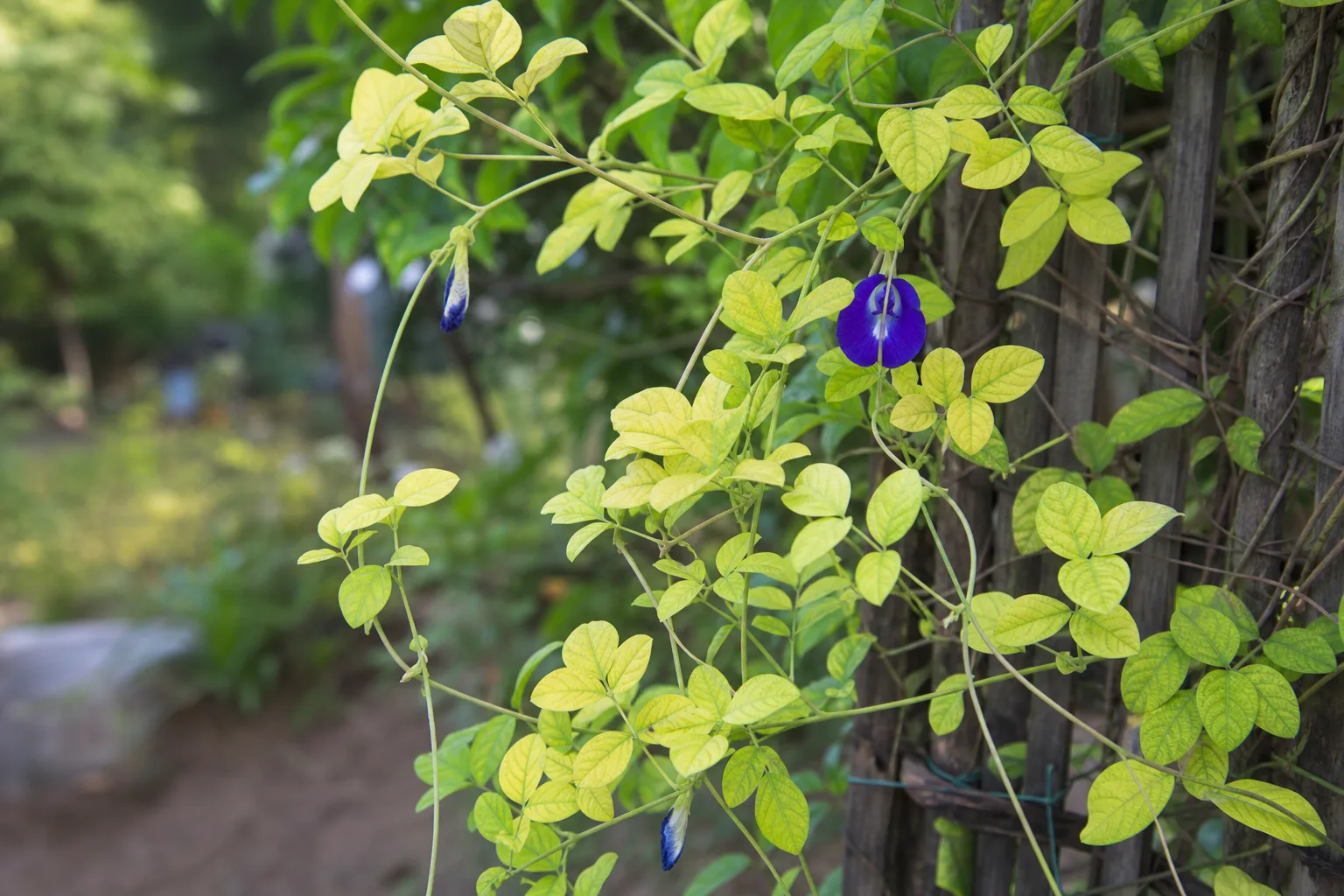
Yellow Leaves on Aparajita: Causes, Checks & Fixes
This guide covers yellow leaves on Aparajita. See also the general Yellow Leaves guide, watering, and light pages for this plant.
Yellow Leaves on Aparajita: Causes, Checks & Fixes
Quick answer
Yellow leaves on Aparajita (Clitoria ternatea, butterfly pea) are almost always a root-zone or light problem, not a mystery nutrient deficiency. This twining tropical legume is drought tolerant yet performs best with consistent watering in well-drained soil and full sun. Growers who overwater to “push cobalt blooms” keep the top 3 cm soggy-and yellow lower leaflets follow. Agronomic references note the species will not tolerate flooding or waterlogging.
First step: stop watering until the top 3 cm of mix feel dry to the touch. Push your finger to the second knuckle; if soil clings, wait. That dry cycle is the correct first response for yellowing on wet mix-not nitrogen fertilizer.
What yellow leaves look like on Aparajita
Butterfly pea carries smooth elliptic leaflets in compound leaves along twining stems-not a single rosette like Anthurium. Yellowing patterns:
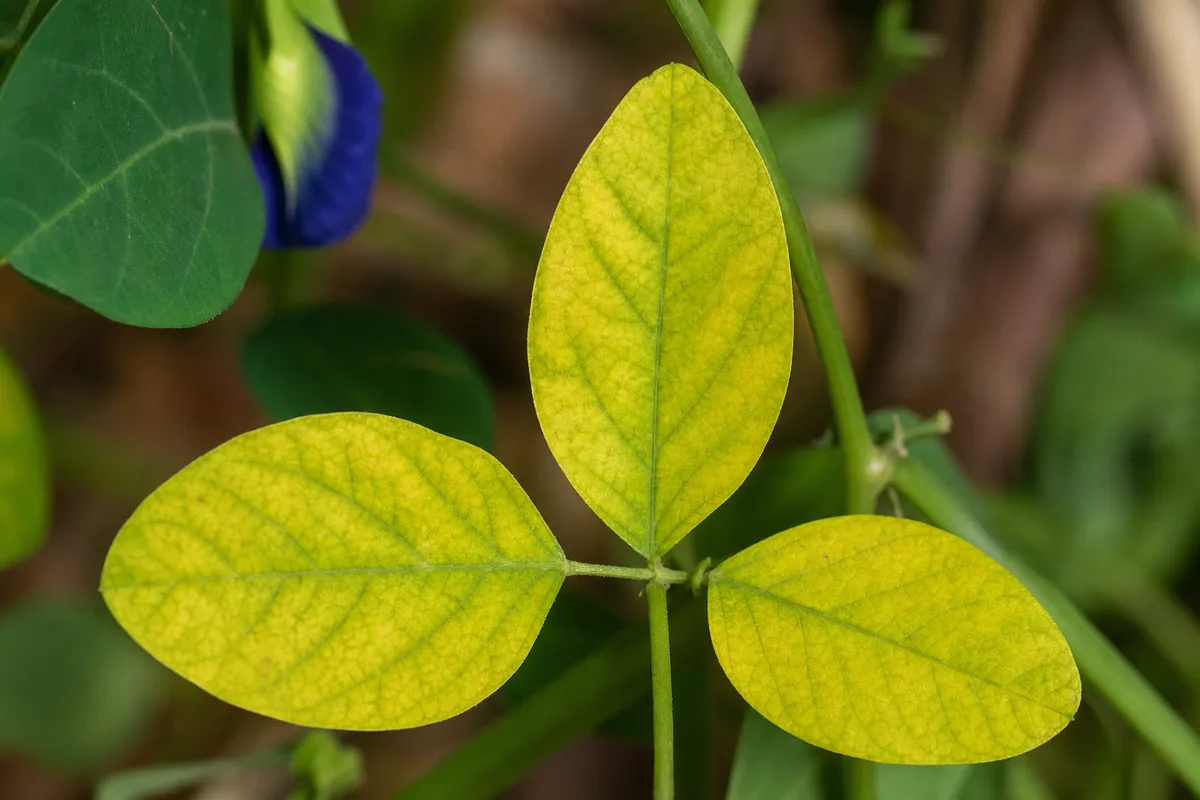
Yellow Leaves symptoms on Aparajita - compare with healthy tissue on the same plant.
overwatering on Aparajita / waterlogging (most common)
- Lower leaflets yellow first, often in pairs along the oldest stems
- Soil stays dark and damp five or more days after watering
- New tendril tips stall; cobalt buds abort or fail to open
- Fungus gnats may rise from wet surface soil-see fungus gnats on Aparajita
- Stems stay firm early; soft base and sour smell mean advanced root stress
Low light indoors
- Pale yellow-green leaflets on thin stretched tendrils leaning toward glass
- Weak growth through winter on north windowsills
- Often paired with wet soil because the vine uses less water in shade
Natural senescence
- Oldest leaflets at the vine base yellow slowly over months
- Active new tendrils, firm stems, and healthy buds elsewhere on the plant
Nitrogen issues (less common than overwatering)
- Uniform pale yellowing on established plants in very lean mix with good drainage and correct watering
- Do not assume nitrogen deficiency when soil is wet-legume roots fix nitrogen with rhizobia bacteria in the soil
Why Aparajita gets yellow leaves
Overwatering and waterlogging
Clitoria ternatea roots need oxygen. NC State lists butterfly pea as doing well in well-drained, dry to slightly moist soil-”moist” is not saturated for a week. Bloom-driven overwatering, monsoon saucer retention, and peaty slow-draining mix keep roots functioning poorly. Lower leaflets yellow as uptake fails.
Small pots and indoor culture
Young vines in starter pots on windowsill trellises have little root mass relative to soil volume. The top layer stays wet while owners water on habit-yellow leaflets and mold on soil often appear together.
Low light slowing water use
Indoor butterfly pea in dim rooms transpires slowly. Mix stays wet longer; roots yellow leaflets even when the watering volume seemed modest. See not enough light on Aparajita when stretch and pale color dominate.
Cold wet soil
Tropical legumes stall in cold saturated mix. Yellowing after a cool rainy spell on a balcony points to temperature plus waterlogging overlap.
High-nitrogen fertilizer on wet roots
Excess nitrogen on stressed wet roots can worsen yellowing and soft growth. Fix moisture before feeding. Balanced light feed only after dry-down stabilizes and new tendrils emerge clean.
How to confirm the cause
- Moisture at 3 cm - Wet upper zone while yellowing spreads confirms overwatering per our watering guide.
- Leaflet position - Lower pairs first on wet soil vs. uniform pale stretch in shade vs. isolated oldest leaflets only.
- Stem base - Firm green or brown stems early; soft dark base means escalate to root rot inspection.
- Drainage and saucers - Cachepots and full saucers keep bottom mix wet during monsoon stretches.
- New growth - Active tendrils and buds mean the vine is still functioning despite some yellow leaflets.
- Smell - Sour mix on yellowing vine means unpot and inspect roots.
The first fix to try
Stop watering until the top 3 cm of mix are dry. Empty saucers. Ensure drainage holes are open. Do not apply high-nitrogen fertilizer to yellow plants on wet soil.
If soil is bone dry and leaflets are crispy-rare on Aparajita overview-water thoroughly once, then return to the 3 cm dry rule.
Step-by-step recovery
- Dry cycle - Wait for top 3 cm dry before every drink. This may extend to seven to fourteen days indoors in winter.
- Improve drainage - Repot into perlite-amended airy mix per our soil guide if soil smells sour or stays wet a week after one drink.
- Maximize light - Move to full sun outdoors when warm, or the brightest window indoors. Legumes need photons to use water correctly.
- Remove fully yellow leaflets - Snip spent pairs to improve airflow along the trellis.
- Hold fertilizer - Wait for new tendrils before light balanced feed.
- Address gnats or mold - Wet surface invites both; drying the top layer fixes the habitat.
Recovery timeline
| Stage | What to expect |
|---|---|
| 3–7 days | Yellowing should stop spreading once top 3 cm dry consistently |
| 2–3 weeks | New tendrils and firm leaflets-primary success marker |
| 4–6 weeks | Cobalt buds may return on recovered vines in warm bright conditions |
Old yellow leaflets drop; they do not re-green.
Lookalike symptoms
| Pattern | What you see | Likely cause |
|---|---|---|
| Wet soil + lower leaflet yellow | Spread from base on damp mix | Overwatering |
| Pale stretch in dim room | Thin tendrils, weak color | Low light |
| Oldest leaflets only | Slow yellow at vine base | Normal aging |
| Sour wet mix + soft stem | Collapse | Root rot |
| White mold on soil surface | Fuzz with firm stems | Wet top layer-see mold guide |
Mistakes to avoid
- Watering to force blooms on wet soil - Butterfly pea aborts flowers when roots drown.
- High-nitrogen feed on yellow wet plants - Fix moisture first.
- Treating Aparajita like a moisture-loving fern - It is a drought-tolerant legume.
- Ignoring saucer water in monsoon season - Bottom saturation yellows leaflets even when you skip manual watering.
- Assuming yellow always means feed - Wet roots are the top cause.
When to worry
Escalate when yellowing climbs the vine on sour wet soil, stems soften at the base, or the plant wilts despite moisture. Unpot, trim mushy roots, and repot into fresh airy mix. Established Clitoria ternatea rarely dies from a few yellow leaflets alone-death follows untreated wet roots.
How to prevent yellow leaves next time
Maintain the 3 cm dry-down rhythm year-round. Grow in well-drained, dry to slightly moist soil with full sun to bright light. Empty saucers. Use airy perlite-amended mix. Harvest and pinch tendrils regularly for airflow. Respect that butterfly pea cannot tolerate waterlogging-yellow leaflets are often the first warning before buds abort and roots fail.
When to use this page vs other Aparajita guides
- Aparajita watering guide - Use for routine moisture checks before assuming yellow leaves is the main issue.
- Aparajita problems hub - Browse all 16 common issues on this species.
- Overwatering on Aparajita - Different entry point when symptoms overlap with yellow leaves.
- Underwatering on Aparajita - Different entry point when symptoms overlap with yellow leaves.
- Not Enough Light on Aparajita - Different entry point when symptoms overlap with yellow leaves.