Watering Aparajita: Schedule, Soil Checks & Common Mistakes
Watering Aparajita: Schedule, Soil Checks & Common Mistakes
Watering Aparajita: Schedule, Soil Checks & Common Mistakes
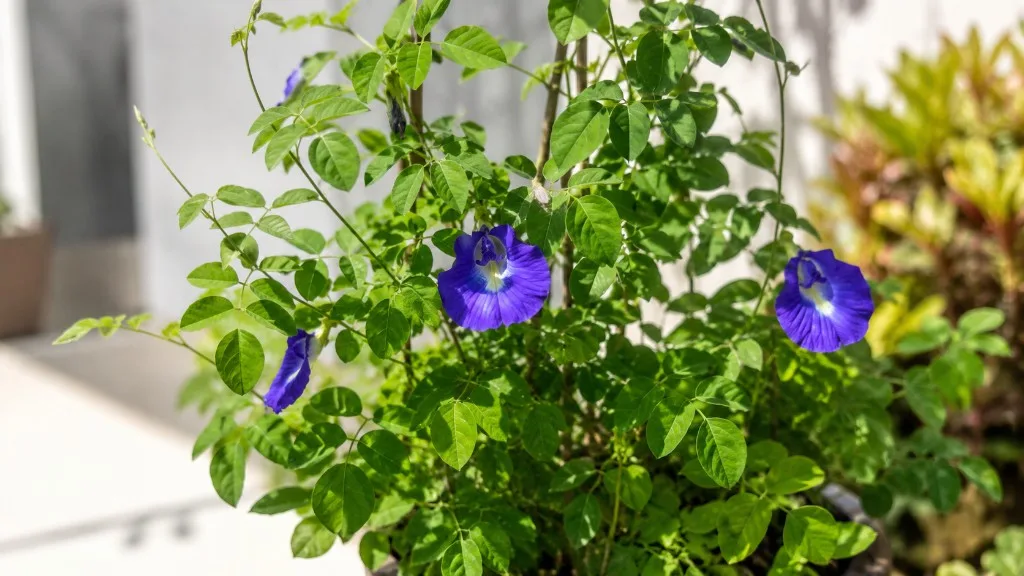
Aparajita (Clitoria ternatea), the vivid blue butterfly pea vine, is one of those plants that looks simple on a care tag and then quietly punishes guesswork. Give it steady moisture with good drainage and it climbs fast, flowers heavily, and shrugs off short dry spells. Let the roots sit wet for a week, or swing between drought and flood, and you get yellow leaves, stalled blooms, and the kind of wilting that makes you reach for the watering can at exactly the wrong moment. The fix is not a prettier calendar. It is learning to read the pot, the soil depth, and the season before you add a single drop.
Why Aparajita needs soil checks, not a fixed watering calendar
Every published watering range you will find for butterfly pea - every two to three days in summer, once a week in winter, about an inch of water per week - is a starting clue, not a rule. Clitoria ternatea grows in tropical Asia from the Indian subcontinent through Southeast Asia, where rainfall is uneven, humidity swings, and the same vine might sit in blazing balcony sun or partial shade under a monsoon cloud deck. Your home, balcony, or garden bed has its own evaporation rate, and that rate changes when you move the pot six inches toward a window.
The North Carolina Extension Gardener Plant Toolbox describes butterfly pea as having a reputation for drought tolerance but performing best with consistent watering and full sun. PROSEA and Feedipedia also describe the species as drought tolerant with vigorous growth in favorable conditions. Both statements are true at the same time, which is exactly why calendar watering fails. An established vine can survive a dry spell; a vine you want covered in blue flowers cannot afford repeated moisture stress without paying for it in bloom count.
What Clitoria ternatea expects from its root zone
Butterfly pea is a legume. Like beans and peas, it partners with rhizobium bacteria in the soil to fix atmospheric nitrogen. That biology gives the plant a useful buffer against lean soil, but it does not make the roots immune to drowning. Research summarized in a University of Florida graduate thesis on Clitoria ternatea cultivation notes the species tolerates short-term flooding yet is sensitive to extended waterlogging and cannot survive wet feet for long. The practical translation: roots want access to moisture and oxygen at the same time. They need a wet-dry rhythm where water moves through the mix, drains freely, and then air refills the pore spaces before the next soak. The PROSEA/Feedipedia agronomic profile confirms the species will not tolerate flooding or waterlogging.
In a well-draining potting mix or garden soil with moderate fertility, that rhythm usually means letting the upper layer dry slightly while the deeper root zone stays lightly moist, never saturated for days on end. In heavy clay, peat-heavy mixes without perlite, or pots lacking drainage holes, the surface can look fine while the bottom third of the pot is anaerobic sludge. Aparajita will not send you a polite email about this. It will yellow from the bottom up, drop buds, and stall new tendrils.
How inconsistent moisture hurts flowering vines
Flowering vines are especially sensitive to moisture swings because bloom production sits at the end of a long resource chain. The plant must support climbing growth, leaf expansion, nitrogen fixation, and flower formation at the nodes. When water is scarce, Clitoria ternatea prioritizes survival: leaves may stay green for a while, but flower buds abort first. When water is excessive, root function collapses and you get the same visible result - fewer blooms - through a different mechanism.
The goal for most growers is not bare survival. It is a steady flush of those cobalt, butterfly-shaped flowers from early summer through fall, or year-round in truly tropical conditions. That outcome depends on stable moisture in the root zone, not maximum moisture. Checking soil before watering is how you keep stability without crossing into soggy soil that invites bacterial soft rot, anthracnose, and powdery mildew - all problems The Spruce and Eden Brothers associate with wet foliage and poor air circulation around butterfly pea.
The golden rule: let the top 3 cm dry, then water at the base
If you remember one rule, make it this: water Aparajita when the top 3 cm (about 1 to 1.5 inches) of soil feels dry, and water at the base of the plant until excess drains out. This matches guidance from Indian balcony-growing resources and multiple butterfly pea care pages that recommend checking the top inch or two before adding water. Everything else - summer frequency, winter slowdown, pot size adjustments - is a refinement of this single decision.
The “3 cm dry” threshold is a check, not a desert. You are not waiting for the whole pot to bake into concrete. You are confirming that the surface and shallow root zone have had enough air exposure that another deep soak will refresh the system instead of stacking water on water. For an established vine in an active growth phase, that check might come every two to three days on a hot balcony. For the same vine in a cool room in January, it might take ten days or longer.
What “dry at 3 cm” means in real potting mixes
A standard finger test at 3 cm depth works only if you know how your mix behaves. A blend heavy in compost and garden soil holds moisture longer than a sandy, perlite-rich balcony mix. A terracotta pot dries faster than glazed ceramic. A vine in a 60 cm container dries more slowly than a young plant in a 20 cm starter pot because the root mass relative to soil volume is different. The honest version of the rule is: the top 3 cm should feel dry to the touch, and the pot should feel noticeably lighter than it did right after the last full watering.
If you recently repotted, wait two to three weeks before trusting the test. Fresh mix often has uneven moisture distribution, and disturbed roots need time to re-anchor. During that settling period, check more often but water slightly less per session until you see new growth resuming.
Established butterfly pea vines are more forgiving of brief dry windows than seedlings or freshly transplanted cuttings. The Spruce recommends about 1 inch of water per week for seedlings, with established plants receiving supplemental irrigation mainly during hot, dry spells. Use that as a volume baseline, then let your soil checks govern timing.
Why base watering beats overhead splashing
Overhead watering is the most common bad habit with Aparajita, and it is easy to understand why. The vine has attractive foliage, the flowers are the whole point, and a quick shower from a watering can feels efficient. The problem is that wet leaves plus warm, humid conditions create a fungal invitation. Eden Brothers planting guidance explicitly recommends watering at the base of the plant and avoiding overhead watering to reduce disease risk. The Spruce adds that soil-level irrigation helps prevent powdery mildew on wet leaves, and NC State Extension notes butterfly pea does well in well-drained, dry to slightly moist soil.
Water at the soil line with a narrow-spout can, a gentle watering wand, or a soaker hose. Morning is the best window: roots absorb moisture before midday heat, and any incidental splashes on leaves dry quickly. If you must wet foliage - for example, to knock off aphids - do it early on a day with good air movement, not at dusk when water sits on the leaf surface all night.
Three reliable soil moisture checks before you water
Guessing is how healthy Aparajita vines end up on a rescue table. The plant’s drought tolerance makes underwatering on Aparajita less immediately dramatic than overwatering on Aparajita, which encourages growers to err on the wet side. That is backward. Three low-cost checks, used together, remove most of the guesswork.
The finger test
Push your index finger into the soil to the second knuckle, roughly 3 cm deep. If the soil feels cool and damp, wait. If it feels dry and crumbly, water. The test takes five seconds and works in any container. The main failure mode is when the mix has become hydrophobic - water runs down the inside wall of the pot while the center stays dry. If water pools on the surface and refuses to sink in, see the recovery notes in the warning-signs section below.
The skewer or chopstick test
For a deeper read without disturbing roots, push a plain wooden skewer or chopstick into the soil near the pot wall until it reaches mid-depth. Leave it for thirty seconds, then pull it out. Clinging soil and a dark damp stripe mean the lower mix is still wet. A clean, dry stick means it is time to water. This test is especially useful in larger containers where the finger test only reads the surface layer.
The pot-weight test
Lift the pot right after a thorough watering and notice the weight. Lift it again daily until you feel a clear difference. A dry Aparajita pot is dramatically lighter than a freshly watered one. Experienced balcony growers in hot climates often rely on this test more than any other because it integrates pot material, vine size, and weather into one signal. Combine it with the finger test when you are still learning the plant’s rhythm.
A moisture meter with a probe can help, but treat it as a supporting tool. In chunky, airy mixes, readings vary by probe placement. In dense mixes, meters can lag behind actual conditions. Your fingers and a stick have no battery to fail.
A practical seasonal watering schedule for Aparajita
The golden rule does not change with the season. The speed at which the top 3 cm dries does. Use the table below as a starting framework, then adjust with your soil checks.
| Season | Typical conditions | Starting interval | Key adjustment |
|---|---|---|---|
| Summer / peak bloom | Hot, bright, active growth | Every 2–4 days | Second check in heat waves; never skip drainage |
| Monsoon / high humidity | Rain, cloud cover, heavy air moisture | Pause manual watering outdoors | Drain saucers; watch for chronic wet soil |
| Post-monsoon / autumn | Warm days, shorter nights | Every 4–7 days | Resume normal rhythm as rain drops |
| Winter / cool slow growth | Lower light, cooler temps | Every 7–14 days | Soil stays wet longer; wait for real dryness |
Summer and peak bloom season
During active growth and flowering, Aparajita drinks steadily. A vine in full sun on a south-facing balcony in India or the southern United States may need watering every two to three days when temperatures climb above 32°C (90°F). A container vine in partial afternoon shade might stretch to four or five days. The flowers themselves are short-lived - often open for a day - but the plant must stay hydrated to keep producing new buds along the twining stems.
Water early in the morning. If a heat wave is forecast and your pot dried unusually fast the day before, check again in the evening rather than assuming the morning soak is still enough. Do not compensate by leaving the pot in a full saucer overnight. Empty runoff after every watering.
Monsoon, humid, and rainy periods
This is the season when overwatering kills more butterfly pea vines than drought. Outdoor pots receive rain, ambient humidity stays high, and evaporation drops. The top centimeter might look dry after a brief sunny break while the core of the pot has been wet for a week. If your Aparajita sits in open rain, suspend manual watering until the 3 cm test reads genuinely dry. After heavy storms, tip cachepots and saucers to remove standing water.
Indoor plants are less affected by monsoon rain but still dry slower in humid air. Extend your check interval and trust the skewer test over the calendar. Fungal spotting on leaves during this season is often a sign of wet foliage plus poor airflow, not necessarily too much soil moisture - but chronic wet soil makes every fungal problem worse.
Winter and slow-growth months
In USDA zones 10–12, Aparajita may slow down but not fully dormate. In cooler homes or north of zone 9, where the vine is overwintered indoors, growth can nearly stall. Soil in a cool room stays wet much longer because the plant is using less water and the mix evaporates slowly. A weekly habit that worked in July can rot roots by December. The Missouri Botanical Garden notes the plant may be grown in a greenhouse where temperatures dip below 60°F.
Reduce frequency sharply and let dryness at 3 cm drive every decision. If you are overwintering a potted vine indoors, pair reduced watering with your brightest window and resist the urge to fertilize or repot until spring growth resumes. Leaves may drop; that is not always a watering emergency. Check the root zone before responding.
How pot size, soil texture, and light change the rhythm
Watering Aparajita is really watering the system - pot, mix, roots, light, and air - not just the plant label. Four variables override any schedule printed on a care card.
Pot size and material. A vine recently moved from a 25 cm pot to a 40 cm pot will sit in a larger volume of moist mix while roots colonize the new space. Water less per session but do not water less often until you confirm the extra soil is actually drying. Terracotta breathes and dries faster; plastic and glazed pots retain moisture longer. A decorative outer pot without drainage is a root-rot machine unless you lift the inner nursery pot to drain after every soak.
Soil texture. Butterfly pea tolerates clay, loam, and sand according to NC State Extension, but every texture behaves differently in a container. Sandy, perlite-amended mixes need more frequent checks. Heavy garden soil in a pot may stay wet in the center while the surface looks dusty. Match your watering to the mix you actually have, not an ideal recipe you plan to repot into someday.
Light intensity. Aparajita wants full sun - at least five to six hours of direct light for strong flowering, with many sources recommending six to ten hours. More light means more photosynthesis, more growth, and faster water use. A vine that looked perfectly watered on an east balcony may dry twice as fast after you move it to west-facing railings. Relearn the pot weight after any placement change.
Vine size and root fill. A mature, root-filled pot dries faster than a young seedling in the same container size because the root mass displaces water-holding soil. Conversely, an oversized pot with a small root ball holds a dangerous water reservoir around unused soil. If your vine is young, err on the lighter side of watering and prioritize drainage over generosity.
Watering Aparajita in pots vs. in the ground
Container growing is how most balcony and indoor gardeners meet butterfly pea, and containers demand stricter discipline. In a pot, you are the rain. Every millimeter of water you add stays in that limited soil volume until it drains or evaporates. In the ground, roots can explore outward for moisture and drainage is usually better unless the site is heavy clay or low-lying.
For pots, always use a drainage hole. Water until runoff appears, then stop. If you use a saucer or cachepot, empty it within thirty minutes. For climbing vines in 30–60 cm containers with trellis support - a common Aparajita setup - expect to check moisture at least twice a week in warm weather. Self-watering containers can work if the reservoir is adjusted so the soil never stays constantly saturated; butterfly pea prefers moist, not boggy.
In-ground vines benefit from deep, less-frequent soaking that encourages roots to chase moisture downward. A weekly deep irrigation during dry summer weeks, supplemented by rainfall, often outperforms daily sprinkles that only wet the surface. Mulch around the base - not against the stem - reduces evaporation and keeps soil temperature steadier. Avoid planting in sunken areas where water collects after storms.
Seedlings and newly rooted cuttings in either setting need more consistent moisture than established vines because their root systems are shallow and have not yet built drought reserves. Keep the top layer lightly moist without saturating it, using a finer spray at the soil line until true leaves harden off and tendrils begin to climb.
Reading warning signs: overwatering vs. underwatering
Aparajita symptoms overlap, which is why growers misdiagnose the problem half the time. Use the table as a first pass, then confirm with a soil check at 3 cm and a pot lift. Never treat wilting alone as proof of thirst.
| Symptom | More likely overwatering | More likely underwatering |
|---|---|---|
| Leaf color | Yellowing from bottom up, pale new growth | Dull, gray-green, crispy edges |
| Leaf texture | Soft, limp, sometimes dropping | Thin, papery, wilting in heat |
| Soil at 3 cm | Wet or cold when “wilting” | Dry and dusty |
| Pot weight | Heavy days after last watering | Very light |
| Flowers | Bud drop, few new blooms | Reduced bloom size, early wilt |
| Roots (if visible) | Brown, mushy, sour smell | Dry, brittle, shrunken root ball |
Overwatering on butterfly pea usually traces to a pot without drainage, a heavy mix in low light, or a decorative cachepot holding runoff. NC State and multiple disease guides link chronic wet conditions to root rot on Aparajita and bacterial soft rot. If several yellow leaves appear together and the soil smells sour or feels cold and soggy, stop watering immediately. Move the pot to brighter air if light was part of the problem, empty any standing water, and let the mix dry down before the next cautious soak.
Underwatering shows up as wilting tendrils, folded leaves, and dry soil that pulls away from the pot edge. A single dry episode often recovers after a thorough soak and drain cycle. Repeated drought stresses fine roots and can make the plant react badly when water finally returns - leaves yellow as damaged roots fail to move moisture. Rehydrate evenly, do not compensate with daily sips that never reach the deep root zone.
The scenario that fools almost everyone: limp leaves with wet soil. That usually means root damage, not thirst. The leaves droop because compromised roots cannot transport water, even though the mix is moist. Adding more water makes the rot worse. Pause irrigation, improve drainage and airflow, and inspect roots only if the plant keeps declining after the mix dries.
Water quality, temperature, and irrigation methods that work
Butterfly pea is not as finicky as some houseplants about water chemistry, but temperature and mineral buildup still matter over time. Room-temperature water is the safe default. Cold tap water on warm summer roots can shock the plant and slow uptake for hours. If you store water in a can on the balcony, let it warm to ambient temperature before pouring.
Tap water is acceptable in most locations if you drain the pot properly and avoid chronic overfertilizing that compounds salt stress. If your tap water is very hard, you may notice white mineral crust on the soil surface over months of top watering. Scrape the crust lightly and flush the pot with plain water until runoff runs clear, or repot at the next sensible opportunity. Rainwater is excellent if you can collect it cleanly. Distilled or RO water is rarely necessary for outdoor vines but can help container plants in homes with heavily treated water.
Irrigation method matters as much as chemistry. Base watering with a narrow spout is the default best practice. Bottom watering - setting the pot in a shallow tray of water and letting the mix wick upward - works for small seedlings but is awkward for large trellised vines and can leave the top layer falsely dry while the bottom sits wet. Soaker hoses and drip emitters are excellent for in-ground plantings. Avoid misting as a substitute for soil moisture; Aparajita appreciates moderate to high ambient humidity (roughly 50–70% in indoor setups) but humidity on leaves does not hydrate roots.
If you use a self-watering container, treat the reservoir as a helper, not autopilot. Check the soil manually every few days in hot weather. The vine should never sit in a permanently saturated root zone.
Conclusion
Watering Aparajita well comes down to one disciplined habit: check the soil at 3 cm, then water deeply at the base until the pot drains. The calendar is only a reminder to perform that check. Summer heat may call for it every two or three days on a sunny balcony; a cool winter room may need ten days or more between soaks. Monsoon season asks you to step back and let rain count - then drain what rain leaves behind.
Butterfly pea rewards growers who respect its split personality: drought tolerant once established, yet far more floriferous with consistent moisture and sharp drainage. Learn your pot’s weight, read the soil instead of the schedule, keep water off the leaves, and match your rhythm to light and season. Get those pieces right and Clitoria ternatea repays you with the blue flowers that made this vine a balcony favorite across tropical Asia - without the yellow leaves and silent roots that calendar watering leaves behind.
When to use this page vs other Aparajita guides
- Aparajita overview - Start here for whole-plant context before deep-diving this topic.
- Aparajita problems hub - Jump to symptom-specific fix guides when this care topic does not resolve the issue.
- Overwatering on Aparajita - Escalate here when watering adjustments are not enough.
- Underwatering on Aparajita - Escalate here when watering adjustments are not enough.
- Root Rot on Aparajita - Escalate here when watering adjustments are not enough.
Related Aparajita guides
- Aparajita overview
- Aparajita light
- Aparajita soil
- Aparajita propagation
- Aparajita fertilizer
- Aparajita repotting
- Overwatering on Aparajita
- Underwatering on Aparajita
- Root Rot on Aparajita
- Wilting on Aparajita
- Drooping Leaves on Aparajita
- Mold on Soil on Aparajita
Related tool
Try the Plant Watering Calculator with aparajita pre-selected to estimate needs for your setup.