Drooping Leaves on Aparajita: Causes, Checks & Fixes
Quick answer
Drooping on Aparajita usually means turgor loss from dry soil, root failure in wet soil, or too little direct sun on a fast-growing vine. First step: push your finger 3 cm into the mix-if dry, water deeply at the base; if wet and limp, stop watering and inspect roots.
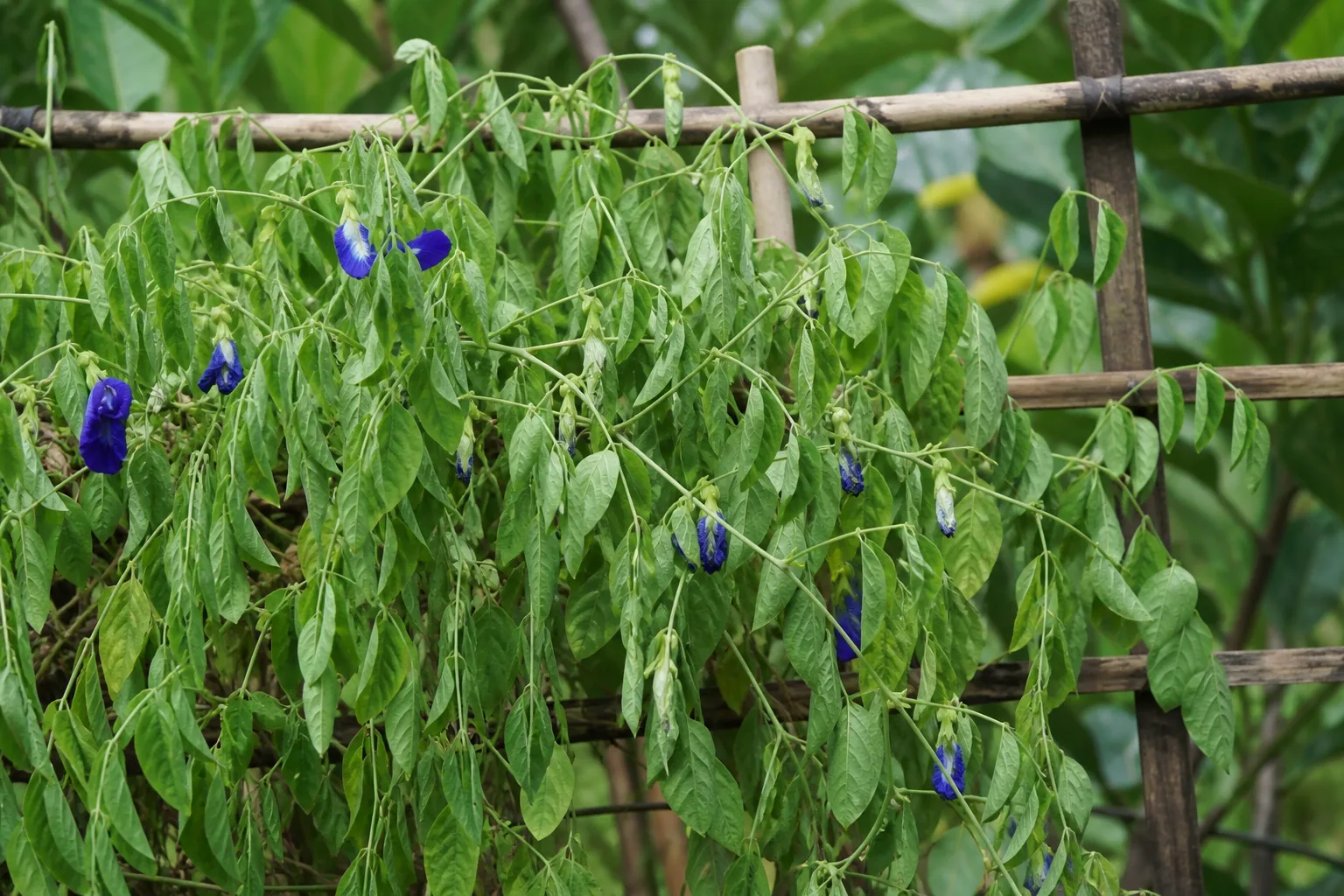
Drooping Leaves on Aparajita: Causes, Checks & Fixes
This guide covers drooping leaves on Aparajita. See also the general Drooping Leaves guide, watering, and light pages for this plant.
Drooping Leaves on Aparajita: Causes, Checks & Fixes
Quick answer
Drooping leaves on Aparajita (Clitoria ternatea, butterfly pea) mean the vine has lost turgor pressure-the internal water stiffness that keeps compound leaflets upright on their stems. On this fast-growing tropical legume, all five to nine leaflets on a leaf often sag together when roots cannot supply enough water, when damaged roots fail in soggy soil, or when weak light slows the whole metabolism.
First step: push your finger 3 cm (about 1 inch) into the potting mix. If it feels dry and the pot is noticeably light, water deeply at the soil line until excess drains out. If the mix is wet and the vine is still limp, do not add more water-soggy roots cannot absorb moisture and the plant can drown even in wet soil. That single soil check separates the two most common Aparajita droop causes before you stack other treatments.
What drooping looks like on Clitoria ternatea
On butterfly pea, drooping is easy to spot because the vine carries odd-pinnate compound leaves-each leaf has several elliptic leaflets that normally sit at a slight upward angle. When turgor drops, every leaflet on the leaf hangs downward and the whole leaf stem (petiole) may bow toward the pot. The effect can run through one side of the vine first or hit the entire plant at once depending on root exposure and light direction.
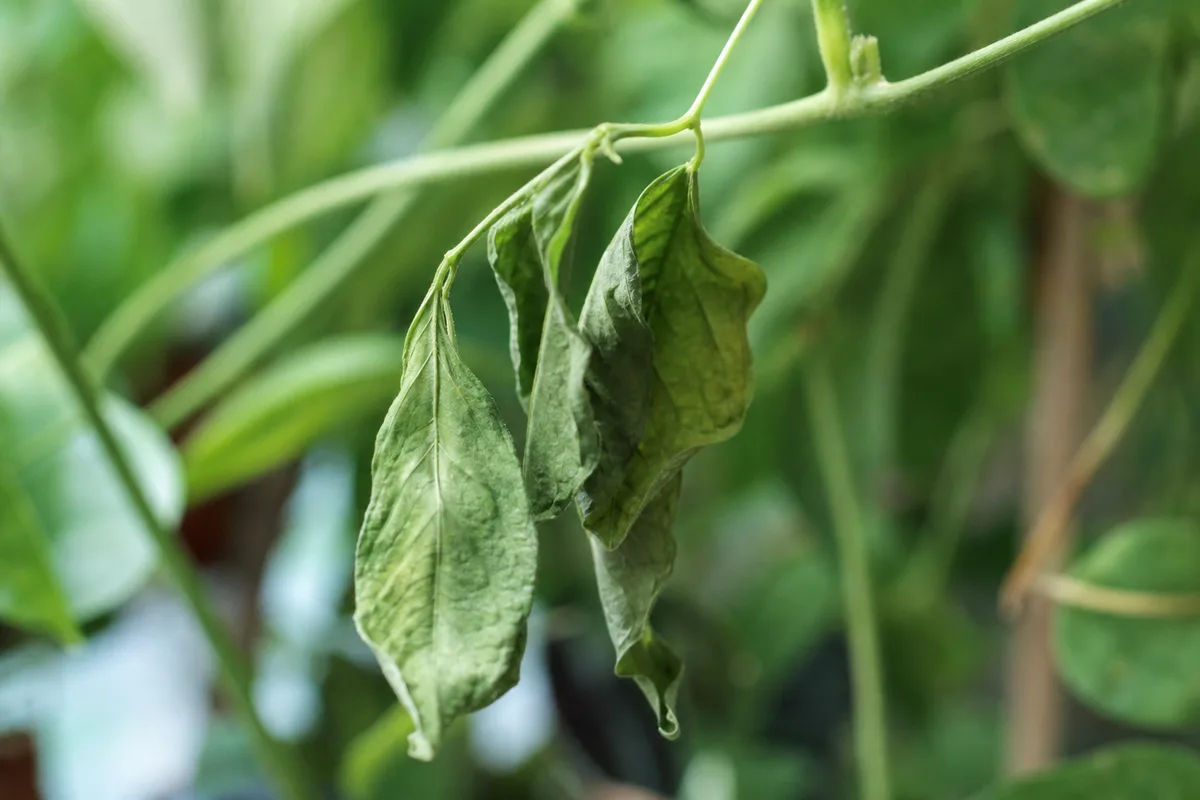
Drooping Leaves symptoms on Aparajita - compare with healthy tissue on the same plant.
Drought droop usually arrives after the top 3 cm of mix has been dry for a day or longer. Leaflets stay mostly green but feel soft and papery. The pot feels light. On a hot balcony, droop may worsen in afternoon heat and look alarming even when morning moisture was adequate-still verify depth, do not guess from leaf softness alone.
Root-rot droop looks similar from across the room but the soil tells a different story. Mix stays wet for days, may smell sour, and lower leaflets often yellow before they sag. The stem can feel limp without springing back when bent-a flexibility clue LSU AgCenter associates with overwatering damage. New growth at the tips may stall while older leaves collapse.
Low-light droop develops more slowly. Leaflets sag, internodes stretch, and the vine leans toward the brightest window. Soil moisture may be correct, yet the plant looks tired because butterfly pea performs best in full sun-six or more hours of direct light daily per NC State Extension-not the dim corners where many houseplant guides assume all vines belong.
Cold-draft droop hits indoor specimens parked on winter window sills. Night temperatures below about 65°F (18°C) slow root function on this tropical climber. Leaflets sag in the morning even when soil moisture looked fine the day before.
Why Aparajita vines droop
Fast growth outpaces inconsistent watering
Butterfly pea is a rapidly growing twining vine that can extend long stems in a single warm season. High transpiration on a sunny balcony pulls water through compound leaves faster than a slow-growing foliage houseplant. The species tolerates short dry spells once established, but young container vines have smaller root systems and droop quickly when the top 3 cm dries and deeper roots cannot catch up.
Overwatering and root failure mimic thirst
Saturated soil drives out oxygen. Roots brown, soften, and stop moving water upward-so leaflets droop despite wet soil, the classic pattern extension agents describe when underwatering and overwatering look alike. Aparajita will not tolerate sitting in waterlogged mix even though it is a legume that fixes nitrogen; nitrogen fixation does not rescue drowned roots on a stressed young vine.
Insufficient direct sun weakens the whole vine
In partial shade or a bright room away from the glass, butterfly pea survives with green leaves but weak structure. Internodes lengthen, stems thin, and leaflets sag because the plant is rationing resources. This overlaps with not enough light and leggy growth-drooping here is a performance warning, not always a watering emergency.
Pests and dry indoor air
NC State and Missouri Botanical Garden both list spider mites and whiteflies as common butterfly pea pests. Mite feeding adds stippling and fine webbing on leaflet undersides; chronic infestation weakens turgor. Heated winter rooms with humidity below 40% favor mites and crisp leaflet edges, which can precede droop on stressed vines.
How to confirm the cause
Work through this decision path in order. Each step narrows the fix before you change light, repot, or spray.
1. Soil moisture finger test (dry vs. wet)
Push your finger 3 cm into the mix at the pot edge. Dry at that depth with a light pot → likely underwatering. Wet or cool and clinging several days after your last watering → likely overwatering or poor drainage. Moist but not soggy with limp leaflets → move to light, temperature, and root checks before watering again.
| What you find | Likely cause | Next check |
|---|---|---|
| Dry 3 cm, light pot, green sagging leaflets | Drought turgor loss | Water deeply at base; recheck in 6–12 hours |
| Wet 3 cm+ for 48+ hours, yellow lower leaflets | Root stress / rot | Inspect roots; improve drainage |
| Moist soil, stretched stems, dim placement | Low light | Measure direct sun hours; relocate or add grow light |
| Moist soil, stippling + webbing on undersides | Spider mites | See spider mites on Aparajita |
| Drooping after recent repot, firm roots | Transplant shock | Hold steady moisture; avoid stacking treatments |
2. Root health check
If soil has stayed wet or the vine keeps drooping after a careful deep watering, slide the plant partly out of the pot. Healthy roots are firm and pale. Rotting roots are brown, mushy, and may smell sour-UF plant pathology guidance ties that pattern to chronic overwatering rather than a leaf disease. Trim only obviously mushy tissue with clean shears; repot into fresh, well-drained mix only if a significant portion of the root ball is compromised.
3. Light and temperature scan
Count hours of direct sun on the foliage, not just the pot rim. Fewer than six hours on an established flowering vine is a probable contributor. Indoors, confirm the vine is not chilling on a winter window where night temperatures dip below 65°F (18°C). Compare your setup to the Aparajita light guide and overview troubleshooting sections on yellow leaves and placement.
4. Pest check on compound leaflets
Hold a leaflet to the light and check undersides for stippling, webbing, or whitefly clouds. Mite stress often pairs with dry air. If pests are active, correct moisture and light first, then follow the dedicated spider mites page-do not shower and spray on the same day you repot.
First fix for Aparajita
Run the 3 cm soil test and act on the result-one correction only.
- If dry: Water at the base until water runs from drainage holes. Empty the saucer. Do not mist leaves; butterfly pea is prone to fungal issues when foliage stays wet.
- If wet: Stop watering. Move the pot to brighter, airier conditions so the mix dries faster. Do not fertilize. Recheck roots only if droop worsens over 48 hours.
This single branch addresses most Aparajita droop cases. If soil was balanced and the vine still sags, the next fix is usually more direct sun-move to a south- or east-facing balcony section or add a grow light-rather than another watering cycle.
Recovery timeline
Simple drought droop on healthy roots often shows firmer leaflets within 6 to 24 hours after a deep soak. The pot should feel heavier; new tendrils should stay upright by the next morning.
Root-stress droop takes longer. After you stop overwatering and improve drainage, expect one to three weeks before new growth looks firm. Old sagging leaflets may never fully stiffen; judge success by upright tips and fresh compound leaves.
Low-light droop corrects over two to four weeks after you increase direct sun gradually. Moving from shade to harsh afternoon sun in one day can scorch leaflets-acclimate over 7 to 10 days.
Transplant shock after repot may droop for 7 to 14 days while fine roots re-anchor. Keep moisture steady, provide bright light, and avoid Aparajita repotting guide again unless roots are visibly rotting.
Lookalike symptoms to rule out
Drooping overlaps with other Aparajita problem pages. Use these differentiators:
- Wilting - Broader collapse language; same drought-vs-drowning split. Drooping leaves focuses on sagging compound leaflets and the soil decision tree first.
- Underwatering - Confirmed dry root zone; droop is the visible flag. Fix watering rhythm from the watering guide.
- Overwatering - Chronic wet mix, yellow lower leaves, sour smell. Drooping with wet soil is often the first visible sign before full wilt spreads.
- Yellow leaves - Yellowing can follow droop from root rot on Aparajita or nutrient stress; check soil before fertilizing.
- Normal evening posture - Some leaflets relax slightly on hot afternoons without root damage. If they firm up overnight and soil moisture is stable, that is not an emergency.
What not to do
Do not water when soil is already wet because leaflets look “thirsty”-that deepens root rot on butterfly pea. Do not fertilize a drooping vine before you know whether roots and light are sound; excess nitrogen pushes leaves at the expense of flowers on this nitrogen-fixing legume. Do not stack repotting, hard pruning, and pesticide on the same day.
Do not place Aparajita in “bright indirect light” as a recovery strategy when the real issue is insufficient direct sun. This species wants full sun for strong structure, not a generic houseplant corner. Do not overhead-water to “revive” drooping leaves-water at the base per NC State’s well-drained, dry to slightly moist soil guidance.
How to prevent drooping next time
Match watering to how fast your pot dries in its actual sun exposure: water when the top 3 cm is dry, then soak at the base until drainage runs clear. Pair that rhythm with six or more hours of direct sun and a trellis so the vine distributes weight evenly.
Use a well-drained mix with perlite or coarse sand, pots with drainage holes, and empty saucers within 30 minutes of watering. In winter, pull containers back from cold glass and reduce watering frequency when growth slows. Inspect leaflet undersides weekly during dry heating season to catch spider mites before they weaken turgor.
For full species context-flowering, repotting, and overview troubleshooting-see the Aparajita care guide.
When to worry
Treat droop as urgent if wet soil plus spreading limp tissue continues beyond 48 hours after you stop watering, if stems soften at the crown, or if roots smell rotten when you inspect. Those signs fit advanced root failure, not a missed drink.
Also act quickly on a hot, dry balcony when the pot is light and leaflets collapse rapidly-established vines recover fast from thirst, but repeated drought cycles reduce flowering. Non-urgent droop that firms overnight after soil was appropriately moist usually needs light or support adjustment, not emergency repotting.
Conclusion
Drooping leaves on Aparajita are a turgor signal on a sun-loving twining vine-not a mystery disease. The soil moisture test at 3 cm depth separates drought from drowning faster than any leaf symptom alone. Water deeply only when dry; stop watering and inspect roots when wet. Add direct sun, stable trellis support, and pest vigilance for the cases moisture alone does not explain. Judge recovery by firm new growth at the vine tips, not by whether every old leaflet re-stiffens.
When to use this page vs other Aparajita guides
- Aparajita watering guide - Use for routine moisture checks before assuming drooping leaves is the main issue.
- Aparajita problems hub - Browse all 16 common issues on this species.
- Underwatering on Aparajita - Different entry point when symptoms overlap with drooping leaves.
- Overwatering on Aparajita - Different entry point when symptoms overlap with drooping leaves.
- Root Rot on Aparajita - Different entry point when symptoms overlap with drooping leaves.