Not Enough Light on Aparajita: Causes, Checks & Fixes
Quick answer
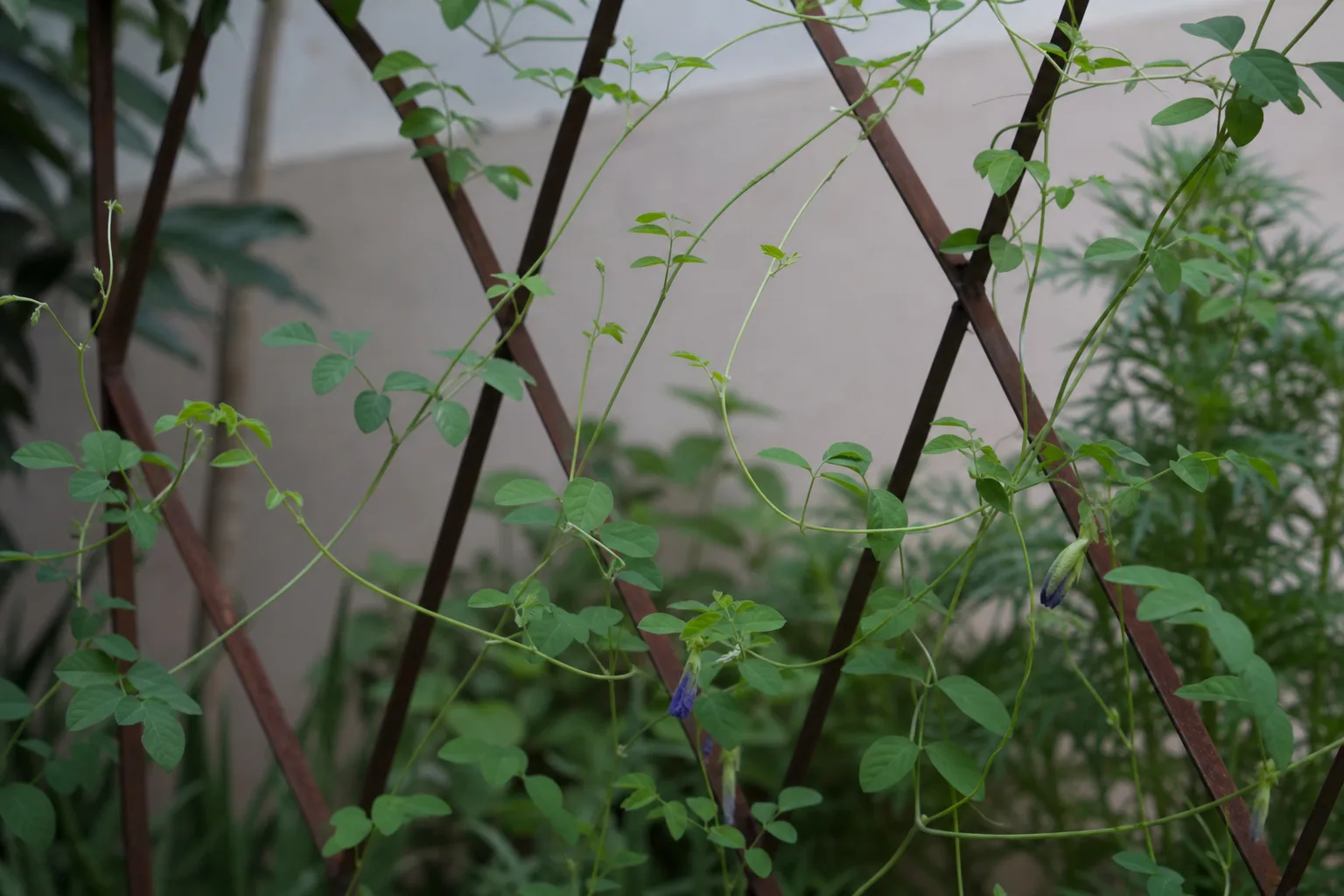
Aparajita is a full-sun flowering vine-when direct sun on the foliage falls below roughly five hours, vines stretch, lean toward windows, and bloom poorly despite green leaves. First step: move the pot to the sunniest spot that gives morning direct sun on the leaves, then acclimate over one to two weeks.
Not Enough Light on Aparajita: Causes, Checks & Fixes
This guide covers not enough light on Aparajita. See also the general Not Enough Light guide, watering, and light pages for this plant.
Not Enough Light on Aparajita: Causes, Checks & Fixes
Quick answer
Aparajita (Clitoria ternatea) often fails in the most frustrating way: deep green leaves and active twining, but no indigo-blue blooms. That split-foliage that looks acceptable while flowering stops-is the signature of insufficient light on butterfly pea, not a nutrient crisis or a pot that is too small.
When direct sunlight on the leaves themselves drops below roughly five hours a day, the vine survives by stretching toward brighter conditions: long gaps between leaf pairs, thin stems, persistent leaning, and weak or absent conch-shaped flowers.
This page is for diagnosing low light when you already see stretch, lean, or bloom failure. For window placement, sun-hour targets, grow-light setup, and acclimation basics, see the Aparajita light guide. If stretch is already obvious and you need remounting detail, see leggy growth on Aparajita.
First step: move the pot to the sunniest placement that delivers direct morning sun on the foliage, such as an east-facing balcony railing or a south-facing windowsill, then acclimate gradually over one to two weeks. Do not reach for fertilizer, Aparajita repotting guide, or heavy pruning until you have corrected light and watched new growth for at least two weeks.
| Your question | Start here | Deeper reference |
|---|---|---|
| Is light the problem? Six-step sun audit and lookalike table | This page | - |
| How much sun does Aparajita need? Window and balcony placement | Light guide | Full culture |
| Wet soil plus yellow lower leaves in shade | Overwatering · Root rot | Water rhythm |
| Long vines but unsure if light or support | Leggy growth | Stretch morphology |
| General care context | Overview · Watering | Baseline rhythm |
What not enough light looks like on Aparajita
Insufficient light on butterfly pea produces a pattern growers often misread because the plant tolerates shade longer than many temperate ornamentals.
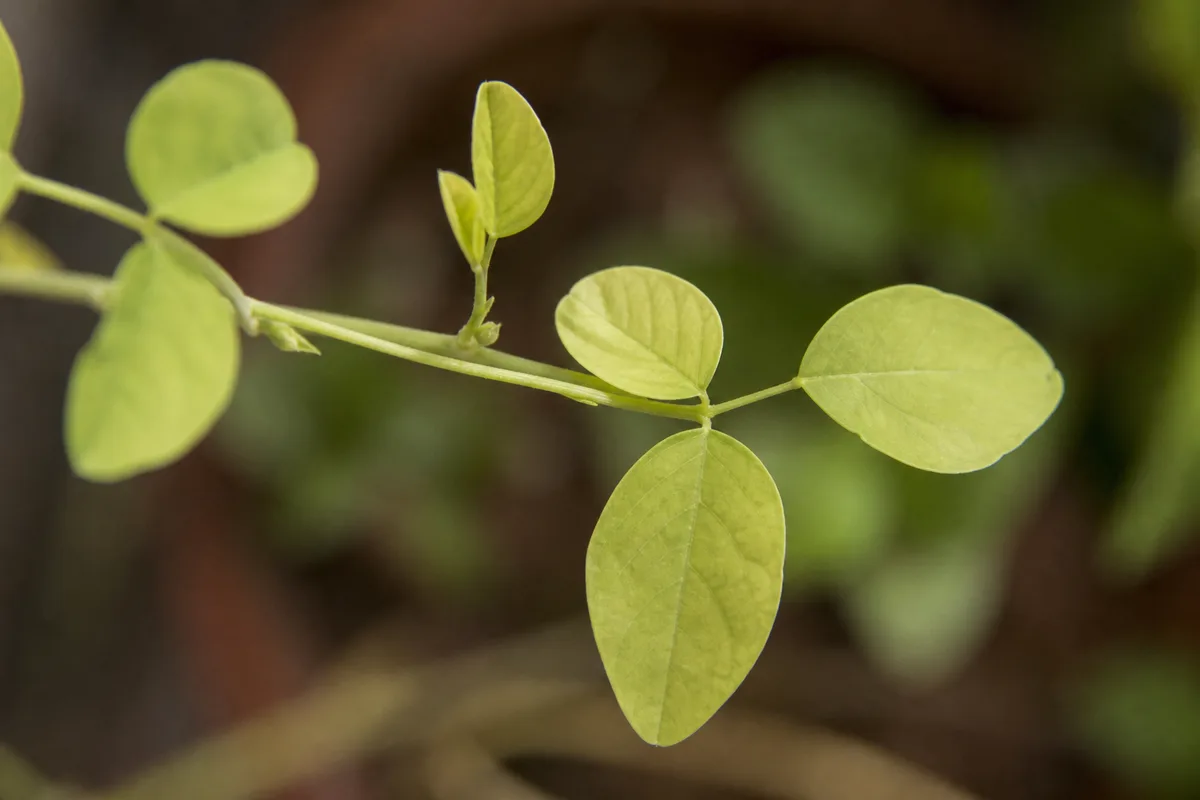
Not Enough Light symptoms on Aparajita - compare with healthy tissue on the same plant.
Typical low-light signals:
- Leggy, reaching vines with unusually long internodes-the gaps between opposing leaf pairs-as the plant searches for photons.
- Smaller, paler new leaves compared with older foliage formed in stronger light.
- Persistent lean toward one window, railing edge, or sky gap even after you rotate the pot.
- Few or no flower buds through warm months despite active twining and deep green mature leaves.
- Slow extension growth and stems that feel soft or thin rather than firm.
- Soil that stays wet for many days, because the plant is not transpiring fast enough to use water at your old sunny-weather schedule.
Aparajita teaches a useful diagnostic split: leaves can look acceptable while flowering fails. Many leguminous vines maintain a leaf canopy at light levels below what bud formation requires. NParks Singapore lists butterfly pea as preferring full sun while tolerating slight semi-shade-that tolerance explains survival, not performance. If your vine twines actively, shows no pests, and still produces no blue blooms through late spring and summer, compare actual direct sun hours against the five-to-eight-hour performance target before assuming the plant needs feed or a larger pot.
Low light rarely kills Aparajita quickly. It slowly converts a showpiece vine into a sparse, searching climber that frustrates growers who expected balcony color.
Recovery snapshot: north terrace to east railing in Bengaluru
A common post-monsoon pattern on Bengaluru terraces: an Aparajita purchased in full bloom sits on a north-facing railing through October and November. By February the caudex base stays firm and leaves remain deep green, but newest internodes measure roughly 8–10 cm between leaf pairs (older summer growth was under 4 cm), the vine leans hard toward the east parapet gap, and no buds appear despite warm days. After a 12-day acclimation from two hours of morning east-railing sun to five hours of direct exposure, the third new leaf pair opens smaller gaps and firmer stems; bud initials often follow by late March when nights stay above 18°C. Old stretched sections from the shaded winter never shorten-only new growth proves the fix worked.
Why Aparajita runs out of light so easily
Clitoria ternatea evolved in sunny tropical and subtropical Asia as a fast-growing twining legume. NC State Extension lists butterfly pea as requiring full sun, defined as six or more hours of direct sunlight daily. That is not decorative guidance-it reflects how the plant allocates energy. In strong light, surplus photosynthate supports flower initiation, firm stems, and the nitrogen-fixing root nodules that help fuel growth. In weak light, the vine prioritizes length over reproduction, stretching toward whatever bright source exists.
Several home-growing situations push Aparajita below that threshold:
Indoor shelf culture. A pot two meters inside a bright room may receive only a fraction of windowsill intensity. University of Maryland Extension notes that light intensity drops rapidly with distance from the source and that plants grown where light reaches them from one direction develop a lean. For a sun-loving vine, ambient room brightness is not a substitute for direct rays on leaves.
North-facing balconies and deep shade pockets. North exposures in the Northern Hemisphere deliver little direct sun. A terrace that feels hot to a person standing on it may still fail the leaf-level test if parapet walls, furniture, or roof overhangs block low-angle morning light from reaching foliage.
Upper vine shading. A common balcony mistake: the base of the pot sits in sun while twining growth disappears beneath an eave or into a shaded corner. Aparajita needs the majority of its canopy-not just the lowest stems-in the light beam.
Seasonal daylight loss. Winter short days and lower sun angles can weaken flowering on the same terrace that performed well in May, especially in North India where cool-season light intensity drops sharply. The plant may stay green while internodes lengthen and buds disappear.
Dirty glass, mesh screens, and tinted panes. Curtains, insect netting, and grimy windows cut usable intensity more than owners expect. Maryland Extension lists window factors as major modifiers of indoor light levels.
Because Aparajita partially fixes its own nitrogen as a legume, moderate growth in shade can mask stress temporarily. Do not interpret survival as preference. The plant lives in partial shade; it performs in sun.
How to confirm insufficient light
Work through these checks before treating water, fertilizer, or pests.
- Count direct sun hours at the pot location across a typical day-not peak noon only. Note morning versus afternoon contribution. Direct sun means unfiltered rays hit leaves; bright shade does not count toward the total.
- Run the hand-shadow test on the newest leaves. On a clear day, hold your hand between plant and sky. A sharp, dark shadow on the foliage for much of the day means usable direct sun. A faint or absent shadow means the vine is in bright shade, not full sun.
- Inspect the newest vine tip for internode length, leaf size, and color compared with growth from last month. Stretching tips with no buds during a warm week strongly suggest light deficit.
- Rotate the pot 180 degrees and watch for a week. Persistent reach toward one compass point means the plant is still hunting light.
- Check the upper canopy, not just the base. Follow the trellis to where new leaves form. If only lower stems catch sun, the diagnosis is still insufficient light.
- Feel the top 3 cm of soil and note dry-down speed. Soil wet for five or more days while growth is sluggish can mean low light is slowing water use-a secondary stress that mimics overwatering. See overwatering on Aparajita if yellow lower leaves join the pattern.
- Review placement history. Recent moves from nursery shade, a dim shop floor, or an indoor shelf to a brighter spot can produce temporary stress symptoms; history tells you whether chronic low light or acclimation shock is more likely.
Confirmation test: Move the vine one step brighter-east railing, open terrace edge, or windowsill with direct morning sun-for two to three weeks without changing fertilizer or pot size. If internodes shorten on new growth and buds appear, light was the primary limiter.
Lookalike symptoms - comparison table
Use this table before stacking treatments. One variable at a time keeps the diagnosis honest.
| Symptom cluster | Likely cause | First move |
|---|---|---|
| Long internodes + lean toward one bright gap + firm base + no buds | Not enough light | Move to morning sun; acclimate gradually; recheck new tips in 2–3 weeks |
| Long vines in random directions + sunny lower sections still bloom | Missing trellis support | Add support-but if lean is directional, light is still suspect; see leggy growth |
| Yellow lower leaves + wet soil 5+ days + soft stems | Overwatering in dim conditions | Fix light and dry-down rhythm together; see overwatering |
| Lush green leaves + no buds after heavy feed | Excess nitrogen | Pause fertilizer before moving the plant again |
| Slow growth + adequate sun + cool nights | Cool temperatures | Wait for warmer weather; Missouri Botanical Garden recommends outdoor culture only where temperatures do not dip below 60°F (15°C) |
| Distorted new shoots + stickiness on undersides | Spider mites or aphids | Inspect leaf undersides; see spider mites or aphids |
| Bleached patches + crisp brown margins after one-day move | Too much sun too fast | Pull back to morning exposure and re-acclimate |
Shipping or nursery shock can dull new arrivals for a week. If symptoms built gradually over months in your home, acclimation shock is not the main story.
First fix for Aparajita
Move the pot to the brightest placement that provides direct morning sun on the foliage, starting with two to three hours in that spot for the first three to four days.
East-facing balcony railings and east windows work well in hot Indian climates because morning sun drives photosynthesis and flower initiation without the harshest afternoon heat load. South-facing terraces deliver longer total sun and suit winter recovery when day length drops. Put the pot where leaves-not just the container-sit in the beam.
Do not jump from a dim indoor shelf to harsh west-afternoon sun in a single day. Sudden exposure scorches leaves acclimated to lower intensity and can look like drought stress. Extend morning hours by one to two hours every three days until the plant tolerates your target placement.
Hold off on repotting, heavy pruning, and nitrogen fertilizer until acclimation finishes and new growth looks firm. Stacked stressors make it impossible to read whether light correction worked.
If outdoor sun is unavailable, add a full-spectrum LED grow light 30 to 45 cm above the canopy for 12 to 14 hours daily-but still maximize window exposure rather than leaving the vine in a dark corner with a distant lamp. The light guide covers grow-light placement for twining vines.
Step-by-step recovery
After the initial brighter placement:
- Extend sun exposure gradually following the acclimation rhythm above until the vine receives at least five hours of direct sun on foliage, or six or more if your climate is cool or cloudy.
- Install or adjust trellis support so new growth stays in the light path. Low light and lack of support both cause long vines, but the fix differs; here the priority is photons, then training.
- Increase watering checks without automatically watering more. Brighter light dries soil faster. A pot that took five days to dry in shade may take two in full sun-that is a positive sign the light upgrade worked. Match rhythm to the watering guide.
- Reduce nitrogen fertilizer until flowering resumes. As a nitrogen-fixing legume, Aparajita in shade plus extra nitrogen often pushes leaves at the expense of buds.
- Rotate the pot every few days during recovery for even growth once leaning eases.
- Prune only after stabilization. Remove excessively leggy, flowerless stems that clutter the trellis once new compact growth and buds prove the placement is correct. Old stretched internodes will not shorten.
For indoor specimens with fewer than five hours of real direct sun, run a grow light on a timer through the active growth season rather than accepting permanent bloom failure.
Recovery timeline
Expect visible change on new growth within two to three weeks of corrected light and gradual acclimation. Internodes on the freshest vine tips should shorten, stems should feel firmer, and bud initials may appear on warm-season plants that are already established.
Older elongated stems do not compact backward. Maryland Extension describes how the same plant in brighter light would be more compact with normal leaf size-that improvement applies to leaves and stems formed after the fix, not tissue already stretched.
A newly germinated seedling may need several weeks of strong light before the first flowers even under ideal conditions. An established acclimated vine on a sunny balcony should show bud formation within one to two bloom cycles after light correction.
If three to four weeks pass with no improvement on new tips despite six or more direct sun hours, revisit root health, pot drainage, and pests before blaming light alone. See root rot if the base feels soft or soil smells sour.
Mistakes to avoid
Do not treat Aparajita like a low-light foliage houseplant. Bright indirect light in a living room rarely delivers enough energy for profuse blue blooms.
Do not move from nursery shade to full west sun in one afternoon. Acclimation prevents scorch that growers misread as disease.
Do not fertilize harder to force flowers in a shaded vine. Energy deficit is the issue, not nutrient absence.
Do not ignore the upper canopy climbing into shade beneath roof overhangs.
Do not keep a winter watering schedule when summer sun suddenly increases transpiration-or vice versa when a vine moves from terrace to dim indoor overwintering.
Do not stack repotting, pruning, and light changes on the same day.
Light cross-check with watering and feeding
Getting light right stabilizes the rest of the care system. Brighter conditions raise water use predictably and make pest outbreaks on soft shaded growth less likely.
Sun target: Five to eight hours of direct sun on foliage during active growth-the light guide covers window orientation, east-versus-south balcony logic, and grow-light setup in full. Missouri Botanical Garden recommends full sun for Clitoria ternatea, with light afternoon shade appreciated only in hot climates-not permanent shade.
Watering rhythm: Allow the top 3 cm of mix to dry between waterings. In full sun, expect faster dry-down than in shade. Wet soil plus weak light is a risky combination-see watering and overwatering if yellow lower leaves appear.
Feeding: Balanced fertilizer every three to four weeks March through October only after light and watering are stable. Low light plus nitrogen pushes foliage over flowers.
How to prevent not enough light next time
Place new Aparajita vines where direct sun hits leaves for most of the day, not where the pot looks best against a shaded wall. East balconies are often the easiest high-performance choice in hot cities; south terraces excel in cooler months.
Clean windows and balcony glass seasonally. Remove obstructions that block low winter sun angles.
When sowing in March or repotting in spring, position the support structure in the brightest section of the rail or bed so upper growth never trains into a shadow pocket.
For indoor or north-facing setups, plan a grow light from day one rather than hoping ambient brightness will flower a tropical vine.
Run a weekly five-point audit: count sun hours, inspect the newest tip, note bud status, feel soil dry-down, and adjust placement one step brighter or softer based on stretch versus scorch signals.
When to worry
Low light alone is usually a slow performance problem, not a same-day crisis. Treat as more urgent when a shaded vine sits in wet soil for a week or more with yellowing lower leaves, sour mix smell, or soft stems at the base-that combination can progress toward root rot while you debate fertilizer.
Also act promptly if winter indoor overwintering combines dim light, cool drafts, and heavy watering; the plant may shed leaves and stall until spring sun returns. NCAT notes butterfly pea is intolerant of freezing weather, and Missouri Botanical Garden recommends outdoor culture only where temperatures stay above 60°F (15°C)-cold stress slows growth similarly to low light even when windows look bright.
Pure stretch with firm roots, dry-normal soil, and no crown softness can be corrected over weeks without panic. The risk is months of bloom failure and gradual decline, not overnight collapse.
Conclusion
Aparajita rewards growers who treat light as a bloom requirement, not background detail. Clitoria ternatea wants direct sun for strong flowering; partial shade keeps the vine alive but rarely delivers the indigo show that justifies the trellis. Move to morning sun first, acclimate gradually, match watering to the new dry-down pace, and judge recovery by shorter internodes and new buds-not by shortening old stretched stems. Fix placement before fertilizer, keep the weekly light audit boring, and the blue flowers usually follow without heroic intervention elsewhere in the care routine. For baseline sun requirements and window placement, return to the Aparajita light guide.
When to use this page vs other Aparajita guides
- Aparajita watering guide - Use for routine moisture checks before assuming not enough light is the main issue.
- Aparajita problems hub - Browse all 16 common issues on this species.
- Leggy Growth on Aparajita - Different entry point when symptoms overlap with not enough light.
- Slow Growth on Aparajita - Different entry point when symptoms overlap with not enough light.
- Yellow Leaves on Aparajita - Different entry point when symptoms overlap with not enough light.