Slow Growth on Aparajita: Causes, Checks & Fixes
Quick answer
Aparajita is a fast tropical vine-when growth flatlines, cool room air below about 65°F (18°C) and too little direct sun are the usual culprits, not missing fertilizer. First step: check the temperature at the pot and count direct sun hours on the foliage; warm the plant and add morning sun before repotting or feeding.
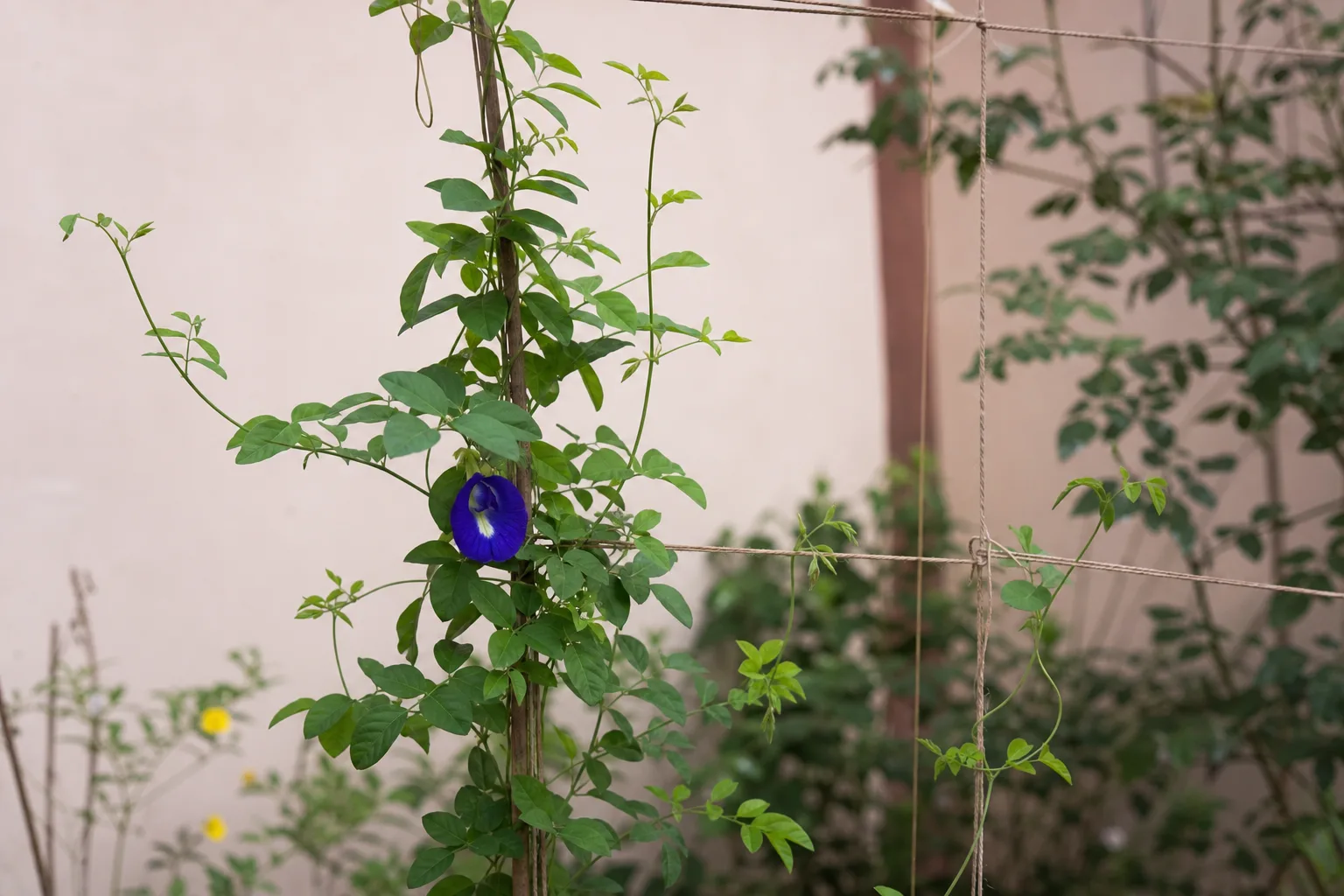
Slow Growth on Aparajita: Causes, Checks & Fixes
This guide covers slow growth on Aparajita. See also the general Slow Growth guide, watering, and light pages for this plant.
Slow Growth on Aparajita: Causes, Checks & Fixes
Scope note: This page covers vines that stay green but barely extend-true growth stalls. If your main issue is long reaching stems, weak blooms, or soil staying wet in shade, start with the not-enough-light guide and the Aparajita overview growth section.
Quick answer
Aparajita (Clitoria ternatea), the butterfly pea vine, is built for warm tropical growth. In strong sun above roughly 65°F (18°C), healthy vines extend steadily and can climb toward a mature height of 10 to 15 feet when supported. Slow growth means the newest tip adds little or no length for weeks while older leaves often stay deep green-a pattern owners misread because the plant looks fine.
First step: check the temperature at the pot and count direct sun hours on the foliage-not ambient room brightness. If nights or daytime readings sit below about 65°F (18°C), or direct sun on leaves falls under roughly five hours, warm the plant and add morning sun before repotting, pruning, or fertilizing. Those two factors stall more butterfly pea vines than nutrient gaps.
How fast should Aparajita normally grow?
Understanding normal pace separates seasonal rest from a fixable problem.
Warm-season benchmarks for established vines:
- Active extension: In full sun with nights above 65°F (18°C), expect visible new vine length every few days on a healthy plant-not months of silence.
- Climbing rate: NC State Extension notes butterfly pea can grow rapidly to its mature height when warmth, sun, and support align.
- First flowers from seed: Most growers see initial blooms about 10 to 14 weeks after sowing when seed was scarified, kept around 70–75°F (21–24°C), and given at least six hours of direct sun-as outlined in the Aparajita overview.
- Bloom flushes: Mature vines produce pea-like blue flowers through warm months; a vine that twines but never buds in summer often has a light or temperature limiter, not a mysterious growth disease.
Winter or cool-room stall:
- Missouri Botanical Garden states that where temperatures dip below 60°F (16°C), butterfly pea is grown as an annual, in a greenhouse, or overwintered indoors-growth essentially pauses in that range even when leaves stay green.
- Indoor rooms at 62–65°F (17–18°C) through North Indian or temperate winters commonly produce a healthy-looking but motionless vine for six or more weeks. That is often normal dormancy, not pathology.
The diagnostic question is not “Is the plant alive?” but “Is the newest tip moving at the rate this species should move at this temperature and light level?”
What slow growth looks like on butterfly pea
Slow growth on Aparajita has a distinct fingerprint growers confuse with other problems because foliage stays attractive.
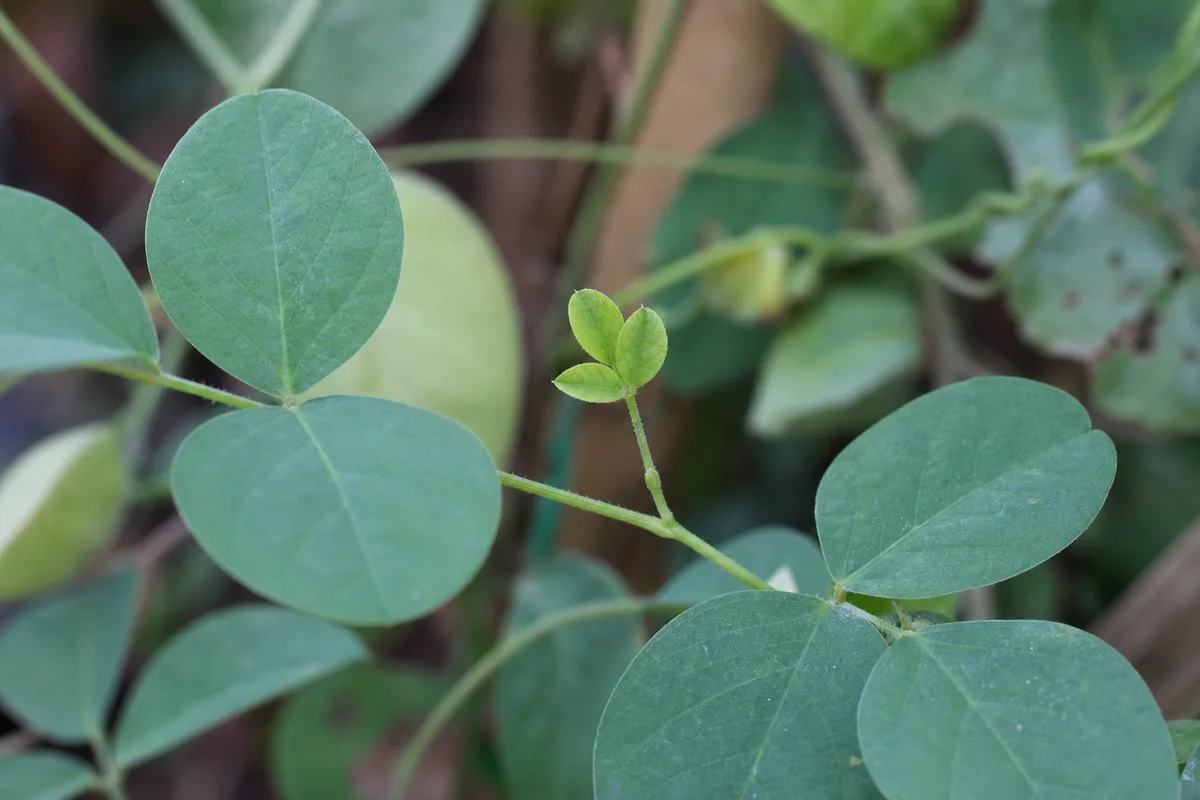
Slow Growth symptoms on Aparajita - compare with healthy tissue on the same plant.
Typical stall signals:
- Frozen vine tip - The leading shoot adds millimeters, not inches, across multiple warm weeks.
- Green but static canopy - Mature leaflets look fine; only extension fails.
- No new flower buds through a month that should be active bloom season outdoors or on a sunny terrace.
- Soil that stays damp longer than last summer because transpiration dropped with metabolic slowdown-wet mix plus stall can invite root rot if you keep watering on a summer schedule.
- Short internodes without dramatic reach - Unlike leggy growth toward a window, true stall shows compact nodes and a tip that simply does not advance.
What slow growth is not:
- Long gaps between leaf pairs with the vine leaning hard toward one light source → see not-enough-light.
- Sudden limp wilting with dry or soggy extremes → see wilting and overwatering guides.
- Yellowing lower leaflets with sour soil smell → often wet roots, not pure temperature stall.
Butterfly pea teaches a useful counter-narrative: the plant can look healthy while completely stalled. Owners who see green leaves assume care is adequate and reach for fertilizer-exactly the wrong first move on a cold legume vine.
Common causes ranked for Clitoria ternatea
Cool temperatures and winter dormancy
Clitoria ternatea evolved in tropical Asia and Africa as a warmth-dependent twining legume. The Aparajita overview recommends maintaining indoor temperatures above 65°F (18°C) for year-round performance. Below that band, enzyme-driven growth slows sharply even when light is acceptable.
Typical scenarios:
- Overwintered balcony pots brought into a 62°F (17°C) living room.
- Early spring terraces before night temperatures stabilize above 60°F (16°C).
- Air-conditioning drafts hitting a pot on a windowsill.
Growth may resume within one to two weeks after sustained warmth returns-no heroic intervention required if roots are sound.
Insufficient direct sun
Light deficits more often produce stretch and weak flowering than total stall, but chronically weak sun combined with cool air creates a double brake. NC State lists butterfly pea as requiring full sun-six or more hours of direct sunlight daily. A pot deep inside a bright room may receive far less leaf-level intensity than a windowsill.
Do not duplicate the full low-light workflow here. If stretch, lean, or bloom failure dominate, use the not-enough-light guide for sun-hour targets, acclimation steps, and confirmation tests. On this page, treat inadequate sun as one stall factor to rule out alongside temperature.
Root-bound container
Butterfly pea is a fast grower; a vine started in spring can circle a 8–12 inch (20–30 cm) pot by late summer. Root-bound plants often stall extension despite adequate sun because limited root volume cannot support vine elongation and flowering simultaneously.
Clues:
- Roots visible at drainage holes or wrapping the soil ball when you gently lift the plant.
- Water runs straight through the pot within minutes.
- Soil dries in hours in hot sun-then stall returns because roots cannot access enough moisture between cycles.
- Last repot was more than one active season ago on a vigorously growing specimen.
Pests and hidden stress
Sap-sucking pests-especially spider mites in dry heated rooms and aphids on soft new shoots-drain vigor without always causing obvious wilt. NC State lists butterfly pea as susceptible to spider mites. Inspect leaf undersides and new tips with a hand lens before blaming temperature alone.
Over- or under-fertilizing a legume vine
Butterfly pea fixes atmospheric nitrogen through rhizobium root nodules like other legumes. It rarely needs heavy nitrogen feeds. Excess nitrogen on a stalled shaded vine pushes soft foliage without restoring extension. Severe nutrient depletion in an old, root-bound pot can also limit new growth-but that diagnosis comes after temperature, light, and root volume checks, not before.
Do not fertilize a cold-stalled vine hoping to jump-start spring. Wait until nights stay above 65°F (18°C) and new growth shows firm texture.
Missing trellis and perceived stall
Butterfly pea climbs by twining. Without a thin support, stems may pile in a pot without obvious vertical progress-owners report “no growth” when length is actually accumulating horizontally. Install an obelisk or string before diagnosing pathology.
How to confirm the cause - step-by-step checks
Work through these in order. One variable at a time makes the plant’s response readable.
- Measure temperature at the pot across day and night for three days-not the thermostat across the room. Drafty windows and concrete balcony floors run colder than interior walls.
- Count direct sun hours on foliage at the current placement. Bright ambient light does not count; unfiltered rays must hit leaves. Compare against five to eight hours for active warm-season growth.
- Mark the newest vine tip with a small tie or chalk on the trellis today. Check again in seven days. Less than 2 cm (¾ inch) of extension during a warm week strongly suggests stall.
- Feel the top 3 cm of soil and note dry-down speed. Soil wet five or more days while growth is flat may mean cool stall slowed water use-or roots are struggling. Cross-check root rot signs if mix smells sour.
- Slide the root ball partially out if the pot is small and last repot was over a year ago. Circling white roots confirm crowding.
- Inspect leaf undersides and shoot tips for stippling, webbing, honeydew, or clustered aphids.
- Review recent care changes - heavy nitrogen feed, repot shock, or a sudden move from nursery shade to dim indoors can all pause growth temporarily.
Symptom lookalike table
| Pattern you see | Most likely cause | First check | Where to read more |
|---|---|---|---|
| Green vine, no length for weeks, room 60–65°F | Cool dormancy | Thermometer at pot | This page - wait for warmth |
| Long internodes, lean toward window, few blooms | Low light | Sun-hour count | Not-enough-light |
| Green tip frozen, 6+ sun hours, warm room, old pot | Root-bound | Root inspection | Repotting guide |
| Stippling, webbing, distorted new leaves | Spider mites / aphids | Leaf underside scan | Spider mites |
| Yellow lower leaves, wet soil, sour smell | Root stress | Moisture + drainage | Root rot |
| Lush leaves, no buds, recent heavy feed | Excess nitrogen | Pause fertilizer | Fertilizer guide |
Confirmation test: If temperature is the lead suspect, move the pot to the warmest stable placement above 65°F (18°C) with direct morning sun for two weeks without repotting or feeding. New firm extension on the tip confirms warmth and light were limiting.
First fix for slow Aparajita growth
Move the vine to the warmest placement that delivers direct morning sun on the foliage-at least two to three hours to start-and keep night temperatures above 65°F (18°C) if you are growing indoors.
East-facing balcony railings and east windows work well in hot climates because morning sun drives photosynthesis without the harshest afternoon heat. If the plant overwintered in a cool room, gradual warming matters more than an instant jump to a baking west terrace.
Do not repot, prune heavily, or fertilize on day one. Stacked stressors make it impossible to read whether the temperature-and-sun correction worked. Hold those tools until the newest tip shows firm extension for two consecutive weeks.
If outdoor warmth is unavailable and the room cannot stay above 65°F (18°C), accept seasonal dormancy-reduce watering frequency slightly, stop fertilizer, and plan for spring recovery rather than forcing growth in conditions the species does not support.
When sun is clearly adequate but roots are circling a small pot, repotting into the next size container with fresh well-drained mix becomes the first fix-but only after warmth is confirmed, because repotting a cold-stalled vine adds unnecessary shock.
Recovery timeline
Cool-stall recovery: Once nights stay above 65°F (18°C) and morning sun increases, expect the first measurable tip extension within one to two weeks. Bud formation may follow two to four weeks later on established vines.
Post-repot recovery: Root-bound vines often show new extension within two to three weeks after repotting into a slightly larger pot with intact root handling-faster if repotted during warm weather.
Light-limited stall: If weak sun contributed, internode shortening and bud initials may take two to four weeks after brighter acclimated placement-see the not-enough-light guide for acclimation rhythm.
Pest-related stall: Mite or aphid cleanup can take two to three weeks before extension resumes; judge progress by pest reduction on new shoots, not old damaged leaflets.
Older leaves that yellowed during stall do not fully re-green; success means stable new growth with firm stems and shortening internodes on fresh tips.
If four weeks pass in warm sun with no tip movement despite corrected temperature, roots, and pests ruled out, revisit whether the plant is entering natural end-of-season decline in your climate.
What not to do
Do not fertilize heavily on a cold-stalled legume vine hoping to force spring growth-excess nitrogen on a paused metabolism produces soft tissue without solving the stall.
Do not keep a summer Aparajita watering guide when cool stall slowed transpiration; wet soil invites root problems. Feel the top 3 cm of mix before each water.
Do not confuse winter rest with death and discard a firm-rooted green vine in February-wait for warmth.
Do not stack repotting, pruning, pesticide, and light moves on the same day.
Do not treat “bright indirect light” as sufficient for a tropical full-sun vine. Missouri Botanical Garden recommends full sun for Clitoria ternatea, with light afternoon shade only in hot climates-not permanent dim corners.
Do not assume fertilizer deficiency before temperature and sun audits-legumes fix much of their own nitrogen.
How to prevent slow growth next season
Place pots where direct sun hits foliage for most of the warm season and plan overwintering above 65°F (18°C) or accept deliberate dormancy with reduced water.
Repot fast-growing vines each spring or when roots circle an 8–12 inch pot-before mid-season stall sets in.
Match watering to dry-down speed: faster in full summer sun, slower in cool indoor overwintering.
Run a monthly three-point audit during the active season: temperature at the pot, sun hours on leaves, and newest tip movement marked on the trellis.
Provide trellis support early so extension is visible and trainable.
For indoor culture below five direct sun hours, plan grow lights from the start rather than accepting a permanently stalled vine-details in the light guide.
Cross-link your mental model with the Aparajita overview temperature and growth sections so seasonal expectations stay realistic.
When to worry
Pure cool-season stall with firm roots, normal soil moisture, and no pest coating is not an emergency-patience through winter is valid.
Treat as more urgent when:
- Wet soil persists a week or more with yellowing lower leaves and soft stems-stall plus saturation can progress toward root rot.
- New growth is coated in aphids or heavily stippled from mites while extension stops.
- The crown feels soft or the base blackens-unlikely from temperature alone; inspect roots immediately.
Conclusion
Slow growth on butterfly pea is usually a temperature-and-sun story, not a fertilizer mystery. Clitoria ternatea wants warmth and direct light to extend its fast tropical vine habit; cool rooms produce green but motionless plants that frustrate owners who expected balcony color in January. Check the thermometer at the pot, count sun on leaves, mark the newest tip, and warm the vine before repotting or feeding. Differentiate stall from stretch using the not-enough-light and leggy growth guides when internodes lengthen instead of freezing. Judge recovery by firm new extension-not by re-greening old leaflets-and the vine usually resumes climbing without heroic intervention elsewhere in the care routine.
When to use this page vs other Aparajita guides
- Aparajita watering guide - Use for routine moisture checks before assuming slow growth is the main issue.
- Aparajita problems hub - Browse all 16 common issues on this species.
- Not Enough Light on Aparajita - Different entry point when symptoms overlap with slow growth.
- Leggy Growth on Aparajita - Different entry point when symptoms overlap with slow growth.
- Yellow Leaves on Aparajita - Different entry point when symptoms overlap with slow growth.