Spider Mites on Aparajita: Causes, Checks & Fixes
Quick answer
Spider mites on Aparajita colonize fast-growing vine tips and compound leaf undersides in dry, warm air. First step: isolate the plant away from neighbours and inspect the topmost trellis shoots before rinsing leaf undersides with lukewarm water.
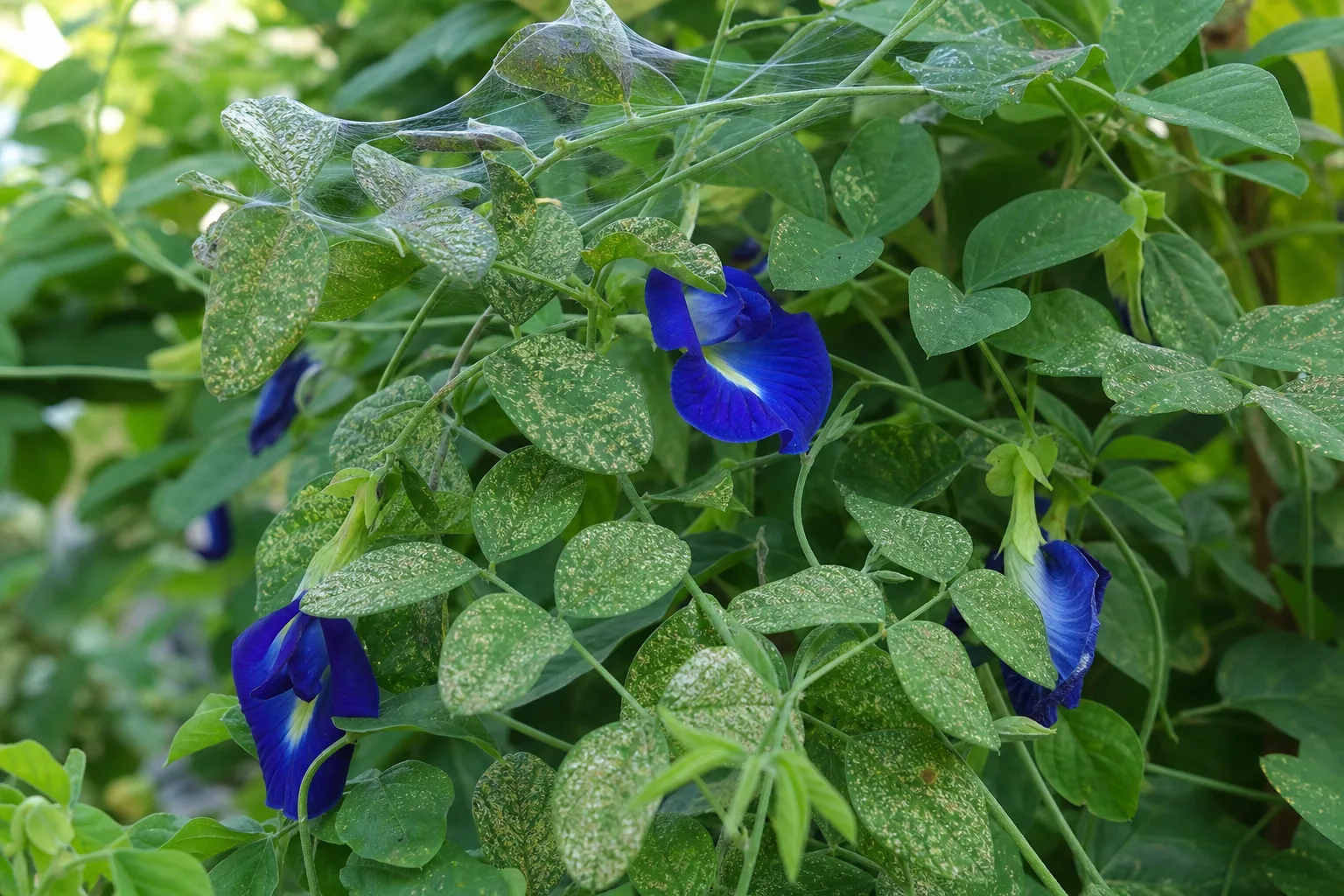
Spider Mites on Aparajita: Causes, Checks & Fixes
This guide covers spider mites on Aparajita. See also the general Spider Mites guide, watering, and light pages for this plant.
Spider Mites on Aparajita: Causes, Checks & Fixes
Quick answer
Spider mites on Aparajita (Clitoria ternatea) show up where the vine is growing fastest-fresh tips climbing a trellis, opening leaflet clusters, and the soft tissue around flower buds. The twospotted spider mite, Tetranychus urticae, is the usual culprit on houseplants: tiny arachnids that pierce leaf cells from the underside, leaving pale stipples that later bronze or crisp. NC State Extension lists butterfly pea as susceptible to spider mites, especially when air stays dry.
First step: move the pot away from other plants and inspect the topmost trellis shoots before you rinse anything. Mites spread quickly across crowded balcony rails and windowsill collections. Once you see stippling plus moving specks on a paper tap test, rinse compound leaf undersides with lukewarm water-then repeat on a schedule, because one shower rarely clears an active colony.
What mite damage looks like on butterfly pea leaflets
Aparajita carries compound leaves with 5 to 9 smooth elliptic leaflets per leaf-not fuzzy foliage. Mite damage therefore shows as fine yellow or white pinprick stipples across individual leaflets, often starting on the newest clusters at vine tips while lower mature leaves still look normal.
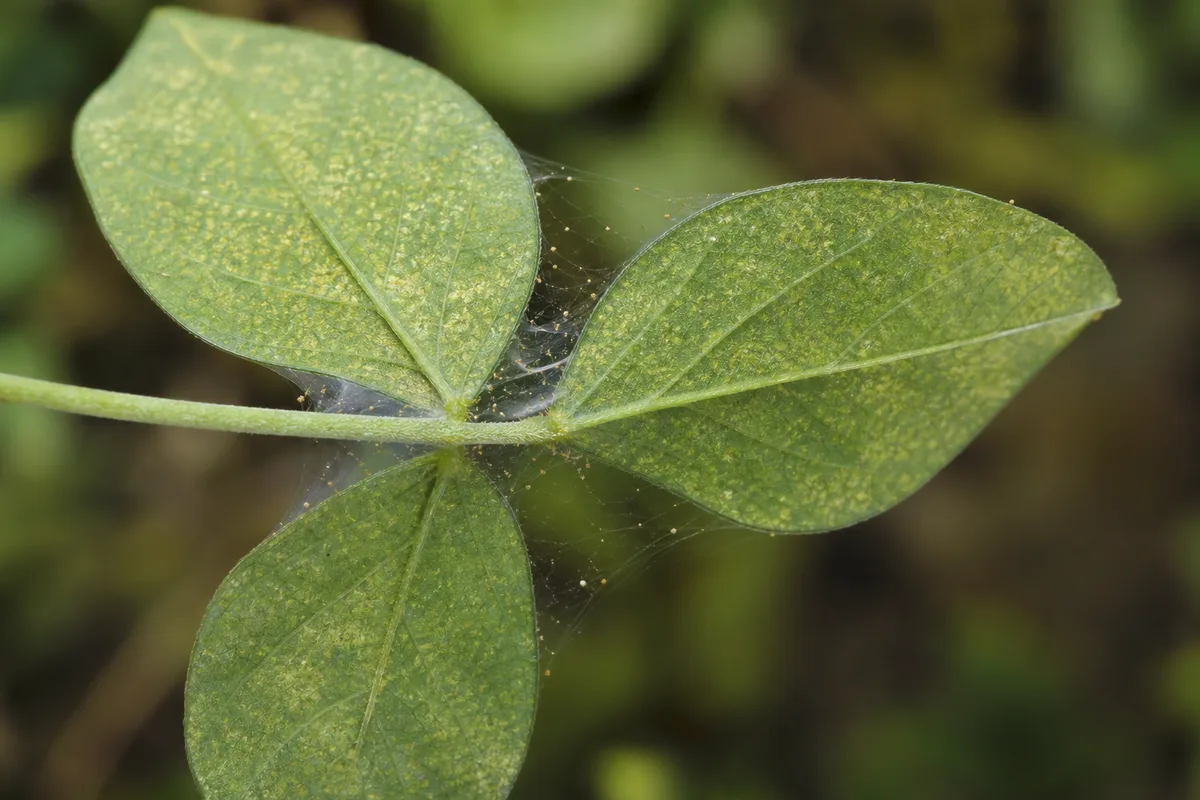
Spider Mites symptoms on Aparajita - compare with healthy tissue on the same plant.
Typical signs include:
- Pale speckling that turns bronze or gray as feeding continues; severely hit leaflets may crisp at the margins
- Delicate silk webbing at leaflet bases, petioles, and trellis strings-especially where new growth meets older stems
- Slow, dusty-looking leaflets on the climbing end while the bottom of the vine appears untouched
- Distorted or aborted buds when colonies move onto flower stalks during bloom season
- Fine cast skins on undersides, visible with a hand lens
Because butterfly pea is a fast tropical legume, mites often concentrate on actively extending shoots rather than evenly across the whole plant. That pattern differs from drought stress, which more often yellows lower leaflets when soil dries too long-see the watering guide before blaming pests alone.
Why Aparajita gets spider mites
Aparajita is not randomly unlucky-it produces exactly the tissue spider mites prefer, especially when indoor culture fights the plant’s tropical humidity needs.
Winter indoor heating and low humidity. The Aparajita overview recommends 50 percent humidity or higher indoors to prevent spider mite outbreaks. Central heating, radiator ledges, and sunny south-facing glass that bakes the pot by day then chills it at night all drop effective humidity around leaflets. Twospotted spider mites prefer hot, dry conditions and reproduce quickly when temperatures sit in their comfort zone while air stays parched.
Fast soft growth on trellises. A well-lit Aparajita in full sun pushes constant new tips toward a trellis or obelisk. Mites colonize that tender tissue before you notice stippling on older leaflets-similar to how aphids gather on soft shoots, though mites leave stippling and webbing rather than sticky honeydew.
Crowded plant displays. Butterfly pea grouped with herbs, peppers, or other vines on a sheltered balcony limits airflow and lets mites walk silk strands between pots. One infested trellis can seed a whole rail within days in warm dry weather.
Drought stress layered on dry air. Outdoor butterfly pea tolerates brief dry spells, but vines stressed by uneven watering plus low humidity become more attractive to mites. Chronic underwatering on Aparajita alone causes wilt on dry soil without stippling-cross-check moisture at the 3 cm depth described in the watering guide when symptoms are ambiguous.
How to confirm the cause
Work through these checks in order:
- Trellis-tip inspection - Follow the vine to its highest growing point and the two nodes below. Mites colonize here first on Aparajita.
- Underside scan - Tilt each newest compound leaf and look at every leaflet underside with a hand lens. Stippling plus webbing at petiole bases confirms mites.
- Paper tap test - Hold white paper under a suspect leaf cluster and tap sharply. Slow-moving specks falling onto the paper confirm live mites; thrips jump or crawl differently and rarely produce heavy webbing.
- Webbing check - Fine silk between leaflets and trellis string distinguishes mites from mineral spray residue or dust.
- Humidity context - If the pot sits on a heater, near a blowing vent, or in a room below 40 percent humidity during winter, environmental stress is part of the story even after mites are confirmed.
- Lookalike rule-out - Use the table below before treating.
Symptom lookalike table
| What you see | Likely cause | Key differentiator | Where to read more |
|---|---|---|---|
| Stippling + fine webbing on leaflet undersides | Spider mites | Moving specks on paper tap | This page |
| Pear-shaped insects + sticky honeydew on soft tips | Aphids | No stippling pattern; tacky residue | Aphids on Aparajita |
| Silver streaks, distorted new leaflets, no webbing | Thrips | Insects visible with lens; no heavy silk | Extension indoor pest guides |
| Crisp brown leaflet edges, no speckling, no pests | Low humidity | Paper tap clean; air feels dry | Low humidity |
| Yellow lower leaflets, wet soil, no insects | Overwatering | Soil stays damp; no webbing | Overwatering |
| Even limp vine on bone-dry soil | Underwatering | Dry mix; no stippling | Watering guide |
If stippling, webbing, and moving specks align, spider mites are confirmed. Yellow leaflets alone without those signs point elsewhere first.
First fix for Aparajita
Move the pot away from other plants and rinse the undersides of compound leaves with lukewarm water.
Take indoor Aparajita to a sink or shower, or hose outdoor vines early in the morning. Angle the spray upward into leaflet undersides, petiole axils, and trellis strings where mites hide. Some pests can be removed using a forceful spray of water on a sturdy vine that tolerates a firm rinse better than many delicate houseplants. Let foliage dry in bright light the same day-Aparajita recovers quickly once the rinse is done.
Do not reach for miticide on day one if you have not confirmed live mites. Do not use insecticides labeled for insects only-mites need miticides, horticultural oil, or insecticidal soap labeled for mite control. Do not fertilize a mite-hit vine hoping to push new growth; that produces more soft tissue mites prefer.
Because growers often harvest butterfly pea blooms for tea, rinse developing buds gently and avoid drenching open flowers with soap until petals pass if you plan to consume them.
Step-by-step recovery
After the initial isolation and rinse:
Light to moderate infestations
- Repeat water rinses every five to seven days until paper tap tests stay clean and fresh webbing stops appearing. Two or more applications at five-day summer intervals or seven-day winter intervals are typical for miticides-the same rhythm applies to thorough rinsing when colonies are small.
- Raise humidity around the pot - Pebble tray, grouping with other plants, or a small humidifier near-but not touching-the foliage. Target the 50 percent or higher band from the overview rather than misting leaves directly on a schedule.
- Relocate off heat sources - Move the pot away from radiators, furnace vents, and south glass that superheats dry air. See the light guide if you must trade a few sun hours for better airflow while treating.
- Scout trellis tips twice weekly - Mark the newest node with a string so you can tell whether clean extension resumes.
Moderate to heavy infestations
- Apply horticultural oil or insecticidal soap labeled for mites if rinses alone fail after two cycles. Cover every leaflet underside and stem joint; soaps and oils work on contact with no long residual.
- Repeat labeled applications every five to seven days through at least two complete cycles-most products miss eggs on the first pass.
- Prune heavily webbed tips if mites hide inside curled leaflets spray cannot reach. Aparajita branches from nodes below a clean cut and pushes new vine within days in warm weather.
- Protect neighbouring pots - Mites travel on clothing, tools, and breeze. Keep treated vines isolated until you see no new stippling for seven to ten days.
When to escalate or discard
If webbing envelopes most of the trellis, leaf drop accelerates despite repeated treatment, or mites reappear within days on every fresh tip, the vine may be cheaper to replace than to keep cycling chemicals-especially on a stressed overwintering specimen. Starting clean from seed or a healthy cutting is often faster for butterfly pea than fighting a chronic greenhouse-style infestation on one crowded shelf.
Contact your local extension office if populations persist after labeled miticide courses-you may be dealing with miticide-resistant strains common on twospotted spider mites after prolonged chemical use.
Recovery timeline
Water knockdown shows results within three to five days when colonies are moderate. A full oil or soap course may take two to three weeks with interval repeats. Aparajita grows fast in warm weather-expect clean new leaflets on fresh tips within one to two weeks once mites stay gone, even if older stippled leaflets never fully re-green.
Judge recovery by new growth quality and flowering, not old damage. Firm stems, normal colour on fresh leaflets, no fresh webbing, and new buds forming mean the plant is winning. Spreading stippling up the trellis, renewed webbing after each rinse, or mite damage continuing on open flowers means escalation is needed.
Mistakes to avoid
Do not assume a general insecticide will kill spider mites-many products leave mite populations untouched while killing predatory insects that might have helped.
Do not skip repeat treatments. Eggs hatch on a staggered schedule; one rinse or spray rarely ends an outbreak.
Do not blast wilted Aparajita with soap in direct hot midday sun-stressed leaflets burn more easily. Treat early morning or evening when leaves are turgid.
Do not ignore the humidity story. Rinsing without moving the pot off a radiator ledge often invites reinfestation within days.
Do not compost heavily webbed clippings near garden beds. Mites can survive briefly on discarded tissue.
Do not confuse butterfly pea with sweet pea (Lathyrus odoratus) when researching pet safety-Aparajita is a different legume; still keep rinsed or treated plants out of pet reach and wash hands after handling sap-heavy stems.
Aparajita care cross-check while treating
While fighting mites, keep baseline care steady-big swings in water, light, or pot size stress the vine and slow recovery.
- Humidity - Aim for 50 percent or higher indoors per the Aparajita overview; dry winter rooms are the primary mite trigger for container butterfly pea.
- Water - Maintain the top 3 cm dry-down rhythm from the watering guide. Chronic drought on dry soil weakens the vine even if mites are controlled.
- Light - Full sun supports compact growth that is easier to inspect. Weak light produces leggy soft shoots where mites hide-see the light guide if stretch dominates.
- Support - Keep the trellis in place so you can inspect both sides of climbing stems without crushing tips.
- Fertilizer - Hold feeding until new growth looks clean for two weeks, then resume moderate balanced feeding during the growing season.
How to prevent spider mites next time
Scout trellis tips weekly from autumn through winter when indoor heating runs-that is when spider mites thrive in dry, warm conditions.
Maintain humidity at 50 percent or higher near overwintering Aparajita. A pebble tray, humidifier, or grouped pots helps; avoid letting the vine sit directly above a radiator.
Quarantine new butterfly pea plants and stem cuttings for two weeks before placing them on a shared trellis or propagation shelf.
Improve airflow around crowded vine displays on sheltered balconies. Stagnant warm pockets let colonies build unnoticed.
When moving outdoor Aparajita inside for winter, inspect every compound leaf before the pot joins your indoor collection-mites hitchhike on leaf undersides unnoticed until heating dries the room.
When to worry
Treat as urgent when webbing spreads across most of the trellis within days, leaf drop accelerates despite repeated rinsing, mites appear on multiple pots in the same display, or bud clusters abort en masse during peak bloom season.
Replace severely declining vines rather than fighting endless reinfestation on a stressed specimen. Butterfly pea germinates readily in warm soil-a clean restart is often faster than repeated chemical cycles on one chronically infested pot.
Light stippling on one trellis tip after a dry week indoors is not urgent. Confirm with a paper tap, isolate, rinse first, and escalate only if specks and webbing persist through two treatment cycles.
Conclusion
Spider mites on Aparajita concentrate on the same fast-growing tissue that drives flowering-climbing tips, compound leaflets, and buds. Inspect those sites first, isolate before you rinse, and repeat treatment on a five-to-seven-day rhythm until new leaflets emerge clean. Pair mechanical knockdown with the humidity targets from the Aparajita overview and you stop dry-winter outbreaks before they coat the whole trellis-keeping treatment proportionate to a vine that recovers quickly once mites are gone.
When to use this page vs other Aparajita guides
- Aparajita watering guide - Use for routine moisture checks before assuming spider mites is the main issue.
- Aparajita problems hub - Browse all 16 common issues on this species.
- Low Humidity on Aparajita - Different entry point when symptoms overlap with spider mites.
- Slow Growth on Aparajita - Different entry point when symptoms overlap with spider mites.