Low Humidity on Aparajita: Causes, Checks & Fixes
Quick answer
Aparajita (Clitoria ternatea) tolerates 40–60% RH but performs best at 60–80%; forced-air heat and vent paths often drop indoor air below 30% and crisp compound leaflets or abort flower buds. First step: measure humidity beside the pot and move the vine at least 3 feet from heating vents or AC blasts before adding a humidifier.
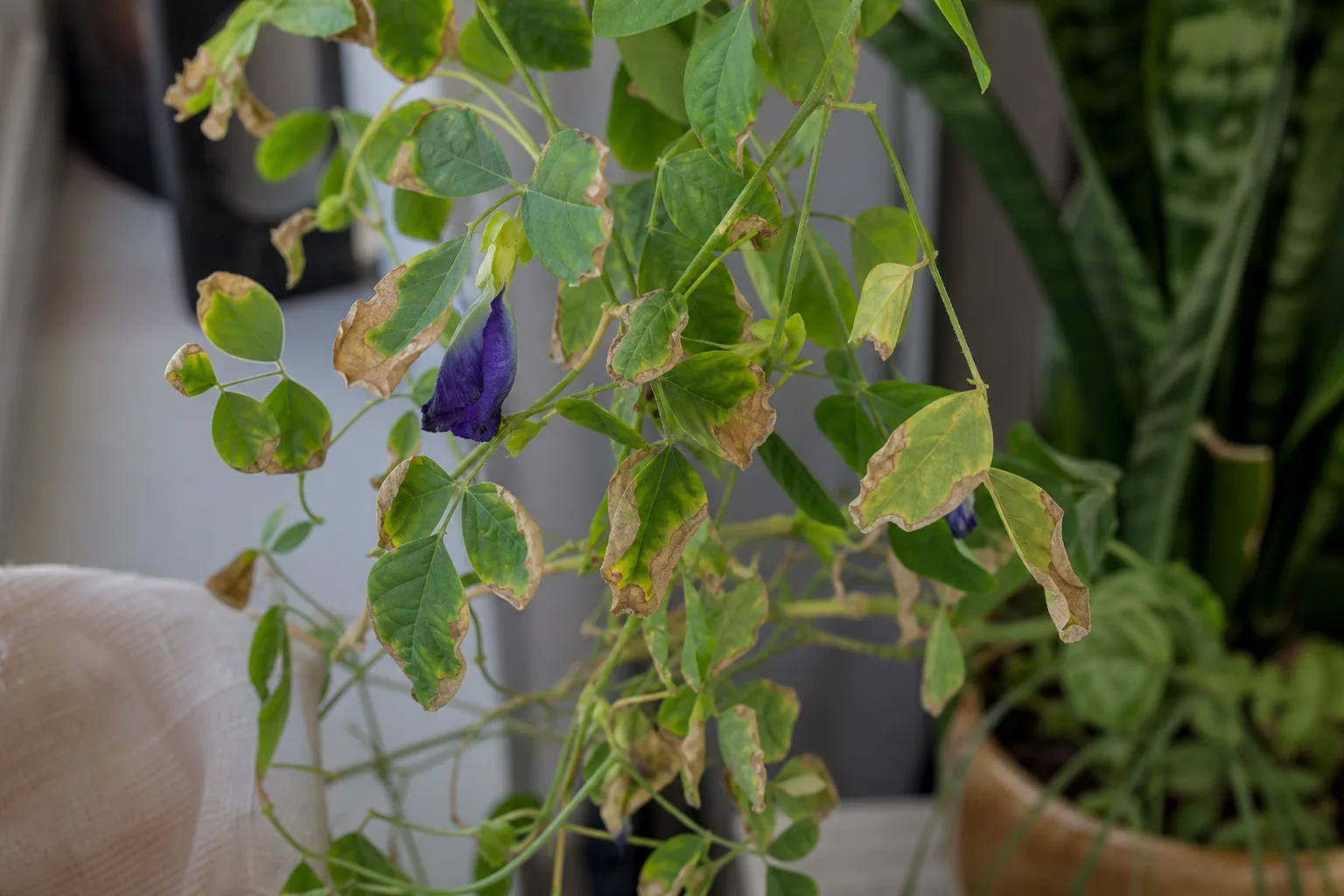
Low Humidity on Aparajita: Causes, Checks & Fixes
This guide covers low humidity on Aparajita. See also the general Low Humidity guide, watering, and light pages for this plant.
Low Humidity on Aparajita: Causes, Checks & Fixes
Quick answer
Aparajita (Clitoria ternatea, butterfly pea) is a tropical twining legume with compound leaves of five to nine elliptic leaflets and daily blue flowers that evolved in humid equatorial climates. It tolerates average indoor humidity around 40–60% but performs better when relative humidity sits closer to 60–80%-the range typical of its native tropics. Winter furnaces, heat pumps, and placement beside vents often push readings below 30% at leaf height, while heated homes can fall to 10–20% RH in the same season.
Low humidity on butterfly pea usually shows as crisp brown leaflet margins, crisp or aborting flower buds, and-if air stays dry for weeks-spider mite flare-ups. It is not the same as underwatering, nitrogen deficiency, or active mite stippling, and adding extra water to wet soil will not fix dry air.
First step: place a hygrometer beside the foliage, note the reading, and move the pot at least 3 feet (1 m) off heating vents, radiators, and AC register paths. If RH stays below 40%, add a room humidifier or group plants before Aparajita repotting guide, fertilizing, or spraying pesticides.
Does butterfly pea need high humidity?
Aparajita is more forgiving of average home air than calatheas or maidenhair ferns, but it is still a tropical vine, not a succulent. Outdoors in warm monsoon climates, ambient humidity often sits well above 50%; indoors with central heat, the same pot may sit in air dry enough to desiccate leaflet edges even when you water correctly.
Practical targets:
- 40–60% RH - acceptable for established vines with good light and watering; some margin crisping may still appear in peak heating season
- 50% or higher - safer when overwintering indoors or growing beside forced-air paths; aligns with mite-prevention goals on this species
- 60–80% RH - ideal band for lush compound foliage and steady flower production, matching tropical norms described in the Aparajita overview humidity section
You do not need greenhouse fog. You do need to know whether the air beside the plant-not across the room-is chronically below 40%, because that is when butterfly pea shows stress patterns distinct from generic houseplant advice.
What low humidity looks like on Aparajita
Dry-air damage on butterfly pea follows the plant’s compound leaflet structure and daily flowering habit:
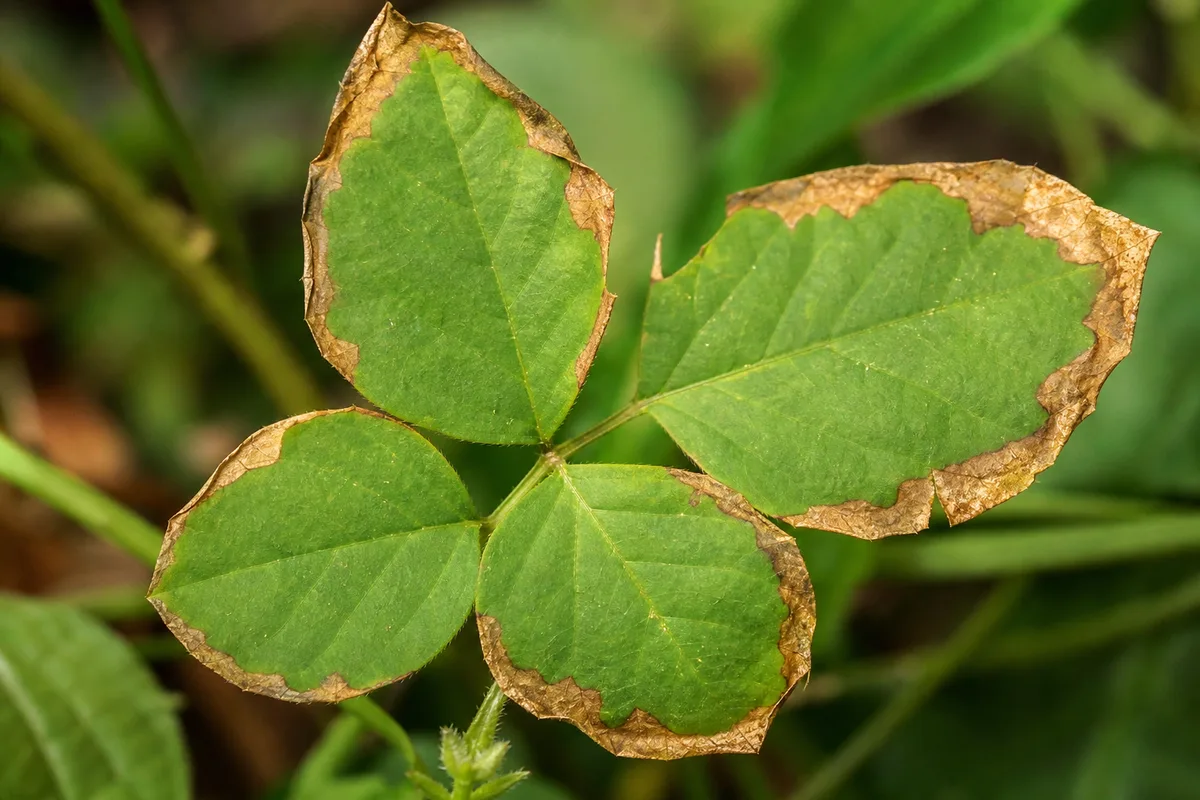
Low Humidity symptoms on Aparajita - compare with healthy tissue on the same plant.
- Brown or tan crisping on leaflet margins, sometimes worse on the side facing a heater, radiator, or hot window glass
- New flower buds that brown, shrivel, or drop before opening-often the earliest signal in dry forced-air rooms, before whole leaves fail
- Slow or distorted unfurling on the newest compound leaves at the vine tip
- Fine stippling, bronzing, or webbing on undersides when dry air persists long enough for spider mites-NC State Extension lists spider mites among pests on butterfly pea
- Firm green stems and normal soil dry-down while only margins or buds suffer-contrast with underwatering wilt
- Seasonal timing-symptoms that appear when heating season starts or right after moving a potted vine indoors for winter, often without any change to your watering calendar
Normal winter rest is different. When you overwinter Aparajita inside, some leaf drop and slower growth are expected if nights are cool and watering is reduced. That is not the same as progressive margin crisping on multiple compound leaves while RH beside the pot reads in the high 20s.
Why Aparajita gets low humidity stress
In tropical Asia, Clitoria ternatea grows in warm, humid conditions with full sun and consistent moisture at the root zone. Indoors or on a dry winter balcony, several triggers stack against that biology:
- Forced-air heating that drops whole-room humidity below 20% for weeks-far below what most non-succulent houseplants prefer
- Placement within the blast zone of floor or ceiling vents, where localized air is drier than the rest of the room
- Pots on sunny window sills in winter, where afternoon sun through glass heats leaflet tissue while ambient air stays dry
- Single-vine isolation in a large dry room with no humidifier or plant grouping to buffer transpiration loss from many small leaflets
- Indoor overwintering after outdoor summer growth-suddenly lower humidity plus reduced watering rhythm shocks the vine even when temperature is adequate
Butterfly pea is a fast-growing legume that transpires heavily when given six or more hours of direct sun. Bright light plus dry air pulls moisture from leaflet edges faster than roots replace it, so margins desiccate even when soil moisture is correct. That is why this page pairs humidity fixes with the light guide-dim rooms mask dry-air damage until mites or bud drop appear.
How to confirm dry air vs. other causes
Work through these checks before changing fertilizer, repotting, or pesticide:
- Hygrometer reading at vine height - Place the sensor beside the foliage, not across the room. Act if RH is below 40%; target 50–60% or higher when overwintering indoors or fighting mite pressure.
- Vent, radiator, and AC draft audit - Feel for warm or cold drafts at leaf level. Move pots at least 3 feet from registers; avoid foliage pressed against hot winter glass.
- Bud vs. leaf pattern - Crisping unopened buds with firm lower leaves strongly suggests dry air in a flowering vine; uniform wilt points to roots or water.
- Soil moisture cross-check - Press the top 3 cm of mix. Firm stems with dry margins but appropriate moisture fit humidity stress; a light pot and limp vine suggest underwatering instead.
- Leaf underside inspection - Yellow speckles, bronzing, or fine webbing? Rule in spider mites. Even margin crisping without specks stays environmental.
- Light cross-check - Leggy stretch with few flowers in a dim corner is not enough light, not humidity-though dry air often stacks on the same overwintering plant.
- Two-week placement trial - Move off the vent path and add one humidity step (humidifier or grouping). Cleaner unfurling on the next compound leaf or successful bud open confirms the diagnosis.
Symptom lookalike table
| What you see | More likely cause if… |
|---|---|
| Even leaflet margin crisping, no stippling, plant near vent or dry winter room | Low humidity - confirm with hygrometer |
| Whole-vine wilt, light pot, dry mix several cm down | Underwatering - see underwatering |
| Yellow speckles, bronzing, fine webbing on undersides | Spider mites - see spider mites |
| Lower yellow leaves with wet, heavy soil | Overwatering / root rot on Aparajita - see overwatering |
| Bleached or scorched patches on sun-facing leaflets after a sudden move outdoors | Sunburn - acclimate gradually; see light guide |
| Pale new growth on older pot-bound vine in bright sun | Nutrient deficiency - after RH and water are ruled out |
If margins crisp without wilt on dry soil, stippling, or scorch patches, low humidity is the leading explanation-especially when RH beside the pot reads under 40%.
First fix for Aparajita
Relocate away from dry-air sources, then raise ambient humidity toward 50–60% or higher-without misting foliage.
Practical order:
- Move the pot today off the vent line, away from hot window glass, and out of the direct path of AC blasts-critical for potted vines overwintering indoors.
- Run a cool-mist humidifier in the same room if RH stays below 40% after the move. Extension guidance recommends portable humidifiers near plants for consistent winter RH lift-more reliable than pebble trays alone for a trellised vine.
- Group pots so collective transpiration raises the local microclimate around the trellis.
- Add a pebble tray under the pot if a humidifier is not available: rest the pot on pebbles above the water line so roots never sit submerged.
Do not stack repotting, fertilizer, and heavy pruning on the same day. One environmental correction at a time lets you read the plant’s response on the next leaflet flush or flower bud.
Step-by-step humidity recovery
After the first fix:
- Hold watering steady using the top-3-cm dry rule from the watering guide-dry air is not fixed by extra soil moisture, and soggy mix invites root rot on this species.
- Keep full sun or grow-light hours unchanged while you raise RH-butterfly pea still needs six or more hours of direct light for recovery bloom, not “bright indirect” dimness.
- Run the humidifier daily through heating season while RH reads under 45% at vine height; clean the tank weekly.
- Wait for one to two new compound leaves or successful bud opens before judging success.
- Trim only fully dead margin tissue if brittle and brown; partial green leaflets still photosynthesize.
- Inspect undersides weekly while air is dry. If stippling appears, escalate to the spider mites guide while keeping humidity up.
Recovery timeline
Expect visible stabilization within two to three weeks once RH rises and vent exposure stops-faster when the vine sits in strong light and warm room temperatures, slower in mid-winter overwintering mode.
Crisp brown margins on existing leaflets do not turn green again. Damaged leaf tissue does not heal; judge recovery by clean new leaflet edges, buds that open fully, and stopped spread to older foliage.
A hygrometer climb from the high 20s to the mid-50s often correlates with the next flower bud opening cleanly within three weeks on an otherwise healthy vine. If margins keep crisping on fresh growth after four weeks above 45% RH, revisit underwatering, pests (spider mites), or light (light guide).
What not to do
- Do not overwater when brown leaflet edges look like “thirst” from dry air-check RH and soil separately.
- Do not mist foliage to raise humidity. Overhead moisture favors anthracnose and bacterial soft rot on butterfly pea; water at the base per the overview watering guidance.
- Do not dim light to “reduce stress”-insufficient direct sun reduces bloom and worsens leggy, mite-prone growth. Use the light guide instead of pulling the vine into shade.
- Do not fertilize a stressed vine before humidity and watering are stable-feed only when new growth looks healthy.
- Do not stack repotting, pruning, and pesticide on the same day as your first humidity fix.
How to prevent dry-air stress next winter
Before you bring a container vine indoors:
- Scout the indoor spot for vent paths and hygrometer readings at trellis height-not just thermostat comfort.
- Plan a humidifier for the room where the vine overwintering, especially if you run heat daily; most houseplants prefer 40–60% RH, and butterfly pea benefits from the upper half of that band indoors.
- Cut watering back when growth slows, but do not interpret dry soil on a reduced schedule as permission to ignore RH-buds abort in dry heat even when roots are correctly dry.
- Keep the brightest window or grow light available; humidity fixes work best alongside adequate light for this full-sun species.
- Inspect leaf undersides monthly through heating season-dry conditions favor spider mites on many indoor plants, and butterfly pea is a listed host.
On Indian dry-season balconies, grouping pots and evening watering at the soil line (not on foliage) often buffers afternoon desiccation better than midday misting, which can burn wet leaflets in strong sun.
When to worry
Escalate if stippling and webbing spread despite RH above 50%-treat mites per the dedicated guide while maintaining humidity. Act quickly if multiple buds abort daily and RH beside the pot still reads below 30% after a vent move; add a humidifier rather than waiting for spring.
Soft stems, sour soil smell, or yellowing lower leaves with wet mix point to overwatering or root issues-not humidity alone. Firm green vines with cosmetic margin burn on older leaflets are low urgency if new growth is clean.
Conclusion
Low humidity on Aparajita is a placement and ambient-moisture problem on a tropical flowering legume-not a mystery watering defect. Measure RH beside the trellis, move off forced-air paths, raise humidity with a humidifier or grouping (not misting), and keep full sun or grow-light exposure steady. Rule out underwatering and spider mites with the lookalike checks above. Existing crisp margins will not re-green; success is clean new leaflets and blue buds opening on a firm, well-lit vine.
When to use this page vs other Aparajita guides
- Aparajita watering guide - Use for routine moisture checks before assuming low humidity is the main issue.
- Aparajita problems hub - Browse all 16 common issues on this species.
- Brown Tips on Aparajita - Different entry point when symptoms overlap with low humidity.