Brown Tips on Aparajita: Causes, Checks & Fixes
Quick answer
Brown tips on Aparajita usually trace to dry indoor air, inconsistent watering, fertilizer salt buildup, or sudden sun exposure-not disease on leaflet margins. First step: check humidity within arm's reach of the plant and whether only the oldest leaflet tips are crispy while the rest of each compound leaf stays green.
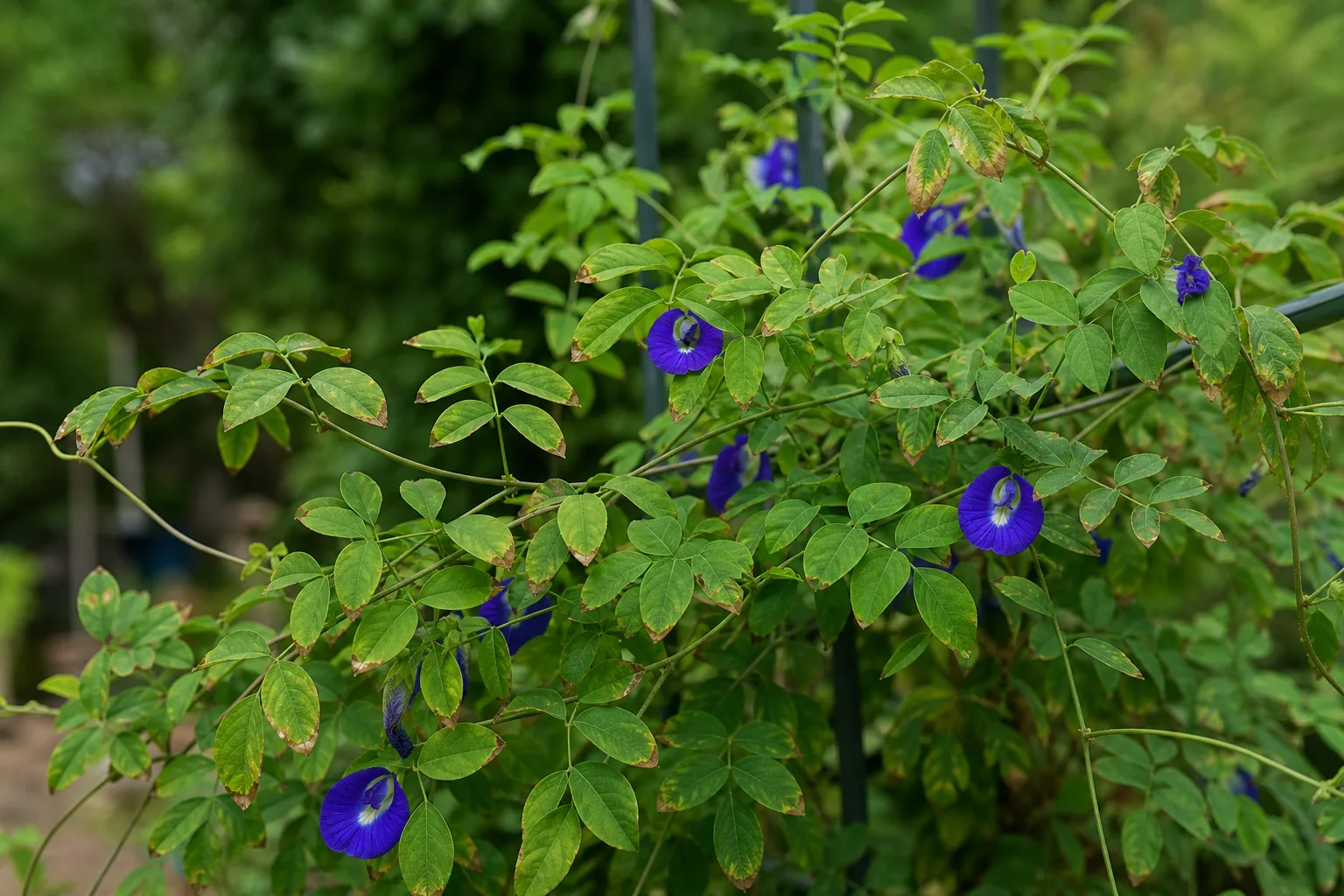
Brown Tips on Aparajita: Causes, Checks & Fixes
This guide covers brown tips on Aparajita. See also the general Brown Tips guide, watering, and light pages for this plant.
Brown Tips on Aparajita: Causes, Checks & Fixes
Quick answer
Brown tips on Aparajita - Clitoria ternatea, butterfly pea - are almost always environmental stress, not a fungal disease on leaflet margins. Each compound odd-pinnate leaf carries 5 to 9 elliptic leaflets with pointed tips that desiccate first when humidity drops, roots cannot deliver steady moisture, or salts concentrate in tissue.
First step: check humidity within arm’s reach of the plant and whether only the oldest leaflet tips are dry and crispy while neighboring leaflets on the same rachis stay green. Below 40% relative humidity in heated winter rooms points to low humidity. If humidity is adequate, press the top 3 cm of mix and scan the pot rim for white crust before misting or fertilizing.
Fix one confirmed cause before stacking humidifier, flush, and repot on the same week. Existing brown leaflet tips will not turn green - judge recovery by new compound leaves emerging with clean pointed tips.
What brown tips look like on Aparajita
On indoor butterfly pea, individual leaflet tips turn tan to dark brown and feel papery or crispy. Damage stays at the pointed end of each elliptic leaflet within a compound leaf - the midrib, petiole, and neighboring leaflets on the same rachis often remain green. Older compound leaves at the base of the vine show tips first; new leaves at growing tips may emerge clean if the stress is recent.
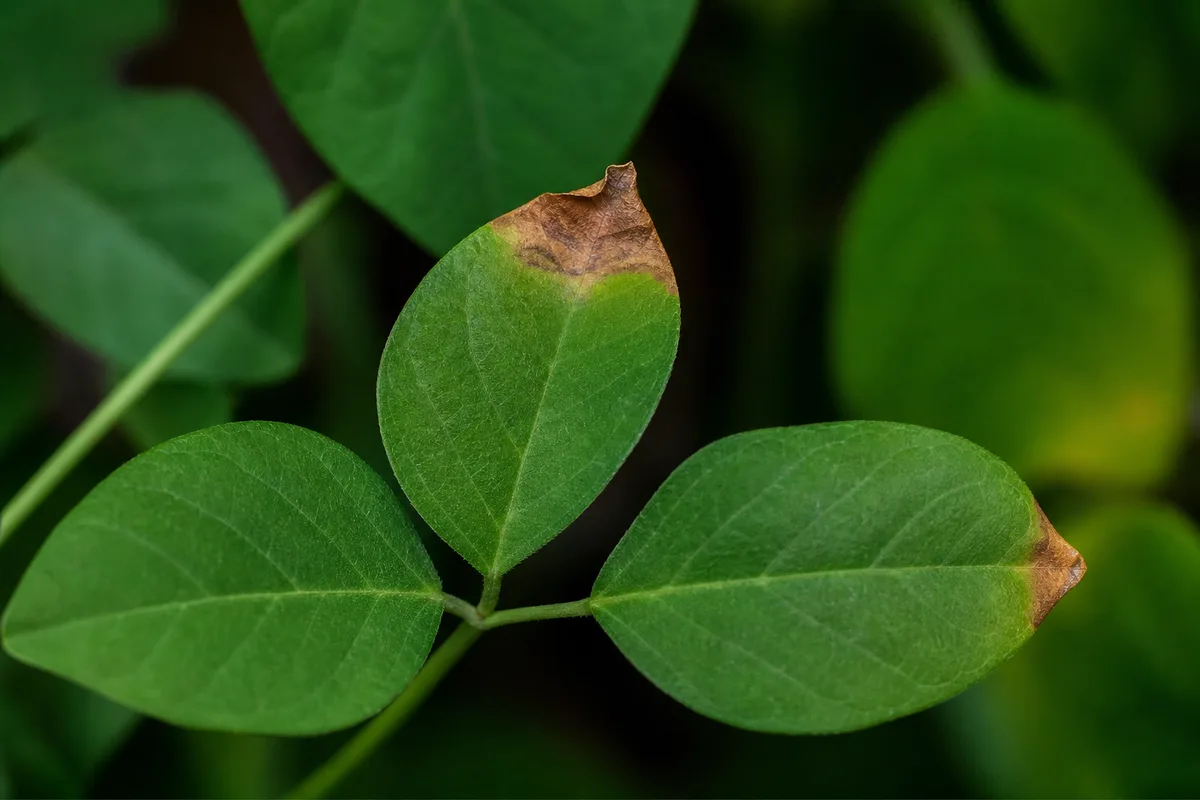
Brown Tips symptoms on Aparajita - compare with healthy tissue on the same plant.
Early tip-burn patterns
- Sharp brown lines at the very tip of one or more leaflets, sometimes advancing slowly inward over weeks
- Symmetric tip crisping on exposed leaflets when forced-air heat runs - no soft wet lesions
- White or chalky crust on the pot rim or soil surface with tip burn on both old and relatively new leaflets
- Bleached or tan patches on leaflets that faced harsh sun after a sudden outdoor move - not tip-only damage
- Fine pale dots across the leaflet with webbing on undersides - mite stippling, not isolated crispy points alone
Established damage
- Tips brown on most compound leaves on the vine, with newer growth emerging already edged in tan
- Margins stay crisp even after careful watering - water quality or salts may dominate
- One-sided tan patches on leaflets in the path of a heat vent, radiator, or hot afternoon window glass
Normal aging - not brown tips
One or two oldest compound leaves losing tip color over months while new growth stays perfect is normal senescence on a fast-growing legume - no care change needed. Brown-tip failure adds dry necrosis at leaflet apices on multiple leaves after a care shift, or on newest compound growth while the environment is still wrong.
Why Aparajita gets brown tips
Clitoria ternatea is a tropical twining legume with fine-textured compound foliage that transpires heavily in the full sun the species prefers. Individual leaflet tips sit at the end of the water pathway; any stress that limits root uptake, desiccates air, or concentrates salts shows there first.
Low humidity in heated indoor rooms
Butterfly pea is native to tropical Asia and Africa and thrives in moist air. Indoors, winter heating drops humidity to 20–35% near windows and vents. The Aparajita overview recommends 50 percent humidity or higher to prevent spider mites and leaf stress - tip burn often appears before mite outbreaks. See the dedicated low-humidity guide when margins crisp while soil stays cool-damp.
Inconsistent watering and underwatering
Established butterfly pea is drought tolerant once established but container vines dry quickly in warm rooms under grow lights. Long dry spells followed by heavy soaking stress feeder roots. Damaged roots cannot hydrate leaflet margins reliably, so tips crisp even when you eventually water. Overwatering causes different symptoms - yellowing lower leaflets and limp tissue with wet soil - but chronic wet-dry swings produce repeated tip necrosis on otherwise green leaflets.
Salt and fertilizer buildup
As a nitrogen-fixing legume, Aparajita fixes atmospheric nitrogen through rhizobium nodules and needs less supplemental nitrogen than heavy foliage feeders. Many growers still apply balanced liquid feed on a houseplant schedule. Excess fertilizer and minerals from tap water accumulate in potting mix. Fertilizers are salts; excess buildup often shows at leaf tips and margins - especially in small pots that are not flushed regularly.
Sudden direct sun exposure
Butterfly pea wants full sun when acclimated - but vines grown indoors under filtered light scorch when moved abruptly into harsh midday sun. The Missouri Botanical Garden notes the plant appreciates light afternoon shade in hot climates. Tender compound leaves cannot adjust in one day; leaflet tissue bleaches or browns at tips and margins on the exposed side.
Spider mites in dry air
Low humidity that causes tip burn also favors spider mites that thrive in dry, warm indoor conditions. NC State lists butterfly pea as susceptible to spider mites. Mites pierce leaflet cells, causing stippling that can progress to tip and edge browning. This lookalike worsens despite raising humidity slightly if mites are already established - see spider mites on Aparajita.
Drafts and heat vents
Hot dry air from radiators or HVAC vents directed at foliage accelerates tip desiccation on the leaflets in the airflow path. Cold winter drafts near glass compound the stress by chilling roots while leaves transpire in dry heat above.
Diagnostic table: humidity vs. salts vs. underwatering vs. sun vs. mites vs. drafts
| What you observe | Soil / pot check | Other signs | Likely cause | First direction |
|---|---|---|---|---|
| Crisp tips on many leaflets; moist soil; RH below 40% at canopy | Cool-damp at 3 cm; moderate pot weight | Winter heat running; no stippling | Low humidity | Humidifier toward 50–60% RH |
| Sharp brown tips + white crust on soil rim | Often moist; moderate weight | Recent heavy feeding | Salt / fertilizer buildup | Flush salts; pause feed |
| Crispy tips + thin limp leaflets; pot very light | Dry throughout at 3 cm | Whole vine less rigid | Underwatering | Deep soak + reset check rhythm |
| Tan patch on one side only | Variable | Near vent, radiator, or hot glass | Heat draft / localized scorch | Relocate off vent |
| Bleached patch + brown edge after sudden sunny move | Variable | Window- or sun-facing side only | Sun scorch | Filter light; acclimate per light guide |
| Fine stippling + webbing on undersides | Variable | Dry room; mites on tap test | Spider mites | Rinse + treat; keep humidity up |
| Tips on 1–2 oldest compound leaves only | Normal | Vigorous new growth elsewhere | Normal aging | No fix needed |
How to confirm the cause
Work through these checks in order - stop when one pattern clearly fits:
- Humidity at canopy height - Sustained readings below ~40% RH near leaves support dry-air crisping when mix is not dry throughout. Above 50% with only old-leaflet tips brown suggests aging or past stress, not active humidity failure.
- Soil moisture at 3 cm depth and pot weight - Dry mix throughout and a light pot confirm underwatering. Cool-damp mix with crisp margins shifts suspicion to humidity, salts, or water quality - not thirst.
- Salt crust on rim and soil surface - White or chalky deposits with tip burn on new and old leaflets support fertilizer or mineral injury. Flush before adding more feed.
- Light and placement history - Recent move to full outdoor sun or hot window without gradual acclimation supports scorch. Gradual winter tip browning without a light change supports humidity or salts.
- Leaflet undersides - Yellow speckles, bronzing, fine webbing, or moving specks on white paper confirm spider mites. Tips alone without dots suggest humidity or salts instead.
- Which leaflets are affected - Oldest compound leaves only, tips alone, rest green = often humidity or past underwatering. New growth emerging with tip necrosis = active ongoing stress (salts, air, or mites).
- Pot size and feed history - Root-bound plants in small pots dry in hours and accumulate salts faster - both drive tip burn on fast-growing summer vines. Heavy nitrogen on a legume that fixes its own nitrogen salts tips quickly in containers.
If soil cycles correctly per the watering guide, RH stays adequate, salts are flushed when crust appears, and the next compound leaf emerges with a clean tip, the acute tip-burn phase has passed.
First fix for Aparajita (by confirmed cause)
Apply one primary fix based on what you confirmed - not all fixes at once.
If RH below ~40% at canopy with cool-damp soil
Run a humidifier toward 50–60% RH within a few feet of the plant and move the pot off radiator ledges. Group with other pots if needed. Full ladder in our low-humidity guide. Do not mist foliage as your only step - evaporating droplets do not sustain 50% RH and can encourage mildew on dense compound leaves; the overview recommends base watering for this species.
If soil is dry throughout and the pot is light
Give one thorough soak until excess runs from drainage holes, drain fully, then reset checks at 3 cm depth per the watering guide. Match rhythm to season and pot size - fast-growing summer vines in small containers may need water every two to four days indoors under grow lights.
If white crust, sharp tip lines, and moist soil dominate
Flush the pot once with plain water equal to two to three times the pot volume, empty the saucer, and skip fertilizer until new compound leaves emerge without fresh tip damage for two to three weeks. Resume at half label strength only when growth is firm.
If one-sided damage tracks a vent or hot window
Relocate at least 60–90 cm (2–3 feet) from forced-air blasts while keeping bright exposure. If moving to much harsher sun, acclimate over 7–14 days per the light guide.
If stippling, webbing, or moving specks on undersides
Rinse leaflet undersides thoroughly and isolate the plant before any oil spray - especially if you harvest flowers for tea. Escalate to the spider mites guide while keeping humidity up.
How to trim brown leaflet tips without damaging green tissue
Trimming is cosmetic - it does not heal the underlying stress. Wait until the cause is corrected and stable for one to two weeks.
Use clean scissors. Follow the natural curve of each elliptic leaflet and remove only fully dead crispy tissue. Leave a thin brown margin (about 1–2 mm) rather than cutting into healthy green - cuts through living tissue often develop a new brown line. Remove individual damaged leaflets or tip edges rather than entire compound leaves when only tips are cosmetic.
Step-by-step recovery
After the matched first fix:
- Inspect leaflet undersides weekly with a hand lens while air is dry. If mites are present, rinse thoroughly before any pesticide - butterfly pea flowers are edible and cyclotide compounds make the species somewhat pest-resistant outdoors, but indoor dry air still favors mites.
- Trim cosmetic brown tips along the natural leaflet curve if desired.
- Relocate away from heat vents and cold window drafts while keeping bright indirect to morning direct light indoors.
- Harden off gradually if moving outdoors: start with one hour of morning sun, increase over ten days.
- Flush salts monthly during active growth if you fertilize - run plain water through until it drains freely.
- Repot in spring only if root-bound and tips persist despite humidity and flushing - use well-draining mix with drainage holes per the repotting guide.
- Reduce fertilizer strength to half label rate; excess nitrogen in small pots salts tips quickly even on nitrogen-fixing legumes.
Do not stack repotting, heavy pruning, and pesticide on the same day on a stressed vine.
Recovery timeline
Tip-burn corrections show in new growth, not old leaflets.
- Humidity - New tip necrosis often stops within one to two weeks of stable 50–55% RH; full cosmetic recovery across the vine may take one to two growing seasons as older compound leaves age out.
- Underwatering - Turgor often returns within hours to a day after a thorough soak; clean tips on the next compound leaf if checks stay consistent.
- Salt flush - Sharp lines stop advancing on existing leaflets within two to four weeks; visibly cleaner tips on the next emerging compound leaf may take three to five weeks.
- Sun scorch relocation - New leaflets avoid repeat scorch within two to three weeks if light is adjusted; old bleached patches remain permanent.
- Mite recovery - Two to three weeks with repeated rinsing or approved miticides while humidity stays up.
Brown tissue already dead will not turn green again. Success means firm stems, stable soil rhythm, and clean pointed tips on the newest compound leaves.
What not to do
Do not overwater because tips look dry when soil is already moist - butterfly pea cannot survive wet feet for long and soggy mix worsens root function without fixing mineral or humidity burn.
Do not fertilize stressed plants to force green tips - salts worsen margin burn on container legumes.
Do not mist foliage as the only humidity fix in a dry room - brief wetting evaporates in minutes; use a humidifier per the low-humidity guide.
Do not move an indoor vine into blazing afternoon sun to “harden” tips - acclimate gradually per the light guide.
Do not apply full-strength pesticide or oil sprays on vines you harvest for blue tea without reading label intervals and rinsing flowers - treat pests mechanically first when possible.
Do not stack repotting, flushing, humidifier setup, and pruning on the same day unless root failure is confirmed.
How to prevent brown tips next time
Run a humidifier from the first heating-season cold snap when Aparajita sits in bright light - transpiration and dry air stack fast on compound tropical foliage.
Water on a consistent dry-down schedule for your pot size per the watering guide - fast-growing summer vines in small containers may need water every two to four days indoors under grow lights.
Flush salts monthly if feeding during active growth. Use balanced or bloom-weight feed at half strength rather than heavy nitrogen on a legume that fixes its own nitrogen in the ground.
Harden off before seasonal outdoor moves. Keep pots away from radiator and vent blasts while maintaining bright light from a south or west window or supplemental grow lamp.
Inspect leaflet undersides weekly in dry rooms to catch spider mites before stippling mimics tip burn.
When to worry
Treat as urgent when:
- Browning spreads from tips down most of each leaflet on new compound leaves despite corrected humidity - inspect for root rot if soil stays wet and stems soften
- Heavy mite webbing covers most leaflets - treat before the vine defoliates; see spider mites
- Brown spreads with limp wilt and persistently wet soil - opposite of drought; pull back on water and inspect roots
Lower urgency when a few margin tips appear after winter heat kicks on and the next compound leaf emerges with a clean tip once humidity or watering is corrected. Cosmetic tips on oldest leaflets on an otherwise vigorous blooming vine are low urgency.
Aparajita care cross-check
| Factor | Tip-burn risk when wrong |
|---|---|
| Humidity | Winter RH below ~40% at canopy |
| Watering | Chronic drought or compensatory overwatering |
| Feeding | Salt buildup from heavy fertilizer in small pots |
| Light / heat | Scorch + dry vent air on window-facing leaflets |
| Pests | Mite stippling in the same dry rooms that crisp tips |
Cross-link your routine: overview hub for placement and 50%+ humidity target; watering for wet-dry cycles; low-humidity when air is dry with damp soil; light for scorch and acclimation.
Conclusion
Brown tips on butterfly pea are a diagnosis problem, not a mystery disease. Compound Clitoria leaves telegraph dry air, uneven watering, salts, sun scorch, and mite stress at individual leaflet apices first. Check humidity at the canopy, soil at 3 cm depth, and the pot rim for white crust, then apply one matched fix. Old brown leaflet tips stay brown - clean new compound growth tells you the correction worked.
Related Aparajita problems
- Low humidity - crisp leaflet margins when soil stays moist in dry winter air
- Underwatering - light pot and limp leaflets when mix is bone dry throughout
- Spider mites - stippling and webbing on leaflet undersides in dry heated rooms
- Overwatering - yellow lower leaflets and soft stems when wet soil persists
- Yellow leaves - lower-leaf yellowing that sometimes overlaps with moisture stress
- Aparajita overview - Clitoria ternatea biology, 50%+ humidity target, and baseline care
When to use this page vs other Aparajita guides
- Aparajita watering guide - Use for routine moisture checks before assuming brown tips is the main issue.
- Aparajita problems hub - Browse all 16 common issues on this species.
- Low Humidity on Aparajita - Different entry point when symptoms overlap with brown tips.
- Underwatering on Aparajita - Different entry point when symptoms overlap with brown tips.
- Overwatering on Aparajita - Different entry point when symptoms overlap with brown tips.