Aparajita Repotting: When, How, and Mistakes to Avoid
Aparajita Repotting: When, How, and Mistakes to Avoid
Aparajita Repotting: When, How, and Mistakes to Avoid
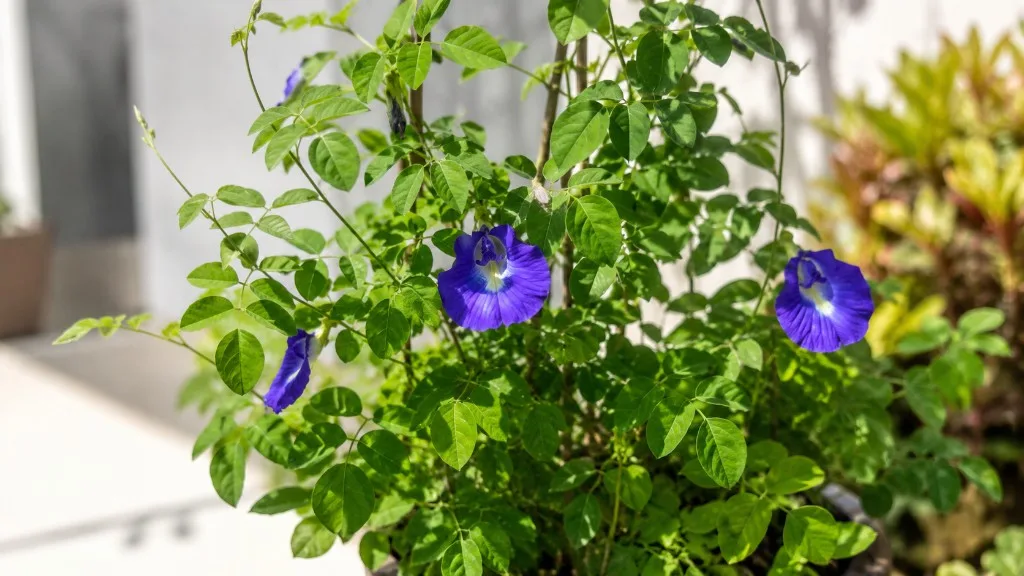
Aparajita (Clitoria ternatea), the vine behind butterfly pea tea and those impossible blue flowers, is forgiving about many things - light swings, heat, even a missed watering - but it is less forgiving about a cramped, exhausted root zone. In a pot, the same fast-growing twining habit that makes Aparajita a star on a balcony trellis also means roots can circle, compact, and outpace the soil faster than you expect. Repotting is how you reset that relationship: fresh mix, sensible pot size, room to climb, and a root system you have actually looked at instead of guessed about.
This guide is built for container growers, whether you keep Aparajita outdoors year-round in a warm climate or move pots indoors before frost. You will learn when repotting is routine maintenance versus an emergency, how to size the next pot without triggering root rot on Aparajita, what to do with the nitrogen-fixing nodules on legume roots, and how to get the plant back to blooming with minimal transplant shock.
Why Repotting Matters for Clitoria ternatea
In the ground, Clitoria ternatea behaves like the tropical perennial it is: roots spread, rhizobium bacteria colonize nodules on the root system, and the vine fixes atmospheric nitrogen while pushing 10 to 15 feet of twining growth when supported. In a container, that same biology runs on a smaller budget. Potting mix breaks down over 12 to 24 months, air spaces collapse, salts from fertilizer accumulate, and the root ball begins circling the pot wall. The plant may still look green while the soil system underneath is failing.
Repotting solves three separate problems at once. First, it refreshes the growing medium so water moves through predictably instead of channeling down the sides of a root ball while the center stays dry or soggy. Second, it gives roots physical space when the plant has genuinely outgrown its container. Third, it gives you a inspection window - the only time you can see whether roots are white and firm, whether nodules are healthy, or whether rot has started before leaves tell the full story. The North Carolina Extension Gardener Plant Toolbox notes that butterfly pea prefers well-drained, fertile soil with good drainage and Aparajita light guide; repotting is how you restore those conditions when the mix no longer delivers them. (NC State Extension)
How Container Life Changes the Root Zone
Container Aparajita lives in a different rhythm than in-ground plants. Pots heat and cool faster, dry faster in sun, and stay wet longer in shade or cool weather. A 12- to 16-inch diameter container - the size range most sources recommend for a mature butterfly pea vine - holds only a fraction of the root volume the plant would claim in a garden bed. That is fine for bloom and tea production on a balcony, but it means annual or biennial repotting is normal, not a sign you failed.
Because Aparajita is a legume, its roots form symbiotic nodules with rhizobium bacteria that fix nitrogen. That is an advantage in poor soil but it also means the root system is doing more than just absorbing water. Disturb it carelessly during repotting and you slow recovery. Handle it intelligently - tease circling roots, keep many nodules intact, refresh mix without bare-rooting - and the plant often rebounds with strong new shoots within weeks.
Signs Aparajita Needs Repotting
Not every tired-looking vine needs a bigger pot. Some need the same pot with fresh mix. Others need upsizing. A few need immediate intervention because roots are rotting. The signs below help you sort which case you are in before you grab the trowel.
Root-Bound and Drainage Signals
The clearest repotting signal is roots escaping the drainage holes or circling tightly against the inside wall of the pot when you slide the plant out. If you see a solid mat of roots with almost no visible mix, the plant is root-bound. Water behavior changes tell the same story: when soil dries out in a day or two after a thorough watering even in moderate weather, the root mass has likely consumed most of the usable mix. Conversely, if water runs straight through and out the bottom within seconds while the top still looks wet, you may have a hydrophobic, degraded root ball - another reason to refresh.
Lift the pot occasionally and look at the bottom. White or tan roots peeking through holes are normal on a fast grower. A dense beard of roots matted against the hole openings means the next active growth window is a good time to repot. If the pot feels disproportionately light right after watering, the mix may have broken down into fine particles that no longer hold moisture well. That is a refresh scenario even when the pot size is still appropriate.
Growth and Blooming Clues
Aparajita that stalls in midsummer despite strong light, consistent moisture, and prior good bloom often has a root-zone problem rather than a mysterious “bad year.” Slowed new vine tips, smaller leaves on new growth, and fewer flowers per flush are common when roots are cramped or the mix is exhausted. Yellowing lower leaves combined with wet soil can indicate root stress from poor drainage in old, compacted mix - sometimes the prelude to rot.
Top-heaviness is another clue. Butterfly pea twines upward and can look lush on a trellis while the root ball is tiny relative to the vine mass above. If the plant wobbles in its pot or the trellis pulls the whole container over in a breeze, check whether the root system still anchors the plant properly. UF/IFAS Gardening Solutions notes that butterfly pea is a rapidly growing vine that can reach up to 15 feet and benefits from trellis support at planting.
Best Time of Year to Repot Aparajita
Timing matters because repotting interrupts root function at the same moment you want the plant to push new growth. Aparajita repotting goes best when warmth and daylight are rising, not when the plant is winding down for cool weather or sitting in a dim indoor corner.
Spring and Early Summer Windows
Early spring through early summer is the safest window in most climates. Soil temperatures are climbing, days are lengthening, and the vine is entering its most active growth phase. In India and other tropical regions where Aparajita is a familiar garden plant, repotting in late February through April - before peak summer heat but after the coolest nights - aligns well with the plant’s natural push. If you grow outdoors in USDA zones 10 to 12, where the vine is perennial, the same spring window applies.
For temperate growers who overwinter pots indoors, repot after you move the plant back outside and it has had a week to acclimate, not on the first warm day when nights may still dip cold. Root regeneration slows below about 60°F (16°C). Repotting into fresh mix and then exposing the plant to cold nights stacks stress you can avoid with a little patience.
When Winter Repotting Is Justified
Avoid routine winter repotting. Aparajita in a cool, low-light indoor spot will not root into new mix quickly, and excess moisture around disturbed roots lingers longer in cold conditions. Emergency exceptions exist: severe root rot discovered during inspection, a pot that has cracked, or a plant so root-bound that soil will not hold moisture at all. In those cases, repot into slightly better-draining mix, trim clearly mushy roots, skip fertilizer, and keep the plant warm and bright. Recovery will be slower than a spring repot, but leaving rot in place is worse.
Choosing the Right Pot Size and Material
Pot choice is where many repotting jobs succeed or fail silently. Aparajita wants room, but not a swimming pool.
The One-Size-Up Rule
Move up 2 to 3 inches (5 to 8 cm) in pot diameter - roughly one container size - not jump from a 6-inch starter pot to a 14-inch finale pot. Oversized pots hold water the small root system cannot use, especially in the weeks right after repotting when roots have not yet explored the new mix. That idle wet zone is where root rot starts on butterfly pea, which likes moisture but not standing water around its roots.
For a first serious container after seedlings, many growers use a pot 12 to 14 inches in diameter and at least 6 to 8 inches deep, with a trellis inserted at planting time. The Missouri Botanical Garden notes that butterfly pea grows in well-drained soil with full sun and can reach 10 to 15 feet with support. When upsizing from there, a 14-inch to 16-inch pot is often enough for several seasons of balcony bloom.
If the plant is healthy but the mix is stale and the root ball still fits comfortably with an inch of space around the sides, repot into the same cleaned pot with fresh mix. That is one of the most underused techniques in vine care and it avoids the overpotting trap entirely.
Terracotta, Plastic, and Fabric Compared
Terracotta breathes, dries evenly, and reduces the risk of waterlogging - a strong choice for Aparajita in humid climates or for growers who tend to water generously. Plastic holds moisture longer, which helps in hot, dry balconies but requires more discipline in monsoon season or shaded porches. Fabric grow bags offer excellent aeration and are easy to store off-season in cold climates, though they dry quickly and may need more frequent watering in peak summer.
Whatever material you choose, drainage holes are non-negotiable. Decorative outer pots without holes are fine only as cachepots if the inner nursery pot drains freely and you never let standing water accumulate at the bottom. A layer of stones in the base does not fix poor drainage in the mix itself; it mostly reduces usable soil volume.
Soil Mix for Repotting Butterfly Pea
Aparajita tolerates a range of textures - clay, loam, sand - but insists on good drainage and moderate fertility. The Missouri Botanical Garden and NC State both describe it as adaptable yet intolerant of waterlogged conditions. (Missouri Botanical Garden)
A reliable repotting blend:
- 60% quality potting mix or loamy garden soil
- 20% compost or well-rotted manure for organic matter and slow nutrients
- 20% coarse sand, perlite, or fine bark for aeration
A reliable repotting blend targets pH 6.0 to 7.5, which matches the slightly acidic to neutral range butterfly pea prefers. Because the plant fixes nitrogen, you do not need a high-nitrogen mix at repotting time. Excess nitrogen after repotting pushes leaves at the expense of flowers. If you are repotting after suspected rot, increase the perlite or sand fraction slightly so the refreshed mix dries faster while roots heal.
Do not reuse old mix from another plant without sterilizing it, and do not repot into dense, peat-heavy commercial blends straight from the bag without adding drainage material - they often stay too wet for a disturbed legume root system in a large pot.
Tools and Materials Checklist
Gather everything before you unpot. Aparajita stems are soft and twining; the longer the root ball sits exposed, the more moisture it loses.
You will need:
- A new pot or cleaned existing pot with drainage holes, sized appropriately
- Fresh mix prepared and slightly moistened - damp enough to hold together when squeezed, not dripping
- A hand trowel or hori-hori knife
- Clean pruning shears or scissors
- A chopstick or pencil for settling mix around roots
- Gloves if you prefer; optional dust mask when handling dry mix
- A bucket or tarp for old mix disposal
- A trellis stake or obelisk if the current support cannot move with the plant
- Clean water for the first post-repot drink
If you are repotting a large vine on a balcony trellis, plan how to lay the plant down without snapping stems. Loosen ties first, or repot with a helper so the trellis can tilt gently while you work on the root ball.
Step-by-Step Aparajita Repotting Guide
Work on a mild day when the plant is neither drought-stressed nor soggy. Water lightly the day before so the root ball holds together but is not saturated.
Preparing the Plant and Workspace
Clear a stable surface at pot height if possible. If the vine is tied to a trellis, untie the softest stems or rotate the pot so you can slide the plant out without yanking. Turn the pot on its side, support the base of the stems with one hand, and tap or squeeze the pot to loosen the root ball. Slide the plant out slowly. If it resists, run a knife around the inside edge - a sign the plant was overdue.
Place the removed plant in shade for the few minutes you need to inspect roots. Direct sun on exposed roots dries fine root hairs quickly on a warm afternoon.
Inspecting and Trimming the Root Ball
Look for white, firm roots - healthy. Brown, mushy, or foul-smelling roots - remove them back to solid tissue with clean shears. If more than a third of the root mass is mushy, treat this as an emergency repot: trim aggressively, upsize only slightly or stay in the same pot, and use a more porous mix.
For a moderately root-bound plant, tease circling outer roots with your fingers or the chopstick. You are loosening the spiral, not shredding the entire ball. Remove the bottom inch of matted roots if they form a solid pancake - that encourages new downward growth. Leave the central root mass largely intact.
You may see small, round pinkish or tan nodules on Aparajita roots - rhizobium colonies doing nitrogen-fixation work. Those are rhizobium colonies doing nitrogen-fixation work. Do not strip them off thinking they are pests or gall damage. Avoid bare-rooting the plant and washing every particle of old soil away unless you are treating severe rot and must inspect every root. Keeping some original mix around the nodules helps the symbiosis restart quickly in the new container.
Place a layer of fresh mix in the bottom of the new pot so the top of the root ball will sit about 1 inch below the rim - the same depth the plant grew before. Set the plant centered, fill around the sides with mix, and use the chopstick to eliminate large air pockets without compacting the mix into concrete. Firm the surface lightly with your palms. Do not bury stems deeper than they were; butterfly pea crowns and lower nodes rot easily if buried.
Install or reattach the trellis before the plant gets floppy. Water slowly until you see runoff, then discard any water collected in saucers or cachepots after 15 minutes.
Support and Trellis Adjustments After Repotting
Repotting is the right moment to fix support problems you have been tolerating. Aparajita climbs by twining, not by adhesive pads, so it needs thin vertical structures - bamboo stakes, wire obelisks, jute twine on a frame - with bars roughly half an inch to 1.5 inches wide. Tomato cages are often too coarse for young stems to grip.
If you upsized the pot, check whether the trellis is still proportional. A top-heavy vine on a narrow obelisk in a wider base can still tip the pot. Consider a heavier ceramic or terracotta pot, a wider saucer as ballast, or tying the trellis to a railing. After repotting, avoid aggressive pruning the same day unless you removed rotted roots and need to reduce top weight. Wait until new growth shows the plant is re-establishing, then pinch tips to encourage branching as you normally would.
Aftercare, Recovery, and Common Mistakes
The first two weeks after repotting define success. Place Aparajita in bright indirect light or gentle morning sun, not full midday sun on a freshly disturbed root system. Keep temperatures above 65°F (18°C) if possible. Water when the top inch of mix feels dry - lighter and more frequent checks beat a rigid calendar. Do not fertilize for at least four weeks; fresh compost in the mix and stored reserves in the plant are enough while new root tips form.
Mild wilting or paused growth for 7 to 14 days is normal transplant shock. New vine tips and fresh flower buds are the clearest recovery signals, usually appearing within two to four weeks in warm conditions. Full root establishment often takes four to six weeks. Old damaged leaves will not green up again; judge success by new growth.
Common mistakes to avoid:
- Jumping to an oversized pot - leads to wet idle soil and rot. Fix: stay one size up or refresh in the same pot.
- Bare-rooting and washing all soil away - destroys fine roots and rhizobium nodules. Fix: tease outer roots only.
- Fertilizing immediately - burns tender new root tips in fresh mix. Fix: wait four weeks minimum.
- Repotting during peak bloom on a stressed plant - drops flowers and sets recovery back. Fix: wait until after the flush unless emergency.
- Heavy watering before roots explore new mix - keeps the center soggy. Fix: water to runoff once, then let the top inch guide the next drink.
- Skipping drainage holes or leaving standing saucer water - especially fatal after root disturbance.
If you repotted because of rot, reduce watering further and improve airflow. If leaves yellow but roots were healthy at repot, suspect too much sun too soon or cold nights before blaming the mix.
Pet note: Clitoria ternatea is widely used as an edible flower in human foods, but seeds and roots contain alkaloids that may cause gastrointestinal upset in pets if ingested. Repotting exposes disturbed soil and root fragments; keep pets away from the work area and discard old mix where curious dogs or cats cannot reach it.
Conclusion
Aparajita repotting is not a calendar ritual you perform every spring regardless of need. It is a root-zone reset - refresh exhausted mix, upsize only when the plant has earned it, inspect for rot before leaves scream, and match pot material to your watering habits. The butterfly pea rewards this attention with faster rebound growth, steadier bloom flushes, and fewer mysterious midseason stalls.
Start with the one-size-up rule, a well-draining legume-friendly mix, spring timing when you can, and gentle aftercare without early fertilizer. When roots tell you the plant is cramped, listen. When the mix still has structure and the root ball fits, refresh in place instead of chasing a bigger pot. Get those decisions right and Clitoria ternatea stays the low-drama, high-impact vine it is meant to be - vivid blue flowers, twining green growth, and a container that supports the plant instead of slowly suffocating it.
When to use this page vs other Aparajita guides
- Aparajita overview - Start here for whole-plant context before deep-diving this topic.
- Aparajita problems hub - Jump to symptom-specific fix guides when this care topic does not resolve the issue.
- Root Rot on Aparajita - Escalate here when repotting adjustments are not enough.