Underwatering on Anthurium: Causes, Checks & Fixes
Quick answer
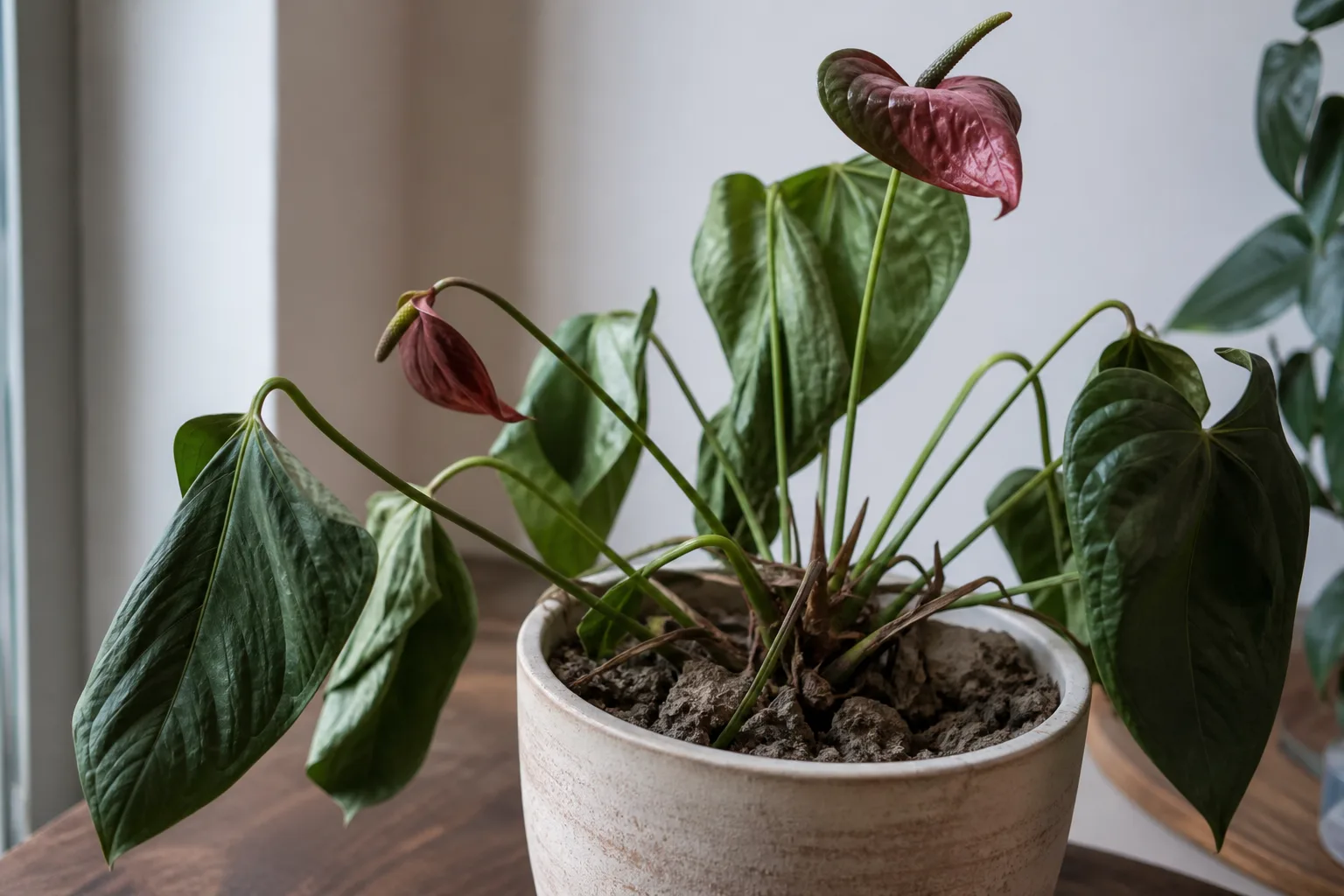
Fading spathes and limp heart-shaped leaves on a light, dusty pot usually mean the root ball dried out-not that you should water less. Push a skewer one-third into the mix; if it is dry throughout, give one thorough soak until water drains freely.
Underwatering on Anthurium: Causes, Checks & Fixes
This guide covers underwatering on Anthurium. See also the general Underwatering guide, watering, and light pages for this plant.
Underwatering on Anthurium: Causes, Checks & Fixes
Quick answer
Check the spathe and the pot weight before you reach for the watering can. On Anthurium (Anthurium andraeanum, flamingo flower), drought stress often shows on waxy inflorescences first-spathes fade or crisp at the margins while heart-shaped leaves still look mostly green. This epiphytic evergreen tropical perennial evolved for brief wet-to-dry cycles in leaf litter, not for weeks of bone-dry bark mix indoors.
First step: probe soil moisture at depth, then soak thoroughly once. Push a finger or wooden skewer one-third into the pot. If the mix is dry throughout and the container feels light, give one deep drink until water runs from drainage holes. Do not stack Anthurium repotting guide, fertilizer, or heavy misting until you confirm the plant is actually dry-not wilting from rotting roots in wet soil. For chronic rhythm fixes after recovery, see the Anthurium watering guide.
Symptom verification checklist (before you act)
| What you should see | Points to underwatering | Points away from it |
|---|---|---|
| Pot weight | Light; lifts easily one-handed | Heavy and cool days after watering |
| Soil at one-third depth | Dry skewer or dusty mix throughout | Damp wood; cool mix at depth |
| Leaf pattern | Limp blades with crisp brown edges | Yellow lower leaves on wet mix |
| Spathe signal | Early fade or brown margins on multiple blooms | Single old spathe aging after months |
| Crown at soil line | Firm; no sour smell | Soft, darkening tissue-see root rot |
What underwatering looks on Anthurium
Anthurium signals drought differently from succulents. Because it is an epiphytic aroid with fleshy roots adapted to open, moisture-retentive but sharply draining compost, it wilts quickly when the mix goes too dry but also shows slower damage on leaf margins and flowers.
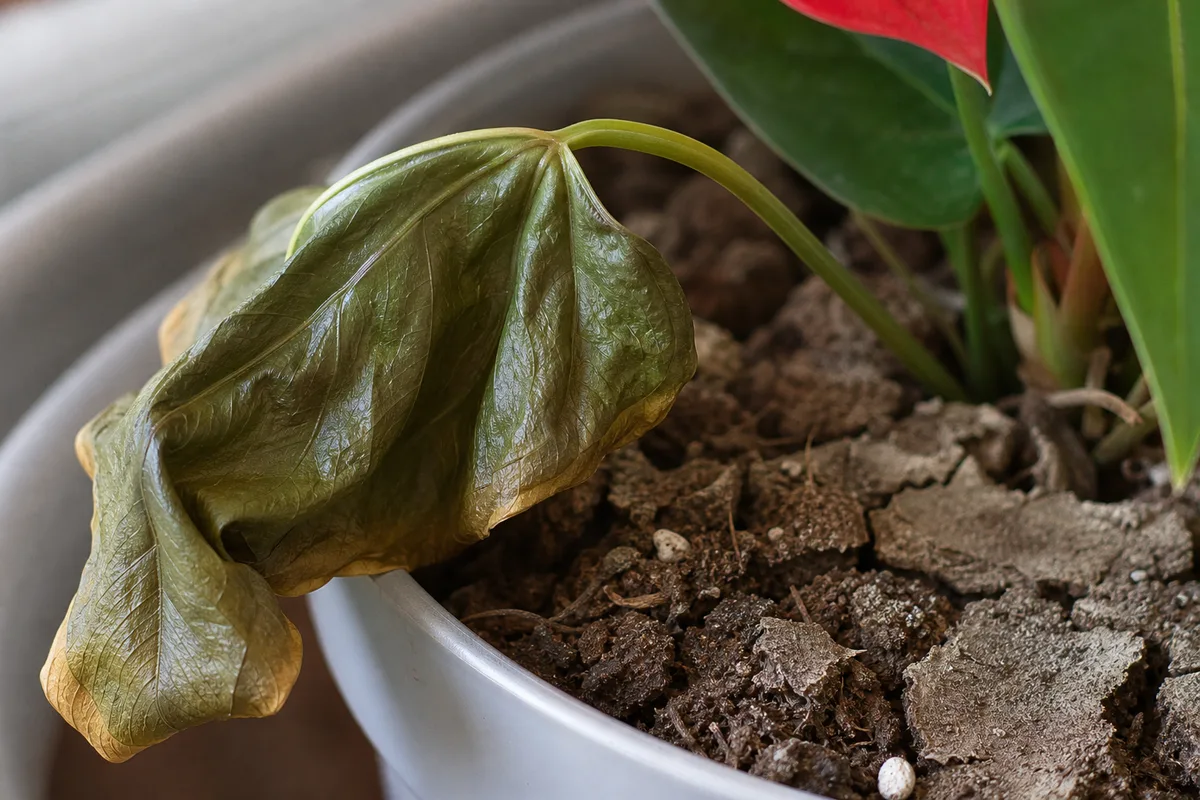
Underwatering symptoms on Anthurium - compare with healthy tissue on the same plant.
Typical signs include:
- Limp, drooping leaves on long petioles-the plant reduces turgor to limit water loss
- Dry brown edges and tips on heart-shaped foliage, sometimes with a papery feel
- Prematurely faded or browning spathes (the waxy “flowers”) while leaves still look mostly green
- Lightweight pot and mix that has shrunk away from the pot wall
- Slow or stalled new leaves during what should be active growth season
- Older lower leaves yellowing and dropping after repeated dry cycles
UF/IFAS lists tip burn, root damage, and reduced growth as symptoms of not enough water on Anthurium-the same stress pattern many home growers see as crispy margins before they connect it to irrigation.
Compare with healthy stress signals: a single old leaf yellowing at the base is normal. Underwatering is a pattern-multiple leaves drooping together, dry mix deep in the pot, and a pot that stays light for many days after you thought you watered. Sudden whole-plant collapse may also appear on wilting when the pot is light; this page focuses on chronic thirst and rehydration depth.
Why Anthurium gets underwatered
Anthurium sits in a narrow band between “too wet” and “too dry.” UF/IFAS recommends allowing the medium to dry slightly between interior waterings, then watering thoroughly-not letting the entire root ball desiccate. That nuance gets lost when owners treat it like a drought-tolerant succulent or skip weeks of watering in winter.
Common Anthurium-specific triggers:
- Fear of overwatering after reading about root rot - skipping drinks until the whole pot is bone-dry; see overwatering on Anthurium for the wet-soil opposite
- Chunky aroid mix in bright light - bark and perlite drain fast; a plant near a sunny window or heating vent can dry in two to three days while your calendar says “weekly”
- Root-bound pots - when roots circle the base, the small soil volume dries rapidly between waterings
- Hydrophobic dry mix - old peat or bark repels water; surface looks briefly damp while the center stays dry
- Winter schedule mismatch - lower light slows growth, but indoor heating dries air and soil faster than many owners expect; foliage may scorch in dry or drafty locations
- Light top-watering on dry soil - a quick pour runs through channels without wetting the root ball
RHS guidance for anthuriums notes they are epiphytic with fleshy roots that need open, moisture-retentive but sharply draining compost-mixes that dry unevenly punish this species when watering is infrequent or shallow.
Field observation: when weekly watering still fails
In a 6-inch nursery pot on a south-facing sill, bark-heavy aroid mix can go dust-dry in 72 hours even with a once-a-week calendar-especially above a radiator. The owner sees a briefly damp surface crust, assumes the plant was watered, and the spathe fades before lower leaves crisp. Pot weight and depth moisture beat the calendar every time on flamingo flower.
How to confirm the cause
Work through these checks before changing anything else:
- Pot weight - Lift the pot. Light and dry confirms drought; heavy and cool suggests overwatering or poor drainage.
- Moisture at depth - Do not trust the surface crust. Insert a finger, skewer, or moisture meter one-third to halfway into the pot. If the pot is light, it needs water-but also confirm roots are not rotting in wet soil below a dry top layer.
- Leaf and stem feel - Underwatered leaves droop but feel thin and dry, not soft and translucent. Soft mushy tissue at the soil line points to rot, not drought.
- Spathe condition - Browning spathes with dry mix support underwatering; spathes fading while soil stays wet for days suggests another issue.
- Recent care context - Travel, a new “water less” rule, repotting into very chunky mix, or moving the plant to a brighter spot all increase drought risk without changing your calendar.
- Drainage check - Confirm holes are open. Underwatering and overwatering both cause wilt, but only underwatering pairs wilt with dry deep mix and firm pale roots when you unpot.
If leaves wilt while soil is wet and smells sour, stop-that is likely root rot, not underwatering. Soaking a rotting plant makes things worse.
Wet-vs-dry decision table
| What you see | Pot / soil signal | Crown firmness | Urgency | First action | Read next |
|---|---|---|---|---|---|
| Limp leaves, crisp margins | Light, dry at depth | Firm | Moderate | One thorough soak; drain fully | This page |
| Whole-plant flop, dry mix gap at wall | Dust-dry; pot very light | Firm | Moderate–urgent | Deep soak or bottom-water rescue | This page |
| Wilting, yellow lower leaves | Heavy, wet at depth | Firm | Not underwatering | Stop water; inspect roots | Overwatering |
| Wilting, sour smell | Saturated mix | Firm or softening | Urgent-same day | Unpot; trim mush | Root rot |
| Brown tips only, moist soil | Moist, not sour | Firm | Likely humidity | Humidifier; do not flood pot | Low humidity |
| Bleached centers, brown tips | Variable moisture | Firm | Excess light | Increase shade | Not enough light |
| Gradual petiole hang | Variable | Firm | Posture, not acute thirst | Pot-weight fork | Drooping leaves |
First fix for Anthurium
Check soil moisture at depth, then water thoroughly once.
Place the pot in a sink or shower. Water slowly until the entire root zone accepts moisture and excess drains freely from the bottom-usually several passes if the mix was very dry. UF/IFAS interior care directs watering thoroughly when the medium has dried slightly, not shallow splashes on a crusted surface. Let the pot drain 15–20 minutes and empty the saucer. That single deep soak is the correct first response; do not follow with daily heavy drenching.
If water runs straight through and the pot still feels light within an hour, the mix may be hydrophobic. Bottom-water by setting the pot in a tray of room-temperature water until the surface moistens (20–45 minutes), then drain completely-RHS recommends checking moisture about 5 cm below the surface before the next top watering so you know the root ball actually rewetted. Repeat once if needed.
Do not fertilize, repot, or prune heavily on day one. Rehydration comes first.
Step-by-step recovery
After the first thorough soak, support recovery in this order:
- Wait for turgor to return - Leaves often perk within hours to two days if roots are intact. No improvement after 48 hours with moist mix means inspect roots.
- Trim only dead tissue - Snip fully brown crispy leaf tips or spent spathes at the base if they are clearly dry and dead. Do not remove limp green leaves that may recover.
- Stabilize humidity - Anthuriums prefer high humidity; dry heated air pulls moisture from leaves faster after drought. A pebble tray or grouping with other plants helps; misting alone does not replace soil moisture.
- Adjust the watering rhythm - Water when the top inch of mix dries during active growth. In winter, stretch intervals but do not let the entire ball stay dust-dry for weeks-see seasonal guidance on the watering guide.
- Repot only if mix failed - If soil repels water repeatedly or roots fill the pot and dry out in one to two days, repot into fresh chunky aroid mix in a pot one size up with drainage holes-after the plant stabilizes, not while collapsed.
- Hold fertilizer - Wait until new leaves look firm and green for two weeks before resuming dilute feed. Salt on drought-stressed roots worsens tip burn.
Recovery timeline
Mild underwatering often shows visible improvement within 24–48 hours after a proper soak-leaves rise, petioles stiffen, and the pot gains weight. Judge recovery by turgid new growth rather than old damaged leaves; brown margins on existing foliage will not turn green again.
Spathe recovery is slower and partial. A browned or faded spathe will not re-wax; new inflorescences need stable moisture for weeks before they develop normally. If blooms stall after drought, cross-check no flowers only after the root ball stays evenly moist between drinks.
Repeated dry cycles over weeks may cause fine root dieback, slowing recovery to one to three weeks even after watering improves. If new leaves stay small, spathes fail to develop, or wilt returns within a day of watering, unpot and check whether enough healthy root mass remains.
Lookalike symptoms
Overwatering and root rot also cause yellow leaves and wilt-the critical split is soil moisture and root feel. Wilted leaves may indicate soil that is too dry or too wet-rotting roots cannot take up water even when mix is saturated. Overwatered Anthurium has heavy wet mix, often sour smell, and soft brown roots. Underwatered plants have dry mix throughout and firm pale roots.
Low humidity alone causes brown tips similar to drought, but the pot still weighs normal and soil moisture at depth reads adequate. Fix humidity and watering together on Anthurium; this species suffers in dry heated rooms-see low humidity.
Excess light bleaches leaf centers with brown tips on Anthurium per UF/IFAS physiological symptom tables-different from uniform drought crisping paired with a light dry pot.
Normal spathe aging - a single old spathe fading after months of display is not underwatering. Multiple spathes browning early plus dry soil fits drought stress.
Water-quality brown tips - fluoride or mineral burn can mimic drought damage on margins. If tips stay brown after the root ball stays moist for two weeks, read brown tips on Anthurium before you increase watering again.
Mistakes to avoid
- Assuming all drooping means overwatering - Anthurium wilts from both extremes; always check soil at depth first.
- Misting instead of soaking roots - Surface humidity does not rehydrate a dry root ball.
- Watering on a calendar - Bright seasons and root-bound pots need more frequent checks, not the same Tuesday schedule year-round.
- Daily drenching after one dry spell - Swinging from drought to soggy soil invites root rot on this aroid.
- Fertilizing a collapsed plant - Rehydrate first; fertilizer on dry roots causes marginal burn.
- Using ice-cold or hard tap water repeatedly - Anthurium is sensitive to fluoride and minerals; brown tips from water quality mimic drought damage and will persist after watering fixes.
How to prevent underwatering next time
Build a simple check habit tied to this plant’s needs:
- Test the top inch before every major watering; check moisture about 5 cm below the surface if the surface crust dries fast.
- Lift the pot until you learn what “ready to water” weight feels like for your container size.
- Adjust seasonally - more frequent checks in summer bright growth, less in winter but never full desiccation.
- Use chunky well-drained aroid mix with bark and perlite, sized to the root mass-not an oversized decorative pot that makes moisture hard to read.
- Keep drainage holes open and empty saucers after watering so you never confuse standing runoff with adequate root-zone moisture.
- Group or humidify in dry rooms so leaves lose less water between drinks.
Allow Anthurium to dry slightly between waterings, then water thoroughly-that rhythm prevents both chronic drought and the overcorrection that leads to rot.
When to worry
Escalate if the plant stays collapsed after two thorough soaks 48 hours apart with moist (not soggy) mix, if most roots are brown and brittle when you unpot, or if the crown softens at the soil line. Those signs suggest root loss beyond simple thirst. A plant with firm crown tissue and some healthy roots can recover from underwatering; one with advanced rot or a hollow stem may not.
Related Anthurium problems
- Anthurium overview - Semi-epiphytic biology, humidity band, and culture hub
- Watering - Top-inch-dry rhythm and seasonal intervals
- Overwatering - Wet-soil wilt paradox and cachepot traps
- Root rot - Mushy roots when wilt pairs with sour wet mix
- Wilting - Acute collapse on wet or dry soil
- Drooping leaves - Gradual petiole hang vs acute thirst
- Brown tips - Water-quality margins that persist after rehydration
- Low humidity - Crisp tips on otherwise moist soil
- No flowers - Spathe loss after root-zone stress clears
- Soil - Chunky aroid mix for recovery repot
FAQs
How can I confirm underwatering on Anthurium?
Lift the pot-it should feel noticeably lighter than after watering. Stick your finger or a skewer one-third into the mix; if it is dry throughout and leaves are limp with crisp brown margins, underwatering is likely. Wet heavy soil with yellow lower leaves points to overwatering instead.
What should I check first for underwatering on Anthurium?
Check soil moisture at depth, not just the surface crust. Note recent watering history, pot size relative to roots, and whether the plant sits in bright heat or near a heating vent where mix dries faster.
Will damaged Anthurium leaves recover from underwatering?
Brown crispy leaf edges and prematurely faded spathes will not re-green, but turgid new leaves and firm upright foliage mean the plant is recovering. Judge success by new growth, not old damaged tissue.
When is underwatering urgent on Anthurium?
Treat immediately if the entire plant is collapsed, soil has pulled away from the pot edge, and the mix is dust-dry several inches down-especially in bright warm rooms. Severe drought can kill fine roots before you notice wilt.
How do I prevent underwatering on Anthurium next time?
Water when the top inch of chunky aroid mix dries, never letting the whole root ball stay bone-dry for weeks during active growth. Adjust frequency seasonally-every 5–7 days in summer and every 10–14 days in winter for most pots-and increase checks in bright or heated spots.
When to use this page vs other Anthurium guides
- Anthurium watering guide - Use for routine moisture checks before assuming underwatering is the main issue.
- Anthurium problems hub - Browse all 20 common issues on this species.
- Wilting on Anthurium - Different entry point when symptoms overlap with underwatering.
- Brown Tips on Anthurium - Different entry point when symptoms overlap with underwatering.
- Yellow Leaves on Anthurium - Different entry point when symptoms overlap with underwatering.