Low Humidity on Anthurium: Causes, Checks & Fixes
Quick answer
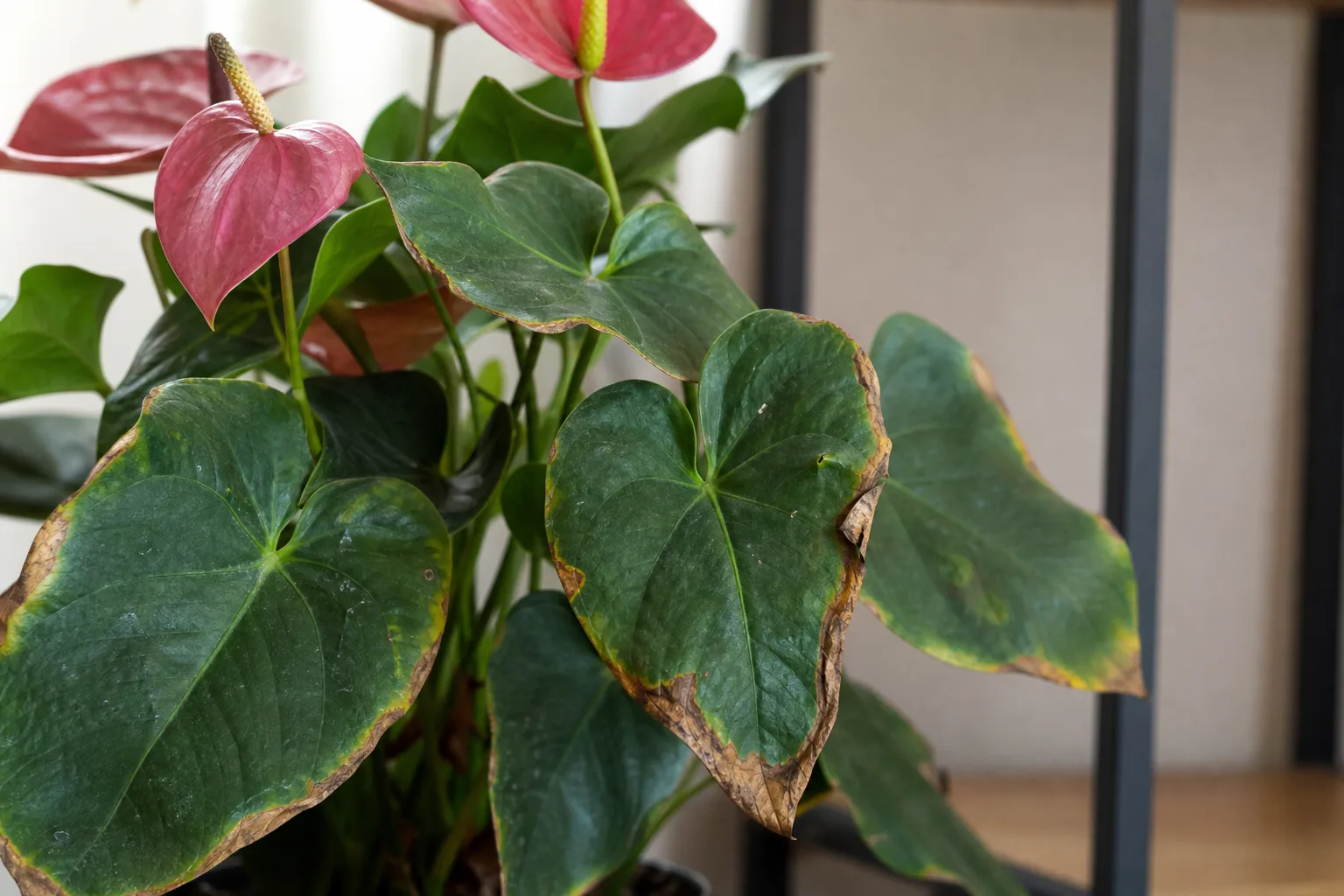
Low humidity on Anthurium shows as symmetrical crisp brown leaf edges, papery spathe browning, and stalled blooms while soil moisture stays normal-common near heating vents in winter. First step: move the pot away from forced-air vents and radiators, then check ambient RH with a hygrometer before you change watering.
Low Humidity on Anthurium: Causes, Checks & Fixes
This guide covers low humidity on Anthurium. See also the general Low Humidity guide, watering, and light pages for this plant.
Low Humidity on Anthurium: Causes, Checks & Fixes
Quick answer
Anthurium (Anthurium andraeanum, flamingo flower) evolved in the humid rainforests of Colombia and Ecuador as an epiphytic tropical perennial with glossy heart-shaped leaves and waxy spathes. It prefers 60 to 80% relative humidity-far above what most heated homes provide in winter.
First step: move the pot away from heating vents, radiators, and cold drafty windows, then check ambient RH with a hygrometer beside the foliage. Dry forced-air heat is the most common trigger for symmetrical crisp leaf edges and papery spathe browning while soil moisture stays normal. Do not flood the pot to compensate for dry air-that invites root rot on Anthurium on semi-epiphytic roots already sensitive to soggy mix.
What low humidity looks like on Anthurium
Low-humidity stress on flamingo flower usually appears on the most exposed foliage first-leaves and spathes nearest vents, sunny glass, or the direct path of AC airflow. Typical patterns:
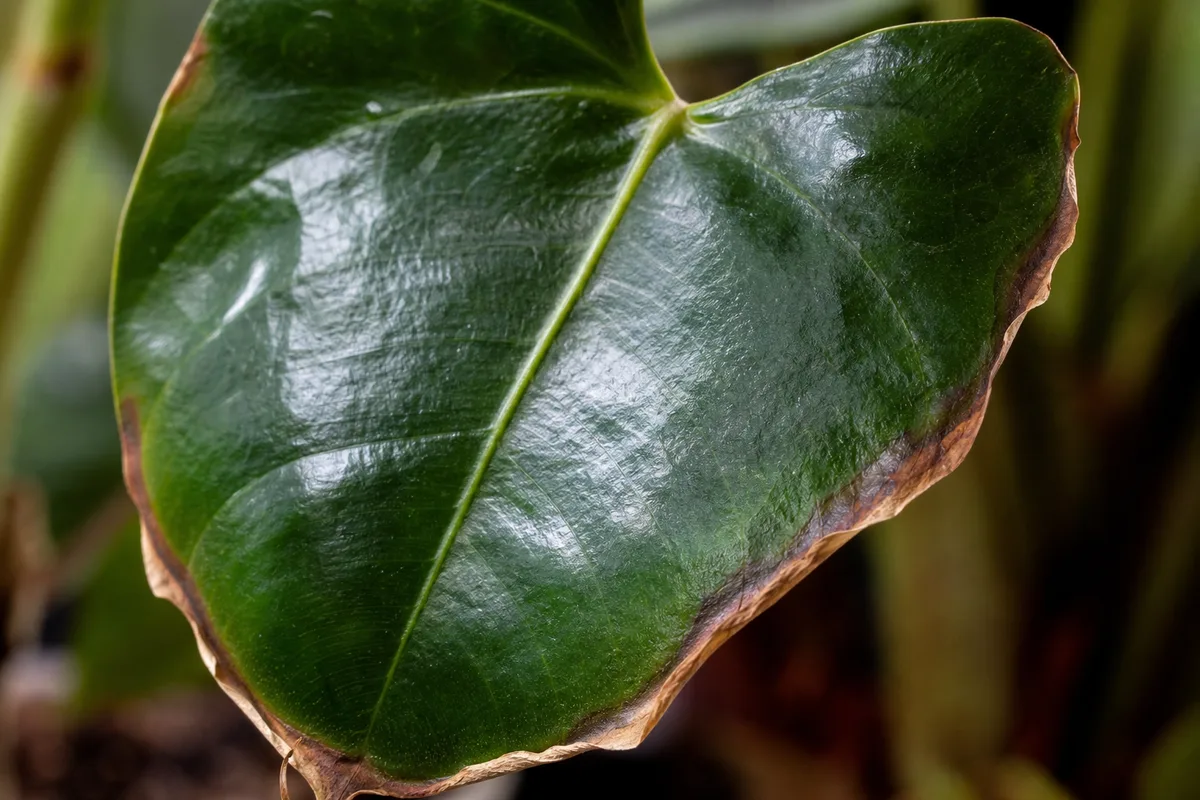
Low Humidity symptoms on Anthurium - compare with healthy tissue on the same plant.
- Symmetrical crisp brown leaf edges and tips - Heart-shaped foliage browns evenly along margins and apex while the midrib may stay green. The RHS notes anthurium leaves may brown at the edges when air is too dry, which is common in centrally heated homes.
- Papery, dull spathes - Waxy red, pink, or white spathes lose gloss, feel dry, and brown prematurely at the margins even when the plant otherwise looks healthy.
- Slowed or absent blooms - Below roughly 50% RH, Anthurium often keeps foliage but spathe production slows while light and watering look fine. See no flowers for the full bloom-suppression checklist including humidity, light, and fertilizer.
- Location-specific damage - Only the side facing a heat register or hot afternoon window crisps first; the shaded side stays greener longer.
- Winter timing - Symptoms worsen between October and March when indoor air tends to be excessively dry and relative humidity is low as furnaces warm air without adding moisture.
- Spider mite overlap - Spider mites thrive in dry, warm conditions; yellow stippling and fine webbing on leaf undersides alongside tip browning mean dry air and pests may need parallel fixes.
Crispy brown tissue on old leaves and spent spathes does not re-green. Judge recovery by stable new growth at the crown once humidity and placement improve.
Why Anthurium struggles in dry indoor air
Anthurium is built for rainforest understory humidity, not furnace-season living rooms. Its large, thin leaf blades and exposed spathes transpire heavily when ambient moisture is low-leaf tips receive water last in the vascular stream, so margins crisp first.
Winter heating strips humidity. Cold outdoor air holds little moisture; indoor heat raises temperature without adding water, so relative humidity stays fairly low in winter and moisture is drawn from foliage. Anthurium wants 60 to 80% RH while many heated rooms sit near 30–45%.
Forced-air vents create microclimates. A pot three feet from a floor register may sit in a stream of very dry air while a wall hygrometer reads higher across the room. The Missouri Botanical Garden warns foliage may scorch in dry or drafty locations, and keeping plants away from heat vents and radiators is the first placement fix.
Epiphytic roots mask underwatering briefly - Thick roots store some moisture, so growers see brown tips and assume drought. In true low-humidity stress, the top inch of chunky mix is often appropriately cool and damp and the pot feels normal weight. Adding water without raising RH worsens the wrong problem and risks rot.
Bright light compounds transpiration - Anthurium in a bright window loses more leaf moisture per hour. Dry air plus strong indirect light browns outer leaves and spathes faster than the same RH in a dim corner.
Velvet species need more - Florist hybrids such as A. andraeanum tolerate average home humidity better than velvet-leaved species like A. clarinervium, which often need sustained RH above 60% to keep textured foliage clean. If you grow both types, do not apply the same humidity target to every Anthurium on the shelf.
How to confirm the cause
Work through these checks before you change watering, fertilizer, or Anthurium repotting guide:
- Room and microclimate RH - Use a digital hygrometer near the foliage for 24 hours. Tropical species thrive at higher ranges of 70–80%; Anthurium is comfortable targeting 60%+ and shows stress when winter rooms sit near 30–50%.
- Placement audit - Note distance to heating vents, radiators, fireplaces, AC returns, and cold window glass. Keep plants away from heat vents, radiators, and outside doors before treating foliage alone.
- Soil moisture vs. air dryness - Push your finger into the top inch. Cool, slightly damp mix with papery brown tips points to low humidity. Dusty dry mix and a light pot point to underwatering instead.
- Spathe and leaf pattern - Symmetrical edge crisping on multiple leaves and dull spathes fit dry air. Isolated bleached patches on the window side may combine direct sun with dryness.
- Salt and water quality - White crust on the pot rim with browning on newest leaves suggests hard-water or fertilizer salts; see brown tips for overlap. Humidity fixes alone will not clear salt burn.
- Pest check - Examine leaf undersides with a hand lens. Fine webbing, stippling, or moving specks on white paper mean spider mites-dry air favors outbreaks and needs pest treatment alongside humidity work.
- Seasonal timeline - Symptoms that appear when heat kicks on strongly support environmental dryness rather than sudden root failure.
If soil stays wet for days, roots smell sour, or yellowing spreads with wilting, treat as overwatering or root rot-not humidity.
First fix for Anthurium
Move the pot away from heating vents, radiators, and drafty window glass, then measure RH at the plant’s new location.
Even a shift of three to six feet off a floor register can stop active tip browning within days because you remove the driest microclimate. Place the hygrometer beside the foliage before deciding the room is “fine.” Grouping plants together raises local humidity as they transpire-use that after relocation, not instead of leaving the pot in the vent stream.
Do not respond to papery tips by watering more when the top inch is already moist. The Missouri Botanical Garden warns that keeping compost too wet causes root rot; flooding a humidity-stressed Anthurium is a common mistake in dry winter rooms.
Step-by-step humidity fixes
After relocation and RH measurement, add moisture in this order-one change at a time so you can read the plant’s response:
- Pebble tray - Set the pot on a shallow tray of pebbles with water kept just below the stone tops so the container never sits in standing water. The RHS recommends standing the pot in a saucer over a tray of moist gravel as water evaporates to moisten the air. Trays help the immediate pot zone; they rarely fix whole-room dryness alone.
- Group with other plants - Cluster humidity-loving houseplants on one shelf so shared transpiration bumps local RH. Placing more plants together can expand the microclimate effect.
- Cool-mist humidifier - Run a small humidifier near the plant until RH holds roughly 60% at foliage height. Portable humidifiers offer the most benefit, particularly in larger rooms, and may need to run several hours daily during furnace season.
- Bright bathroom trial - If light is adequate, a bathroom with natural light often carries higher ambient moisture from showers. The RHS specifically suggests grouping anthuriums in a bathroom where humidity is naturally higher-move only if the plant still gets Anthurium light guide for several hours daily.
- Light misting as supplement only - The RHS recommends misting leaves regularly because anthuriums enjoy humid air, but misting gives only a brief bump. Use it to dislodge dust per UF/IFAS interior care guidance, not as your sole winter strategy.
- Trim fully dead tissue cosmetically - Snip papery brown spathe edges or fully crisp leaf tips if they bother you; leave any green tissue that can still photosynthesize while new growth fills in.
- Treat spider mites if present - Rinse leaf undersides and apply insecticidal soap or horticultural oil labeled for mites if webbing or stippling confirms pests. Humidity alone will not clear an established colony.
Recovery timeline
Days 1–7: Relocating off vents often stops new tip browning quickly if RH at the new spot is meaningfully higher. Existing brown tissue stays brown.
Weeks 2–4: Fresh leaves should emerge with clean margins during spring and summer active growth once RH stabilizes and watering stays appropriate. In winter, recovery may be slower but halted edge spread is the first sign of success.
Weeks 4–8: New spathes may develop if light, humidity above roughly 50–60%, and watering remain steady. Old papery spathes will not regain waxy color.
When to worry: Browning accelerates after humidity fixes, webbing spreads despite treatment, wilting appears with wet soil, or the crown softens-these point to pests, rot, or underwatering, not humidity alone.
Lookalike symptoms
| Pattern | Likely cause | Quick check |
|---|---|---|
| Symmetrical crisp leaf edges, moist soil | Low humidity | RH below 50%; plant near vent |
| Limp leaves, light pot, dry top inch | Underwatering | Deep soak perks foliage in 12–24 h |
| Stippling + webbing on undersides | Spider mites | Tap test on white paper |
| Brown tips on newest leaves, white pot crust | Salt / fluoride burn | Hard tap water; flush salts |
| Wilting, heavy pot, wet mix, sour smell | Overwatering / root rot | Soft brown roots when unpotting |
| Papery spathe, stalled blooms, adequate light | Low humidity + winter heat | RH low; no new spathes for months |
Low humidity vs. underwatering - Both can brown leaf margins on Anthurium. Humidity stress keeps soil appropriately moist and roots firm; drought pairs brown tips with dry mix and dramatic pot weight loss. Run both checks before you pour.
Low humidity vs. salt or fluoride burn - Tap-water salts often affect newer growth with crust on the rim while placement away from vents looks fine. Humidity browning is more symmetrical and tracks dry winter air or vent proximity. Flush with rainwater or filtered water if salts are suspected; see brown tips.
Low humidity vs. spider mites - Dry air invites mites on Anthurium. Humidity alone without pest treatment fails when webbing is visible. Raise RH and rinse or treat if mites are confirmed.
What not to do
Do not overwater to compensate for dry air when the top inch is already moist-root rot is harder to fix than brown tips on this aroid.
Do not rely on misting alone in heated winter rooms; the ambient RH drop returns within minutes.
Do not mist spathes heavily in stagnant air-wet waxy tissue in a closed corner can invite fungal spotting. Aim moisture at the room, not a daily soak on blooms.
Do not leave the plant on a window ledge touching cold glass while heat runs-temperature swings and dry drafts compound stress.
Do not fertilize stressed plants before humidity and watering are stable; UF/IFAS notes overfertilization indoors causes leaf marginal injury.
Do not stack repotting, hard pruning, and pesticide on the same day as your first humidity fix-make one environmental correction, wait a week, then escalate.
Anthurium care cross-check
Stable flamingo flower combines high humidity with even moisture and bright indirect light:
- Humidity target: 60–80% RH; stress often appears below 50% in heated homes.
- Watering: Water when the top 1–2 inches of chunky mix dry; do not confuse air dryness with soil drought. See the anthurium watering guide.
- Light: Bright indirect; direct hot sun scorches leaves and spathes and raises transpiration.
- Temperature: 65 to 80°F preferred; cold drafts and heat blasts both damage foliage.
- Placement: Off vents, 1–2 feet back from cold windows in winter, with space for gentle air movement.
The anthurium overview covers full humidity, light, watering, and bloom targets in more depth.
How to prevent low humidity next winter
- Place the humidifier before heat season starts - Do not wait until half the leaf edges are crisp.
- Check RH weekly with a hygrometer at foliage height, not across the room on a wall.
- Rotate pots a quarter turn weekly so one side does not bear all vent or window exposure.
- Group Anthurium with other leafy plants on one shelf to buffer transpiration loss.
- Inspect weekly for early tip browning, dull spathes, and mite stippling when furnaces run.
- Maintain consistent watering from the watering guide-humidity fixes fail if roots alternate between drought and flood.
When to worry
Escalate when brown tips spread rapidly despite RH above 50% and good placement, when fine webbing coats new growth, or when wilting and mushy roots appear with wet soil. Those patterns overlap wilting, root rot, and pest issues more than simple dry air.
Low urgency: gradual winter tip browning on outer leaves, firm roots, moist appropriate soil, and damage concentrated near an obvious heat source. Relocate, humidify, and watch for two weeks before heavier intervention.
Related problems
- Brown tips on Anthurium - salt burn, fluoride, and humidity overlap on leaf margins
- Underwatering on Anthurium - dry soil and light pot with limp foliage
- Spider mites on Anthurium - stippling and webbing favored by dry indoor air
- No flowers on Anthurium - low humidity bloom suppression with adequate light
- Anthurium care overview - full humidity, light, and watering baseline
Conclusion
Low humidity on Anthurium is a real winter problem for a rainforest epiphyte sold as a flowering houseplant-not a watering mistake by default. Move the pot off heating vents, confirm RH near the foliage, then raise ambient moisture with a humidifier, bathroom placement, grouping, or a pebble tray before you soak the roots. Brown leaf edges and papery spathes on old tissue will not re-green; clean new leaves and fresh spathes tell you the fix is working.
When to use this page vs other Anthurium guides
- Anthurium watering guide - Use for routine moisture checks before assuming low humidity is the main issue.
- Anthurium problems hub - Browse all 20 common issues on this species.
- Brown Tips on Anthurium - Different entry point when symptoms overlap with low humidity.