No Flowers on Anthurium: Causes, Checks & Fixes
Quick answer
Anthurium stops blooming most often from too little bright indirect light-not from missing fertilizer. First step: move the plant within a few feet of an east or filtered south/west window, or add a grow light for 10–12 hours daily, before changing feed or repotting.
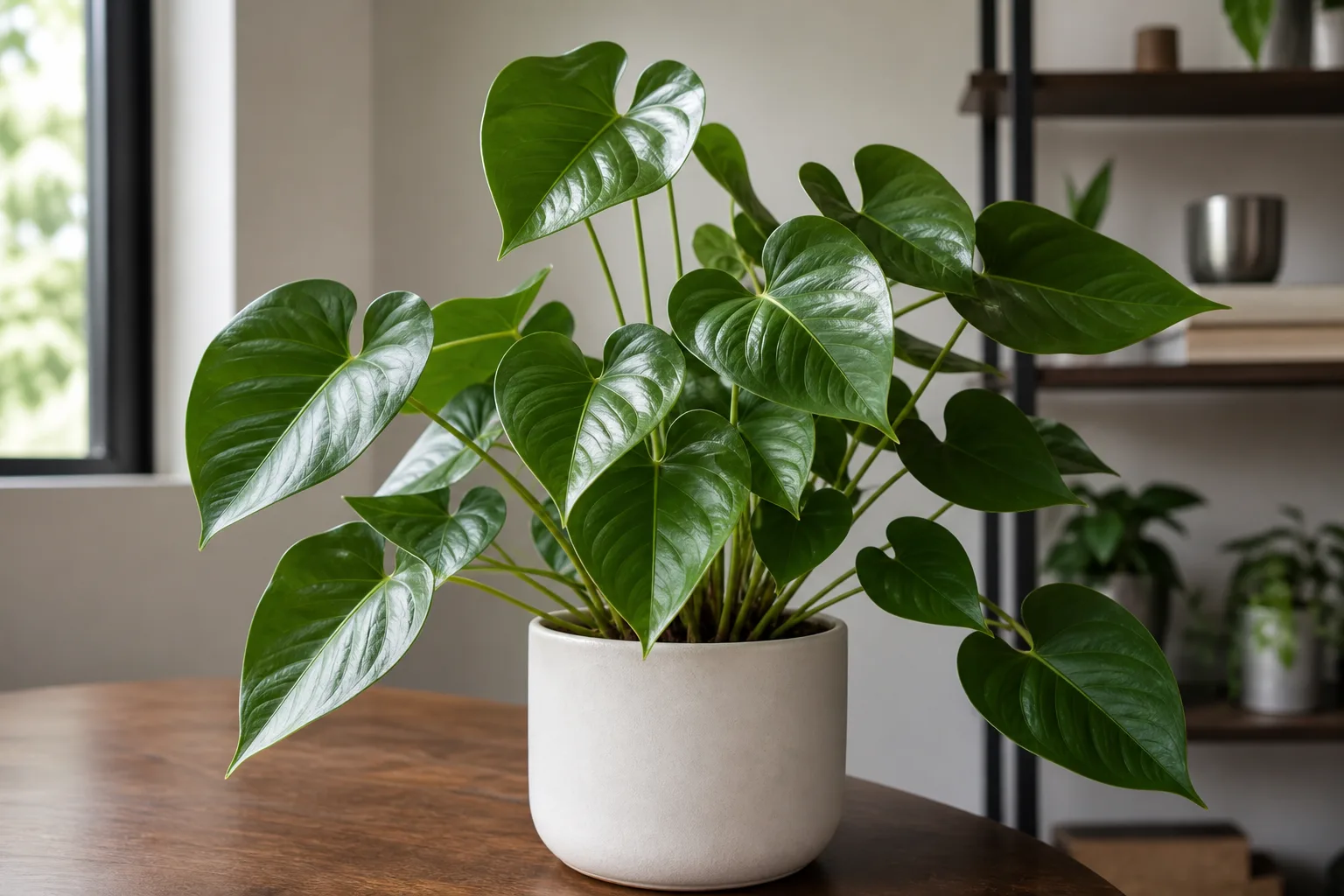
No Flowers on Anthurium: Causes, Checks & Fixes
This guide covers no flowers on Anthurium. See also the general No Flowers guide, watering, and light pages for this plant.
No Flowers on Anthurium: Causes, Checks & Fixes
Quick answer
When Anthurium andraeanum (flamingo flower) grows glossy leaves but no waxy spathes for months, the limiting factor is almost always bright indirect light-not a missing bloom product. Anthurium is an epiphytic aroid from Colombian and Ecuadorian rainforests; indoors it needs roughly 1,500 to 2,000 foot-candles of filtered light for at least six hours daily, 60 to 80% relative humidity, and a deliberate 3-1-2 to 1-2-2 fertilizer switch to keep rebloom cycles going.
First step: increase light before changing fertilizer or Anthurium repotting guide. Move the pot within one to two feet of an east window, or three to five feet back from a filtered south or west window, or hang a full-spectrum grow light 12 to 18 inches above the canopy on a 10 to 12-hour timer. Only after light checks out should you review humidity, NPK ratio, and epiphyte root health. See the Anthurium light guide for window placement and grow-light targets.
Spathe, spadix, and what “no flowers” means on Anthurium
The red, pink, or white “petals” on an anthurium are spathes-modified leaf bracts-not true petals. The actual flowers are tiny and packed on the central spadix, the finger-like spike inside the spathe. The Missouri Botanical Garden describes Anthurium andraeanum as producing a bright spathe up to six inches across with a creamy yellow spadix.
“No flowers” on an anthurium therefore means no new spathe-and-spadix structures forming, not missing petals on a conventional bloom. A plant can look perfectly healthy-dark green leaves, steady new foliage-and still fail spathe initiation when light, humidity, or nutrition is out of balance. A small, pale, or brown spadix on an otherwise green plant points to light or feed stress rather than a fungal disease. Understanding that distinction keeps you from treating a cultural problem with unnecessary sprays or repots.
Why Anthurium stops flowering
Anthurium bloom failure indoors usually traces to one of five ranked causes. Work through them in this order; the sequence matches how often each appears in home cultivation.
1. Insufficient bright indirect light (most common)
Anthurium evolved under a broken rainforest canopy. The Royal Horticultural Society recommends bright, indirect light-such as an east- or west-facing window, or a south window filtered by a sheer curtain. In too much shade, plants may not bloom even when leaves stay glossy. NC State Extension lists insufficient light as a primary reason for reduced flower production.
Dim corners, north rooms without grow lights, and winter windows with dirty glass all cut the photons that drive spathe initiation. This is the classic pattern: dark green, dense foliage and zero spathes for half a year or more.
2. Low humidity below the 60% band
Anthurium prefers 60 to 80% relative humidity-well above typical heated or air-conditioned rooms. Below about 50%, the plant often keeps leaves but slows or stops spathe production. Crisp brown leaf edges alongside missing blooms suggest humidity is contributing; see low humidity on Anthurium when edges desiccate before spathes stall.
3. Wrong fertilizer ratio-too much nitrogen
High-nitrogen feed year-round pushes vegetative growth at the expense of reproductive tissue. Commercial growers use a 3-1-2 N-P-K ratio during active leaf production, then shift to 1-2-2 or a bloom booster such as 4-15-12 for six to eight weeks to trigger new spathes, per UF/IFAS interiorscape guidelines. Feeding heavily while light is still inadequate rarely produces blooms-it produces darker leaves. Full timing is in the anthurium fertilizer guide.
4. Root stress-rot, oversize pot, or recent repot
Semi-epiphytic roots need air in a chunky mix. Dense peat, chronic overwatering on Anthurium, or a pot far too large for the root mass suffocates roots and blocks nutrient uptake-stalling blooms even when light looks acceptable. Wilting with damp soil and yellowing lower leaves point to root rot rather than light alone. A recent repot also pauses blooming for four to six weeks while roots settle; that is normal, not failure.
5. Immaturity, season, or temperature drift
Young divisions or newly purchased plants may need a full season of stable care before the first spathe. Short winter days and rooms below 60°F (15°C) slow metabolism; NC State warns against cold drafts and sudden temperature changes that abort bud development. Do not confuse a normal winter slowdown with a care error-resume concern when days lengthen and temperatures hold above 65°F without new spathe initiation.
What no blooms looks like on Anthurium
True bloom failure on a mature plant shows recognizable patterns:
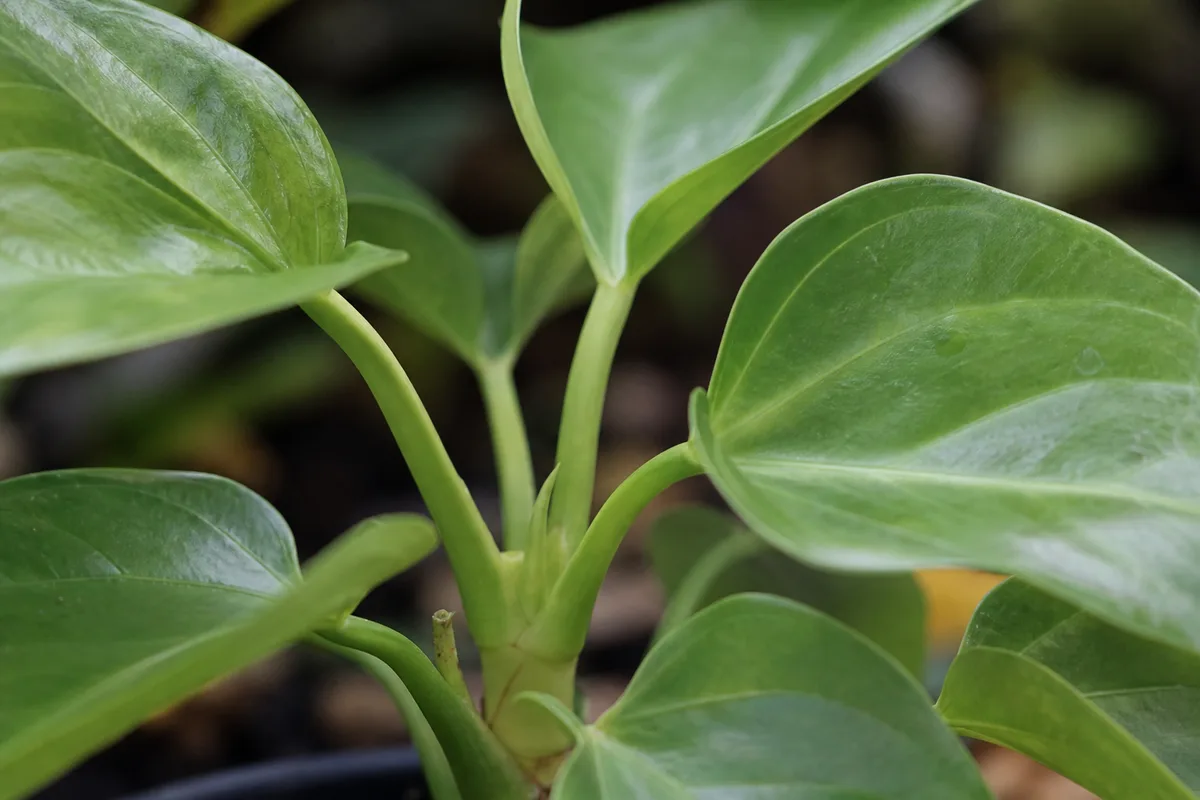
No Flowers symptoms on Anthurium - compare with healthy tissue on the same plant.
- Months of healthy dark green leaves with zero spathes - classic low-light signature
- Leggy petioles and smaller new leaves stretching toward the brightest window
- Tiny, pale, or brown spadices on sporadic blooms that never reach full size
- Scorched or bleached spathes when direct sun hits foliage-too much light, not too little
- Crisp leaf edges plus missing blooms - humidity or salt stress layered on other limits
- Wilting and yellow lower leaves with damp mix - root dysfunction mimicking “lazy” bloom failure
Compare with not enough light on Anthurium when stretch and missing spathes dominate, and leggy growth when stems lengthen without adding much leaf mass.
How to confirm the cause
Run this numbered confirmation workflow before stacking fixes:
- Light intensity and duration - At midday, hold your hand 12 inches above the canopy. A soft-edged shadow means bright indirect light; barely any shadow means too dim. If you have a meter, target 1,500 to 2,000 foot-candles at the leaf surface for bloom initiation per UF/IFAS EP159. Confirm at least six hours of that quality daily, or supplement with a grow light.
- Humidity reading - Place a hygrometer beside the pot for 24 hours. Sustained readings below 50% explain stalled spathes even when leaves look fine; aim for 60 to 80%.
- Fertilizer label review - Note the N-P-K on your bottle. All-nitrogen or balanced 20-20-20 used year-round without a fall phosphorus shift keeps many anthuriums in foliage mode. Check for white salt crust on the pot rim.
- Anthurium watering guide - Top 1 to 2 inches of mix should dry before the next soak, per NC State. Mix wet for a week after watering suggests drainage or root problems.
- Root inspection - Slide the plant out. Healthy epiphyte roots are firm and pale with white tips. Black, mushy, or sour-smelling roots confirm rot-light fixes alone will not restore blooms until roots recover.
- Recent history - Repot, move, division, or drafty window within the last six weeks? Expect a temporary bloom pause before judging failure.
Lookalike symptoms - quick comparison
| Pattern | Likely cause | Key differentiator |
|---|---|---|
| Dark green leaves, no spathes for months | Low light | Leaves look “too healthy”; plant leans toward window |
| Crisp edges, no spathes, hygrometer under 50% | Low humidity | Edges brown before whole leaves yellow |
| Wilting + wet soil + yellow lower leaves | Root rot | Roots mushy on inspection; see root rot guide |
| Glossy leaves, no blooms, high-nitrogen feed only | Wrong NPK | Dark foliage, no stretch; light may be adequate |
| No spathes 4–6 weeks after repot | Repot stress | Roots white and firm; timing matches disturbance |
| No spathes Nov–Feb only | Seasonal rest | Resumes when light and warmth return |
First fix for Anthurium with no flowers
Increase bright indirect light-one clear action first. Move the plant to the brightest filtered spot available: one to two feet from an east window, or behind a sheer curtain on south/west exposure, or under a full-spectrum LED 12 to 18 inches above the canopy for 10 to 12 hours daily. Hold fertilizer changes and repotting until the plant has been in the improved light for two weeks.
If light was clearly adequate already (verified foot-candles or shadow test), the second action is a humidity boost toward 60%+ using a humidifier or bright bathroom placement-not misting alone. The third action, during active growth months, is switching from 3-1-2 feed at quarter strength to 1-2-2 or 4-15-12 bloom booster for two to three applications spaced two to three weeks apart, as outlined in the fertilizer guide and overview bloom section.
Only after light, humidity, and feed are aligned should you repot root-bound plants into chunky aroid mix one size up in spring-or treat confirmed rot by trimming mushy roots and refreshing mix.
Recovery timeline - when to expect new spathes
After a verified light increase during warm active growth, expect the first visible spathe bud within six to ten weeks. A phosphorus-forward fertilizer switch in early fall often produces new spathes within four to eight weeks when light and temperature already meet targets-the same window cited in the overview bloom FAQ.
Winter corrections without grow lights take longer because day length and indoor temperatures both drop. Post-repot pauses of four to six weeks are normal; do not repot again hoping to force blooms. Each individual spathe lasts roughly six to eight weeks once open, per UF/IFAS production data.
Signs improvement is working: new spathe buds visible at the crown, firmer petioles, more even leaf spacing, and hygrometer readings holding in the 60%+ band. Signs the problem is worsening: continued stretch without buds, spreading yellow leaves with wet soil, or crown softening-escalate to root inspection.
What not to do
- Do not repot into a much larger pot hoping to trigger flowers-oversized containers stay wet and stall epiphyte roots.
- Do not apply full-strength fertilizer or bloom booster on a dry plant or in a dim corner; salts burn roots without producing spathes.
- Do not remove healthy green spathes to “encourage” rebloom-they store energy for the next cycle.
- Do not use dense peat-based houseplant soil without bark and perlite; suffocated roots cannot support blooms.
- Do not chase blooms with extreme 0-10-10 products before fixing light; excess phosphorus locks micronutrients.
- Do not assume every winter pause is failure-resume troubleshooting when spring growth resumes without spathes.
How to prevent repeat bloom failure
Keep bright indirect light year-round, supplementing with a grow light when winter windows weaken. Maintain 60 to 80% humidity with a humidifier rather than occasional misting. Feed 3-1-2 at quarter strength every two weeks from spring through summer, then switch to 1-2-2 or 4-15-12 for six to eight weeks in early fall before pausing feed through the cool-season rest.
Remove spent brown spathes at the stem base; leave green ones intact. Water when the top inch dries, using rainwater or filtered water if tap leaves salt crust. Repot only when genuinely root-bound every two to three years into chunky mix-anthuriums bloom well when slightly snug, not swimming in excess soil. Rotate the pot weekly for even exposure, and track spathe timing monthly so stalls show up early.
For full seasonal rhythm, light targets, and repot timing, keep the Anthurium care overview bookmarked alongside this page.
When to worry
Missing blooms alone is seldom an emergency. Act promptly when the crown softens, leaves collapse despite wet soil, roots are mushy on inspection, or yellowing spreads while zero spathes appear for two full growing seasons after verified bright light, good drainage, and appropriate feeding-those patterns overlap root failure more than a simple light gap.
Conclusion
Anthurium bloom failure is usually a light problem dressed as a fertilizer problem. Confirm spathe anatomy, run the numbered checks-light, humidity, NPK, roots-then fix light first. Use the lookalike table to separate rot, humidity, and seasonal rest from true stall, adjust one variable at a time, and judge success by new spathe buds within six to ten weeks of verified improvement-not by how the plant looked at purchase.
When to use this page vs other Anthurium guides
- Anthurium watering guide - Use for routine moisture checks before assuming no flowers is the main issue.
- Anthurium problems hub - Browse all 20 common issues on this species.