Brown Tips on Anthurium: Causes, Checks & Fixes
Quick answer
Brown tips on Anthurium (Anthurium andraeanum, flamingo flower) most often trace to fluoride or chlorine in municipal tap water burning the newest leaves as they unfurl, dry indoor air near vents crisping older heart-shaped leaves and spathes, salt buildup from fertilizer, or saturated chunky aroid mix suffocating semi-epiphytic roots. First step: move the pot off heating vents and AC drafts, then read ambient humidity and inspect new leaves for white crust before you change water or flush salts.
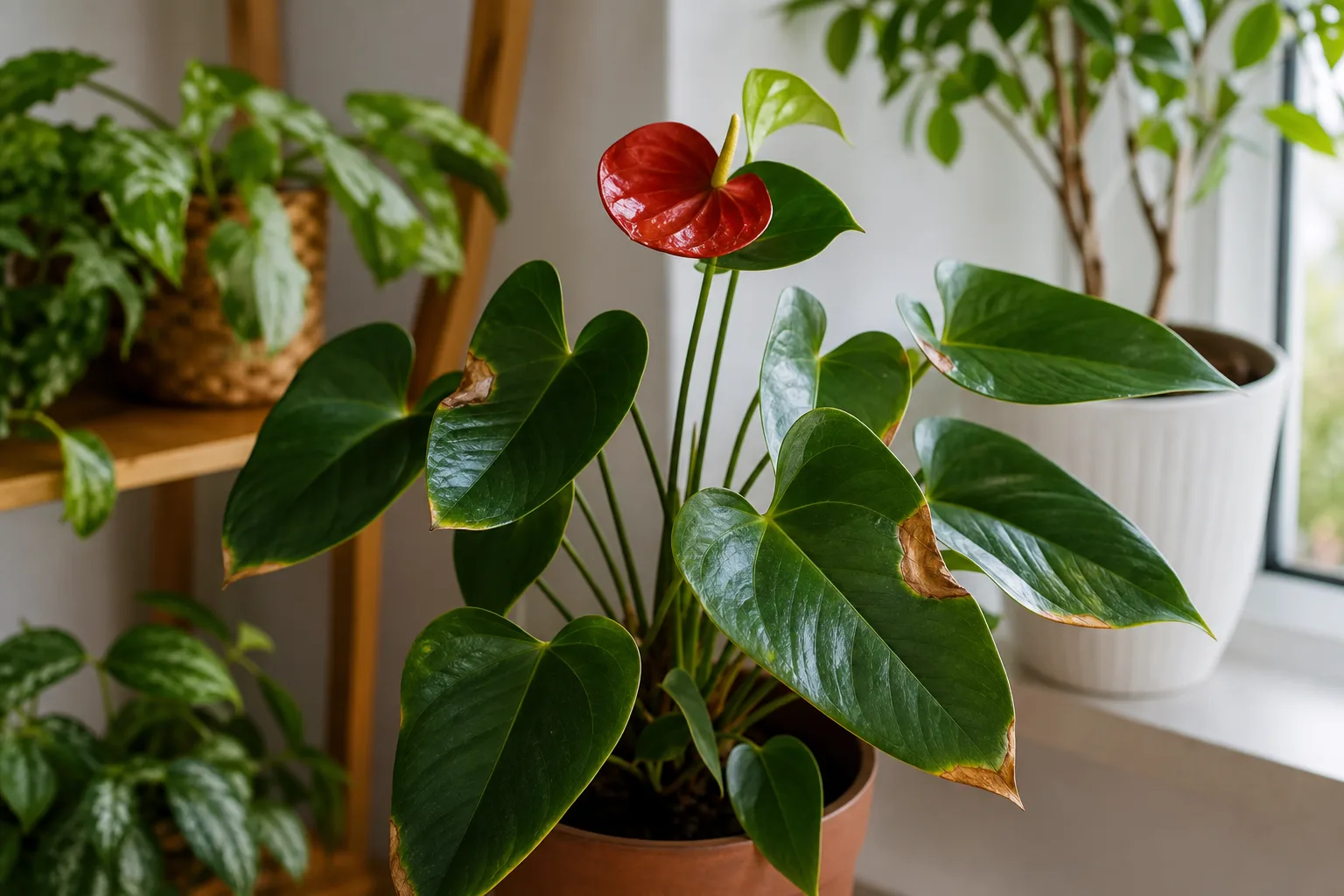
Brown Tips on Anthurium: Causes, Checks & Fixes
This guide covers brown tips on Anthurium. See also the general Brown Tips guide, watering, and light pages for this plant.
Brown Tips on Anthurium: Causes, Checks & Fixes
Quick answer
Anthurium (Anthurium andraeanum, flamingo flower) is a flowering aroid grown for two different organs at once: glossy, heart-shaped (cordate) leaves with a deep basal sinus, and the brightly colored, waxy modified leaf called a spathe that wraps a yellow spadix on mature plants. That dual-tissue habit is the reason brown tips read differently here than on a plain foliage aroid: tip necrosis can hit leaf margins, the spadix, and the spathe apex at the same time, and the cause is usually specific to one of them.
The most common triggers on indoor Anthurium are fluoride and chlorine in municipal tap water burning newest leaves as they unfurl, dry indoor air crisping older cordate leaves and spathe edges, soluble salt buildup from fertilizer, and saturated chunky aroid mix suffocating semi-epiphytic roots. Anthurium prefers 60 to 80% relative humidity and rainwater or filtered water at room temperature, well above what most heated homes provide and stricter than many common houseplants tolerate from tap.
First step: move the pot off any heating vent, radiator, or AC stream, then read ambient humidity with a hygrometer beside the foliage. If RH reads below 50% or the pot sits in forced-air airflow, fix placement and humidity before adding water. If humidity is adequate and placement is stable but new leaves keep tipping, switch to filtered or rainwater and plan a salt flush; hard tap water is the most frequent culprit on Anthurium. For the generic mechanics of brown leaf tips across houseplants, see the brown tips leaf hub.
What brown tips look like on Anthurium
Flamingo flower carries glossy cordate leaves 8 to 12 inches long and waxy red, pink, or white spathes on plants mature enough to bloom. Tip browning shows up in distinct patterns that map to specific causes:
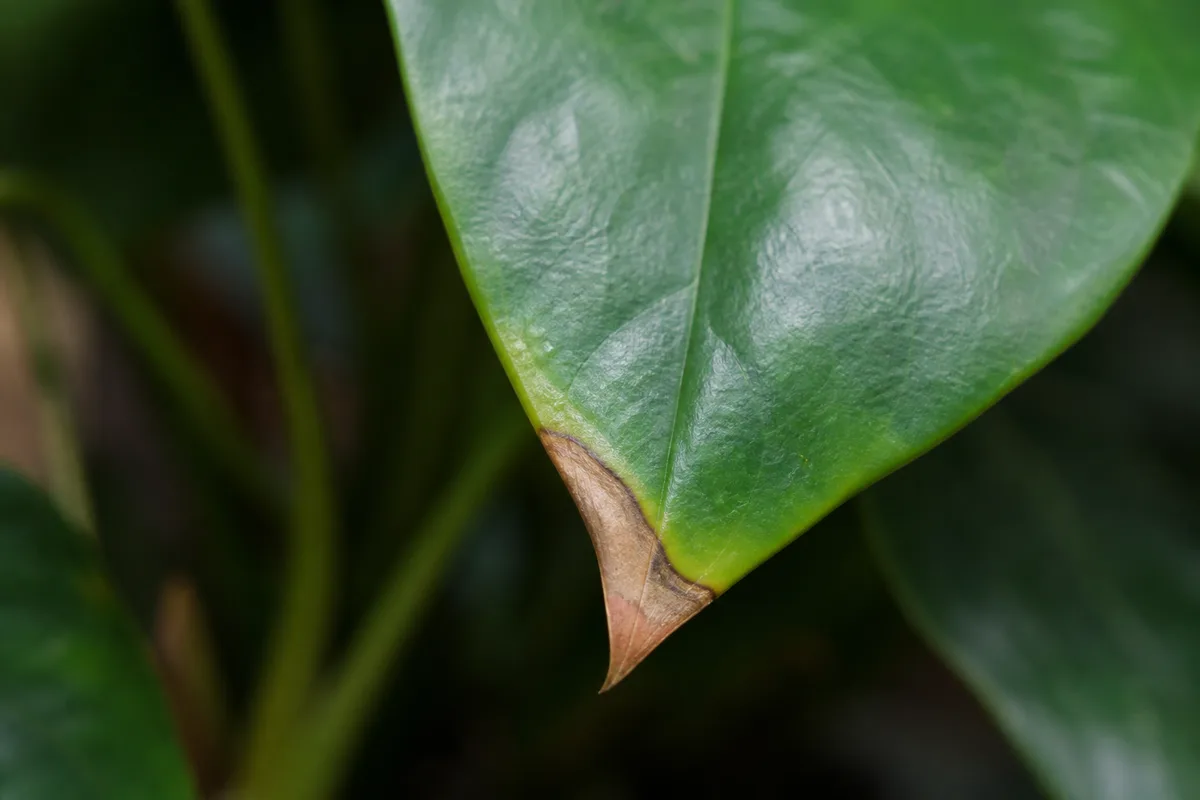
Brown tips symptoms on Anthurium - compare with healthy leaf tissue, basal sinus, and spathe on the same plant.
- Fluoride-chlorine tip burn on newest leaves - Tips brown on leaves within days of unfurling, often before the leaf has hardened off, with no white crust at first. The brown is sharply defined along the distal half-inch, sometimes with a yellow halo just inside the dead tissue. This pattern repeats on every new flush because tap water keeps arriving with fluoride and chlorine intact. Spathes may crisp at the apex even when leaf margins look fine.
- Dry-air tip burn on older cordate leaves - Oldest outer leaves develop dry, tan-to-brown tips or symmetrical crisp edges along the deep basal sinus, while newer center leaves and spathes stay clean. Tips feel papery rather than soft. The pot often sits near a radiator, heating vent, or cold AC draft. The RHS notes anthurium leaves may brown at the edges when air is too dry, a common pattern in centrally heated homes.
- Salt-burn crust pattern - Tips crisp on multiple leaves and you see white or tan crust on the soil surface, the inner pot rim, or the underside of drainage holes. Overfertilization causes soluble salt buildup that concentrates where evaporation pulls water upward. This pattern overlaps with fluoride injury but adds the visible crust.
- Wet-mix tip stress on semi-epiphytic roots - Tips crisp while the top inch of chunky mix stays wet, the pot feels heavy days after watering, and lower leaves may yellow or wilt. Anthurium evolved as a semi-epiphytic tropical perennial whose roots need oxygen between soaks, so leaf margins dry even though the problem is too much water, not too little.
- Direct sun scorch on the waxy spathe - Anthurium needs bright indirect light, not direct rays. Sun-facing spathe edges bleach and crisp before shaded leaf tissue shows damage, a patchy pattern on exposed surfaces rather than uniform tip burn on every leaf. Spathe scorch leaves the underlying spadix unharmed.
- Normal cosmetic aging on oldest bottom leaves - One or two oldest outer leaves may show minor tip browning over months on an otherwise stable plant that is still pushing clean spathes. Low priority if watering, humidity, and placement are sound.
Worry when browning hits new center growth, when spathe production stalls, when margins spread down most leaves, or when tips crisp while the mix stays saturated - those patterns point at root failure rather than cosmetic tip burn.
Why Anthurium gets brown tips
Fluoride and chlorine: the Anthurium-specific injury
Anthurium is one of the more fluoride-sensitive indoor plants, more so than Aglaonema or Dieffenbachia, because its thin leaf cuticle and active new-growth flush cannot tolerate the fluoride ions that municipal water systems add for dental health. Fluoride accumulates in leaf tips and margins as water moves through the vascular system and evaporates at the leaf surface; over weeks the tissue dies back from the tip in a sharply defined pattern. Chlorine behaves similarly but is partly off-gassed when tap water sits overnight, while fluoride remains. This is the most common reason new leaves on Anthurium keep tipping despite correct humidity and stable watering.
The fix is not harder flushing or more fertilizer; it is changing the water source. Rainwater, distilled water, or filtered water at room temperature avoids the accumulation entirely. Anthurium owners in hard-water regions often see this injury plateau within three to five new leaves after switching sources.
Heart-shaped cordate leaf morphology and dry-air margin burn
Anthurium leaves have a deep basal sinus where the petiole meets the blade, and that sinus pulls a long thin margin of leaf tissue far from the central veins. In dry indoor air, those far-from-vein areas are the first to lose water through transpiration and the last to be refilled, so they crisp. Aglaonema, with lance-shaped or elliptic leaves on shorter petioles, holds humidity through its margins more evenly; Dieffenbachia’s elongated variegated blades transpire differently again because the pale zones lack dense stomata. The cordate Anthurium leaf is uniquely exposed at the apex and sinus, which is why dry-air brown tips on Anthurium tend to start at the leaf point and along the sinus before spreading to the rest of the margin.
Heart-shaped Anthurium leaves evolved under rainforest understory humidity, where ambient moisture rarely drops below 70%. Indoor winter air near 30 to 45% RH pulls water from these thin margins faster than semi-epiphytic roots can replace it. A humidifier running toward 60 to 80% RH at foliage height is the most reliable fix; pebble trays and misting help the immediate pot zone but rarely hold whole-room humidity through furnace season.
Spathe and spadix: a second organ to inspect
No other common houseplant aroid presents the symptom on a colored bract the way Anthurium does, because Aglaonema blooms on a greenish spathe that fades into the foliage and Dieffenbachia blooms on a slim green-white spadix without a showy bract. On a mature Anthurium, the spathe is a flat, waxy, heart-shaped or oval shield held above the foliage, and the spadix is the narrow finger-like flower cluster that rises from its base. Tip browning that hits the spathe apex while leaf margins look fine is almost always light-related or fluoride-related rather than humidity-related, because the spathe has no petiole margin to desiccate - it crisps at the apex or along the edge where direct sun lands or where salts concentrate.
Inspect the spadix separately: a browning or blackening spadix while spathes stay clean points at spent bloom cycle rather than cultural stress, while a spadix that fails to form at all on a mature plant usually points at light or phosphorus rather than tip-burn causes. See no flowers on Anthurium when bloom cycle, not just leaf color, is the deeper question.
Inconsistent watering on semi-epiphytic roots
Anthurium should be watered when the top inch of mix feels dry, not on a rigid calendar. When the chunky mix of orchid bark, perlite, and potting soil stays saturated, roots lose oxygen and stop moving water efficiently. The plant cannot deliver water to leaf margins even though the pot is wet, so tips crisp while the mix is damp. This overlaps with yellowing lower leaves and a heavy pot that never dries on schedule.
Owners who see brown tips and water more deepen the exact problem. See overwatering on Anthurium if wet mix and limp leaves pair with spreading margin browning.
Fertilizer salt buildup in chunky aroid mix
Anthurium is a moderate feeder during active growth but sensitive to salt concentration in a small pot indoors. Overfertilization causes soluble salt buildup that concentrates in the upper inch of mix and burns leaf edges and spathe tips. Salt burn often appears with the white crust described earlier and can mimic fluoride damage. Leaching with plain water - roughly three to four pot volumes poured slowly through the medium - clears the accumulation without disturbing roots.
Do not increase fertilizer to “green up” tipped leaves on a stressed plant. Extra feed adds more salts to a mix that already holds too many.
Less common: direct sun scorch and dry-air spider mites
Direct rays can scorch spathe edges before green leaf margins show damage. Move the plant into bright, indirect light only before treating water quality or humidity. In chronically dry air below 50% RH, spider mites thrive on leaf undersides and compound tip damage with yellow stippling and fine webbing. Raise humidity and inspect undersides with a hand lens before assuming environmental burn alone.
How to confirm the cause
Work through this inspection in order. Do not change more than one variable at a time on a stressed plant.
- Which leaves are affected - Oldest outer leaves only with clean new growth fits dry air or aging. Newest leaves tipping within days of unfurling fits fluoride or chloride. Multiple leaves plus white crust on the rim fits salt buildup. Most leaves, wet mix, lower yellowing fits root stress. Sun-facing spathe crisp with clean leaves fits light scorch.
- Hygrometer reading at foliage height - Sustained readings below 50% support dry-air tip burn. Aim for 60 to 80% RH per NC State guidance.
- Moisture through the top 1 to 2 inches - Cool and damp means pause watering. Dry through that zone with a light pot suggests drought. Heavy pot days after watering confirms slow dry-down on semi-epiphytic mix.
- Placement and airflow - Is the pot above a radiator, beside a vent, or in an AC stream? Cold draft from a window at night?
- Soil surface and pot rim - White crust or gritty deposits suggest salt buildup from fertilizer or hard water.
- Water source history - Months of untreated tap water with recurring new-leaf tip burn supports fluoride or mineral sensitivity per RHS water-quality guidance.
- Root spot-check if wet mix plus spreading margin browning - Slide the plant partway out. Firm pale roots support a dry-down fix. Mushy brown roots confirm rot and need trimming before recovery.
Confirmed fluoride-chlorine burn shows tipping on new leaves, clean older leaves, and a history of untreated tap water. Confirmed salt burn adds the crust. Confirmed dry-air burn shows papery tips on older leaves, clean new growth and spathes, RH below 50%, and a pot in a drafty microclimate. Confirmed root stress shows limp lower leaves and a pot that never dries on schedule.
First fix for Anthurium
Move the pot off heating vents and AC drafts, then read ambient humidity at foliage height before you add water or flush salts.
That single action addresses the two most common mistakes: treating dry-air tips with extra water, and leaving the plant in airflow that keeps desiccating margins. If RH reads below 50%, add a humidifier within a few feet of the foliage or relocate to a bright bathroom - misting alone provides only brief humidity and is not a substitute in dry homes.
If the top 1 to 2 inches of mix is still damp, do not water until it dries. If humidity is adequate, placement is stable, and new leaves keep tipping, switch to filtered or rainwater for the next four to six weeks and pause fertilizer until new growth stays clean.
Do not compensate with fertilizer, misting marathons, or an immediate repot unless roots are mushy or salt crust is thick. Make one correction first. Wait two weeks before stacking remedies.
After placement and humidity:
- If white crust covers the soil, plan a plain-water flush during the next watering, not on the same day you moved the plant if it is already stressed.
- If spathe edges scorched on the sun-facing side, shift to bright indirect light only, never direct rays on waxy spathe tissue.
- If the mix stays wet and tips spread, let the top inch dry fully and review watering rhythm on Anthurium before stacking other fixes.
If roots are mushy
When a spot-check finds brown, slimy roots and sour-smelling mix with browning margins on most leaves, escalate to root rot on Anthurium: unpot, trim dead roots, let cut surfaces dry briefly, and repot into fresh chunky aroid mix. Hold water for seven to ten days after repotting. That path is for confirmed rot, not for a few tan tips on one old leaf near a vent.
Step-by-step recovery
Match follow-up steps to what you confirmed.
Fluoride or chlorine sensitivity (newest leaves tipping, clean older leaves):
- Switch to filtered, distilled, or rainwater for four to six weeks per RHS water-quality guidance.
- Pause fertilizer until new growth stays clean for two to three weeks.
- Trim old brown tips along the natural leaf shape if appearance matters, leaving a thin dark edge so you do not cut into healthy tissue.
Dry air and drafts (older tips only, clean new growth):
- Keep Anthurium away from radiators, vents, and cold glass.
- Run a humidifier toward 60 to 80% RH or group with other plants in a bright bathroom.
- Watch for new leaves and spathes emerging with clean margins for two consecutive weeks.
Salt buildup (white crust, multiple leaves, sometimes spathe tips):
- Leach salts with three to four pot volumes of plain room-temperature water poured slowly through the medium.
- Let the pot drain fully and empty the saucer.
- Resume quarter-strength 5-10-5 feeding only during spring and summer active growth, not while the plant is recovering.
Wet-mix root stress (wet soil, heavy pot, limp lower leaves):
- Let the top 1 to 2 inches of mix dry fully between waterings.
- Adjust winter frequency; Anthurium often needs water every 10 to 14 days in cool months versus weekly in active summer growth.
- Ensure drainage holes are open and saucers stay empty.
Direct sun scorch (spathe edges bleached and crisp):
- Shift to bright indirect light only, never direct rays on spathe tissue.
- Remove severely scorched spathes at the stem base if they are fully spent; new spathes should emerge clean in filtered light.
Recovery timeline
Brown tip tissue does not turn green again. Recovery shows up at the crown and on new spathes.
- Fluoride-chlorine burn - Switching water source usually stops new tipping within three to five new leaves, often four to six weeks for several clean spathes in a row.
- Dry-air tip burn - New leaves and spathes often emerge clean within two to three weeks after humidity and placement improve.
- Salt buildup - A plain-water flush plus paused feeding produces clean margins on the next one to two new leaves, generally within four to six weeks.
- Wet-mix tip stress - Tips stop spreading once mix oxygen returns, often within one to two dry-down cycles. New leaves emerge crisp within two to four weeks if roots were still firm.
- Sun scorch on spathe - New spathes in filtered light often show clean edges within two to three weeks after the move.
- Advanced root rot - Recovery takes longer and may be partial. If the crown softens or new leaves keep browning after dry-down and root trim, the plant may not be saveable.
Signs of improvement: new leaves and spathes with clean tips, pot weight dropping on a normal schedule, browning that does not spread down margins, and new spathes emerging fully colored. Signs of worsening: sour smell, soft stems, tipping on every new leaf despite filtered water, or soil that never dries.
Mistakes to avoid
Do not water more because tips look dry when the top inch is already wet; that deepens root stress on semi-epiphytic roots and is a common misread in winter.
Do not mist as the only humidity fix. Brief misting does not hold the stable moisture margins need near vents; use a humidifier or bright bathroom placement instead.
Do not fertilize a tipped, stressed plant to force new growth. Salt buildup from overfeeding causes the same tip burn you are trying to fix.
Do not repot on day one unless roots are mushy, salt crust is severe, or drainage has failed. Repotting a waterlogged plant into a bigger pot often makes drying slower.
Do not trim brown tips back into green tissue. Cut along the natural leaf shape and leave a thin brown edge to avoid wounding healthy cells.
Do not ignore wet mix while treating water quality. Fluoride sensitivity and root stress can overlap; fix saturation before stacking multiple remedies.
Do not assume brown spathe apex means a sick plant. A spent or sun-scorched spathe is cosmetic; the spadix and next flush of leaves and bracts tell the real story.
How to prevent brown tips on Anthurium
Prevention comes down to stable humidity, clean water, appropriate light, and a watering rhythm that matches how fast the chunky aroid mix dries:
- Humidity first - Target 60 to 80% RH with a humidifier; confirm with a hygrometer at foliage height.
- Placement - Keep flamingo flower off radiators, away from AC and heat vents, and out of direct sun on spathe tissue.
- Water on dryness, not calendar - Check the top 1 to 2 inches every time. Summer often means weekly; winter often means every 10 to 14 days.
- Use appropriate water - Filtered or rainwater if new leaves repeatedly tip; most municipal water is fine if tips stay clean on new growth.
- Feed lightly - Quarter-strength 5-10-5 during spring and summer only; pause in fall and winter.
- Flush salts occasionally - One thorough plain-water flush during active growth if you feed regularly.
- Remove spent spathes and oldest outer leaves promptly - Makes new tip problems easier to spot early.
Return to the Anthurium overview for bloom, humidity, water quality, and toxicity context.
When to worry
Treat brown tips as urgent when:
- Browning spreads from tips down most leaf margins on many leaves at once.
- Mix smells sour or stems feel soft at the soil line while tips crisp.
- New center growth tips brown within days of unfurling despite filtered water and good placement; inspect roots the same week.
- The plant collapses despite moist mix; roots may be failing to absorb water. See wilting on Anthurium if stems go limp alongside tip damage.
A few tan tips on one or two oldest outer leaves near a winter vent on an otherwise stable Anthurium is cosmetic. Widespread margin browning with wet mix is not; inspect roots promptly.
Related Anthurium problems
- Anthurium overview - Epiphyte biology, humidity band, and water-quality baseline
- Watering Anthurium - Top-inch-dry rhythm for chunky aroid mix
- Low humidity on Anthurium - Dry-air margin burn and humidifier placement
- Overwatering on Anthurium - Wet-mix tip stress and root impairment
- No flowers on Anthurium - When humidity and water stress stall spathe production
- Spider mites on Anthurium - Dry-air pest pressure alongside tip burn
- Wilting on Anthurium - Stem limpness when wet-mix and dry-mix branches diverge
When to use this page vs other Anthurium guides
- Brown tips on Anthurium (this page) - Use when tip and margin browning is the dominant symptom and you need to separate fluoride burn, dry air, salt buildup, and root stress.
- Low humidity on Anthurium - Use when symmetrical crisp edges on older leaves dominate and RH reads below 50% at foliage height.
- Overwatering on Anthurium - Use when wet mix, heavy pot, and yellow lower leaves pair with spreading margin browning.
- No flowers on Anthurium - Use when spathe production has stalled even though foliage looks acceptable.
- Anthurium problems hub - Browse all common issues on this species when the symptom does not match a single page.