How Often to Water Anthurium (and How to Fix Common
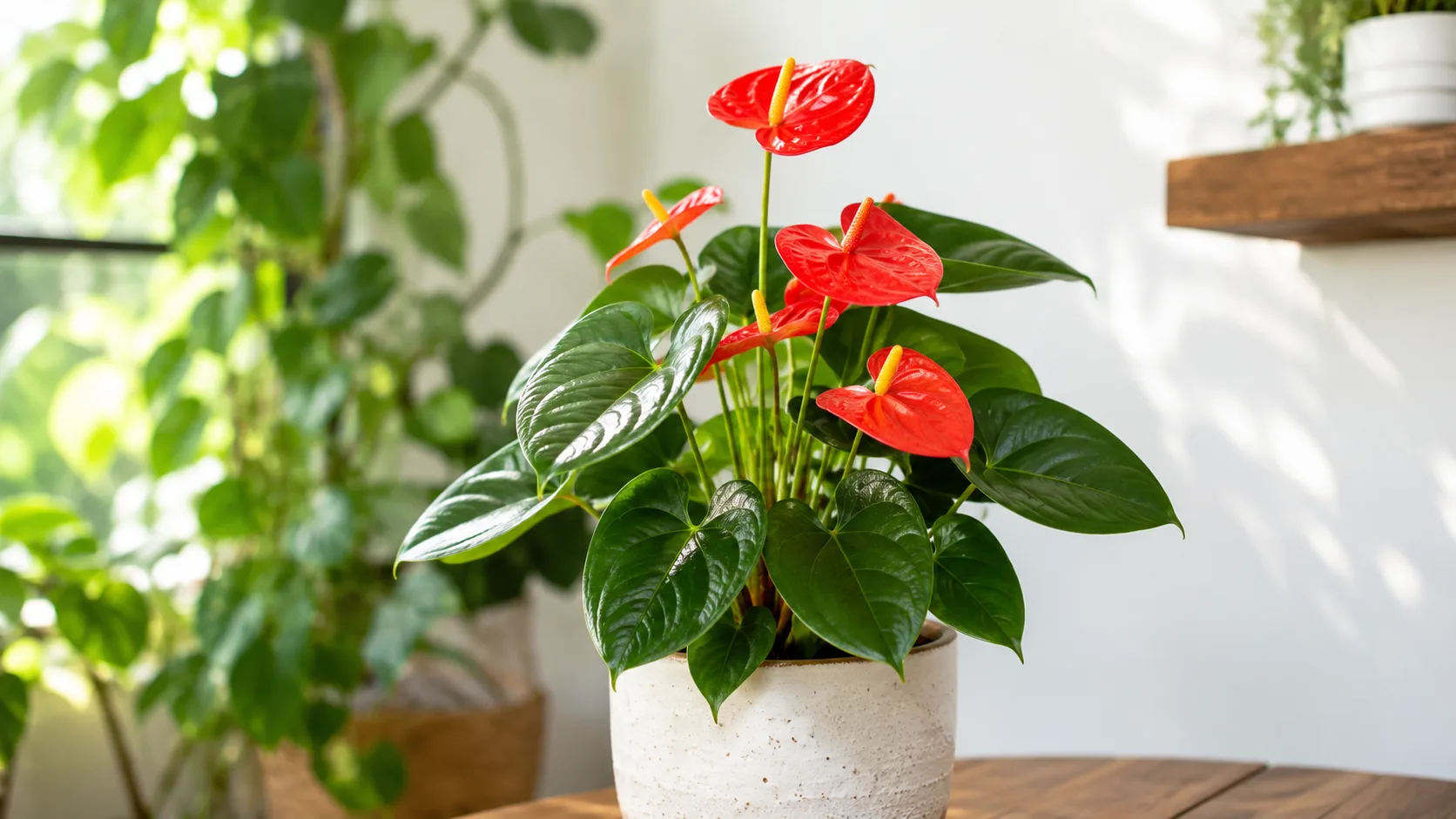
How Often to Water Anthurium (and How to Fix Common Mistakes)
How Often to Water Anthurium (and How to Fix Common Mistakes)
Anthurium watering comes down to one habit: check the soil before you pour, not the calendar on your phone. Anthurium andraeanum, the flamingo flower sold in most garden centers, is a semi-epiphytic aroid whose roots evolved for fast wet-to-dry cycles in tropical leaf litter, not for sitting in soggy peat for a week. When you match that rhythm with clean water and humidity above 50%, the plant rewards you with glossy leaves and waxy spathes that last weeks. When you miss it, the same plant yellows, wilts, and stops flowering while you chase the wrong fix. This guide covers the full system: how often to water in each season, how much water to use, what kind of water to choose, and how to recover when something goes wrong.
Why Anthurium Watering Is Different From Other Houseplants
Most beginner houseplants tolerate a wide margin of error. Pothos can sit in damp soil for days. Peace lilies wilt dramatically and bounce back after a drink. Anthuriums sit in a narrower band. Their thick, fleshy roots need oxygen as much as moisture, and they accumulate damage from fluoride and chlorine in municipal tap water over months, showing up as brown leaf tips that have nothing to do with how often you water.
The University of Florida IFAS Extension describes anthuriums as requiring moist, well-drained soil with humidity above 50%. When relative humidity drops below that threshold, leaves lose their glossy texture and may die off. That humidity requirement is not separate from watering; it directly changes how fast the plant pulls moisture from the soil through transpiration. A plant in a dry, heated room dries its pot faster than the same plant in a humid bathroom, even though both receive the same light.
Anthuriums also differ in how they signal distress. overwatering on Anthurium and underwatering on Anthurium can both produce yellow leaves and drooping foliage, which sends most owners in the wrong direction. The diagnostic move is always the same: feel the soil, lift the pot, and inspect the stem base before changing anything.
The “Top Inch Dry” Rule: How It Works and Why It Matters
The standard instruction for anthurium watering is to let the top 1 to 2 inches of soil dry before watering again. UF/IFAS interior production guidelines recommend allowing the top 2 to 3 centimeters of growing medium to dry slightly between waterings. The advice is sound, but the application matters more than the phrase itself.
The goal is not to let the entire pot go dry. It is to let the upper root zone breathe while the lower two-thirds of the mix still holds moisture the roots can reach. When you water thoroughly, the mix wets completely, oxygen is displaced, and roots absorb water. As the upper zone dries, air re-enters the pores between bark, perlite, and coco chips. That air exchange is what epiphytic roots evolved to expect between tropical rain showers.
The common mistake is testing only the surface. A thin crust can dry in a day while the middle of the pot stays saturated. Push your finger, a wooden skewer, or a moisture meter to roughly one-third of the pot depth, not just the surface, and only water when that zone reads dry. If the top inch is dry but the middle is still damp, wait two more days and check again.
How Often to Water Anthurium in Spring, Summer, Fall, and Winter
There is no calendar that survives every home. Frequency depends on light, temperature, humidity, pot size, and the mix itself. That said, a healthy mature anthurium in a 4- to 6-inch pot of chunky aroid mix, in Anthurium light guide, typically follows this pattern:
- Spring (March–May): about every 7 to 10 days. Growth is steady, daylight is lengthening, and the mix dries at a moderate pace. Let the top 1 to 2 inches dry between waterings.
- Summer (June–August): about every 5 to 7 days. Warmer temperatures and stronger light increase transpiration. Check the soil every few days rather than waiting for a calendar reminder.
- Fall (September–November): about every 7 to 10 days, gradually stretching. Shorter days and the start of indoor heating slow growth and extend dry-down time.
- Winter (December–February): about every 10 to 14 days. Let the top 2 to 3 inches dry before watering. If the plant is entering a six-week cool rest to trigger rebloom, stretch the interval further so the mix is mostly dry between drinks without going bone-dry.
These ranges assume a typical indoor environment. A plant under a humidifier in a sunroom will need water less often. A plant in a dry, heated living room with strong light will need water more often. Adjust the range to your room, not the other way around. Proven Winners recommends watering once the top 2 inches of soil become dry during active growth, then reducing frequency when growth slows in fall and winter.
Choosing the Right Water: Filtered, Rain, Distilled, or Tap?
Anthuriums are sensitive to three things in tap water: chlorine, fluoride, and dissolved minerals from hard water. Each causes a different symptom, and none of them respond to watering less often. The Missouri Botanical Garden notes that chlorine dissipates if water is left in an open container for 24 hours, but the same is not true for fluoride or hard-water minerals like calcium and magnesium.
In order of best to worst for a home grower:
- Rainwater is the gold standard. It is naturally soft, slightly acidic, and free of municipal additives. A clean collection barrel pays for itself in plant health over time.
- Distilled or reverse-osmosis water is mineral-free and safe, but also nutrient-free. Growers using it exclusively need a complete fertilizer to replace what the water would normally contribute.
- Filtered tap water through an activated carbon filter removes chlorine effectively and a meaningful share of chloramine, but reduces fluoride by only 40–60%, so it is a partial fix in fluoridated areas.
- Tap water, rested 24 hours, removes chlorine only. It does not remove fluoride, calcium, magnesium, or sodium. If your municipal supply is hard or fluoridated, brown tips will still appear over months.
- Sodium-softened water should never be used. The ion-exchange process substitutes sodium for calcium and magnesium, and anthurium roots cannot tolerate the sodium load. Leaf collapse can happen quickly.
If brown leaf tips and white mineral crust on the pot rim recur despite correct watering, switch the water source before you change the schedule. The Royal Horticultural Society specifically recommends rainwater or filtered water at room temperature for anthuriums.
How to Remove Chlorine and Fluoride From Tap Water
Two practical paths exist for a typical home. The first is a 24-hour resting period in an open container: chlorine off-gasses into the air and the water warms to room temperature. This works for free chlorine but not for fluoride, which does not evaporate from an open container. The second is dedicated filtration: activated carbon for chlorine and chloramine, reverse osmosis or distillation for fluoride and dissolved minerals.
For most growers, the cleanest answer is to collect rainwater and top up with rested or filtered tap water during dry spells. If brown tips persist, flush the soil every two to three months by watering until water runs freely from the drainage holes for several minutes, leaching accumulated salts. UF/IFAS production guidelines note that soluble salts above 3 dS/m produce visible tip burn, and optimal levels sit between 0.8 and 1.2 dS/m for interior plants.
Water Temperature and Why Cold Water Is a Mistake
Cold water shocks tropical roots. The plant’s vascular system slows, nutrient uptake drops, and lower leaves may yellow within a day or two of a cold pour. Always use room-temperature water, somewhere between 65 and 75°F. If you store rainwater in a basement or garage, bring it inside the day before you plan to water. If you use tap water, leaving it in an open container overnight does double duty: it warms the water and lets chlorine dissipate.
Thompson & Morgan and other tropical plant guides recommend boiled or distilled water that has been left to cool, which reinforces the same principle. The temperature of the water matters as much as its mineral content for a plant whose native range sits in warm, humid rainforests.
Bottom Watering vs Top Watering: Which Suits Anthurium?
Both methods work, but they are not interchangeable. Top watering, pouring evenly over the surface until water runs out the drainage holes, mimics tropical rainfall. It flushes accumulated salts from the mix, hydrates the entire root ball, and is the safest default. Proven Winners recommends a bottom-up method for anthuriums, lowering the pot into a bowl of room-temperature water for 15 to 20 minutes, which avoids splashing the foliage.
Bottom watering is useful for rehydrating a plant that has been allowed to dry out too far, because the mix wicks moisture upward from below. The risk is leaving the pot sitting in standing water for too long, which produces root rot on Anthurium in epiphytic roots that need air around them. Plant Addicts notes that bottom watering is a good method for anthurium, but only when the pot is removed promptly after the mix has absorbed enough moisture.
A good working rule: top water as the default, bottom water occasionally to rescue a bone-dry mix, and never leave the pot in a filled saucer for more than 20 minutes. After either method, drain thoroughly. The wet-feet rule prevents more anthurium deaths than any other single habit.
The Role of Humidity in Your Watering Rhythm
Humidity is the variable most guides under-weight. Anthurium leaves lose water through transpiration, and the rate of that loss is set by the gap between moisture in the leaf and moisture in the surrounding air. In a 70% room, the plant transpires slowly and the mix stays wet longer. In a 30% heated winter room, the same plant transpires aggressively, the mix dries faster, and the roots work harder to keep up.
UF/IFAS states that anthuriums require humidity above 50% and recommends keeping interior plants on trays of moist gravel or misting several times per day. Most indoor growers should target 60–80% for sustained growth and flowering. The practical effect is direct: in a humid room you water less often, and in a dry room you must water more often. Plants in dry air also benefit more from a humidifier than from extra water in the pot, because the limiting factor is leaf moisture, not root moisture.
Misting raises humidity briefly but does not substitute for a humidifier in open air. Wet leaves in low airflow can also invite fungal spots. If you choose between misting and running a humidifier for four hours a day, the humidifier wins every time.
Humidity Thresholds That Change How Fast Soil Dries
Below 50% relative humidity, anthurium transpiration accelerates sharply. Soil that lasted seven days in a humid room may dry in three or four in a dry one. Below 40%, leaf tips brown even when the soil is moist, because the leaf surface loses water faster than the roots can replace it. The cleanest signal of low humidity is brown, crispy leaf edges on a plant with a normally moist root zone.
A small ultrasonic humidifier running four to six hours a day, or a group of plants clustered around a pebble tray, is usually enough to keep a room above 60%. Check with a hygrometer rather than guessing. Winter is counterintuitive: you water less often on the calendar, but the heating system dries the air, so humidity support matters more in December than in July.
Reading the Soil: Three Reliable Moisture Checks
The most reliable anthurium watering habit is a consistent check, not a consistent day. Three methods work, and experienced growers use more than one.
- The finger test: push a clean finger to the first knuckle, about one inch. If the mix feels dry at that depth and the pot feels light, water. If it feels cool and slightly damp, wait two days and check again.
- The skewer test: insert a dry wooden chopstick or bamboo skewer to the pot’s drainage level. Pull it out after 30 seconds. Dry wood means water. Damp wood with dark mix clinging to it means wait.
- The pot weight test: lift the pot right after a thorough watering and remember that weight. Lift it again before the next check. A pot that is noticeably lighter needs water. A pot that is still heavy does not.
A moisture meter is a useful backup, not a substitute. Cheap two-prong meters are sensitive to salts and can read moist in a dry pot. A quality meter used as a sanity check, especially in winter, is a worthwhile tool.
Pot Weight, Pot Size, and Why Both Change the Schedule
Pot size changes everything. A 4-inch anthurium in a chunky mix may dry in five days. The same plant moved into an 8-inch pot can stay wet for two weeks, because the root system has not yet filled the new volume of mix. Anthurium repotting guide always shifts the schedule. After any repot, expect a longer dry-down for the first four to six weeks, then a reversion to the new normal as roots colonize the fresh mix.
Pot material matters too. Unglazed terracotta wicks moisture through the walls and dries the mix faster. Glazed ceramic and plastic hold moisture longer. A plant that thrived on a weekly schedule in nursery plastic may need water every five days after a move into terracotta. The weight test is the easiest way to learn the new rhythm: lift the pot every two days, note how the weight changes, and water when it drops below your mental baseline.
Drainage Holes, Cachepots, and the “Wet Feet” Trap
Drainage is non-negotiable. An anthurium in a pot without holes is a plant on a timer, and the timer is set to root rot. If you use a decorative cachepot to hide the nursery pot, the inner pot must drain freely and the cachepot must be emptied after every watering. Standing water in a cachepot is the most common silent killer of otherwise healthy anthuriums, because the inner pot sits in a slow bath of stale water that suffocates roots from the bottom up.
UF/IFAS interior guidelines emphasize watering thoroughly when it is time to water, then allowing the plant to dry slightly between waterings. Never let finished plants sit in standing water. A second drainage issue is the slow clog: after a year or two, drainage holes can become blocked by roots or compacted mix. Water pools at the bottom while the upper soil appears dry, and the plant shows classic overwatering symptoms without the soil ever feeling wet on top. If your pot drains noticeably slower than it used to, tip the plant out, clear the holes, and refresh the mix if needed.
Signs You Are Overwatering Anthurium
Overwatering is the single most common anthurium problem, and the symptoms look like underwatering to most beginners. Watch for this combination:
- Yellowing lower leaves that drop easily when touched. The oldest leaves go first because the plant shuts them down to protect newer growth.
- Wilting despite wet soil. on Anthurium The plant looks thirsty but the pot is heavy and damp. The roots have rotted and cannot move water up to the leaves.
- Soft, mushy stems at the soil line. Crown rot often follows root rot. The stem loses firmness and may turn dark brown or black.
- A sour, swampy smell from the mix. Active decomposition of roots and bark produces a distinctive musty odor. A healthy anthurium mix smells earthy, not sour.
- No new spathes despite otherwise reasonable care. Persistent overwatering suppresses flowering even before visible leaf damage appears.
- Edema on leaf undersides: small, water-soaked blisters that turn into corky brown spots. This is a sign the plant is taking up water faster than it can transpire it.
If two or more of these appear together, assume root rot rather than drought. UC IPM guidance notes that soil moisture above 70% of available water capacity creates conditions for Pythium infection, and a serious case can destroy half the root system before any leaf yellows visibly.
Signs You Are Underwatering Anthurium
Underwatering is less lethal than overwatering, but it leaves its own signature.
- Crispy, brown leaf edges and tips. The plant sacrifices the margins of older leaves first to preserve the core.
- Drooping leaves on Anthurium that feel dry and slightly papery, not soft and mushy. The pot feels noticeably light.
- Slow growth and small, pale new leaves. Without enough water, the plant cannot push out the same size or color of growth.
- Spent spathes browning prematurely. Flowers are the first thing an anthurium cuts back on when water is short.
- Soil pulling away from the pot edges. A chronically dry mix shrinks and creates a gap that lets water run down the sides instead of soaking in.
A single dry episode is usually recoverable. Repeated drought is harder on the fine root hairs and can leave the plant vulnerable to overwatering damage the next time you water, because damaged roots cannot process the same volume they used to.
How to Fix an Overwatered Anthurium (Root Rot Recovery)
If you suspect active rot, stop watering and unpot the plant within a day. Speed matters: every additional day in soggy mix gives the pathogen more root tissue to consume.
- Slide the plant out and shake off as much old mix as possible. Rinse the roots under lukewarm water so you can see them clearly.
- Trim every soft, brown, or black root back to firm, white, or pale tan tissue. Sterilize your scissors between cuts with rubbing alcohol to avoid spreading the pathogen.
- If the rot has reached the crown or main stem, cut back into healthy green tissue. Dust large cut surfaces with cinnamon or a labeled fungicide.
- Repot in a fresh, chunky, well-draining aroid mix. A blend of orchid bark, perlite, and coco chips drains faster than standard potting soil and is closer to the plant’s natural root environment.
- Choose a pot with drainage holes that is the same size or one size smaller than the previous pot. Overpotting is what caused the rot in many cases.
- Water lightly once, just to settle the mix around the roots, then hold off until the top inch dries. Resume normal watering only when you see new growth, which signals the root system is functional again.
- Hold fertilizer for at least a month. Damaged roots cannot process nutrients, and salts will burn recovering tissue.
If the rot is so advanced that no white roots remain, take healthy stem cuttings with a node each and propagate them in water or damp sphagnum. The mother plant may not recover, but the cuttings will.
How to Fix an Underwatered Anthurium Without Shocking It
The goal is to rehydrate gradually, not to flood. Pour a small amount of room-temperature water over the surface, let it soak in, then add a little more. Repeat until water drains from the bottom holes. For a severely dry plant, set the pot in a tray of room-temperature water for 15 to 20 minutes so the mix wicks moisture from below, then remove and let the pot drain fully.
Do not put the plant in direct sun to help it recover or feed it to boost growth. Both stress an already-stressed plant. Keep humidity above 60% for the next week or two, ideally with a humidifier, and avoid repotting or moving the plant until new growth is visible. Leaves that crisped at the edges will not heal, so trim the brown parts back to healthy tissue with clean scissors. New leaves that emerge with intact edges are your signal that the watering rhythm is back in line.
Using Watering Rhythm to Encourage More Blooms
Anthuriums do not bloom continuously. UF/IFAS notes that showy-flowered species bloom 4 to 6 times per year, with each flower lasting about six weeks. A healthy, mature plant can produce multiple spathe cycles under good light, but only if the watering rhythm supports both growth and rest.
In practice, the watering rhythm for bloom encouragement looks like this:
- During active growth and bloom: water when the top 1 to 2 inches dry, keep humidity at 60–80%, and feed monthly with a diluted, balanced or phosphorus-leaning fertilizer.
- After a spathe fades and is removed: stretch the interval so the mix dries to roughly two-thirds of pot depth between waterings. Cut fertilizer to none.
- During a six-week cool rest: if you can provide a cooler spot between 60 and 63°F, reduce watering to every 10 to 14 days, never letting the mix go bone-dry, and hold fertilizer entirely.
- When new leaves emerge after the rest: resume the active watering rhythm, restart light feeding once new growth is visible, and expect the first new spathe alongside the second or third new leaf.
Light is still the dominant bloom trigger, so do not expect this rhythm to compensate for a dim corner. But in a bright, indirect-light location, the watering rhythm is the difference between two bloom cycles a year and five.
Common Watering Mistakes That Stop Spathes From Forming
A few patterns show up over and over in plants that will not rebloom, and almost all of them are watering mistakes in disguise.
- Watering on a fixed weekly schedule in winter. The plant is resting, light is low, and the mix stays wet. Root stress suppresses flowering before the leaves show it.
- Letting the pot sit in a saucer of water. Even a shallow pool keeps the bottom of the root zone saturated and slowly suffocates fine roots.
- Switching to misting in place of proper watering. Mist raises leaf humidity briefly but does not address root moisture, and wet leaves in low airflow invite fungal spots.
- Compensating for low humidity with extra water. The leaves are losing moisture to dry air, not to a dry root zone. More water in the pot does not fix it. A humidifier does.
- Using water that has been softened with sodium. The plant shows generic stress and yellowing that does not match any other diagnosis. The fix is a new water source, not a new schedule.
- Fertilizing into a dry pot. Always water lightly first, then feed. Fertilizer salts concentrate in dry mix and burn the root hairs, especially the fine feeders near the surface.
- Skipping the post-bloom rest. A plant that is constantly pushed back into active growth with frequent water and feed may stay alive but stop initiating flower buds. The cool, drier rest is what triggers the next cycle.
Conclusion
Anthurium watering is less about a schedule and more about a relationship between soil, light, humidity, and water quality. The plant wants its roots to wet thoroughly, drain fast, and then sit in moist air for a few days before the next drink. Once you build that pattern with the right mix, a pot that drains freely, water that is free of fluoride and chlorine, and humidity that holds above 60%, the rest of the care picture gets much easier. When something does go wrong, the diagnostic question is almost always the same: how wet is the root zone, and what is in the water? Answer that with a soil check and a glance at the water source, and most anthurium problems resolve themselves within a few weeks. The plant’s job is to keep producing glossy leaves and waxy spathes; your job is to let the roots breathe, drink clean water, and rest on a rhythm that matches the seasons.
When to use this page vs other Anthurium guides
- Anthurium overview - Start here for whole-plant context before deep-diving this topic.
- Anthurium problems hub - Jump to symptom-specific fix guides when this care topic does not resolve the issue.
- Overwatering on Anthurium - Escalate here when watering adjustments are not enough.
- Underwatering on Anthurium - Escalate here when watering adjustments are not enough.
- Root Rot on Anthurium - Escalate here when watering adjustments are not enough.
Related Anthurium guides
- Anthurium overview
- Anthurium light
- Anthurium soil
- Anthurium propagation
- Anthurium fertilizer
- Anthurium repotting
- Overwatering on Anthurium
- Underwatering on Anthurium
- Root Rot on Anthurium
- Wilting on Anthurium
- Drooping Leaves on Anthurium
- Mold on Soil on Anthurium
Related tool
Try the Plant Watering Calculator with anthurium pre-selected to estimate needs for your setup.