Drooping Leaves on Anthurium: Causes, Checks & Fixes
Quick answer
Drooping leaves on Anthurium usually mean lost turgor on long petioles-from underwatering, overwatering/root rot, cold drafts, or repot shock. First step: lift the pot and check soil moisture at depth before you water again.
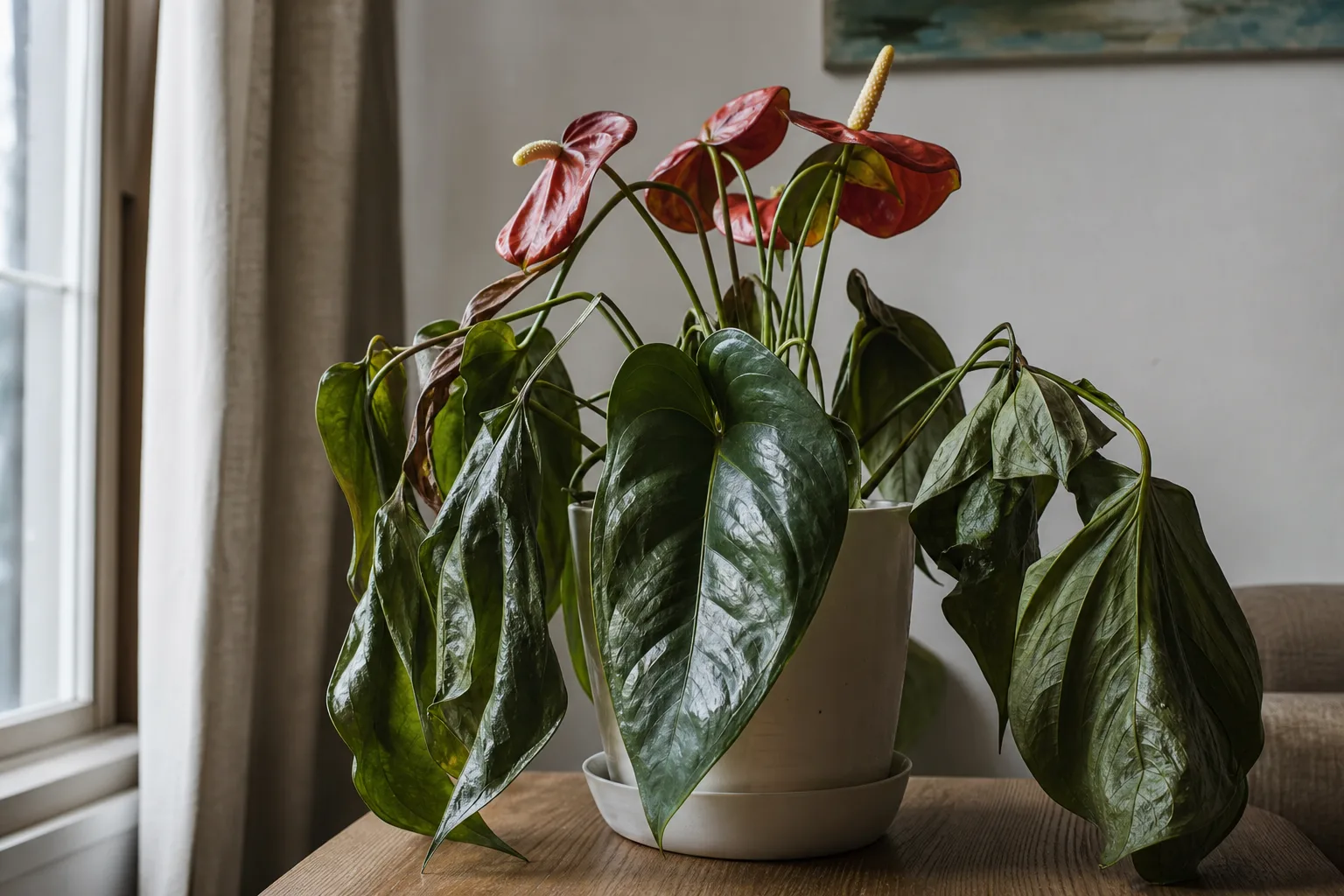
Drooping Leaves on Anthurium: Causes, Checks & Fixes
This guide covers drooping leaves on Anthurium. See also the general Drooping Leaves guide, watering, and light pages for this plant.
Drooping Leaves on Anthurium: Causes, Checks & Fixes
Quick answer
Drooping leaves on Anthurium (Anthurium andraeanum, flamingo flower) mean the plant has lost turgor-internal water pressure-in its foliage. On this aroid, that shows up first on long petioles: heart-shaped leaves hang at a sharper angle than usual while the blade may still look green. Because Anthurium is an epiphytic evergreen with fleshy roots adapted to brief wet-to-dry cycles, both drought and saturated mix can produce the same limp look through opposite failures.
First step: lift the pot and check soil moisture one-third of the way down-not the surface crust alone. A light, dry pot calls for one thorough soak; a heavy, wet pot means stop watering and inspect drainage and roots before you add another drink. That single wet-vs-dry fork prevents the most common mistake: watering an already soggy Anthurium and advancing root rot.
What drooping looks like on Anthurium
Anthurium droop is distinct from a single old leaf yellowing at the base. Systemic stress pulls multiple leaves down at once, often starting with outer or lower foliage while the crown still looks intact.
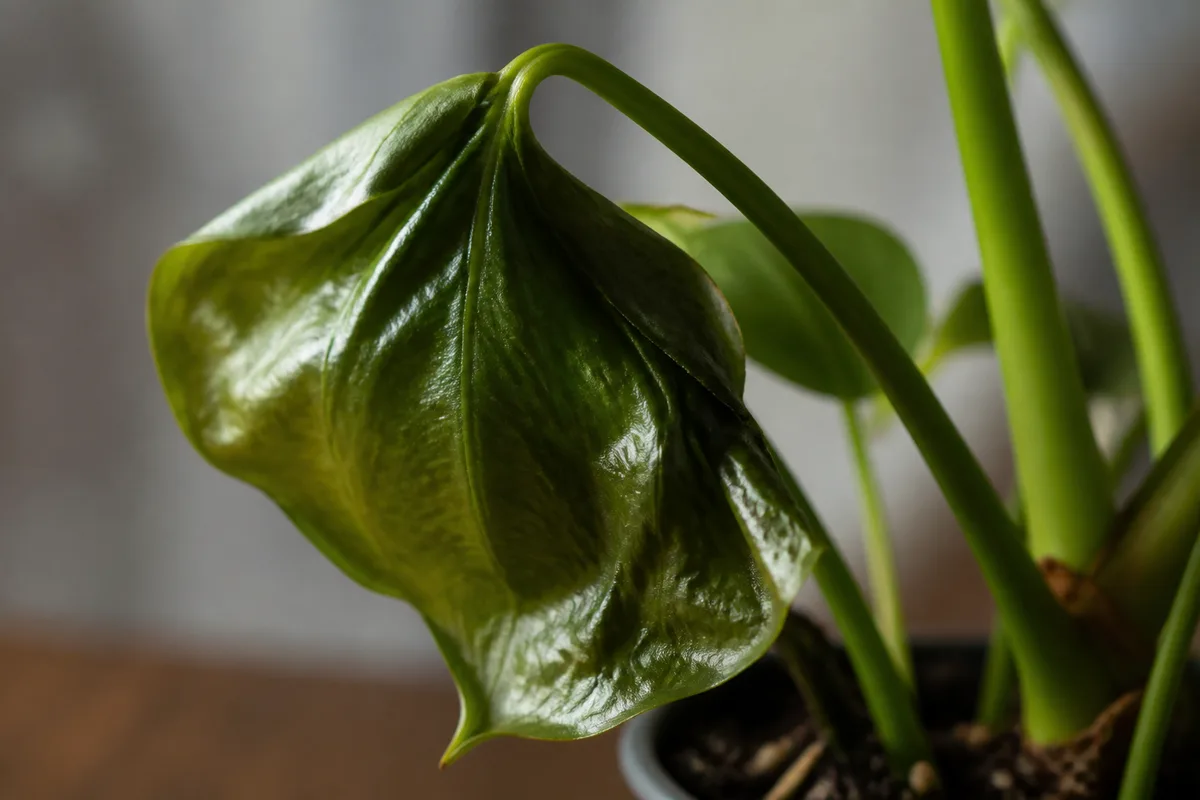
Drooping Leaves symptoms on Anthurium - compare with healthy tissue on the same plant.
Typical patterns:
- Limp petioles - Stems that normally hold leaves at a 45° angle sag toward horizontal; blades feel soft and thin rather than waxy-rigid
- Whole-plant slump - Several leaves droop together after a missed watering, heat spike, or draft-not one isolated leaf aging out
- Wet-soil droop - Leaves hang despite dark, cool mix; lower leaves may yellow while the pot stays heavy for many days
- Dry-soil droop - Mix has shrunk from the pot wall, pot feels light, and leaf edges may feel papery even before crisp brown tips appear
- Post-repot droop - Temporary limpness for three to seven days after division or Anthurium repotting guide while fine roots re-establish
- Cold-draft droop - Sudden limpness near a winter window, AC vent, or door without a change in watering rhythm
UF/IFAS lists tip burn, root damage, and reduced growth as symptoms of not enough water on Anthurium, while chlorotic lower leaves with root damage trace to excess water-the same genus shows droop from both extremes.
A healthy Anthurium holds glossy leaves on firm petioles. One lower leaf relaxing after months of display is normal senescence, not a crisis.
Why Anthurium leaves droop
Underwatering and drought stress
Anthurium needs consistent moisture-soils must not be allowed to dry out completely-yet many owners underwater after reading about root rot. When the root ball desiccates, roots cannot supply enough water to maintain petiole turgor. Chunky bark-heavy mix in bright light can go from “ready to water” to collapsed in two to three days.
See underwatering on Anthurium for the full dry-pot diagnostic path, hydrophobic mix rescue, and rehydration steps.
Overwatering, poor drainage, and root rot
Epiphytic roots need oxygen between drinks. When mix stays saturated, roots lose function and leaves droop despite wet soil-the classic misread that sends owners toward more water. Wilting with moist soil often means roots cannot absorb water because they are damaged. Yellow lower leaves, sour smell, and fungus gnats strengthen the overwatering diagnosis.
Follow overwatering when the pot stays heavy, and root rot when roots are mushy on inspection.
Cold drafts and temperature swings
Anthurium prefers regular summer temperatures with a minimum of 60°F in winter. NC State Extension notes these plants do not tolerate cold drafts or sudden temperature changes-air against cold glass in January can sit several degrees below room temperature. Cold slows root metabolism; leaves lose turgor even when soil moisture looks adequate.
Keep plants away from heating vents, refrigerator exhaust, and frequently opened exterior doors in winter.
Repotting and transplant shock
Spring repotting into fresh mix disturbs fine feeder roots. Anthurium often droops for several days after division or a move to a larger pot-especially if watered heavily immediately after repotting. Repotting is recommended during the spring when the plant is actively growing; handle carefully because sap can irritate skin.
Hold off on fertilizer and heavy pruning until turgor returns.
Low humidity (contributing factor)
Anthurium evolved in humid rainforest understory. NC State Extension targets 60 to 80% humidity; dry heated air increases transpiration so leaves lose turgor faster between waterings. Low humidity alone rarely collapses a well-watered plant, but it worsens drought droop and slows recovery-pair humidity fixes with correct soil moisture, not misting alone.
See low humidity if margins brown while the pot weight stays normal.
How to confirm the cause
Work through this numbered checklist before changing light, repotting, or feeding:
- Pot weight - Lift the container. Light and dry supports underwatering; heavy and cool supports overwatering or poor drainage.
- Moisture at depth - Push a finger or skewer one-third into the mix. Surface crust can lie; the middle of the pot tells the truth.
- Crown firmness - Press gently at the soil line. Firm green tissue with droop is less urgent than soft, translucent, or sunken crown tissue.
- Leaf pattern - Multiple limp petioles with green blades fit water stress; single lower yellow leaf may be normal aging.
- Recent events - Repot within the last week, move near a heat vent, or cold window exposure explains environmental droop without root disease.
- Drainage and smell - Blocked holes, standing saucer water, or sour odor point to saturated roots-do not water again yet.
- Spathe condition - Prematurely fading spathes plus dry deep mix fit drought; yellow lower leaves with wet mix fit root stress.
Wet-soil droop vs. dry-soil droop
| What you observe | Likely cause | First response |
|---|---|---|
| Light pot, dry mix throughout, crisp or thin leaf feel | Underwatering | One thorough soak until runoff; bottom-water if mix is hydrophobic |
| Heavy pot, wet mix for 3+ days, yellow lower leaves | Overwatering / root rot | Stop watering; check roots after surface dries |
| Drooped leaves after repot, mix evenly moist, firm crown | Transplant shock | Anthurium light guide, stable temperature, no extra fertilizer |
| Sudden droop near window or vent, soil moisture normal | Cold draft or heat stress | Move to stable 65–80°F zone away from drafts |
| Drooped leaves, adequate soil moisture, brown tips only | Low humidity contributor | Raise humidity; confirm watering rhythm on overview |
If symptoms overlap-dry top but wet bottom, or wilt returning within hours of watering-unpot and inspect root color and firmness before the next drink.
First fix for Anthurium drooping leaves
Lift the pot and check soil moisture at depth-then apply the matching single fix:
- If dry: Water thoroughly once until excess drains; empty the saucer. Do not fertilize or repot on day one. Details: underwatering guide.
- If wet: Stop watering until the top inch dries. Confirm drainage holes are open. If leaves keep declining after the surface dries, inspect roots before the next drink. Details: overwatering and root rot.
- If recently repotted: Keep evenly moist (not soggy), avoid direct sun, and wait five to seven days for turgor to return.
- If near a draft: Move to a stable spot within 65 to 80°F and away from cold glass or heat blasts.
Make one care correction, then observe for 48 hours. Stacking repot, prune, mist, and fertilizer on the same day obscures which fix worked.
Recovery timeline
Mild drought droop often shows visible improvement within 6 to 24 hours after a proper soak-petioles stiffen and the pot gains weight. Judge progress by turgid new growth rather than perfect old leaves; bent petioles from severe stress may not return fully upright even after the plant is healthy again.
Overwatering recovery takes longer: several days to two weeks once oxygen returns to the root zone and damaged roots are trimmed if needed. Repot shock droop usually resolves within three to seven days when temperature and light stay stable.
Escalate if droop persists more than 48 hours after the correct wet-or-dry fix, the crown softens, or wilt spreads despite appropriate soil moisture-those signs suggest advanced root loss, not a simple thirst episode.
Lookalike symptoms
Wilting on Anthurium describes the same limp petiole picture for many searchers; this page focuses on drooping-first diagnosis. See wilting on Anthurium for overlap notes-the wet-vs-dry fork still comes first.
Yellow leaves with wet soil often mean root stress rather than droop alone; lower-leaf yellowing plus limp foliage fits overwatering more than a pure turgor issue.
Not enough light produces dark green, elongated petioles over weeks-not sudden collapse-unless a recent move to harsh sun caused heat stress droop.
Spider mites cause stippling and webbing on undersides; droop from mite damage builds over days with dry air, not overnight from one missed watering.
What not to do
- Do not water because leaves look tired when soil is already wet - That deepens root rot on this moisture-sensitive aroid.
- Do not assume all drooping means underwatering - Anthurium wilts from both drought and drowning; pot weight is the split.
- Do not fertilize a collapsed plant - Salt on stressed roots worsens marginal burn; rehydrate or dry down first.
- Do not repot into a larger pot to “fix” droop on day one - Unless roots are visibly rotting, stabilize turgor before disturbing the root ball again.
- Do not stack repotting, pruning, and pesticide on the same day as your first moisture correction.
How to prevent drooping leaves next time
Build habits tied to Anthurium biology:
- Water when the top inch of mix dries - NC State Extension recommends checking when the top inch feels dry, not on a fixed calendar.
- Lift the pot weekly until you know what “ready to water” weight feels like for your container size.
- Use chunky well-drained aroid mix sized to the root mass-not dense peat that stays soggy in cool rooms.
- Maintain 60–80% humidity in dry seasons; group plants or use a pebble tray if needed.
- Keep minimum 60°F in winter and away from drafty windows and heat vents per Missouri Botanical Garden guidance.
- Repot in spring every two to three years with minimal root tearing; water once after repotting, then let the top inch dry before the next drink.
The anthurium overview and watering guide cover seasonal rhythm, water quality, and humidity in full.
When to worry
Treat drooping as urgent if the crown softens at soil level, mix smells sour with rapid yellowing, or multiple leaves collapse within 48 hours despite your wet-or-dry correction. Those patterns suggest advancing root rot or crown involvement-not a recoverable thirst episode.
For most owners, drooping on Anthurium resolves the same week once soil moisture matches root health: confirm wet vs. dry, apply the single matching fix, and watch for firm new leaves-not perfect old petioles.
When to use this page vs other Anthurium guides
- Anthurium watering guide - Use for routine moisture checks before assuming drooping leaves is the main issue.
- Anthurium problems hub - Browse all 20 common issues on this species.
- Underwatering on Anthurium - Different entry point when symptoms overlap with drooping leaves.
- Overwatering on Anthurium - Different entry point when symptoms overlap with drooping leaves.
- Root Rot on Anthurium - Different entry point when symptoms overlap with drooping leaves.