Anthurium Soil Mix: Best DIY Aroid Recipe + What to Buy
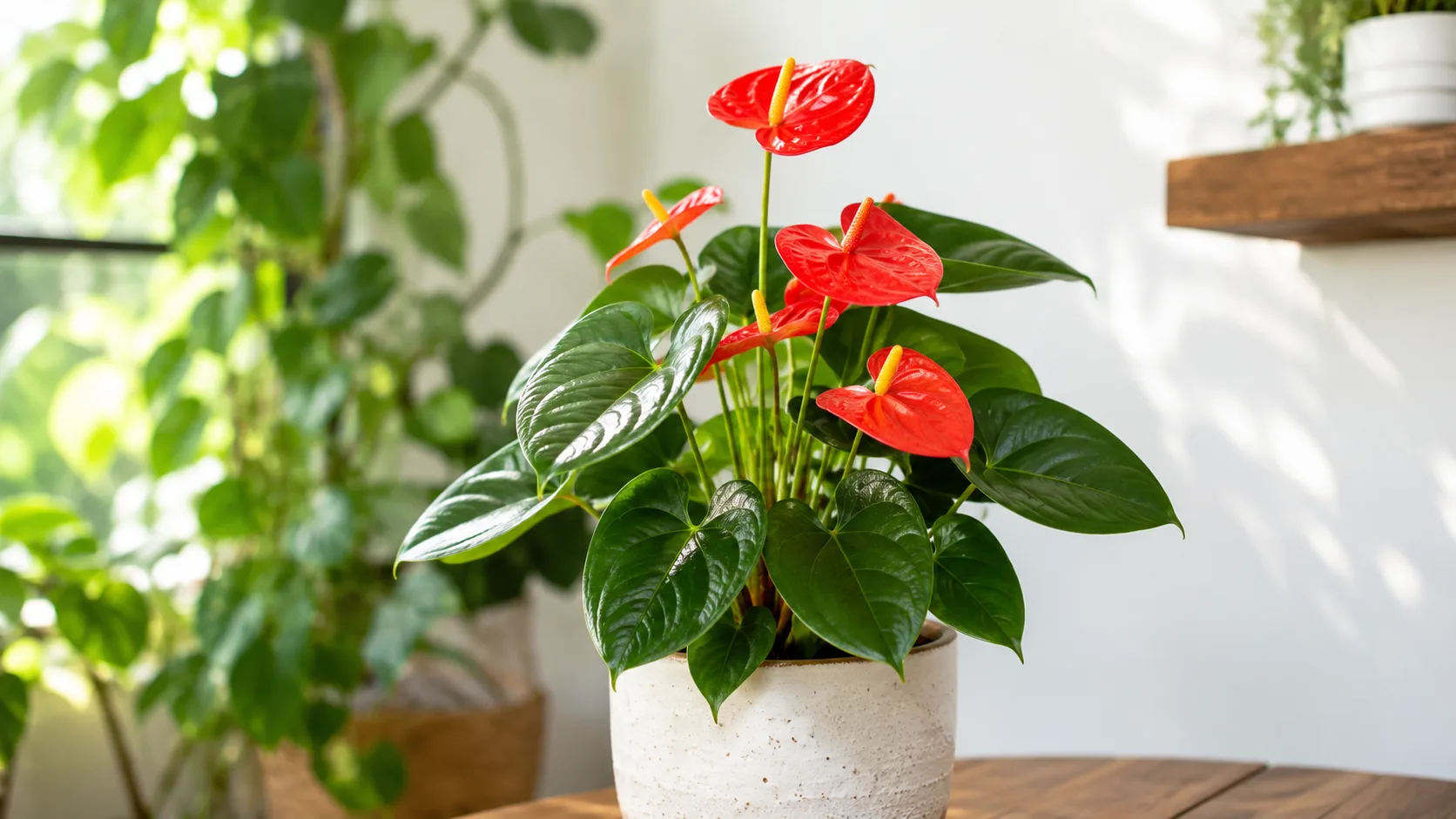
Anthurium Soil Mix: Best DIY Aroid Recipe + What to Buy
Anthurium Soil Mix: Best DIY Aroid Recipe + What to Buy
What Makes a Good Soil for Anthurium
A good anthurium soil mix is chunky, airy, and fast-draining, yet it holds just enough moisture that the roots never go bone-dry between waterings. Anthurium andraeanum, the flamingo flower sold in nearly every garden center, is an aroid with semi-epiphytic roots. In the wild rainforests of Colombia and Ecuador, those roots cling to tree branches and leaf litter where water runs off in seconds and air moves freely through the substrate. The Missouri Botanical Garden describes anthuriums as tropical evergreens that prefer Anthurium light guide, high humidity, and a well-drained growing medium. Your potting mix is the single most important tool for giving indoor roots that same balance of oxygen and moisture.
Most general houseplant potting soil fails this test. It is engineered for a wide range of plants and tends to be fine-textured, peat-heavy, and slow to dry in a typical indoor pot. Anthuriums tolerate a lot of cultural variation, but they do not tolerate a stagnant root zone. When the mix stays wet for days, roots lose oxygen, soft rot fungi move in, and the plant yellows even though the soil feels damp. The fix is almost never “water less” alone. It is almost always “use a chunkier, better-aerated mix.” That is what this guide gives you: a DIY recipe grounded in commercial production standards, store-bought options that actually work, and a clear list of substrates to avoid.
Why Anthuriums Need Orchid-Like Mix (Not Regular Potting Soil)
Anthuriums are not orchids, but they share a critical root preference with many orchids and climbing aroids: high oxygen at the root surface. Oglesby Plants International, a commercial anthurium producer, notes that most Anthurium species are native to tropical rainforests and are primarily epiphytic in nature. In cultivation they prefer evenly moist media when actively growing, but they will not tolerate saturated, poorly drained mixes. overwatering on Anthurium causes root damage and sudden yellowing of older leaves; underwatering on Anthurium causes tip burn and reduced growth. The margin between those two failure modes is narrow, and soil texture is what determines how wide that margin feels in your home.
Dense potting compost suffocates epiphytic-style roots because water fills the air pockets roots need for gas exchange. Once oxygen drops, roots stop functioning even when surrounded by moisture, which is why a wilting anthurium with damp soil is often a root-rot signal, not a thirst signal. Chunky bark creates structural channels that resist compaction. Perlite or pumice adds permanent air space. A modest amount of peat or coco coir holds water in porous fibers without turning the whole pot into mud. Together they mimic the loose, airy debris an anthurium would encounter on a rainforest branch, which is exactly what the roots evolved to grip.
Regular potting soil also breaks down faster than bark-based mixes. Within a year or two, peat particles collapse, perlite floats upward, and the mix that drained well on day one becomes a dense mat that holds water at the center while looking dry on top. Anthuriums are long-lived houseplants that can bloom repeatedly for years when the root zone stays healthy. Investing ten minutes in mixing a proper aroid substrate pays off across every future watering decision.
The Four Jobs Your Anthurium Soil Has to Do
Every successful anthurium mix performs four jobs at once. When you evaluate a bagged product or design your own blend, score it against these four jobs and you will immediately see where it will fail in your conditions.
Drain fast without drying out instantly
The mix must let excess water escape through drainage holes within seconds of watering, yet retain enough water in its pores that you are not watering every other day. That sounds contradictory until you understand porous structure. Bark and perlite create large channels where gravity pulls water out. Peat and coco coir absorb water into their fibers and release it slowly. A bark-heavy blend drains fast while staying lightly damp, which is the feel anthuriums prefer. If your mix dries so quickly that the plant wilts between normal waterings, add a little more coir or peat. If it stays wet for more than a week in a pot with a drainage hole, add more bark and perlite.
Keep air around the roots
Air-filled porosity is the volume of the pot occupied by air rather than water or solid particles after drainage. Tropical aroids do best when a meaningful fraction of the root zone stays aerated between waterings. Chunky orchid bark, coarse perlite, and pumice are the main tools for raising air space without eliminating moisture entirely. Fine potting mix alone often sits below the aeration threshold anthuriums need, which is why “add a handful of perlite” is rarely enough. You want visible bark pieces throughout the mix, not a few white flecks in dark mud.
Hold light moisture between waterings
Anthuriums like consistent moisture during active growth, but consistent does not mean constantly wet. The mix should reach a lightly moist state after watering and then dry partially before the next drink. Most indoor growers check the top inch or two; when it feels dry, water thoroughly until excess runs out the bottom. A mix with zero moisture-holding capacity, such as straight orchid bark, forces you into a high-maintenance Anthurium watering guide and increases stress during travel or busy weeks. A small fraction of peat or coco coir, typically 15 to 25 percent of the total volume, provides that buffer.
Stay slightly acidic
Anthuriums prefer a slightly acidic root zone. UF/IFAS Extension publication EP159 specifies substrate pH between 6.0 and 6.5 for commercial anthurium production, and Oglesby Plants International recommends maintaining pH between 5.5 and 6.5. Most peat-based and coco-based components naturally sit in or near that range. pH matters because it controls nutrient availability; a plant can show deficiency symptoms even when fertilizer is present if the mix is far outside the preferred band. Most home growers using a balanced peat-or-coir-based aroid mix never need to chase pH numbers, but a test strip is worth keeping if you use hard tap water or fertilize heavily.
The Ingredients That Actually Work
You can build an excellent anthurium mix from five ingredient categories, all widely available at garden centers or online. None are exotic. The art is in the ratios and in adjusting for your home’s humidity, light, and watering habits.
Orchid bark and pine bark (structure)
Orchid bark, usually graded fir or pine bark in medium pieces roughly 1 to 2 cm, is the structural backbone of any good anthurium mix. It creates large air channels, resists compaction far longer than peat, and gives epiphytic roots something coarse to grip. UF/IFAS lists bark as one third of its standard 1:1:1 production mix alongside peat and perlite, which tells you how central bark is to professional anthurium culture. Fine pine bark fines alone are too small and mat down; medium-grade orchid bark is the sweet spot for flamingo flowers in typical 4-to-6-inch pots. Coco chips can substitute for part of the bark if you prefer a peat-free mix, though they behave slightly differently in water retention.
Perlite and pumice (aeration)
Perlite is expanded volcanic glass: lightweight, white, porous, and pH-neutral. It creates air pockets and improves drainage without decomposing. Pumice is a heavier volcanic rock with more weight and slightly higher nutrient-holding capacity. Perlite floats to the top over time and can break into dust; pumice stays put and lasts longer in large pots. For standard indoor anthuriums in plastic or ceramic pots, perlite is perfectly adequate. For growers who want a longer-lived substrate or who keep plants in heavier terra-cotta, swapping some perlite for pumice is a meaningful upgrade. Either way, aim for roughly 20 to 30 percent of the total mix volume.
Peat moss and coco coir (moisture buffer)
Sphagnum peat moss is the traditional moisture-holding component in commercial anthurium mixes. It absorbs water readily, holds it in fibers, and contributes natural acidity. Coco coir, made from coconut husks, is the peat-free alternative with a more neutral pH and easier rewetting when dry. Both work; the choice often comes down to sustainability preference and what you already have on hand. UF/IFAS uses Canadian peat in its published 1:1:1 formula. Home growers frequently replace part or all of the peat with coco coir without problems, especially when bark and perlite percentages stay high. Neither peat nor coir should dominate the mix alone; they are buffers, not the whole substrate.
Horticultural charcoal and worm castings
Horticultural charcoal, added at roughly 5 to 10 percent of total volume, is optional but useful. Its porous structure adsorbs organic compounds that accumulate in closed pots, lightly buffers pH, and helps old mix smell fresher between repots. Worm castings at about 5 percent add gentle slow-release nutrition and beneficial microbes without the burn risk of synthetic fertilizer prills in fresh mix. Neither ingredient is strictly required; your anthurium will grow without them. If you keep plants in the same pot for two or more years between full repots, charcoal is a small upgrade worth including.
The Best DIY Aroid Mix for Anthurium
Commercial anthurium growers have used the same foundation for decades. UF/IFAS Extension EP159 states that rooting and production are best in well-aerated potting mixes of 1:1:1 peat, perlite, and bark, with substrate pH between 6.0 and 6.5. That equal-parts formula is the scientific baseline. Home growers often push the bark higher and add coir, charcoal, and worm castings because indoor pots dry differently from greenhouse benches and because a little slow nutrition in the mix reduces early fertilizer stress.
The most reliable home recipe, by volume:
- 40 to 45 percent medium-grade orchid bark (fir or pine)
- 25 percent perlite or pumice, or a 50/50 blend
- 20 percent coco coir (pre-soaked and drained) or peat-based potting mix
- 8 percent horticultural charcoal
- 7 percent worm castings
This produces a mix that is visibly chunky, light in the hand, and slightly damp after you run water through it. For a simpler three-ingredient version closer to the UF/IFAS standard, use 1 part peat or coir, 1 part perlite, and 1 part orchid bark. That works well and is easy to remember. The five-ingredient version above performs better long-term because the extra bark resists compaction and the castings plus charcoal improve stability across multiple growing seasons.
Run the wet squeeze test on your finished batch. Grab a fistful after saturating the mix. Squeeze. A good anthurium blend holds its shape loosely, then crumbles when you poke it. Water should not stream out like gravel, and the ball should not stay tight and muddy. If it collapses instantly and feels dusty, add a little coir or peat. If it stays wet and dense, add bark and perlite.
Adjust for your home. In a dry winter apartment with forced-air heat, bump coir to 25 percent and bark to 40 percent. In a humid bathroom with slower drying, push bark to 50 percent and drop coir to 15 percent. If you tend to overwater, increase perlite and bark before changing your calendar. The mix should make the right watering rhythm obvious: top inch dry, then water until runoff.
Pre-Made Mixes Worth Buying (and How to Upgrade Them)
Not everyone wants to source five components. Several store-bought options work for anthuriums with light amending, and a few specialty aroid mixes are ready to use out of the bag.
Specialty aroid or anthurium mixes from reputable plant shops or online sellers are usually the easiest path. Read the ingredient list. Good ones contain visible bark, perlite or pumice, coco coir or peat, and sometimes charcoal, with little actual mineral soil. If the bag feels light and chunky when you squeeze it, you can often pot directly. If it looks like dark fine compost with a few bark chips, amend before use.
Orchid bark mix plus perlite at 1:1 is the classic beginner shortcut recommended across aroid guides. It drains correctly, is widely available, and costs less than sourcing five separate ingredients. The trade-off is faster drying and no built-in nutrition, so you will water a bit more carefully and fertilize lightly during the growing season. Adding a handful of coco coir per quart of mix improves moisture buffering without sacrificing much drainage.
FoxFarm Ocean Forest or Happy Frog, mixed 2 parts bagged mix to 1 part perlite and 1 part orchid bark, produces a rich, well-aerated anthurium substrate. Out of the bag these mixes are slightly dense for epiphytic roots in small pots; the perlite and bark upgrade fixes that.
Miracle-Gro Indoor Potting Mix is inexpensive and easy to find but too fine and often loaded with slow-release fertilizer prills that can stress fresh roots. Amend it 1:1 with perlite and add a generous volume of orchid bark, targeting at least 30 to 40 percent chunky material in the final blend.
Espoma Organic Cactus Mix drains well but dries fast. Blend it 1:1 with coco coir to raise moisture retention to anthurium levels, then add bark if the texture still looks too fine.
The upgrade rule for any pre-made mix: if the bag feels heavy and the contents look like dark, uniform soil, add at least 30 to 40 percent chunky material by volume before potting an anthurium. If the bag already feels light with visible bark, you may only need a small coir addition in dry homes.
Can You Use Orchid Mix for Anthurium?
Yes, with adjustments. Anthuriums and orchids both benefit from coarse bark structure and high oxygen at the roots, which is why orchid bark appears in nearly every anthurium recipe. Straight orchid mix, however, is often too coarse and too fast-drying for anthuriums on its own. Orchid mixes prioritize air over moisture retention because many orchids prefer to dry sharply between waterings. Anthuriums want evenly moist conditions during active growth, not a cycle of flood and drought.
The practical approach: use orchid bark mix as a base, not the whole substrate. A simple blend of 2 parts orchid mix, 1 part perlite, and 1 part coco coir or peat-based potting mix gives you orchid-grade drainage with enough moisture buffer for a flamingo flower in normal indoor light. If you already have a bag of orchid mix and perlite, the 1:1 shortcut mentioned above works; just watch drying speed for the first two weeks and add coir if the plant wilts between waterings despite your normal schedule.
Do not confuse “orchid mix” with “orchid moss.” Sphagnum moss alone holds far too much water for a potted anthurium unless you are rooting a cutting in a controlled propagation setup. Bark-based orchid mix is the relevant product.
What Soil to Avoid
A short list of substrates causes most anthurium soil problems indoors.
Garden soil and in-ground topsoil compact within weeks in a container, collapse air pockets, and often introduce root-rot fungi, pests, and weed seeds. Anthuriums are not terrestrial border plants; they are tropical aroids that expect loose, organic debris, not clay-heavy mineral soil.
Dense all-purpose potting mix used straight from the bag is the most common slow-motion mistake. It works for a season, then compacts, then the plant yellows and stops blooming while the mix stays damp. Always amend heavy bagged mixes with bark and perlite, or switch to an aroid-specific blend.
Moisture-control potting mixes with water-retention polymers keep the root zone wet longer. Anthuriums fail from excess moisture far more often than from drought indoors. These products solve the wrong problem.
Pure peat moss or pure coco coir without bark and perlite is too water-retentive and too low in air-filled porosity. Both are excellent as partial ingredients and poor choices as the entire mix.
Vermiculite in large long-term pots deserves caution. Oglesby Plants International advises avoiding vermiculite except in small 4-inch containers because it compacts over time in long-term crops and can waterlog. Perlite or pumice is the safer aeration choice for anthuriums you plan to keep in the same pot for years.
Reused soil from a plant that had root rot on Anthurium can carry Pythium, Phytophthora, and other pathogens into a fresh pot. Discard diseased mix, sterilize or replace the pot, and start with fresh substrate.
When to Refresh or Repot
Anthuriums do not need frequent Anthurium repotting guide. Every two to three years is a reasonable default, with spring or early summer as the best window when the plant is pushing new growth. That schedule assumes the mix is still draining well and the pot size is appropriate.
Repot or refresh sooner if you see roots circling the surface or escaping drainage holes, if water runs straight through the pot the moment you pour it (often a sign the mix has gone hydrophobic or broken down), if the mix stays wet for more than ten days after a normal watering, or if the plant wilts within hours of being watered despite moist soil (a classic root-decline signal). A sour or swampy smell from the root zone means oxygen has been low for too long and the substrate needs replacement, not another top watering.
When upsizing, go up only one inch, maybe two, in pot diameter. Oversized pots hold excess soil the roots cannot use, and that unused soil stays wet, which is exactly the condition anthuriums cannot handle. Even if the pot size stays the same, replace the mix entirely every two to three years because bark and coir decompose and lose structure. Top-dressing with fresh bark helps briefly but cannot fix a compacted core.
If you suspect active root rot, repot immediately regardless of season. Remove the plant, rinse or shake off old mix, trim black mushy roots with clean scissors, and repot into fresh dry mix. Wait a day before watering lightly so cut surfaces callus. Withhold fertilizer for six to eight weeks while roots recover.
Common Soil Mistakes That Kill Anthuriums
Several patterns repeat in failed anthurium pots, and soil is usually involved.
The “nice bag of potting mix, used as is” mistake is number one. Standard houseplant mix compacts, holds water too long, and starves roots of oxygen. The plant looks fine for months, then lower leaves yellow, blooms stop, and recovery requires repotting into a proper mix.
Overpotting into a large decorative container is number two. Unused soil stays wet. The plant sits in anaerobic conditions while the grower keeps watering on schedule because the surface looks dry. Match pot size to root mass, not leaf spread.
Watering on a calendar instead of by soil feel defeats even a perfect mix. The top inch or two should guide you: dry, then water thoroughly until runoff. A drainage hole is not optional for long-term indoor anthuriums.
Planting directly into a cache pot with no drainage traps water at the bottom. Nursery pots with holes inside decorative covers work; sealed ceramic with no exit path does not.
Never refreshing old mix lets a once-good blend turn into a dense, hydrophobic mat. If water beads on the surface and runs down the sides while the root ball stays dry, the whole substrate needs replacement, not another splash from the can.
Chasing symptoms above the soil while the root zone stays wrong prolongs decline. Yellow leaves, no blooms, and wilting with damp soil often trace back to substrate texture and pot size before they trace back to fertilizer or light. Fix the soil system first, then evaluate light and feeding.
Conclusion
The best anthurium soil mix is a chunky, fast-draining, slightly acidic aroid blend built around orchid bark, with perlite or pumice for aeration and a modest fraction of peat or coco coir for moisture buffering. UF/IFAS commercial guidance anchors the foundation at 1:1:1 peat, perlite, and bark with pH near 6.0 to 6.5; the home recipe of roughly 40 to 45 percent bark, 25 percent perlite, 20 percent coir, plus small amounts of charcoal and worm castings turns that science into a mix that behaves well in ordinary indoor pots. If you would rather not blend from scratch, start with orchid mix amended by perlite and coir, or upgrade a quality peat-based bagged mix with bark and perlite until it feels visibly chunky in your hand. Avoid garden soil, moisture-control mixes, oversized pots, and stale compacted substrate. Refresh the mix every two to three years, water when the top inch dries, and keep a drainage hole open. Get the soil right and watering, blooming, and recovery from stress all become much easier to manage.
When to use this page vs other Anthurium guides
- Anthurium overview - Start here for whole-plant context before deep-diving this topic.
- Anthurium problems hub - Jump to symptom-specific fix guides when this care topic does not resolve the issue.
- Root Rot on Anthurium - Escalate here when soil adjustments are not enough.
- Mold on Soil on Anthurium - Escalate here when soil adjustments are not enough.
Related Anthurium guides
- Anthurium overview
- Anthurium watering
- Anthurium light
- Anthurium propagation
- Anthurium fertilizer
- Anthurium repotting
- Root Rot on Anthurium
- Mold on Soil on Anthurium
- Anthurium problems
Related tool
Try the Soil Mix Calculator with anthurium pre-selected to estimate needs for your setup.