Mold on Soil on Anthurium: Causes, Checks & Fixes
Quick answer
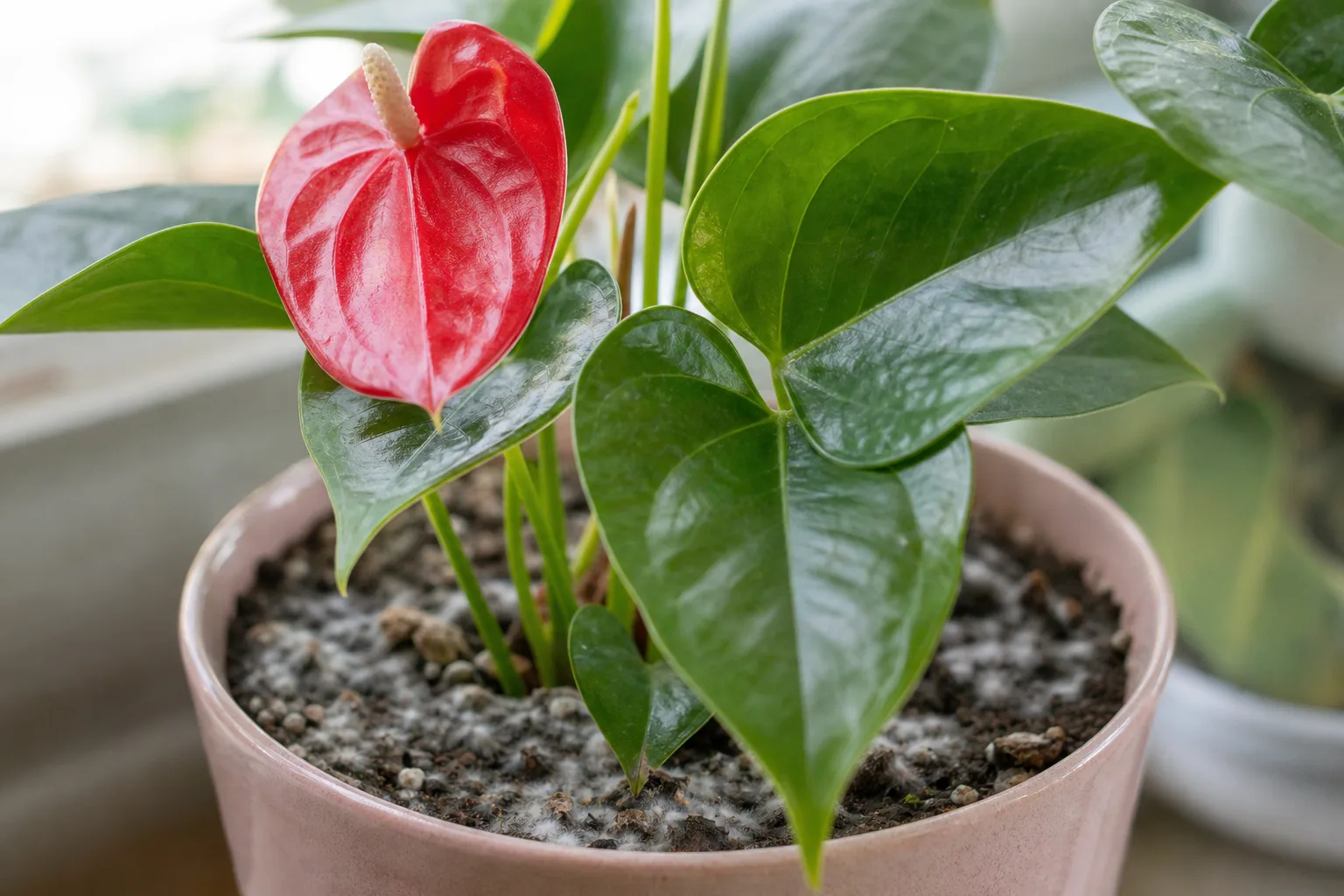
White or gray fuzz on Anthurium's soil is almost always harmless saprophytic fungus on wet organic mix-not a leaf disease. First step: stop watering, scrape the moldy surface, and let the top inch dry before the next drink.
Mold on Soil on Anthurium: Causes, Checks & Fixes
This guide covers mold on soil on Anthurium. See also the general Mold on Soil guide, watering, and light pages for this plant.
Mold on Soil on Anthurium: Causes, Checks & Fixes
Quick answer
White or gray fuzz on the soil surface of your Anthurium (Anthurium andraeanum, flamingo flower) is almost always saprophytic fungus feeding on dead organic matter in wet potting mix-not mold attacking the leaves or spathes. It is unsightly but rarely harms a healthy plant on its own.
It does mean the top layer stays moist too long, which is risky for an epiphytic aroid whose roots need air as much as moisture. Chronic surface wetness often precedes root rot on Anthurium, fungus gnats, and yellow lower leaves.
First step: stop watering and scrape off the moldy top layer. Remove the fuzzy surface and the top quarter-inch of wet mix, discard it, and do not water again until the top inch of soil feels dry to your finger. That single pause plus surface cleanup tells you whether you are dealing with cosmetic fungus or a deeper watering problem.
What mold on soil looks like on Anthurium
Surface mold on Anthurium pots usually appears as:
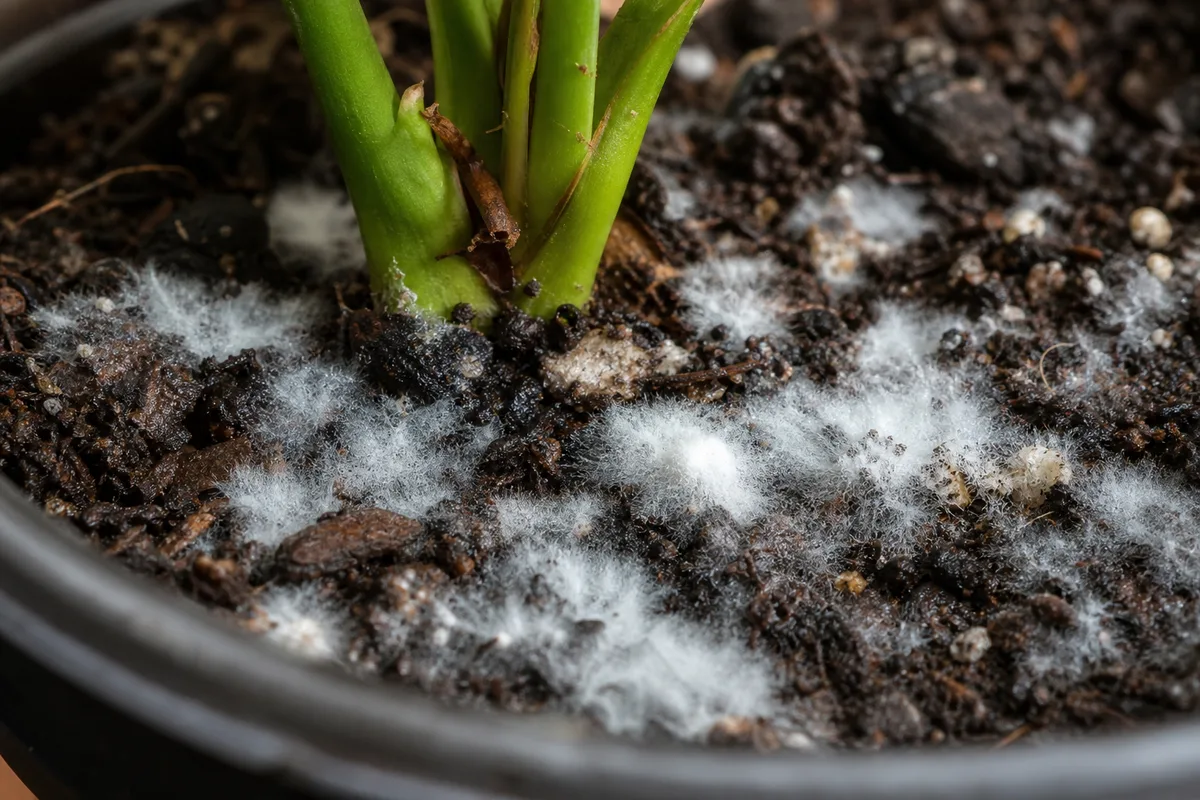
Mold on Soil symptoms on Anthurium - compare with healthy tissue on the same plant.
- White, gray, or occasionally pale green fuzzy patches on the soil surface
- Growth concentrated after recent watering or when the pot has sat in a humid bathroom without drying
- A musty smell near the pot in advanced cases, especially if leaf litter is decaying on the surface
- Healthy-looking spathes and leaves above the soil line in early stages-unlike root rot, which yellows and wilts foliage while mix stays wet
The mold stays on the soil and debris, not on the waxy spathe or glossy leaf blade. If you see fuzzy growth on leaf tissue, that is a different problem (often botrytis or powdery mildew from wet foliage)-not the same as harmless soil-surface fungus.
Small dark flies hovering near the pot often appear alongside chronically damp mix. They share the same wet-soil habitat as surface mold even though they are a separate pest.
Why Anthurium gets mold on soil
Anthurium evolved as a semi-epiphytic rainforest plant whose roots cling to bark and leaf litter-not dense, waterlogged garden soil. In a home pot, surface mold appears when culture keeps the top of the mix wet longer than the plant uses water.
overwatering on Anthurium or watering on a calendar is the most common trigger. Anthurium wants consistent moisture but cannot tolerate soggy roots. When you water before the top inch dries-especially in winter when uptake slows-the surface stays damp and saprophytic fungi colonize bark chips, peat, and fallen organic debris.
Dense or peat-heavy mix makes the problem worse. Store-bought blends that hold water like a sponge keep the surface wet even when you think you watered lightly. Chunky aroid mix with bark and perlite dries faster; heavy peat does not.
High humidity without airflow slows surface drying. Anthurium likes humid air for leaf edges, but a steamy bathroom corner with low light and frequent splashing can leave the soil surface perpetually damp. Humidity on leaves is not the same as stagnant wet soil.
Organic debris on the soil feeds fungus. Spent red spathes, yellowing leaf bases, and pruned stems that fall into the pot give saprophytic molds a food source. Anthuriums bloom for weeks; old inflorescences left to rot on the surface are a common hidden cause.
Oversized pots hold a large wet zone around a small root ball. The top may look moldy while deeper mix stays saturated for days-exactly the pattern that stresses epiphytic roots.
Low light slows transpiration. A dim shelf Anthurium uses less water than the same plant in Anthurium light guide, so the same Anthurium watering guide leaves the surface wet longer.
How to confirm the cause
Work through these checks before Anthurium repotting guide or spraying fungicide:
- Surface only? - Fuzz limited to the top layer with firm stems and normal spathes points to cosmetic mold. Yellowing lower leaves plus wet mix suggests overwatering beyond surface fungus.
- Finger test at one inch - Dry top inch with mold that appeared after one heavy drink may mean a single overwater event. Wet top inch days after the last watering means the rhythm is off.
- Pot weight - A heavy pot days after watering confirms slow drainage or excess volume. A light pot with mold may mean you top-watered heavily on already-wet mix.
- Smell - Musty surface odor from decaying leaves is common with mold. Sour or swampy smell from the drainage hole suggests anaerobic mix and possible root trouble.
- Crown firmness - Press the base of stems where they meet soil. Firm tissue supports a surface-mold diagnosis. Soft, collapsing crown tissue needs root inspection, not just scraping.
- Debris scan - Lift spent spathes and fallen leaves. Mold clustered around decaying matter confirms a food source you can remove today.
- Gnats and timing - Flies plus mold that returns within three to five days of scraping means the soil is still too wet overall.
If spathes stay glossy, new leaves unfurl cleanly, and only the soil surface is fuzzy, you can proceed with the surface fix. If multiple lower leaves yellow while soil stays wet, treat this as a watering and root-zone problem, not mold alone.
First fix for Anthurium
Stop watering and scrape the moldy surface today.
Use a spoon or gloved fingers to remove the fuzzy layer and the top quarter-inch of mix beneath it. Bag and discard the scraped material-do not compost it on other houseplants. Wearing gloves is sensible because Anthurium sap can irritate skin.
Leave the pot in bright indirect light with space around it for airflow. Do not mist the soil surface. Wait until the top inch of mix feels dry before the next thorough watering-and when you do water, empty the saucer within thirty minutes.
That pause alone often clears surface mold within a week because saprophytic fungi need constant surface moisture to persist. Scraping reduces spore load; drying breaks the cycle.
Step-by-step recovery
If mold was mild and stems are firm, follow this order after the first scrape and dry-down:
- Remove debris - Pull spent spathes, yellow leaf bases, and any organic topping that holds moisture on the surface.
- Refresh the top layer - Replace scraped mix with a small amount of dry, chunky aroid blend matching what the plant already grows in-orchid bark, perlite, and potting soil in roughly equal parts-not fresh peat piled deep.
- Adjust watering - Water thoroughly only when the top inch is dry. In winter, that may mean ten to fourteen days between drinks; in active summer growth, five to seven days is more typical for many homes.
- Improve drying conditions - Move the pot slightly away from a steamy shower stall if the surface never dries, or add an inch of space between grouped plants so air reaches the soil line.
- Address gnats if present - Let the top one to two inches dry between waterings, set yellow sticky traps near the pot base, and remove decaying matter. Fix moisture first; traps alone do not solve wet soil.
- Repot only if mold keeps returning - After two to three scrape-and-dry cycles fail, unpot, inspect roots, trim any mushy tissue, and repot into fresh chunky mix in a right-sized container with drainage holes. Do not repot on day one for surface fuzz alone.
Skip cinnamon, hydrogen peroxide drench, and fungicide unless mold persists after moisture correction-or unless a separate leaf disease is confirmed. Chemicals on the soil do not replace drying the mix.
Recovery timeline
Within three to seven days of stopping water and scraping, visible surface mold should shrink or disappear as the top layer dries.
One to two weeks without recurrence is a good sign your watering rhythm matches how fast the pot dries in your light and humidity.
Existing leaves and spathes do not need to “recover” from soil mold-they were never infected. Judge success by no new fuzz, firm stems, and continued unfurling of new leaves.
Worsening signs during the same window include spreading yellow lower leaves, persistent musty smell from the drainage hole, soft crown tissue, or mold returning within forty-eight hours of scraping. Those mean the root zone is still too wet and needs deeper correction-often repotting and root inspection.
Lookalike symptoms
- Root rot from overwatering - Yellow lower leaves, wilting despite wet mix, sour smell, mushy roots when unpotted. Surface mold may be present, but stem softness and leaf decline are the urgent clues.
- Fungus gnats alone on Anthurium - Flying adults without visible mold still mean wet soil. Fix drying the same way.
- Green algae on soil - Slimy green film in very low light with constant surface moisture. Also harmless to roots but signals the same overwatering pattern; scrape and dry.
- Powdery mildew or leaf botrytis - White or gray growth on leaf or spathe tissue, not soil. Requires leaf-level airflow and moisture control, not just scraping the pot surface.
- Yellow mushrooms - Larger fruiting bodies on the surface are still saprophytic and harmless to the plant, but indicate very wet organic mix. Remove if pets might ingest them; fix watering regardless.
What not to do
Do not keep watering on schedule because the plant “looks fine” while mold spreads on the surface-that extends wet conditions.
Do not mist the soil or leave the pot in a full saucer to “maintain humidity.” Anthurium humidity belongs in the air around leaves, not stagnant water at the roots.
Do not reach for fungicide first on harmless surface mold. Scraping and drying solve most cases without chemicals.
Do not cover the soil with decorative moss or rocks that trap moisture until the drying rhythm is fixed.
Do not repot immediately into a larger pot for cosmetic mold-that adds wet soil volume and slows drying.
Do not ignore spent spathes sitting on the mix-they are a common mold food source on blooming Anthuriums.
How to prevent mold next time
Match watering to how fast your pot dries, not a calendar. Check the top inch before every drink. Reduce frequency in winter when growth slows but never let the entire root ball bone-dry for weeks.
Use chunky, well-aerated aroid mix and a pot with drainage holes only one size larger than the root ball. Empty saucers after watering.
Remove expired spathes and yellow leaf bases before they decay on the soil surface.
Place the plant where it gets bright indirect light so it uses water steadily-dim corners stay wet longer.
Consider bottom-watering occasionally so the surface stays drier while roots still drink from below; let the top inch dry between sessions either way.
If fungus gnats appear, treat them as a moisture alarm and dry the top layer aggressively rather than relying on traps alone.
When to worry
Treat surface mold as urgent when lower leaves yellow in clusters, the crown feels soft, the mix smells sour from the drainage hole, or wilting continues while soil is wet. Those patterns can overlap with root rot from excess water on Anthurium and need unpotting, root trimming, and fresh airy mix-not another surface scrape.
Cosmetic white fuzz on dry-day-old soil after one heavy watering, with firm stems and healthy spathes, can wait for a scrape-and-dry fix without repotting.
Conclusion
Mold on Anthurium soil is a moisture and hygiene signal, not a death sentence. Confirm it is surface-only, stop watering, scrape the top layer, and let the mix dry before the next drink. Fix debris, mix texture, pot size, and light so the surface dries between waterings. When yellow leaves and soft crowns join the mold, shift from cosmetic cleanup to root-zone rescue-Anthurium forgives a dry week far more willingly than a wet month.
When to use this page vs other Anthurium guides
- Anthurium watering guide - Use for routine moisture checks before assuming mold on soil is the main issue.
- Anthurium problems hub - Browse all 20 common issues on this species.
- Fungus Gnats on Anthurium - Different entry point when symptoms overlap with mold on soil.
- Overwatering on Anthurium - Different entry point when symptoms overlap with mold on soil.
- Root Rot on Anthurium - Different entry point when symptoms overlap with mold on soil.