Slow Growth on Anthurium: Causes, Checks & Fixes
Quick answer
Anthurium is a naturally slow to moderate grower; concern starts when no new leaves appear through spring and summer despite stable care. First step: confirm bright indirect light (not winter rest or recent repot) before fertilizing or upsizing the pot.
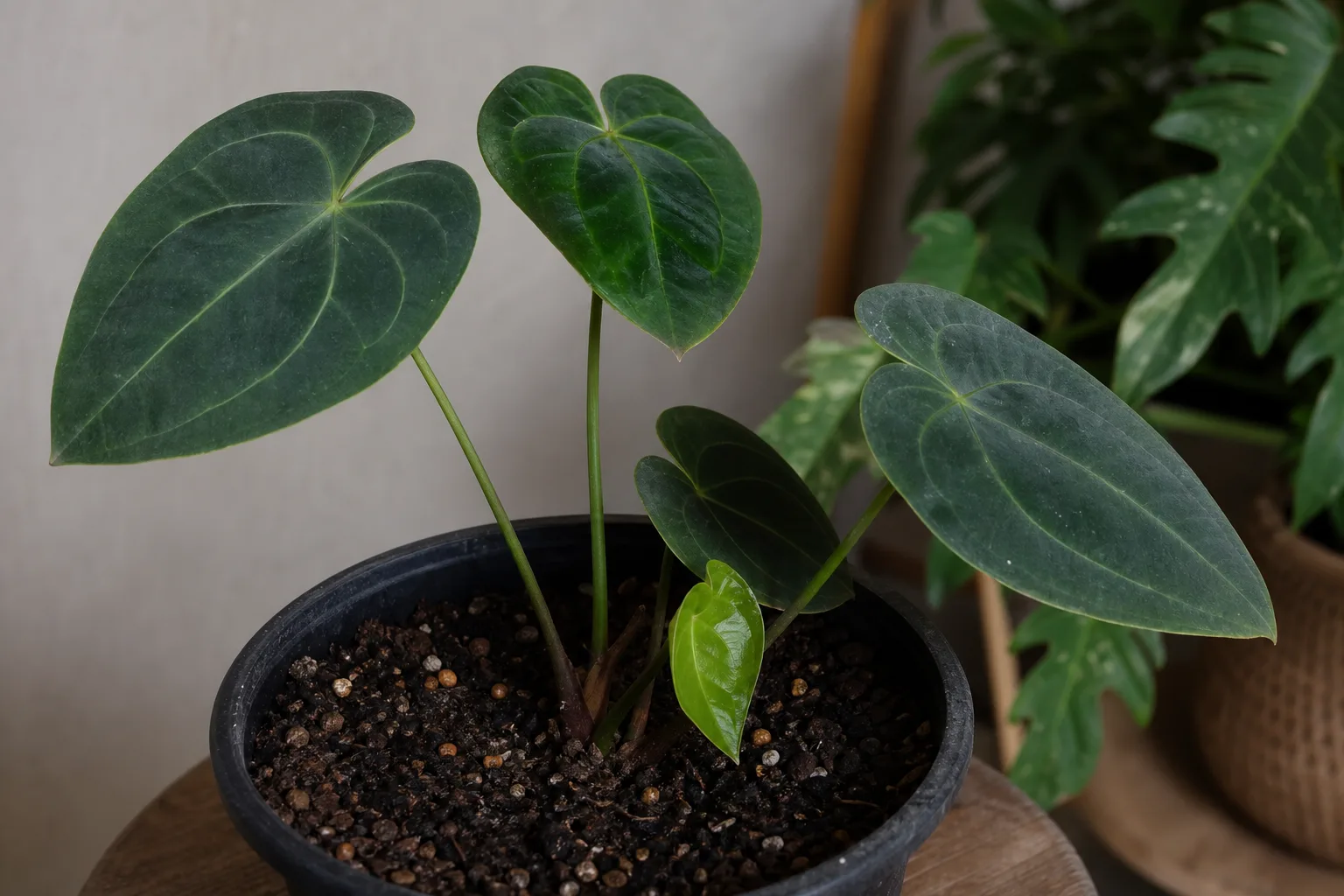
Slow Growth on Anthurium: Causes, Checks & Fixes
This guide covers slow growth on Anthurium. See also the general Slow Growth guide, watering, and light pages for this plant.
Slow Growth on Anthurium: Causes, Checks & Fixes
Quick answer
Slow growth on Anthurium (Anthurium andraeanum, Flamingo Flower) is not always a crisis. The species is a slow grower that naturally rests when days shorten and rooms cool. Worry when no new leaves appear through spring and summer, new foliage stays smaller than older leaves, or no spathes form for months while light and watering look unchanged.
First step: verify Anthurium light guide before fertilizing or Anthurium repotting guide. Move the pot within a few feet of an east or filtered west/south window, or add a grow light for 12–14 hours daily. Insufficient light is the most common reason Anthurium produces leaves but few flowers-and the same light shortfall stalls leaf production indoors. Only after light checks out should you inspect roots, adjust watering, or feed.
What normal Anthurium growth looks like indoors
UF/IFAS and NC State both classify Flamingo Flower as a slow grower-not a pothos pace. In bright indirect light through spring and early fall, many standard cultivars push a new leaf every few weeks, though mature plants investing energy in spathes may pause longer. Compact and dwarf forms bred for smaller stature-UF/IFAS notes dwarf anthuriums stay smaller than the typical two-to-three-foot standard plant-often unfold leaves more slowly; a six-week gap through summer on a six-inch pot is not automatically a problem if blades stay proportional.
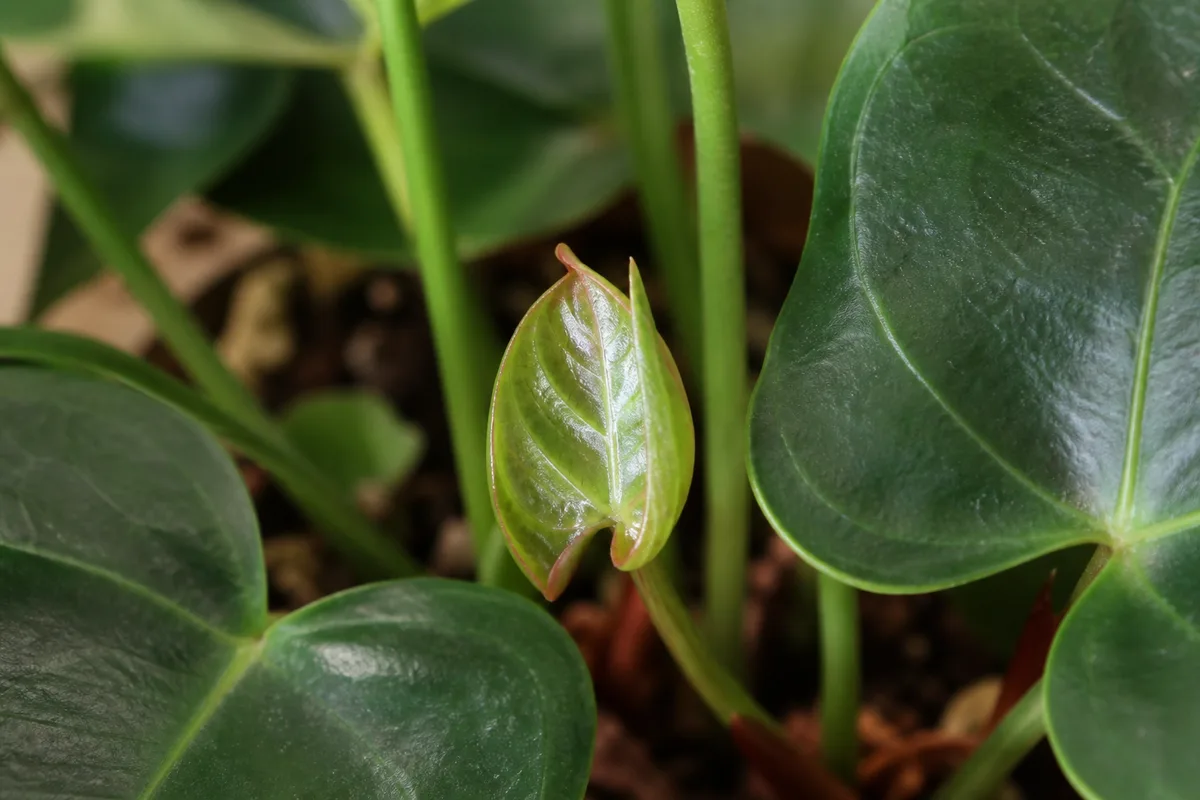
Slow Growth symptoms on Anthurium - compare with healthy tissue on the same plant.
UF/IFAS interiorscape guidelines target 1,000 to 2,500 foot-candles for production; home growers near 1,500 to 2,000 foot-candles of filtered daylight usually see steadier foliage and repeat blooms. For grow-light targets and window placement detail, see the not enough light guide.
Seasonal rhythm matters. From late fall through early spring, shorter photoperiods and cooler rooms slow or pause visible growth-six to eight weeks with no new leaf is often normal, especially without supplemental light. The Missouri Botanical Garden notes minimum 60°F winter temperatures; below that, metabolism drops further.
After repotting or division, expect a three to six week pause while roots settle. Judge the plant on new leaf size and frequency, not on how fast a pothos grows beside it.
Signs your Anthurium is growing too slowly - not just resting
True stall differs from winter rest:
- No new leaves for eight or more weeks during warm months with lengthening days
- Each new leaf smaller than the previous generation, with longer thin petioles
- Dark green, dense foliage but flat canopy height for half a year
- No spathes for three or more months despite prior bloom history
- Mix stays wet a week or more after watering while growth is absent
- Water runs straight through the pot in seconds-possible root congestion with little soil left
- Fine webbing or cottony clusters on leaf undersides with puckered new growth-possible sucking pests before widespread yellowing
Anthurium can look “fine” while energy balance is wrong: semi-epiphytic roots need air and steady light to build leaves and waxy spathes. See not enough light on Anthurium when stretch and missing blooms dominate, and leggy growth when stems lengthen without adding much leaf mass.
Why Anthurium growth stalls - ranked causes
Work through causes in this order; the list matches how often each appears in home cultivation.
1. Insufficient light (most common indoor limiter)
Anthurium evolved under rainforest canopy-bright filtered sun, not dim corners. NC State Extension states that too little light reduces blooms and slows growth. In too much shade, plants may not bloom and leaf production thins. North rooms, shelves far from windows, and dirty winter glass all cut the photons that drive new tissue.
2. Winter dormancy or cool temperatures
Short days and temperatures drifting below 60–65°F slow the plant even when watering stays perfect. This is expected rest, not root failure-unless yellowing, mushy stems, or sour soil accompany the pause.
3. Root-bound pot or degraded airy mix
Anthurium blooms well when slightly root-bound, but severe congestion blocks drainage and oxygen. NC State recommends repotting every two to three years when rootbound. Dense peat that has broken down suffocates semi-epiphytic roots before older leaves yellow-growth stops first.
4. Root rot reducing uptake
Chronic wet soil in a dim spot rots roots while the plant looks merely “lazy.” Excess water with root damage shows chlorotic older leaves and stalled growth. Compare with root rot on Anthurium if soil smells sour or stems soften.
5. Nutrient limits or salt buildup
Depleted mix or accumulated fertilizer salts stall new leaves-often with brown leaf tips on an otherwise green plant. Overfertilization indoors causes salt buildup and marginal burn. Feeding without adequate light rarely fixes slow growth; see the anthurium fertilizer guide for timing.
6. Active bloom cycle diverting energy
A plant pushing multiple long-lasting spathes may slow vegetative growth temporarily-normal if new leaves resume after blooms fade. Each spathe can last about six weeks on the plant per UF/IFAS, so a heavy bloom year naturally trades leaf speed for flower display.
7. Sucking pests draining vigor
NC State recommends monitoring Flamingo Flower for spider mites and mealybugs. Both can stall new leaves before widespread yellowing-look for stippling, fine webbing, or white cottony patches on leaf undersides and along petioles. If pests are confirmed, treat before fertilizing or repotting; see spider mites on Anthurium and mealybugs on Anthurium.
Lookalike symptoms - quick comparison
| Pattern | Likely cause | Key check | First move |
|---|---|---|---|
| No leaves Nov–Feb only; plant otherwise firm | Winter rest / short days | Room above 60°F; no mushy roots | Wait or add grow light; reduce feed |
| Long petioles, dark leaves, no spathes year-round | Low light | Shadow test at window; compare new petiole length | Move to bright indirect light |
| Fast dry-down, roots circling, water channels through pot | Root-bound / tired mix | Roots at drainage holes; pot age 2+ years | Repot one size up in spring with chunky mix |
| Yellow lower leaves, wet soil, sour smell | Root rot | Mushy roots on inspection | Stop water; trim rot; repot airy mix |
| Small pale new leaves, tips crisp, good light | Nutrient/salt stress | Fertilizer history; white crust on rim | Flush pot; resume dilute 3-1-2 when growing |
| Pause 3–6 weeks after repot; firm roots | Transplant recovery | Recent repot date | Hold fertilizer; keep stable light |
| Stippling, webbing, or cottony patches; no new leaves | Spider mites / mealybugs | Magnifier on leaf undersides | Isolate; rinse; treat per pest guide |
How to confirm the cause
Run this numbered workflow before stacking fixes:
- Season and temperature - Is it late fall through early spring, or is the pot below a cold window? If yes, note possible dormancy before treating as deficiency.
- Light audit - Distance to east/west/south glass, shadow sharpness at midday, and whether low light makes indoor plants spindly. Compare newest petiole length to one from six months ago.
- Growth-rate log - Count weeks since the last fully unfurled leaf. Through summer, gaps longer than six to eight weeks on a standard cultivar with stable care suggest a limiter.
- Soil dry-down - Water when the top inch is dry. Mix wet for seven or more days with dull foliage points to light or drainage trouble.
- Root inspection - Slide the plant out. Healthy roots are firm and pale; circling mats, peat smell, or mush mean repot or rot protocol-not more fertilizer.
- Pest check - Examine leaf undersides and new growth with a magnifier. Stippling, webbing, or cottony clusters rule out a pure cultural stall.
- Bloom context - Multiple active spathes can explain a brief leaf pause; absent blooms and absent leaves for months usually trace to light or roots.
First fix for Anthurium
Move the plant to verified bright indirect light and wait two weeks before any other major change.
Practical placement:
- East window or filtered west/south within roughly three to five feet of glass
- Grow light 6–12 inches above leaves for 12–14 hours if winter daylight is weak
- Gradual acclimation if the plant lived in deep shade-avoid jumping into harsh direct sun
Hold repotting, heavy pruning, and fertilizer until new growth responds. Extra nitrogen on a light-starved Anthurium pushes dark leaves without solving the bottleneck. If roots are clearly circling and mix is degraded-but light is already strong-schedule a spring repot one size up with chunky aroid mix per the Anthurium overview soil section.
Step-by-step recovery
Once light is corrected (and rot ruled out), support recovery in order:
- Stabilize environment - Keep 65 to 80°F and avoid drafts; Anthurium does not tolerate sudden cold.
- Match watering to uptake - Brighter spots dry faster; water when the top inch is dry, never on a blind calendar from a former dark corner.
- Repot if root-bound - Use a pot one to two inches larger, spring timing preferred; expect a short post-repot pause.
- Flush salts if tips are burnt - Run several pot-volumes of plain water through the mix, then skip feed for two weeks.
- Resume dilute feeding - When a new leaf is visibly expanding, apply ¼-strength 3-1-2 every two weeks through active growth per the fertilizer guide.
- Raise humidity if edges crisp - Target 60 to 80% humidity alongside light; dry air alone rarely causes total stall but slows recovery on stressed leaves.
Recovery timeline
Three to four weeks after a confirmed light increase in warm months, many plants show a new leaf bud or slightly wider unfolding blade.
Four to eight weeks is a fair window to judge whether root congestion or nutrition still limits growth after light is fixed.
Winter improvements without grow lights may take eight or more weeks-do not judge failure from December alone.
Post-repot pauses of four to six weeks are normal before the next leaf; yellowing with wet soil during that window is not normal-inspect roots.
Worsening signs: shrinking new leaves, soft crown, accelerating yellow with soggy mix, or pests coating new growth-escalate to root inspection and pest treatment.
What not to do
Do not fertilize heavily to “wake up” a plant in dim light or winter rest-salt stress can follow. Avoid repotting into a much larger pot hoping to force growth; excess wet soil volume slows drying and invites rot. Do not stack repot, prune, and pesticide the same day.
Do not confuse slow growth with leggy growth-if stems stretch toward windows, light is still the primary fix (leggy growth guide). Do not repot during winter unless confirmed root rot requires it.
How to prevent slow growth next time
Place Anthurium where bright indirect light is realistic all year, supplementing in winter. Repot every two to three years into fresh chunky mix before roots block drainage holes-frequent repotting helps shed unabsorbed minerals. Match watering to how fast the top inch dries as light changes seasonally.
Feed lightly only during active growth; pause through the cool-season rest. Rotate the pot weekly for even exposure, and track new leaf timing monthly so stalls show up early. For full seasonal rhythm, light targets, and repot timing, keep the Anthurium care overview bookmarked alongside this page.
When to worry
Slow growth alone is seldom an emergency. Act promptly when the crown softens, leaves collapse despite wet soil, roots are mushy on inspection, or yellowing spreads while growth is zero-those patterns overlap root rot more than dormancy.
If no new leaves appear for two full growing seasons after verified bright light, good drainage, and appropriate repotting, inspect leaf undersides for spider mites and mealybugs before assuming the plant has reached its genetic size limit-especially on compact cultivars that naturally grow slowly.
Conclusion
Anthurium slow growth is often light limitation, winter rest, or root congestion-not a mystery disease. Establish whether the pace is normal for the season and cultivar, then rank light before fertilizer and pot size. Use the lookalike table to separate dormancy from stall, fix one variable at a time, and judge success by new leaf frequency and size over the next month, not by how the plant looked last year.
When to use this page vs other Anthurium guides
- Anthurium watering guide - Use for routine moisture checks before assuming slow growth is the main issue.
- Anthurium problems hub - Browse all 20 common issues on this species.
- Not Enough Light on Anthurium - Different entry point when symptoms overlap with slow growth.
- Leggy Growth on Anthurium - Different entry point when symptoms overlap with slow growth.
- Yellow Leaves on Anthurium - Different entry point when symptoms overlap with slow growth.