Spider Mites on Anthurium: Causes, Checks & Fixes
Quick answer
Spider mites on Anthurium show as fine stippling and webbing when indoor humidity drops below the plant's 60–80% comfort band-often before brown leaf edges appear. First step: isolate the plant and rinse every leaf underside with lukewarm water before applying any spray.
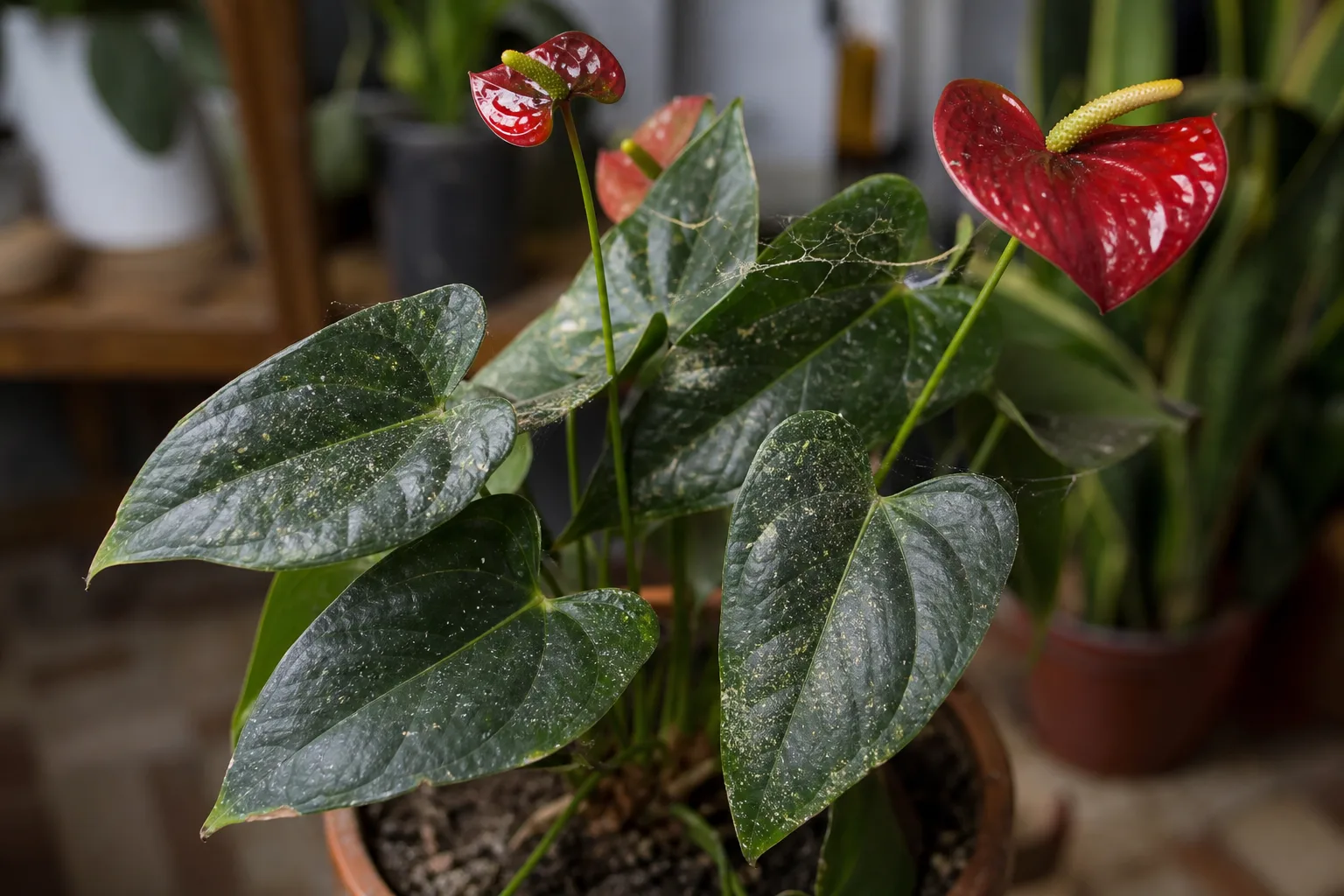
Spider Mites on Anthurium: Causes, Checks & Fixes
This guide covers spider mites on Anthurium. See also the general Spider Mites guide, watering, and light pages for this plant.
Spider Mites on Anthurium: Causes, Checks & Fixes
Quick answer
Spider mites on Anthurium (Anthurium andraeanum, flamingo flower) are almost always a dry-air pest problem on a plant that wants rainforest humidity. Anthurium prefers 60 to 80% relative humidity, yet winter heating and sunny window sills often drop room air to 30–45%-exactly when twospotted spider mites reproduce fastest on waxy leaf undersides.
Stippling on spathes-the waxy red, pink, or white bloom bracts-often appears before you notice damage on lower foliage, especially on retail-bought blooming plants that sat in dry greenhouse aisles before you brought them home.
First step: move the pot away from neighbors and rinse every leaf underside with lukewarm water. Knock down live mites and webbing before you reach for sprays. Only after you see moving specks or fresh stippling should you add insecticidal soap or horticultural oil-and plan on repeating weekly, because mite eggs survive a single pass.
Mites vs. low humidity vs. thrips on Anthurium
These three problems share dry indoor air as a trigger, but the fixes differ:
| Pattern | Stippling on leaf tops? | Paper tap | Webbing? | Urgency | Likely cause |
|---|---|---|---|---|---|
| Fine yellow dots, dull spathes, silk at peduncle bases | Yes | Moving specks | Often | Treat now - rinse + weekly contact spray | Spider mites |
| Symmetrical crisp brown edges only, glossy leaves otherwise | No | Clean | None | Routine - humidifier and placement fix | Low humidity |
| Silvery streaks, black frass specks, insects jump when disturbed | Scraped patches | No mites | None | Treat now - isolate; thrips need different sprays | Thrips (see aphids guide for sap-feeder lookalikes) |
| White cottony clusters in crown axils | No | No mites | None | Treat now - alcohol swab or soap on clusters | Mealybugs |
| Uniform white film, wipes off | No | Clean | None | Routine - flush salts; no pest spray | Mineral or pesticide residue |
| Single bottom leaf yellowing, firm crown | No | Clean | None | Monitor - natural senescence | Age, not pests |
Confirmed mites need stippling plus either moving specks or webbing-one sign alone is not enough if you cannot find live pests.
What spider mites look like on Anthurium
Early damage is easy to miss on glossy Anthurium foliage because the waxy surface reflects light and hides pale feeding marks. By the time webbing shows at a spathe base, the colony is usually well established.
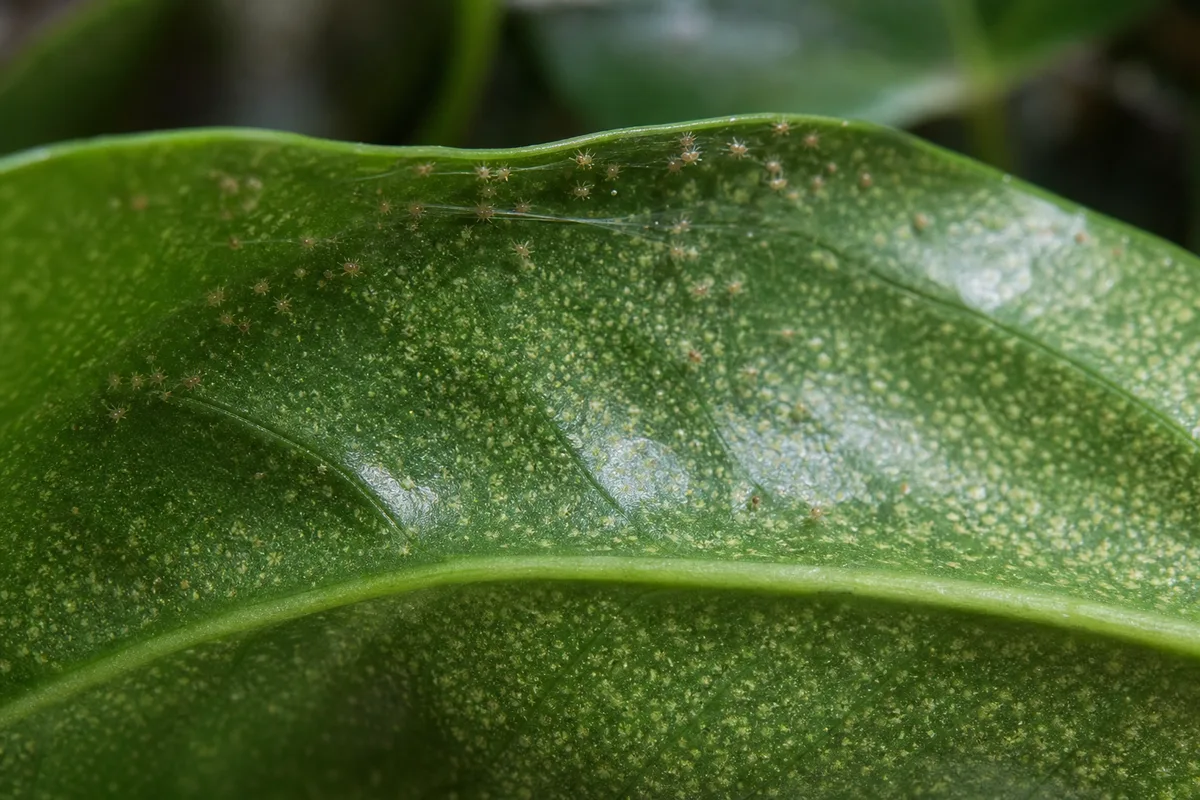
Spider Mites symptoms on Anthurium - compare with healthy tissue on the same plant.
Visual check - stippling on glossy heart-shaped leaves: Tilt a suspect blade toward a window. Mite feeding shows as tiny pale yellow or white dots scattered across the upper surface-not the even brown margins you see with dry air alone. Photo reference: macro of stippling on a glossy Anthurium andraeanum leaf beside an undamaged blade on the same plant.
Typical signs on flamingo flower include:
- Fine yellow or white stippling on the upper leaf surface-each dot is a dead cell where mites pierced and drained sap.
- Dull, less shiny patches on heart-shaped leaves that no longer match the rest of the plant.
- Bronzing or graying on heavily fed leaves; severe feeding can yellow entire blades.
- Silk webbing at the base of petioles, between overlapping leaves, along flower peduncles, or tucked under spathe bracts.
- Spathe damage - Waxy red, pink, or white spathes may show stippling, lose gloss, or brown at margins when mites feed on bloom tissue.
- Tiny moving dots on the paper test-mites look like grains of pepper that crawl slowly, not jump.
Visual check - webbing at spathe base: Use a phone light where the peduncle meets the crown. Early silk looks like fine fuzz tucked under the waxy bract-not the cottony blobs of mealybugs. Photo reference: fine webbing threads at the spathe base on a blooming flamingo flower Anthurium.
Anthurium leaves are glossy, heart-shaped, and often arch outward from a short crown. Mites concentrate on undersides along the midrib, in tight leaf axils, and at spathe bases where humidity stays lowest. Lower, older leaves often show damage first because they sit longest near heat sources.
Cultivar note: Anthurium scherzerianum (pigtail Anthurium) has a smaller crown and corkscrew spadix but the same waxy spathe tissue-mites hide at overlapping peduncle bases the same way. Lace-leaf types (A. crystallinum, A. clarinervium) have thinner, more textured blades where stippling can look like faded silver veining; still confirm with a paper tap before treating.
Why Anthurium gets spider mites
The humidity paradox is the main story. Anthurium is a humidity-demanding tropical perennial that becomes mite-prone precisely when your home drops below its comfort band. NC State Extension lists spider mites among the pests to monitor on Anthurium-often alongside mealybugs, scale, and thrips.
Winter dry air is the trigger. Heating season pulls indoor humidity below the 60–80% range Anthurium grows best in. Spider mites prefer warm, dry conditions and reproduce quickly when leaf surfaces stay dry for hours. Stippling frequently appears before the symmetrical brown leaf edges you would expect from low humidity alone.
Bright-window placement creates hot microclimates. Blooming Anthurium often sits in bright indirect light near east or west glass. Sun-warmed panes and reflected heat dry the air around the crown even when the rest of the room feels comfortable-see our Anthurium light guide for placement that supports blooms without scorch.
Dense crowns and overlapping spathe stalks hide colonies. Multiple peduncles and layered foliage give mites sheltered feeding sites that are hard to see during casual watering. That is why a weekly underside check matters more on Anthurium than on open, single-stem plants.
Retail greenhouse carryover. Blooming Anthurium sold in grocery and garden centers often arrives with early stippling on spathe margins from dry shipping aisles. Quarantine new purchases for two weeks and inspect spathe bases before placing them beside established plants.
Spread from neighbors. Mites walk between touching leaves and ride on hands, tools, or draft airflow. A new plant from a shop display can introduce them before any symptom shows on your established flamingo flower.
How to confirm the cause
Work through this inspection in order:
- Isolate the plant on a tray away from other houseplants-and keep pets from the treatment area. Anthurium contains calcium oxalate crystals toxic to cats and dogs if chewed.
- Hold white paper under a suspect leaf and tap the blade sharply. Slow-moving specks that streak when smeared confirm mites.
- Flip leaves and use a 10× magnifier on the undersides-look for amber eggs, cast skins, and fine silk along veins.
- Inspect spathe bases and flower peduncles - Webbing often starts where the waxy bract meets the stalk, a spot many growers skip.
- Check the crown center and lowest leaves first - Mites often start where foliage overlaps and stays dry.
- Note the environment - Heat vent within a metre, winter sun on glass, humidifier turned off recently, or RH below 50% on a hygrometer at crown height (not just desk level) all support a mite diagnosis. Cross-check humidity targets in our Anthurium overview.
If you find webbing and stippling but no live mites after a thorough rinse, treat anyway-eggs hatch in cycles and colonies rebound within days in dry air.
First fix for Anthurium
Rinse leaf undersides thoroughly with lukewarm water. Place the pot in a sink or shower, support the soil so it does not wash out, and spray the undersides of every leaf, petiole, and flower stalk until water runs clear and webbing loosens. Anthurium’s waxy foliage tolerates shower rinsing better than hairy-leaved plants-just avoid leaving the crown saturated overnight, which can invite fungal problems on dense foliage.
Keep the plant isolated after rinsing. Wear gloves if you have sensitive skin-Anthurium sap irritates some people, and the plant is toxic to pets if ingested. Wash hands and tools before touching other pots.
Make this one correction first. Do not repot, fertilize, and spray on the same day. You need to see whether knocking mites down with water slowed new stippling before adding chemicals.
If rinsing is not enough
When stippling spreads after two thorough washes, add a labeled insecticidal soap or horticultural oil spray, coating undersides and spathe bases until runoff. Repeat every five to seven days for at least three cycles-mite eggs survive single applications and hatch on staggered schedules.
Neem oil vs. horticultural oil on waxy Anthurium: Both are contact treatments that need full underside coverage. Horticultural oil (mineral or plant-based at summer label rates) is often preferred on glossy spathes because heavy neem films can dull waxy bloom color temporarily. Either product can mark leaves that sit in hot window light while wet-move treated Anthurium out of direct sun until foliage dries completely. Avoid homemade soap mixes; commercial insecticidal soaps are formulated to reduce burn risk on foliage plants.
Raising humidity with a humidifier toward the 60 to 80% range helps prevent new outbreaks and supports recovery, but it does not replace direct mite removal on an active infestation. UF/IFAS recommends humidity above 50% for healthy Anthurium foliage-aim higher while treating.
Recovery timeline
Week 1: Stippling should stop spreading after the first rinse plus one follow-up wash or soap treatment. Fresh webbing on new growth or spathe stalks means the cycle is not broken-keep treating.
Weeks 2–3: With weekly contact sprays, live mite counts drop. Old damaged leaves and stippled spathes stay marked permanently; they will not re-green or regain full waxy gloss.
Weeks 4–6: Clean new leaves and spathes emerging from the crown mean the plant is winning. Anthurium grows steadily when light, warmth, and humidity stay in range, but full crown recovery can take a full growing season if lower leaves were heavily marked.
Case note (January 2026): A blooming A. andraeanum on a west-facing windowsill showed dull pink spathe margins and faint silk at two peduncle bases after a dry heating season. Three underside rinses (days 1, 7, 14) plus two horticultural-oil passes on dry foliage (days 4 and 11) cleared the paper-tap test by week three; the first clean spathe opened at week five while older stippled leaves stayed marked.
Judge success by new growth and absent webbing, not by old leaf color. Remove only leaves or spent spathe stalks that are mostly bronze and crisp-keep partially stippled foliage if the plant is sparse, because Anthurium recovers faster with some photosynthetic surface intact.
What not to do
Do not use general insecticides labeled only for aphids or beetles-mites need miticides, horticultural oils, or insecticidal soaps that contact the pest directly.
Do not spray only the upper leaf surface. Mites feed underneath; top-only treatment leaves most of the colony alive.
Do not stop after one good-looking week. A single missed egg batch restarts the outbreak when dry air returns.
Do not increase fertilizer on a mite-stressed plant hoping for faster regrowth. Feed only after new leaves look healthy and you have finished the treatment cycle.
Do not overwater during pest panic. Anthurium’s semi-epiphytic roots need the top inch of mix to dry between drinks-soggy soil while you rinse foliage weekly invites root rot. Follow the watering guide dry-check standard.
Do not leave the crown wet overnight after shower rinsing. Waxy leaves dry quickly in bright indirect light; dense crown centers that stay damp for hours risk leaf-spot fungi.
Do not rely on occasional misting as your humidity fix during treatment-brief leaf wetting does not hold crown-level RH near the 60 to 80% band Anthurium needs.
How to prevent spider mites on Anthurium
Prevention targets the dry conditions mites prefer:
- Hold humidity near 60–80% at crown height with a humidifier-not just at desk level. A small humidifier beside the pot beats occasional misting for consistent coverage during furnace season.
- Quarantine new plants for two weeks and inspect undersides and spathe bases before placing them with your Anthurium collection.
- Rinse or wipe leaf undersides monthly during heating season, especially on plants near windows or vents.
- Space pots so leaves do not touch; mites walk across contact points overnight.
- Check weekly in winter with the paper tap test on one lower leaf-early colonies are cheapest to stop.
Anthurium rewards the same humidity routine that prevents mites-it also supports spathe color and bloom frequency described in our overview guide.
When to worry
Treat as urgent when webbing covers multiple leaves and spathe stalks, new crown growth stays pale and small, or mites appear on several plants from the same shelf. At that point, isolate the whole group and treat every pot on the same schedule.
Consider discarding a severely defoliated, low-value plant in a shared indoor collection-bag it before moving so mites do not scatter during disposal. Most healthy Anthurium recover with consistent washing and repeated contact sprays if the stem and crown stay firm.
If stippling persists after three weekly treatments with confirmed technique, inspect again for thrips, mealybugs, or environmental burn before switching to stronger pesticides. Severe oral swelling from plant ingestion in pets is rare but warrants veterinary care-contact your vet or the ASPCA Animal Poison Control Center if a pet chews treated foliage.
When to escalate - rinse-only vs. spray vs. discard vs. vet
| Severity | What you see | First response | If that fails |
|---|---|---|---|
| Light | A few stippled lower leaves, clean paper tap on neighbors, no webbing | Isolate, rinse undersides every 5–7 days for three cycles, move off heat paths | Add labeled soap or oil on dry foliage; repeat 5–7 days |
| Moderate | Webbing at spathe bases, stippling on multiple blades, mites on paper tap | Rinse + alternate soap/oil every 5–7 days for three full cycles | Hold fertilizer; quarantine 4–6 weeks; treat every shared-shelf neighbor |
| Heavy | Webbing on new spathe stalks, bronzing across most foliage, mites on 3+ pots | Discard or bag the worst plant; aggressive rinse + oil on salvageable neighbors | Contact your local cooperative extension office for ID confirmation |
| Pet emergency | Pet chewed treated foliage or any Anthurium tissue | Remove plant access; rinse pet mouth with water per vet guidance | Call veterinarian or ASPCA Poison Control-Anthurium is toxic to cats and dogs |
Rinse-only is enough when stippling is limited to one or two lower leaves, the crown is firm, and the first two rinses drop live mite counts on paper-tap tests.
Oil or soap escalation is warranted once webbing appears at spathe bases or stippling spreads beyond the lowest tier-one pass never clears egg cycles.
Discard beats repeat oil when most blades and spathes are bronzed and webbed, neighbors are clean, and the plant sits in a high-traffic display where mites walk pot to pot.
Related Anthurium problems
Use these sibling pages when symptoms overlap-each URL scopes a different branch so you do not treat the wrong cause:
- Low humidity - symmetrical crisp brown edges only, no stippling, no moving specks on paper tap
- Brown tips - margin burn without webbing or crawlies
- Mealybugs - white cottony clusters in crown axils, not fine silk threads
- Aphids - sticky honeydew on new growth and soft-bodied insects
- Overwatering - yellow lower leaves on wet heavy mix, clean paper tap
- Root rot - soft stem bases and sour soil, not speckled upper surfaces
- Watering - dry-down rhythm so weekly rinses do not stack with soggy soil
- Light - bright-window placement without hot-glass microclimates
- Anthurium overview - full care hub for humidity, soil, and bloom care
Conclusion
When stippling is limited to one lower leaf and the paper tap is clean after the first rinse, isolate and repeat underside washes for two to three cycles before adding sprays. When webbing appears at spathe bases or stippling spreads weekly, escalate to labeled insecticidal soap or horticultural oil every five to seven days for at least three passes on dry foliage. When mites cover multiple pots on the same shelf, treat the whole group on one schedule or bag and discard the worst plant to protect the collection. When a pet chews treated or untreated Anthurium tissue, remove access and call your veterinarian-calcium oxalate irritation is the primary risk. For upstream humidity and placement fixes, see low humidity and light; for daily watering rhythm during treatment, see watering.
FAQs
Can spider mites damage Anthurium flowers (spathes)?
Yes. Mites feed on waxy spathe tissue and the spadix, causing dull color, stippling, and premature browning at spathe margins. Webbing often hides at the spathe base where the peduncle meets the crown. Treat the flower stalk and bract undersides, not just foliage.
Is it safe to use neem oil on Anthurium with pets in the house?
Anthurium is toxic to cats and dogs if chewed, and wet spray residue adds handling risk. Isolate the plant during treatment, let foliage dry fully before pets return, and wash your hands after rinsing or spraying. Horticultural oil may leave less visible film on waxy spathes than neem, but both require dry foliage before pets return. Contact your veterinarian if a pet ingests any plant part.
Should I raise humidity or spray first when I find mites on Anthurium?
Rinse and isolate first to knock down live mites, then begin weekly contact sprays if stippling spreads. Raising humidity toward 60%+ with a humidifier at crown height slows mite reproduction and supports Anthurium health but does not replace physical removal on an active infestation.
Will damaged Anthurium leaves recover from spider mites?
Stippled or bronzed leaves will not re-green. Recovery means clean new heart-shaped foliage and spathes without fresh webbing after two to three weekly treatment cycles. Keep partially damaged leaves if the crown is sparse-they still photosynthesize.
How do I prevent spider mites on Anthurium next time?
Hold room humidity near 60–80% with a humidifier during heating season, keep pots away from hot window glass and forced-air vents, and run a white-paper tap test on one lower leaf weekly in winter. Quarantine new plants for two weeks before placing them beside blooming Anthurium.
When to use this page vs other Anthurium guides
- Anthurium watering guide - Use for routine moisture checks before assuming spider mites is the main issue.
- Anthurium problems hub - Browse all 20 common issues on this species.
- Low Humidity on Anthurium - Different entry point when symptoms overlap with spider mites.
- Slow Growth on Anthurium - Different entry point when symptoms overlap with spider mites.