Aphids on Anthurium: Causes, Checks & Fixes
Quick answer
Aphids on Anthurium cluster on tender new leaves and flower stalks. First step: isolate the plant and rinse foliage thoroughly in lukewarm water before applying insecticidal soap.
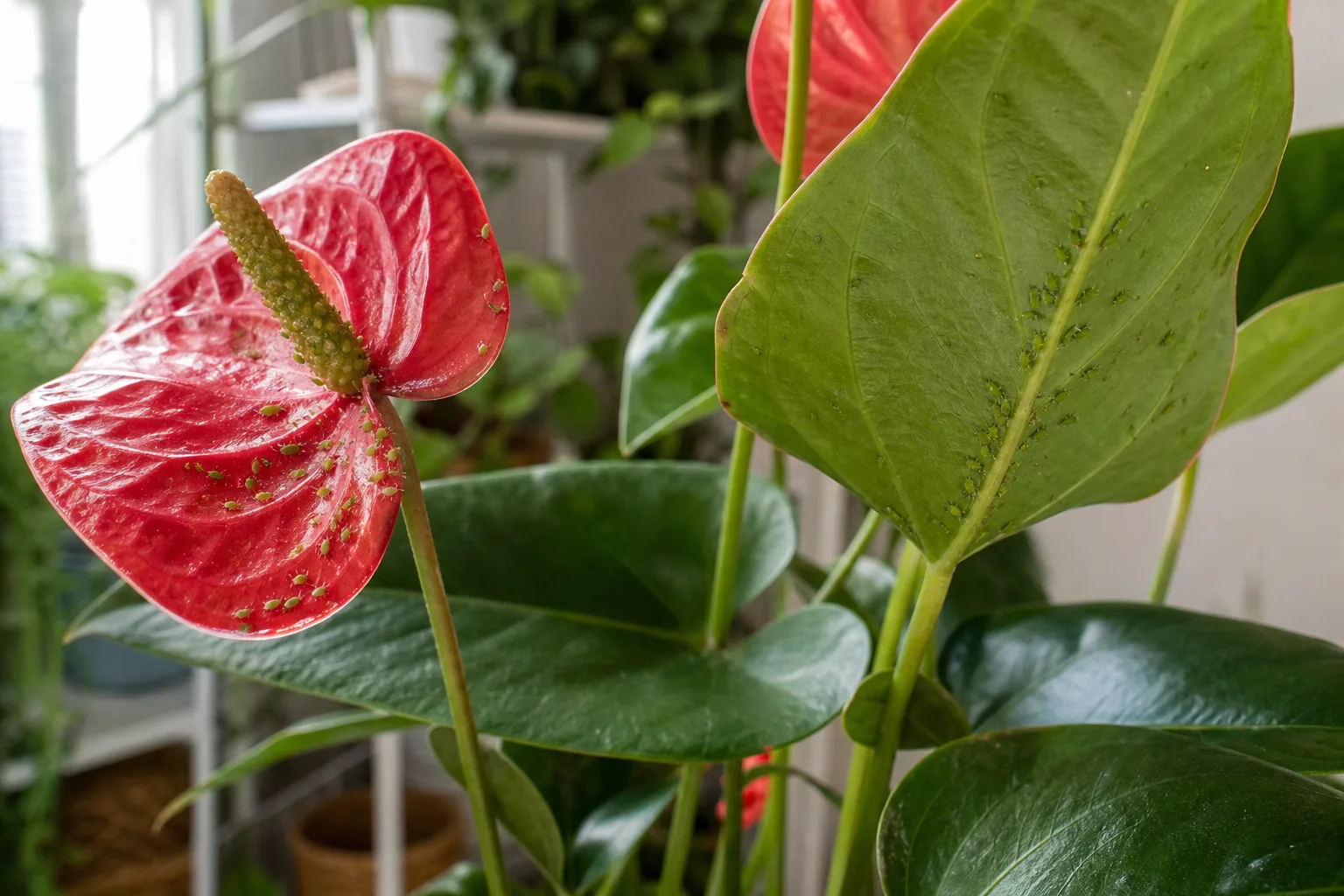
Aphids on Anthurium: Causes, Checks & Fixes
This guide covers aphids on Anthurium. See also the general Aphids guide, watering, and light pages for this plant.
Aphids on Anthurium: Causes, Checks & Fixes
Quick answer
Aphids on Anthurium (Anthurium andraeanum, flamingo flower) are small, soft-bodied sap feeders that settle on the plant’s newest, most tender tissue-unfolding leaves, crown shoots, and the base of flower stalks where spathes form. You may notice sticky honeydew on glossy foliage or ants climbing the pot before you spot the insects themselves. Honeydew on an open red spathe dulls the waxy color within days-treat early if you are growing this plant for display blooms.
First step: move the plant away from others and rinse it thoroughly. Use lukewarm water in a sink or shower, directing the stream at leaf undersides, stem joints, and every flower peduncle. Knock off as many aphids as you can before reaching for sprays. Indoor populations reproduce fast; a few insects today can coat a spathe within a week if left alone.
For baseline culture after treatment, see the Anthurium overview and watering guide.
Visual diagnosis cues (match your plant before you act)
Use these text markers when comparing symptoms-each pest leaves a distinct pattern on flamingo flower:
| What you should see | Points to aphids | Points away from aphids |
|---|---|---|
| Insect shape and movement | Pear-shaped; slow crawl when prodded; winged forms when crowded | Scale stays glued; mealybugs smear white wax |
| Tissue targeted | New crown leaves, spathe bases, youngest petioles | Spider mites stipple older blades in dry air |
| Surface residue | Sticky honeydew; ants on pot rim | Thrips leave silvery scrape marks, little stickiness early |
| Leaf damage pattern | Curl at tips where clusters sit | Uniform brown edges without insects (low humidity) |
| Shed skins | Whitish cast skins on dark green leaves | No molt skins with thrips or mites |
What aphids look like on Anthurium
On a healthy flamingo flower, aphids rarely scatter evenly. They cluster where growth is softest:
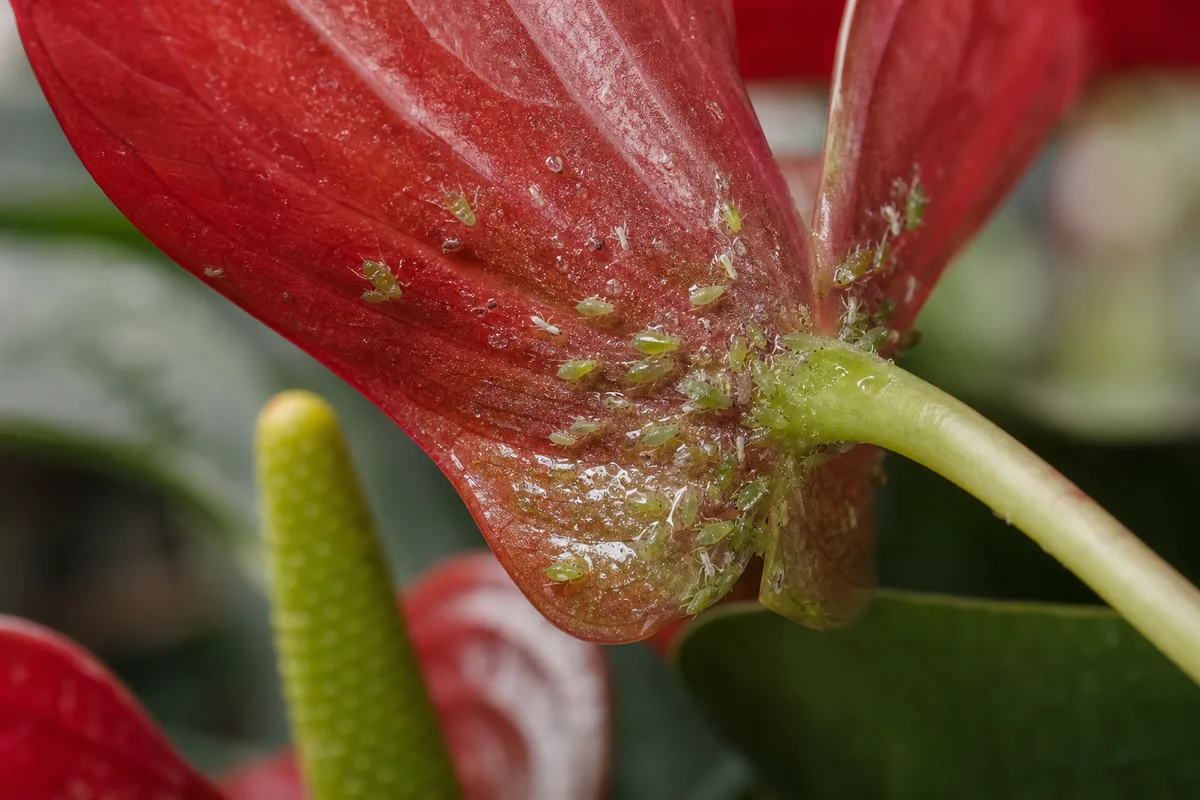
Aphids symptoms on Anthurium - compare with healthy tissue on the same plant.
- New leaves curling or puckering at the tip as they emerge from the crown
- Flower stalks and spathe bases, especially on buds about to open
- Leaf undersides along midribs on the youngest foliage
- Sticky, shiny honeydew on waxy leaves or nearby surfaces
- Black sooty mold growing on honeydew, dulling spathe color
- Whitish cast skins left behind as nymphs molt-visible on dark green leaves
Individual aphids are tiny-roughly 1/16 to 1/8 inch-with pear-shaped bodies, visible legs, and antennae. Most are green, but species on houseplants can also appear black, brown, pink, or gray. When disturbed, they walk slowly rather than jumping. Winged adults may appear when a colony outgrows its spot; those are the ones that spread to other pots.
Green peach aphid (Myzus persicae) is the species most often recorded on greenhouse A. andraeanum and the one home growers usually see on mixed houseplant shelves. UMass greenhouse guidance describes it as highly polyphagous, with long dark-tipped cornicles and a slight indentation at the base of the antennae-useful if you are magnifying a cluster on a spathe stalk.
Heavy feeding can yellow leaves, stunt new shoots, and distort spathes before they fully open. On a plant grown for year-round blooms, even a moderate infestation is worth treating early-honeydew on a red spathe is hard to clean without marking the waxy surface.
Why Anthurium gets aphids
Anthurium is not uniquely prone to one aphid species, but its growth habit makes certain spots easy targets. The plant pushes new leaves and flower spikes steadily when light, warmth, and humidity stay in range-exactly the conditions that keep tissue soft and sap-rich.
Introduction from outside is the usual starting point. Common entry routes for collectors include grocery-store bloom pots, open summer windows, shared greenhouse benches, and tools moved between pots without washing. Skipping quarantine on a new flamingo flower is the fastest way to introduce aphids to an otherwise clean shelf.
Nitrogen-heavy feeding makes the problem worse. Anthurium already tends toward lush foliage when overfed; that soft, fast growth is easier for aphids to pierce and more attractive than older, tougher leaves. If you recently fertilized heavily and see insects on the newest shoots, hold feed until the infestation clears-see the Anthurium fertilizer guide for bloom-focused rates after recovery.
Crowded, still air between grouped plants lets colonies build without predatory insects reaching them. Indoor environments lack the lady beetles and lacewings that control aphids outdoors. Ants farming honeydew on a plant stand can actively protect aphids from natural enemies.
Greenhouse records show several aphid species-including green peach aphid and related polyphagous species-colonizing Anthurium andraeanum, which matches what home growers see on other houseplants: generalist aphids moving onto whatever tender tissue is available.
How to confirm the cause
Work through these checks before committing to sprays:
- Inspect the crown and flower stalks first. Aphids on Anthurium concentrate on new growth. Older, hardened leaves are often clean even when the tip of a peduncle is coated.
- Look for movement. Touch a cluster gently with a cotton swab. Aphids shift or drop; scale stays glued in place; mealybugs smear white wax.
- Check for honeydew. A tacky shine on leaves or the rim of the pot confirms sap feeding. Dust alone wipes off dry; honeydew stays sticky.
- Note leaf curl pattern. Aphid curl follows clustered insects at the leaf tip or base. Thrips leave silvery scrape marks. Spider mites cause fine stippling and webbing on undersides in dry air.
- Examine shed skins. White exoskeletons stuck to foliage mean aphids have been present for at least one molt cycle-not a one-day fluke.
- Scan nearby plants. Aphids spread plant to plant. If one Anthurium has them, check others on the same table before treating only a single pot.
Symptom lookalike comparison
| Pest or issue | Key sign on Anthurium | Honeydew? | First differentiator |
|---|---|---|---|
| Aphids | Dense clusters on new tips and spathe bases | Yes, sticky | Pear-shaped insects crawl when prodded |
| Mealybugs | Cottony white wax in leaf axils and crown | Yes | Crush pink on swab; no pear shape |
| Scale | Firm brown or tan bumps on petioles | Sometimes | Immobile; does not crawl |
| Thrips | Silvery streaks on spathes and blades | Rare early | Slender fast insects; scrape marks |
| Spider mites | Fine stippling; webbing in dry rooms | No | Tap test on white paper; no clusters on new tips |
| Pruning sap | Shine near a fresh cut only | No sticky trail | Recent trim; no insects |
If you find firm, immobile bumps, you are likely dealing with scale, not aphids. Cottony white masses in leaf axils point to mealybugs. Both need different first steps.
First fix for Anthurium
Isolate the plant and rinse aphids off with lukewarm water.
Move the pot away from other houseplants-isolate the plant at least across the room, ideally in a separate space for two weeks. Carry it to a sink or shower and spray all surfaces: leaf tops and bottoms, petioles, the crown center, and every flower stalk from soil line to spathe. Tilt the pot so water runs off without leaving the crown soggy for hours.
Let the foliage dry in bright indirect light, then inspect with a hand lens. If live aphids remain, especially tucked into curled young leaves or under spathe bracts, proceed to contact treatment-not before. Rinsing alone removes a large share of the population and clears honeydew that would block sprays from reaching insects.
Wear gloves if you trim heavily infested stalks. Anthurium sap can irritate skin, and the plant is toxic to cats and dogs if chewed. If a pet nibbles foliage during treatment, call the ASPCA Animal Poison Control Center at (888) 426-4435-available 24 hours a day, year-round (consultation fee may apply).
Crown moisture management after rinse
Anthurium tolerates thorough rinsing but should not sit with water pooled where leaves emerge. After each shower or soap treatment, blot the crown center with a clean towel and keep the plant in airy indirect light until petiole bases feel dry to the touch. Saturated crown tissue on a repeatedly rinsed plant invites rot faster than the aphids alone would cause.
Insecticidal soap on waxy Anthurium foliage
Insecticidal soaps kill on contact only and can affect plants with waxy leaf coatings if applied heavily or in strong sun. Clemson HGIC notes that soaps may wash away desirable wax on bluish or waxy-coated plants, and UConn IPM warns that dish detergents dissolve cuticle wax and raise phytotoxicity risk. On flamingo flower:
- Test one lower leaf and one spathe stalk 48 hours before full-plant spray
- Spray in morning or evening indirect light-not on sun-warmed window glass
- Coat undersides and peduncle bases until runoff; avoid drenching open blooms if the test leaf dulls
Contact vs. systemic treatment indoors
For blooming Anthurium kept inside, contact sprays are the default first escalation after rinsing: insecticidal soap, horticultural oil, or neem labeled for houseplants. They do not move through the plant and carry less residue risk on ornamentals you handle weekly.
Systemic insecticides (such as imidacloprid drenches or granules) travel through sap and can control aphids in folded tissue that sprays miss. UMN Extension cautions that imidacloprid is toxic to bees and should not be used on bee-attractive plants set outdoors in summer. For indoor flamingo flowers:
| Approach | Best when | Anthurium cautions |
|---|---|---|
| Rinse + contact soap/oil | Mild to moderate colonies; reachable tissue | Repeat every 5–7 days; test waxy spathes first |
| Neem or pyrethrin spray | Soap cycles fail after three rounds | Test leaf; avoid stressed or sunburned foliage |
| Systemic drench | Chronic reinfestation in curled crown leaves | Toxicity to pets if soil is disturbed; bee risk if plant goes outdoors; many growers skip on food-adjacent shelves |
Most home collections clear aphids with isolation, rinsing, and labeled soap alone. Reserve systemics for repeated failure after six weeks of contact treatment, and keep treated pots away from pets that dig in soil.
Step-by-step recovery
After the initial rinse, work in this order:
- Prune unreachable colonies. If a young leaf or flower stalk is tightly curled and packed with aphids, cut it off with clean scissors rather than fighting folded tissue. Sterilize blades between cuts.
- Apply insecticidal soap or horticultural oil. Use a product labeled for houseplants. Coat leaf undersides, stems, and spathe bases until spray runs off. These products kill on contact only-they must touch the insect.
- Repeat every five to seven days for at least three cycles. UMass greenhouse guidance notes aphids can mature in 7–10 days between generations; one application rarely clears a colony indoors.
- Blot excess moisture from the crown after each treatment. Anthurium tolerates rinsing but should not sit with water pooled where leaves emerge.
- Hold fertilizer until new growth looks clean for two weeks. Feeding during active infestation produces more soft tissue for aphids to colonize.
- Watch for ants. If ants are present, wipe trails and keep the pot on a stand with a moat or barrier so ants cannot protect aphids from treatment.
- Re-check the collection weekly for six weeks. Winged aphids may have already moved to neighboring plants before you noticed the first infestation.
If populations stay high after three soap cycles, consider neem oil or pyrethrin products labeled for indoor use-always test one leaf first and avoid spraying stressed or sunburned foliage.
Cleaning honeydew from open spathes
On a fully open spathe with light honeydew and no live insects, wipe gently with a damp microfiber cloth in the direction of the waxy surface-never scrub. Heavy sooty mold or etched dull spots usually will not polish away; trim that stalk and protect the next bud. Avoid alcohol or soap on open blooms unless a test area on the same cultivar showed no marking within 48 hours.
Recovery timeline
First rinse should knock down visible numbers within minutes. You may still see scattered insects the same day; that is normal.
One to two weeks of repeated contact treatment is the usual window for indoor aphids to drop below detectable levels. Honeydew stops accumulating when feeding stops.
New leaves emerging three to four weeks after control are the best success signal-they should unfold without curl and without new clusters. Old distorted foliage will not fully flatten; trim it for appearance once the plant is clearly clean.
Spathes damaged during bud stage may open smaller or with sooty mold residue. Cut spent or marred stalks at the base and let the plant redirect energy to the next bloom.
Worsening signs include spreading colonies despite weekly treatment, ants increasing around the pot, or winged aphids appearing on multiple plants-escalate isolation and consider discarding a severely infested specimen rather than risking the whole collection.
What not to do
Do not spray insecticide first without rinsing and confirming live aphids-you may burn waxy foliage for no gain.
Avoid homemade dish soap on Anthurium; it can strip leaf wax and cause spotting. Do not mix homemade soap products as sprays-use products formulated for plants.
Do not apply soap or oil in hot direct sun or on a wilted plant. Treat in the morning or evening when leaves are turgid and light is indirect.
Skip systemic insecticides on a blooming Anthurium unless you accept risk to pollinators if the plant goes outdoors-and many home growers prefer to avoid them entirely on ornamentals.
Do not return the plant to its usual spot after a single treatment. Two weeks without new colonies is a safer quarantine bar.
Do not compost pruned infested material indoors where crawlers can reinfest clean pots.
How to prevent aphids next time
Quarantine every new Anthurium for at least two weeks before placing it beside established plants. Inspect crown and peduncles twice weekly during that period.
During regular watering, check new growth and flower stalks-not just the leaves you see from across the room. A ten-power lens helps spot early colonies.
Feed moderately. Anthurium benefits from phosphorus-rich fertilizer for blooms, but excessive nitrogen produces soft shoots aphids prefer. Follow label rates and skip feed when the plant is stressed.
Manage ants on plant stands. Keeping ants off pots helps predators and makes it easier to spot honeydew early.
Improve airflow slightly between grouped plants without blasting the crown with dry heat. Stagnant, crowded shelves let pests move pot to pot unnoticed.
Wash dusty leaves occasionally with a damp cloth-clean foliage is easier to inspect and less hospitable to pests that thrive on weakened plants.
When to worry
Treat as urgent if flower buds are coated before opening, multiple plants show honeydew at once, or ants are farming aphids on several pots. Anthurium grown for display loses value quickly when spathes stick together or mold.
A single cluster on one new leaf, caught early, is routine-rinse, monitor, and soap if needed.
If more than half the crown is infested after three treatment rounds, or the plant was already weak from root issues, survival may depend on sacrificing blooms and hard-pruning to clean tissue. A heavily compromised specimen is sometimes cheaper to replace than to fumigate a whole room. For chronic multi-plant outbreaks, contact your local cooperative extension office for integrated pest management guidance.
Related Anthurium problems
- Anthurium overview - Semi-epiphytic biology, humidity band, and culture hub
- Watering - Top-inch-dry rhythm that keeps roots healthy during repeated rinsing
- Light - Bright indirect placement without sun-stressed foliage during soap treatment
- Fertilizer - Phosphorus-forward feeding after infestation clears
- Mealybugs - Cottony crown clusters with different first-fix protocol
- Spider mites - Stippling and webbing in dry heated rooms
- Root rot - Crown moisture risk if rinse water pools repeatedly
- Low humidity - Brown edges without insect clusters
Can I save an Anthurium bloom stalk covered in aphids?
Yes, if the spathe has not fused shut with honeydew or sooty mold. Rinse the peduncle under lukewarm water, dab remaining clusters with a cotton swab dipped in diluted insecticidal soap, and treat the whole plant on a five- to seven-day schedule. Cut the stalk at the base only if buds are glued together, the spathe is heavily stained, or insects stay packed inside folded bracts after two soap cycles.
Will insecticidal soap damage Anthurium’s waxy leaves?
Labeled insecticidal soap is generally safe on Anthurium when you test one leaf first, spray in indirect light, and avoid hot afternoon sun on waxy spathes. Dish soap and high-concentration mixes can strip the wax and cause spotting-use products formulated for plants, blot the crown dry after rinsing, and skip open blooms if a test leaf shows dulling within 48 hours.
When to use this page vs other Anthurium guides
- Anthurium watering guide - Use for routine moisture checks before assuming aphids is the main issue.
- Anthurium problems hub - Browse all 20 common issues on this species.
- Mealybugs on Anthurium - Different entry point when symptoms overlap with aphids.
- Spider Mites on Anthurium - Different entry point when symptoms overlap with aphids.
- Yellow Leaves on Anthurium - Different entry point when symptoms overlap with aphids.