Yellow Leaves on Anthurium: Causes, Checks & Fixes
Quick answer
Yellow leaves on Anthurium are a symptom, not one disease-overwatering is the most common indoor cause, followed by low light and natural lower-leaf aging. First step: check whether soil is wet or dry and which leaves are yellowing before you change fertilizer or repot.
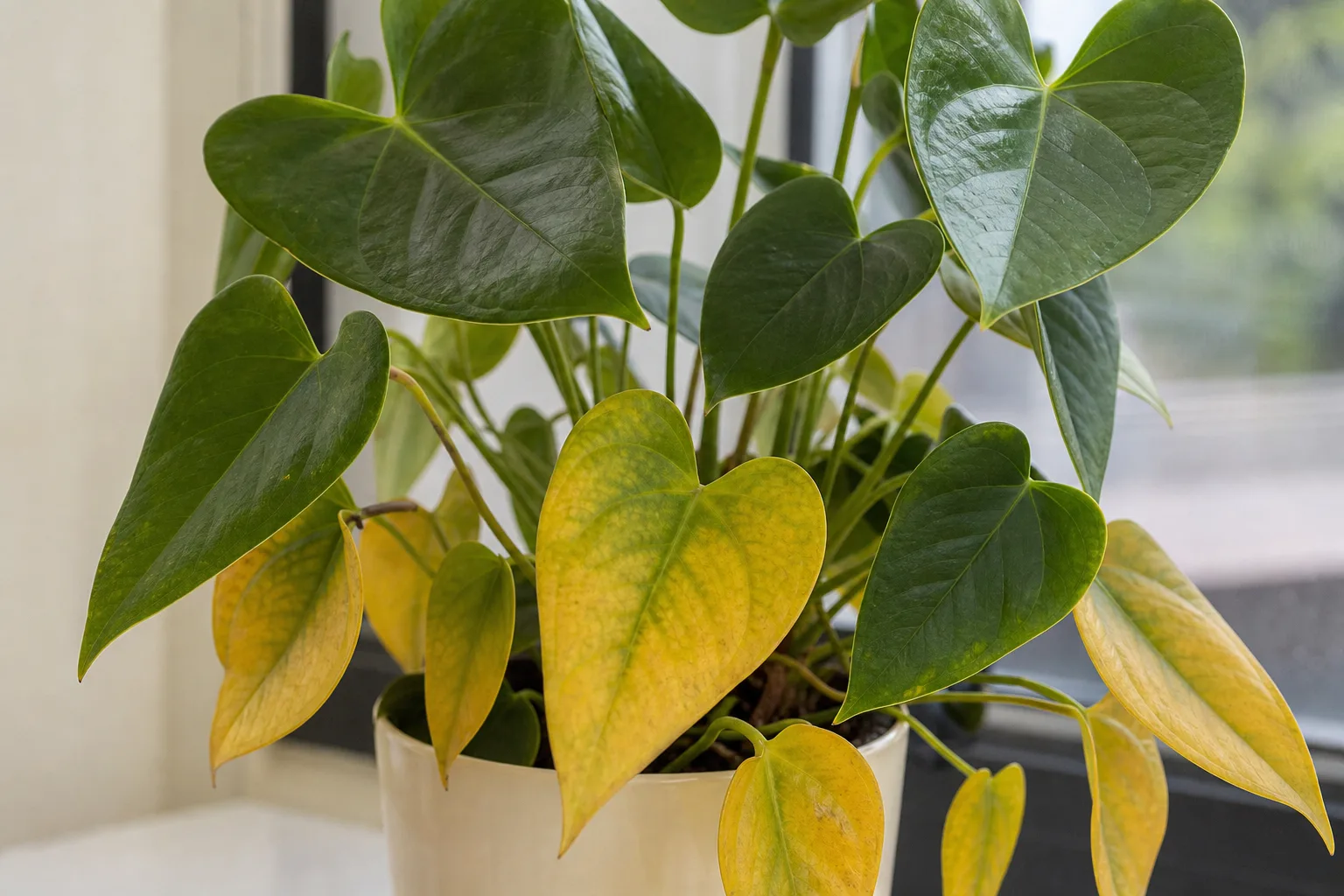
Yellow Leaves on Anthurium: Causes, Checks & Fixes
This guide covers yellow leaves on Anthurium. See also the general Yellow Leaves guide, watering, and light pages for this plant.
Yellow Leaves on Anthurium: Causes, Checks & Fixes
Quick answer
Yellow leaves on Anthurium (Anthurium andraeanum and hybrids) are a symptom, not a diagnosis. Flamingo flower carries thick, glossy leaves on a compact rosette; when culture fails, chlorophyll breaks down and leaves yellow before they drop. Missouri Botanical Garden lists overwatering as among the most common indoor plant problems, and Anthurium’s peat-based roots rot fast in soggy mix. Low light, underwatering on Anthurium, natural aging, and salt stress also yellow leaves-but each shows a different pattern.
First step: check soil moisture 2 inches deep and note which leaves are yellowing-oldest only vs. spreading upward. Do not fertilize or repot on day one until you know whether the root zone is too wet, too dry, or appropriate.
What yellow leaves look like on Anthurium
Yellowing patterns narrow the cause quickly on this rosette plant:
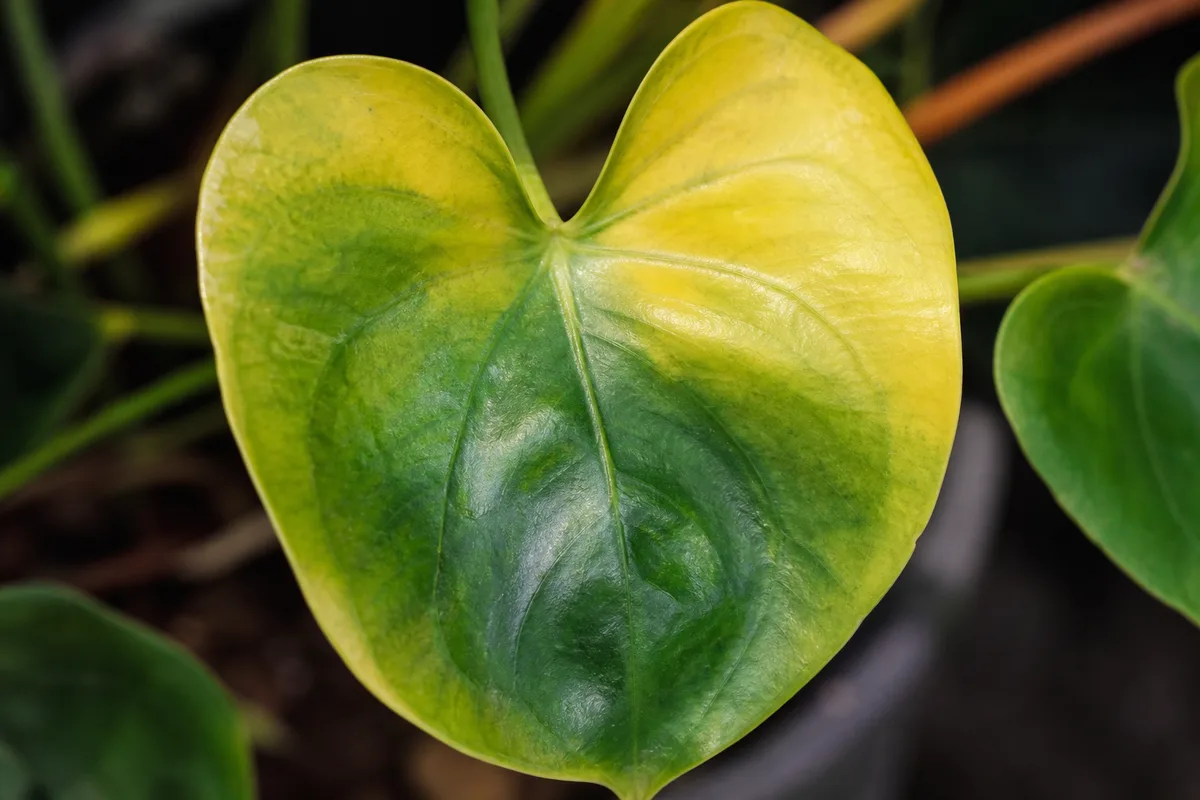
Yellow Leaves symptoms on Anthurium - compare with healthy tissue on the same plant.
Normal aging
- Oldest bottom leaves only yellow slowly over weeks or months
- Center crown and new spathes stay firm and green
- Soil moisture rhythm is stable; no wilt or sour smell
Overwatering / root stress
- Multiple lower leaves yellow together with limp, soft texture
- Soil wet days after watering; pot feels heavy
- Yellowing climbs the stem if roots stay saturated
- New growth may stall or emerge smaller and pale
Underwatering
- Leaf edges yellow or brown with crispy feel; whole leaf may yellow from margins inward
- Mix pulled away from pot sides; light pot weight
- Wilting between waterings that recovers after a soak
Low light
- Pale yellow-green upper leaves on elongated petioles
- Plant leans toward window; slow growth
- Often paired with fewer or smaller spathes
Salt or fertilizer stress
- Tip and margin burn progressing to yellow after heavy feeding
- White crust on soil surface in containers
Why Anthurium gets yellow leaves
Overwatering (most common indoors)
Anthurium wants evenly moist, well-drained organic mix-not constantly wet peat. Calendar watering in winter, closed drainage holes, and saucers left full keep roots oxygen-starved. Lower leaves often yellow first when roots are stressed-a pattern shared by many rosette houseplants with fine roots.
Low light
Anthurium needs bright indirect light for sustained bloom and firm foliage. Dim corners produce pale, weak leaves that yellow from inability to sustain older tissue-not because the plant lacks fertilizer.
Natural senescence
Rosette plants shed oldest leaves as new crown growth continues. One or two bottom leaves yellowing over a long period with otherwise healthy culture is often harmless. Remove them when fully yellow.
Underwatering and drought stress
Letting the root ball go bone dry repeatedly-especially in bright light-yellows margins and stresses the whole leaf. Anthurium wilts visibly when thirsty; chronic drought yellows before drop.
Salt buildup and overfertilizing
Heavy liquid feed without occasional flushing accumulates salts. Leaf margins burn and yellow. Hold fertilizer on already-stressed yellowing plants.
How to confirm the cause
Work through these checks in order:
- Soil moisture at 2 inches - Wet and clinging means overwatering likely. Bone dry means drought stress.
- Leaf position - Bottom only vs. multiple levels vs. whole plant.
- Texture - Limp and soft on wet soil (root stress) vs. crispy (drought) vs. pale and stretched (light).
- Pot weight and drainage - Heavy pot, full saucer, blocked holes?
- New growth - Green firm center leaves mean the crown is still functioning.
- Smell - Sour mix suggests rot; investigate roots if yellowing spreads fast on wet soil per overwatering guidance.
The first fix to try
If soil is wet: stop watering until the top inch dries and empty all saucer water. If soil is bone dry and the plant is wilting: water thoroughly until a little drains, then discard excess.
One correction based on moisture-not fertilizer, not Anthurium repotting guide on day one.
Step-by-step recovery
- Match watering to dry-down - Water when top inch is dry but before the whole root ball desiccates. Never let the pot sit in standing water.
- Improve light if pale and stretched - Move to bright indirect exposure; avoid hot direct sun on leaves.
- Remove fully yellow leaves - Snip spent tissue at the base to reduce pest hiding spots.
- Hold fertilizer - Feed only after new leaves stay green for two to three weeks.
- Inspect roots if rapid spread - If many leaves yellow on wet sour mix, unpot and trim mushy roots into fresh airy mix. See root rot on Anthurium if stems soften.
- Flush salts if burn pattern - Run plain water through the pot until drain runs clear if tip burn followed heavy feeding.
Recovery timeline
| Stage | What to expect |
|---|---|
| 1–2 weeks | Yellowing should stop spreading once moisture or light is corrected |
| 2–3 weeks | New center leaves stay firm and green-primary success marker |
| Ongoing | Old yellow leaves drop; spathe production may resume after stability |
Judge success by new growth, not old leaf color.
Lookalike symptoms
| Pattern | What you see | Likely cause |
|---|---|---|
| Bottom leaf aging | One or two old leaves yellow slowly | Normal senescence |
| Wet soil + limp yellow leaves | Spread from base upward | Overwatering / root stress |
| Crispy margins, dry soil | Edge yellow-brown | Underwatering |
| Pale stretched upper leaves | Long petioles, lean | Low light |
| Margin burn after feed | Tip yellow on moist soil | Salt stress |
Mistakes to avoid
- Fertilizing yellow plants first - Fix water and light before feed.
- Repotting on day one - Unless roots are clearly rotting, stabilize moisture first.
- Misting to “help” yellow leaves - Does not fix root zone problems; can worsen fungal issues on spent tissue.
- Treating all yellow as rot - Single old bottom leaf yellowing is often normal.
- Keeping saucers full - Standing water suffocates roots.
When to worry
Escalate when:
- Many leaves yellow within a week on wet soil
- Stems soften at the base or mix smells sour
- Whole plant wilts despite wet mix-possible advanced root rot
- New center leaves yellow while soil stays wet
How to prevent yellow leaves next time
Grow Anthurium in bright indirect light with well-drained mix. Water when the top inch dries. Empty saucers. Remove spent lower leaves. Feed lightly during active growth only. Align culture with this epiphytic aroid’s need for oxygen at the roots-not constant soggy peat.
When to use this page vs other Anthurium guides
- Anthurium watering guide - Use for routine moisture checks before assuming yellow leaves is the main issue.
- Anthurium problems hub - Browse all 20 common issues on this species.
- Overwatering on Anthurium - Different entry point when symptoms overlap with yellow leaves.
- Underwatering on Anthurium - Different entry point when symptoms overlap with yellow leaves.
- Not Enough Light on Anthurium - Different entry point when symptoms overlap with yellow leaves.