Anthurium Light Needs: Best Indoor Placement, Windows
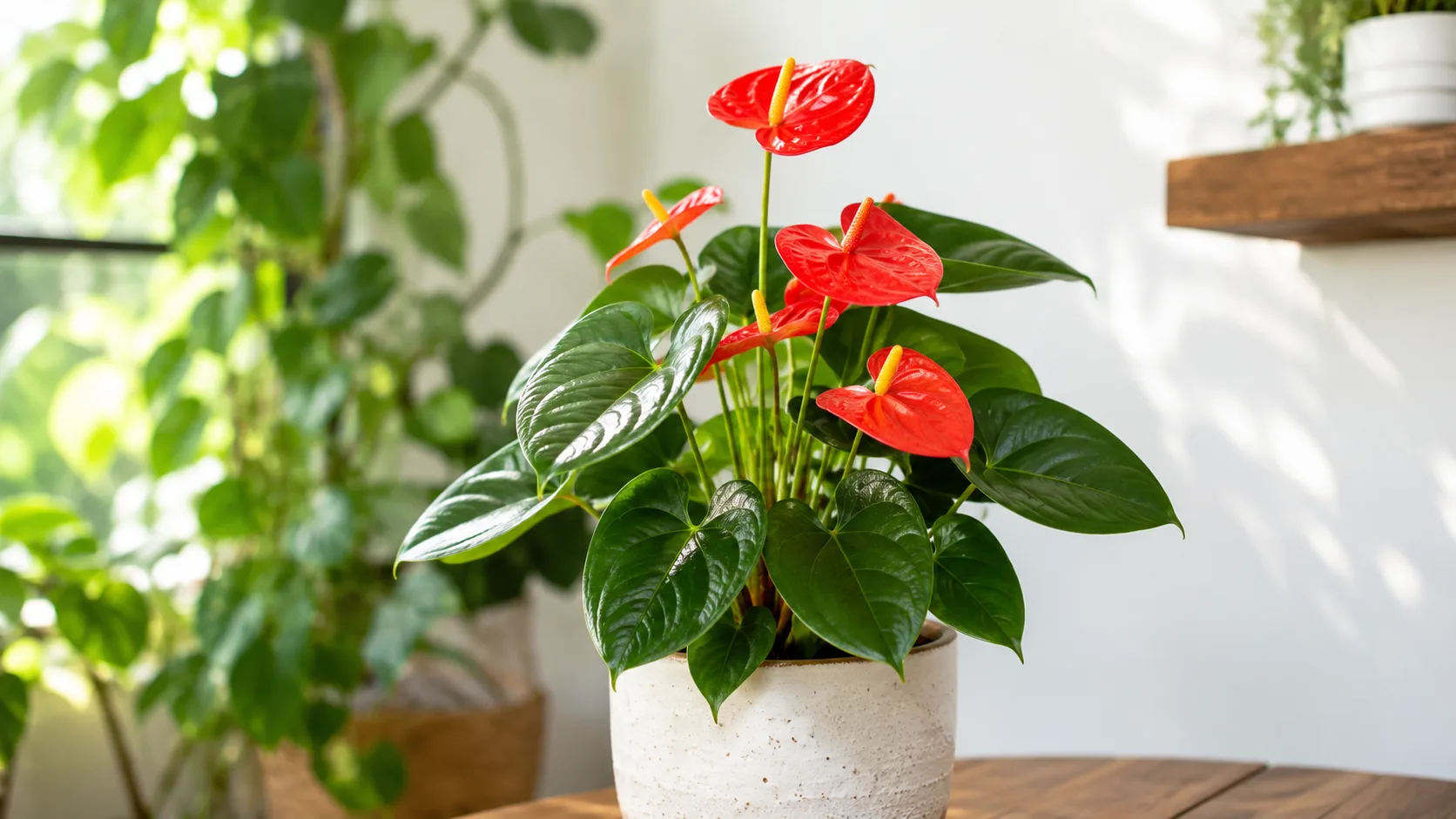
Anthurium Light Needs: Best Indoor Placement, Windows, and Grow Light Guide for Blooms
Anthurium Light Needs: Best Indoor Placement, Windows, and Grow Light Guide for Blooms
Why Light Matters More Than Anything Else for Anthurium Blooms
If you have an Anthurium andraeanum - the waxy red, pink, or white “flamingo flower” sold in garden centers worldwide - the single biggest lever you have over its blooming is light. Water, humidity, and fertilizer all matter, but the Missouri Botanical Garden’s Plant Finder entry for Anthurium andraeanum leads with the rule: “Plants need bright light (part or diffused sun in summer), but avoid full sun. In too much shade, plants may not bloom.” Light is the factor that decides whether your plant is a foliage plant or a flowering plant. The North Carolina Cooperative Extension’s plant toolbox makes the same point more bluntly: “Too little light will cause fewer blooms, and the plant will grow more slowly.”
That matters because most anthurium problems in living rooms are not actually water problems in disguise - they are light problems. A plant can sit in a dim corner for months, look glossy and alive, push out new dark green leaves, and never produce a single spathe. The owner waters carefully, fertilizes on schedule, and wonders what they are doing wrong. The answer, almost always, is that the plant is getting enough light to live but not enough light to flower.
The good news is that light is also the easiest variable to change. You can move the pot, hang a sheer curtain, or screw in a $30 LED panel. The rest of this guide is the practical, numbers-driven version of “bright indirect light,” built from extension-service guidelines, RHS cultural notes, UF/IFAS interiorscape research, and a few decades of grower experience condensed into what actually works at home.
What “Bright Indirect Light” Actually Means for Anthurium andraeanum
“Bright indirect light” is one of the most common phrases in houseplant care and one of the most consistently misunderstood. Two people can read the same care tag and put the same plant in two very different windows, with very different results. The phrase describes light that is intense enough to read a book by comfortably, but where the sun’s rays do not fall directly on the leaf surface for more than a brief window in the day.
For an Anthurium andraeanum, that means light coming through a window with no sunbeam landing on the foliage, or light filtered through a sheer curtain or frosted glass, or a few feet of distance from a sunny window. The Royal Horticultural Society’s growing guide puts it simply: place anthuriums “where they’ll receive bright, indirect light, such as in a west- or east-facing window, or shaded by net curtains or thin blinds in a south-facing window.”
The Foot-Candle Numbers That Matter
If you want to be precise, the UF/IFAS cultural guidelines for interiorscape anthurium (the standard reference used by commercial interiorscapers) put the useful range at roughly 1,000 to 2,500 foot-candles, with around 1,500 to 2,000 foot-candles as the steady target for a blooming plant. The lower end of that range keeps the plant alive and pushing leaves; the upper end is what triggers and sustains flower cycles. Below 100 to 200 foot-candles, an anthurium will survive but stop initiating new spathes; above 2,500 foot-candles, foliage starts to pale, lose its deep green color, and eventually scorch.
If you are not using a light meter, here is how those numbers translate to a real room. A north-facing window in winter typically delivers 50 to 150 foot-candles - a survival range with no real chance of flowering. An east-facing window a foot or two from the glass delivers roughly 200 to 600 foot-candles in the morning bright zone - enough to grow, sometimes enough to flower. A south or west window in summer delivers 1,000 to 2,000+ foot-candles within two feet of the glass, which is the actual blooming range, provided the light is filtered or the plant sits back from the direct beam. Modern phones can approximate these readings with a cheap lux-meter app, and 1 foot-candle equals roughly 10.76 lux, which is close enough for placement decisions.
A Simple Shadow Test You Can Do in 30 Seconds
You do not need a meter to make a confident placement decision. The shadow test is the standard grower shortcut. Hold your hand about 12 inches above the spot where you intend to put the pot, between the plant and the incoming light, at the brightest part of the day. If your hand casts a sharp, dark, well-defined shadow with crisp edges, that is direct sun - too intense for anthurium foliage. If your hand casts a soft-edged, fuzzy shadow with a clear shape but blurred borders, that is bright indirect light - the target. If your hand barely registers a shadow at all, the light is too low to bloom. The whole test takes half a minute, costs nothing, and is more reliable than most care tags.
Best Indoor Placement: Where to Put a Flamingo Flower
Window direction is the single biggest determinant of how much usable light a houseplant receives, because the sun’s path across the sky changes both the intensity and the duration of exposure each window gets. Anthuriums are native to the understory of Colombian and Ecuadorian cloud forests, where they grow as epiphytes on tree trunks under broken canopy. They get strong, diffused light all day, never a full tropical sunbeam. Your job at home is to reproduce that.
East-Facing Windows: The Sweet Spot
An east-facing window is the consensus pick across nearly every reliable source, from the RHS to White Flower Farm to Proven Winners to the N.C. Cooperative Extension. East windows get a few hours of direct morning sun, then bright, indirect light for the rest of the day. Morning sun is gentle - the air is cooler, the sun is low, and the intensity is well within what anthurium foliage can absorb without bleaching. By the time the harsh midday rays arrive, the window has shifted to indirect light, which is exactly what the plant wants. Most growers will tell you that an anthurium within one to two feet of an unobstructed east window is the easiest path to reliable blooming year-round, and UF/IFAS trials back this up: plants in this kind of placement will initiate flower buds continuously once mature.
West-Facing Windows: Bright but Watch the Afternoon
West-facing windows are the second-best option. They deliver a similar total daily light integral to an east window, but the direct-sun window falls in the afternoon, when the sun is hotter and more likely to scorch foliage. If your only bright window is west-facing, you have two clean options: pull the plant back two to four feet from the glass so it sits in the indirect zone, or hang a sheer curtain that diffuses the late-afternoon rays. A west window without filtering will bleach the spathes and crisp the leaf edges within a week of summer sun.
South-Facing Windows: Filter, Don’t Avoid
A south-facing window is the most misunderstood option. Many care guides tell you to avoid south windows entirely, which is overcautious. The light is brighter, yes, but a south window also offers the most room to maneuver: sheer curtain, frosted film, a position three to five feet back from the glass, or a tall piece of furniture that filters the light. The Plant Addicts placement guide notes that “south-facing rooms provide bright, all-day light” and that an anthurium can use that light brilliantly if you control the direct-beam exposure. A south window with a sheer curtain delivers a reliable 1,000 to 2,000 foot-candles of bright, indirect, all-day light - often the most stable blooming position in a temperate home. In winter, when the sun is low and weak, you can even move the plant a bit closer to the glass. In summer, push it back or filter the light.
North-Facing Windows: Usually Not Enough
A north-facing window is a survival window, not a blooming window. In the northern hemisphere it never receives direct sun, and the indirect light it does deliver is too low to sustain flowering for most of the year. Some growers in very bright homes manage to bloom anthuriums in north windows, and a few tougher hybrids will tolerate it, but the default expectation is dark-green leaves and no spathes. If a north window is your only option, plan on supplementing with a grow light for at least part of the year.
How Many Hours of Light an Anthurium Needs Each Day
Intensity is only half of the equation. Duration matters just as much, and most growers underestimate it. The conservative answer for Anthurium andraeanum is six to eight hours of bright, indirect light per day, and the more aggressive answer is eight to ten hours. The Bloomscaper growers’ consensus and the N.C. Cooperative Extension data both land in that 6-to-10-hour band; UF/IFAS interiorscape trials suggest that continuous, steady light in the 1,500 to 2,000 foot-candle range produces 4 to 6 bloom cycles per year, while intermittent or low light drops that to 2 or 3.
You can hit that target with an east window alone for most of spring, summer, and fall. In winter, when day length shrinks and the sun sits low, you almost certainly cannot. That is when a grow light earns its keep: 10 to 12 hours of full-spectrum LED on a simple outlet timer will keep the plant in active growth and bud initiation through the dark months.
Photoperiod, Day Length, and Bloom Cycles
The question of whether anthurium is a short-day, long-day, or day-neutral plant is genuinely contested in the literature, and that is worth saying up front because it is unusual for a popular houseplant. UF/IFAS research on commercial anthurium cultivars identified three flowering responses: age-dependent (flowers continuously after reaching maturity), season- and age-dependent (flowers only in spring and summer after reaching maturity), and cross or multi-seasonal (flowers more than once per year). Some extension sources treat anthurium as a long-day plant and recommend 14 to 16 hours of light per day for active growth; others treat it as essentially day-neutral once it is mature and feed it on a steady 10 to 12-hour cycle. The practical upshot for indoor growers is simple: a stable, year-round 10 to 12-hour photoperiod under bright, indirect light is the most reliable home setup. If you want to experiment with longer days in winter to push more blooms, do it gradually, with a grow light you can ramp over a week or two.
What is not contested is that abrupt photoperiod shifts stress the plant. A move from a 6-hour winter window to a 14-hour summer window can drop leaves and stall flowering for weeks. A grow light on a timer is the cleanest way to control this.
Signs Your Anthurium Is Getting Too Little Light
Low light is sneaky. An anthurium in low light does not wilt, does not yellow, does not obviously suffer. It just quietly refuses to bloom and slowly changes shape. Three reliable diagnostic signs are worth memorizing.
No Blooms, But Otherwise Healthy Leaves
The single most common reason an otherwise healthy anthurium is not flowering is insufficient light. N.C. Cooperative Extension lists “insufficient light or nutrient deficiencies” as the primary causes of reduced flower production. UF/IFAS trials and the Bloomscaper grower data both confirm: a plant that is producing large, dark green, glossy leaves and no spathes is almost always getting enough light to grow but not enough light to trigger bud initiation. The diagnostic is that the leaves look great. If your plant is healthy-looking and flowerless, light is the first thing to fix - not fertilizer, not a bigger pot, not more water.
The practical test is straightforward. Move the plant one to two feet closer to your brightest window, or add a grow light set to 10 to 12 hours per day. If new spathes appear within 6 to 10 weeks, light was the limiting factor. If they do not, you have a second issue (temperature, humidity, nutrition, pot size) layered on top.
Leggy Stems and Dark Green Foliage
The second diagnostic is shape. In low light, an anthurium will start to stretch toward the window. Petioles get longer, leaves get smaller, and the spacing between leaves along the stem increases. The foliage also tends to deepen to a very dark, almost black-tinged green as the plant produces more chlorophyll to compensate for the dim conditions. This is etiolation, the same response you see in seedlings that are not getting enough light. The plant is not dying; it is reorganizing itself to chase the sun. New spathes that do appear in low light are typically smaller, paler, and on longer, weaker stems than the parent plant’s older blooms.
If you see this pattern, move the plant closer to the window gradually - not in one jump - and rotate the pot a quarter turn every week to keep growth even.
Signs Your Anthurium Is Getting Too Much Light
Too much light is louder and faster than too little. The plant shows visible damage in days, not months, and the symptoms are easy to read once you know them.
Bleached Spathes, Yellow Patches, and Scorched Edges
The most diagnostic sign of excess light is bleached spathes. A red spathe that is fading toward washed-out orange, pink, or white is being cooked by direct sun. This often shows up before the leaves do, because the spathe is a modified leaf with thinner tissue and less chlorophyll protection. Leaves follow with pale yellow or tan patches on the upper surface where the sun hits directly. Those patches turn crispy and brown, the edges curl inward, and the leaf eventually drops. In extreme cases, an unfiltered south or west window in summer can bleach an anthurium within a week.
The diagnostic rule of thumb from the Bloomscaper data and the Plantsmith grower notes: bleached spathes and pale or scorched leaves on a plant in good light = too much. Long stems, dark green leaves, and no blooms in a dim spot = too little. If you can place your anthurium in the same room and read your phone screen comfortably without squinting, you are in the right ballpark.
The fix is also fast. Move the plant two to four feet back from the window, hang a sheer curtain, or relocate it to an east-facing exposure. Damaged leaves will not recover, but new growth should come in clean within a few weeks. Do not compensate by overwatering on Anthurium; the soil dries out faster in bright light, but root rot on Anthurium in a soggy pot is still a faster killer than a little extra sun.
Using Grow Lights to Fill the Gap
A grow light is the single most useful piece of equipment you can buy for an anthurium, especially if you live above the 40th parallel where winter daylight is short and weak. The technology has come down in price dramatically, and modern full-spectrum LEDs are essentially plug-and-play. The choices that actually matter are intensity, spectrum, and distance.
For intensity, the consensus target is 100 to 220 µmol/m²/s of PPFD at the leaf surface for 10 to 12 hours per day. That maps to the 1,500 to 2,000 foot-candle range the UF/IFAS data uses. A 20 to 40 watt full-spectrum LED panel hung 12 to 18 inches above the canopy will deliver this in a typical living room. A color temperature of 4,000 to 6,500 K (the “daylight” range) covers both the blue wavelengths that drive compact foliage growth and the red wavelengths that drive flowering, so a single full-spectrum panel covers both. A color rendering index (CRI) above 90 is a quality marker worth looking for, though not strictly required.
For distance, start 12 to 18 inches above the plant and watch the leaves for a week. If the leaves start to yellow or the spathes bleach, raise the light 3 to 6 inches. If the plant does not improve over four to six weeks, lower the light 3 to 6 inches. Use an inexpensive outlet timer to set a 10 to 12-hour photoperiod and leave it. The biggest grower mistake with grow lights is leaving them on too long or mounting them too close, both of which produce the same bleaching symptoms as too much window sun.
A grow light is also the right answer if you have only north windows, if your apartment is shaded by a neighboring building, or if your plant goes into a dark interior room seasonally. It is not a downgrade from a window - it is a more controllable version of one.
Acclimating a New or Moved Anthurium to Brighter Light
Plants do not adjust to a new light level instantly. A plant that was raised in a greenhouse under 60% shade cloth, or that has been sitting in a dim corner of your living room for six months, will scorch if you put it directly into a south window. The cuticle, leaf thickness, and pigment profile of the foliage all need time to adjust. Acclimation is the controlled version of that adjustment, and it is the step most indoor growers skip.
The standard protocol is simple. Move the plant to a brighter spot in two or three small steps over one to two weeks, holding at each new position for three to five days and watching the leaves. If you are going from a dim corner to a south window, start with a few days in an east window, then move to the south window with a sheer curtain, then drop the curtain for a few hours a day, then full-time. If you are adding a grow light, start with 6 to 8 hours per day for the first week, then increase to the target 10 to 12 hours.
New plants from a nursery or mail order are the most important case. They have usually been grown in a controlled greenhouse with stable, bright, indirect light, and even a one- or two-day shipping trip in a dark box can lower their tolerance. Place a new arrival in a warm, draft-free spot with bright, indirect light for the first 7 to 14 days before you do anything else. Avoid Anthurium repotting guide, fertilizing, or moving it around during that window. The plant will tell you when it is ready: firm leaves, no new yellowing, and ideally the first sign of a new growth point pushing out.
A simple “hand test” at each new position takes 30 seconds and prevents most acclimation mistakes. Hold your hand where the leaves are, at the brightest part of the day. If the light feels hot on your skin, the plant will feel it hotter.
Conclusion
Light is the single biggest variable you control over an anthurium’s health and bloom cycle. The plant wants bright, indirect light at roughly 1,500 to 2,000 foot-candles for 8 to 10 hours per day, the kind of light you get one to two feet from an east window, a few feet back from a south or west window with a sheer curtain, or under a 20 to 40 watt full-spectrum LED on a 10 to 12-hour timer. It will not bloom in a dim corner no matter how perfectly you water and feed it, and it will scorch in unfiltered direct sun. The signals are clear: a plant with dark green, leggy foliage and no flowers needs more light, while a plant with bleached spathes, yellow leaf patches, and crispy edges needs less. When in doubt, run the shadow test, check the foot-candles with a phone app, and adjust in small steps over one to two weeks. Get the light right, and the rest of anthurium care - humidity, watering, fertilizer, repotting - falls into place around a plant that is already doing what it evolved to do.
When to use this page vs other Anthurium guides
- Anthurium overview - Start here for whole-plant context before deep-diving this topic.
- Anthurium problems hub - Jump to symptom-specific fix guides when this care topic does not resolve the issue.
- Not Enough Light on Anthurium - Escalate here when light adjustments are not enough.
- Leggy Growth on Anthurium - Escalate here when light adjustments are not enough.
Related Anthurium guides
- Anthurium overview
- Anthurium watering
- Anthurium soil
- Anthurium propagation
- Anthurium fertilizer
- Anthurium repotting
- Not Enough Light on Anthurium
- Leggy Growth on Anthurium
- Anthurium problems
Related tool
Try the Plant Problem Diagnosis Tool with anthurium pre-selected to estimate needs for your setup.