Leggy Growth on Anthurium: Causes, Checks & Fixes
Quick answer
Leggy Anthurium stretch means etiolation-elongated petioles, smaller new blades, and a sparse crown reaching toward the brightest window. First step: move the pot within a few feet of an east or filtered south window before pruning, fertilizing, or repotting.
Leggy Growth on Anthurium: Causes, Checks & Fixes
This guide covers leggy growth on Anthurium. See also the general Leggy Growth guide, watering, and light pages for this plant.
Leggy Growth on Anthurium: Causes, Checks & Fixes
Quick answer
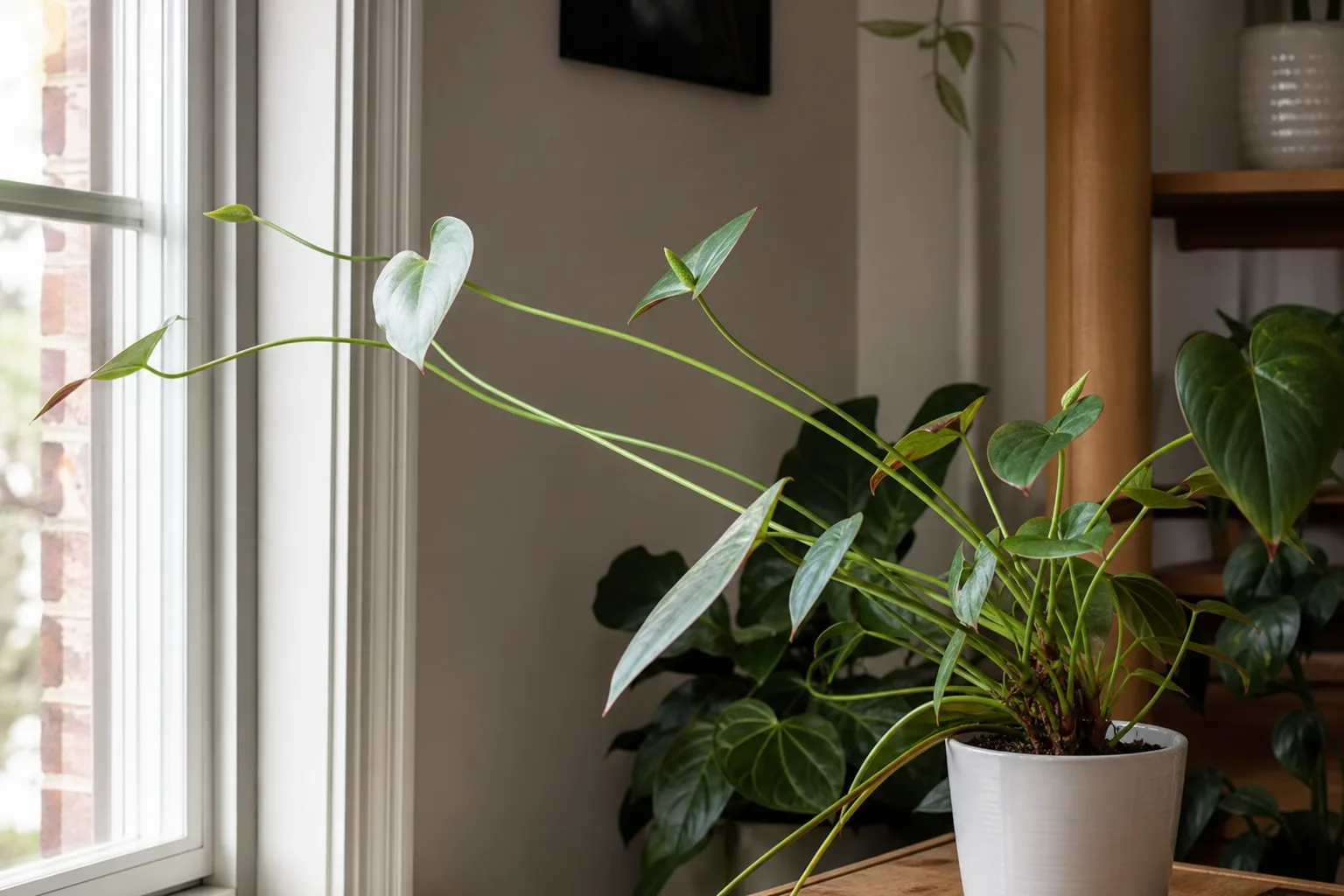
Leggy growth on Anthurium andraeanum (Flamingo Flower) is etiolation-the plant stretching toward usable light by elongating petioles and opening wider gaps between leaves. Unlike a pale, starving plant, Anthurium often stays dark green and glossy while structure quietly fails: long thin leaf stems, smaller new blades, a sparse crown, and a persistent lean toward the brightest window or lamp.
First step: move the pot to brighter indirect light today-within a few feet of an east- or west-facing window, or behind a sheer curtain on south-before pruning, Anthurium repotting guide, or fertilizing. Legginess is almost always a light problem first and a scissors problem second.
How this page differs from our not-enough-light guide: that URL covers the full low-light symptom set-bloom failure, wet-soil yellowing, window protocols, and grow-light setup. This page focuses on structural stretch diagnosis via petiole-length comparison, the shadow test, prune-after-light sequencing, and the lookalike table. For foot-candle targets and PPFD numbers, pair with the Anthurium light guide.
What leggy growth looks like on Anthurium
Growers search “leggy” when the plant looks tall, sparse, and uneven rather than sickly yellow. On Anthurium, the tell is the petiole-the slender stalk between crown and leaf blade-not just overall height.
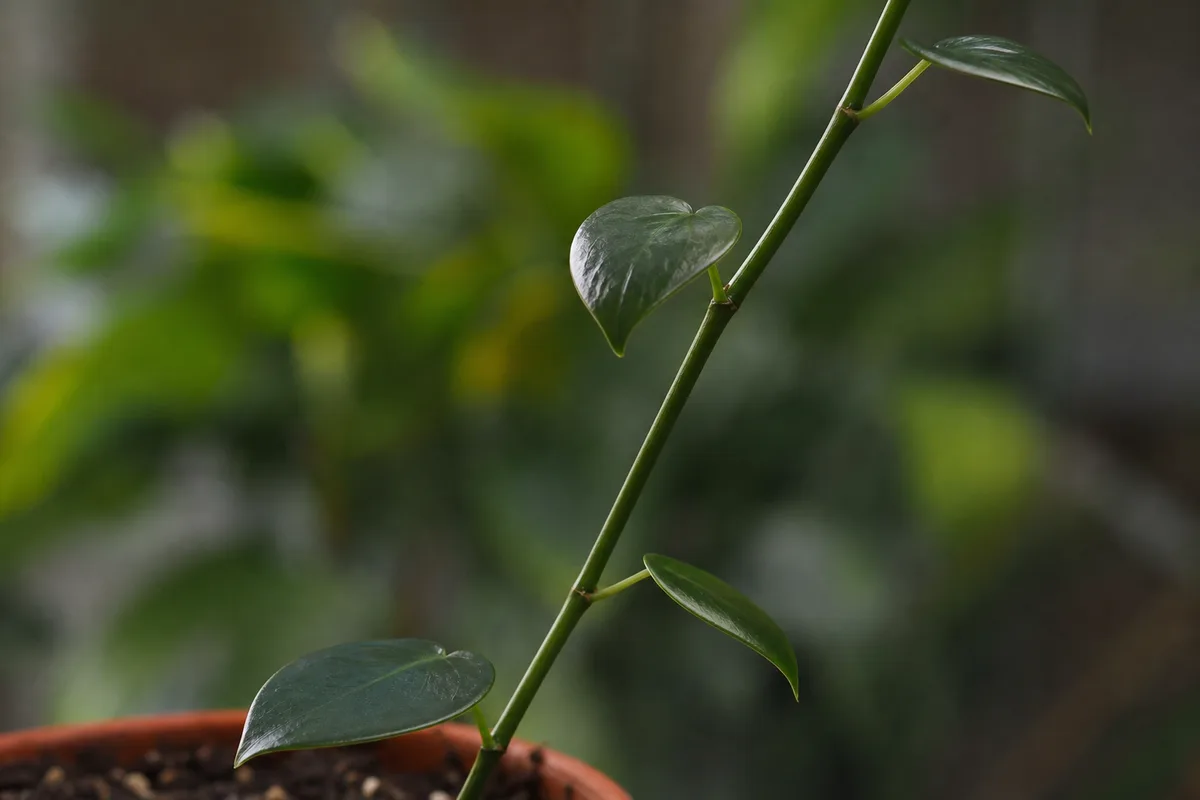
Leggy Growth symptoms on Anthurium - compare with healthy tissue on the same plant.
Because A. andraeanum pushes new leaves from a single compact crown on a short upright stem, each stretched petiole radiates outward like spokes on a wheel. The silhouette opens and the plant leans long before chlorophyll fades-unlike many houseplants that yellow first, Anthurium can look “healthy green” while the crown architecture already betrays weak light.
Typical stretch patterns include:
- Elongated petioles on the newest leaves, with blades smaller than older foliage at the base
- Wide gaps between leaves along the main stem, giving an open, airy silhouette
- Lean or reach toward the window; the pot may stay upright while all foliage points one direction
- Dark green, almost blue-green leaves that look healthy but feel thin and sparse-owners often misread this as “fine but not bushy”
- Few or no spathes on stems that keep pushing foliage; stretch and bloom failure often share the same root cause
- Weak posture where long petioles cannot hold blades level; lower leaves may stay while new growth concentrates at the top
Leggy growth is not bleached or papery patches on sun-facing leaves-that is direct sun stress; see the light guide for scorch placement. It is also not the same as general slow growth in good light, where spacing stays normal but new leaves arrive infrequently.
Why Anthurium stretches toward light
Anthurium evolved as an epiphyte in warm Colombian and Ecuadorian forests, where bright filtered light reaches the understory without harsh direct sun. As a houseplant, it needs bright indirect light to thrive indoors-unlike outdoor shade culture in frost-free gardens. When indoor foot-candles fall below what the crown needs for compact tissue, the plant enters a foraging response: hormones promote rapid cell elongation in petioles so leaves can intercept more photons. Indoor plants in low light become spindly and lean toward the source-classic etiolation, not a separate disease.
For compact growth and spathe production, aim for roughly 1,000–2,000 foot-candles of bright indirect light at the leaf surface-the blooming range spelled out on the Anthurium light guide. Below 100–200 foot-candles, the plant may survive on foliage alone but will stretch and stop initiating new flowers.
Common indoor triggers:
- Decor placement six or more feet from glass, where human eyes see brightness but usable light drops sharply with distance
- Winter short days that cut daily light integral even when the pot never moved-December through February in temperate homes often halves effective photon delivery unless you add a timed grow lamp
- One-sided exposure without weekly rotation, so stretch and lean compound on the window side
- Crowded windowsills where another plant’s shadow blocks half the Anthurium crown
- Heavy nitrogen in dim corners, which can push soft, elongated leaf tissue the crown cannot structurally support when photosynthesis lags-spathes stay absent while petioles keep lengthening
The Missouri Botanical Garden notes flamingo lily needs bright light but avoids full sun, and in too much shade, plants may not bloom. Stretch is the structural version of that same energy deficit-surviving on leaves alone while the plant cannot afford compact growth or spathes. If blooms matter to you, treat stretch prevention as spathe prevention: the same light budget that keeps petioles short is what triggers waxy flower production.
Dim placement also slows water use. Photosynthesis drops, so the same Anthurium watering guide that worked in a brighter spot can leave mix wet for days-inviting yellow leaves and root stress that look like a watering problem when light is the driver. That overlap is covered in depth on the not enough light page.
How to confirm leggy growth vs other problems
Work through these checks in order before changing fertilizer or pot size:
Petiole length comparison
Trace the newest unfurling leaf back to the crown and compare its petiole length to a mature leaf from six to twelve months ago. Increasing stem length with smaller blades confirms stretch. Stable spacing with occasional slow leaves points elsewhere-often roots, temperature, or general slow growth.
Shadow test and window distance
On a bright day, hold your hand between the window and the plant at midday. A soft, fuzzy shadow with blurred edges suggests bright indirect light-the target for recovery. A sharp dark shadow means direct sun-filter or pull back. Almost no shadow means too dim for reliable compact Anthurium growth. Is the pot within roughly 3–5 feet of east or west glass, or filtered south? Farther back is usually medium to low light for a blooming tropical.
Symptom lookalike table
| What you see | Likely cause | First check |
|---|---|---|
| Long petioles, lean toward window, dark green sparse crown | Leggy stretch (low light) | Move to brighter indirect light |
| Normal spacing, few new leaves, no stretch | Slow growth (light, roots, or season) | Light level, root firmness, temperature |
| Yellow soft leaves, sour wet mix, no strong lean | Overwatering in a dim spot | Dry-down rhythm; see overwatering |
| Bleached or brown patches on exposed leaves | Too much direct sun | Filter light; see light guide |
| Brown tips only, no long petioles | Low humidity or salts | Humidity and water quality |
If hot direct sun already hits the leaves and bleached patches appear, you are past legginess into sun stress-move out of the beam before increasing light.
First fix for leggy Anthurium
Relocate the pot to the brightest safe indirect location in your home.
For most rooms-matching RHS bright indirect placement in east or filtered west windows:
- East window - Morning sun, gentler for acclimation; often ideal for compact growth
- West window - Strong afternoon brightness; filter if summer glass heats leaves
- South window - Only behind a sheer curtain or set back from glass; direct sun can scorch Anthurium leaves
Increase exposure gradually over one to two weeks if the plant lived in deep shade for months-sudden jumps into harsh direct sun burn foliage even when the plant wanted more energy.
If no window is bright enough, add a full-spectrum LED grow light 6–12 inches above the foliage for 12–14 hours daily. Supplemental light prevents repeat stretch when natural daylight is insufficient-distance, wattage, and foot-candle targets live in the Anthurium light guide.
Hold fertilizer, repotting, and heavy pruning until new leaves look more compact. Extra nutrients do not replace photons.
Step-by-step recovery after the light move
Once brighter placement is set, support recovery in this order:
- Stabilize placement - Move the pot, then rotate it a quarter turn weekly so all sides face the light source. Keep temperatures in the 65 to 80 degrees Fahrenheit comfort range.
- Adjust watering - Brighter spots dry mix faster. Water when the top inch feels dry, not on the old calendar from the dark corner.
- Watch for the first compact leaf - Shorter petiole, wider blade, less lean. That is your green light for optional cosmetic pruning.
- Prune elongated stems after light improves - Shorten one or two of the longest petioles or stems to just above firm tissue, never more than one-third of green foliage per session. Full technique and crown safety rules are in the Anthurium pruning guide-fix light before scissors, or new growth stretches again.
- Resume mild feeding - When new leaves stay compact for two weeks, use diluted balanced fertilizer during active growth only.
Do not mass-prune healthy stretched leaves hoping to force bushiness. Compact structure returns from photons, not bulk removal.
Recovery timeline
Two to three weeks of brighter indirect light often produce the first visible change: slightly shorter new petioles, wider blades, and less window-lean.
Four to eight weeks in warm active growth is a reasonable window for clearly compact new foliage. Spathes may follow once the plant rebuilds energy-insufficient light decreases flower production on Anthurium overview, so bloom return tracks light recovery.
Old elongated petioles never shorten. They remain long until you prune them for appearance after several healthy new leaves have formed.
Winter recovery may take longer unless you supplement with grow lights; short December days can add two to four weeks before the first compact leaf. Do not judge failure from winter stretch alone.
Worsening signs after the move: continued yellowing with wet soil, soft stems at the base, or new leaves smaller and paler despite verified bright placement-inspect roots and drainage; rot or chronic overwatering may need correction alongside light.
Lookalike symptoms
- Not enough light broadly - Stretch is the structural signature; the sibling page covers bloom history, soil dry-down in dim corners, and full window protocols. Use both pages together when symptoms overlap.
- Overwatering in low light - Yellow leaves, soggy mix, sour smell; fix dry-down rhythm and drainage, not just window placement
- Slow growth with normal spacing - See slow growth on Anthurium when petioles are not elongating but the plant barely pushes new leaves
- Low humidity alone - Brown leaf tips and edges without long petioles; raise humidity but keep light adequate
- Too much direct sun - Bleached, papery, or brown patches on exposed leaves; filter light rather than increase it
What not to do
Do not prune hard before fixing light-the plant will stretch again from the same weak energy budget. Avoid over-fertilizing to “replace” light; high nitrogen can push soft leaves while spathes stay absent.
Do not blast the plant with direct south-window sun in one day to fix legginess-acclimate gradually to avoid scorch. Do not repot into a larger container hoping to force bushiness-extra wet soil volume slows drying in dim rooms.
Do not keep the same watering frequency after a big light increase without checking the top inch of mix. Do not assume a north window alone satisfies a compact flamingo flower unless you add strong supplemental lighting.
How to prevent leggy growth
Place Anthurium where bright indirect light is realistic most of the day, not only where the pot looks best. Match placement to the plant’s light needs rather than décor alone.
Rotate the pot weekly, wipe windows seasonally, and add grow lights before winter stretch becomes severe. When you move the plant for summer or bring it back indoors in autumn, expect an adjustment period-houseplants can decline after light drops, so plan supplemental hours during the transition.
Pair good light with chunky, well-aerated aroid mix and drainage-healthy roots use water efficiently in bright conditions and fail slowly in dark, wet corners. Keeping foot-candles in the 1,000–2,000 range year-round is the simplest way to hold compact petioles and steady spathe cycles; see the light guide for seasonal adjustments.
When to worry
Leggy stretch alone is rarely lethal, but dim placement plus chronic wet soil is urgent-soft stems, collapsing leaves, and foul mix mean root trouble, not just etiolation. Unpot and inspect if yellowing accelerates after you have already corrected watering.
If new growth stays elongated and flowerless for more than two months after verified bright indirect placement and appropriate watering, look beyond light: root health, pot size, and pest pressure on leaf undersides.
Conclusion
Leggy Anthurium growth is etiolation-long petioles, sparse crowns, and lean toward windows while leaves may still look dark green. Confirm it by comparing new petiole length to older leaves and running the shadow test; then move to bright filtered light before any other fix. Old long petioles will not revert, but shorter new growth marks success-and spathes usually follow once the crown has enough energy. After two weeks of improved light, optional pruning tidies stretched stems per the pruning guide. Keep light strong through winter with clean glass or grow lamps, and use the light guide for placement detail beyond stretch recovery.
When to use this page vs other Anthurium guides
- Anthurium watering guide - Use for routine moisture checks before assuming leggy growth is the main issue.
- Anthurium problems hub - Browse all 20 common issues on this species.
- Not Enough Light on Anthurium - Different entry point when symptoms overlap with leggy growth.
- Slow Growth on Anthurium - Different entry point when symptoms overlap with leggy growth.
- Yellow Leaves on Anthurium - Different entry point when symptoms overlap with leggy growth.