Overwatering on Anthurium: Causes, Checks & Fixes
Quick answer
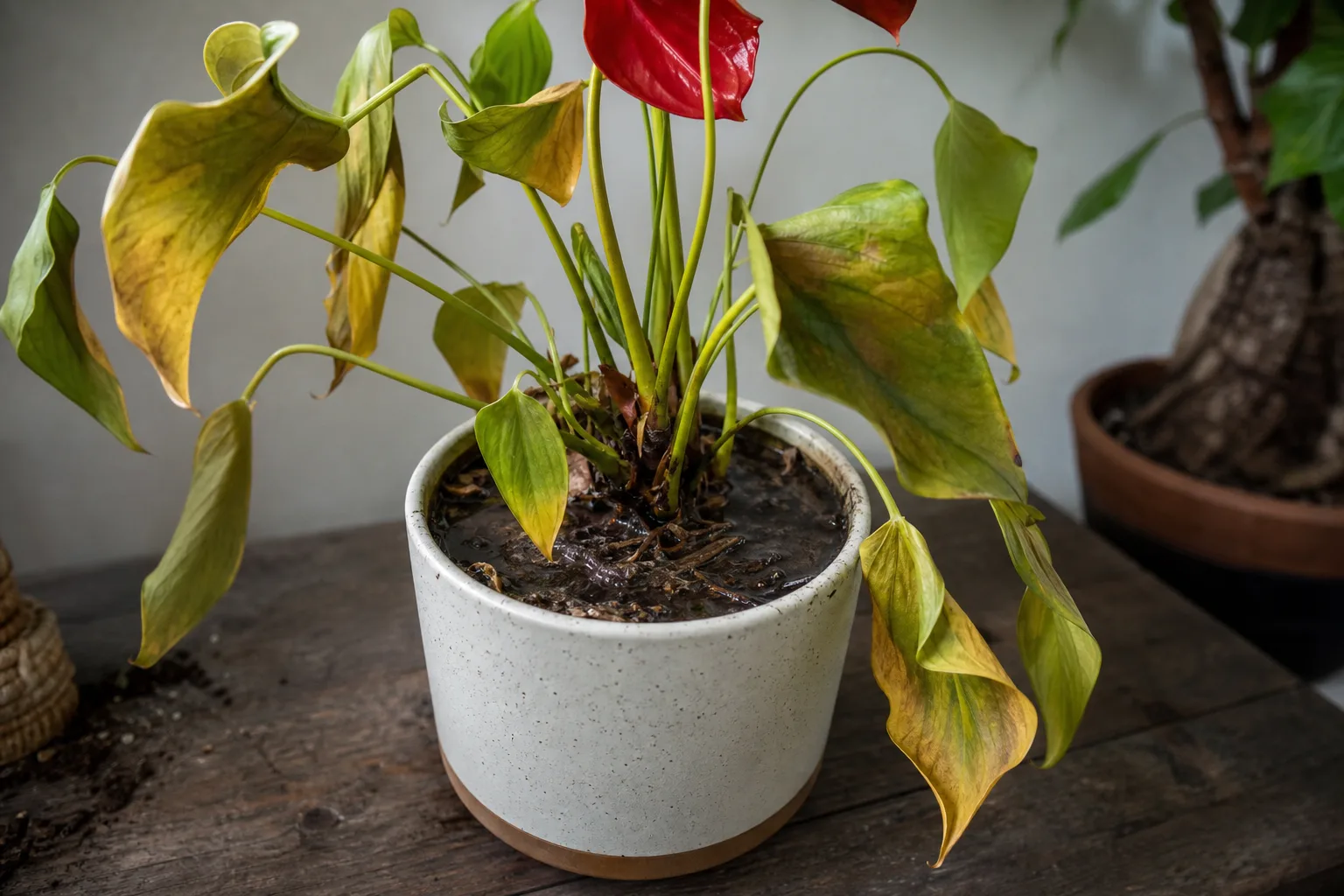
If your Anthurium wilts while the pot feels heavy and damp, stop watering immediately-that wet-soil wilt usually means roots cannot absorb water, not that the plant is thirsty. Let the top inch of mix dry, confirm drainage holes are open, and inspect roots only if leaves keep declining after the surface dries.
Overwatering on Anthurium: Causes, Checks & Fixes
This guide covers overwatering on Anthurium. See also the general Overwatering guide, watering, and light pages for this plant.
Overwatering on Anthurium: Causes, Checks & Fixes
Quick answer
Stop watering-that is the first move when an Anthurium (Anthurium andraeanum, flamingo flower) looks limp and the pot feels heavy. On this semi-epiphytic aroid, roots evolved for fast wet-to-dry cycles in tropical leaf litter, not for sitting in soggy peat. When the mix stays saturated, roots lose oxygen, decay, and can no longer transport water upward. The plant then wilts despite wet soil-the classic trap that sends owners toward another drink and worsens the damage.
Let the top inch of mix dry before the next watering. Lift the pot, confirm drainage holes are open, and empty any cachepot saucer. If leaves keep yellowing after the surface dries, inspect roots before you water again. For the full watering rhythm, see the Anthurium watering guide.
Symptom verification checklist (before you act)
Use these text cues to confirm you are on the right problem page-no guesswork required:
| What you should see | Points to overwatering | Points away from it |
|---|---|---|
| Pot weight | Heavy and cool days after last watering | Light; lifts easily with one hand |
| Soil at one-third depth | Damp skewer or finger; surface may look dry | Dry wood or dusty mix throughout |
| Leaf pattern | Yellow lower leaves; limp glossy foliage on wet mix | Crispy brown edges; inward curl on dry mix |
| Crown at soil line | Firm early; soft or darkening means escalate | Firm; no sour smell |
| Flowers | Spathes stall or drop while lower leaves yellow | Blooms normal; only tips crisp (see low humidity) |
What overwatering looks on Anthurium
Overwatering shows up in the root zone before every leaf tells the story. Early signs include soil that stays dark and cool at the surface for many days after a drink, yellowing lower leaves that drop when touched, and limp petioles while the mix is still damp. As damage progresses, you may notice a sour, swampy smell from the pot, fungus gnats hovering near wet mix, or small water-soaked blisters on leaf undersides (edema) that later turn corky and brown.
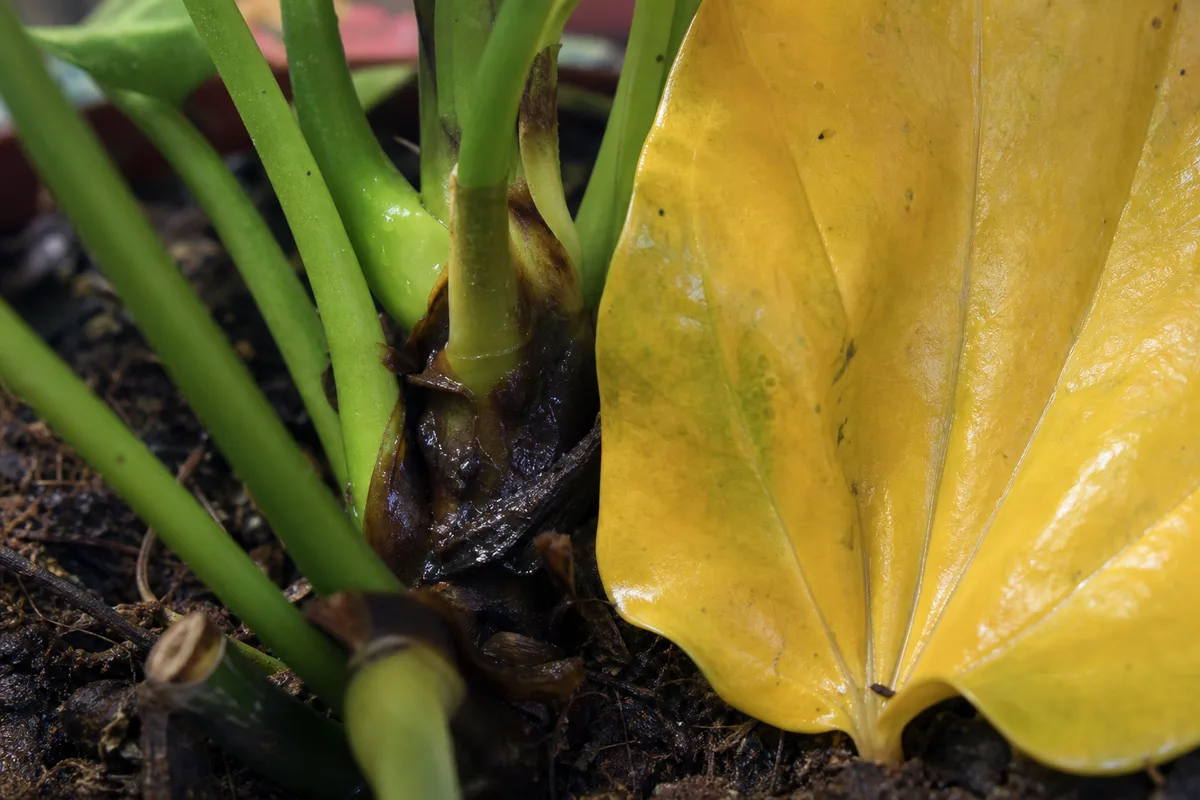
Overwatering symptoms on Anthurium - compare with healthy tissue on the same plant.
The signature pattern is wilting with a heavy, wet pot. Healthy Anthurium foliage should feel firm and glossy when soil moisture is appropriate. Collapsed leaves on saturated mix mean roots are failing-not that the plant needs more water. Soft, mushy tissue at the soil line signals crown involvement and needs same-day attention.
Chronic overwatering also stalls flowering. An otherwise well-lit plant that stops producing waxy spathes while lower leaves yellow often has a root-zone problem, not a light deficit alone-NC State Extension notes that overwatering can cause root rot and yellowing leaves on A. andraeanum. Cross-check no flowers only after you rule out wet soil.
Why Anthurium gets overwatered
Anthurium roots need both moisture and oxygen. UF/IFAS interior production guidelines describe finished plants as needing moist, well-drained soil with humidity above 50%-moist, not constantly wet. Several common habits push flamingo flowers into the danger zone:
Calendar watering. Watering every Sunday ignores how fast your mix dries. A plant in a dim winter room may need water every two weeks; the same specimen in bright summer light may dry in five days.
Heavy, peat-only mix. Standard indoor potting soil holds water too long for epiphytic roots. Without bark, perlite, or coco chips, the center of the pot can stay saturated while the surface crust dries-a surface-dry trap that fools finger tests.
Oversized pots. Extra soil volume holds moisture the small root mass cannot use. A recently repotted Anthurium in a pot two sizes up may stay wet for two weeks even with modest watering.
Cachepots and blocked drainage. Decorative outer pots that trap runoff, or clogged drainage holes after a year of growth, keep roots in standing water. UF/IFAS warns never to let finished plants sit in standing water. Semi-epiphytic roots suffocate faster in cachepot traps than self-supporting foliage plants because they expect air between soaks.
Low light slowing dry-down. In a shaded corner, transpiration drops and soil evaporates slowly. The same watering volume that worked in summer keeps the mix wet too long in fall and winter.
Winter schedule mismatch. Shorter days and indoor heating slow growth, but many owners keep summer watering frequency. The Royal Horticultural Society recommends reducing water in winter and letting the compost dry slightly more between drinks.
Velvet Anthurium caveat. A. clarinervium, A. crystallinum, and other thick-leaved species tolerate slightly drier surface soil than A. andraeanum, but all Anthurium types fail when the root ball stays saturated for weeks-the wet-soil wilt paradox applies across the genus.
How to confirm the cause
Work through these checks in order before changing anything else:
- Pot weight - Lift the container right after you suspect a problem. Heavy and cool means wet mix; light means dry. Compare to how the pot felt after your last thorough watering.
- Moisture at depth - Push a finger or dry wooden skewer to one-third of pot depth, not just the surface. Damp wood or cool mix at depth confirms saturation even when the top inch looks dry.
- Stem firmness at soil line - Press the base gently. Firm tissue is reassuring. Soft, spongy, or darkening crown tissue means rot may be advancing-see root rot on Anthurium.
- Smell and drainage - A sour odor means active root decomposition. Confirm water runs freely from drainage holes; tip the pot and clear blockages if flow is slow.
- Leaf pattern - Yellowing from the bottom up on wet mix supports overwatering. Crispy brown edges on a light, dry pot point to underwatering instead.
- Pest clues - Fungus gnats breeding in constantly moist surface soil strengthen the overwatering diagnosis; see the fungus gnats guide if adults are present.
If the pot is light, soil is dry at depth, and stems are firm, underwatering or low humidity is more likely. Do not withhold water in that case-give one thorough soak and drain fully.
Wet-vs-dry decision table
| What you see | Pot / soil signal | Crown firmness | Urgency | First action | Read next |
|---|---|---|---|---|---|
| Limp leaves, yellow lower foliage | Heavy, wet at depth | Firm | Moderate | Stop water; dry top inch; empty saucer | This page |
| Wilting, sour smell, spreading yellow | Heavy, saturated | Firm or softening | Urgent-same day | Unpot and inspect roots | Root rot |
| Soft dark tissue at soil line | Wet mix | Soft | Urgent-same day | Trim rot; repot chunky mix | Root rot |
| Crispy brown edges, droop | Light, dry top 2 in. | Firm | Not overwatering | One thorough soak | Underwatering |
| Brown tips only, moist soil | Moist, not sour | Firm | Likely humidity | Humidifier; do not flood pot | Low humidity |
| Wilt 1–2 weeks after repot | Moist, no rot smell | Firm roots on check | Shock | Stable light; normal rhythm | Wilting |
| Wilt after cold draft | Variable moisture | Firm | Temperature | Move from vents; wait 48 h | Wilting |
Lookalike symptoms
| What you see | Likely cause | First check |
|---|---|---|
| Limp leaves, heavy wet soil, yellow lower leaves | Overwatering / root rot | Stop water; inspect roots if decline continues |
| Light dry pot, crispy edges, inward curl | Underwatering | Soak and drain |
| Brown tips only, moist soil, RH below 50% | Low humidity | Humidifier before more water |
| Gradual petiole hang, wet mix | Drooping leaves | Pot weight + crown firmness |
| Acute whole-plant flop on wet soil | Wilting / advancing rot | Crown firmness + root inspection |
| White fuzz on wet surface | Mold on soil | Dry surface; fix drainage rhythm |
The wet-soil wilt paradox is the core Anthurium confusion: limp foliage on heavy wet mix means stop water and check roots-not pour another drink. Missouri Botanical Garden notes that wilted appearance with moist soil can indicate damaged roots-the plant cannot absorb water even when surrounded by it.
Cold drafts below about 60°F (15°C) can yellow leaves and slow water uptake. Move the plant away from AC vents and cold windows before assuming the watering schedule is wrong.
The first fix to try
Stop watering until the top inch of mix dries. Do not add another drink, mist heavily, or run extra water through a plant that is already wet. This single pause prevents rot from spreading and gives you a clear baseline.
Move the pot to brighter indirect light if it sits in deep shade-faster transpiration helps the mix dry without changing your long-term watering volume. Empty any saucer or cachepot within 20 minutes of the last watering. Do not fertilize, repot, or prune heavily on the same day.
Once the top inch is dry and stems at the soil line feel firm, resume with one thorough soak until water runs from the drainage holes, then drain completely. Match future drinks to the top-inch-dry rule at one-third depth rather than a calendar.
When to inspect roots and repot
Pause watering alone is enough when you caught the problem early: firm crown, no sour smell, and yellowing stops after the mix dries. Escalate to unpotting when:
- The mix stays damp and smells sour for more than a week after you stopped watering
- Yellowing spreads to newer leaves while soil remains wet
- The crown softens at the soil line
- Leaves keep collapsing after the surface has dried
Gently slide the plant out and brush away mix. Healthy Anthurium roots are firm, pale, and resilient. Mushy brown or black roots are rot-trim dead tissue with sterile scissors, let cuts air-dry briefly, and repot into chunky aroid mix in a snug pot with drainage holes. Withhold water for three to five days after repot unless the new mix is bone dry at depth. Full trimming and repot steps live in the root rot guide.
Do not repot into a larger container to “help drying.” Extra soil holds more water and extends wet cycles.
Recovery timeline and what to watch
Minor overwatering caught while the crown is still firm often stabilizes within one to two weeks once watering stops and the mix dries. Yellow lower leaves may not green up again-that tissue rarely recovers-but new center leaves and firm petioles confirm the root zone is healing.
Moderate cases with some root loss take several weeks. Expect older leaves to continue dropping while the plant rebuilds roots. Do not fertilize until new growth looks normal; excess fertilizer on stressed roots causes salt injury.
Severe crown rot may take months to assess, and soft crown tissue often does not recover. Improvement signs include a firming stem base, new glossy leaves from the center, spathe buds returning after four to eight weeks in Anthurium light guide, and a pot that reaches a predictable light weight between waterings. Worsening signs-spreading black tissue at the crown, collapse despite dry soil, or total loss of new growth-mean rot is advancing and aggressive trimming or disposal may be necessary.
What not to do
Do not water because leaves look sad when soil is already wet-that deepens root damage on moisture-sensitive aroids. Do not mist or humidify heavily as a substitute for fixing drainage; wet leaves in stagnant air invite fungal spots without solving saturated roots.
Avoid Anthurium repotting guide into a much larger pot on day one unless you confirm mushy roots. Avoid standard peat-heavy mix without bark or perlite. Do not fertilize a waterlogged plant hoping to push new growth or restore blooms.
During recovery, resist bottom-watering into a filled saucer for extended periods. Epiphytic roots need air between soaks; standing water at the pot base suffocates them from below.
How to prevent overwatering next time
Match watering to your room, not a generic schedule. In bright active growth, water when the top 1–2 inches dry-often every five to seven days in summer. In winter low light, stretch to every 10–14 days and let the top 2–3 inches dry. Always probe one-third of pot depth before pouring.
Use a chunky, well-aerated aroid mix and a pot only slightly larger than the root ball. The Missouri Botanical Garden recommends compost that drains well and warns that keeping compost too wet causes roots to rot. Keep humidity at 60–80% with a humidifier rather than extra water in the pot.
Learn your pot’s dry-down rhythm: weigh the container when freshly watered versus dry, or note how many days pass before the skewer reads dry at depth. Empty cachepots after every watering. Clear drainage holes annually if flow slows.
For seasonal schedules, water type, and humidity interaction, use the full Anthurium watering guide as your baseline and return here when wet-soil symptoms appear.
When to worry
Treat overwatering as urgent if the crown softens, the mix smells sour with rapid yellowing, or the plant wilts on saturated soil during active growth. Those signs mean rot may be moving into the growing point.
Slow yellowing on firm stems with soil drying at a normal pace can wait for a schedule adjustment. Wet soil plus a soft crown should not wait through another watering cycle-act the same day.
If you are unsure whether tissue is firm or mushy, a five-minute root inspection prevents weeks of guessing and can save the plant when rot is still localized. For advanced crown rot after two trim cycles, contact your local cooperative extension office with photos before escalating to stronger fungicides.
Related Anthurium problems
- Anthurium overview - Semi-epiphytic biology, humidity band, and culture hub
- Watering - Top-inch-dry rhythm and seasonal intervals
- Soil - Chunky aroid mix for recovery repot
- Root rot - Mushy roots and trim-and-repot protocol
- Underwatering - Light dry pot and crispy edge lookalike
- Wilting - Acute collapse on wet or dry soil
- Drooping leaves - Gradual petiole hang vs acute wilt
- Yellow leaves - Lower-leaf progression on wet mix
- Low humidity - Crisp tips on otherwise moist soil
- Fungus gnats - Wet-soil secondary pest signal
- Mold on soil - Surface fuzz on constantly damp mix
- No flowers - Spathe loss after root-zone stress clears
FAQs
Why is my Anthurium wilting if the soil is wet?
Damaged or rotting roots cannot move water up to the leaves, so the plant collapses even though the mix is saturated. This wet-soil wilt paradox is the hallmark of overwatering on semi-epiphytic Anthurium-not a signal to add more water.
Should I unpot my Anthurium or just stop watering?
Start with stopping water and letting the top inch dry if stems at the soil line are still firm. Unpot when the mix stays sour-smelling for days, the crown softens, or yellowing spreads after the surface has dried-those signs mean root rot may already be active.
Can an overwatered Anthurium still bloom?
Chronic wet soil suppresses spathe production before obvious leaf damage appears. Once watering and drainage are corrected and new center growth looks firm, blooms can return within weeks to months depending on light and humidity-not on fertilizer alone.
How can I tell overwatering from underwatering on Anthurium?
Lift the pot. Heavy and damp with yellow lower leaves and soft stems at the soil line points to overwatering. Light and dry with crispy brown leaf edges points to thirst. Wilting with wet mix is almost never underwatering on this plant.
How do I prevent overwatering my Anthurium in winter?
Stretch the interval to every 10–14 days and let the top 2–3 inches dry in low light, because heating and short days slow growth while dense mix holds water longer. Always probe one-third of pot depth rather than watering on a calendar.
Should I mist more when my Anthurium leaves look sad?
No-if soil is already wet, misting or humidifying heavily does not fix saturated roots and can invite fungal leaf spots. Fix drainage and let the mix dry first; raise humidity with a humidifier only after the root zone is on a healthy wet-to-dry cycle.
When to use this page vs other Anthurium guides
- Anthurium watering guide - Use for routine moisture checks before assuming overwatering is the main issue.
- Anthurium problems hub - Browse all 20 common issues on this species.
- Root Rot on Anthurium - Different entry point when symptoms overlap with overwatering.
- Yellow Leaves on Anthurium - Different entry point when symptoms overlap with overwatering.
- Wilting on Anthurium - Different entry point when symptoms overlap with overwatering.