Not Enough Light on Anthurium: Causes, Checks & Fixes
Quick answer
Anthurium without enough bright indirect light stretches toward windows, blooms poorly, and may yellow from slow soil drying. First step: move the pot within a few feet of an east or west window-or behind a sheer curtain on south-before changing fertilizer or repotting.
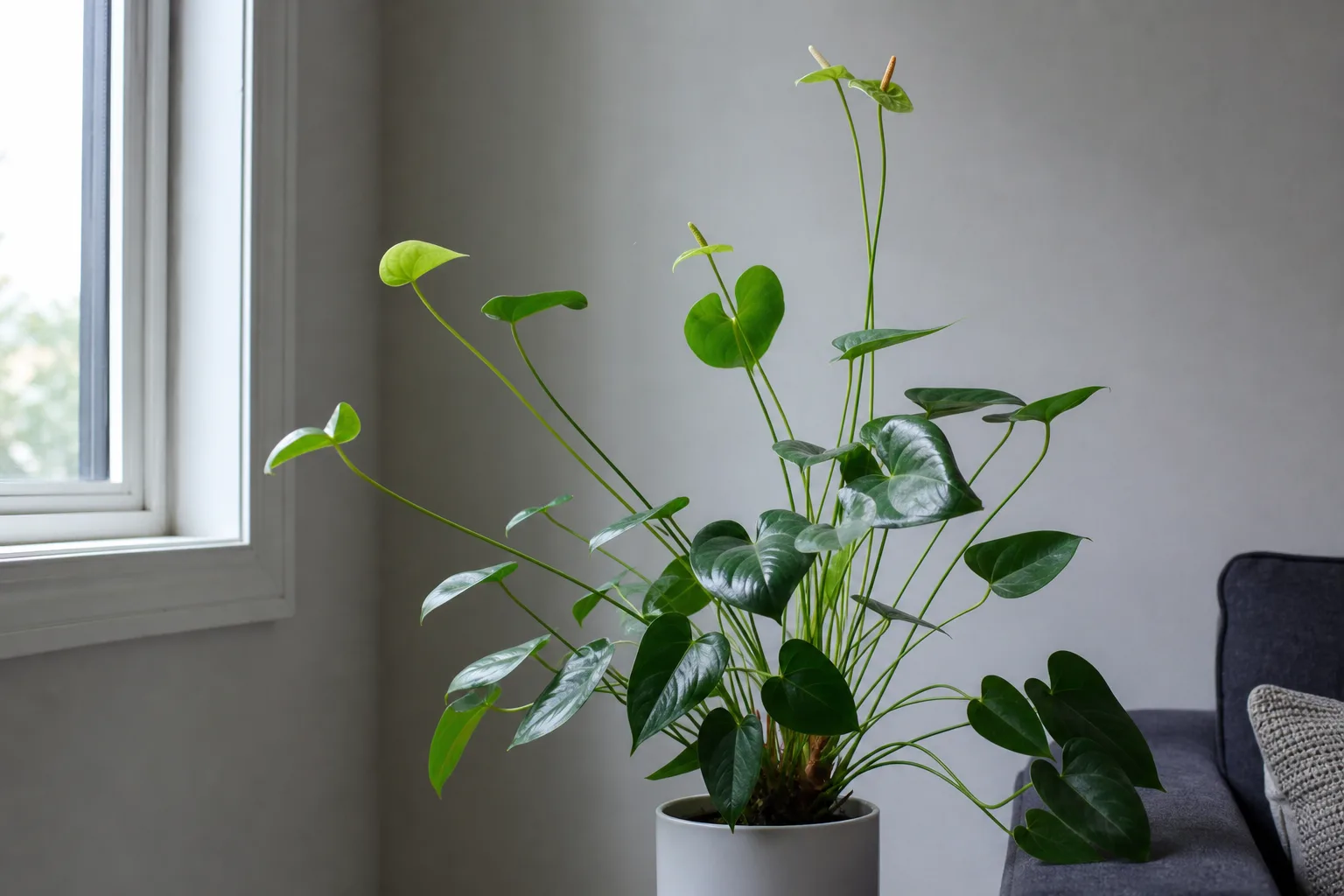
Not Enough Light on Anthurium: Causes, Checks & Fixes
This guide covers not enough light on Anthurium. See also the general Not Enough Light guide, watering, and light pages for this plant.
Not Enough Light on Anthurium: Causes, Checks & Fixes
Quick answer
Anthurium (Anthurium andraeanum, Flamingo Flower) is a rainforest understory plant that needs Anthurium light guide to build leaves, roots, and the waxy spathes most growers want. In a dark hallway, far corner, or north room with little reflected brightness, it often survives but does not thrive-stems lengthen, flowers disappear, and the same Anthurium watering guide can leave soil wet too long.
First step: move the pot closer to usable daylight today. Place it within a few feet of an east- or west-facing window, or behind a sheer curtain on a south window so leaves get strong ambient light without hot direct rays. Do not repot, fertilize heavily, or prune hard until you have tested brighter placement for two weeks and watched how new growth responds.
What not enough light looks like on Anthurium
Low light on Anthurium is easy to misread because the plant may stay green for months while structure quietly fails. Watch the growth pattern, not just leaf color.
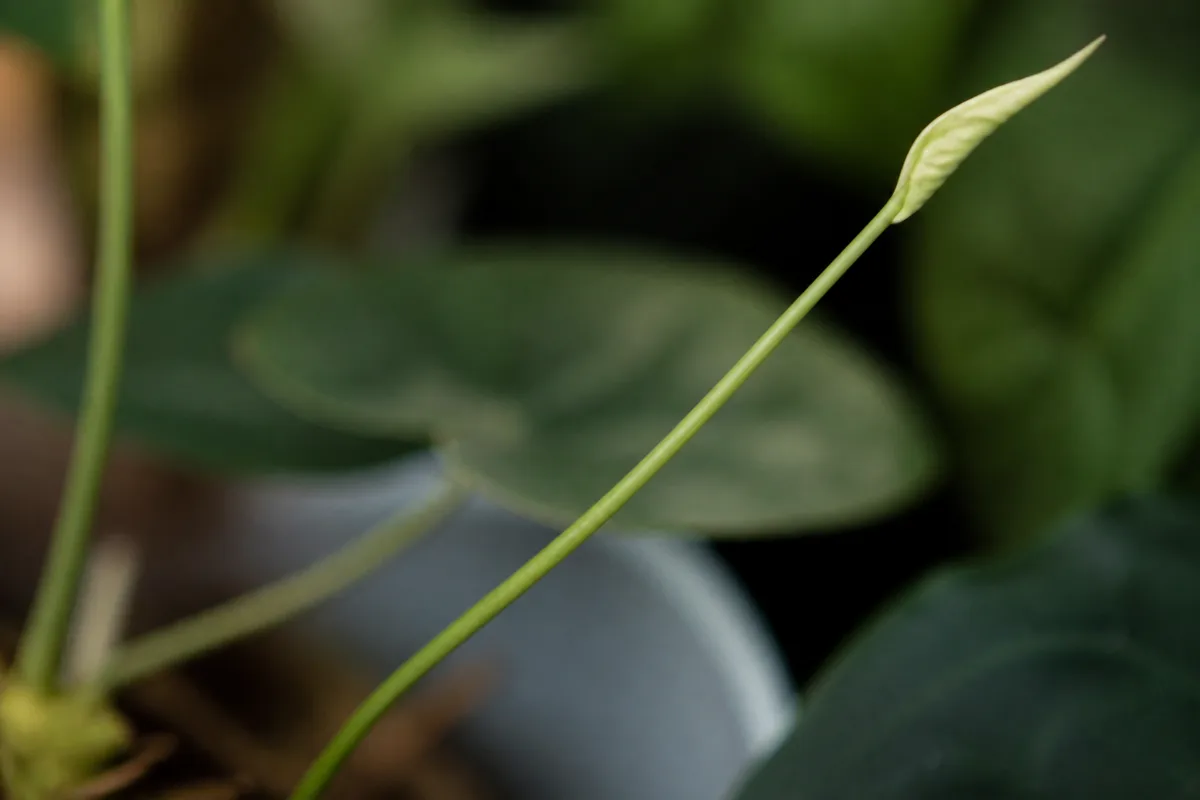
Not Enough Light symptoms on Anthurium - compare with healthy tissue on the same plant.
Typical signs include:
- Long, thin leaf stems (petioles) with smaller new blades compared to older leaves
- Dark green, almost blue-green foliage that looks healthy but feels sparse
- Leaning or reaching toward the brightest window or lamp
- Few or no spathes for weeks, or only small, pale blooms
- Slow overall growth even when watering and humidity seem fine
- Soil that stays damp for days after one watering because the plant is not using moisture
Anthurium spathes should be glossy and prominent when conditions align. Insufficient light decreases flower production on Anthurium overview, which is why many “healthy leaf, no flower” plants are actually light-starved.
What low light is not: crispy bleached patches on sun-facing leaves-that is too much direct sun, not too little. Yellow leaves with sour-smelling wet mix point to overwatering on Anthurium in a dim spot, where roots cannot dry the soil the plant no longer drinks quickly.
Why Anthurium struggles in low light
Anthurium evolved as an epiphyte in warm, humid Colombian and Ecuadorian forests-bright filtered light under canopy, not deep shade or open meadow sun. Missouri Botanical Garden notes that flamingo lily needs bright light but avoids full sun, and in too much shade, plants may not bloom.
Indoor homes often fail this plant in predictable ways:
- Decor placement - On a shelf six or more feet from glass, where human eyes see “a bright room” but footcandles drop sharply with distance
- Winter daylight loss - Same window delivers far less energy from late autumn through early spring; stretch and bloom failure worsen even without moving the pot
- Dirty or curtained windows - Sheers, tint, and grimy panes cut usable light more than owners expect
- Competition from other plants - A crowded windowsill where Anthurium sits in another plant’s shadow
Low light also changes water math. Anthurium likes consistent moisture but cannot tolerate soggy roots. In dim conditions photosynthesis slows, so the same weekly watering that worked in summer can keep mix wet for days-setting up yellow leaves and root stress that look like a watering problem when light is the root cause.
How to confirm the cause
Work through these checks before changing fertilizer or pot size:
- Distance and direction - Is the pot within roughly 3–5 feet of an east or west window, or filtered south light? Farther back is usually medium to low light for a blooming tropical.
- Shadow test - On a bright day, hold your hand between the window and the plant. A soft, diffuse shadow with a fuzzy edge suggests bright indirect light. A sharp dark shadow means direct sun-pull back or filter. Almost no shadow means too dim for reliable Anthurium growth.
- New growth comparison - Compare the length of the newest petiole to one from six months ago. Increasing stem length with smaller leaves confirms stretch.
- Bloom history - Has the plant produced spathes in the last year? NC State Extension lists insufficient light among causes that reduce flowering on A. andraeanum.
- Soil dry-down speed - Stick a finger in the top inch. If mix stays wet more than a week while leaves look dull and stems lengthen, pair a light increase with a watering check-do not assume thirst.
- Season - If symptoms appeared in winter without any care change, short days may be the trigger even if placement stayed the same.
If the plant sits in hot direct sun and leaves show bleached or brown patches, you are dealing with sun stress, not low light-move it out of the beam before adding more light.
First fix for Anthurium
Move the pot to the brightest safe indirect location in your home.
For most rooms that means:
- East window - Morning sun, gentler for acclimation; often ideal for Anthurium
- West window - Strong afternoon brightness; watch for hot glass in summer and filter if leaves pale
- South window - Only behind a sheer curtain or set back from the glass so spathes and leaves get glow without scorch; direct sun can scorch Anthurium leaves
Increase exposure gradually over one to two weeks if the plant has lived in deep shade for months-sudden jumps into harsh direct sun can burn foliage even when the plant wanted more light.
If no window is bright enough, add a full-spectrum LED grow light 6–12 inches above the foliage for 12–14 hours daily. Indoor plants in low light become spindly and lean toward the source, and supplemental light prevents that stretch when natural daylight is insufficient.
Hold fertilizer and Anthurium repotting guide until new leaves look more compact. Extra nutrients do not replace photons.
Step-by-step recovery
Once brighter placement is set, support recovery in this order:
- Relocate and stabilize - Move the pot, rotate it so all sides face the light source weekly, and keep temperatures in the 65 to 80 degrees Fahrenheit comfort range. Cold drafts below about 60°F slow recovery.
- Adjust watering to match new light - Brighter spots dry mix faster. Water when the top inch feels dry, not on the old calendar from the dark corner. Letting roots sit in wet peat while light improves is a common relapse.
- Raise humidity if air is dry - Anthurium prefers 60 to 80% humidity alongside good light. Dry heated air alone rarely causes stretch, but it can brown leaf edges on a plant already stressed.
- Trim only dead or damaged tissue - Remove yellow or mushy leaves for hygiene. Do not mass-prune healthy stretched leaves hoping to force bushiness; new compact growth comes from better light, not scissors.
- Resume mild feeding after improvement - When new leaves look shorter and firmer for two weeks, use a diluted balanced or phosphorus-lean fertilizer during active growth. Feeding a still-stressed plant in dim light rarely restores blooms.
- Watch for pests - Spider mites favor dry, weak foliage. Inspect leaf undersides if growth stays stalled after light correction.
Recovery timeline
Two to three weeks of brighter indirect light often produce the first visible change: new petioles slightly shorter, leaves a bit wider, and the plant standing straighter instead of leaning.
Four to eight weeks in warm active growth is a reasonable window to see clearly compact new foliage. Spathes may follow once the plant is building energy again-shade-grown Anthurium often skips bloom until light improves.
Old stretched leaves never shorten. They remain long until you prune them for appearance after several healthy new leaves have formed.
Winter recovery may take longer unless you supplement with grow lights; do not judge failure from December stretch alone.
Worsening signs after the move: continued yellowing with wet soil, soft stems at the base, or new leaves smaller and paler despite brighter placement-inspect roots and drainage; rot or chronic overwatering may need correction alongside light.
Lookalike symptoms
- Overwatering in low light - Yellow leaves, soggy mix, sour smell; fix dry-down rhythm and drainage, not just window placement
- No flowers from other causes - Slightly root-bound plants often bloom well; oversized pots and excess nitrogen can suppress spathes even in good light
- Low humidity alone - Brown leaf tips and edges without long petioles; raise humidity but keep light adequate
- Normal post-move stress - Temporary droop for a few days after relocation; stable within a week if light and water are appropriate
- Too much direct sun - Bleached, papery, or brown patches on exposed leaves; filter light rather than increase it
What not to do
Do not blast the plant with direct south-window sun to fix legginess in one day-acclimate gradually to avoid scorch. Avoid over-fertilizing to “replace” light; high nitrogen can push leaves while blooms stay absent.
Do not repot into a larger container hoping to force growth-extra wet soil volume slows drying in dim rooms. Do not keep the same watering frequency after a big light increase without checking the top inch of mix.
Do not assume north-window placement alone will satisfy a blooming Anthurium unless you add strong supplemental lighting-many north exposures fall into low-light ranges for tropical foliage plants.
How to prevent low-light stress
Place Anthurium where bright indirect light is realistic most of the day, not only where the pot looks best. Match placement to the plant’s light needs rather than décor alone.
Rotate the pot weekly for even growth, wipe windows seasonally, and add grow lights before winter stretch becomes severe. When you move the plant for summer or bring it back indoors in autumn, expect an adjustment period-houseplants can decline after light drops, so plan supplemental hours during the transition.
Pair good light with chunky, well-aerated aroid mix and drainage-healthy roots use water efficiently in bright conditions and fail slowly in dark, wet corners.
When to worry
Low light alone is rarely lethal, but dim placement plus chronic wet soil is urgent-soft stems, collapsing leaves, and foul mix mean root trouble, not just stretch. Unpot and inspect if yellowing accelerates after you have already corrected watering.
If new growth stays elongated and flowerless for more than two months after verified bright indirect placement and appropriate watering, look beyond light: root health, pot size, and pest pressure on leaf undersides.
Conclusion
Not enough light on Anthurium shows up as reach, stretch, and missing blooms-not always pale yellow leaves. Confirm it by comparing new petiole length, bloom history, and window distance; then move to bright filtered light before any other fix. Old long leaves will not revert, but shorter new growth and returning spathes mark success. Keep light strong through winter with clean glass or grow lamps, and adjust watering as the brighter spot dries the mix faster.
When to use this page vs other Anthurium guides
- Anthurium watering guide - Use for routine moisture checks before assuming not enough light is the main issue.
- Anthurium problems hub - Browse all 20 common issues on this species.
- Leggy Growth on Anthurium - Different entry point when symptoms overlap with not enough light.
- Slow Growth on Anthurium - Different entry point when symptoms overlap with not enough light.
- Yellow Leaves on Anthurium - Different entry point when symptoms overlap with not enough light.