Mealybugs on Anthurium: Causes, Checks & Fixes
Quick answer
Mealybugs on Anthurium hide in leaf axils, petiole bases, and the crown where leaves overlap. First step: isolate the plant and inspect those tight joints with a magnifier before dabbing alcohol. Do not rinse or mist water into the crown while treating-wet clusters invite rot on this plant.
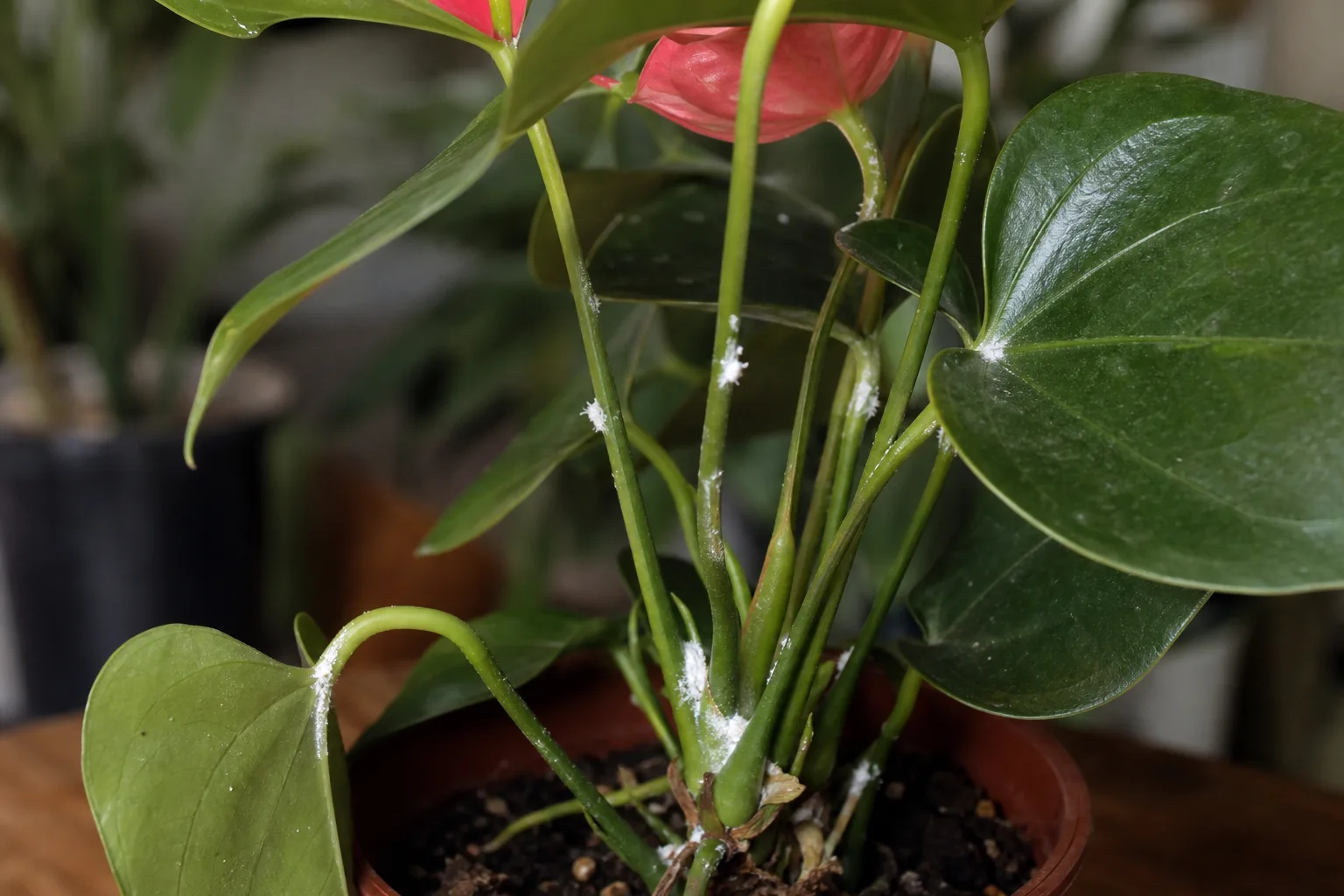
Mealybugs on Anthurium: Causes, Checks & Fixes
This guide covers mealybugs on Anthurium. See also the general Mealybugs guide, watering, and light pages for this plant.
Mealybugs on Anthurium: Causes, Checks & Fixes
Quick answer
Mealybugs on Anthurium (Anthurium andraeanum) show up as white, cottony clusters tucked into the places this plant naturally protects: leaf axils, petiole bases, the crown, and sometimes chunky bark in the pot. They suck sap and secrete honeydew on glossy leaves and spathes, and spread to nearby houseplants if you wait.
First step: move the plant away from your collection and inspect every leaf joint and the crown with a magnifier. You need to know how far the infestation reaches before dabbing alcohol or spraying-blind treatment misses hidden colonies and wastes a week.
Do not rinse or mist water into the crown while you treat. Anthurium’s overlapping leaves trap moisture at the center; honeydew cleanup plus wet axils is a common path to crown rot on an already stressed plant. Wipe sticky spathes with a damp cloth, shower leaf undersides with the pot tilted so water runs off, and let the crown dry in bright indirect air before the next pass.
What mealybugs look like on Anthurium
On Anthurium, mealybugs rarely sit out in plain view on the waxy leaf blade. They aggregate where leaves meet stems:
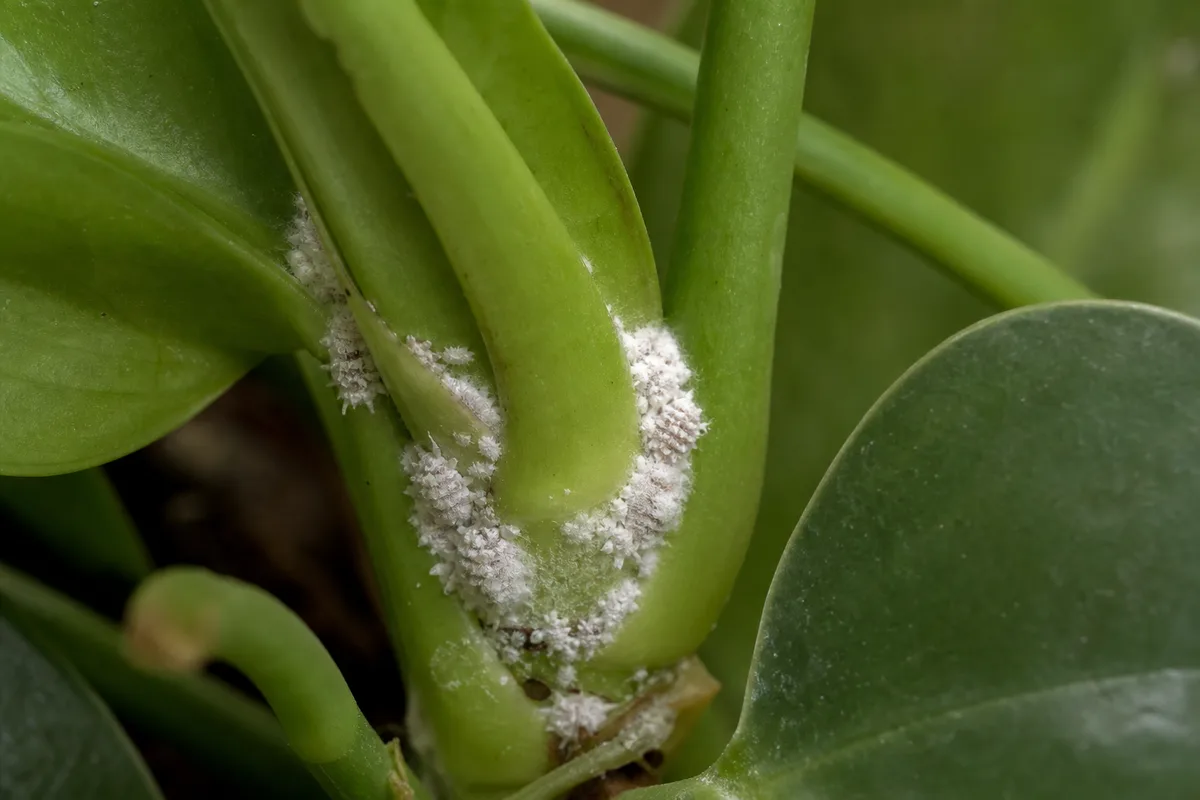
Mealybugs symptoms on Anthurium - compare with healthy tissue on the same plant.
- White or grayish cottony masses in leaf axils and along petioles
- Slow-moving oval insects under the wax if you part the fluff with a swab
- Sticky honeydew on leaf surfaces, spathes, or the pot rim
- Black sooty mold growing on honeydew if the infestation has been ignored
- Yellowing or stunted leaves on heavily fed parts of the plant
Anthurium’s upright rosette and overlapping leaves create sheltered crevices that stay missed during a quick top-water glance. Check the oldest leaves at the base and the center of the crown-those are the usual hot spots. Colonies on an open spathe are especially visible but need careful dab treatment so alcohol does not pool on the waxy bract.
Root mealybugs are possible on semi-epiphytic Anthurium in chunky bark mix-mealybugs can hide below the soil line at the base of the plant. If stems and leaf joints look clean but the plant keeps declining, pull the plant slightly from the pot and inspect the root crown and bark crevices for white wax below the soil line. Perlite grains and bark slivers feel hard and inert; mealybug wax smears pink when crushed.
Why Anthurium gets mealybugs
Mealybugs are introduced pests, not something Anthurium grows on its own. The most common entry routes:
- New plants without quarantine - nursery stock, florist arrangements, and market finds often carry hidden colonies in leaf bases
- Contact spread - crawlers walk to touching leaves, tools, or hands moving between pots
- Stressed or soft new growth - heavily fertilized, nitrogen-rich feeding pushes tender leaves that sap feeders prefer
- Crowded placement - plants packed on a shelf hide leaf axils from weekly inspection
Anthurium’s preferred 60–80% humidity does not prevent mealybugs indoors, where natural predators are absent. Warm rooms with consistent moisture can actually support year-round breeding if a colony establishes in the crown. NC State Extension lists mealybugs among the pests to monitor on Anthurium andraeanum alongside aphids, spider mites, and scale.
Overwatering does not cause mealybugs directly, but soggy crowns from rinsing or misting into tight leaf clusters can weaken tissue and make recovery harder after pest damage-keep water out of the crown when you wash foliage. For watering rhythm after treatment, see our Anthurium watering guide.
How to confirm the cause
Work through these checks before treating:
- Location of white material - Mealybugs cluster in joints and crevices. Chalky hard-water spots or dust sit flat on leaf surfaces and wipe off dry.
- Crush test - Dab a cluster with a damp cotton swab and crush it. Mealybugs treated with alcohol turn light brown; live bodies smear pink or red when crushed-mineral deposits do not.
- Movement - Part the cottony mass with a toothpick. Slow legs or a waxy body confirm live insects; static fluff may be old wax from a dead colony.
- Honeydew - Sticky residue on spathes or leaves below the infestation points to sap feeders, not fungal leaf spot.
- Scope - Count how many leaf axils are affected and whether neighboring plants show the same pattern.
- Root check - If above-ground tissue looks clean but growth stalls, inspect bark mix and the root crown for white wax.
Lookalikes to rule out first:
- Mineral deposits - Hard white crust from tap water; does not smear pink and has no legs
- Natural leaf texture - Some Anthurium hybrids have pale veining; it follows vein pattern, not random clusters at joints
- Powdery mildew - Flat white dusting on leaf faces in stagnant, humid corners; not cottony tufts in axils
- Scale insects - Flat brown or tan disks glued to stems; not fluffy wax
If stippling and webbing appear without cottony wax, compare our spider mites and aphids guides before assuming mealybugs alone.
First fix for Anthurium
Isolate the plant and dab every visible mealybug with 70% isopropyl alcohol on a cotton swab.
Move the pot to a separate room or closed area away from other houseplants. Work systematically from the crown outward-lift each leaf and press alcohol directly onto every white cluster until the wax dissolves and insects turn light brown. Mealybugs in hidden axils must be touched individually; spraying the room air does nothing.
Before a full pass, test alcohol on one older leaf and wait 24 hours. Anthurium’s glossy foliage can show phytotoxicity (bleached or burned patches) if alcohol pools on the surface. If the test leaf marks, use a more diluted dab on insects only and keep liquid off the blade. On an open spathe, touch colonies with a swab rather than spraying the inflorescence.
Wear gloves if you have sensitive skin-Anthurium sap contains calcium oxalate crystals and the plant is toxic to cats and dogs. Wash hands and tools after handling. If a pet chews treated foliage or sap-exposed tissue, contact your veterinarian or the ASPCA Animal Poison Control Center (888-426-4435).
Do not repot, fertilize, or drench the crown on day one unless you confirm root mealybugs below the soil line.
Insecticidal soap for heavy infestations
When colonies cover multiple leaves after the first alcohol pass, follow dabs with insecticidal soap labeled for houseplants. Coat stems, leaf undersides, and every axil until runoff-soap kills on contact only, so missed crevices leave live crawlers. Repeat every five to seven days for two to three cycles. Move treated Anthurium out of direct sun until foliage dries; wet waxy leaves in a hot window can scorch.
Avoid homemade soap mixes. Commercial insecticidal soaps are formulated to reduce burn risk on foliage plants like Anthurium.
Neem oil: when and when not to use
Neem oil can suppress younger mealybugs with less wax, but it requires the same thorough coverage and repeat schedule as soap-and phytotoxicity testing on one leaf first. Do not spray open spathes, recently repotted plants, or foliage sitting in direct sun. On glossy Anthurium, alcohol dabs on visible colonies plus labeled soap usually outperform neem for crown hideouts where spray cannot reach.
Step-by-step recovery
After the first alcohol pass, continue on a weekly cycle until you see no new cottony wax for at least two weeks:
- Repeat alcohol dabs weekly - Newly hatched crawlers are mobile and easy to miss. Hit every leaf axil, petiole base, and crown crevice each session.
- Wipe honeydew - Clean sticky spathes and leaves with a damp cloth so sooty mold does not block light to the plant. Dry the crown afterward.
- Shower lightly if needed - Rinse leaf undersides in lukewarm water to knock down crawlers, but keep water out of the crown to avoid rot in tight leaf clusters. Tilt the pot and let foliage dry in bright indirect air.
- Escalate for heavy infestations - If colonies persist after two alcohol-and-soap cycles, inspect the whole collection and tighten isolation.
- Check the collection - Inspect every plant that sat within crawler range. Treat any new wax immediately.
- Address root mealybugs if present - When wax appears on roots or bark mix, gently brush visible insects off the root crown, repot into fresh chunky aroid mix after trimming only clearly dead roots, and isolate. If above-ground treatment failed twice, a systemic houseplant insecticide watered in at the label rate for soil application may reduce crawler numbers-UC IPM notes imidacloprid spikes or granules can help on houseplants but are less reliable against mealybugs than against other sap feeders. Use only products labeled for indoor ornamentals, follow the label exactly, and avoid systemics on flowering Anthurium if bees or pollinators visit the room. When in doubt, contact your local cooperative extension office before applying soil drenches.
Hold fertilizer until new growth looks clean for two weeks. Feeding a stressed Anthurium during active pest pressure pushes soft tissue pests prefer-see our fertilizer guide for when to resume.
Recovery timeline
Visible colonies should shrink within one to two weeks of consistent weekly alcohol dabs. Expect three to four weekly passes minimum before calling the plant clear-eggs and crawlers hatch on staggered schedules.
Clean new leaves and unblemished spathes are the best recovery markers. Old leaves with yellow stippling or scarring will not fully revert; trim them for hygiene once the plant is insect-free.
If wax reappears in the same axils after four diligent weeks, look for missed crown colonies, root mealybugs, or reinfection from a nearby untreated plant-not a need for more fertilizer.
Worsening signs: sooty mold spreading despite cleaning, wilting in axils where stems soften (rare secondary rot from honeydew and moisture), or crawlers on every new leaf within days of treatment.
What not to do
Do not spray pesticides blindly without isolating and mapping colonies-you will miss axil hideouts and expose pets to chemicals on a toxic plant.
Avoid pouring alcohol over entire leaves without a spot test; burned patches on Anthurium foliage are permanent.
Do not return the plant to the shelf after one treatment. Two weeks with no new wax is the minimum before ending isolation.
Skip heavy nitrogen fertilizer during recovery-it does not help pest-damaged leaves and can push vulnerable new growth.
Do not mist or water into the crown while treating; wet tight clusters after honeydew cleanup invite crown rot on an already stressed Anthurium. If stems soften at the base, cross-check our root rot guide.
Avoid composting pruned infested material indoors where crawlers can walk to other pots.
How to prevent mealybugs next time
- Quarantine new Anthurium two weeks before placing it near other aroids, orchids, or philodendrons
- Inspect leaf axils weekly during watering-this plant’s architecture hides pests by design
- Keep plants spaced so you can see petiole bases and crowns without lifting neighbors
- Feed moderately with balanced or phosphorus-forward fertilizer during bloom season; avoid lush nitrogen pushes when pests have been a past problem
- Clean tools between plants when pruning spathes or removing old leaves
- Check florist and gift plants especially hard-mealybugs often arrive on flowering Anthurium from shops
Stable bright indirect light and proper dry-down watering keep Anthurium resilient. A plant in weak light with soggy roots is not more likely to attract mealybugs from nowhere, but it recovers more slowly once they arrive. The Anthurium overview covers the full cultural baseline.
When to worry
Escalate immediately if multiple plants show cottony wax, if sooty mold covers spathes and blocks photosynthesis, or if stem tissue softens at heavily infested axils.
Consider discarding and replacing the plant only when most leaf bases are infested, the crown is packed with wax you cannot reach, and four or more weeks of careful treatment fail-especially if the plant was already weak from root rot or cold damage. A disposable florist gift Anthurium with wax throughout the crown is often cheaper to replace than to fumigate a whole shelf of orchids.
For a single cluster in one axil on an otherwise healthy Anthurium, isolation plus weekly alcohol is usually enough. The urgency is stopping spread to your collection, not panic.
If treatment fails after four weekly cycles with confirmed technique, contact your local cooperative extension office or university plant clinic before rotating to stronger pesticides-chronic mealybugs on semi-epiphytic bark mix often mean root colonies or reinfection from an untreated neighbor.
Related Anthurium guides
- Anthurium overview - light, humidity, and bloom culture
- Watering - dry-down checks after pest recovery
- Aphids - honeydew lookalike on new growth and spathe stalks
- Spider mites - stippling without cottony wax
- Root rot - crown softness after wet treatment
Conclusion
When wax packs the crown of a mature specimen you have kept for years, weekly alcohol dabs plus axil-focused soap beats starting over-but when a cheap florist Anthurium arrives pre-infested and crawlers already dot neighboring orchids, isolation and honest discard math sometimes protect the collection faster than a month of repeat treatments.