Rose Plant Care: Light, Water, Soil & Tips
Rosa × hybrida
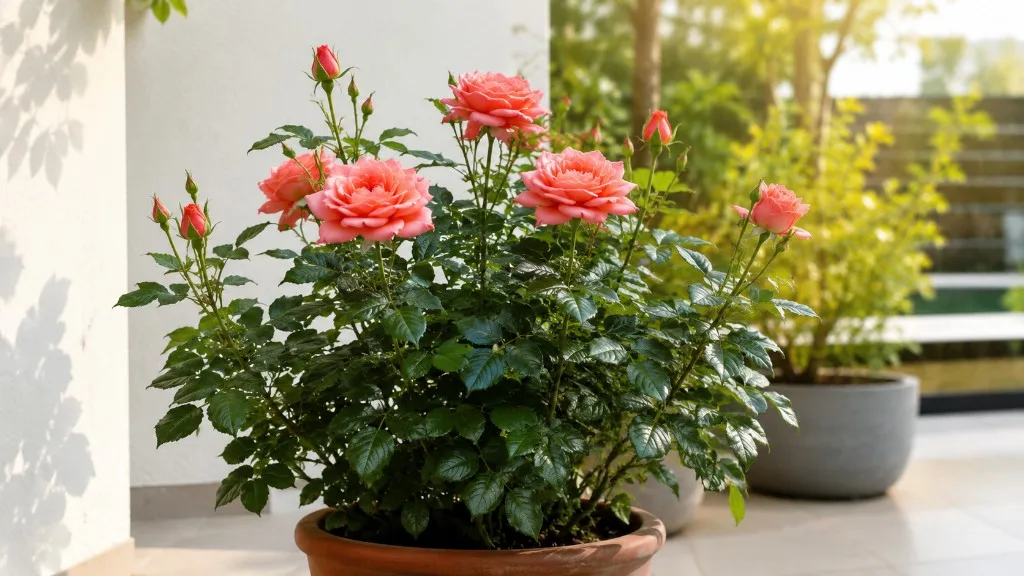
Roses need 6+ hours of direct sun, base watering only, regular feeding with rose fertilizer, and hard pruning in January to reward you with fragrant blooms through India's winter and spring.
Rose Plant Care: Light, Water, Soil & Tips
Start with wateringThe most common care mistake for RoseWatering guide →Rose care essentials
Light
full sun - 6+ hours of direct sunlight daily for maximum flowering
Water
Water deeply at the base when the top 3–4 cm of soil dries; never wet the foliage.
Soil
Rich, moisture-retentive but well-draining soil - roses are heavy feeders.
Humidity
Moderate (40–60%); high humidity combined with poor airflow promotes fungal disease
Temperature
15°C to 28°C (60–82°F)
Fertilizer
Use rose-specific fertilizer or balanced NPK with micronutrients; bone meal at planting and stop if the plant is stressed, newly repotted, or not actively growing.
About Rose
Rose is native to Hybrid origin; Rosa spp. native across Asia, Europe, and North America, typically reaches 60 cm–1.5 m tall; 60–90 cm wide in containers indoors, with moderate growth. Rose has a bushy growth habit and part of the Rosaceae family. It is also known as Hybrid Tea Rose, Gulab, and Garden Rose.
| Detail | Information |
|---|---|
| Also known as | Hybrid Tea Rose, Gulab, Garden Rose |
| Native region | Hybrid origin; Rosa spp. native across Asia, Europe, and North America |
| Mature size | 60 cm–1.5 m tall; 60–90 cm wide in containers |
| Growth rate | Moderate |
| Growth habit | Bushy |
| Scientific name | Rosa × hybrida |
| Family | Rosaceae |
Rose Plant Care: Light, Water, Soil & Tips
What Is Rose?
Rose is the common name for plants in the genus Rosa, among the most widely cultivated flowering shrubs in home gardens, on balconies, and in cut-flower arrangements worldwide. Most roses sold in nurseries and grocery stores are complex hybrids - often labeled Rosa × hybrida or grouped by class names such as hybrid tea, floribunda, grandiflora, shrub, miniature, or climbing rose - bred for repeat bloom, fragrance, and flower form rather than for passive houseplant behavior. In containers, roses typically reach 60 cm to 1.5 m (2 to 5 feet) tall and 60 to 90 cm (2 to 3 feet) wide, depending on cultivar and rootstock, with a moderate growth rate when light, water, and feeding align.
If you are deciding whether a rose fits your space, the honest summary is straightforward: roses reward Rose light guide, deep watering at the root zone, regular feeding during active growth, and consistent deadheading - and they punish shade, wet foliage, cramped roots, and neglect of any one of those basics. A rose in a dim corner may survive as a leafy shrub for a while, but repeat flowering indoors without strong light is the exception, not the rule. Container roses on a sunny balcony or patio often outperform long-term windowsill specimens because they receive the direct sun and airflow roses evolved to use. The payoff is classic, fragrant blooms and a plant that responds visibly to good care within a single season - as long as you respect that roses are woody, hungry, sun-driven perennials, not generic foliage accents.
Botanical Background and Modern Rose Types
Rose belongs to the family Rosaceae, which matters for care more than most gift-plant tags suggest. Rosaceae plants share baseline patterns: they prefer well-drained, fertile soil, they dislike waterlogged roots, and many disease problems begin when foliage stays wet or air circulation is poor. Roses are deep-rooted woody shrubs in their natural habit; in pots they depend entirely on you for moisture, nutrients, and root space, which intensifies both successes and failures compared with in-ground plantings.
Wild Rosa species are native across Asia, Europe, and North America, with roughly 150 naturally occurring species and thousands of cultivated hybrids. Most garden roses today are grafted onto a hardy rootstock - the swollen graft union near the base is the junction between the flowering scion and the anchoring roots. When Rose repotting guide or planting, keep that union just at or slightly above soil level so the scion does not root independently and weaken the intended growth habit. Own-root roses exist - especially some shrub and landscape types - but the majority of hybrid teas and many miniatures you buy in pots are grafted.
Rose type changes practical care more than the word “rose” on a label. Miniature roses stay compact and suit small containers but still need full sun. Hybrid tea roses produce large single blooms on long stems and demand the most precise pruning and feeding. Floribunda and grandiflora roses carry clusters of flowers and often rebloom more generously with less fuss. Shrub and landscape roses - including widely sold disease-resistant lines such as Knock Out - tolerate a wider margin of error in garden beds. Climbing and rambling roses need support and different pruning logic. Two pots both called “rose” may therefore need different pot sizes, pruning intensity, and winter protection even though watering and light principles overlap.
Choosing the Right Rose for Your Space
Before you buy, match the rose class to your actual conditions rather than to the flower photo on the tag. If you have a sunny balcony or patio with room for a 30 to 45 cm (12 to 18 inch) pot, a miniature or compact floribunda is a realistic starting point. If you want long-stemmed cut flowers, a hybrid tea in a larger container or garden bed makes sense - but only if you can commit to deadheading, feeding, and seasonal pruning. If your priority is low-maintenance landscape color, modern shrub roses bred for disease resistance will outperform finicky exhibition types in average suburban beds.
Indoor-only growers should plan honestly. The Royal Horticultural Society and university extension guides consistently recommend a minimum of six hours of direct sunlight daily for reliable flowering - a threshold most indoor rooms do not meet without a south- or west-facing window or supplemental full-spectrum grow lights. A potted gift rose on a kitchen counter can look fine for weeks, but the realistic long-term strategy is often seasonal indoor display followed by outdoor placement during the growing season. Clemson HGIC documents modern breeding programs that produce hardier, more disease-resistant roses than many older hybrids, but even improved genetics cannot substitute for adequate light and drainage.
Light Requirements for Healthy Roses
Roses need full sun for reliable bloom: at least six hours of direct sunlight daily, with more sun generally producing more flowers and tighter growth. Morning sun is especially valuable because it dries dew from leaves quickly, which helps reduce black spot and other foliar diseases according to the University of Maryland Extension. Light is the single variable that separates a rose that reblooms from one that survives as a leafy shrub with occasional buds. When light is wrong, fertilizer and water cannot compensate.
The fastest diagnostic for incorrect light is new growth and bud formation, not old leaves. Firm canes, dark green foliage, and visible flower buds mean the plant is probably receiving enough energy. Long, weak stems with pale leaves and no buds mean the plant wants more light. Bleached or scorched sun-facing leaves mean too much unfiltered afternoon sun for an unacclimated plant. Indoors, a “bright room” that feels well lit to you may still deliver less than roses need; measure success by whether buds form, not by room brightness.
Outdoor and Balcony Light
East-facing exposures that receive direct morning light and bright afternoon ambient light work well for many containers. South- and west-facing sites deliver the intensity repeat-blooming hybrids expect, though acclimate gradually if the plant arrived from a shaded nursery bench - leaves formed in low light burn easily when thrust into harsh midday sun. On balconies, watch for reflected heat from glass railings and dark flooring, which can stress roots in small pots even when foliage looks fine. If afternoon sun is intense in hot climates, provide afternoon shade for the container - not the foliage - by moving the pot or using a light-colored sleeve; the plant still needs direct sun earlier in the day.
In garden beds, choose open sites with good air movement rather than cramped corners where leaves stay damp. Avoid planting roses where they sit in morning shade and then receive only harsh midday blast, a combination the University of Maryland Extension links to increased foliar disease pressure when foliage stays wet and airflow is poor. Climbing roses on a north-facing wall rarely bloom well; a south- or west-facing fence or trellis is the better default.
Indoor Light and Grow Lights
Roses can grow indoors temporarily or long-term only with exceptional light. A very bright south-facing window may support a miniature rose through part of the year in northern latitudes, but winter months usually require supplementation. When natural light is insufficient, use a full-spectrum LED grow light on a timer. Published indoor rose guidance suggests targeting roughly 250 to 450 µmol/m²/s PPFD at the canopy and a 14 to 16 hour photoperiod during low-light months, with a true dark period overnight. Position the fixture close enough to deliver intensity but far enough to avoid heat stress on buds. Rotate pots every few days so all sides receive equal exposure.
If buds fail to form after several weeks under grow lights, increase intensity or duration before reaching for fertilizer. Leggy growth with large internodes is a classic sign the fixture is too far away or the photoperiod is too short. Indoor roses also benefit from occasional gentle airflow - a small fan on low speed reduces stagnant humidity that encourages powdery mildew on tender new leaves.
Temperature, Humidity, and Airflow
Roses prefer stable, moderate temperatures during active growth. Indoors, 65 to 75°F (18 to 24°C) daytime and 55 to 65°F (13 to 18°C) at night suit most hybrids. Avoid placing pots directly above radiators, beside blasting AC vents, or on window sills where winter glass creates cold drafts - sudden temperature swings stress woody plants more visibly than many herbaceous houseplants.
Outdoor container roses tolerate heat when soil moisture keeps pace, but root zones overheat in dark plastic pots on hot pavement. Light-colored pots, pot sleeves, or afternoon shade for the container - not the foliage - reduce heat stress. In cold climates, roses need a dormant period in winter. Fully hardy garden types survive in-ground with mulch in appropriate USDA zones, but container roses freeze more severely because roots are exposed above ground. Plan to move pots to an unheated garage, cold frame, or sheltered wall once plants defoliate, or bury containers to the rim for insulation. Keeping a dormant rose in a warm, dim living room often produces weak, etiolated spring growth.
Humidity is secondary compared with light and root moisture. Average home humidity in the 40 to 60 percent range is acceptable. Very dry winter air can encourage spider mites on indoor specimens; good airflow and occasional showering of foliage - early in the day so leaves dry before evening - help more than misting alone. High humidity with poor air movement and wet leaves invites powdery mildew and black spot, which is why cultural guides emphasize base watering over overhead sprinkling.
Soil, pH, and Drainage Essentials
Use rich, moisture-retentive but well-draining soil - roses are heavy feeders and perform poorly in heavy, compacted mixes. Never plant container roses in garden soil alone; it compacts in pots, suffocates roots, and drains inconsistently. Target a slightly acidic pH around 6.0 to 6.5, which the University of Maryland Extension notes optimizes nutrient availability for roses. Hobbyists rarely need laboratory pH adjustment for a single patio pot, but chalky, alkaline water over years can contribute to iron chlorosis - yellow leaves with green veins. If that pattern appears despite correct watering, consider a chelated iron product and review water quality.
Drainage is non-negotiable. Every container must have drainage holes; roses die quickly in standing water. In garden beds, amend heavy clay with organic matter before planting and choose a site that does not collect puddles after rain. Mulch with compost or shredded bark after spring feeding to conserve moisture and suppress weeds, keeping mulch a few inches away from the crown and graft union. Clemson HGIC emphasizes that poor drainage is one of the most common causes of rose failure - roses simply do not tolerate soggy root zones.
Best Potting Mix for Container Roses
A workable container blend combines roughly two parts quality potting mix, one part compost or well-rotted manure, and one part perlite or coarse sand for aeration. Some growers add bone meal or slow-release organic matter at planting; chemical fertilizer should wait until after the first flush of bloom on newly planted bare-root roses, according to Clemson HGIC. For heavy feeders in small pots, a mix that holds moisture without staying waterlogged is the goal - not maximum water retention. If water sits on the surface or the pot feels permanently heavy days after watering, the mix lacks aeration and needs amendment before the next repot.
How to Water Roses Correctly
The general rule for roses is water deeply at the base when the upper soil dries, keeping foliage as dry as practical. For containers, check when the top 3 to 4 cm (1 to 2 inches) of mix feels dry - often roughly every two to three days in warm summer weather and every four to five days in cooler months for medium pots, though pot size, material, and sun exposure change the interval completely. In-ground established roses typically need about 2.5 to 5 cm (1 to 2 inches) of water per week total from rain and irrigation combined, with more during heat waves, per extension guidance.
Apply water slowly and thoroughly until it runs from drainage holes, then empty the saucer. Aim the stream at the soil surface, not the leaves and flowers, because wet foliage overnight promotes black spot and wastes water. Early morning watering gives leaves time to dry if incidental splash occurs. A soaker hose or drip irrigation at the root zone is ideal for garden rows; for balconies, a watering can with a long spout keeps foliage drier than an overhead spray.
Active-Season Rose watering guide
During the warm, bright months when canes elongate and buds form, roses use water steadily. The goal is even root-zone moisture, not constant sogginess. A healthy rose in active growth draws water predictably; the pot or bed should never swing from bone dry to waterlogged daily. Deep, infrequent watering encourages roots to grow downward, which improves drought tolerance in garden plantings. Shallow, frequent sprinkles produce shallow roots and a plant that wilts the first hot afternoon you miss a watering.
Newly planted roses - whether bare-root in spring or nursery pots - need more attentive watering until roots establish. Wilting on a dry pot is a clear thirst signal. Wilting on a wet pot is the opposite problem and usually indicates root damage, compaction, or rot rather than drought. Always pair wilt with a finger or skewer check several centimeters deep before adding more water. In cooler, dimmer months, growth slows and containers dry more slowly - stretch intervals between waterings and reduce or stop fertilizer as the plant approaches dormancy.
Common Watering Mistakes to Avoid
The single most damaging mistake is overhead watering late in the day, which leaves foliage wet overnight and spreads fungal spores. The second is watering on a calendar without checking soil, which overwaters in shade and underwater in heat. The third is letting containers sit in full saucers, which mimics bog conditions roses cannot tolerate. People also misread yellow lower leaves: on a heavy, wet pot, that is often overwatering; on a light, dry pot with crisp leaves, underwatering is more likely.
Avoid light daily sips that wet only the surface. Roses need the entire root ball moistened when you water. In hot weather, small black plastic pots on concrete may need daily checks; large glazed pots in partial shade may need half that frequency. Let the plant and pot weight guide you, not a generic app reminder. The most common cold-season failure in containers is continuing a midsummer schedule in lower light, which keeps mix waterlogged and leads to yellow leaves, root rot on Rose, and dieback.
Fertilizing Roses for Repeat Bloom
Roses are moderate to heavy feeders during the growing season and bloom better with consistent nutrition than with sporadic heavy doses. A balanced rose fertilizer or slow-release shrub formula applied according to label directions is the standard approach. Clemson HGIC recommends feeding when the plant first leafs out in spring and repeating after each major flush of bloom until about six to eight weeks before your earliest typical frost, when new soft growth would not harden off before cold arrives.
For containers, many growers supplement slow-release granules with diluted water-soluble feed at one-quarter to one-half label strength every four to six weeks during active growth. The RHS suggests switching from a general-purpose liquid fertilizer before buds form to a higher-potassium feed - such as tomato fertilizer - once flowering begins, to support bloom quantity and quality. Always apply fertilizer to moist soil, never to a drought-stressed plant, and water thoroughly afterward to distribute nutrients and prevent salt burn on roots.
Organic options - compost, well-rotted manure top-dressing, fish emulsion, or compost tea - work well for garden beds and improve soil structure over time. In pots, organic feeds are gentler but may not supply enough nitrogen for rapid repeat bloom in small volumes; many container growers combine a modest organic base with occasional soluble feeding. Hold fertilizer during dormancy, after major repotting until new growth appears, and while the plant recovers from root rot or severe pruning. Excess nitrogen produces lush leaves at the expense of flowers and can increase disease susceptibility. If leaf edges brown despite good moisture, flush the pot with plain water to remove salt buildup before resuming feed at a lower rate.
Pruning, Deadheading, and Seasonal Shape
Pruning serves two jobs on roses: plant health and shape control. Deadheading - removing spent blooms - is light, frequent pruning that encourages repeat-flowering types to produce new buds. Cut faded flowers back to the first five-leaflet leaf below the bloom, angling the cut about 6 mm (¼ inch) above an outward-facing bud with clean bypass pruners. On weak new plants, leave more foliage the first season rather than stripping stems for vase-length cuts.
Structural pruning happens in late winter or early spring, just before buds swell - timing varies slightly by climate, but the plant should still be dormant or barely breaking. Remove dead, diseased, damaged, and crossing canes first. Then reduce overall height by up to one-third to one-half on many hybrid teas and miniatures, opening the center for air circulation which the RHS identifies as key to fungal disease prevention. Seal cuts are unnecessary on healthy wood; sterilize blades between plants if rose rosette disease or serious canker is present in your area.
Stop major pruning about six to eight weeks before expected first frost so new growth can mature. In warm climates, some gardeners perform lighter tidying in fall; in cold regions, wait until spring for hard cuts. Climbing roses follow different rules - mainly thinning old canes and tying new ones horizontally - and deserve cultivar-specific reading before you shear them like a shrub. Once-blooming old garden roses flower on last year’s wood; hard spring pruning on those types removes the season’s buds entirely.
When and How to Repot Container Roses
Repot container roses roughly every 18 to 24 months, or when roots circle drainage holes, water runs straight through dry mix, or the plant dries out within a day of watering despite healthy foliage. The best timing is early spring as buds swell, giving a full season to refill the root zone. Choose a pot only 5 to 8 cm (2 to 3 inches) wider than the current root ball - oversized pots hold excess wet soil around underdeveloped roots and invite rot.
Use fresh, well-draining mix enriched with compost. Position the graft union at the same depth it was before unless you are deliberately planting an own-root specimen deeper for stability. Water lightly for the first week while cut roots heal, keep the plant in full sun once acclimated, and delay fertilizer until you see new growth. Inspect roots when repotting: healthy roots are white to tan and firm; brown, mushy roots with a sour smell require trimming back to clean tissue and repotting into fresh mix with reduced watering until recovery.
Physical signs that repotting is overdue include roots emerging from holes, a top-heavy plant that wilts within hours of watering, or mix that has broken down into fine mud. Performance signs include declining bloom despite good sun and feeding, chronic leaf yellowing not explained by pests, or salt crust on the soil surface. Do not repot a plant actively collapsing from overwatering until you inspect and trim rotted roots; fresh mix alone does not fix saturated anaerobic conditions.
Propagating Roses from Stem Cuttings
Home rose propagation is most reliable from stem cuttings taken from healthy, disease-free plants in late spring or early summer when stems are firm but not fully woody. Select a 15 to 20 cm (6 to 8 inch) pencil-thick stem with several nodes, cut just below a node at a 45-degree angle, remove leaves from the lower half, and optionally wound the outer bark lightly at the base to expose cambium. Dip the cut end in rooting hormone, then insert into a moist mix of perlite and peat or coco coir, or into a dedicated propagation medium.
Cover with a clear humidity dome or plastic bag supported away from foliage, place in bright indirect light, and keep medium evenly moist but not soggy. Roots often form in four to eight weeks; gentle resistance when tugged indicates success. Transplant into individual pots with standard rose mix once roots are several centimeters long. Hardwood cuttings taken in dormant season work for some species and own-root types but succeed less consistently for finicky hybrid teas without mist systems.
Grafting and budding are the commercial methods behind most nursery roses; home growers rarely need them unless preserving a specific scion on hardy rootstock. Do not propagate patented cultivars for sale; personal propagation for private use is generally acceptable, but check plant tags if you operate commercially. Never propagate from plants showing rose rosette disease - distorted red shoots and excessive thorns - because the virus spreads on tools and is fatal.
Pests, Diseases, and Troubleshooting
Most rose problems are cultural or environmental, not mysterious failures. The plant signals through leaf spots, yellowing, bud failure, and pest clusters long before the entire shrub collapses. Check light, moisture at depth, and foliage wetness before escalating to chemicals.
Black spot appears as dark circular leaf spots with yellow halos, often after wet weather. Powdery mildew looks like white powder on leaves and buds in humid, stagnant air. Prevention beats cure: full sun, base watering, sanitation (remove fallen leaves), and disease-resistant cultivars where available. The University of Maryland Extension recommends selecting resistant varieties as the first line of defense. Organic options include neem oil or sulfur applied preventively per label directions; severe outbreaks may require fungicides and repeated removal of infected leaves.
Aphids cluster on tender shoots and buds; strong water spray, insecticidal soap, or horticultural oil control most infestations if caught early. Spider mites cause stippling and fine webbing in hot, dry conditions - increase humidity slightly and rinse foliage. Japanese beetles and rose sawflies chew foliage; hand-pick or use targeted controls appropriate to your region. Inspect weekly during growing season.
Yellow leaves can mean overwatering, underwatering, nitrogen deficiency, iron chlorosis in alkaline soil, natural aging of lower leaves, or disease. Check soil moisture first, then review light and recent feeding. Lower leaves yellowing alone on an otherwise blooming plant may be normal senescence - remove them and monitor. No blooms despite healthy foliage usually traces to insufficient sun, excess nitrogen, failure to deadhead, or pruning at the wrong time on once-blooming old garden types. When multiple symptoms appear together, fix light and watering before adding products - a rose with black spot and aphids often has underlying stress from shade or wet foliage that chemicals alone will not resolve.
Is Rose Safe for Pets?
True roses (Rosa species) are non-toxic to cats, dogs, and horses according to the ASPCA toxic plant listing. That covers naturally occurring Rosa species and cultivated hybrids - petals, leaves, stems, and rose hips are not classified as poisonous. Non-toxic does not mean harmless, however. Thorns can injure mouths, paws, and throats if pets chew stems, and the ASPCA notes that ingesting large amounts of stem material could risk gastrointestinal upset or foreign-body obstruction in severe cases.
The bigger practical risks are pesticides, systemic rose treatments, and florist flower-food packets on store-bought bouquets. PetMD emphasizes that chemicals on commercial flowers are often more dangerous than the rose tissue itself. Rinse home-grown blooms if pets nibble plants, avoid spraying toxic products where animals graze, and discard florist water containing preservatives.
Do not confuse true roses with Rose of Sharon (Hibiscus syriacus) or other plants with “rose” in the common name - those have different toxicity profiles. Peonies, sometimes mistaken for roses in bud form, are considered toxic to dogs by many veterinary references. When pet safety matters, confirm Rosa on the tag or with a photo ID before assuming a lookalike is safe.
If your pet eats rose material and shows persistent vomiting, drooling from thorn injury, or refusal to eat, contact your veterinarian or the ASPCA Animal Poison Control Center at (888) 426-4435 (a consultation fee may apply). This is general information, not veterinary advice.
Conclusion
Rose (Rosa spp. and modern hybrids such as Rosa × hybrida) is a sun-driven, woody flowering shrub that trades consistent attention for repeat blooms, fragrance, and garden presence. Give it six or more hours of direct light, deep base watering when the upper soil dries, rich well-draining soil, regular feeding during active growth, and deadheading with seasonal structural pruning, and most repeat-blooming types will perform well in containers on sunny balconies or in garden beds. Long-term indoor success demands exceptional window light or grow lights; otherwise, plan to move pots outdoors for the growing season.
When something looks wrong, read the plant in context: no buds with pale stretched stems mean more light; black spots after wet nights mean improve air flow and keep foliage dry; wilt on a wet pot means roots, not drought. Yellow leaves usually trace to moisture imbalance, nutrition, or age - not a missing magic spray. Fix environment first, adjust watering second, prune and feed on rhythm third, and treat pests before populations explode. Do that, and a rose becomes one of the most rewarding plants you can grow - as long as you respect thorns, winter dormancy in cold climates, and the difference between a true Rosa and a toxic lookalike near curious pets.
When to use this page vs other Rose guides
- Rose overview - Canonical hub for this species - care topics and problems branch from here.
- Rose problems - Symptom-first path when you already know something is wrong.
Related Rose guides
How to care for Rose?
How much light does Rose need?
full sun - 6+ hours of direct sunlight daily for maximum flowering
- full sun - 6+ hours of direct sunlight daily for maximum flowering - full sun - 6+ hours of direct sunlight daily for maximum flowering.
When should you water Rose?
Water deeply at the base when the top 3–4 cm of soil dries; never wet the foliage.
- Check 3–4 cm deep - water when dry at that level - Water deeply at the base when the top 3–4 cm of soil dries; never wet the foliage.
- Drain excess water - Water deeply at the base when the top 3–4 cm of soil dries; never wet the foliage.
What soil works best for Rose?
Rich, moisture-retentive but well-draining soil - roses are heavy feeders.
- 40% potting mix
- 30% compost or well-rotted manure - Rich, moisture-retentive but well-draining soil - roses are heavy feeders.
- 20% cocopeat
Grower notes for Rose
What matters most with Rose
Rose needs enough light and seasonal rhythm to bloom well. Leaves may stay alive in mediocre light, but flowers usually reveal whether the plant is truly getting what it needs. In practice, the care checkpoint is simple: full sun - 6+ hours of direct sunlight daily for maximum flowering. Pair that with rich, moisture-retentive but well-draining soil - roses are heavy feeders, and avoid changing water, pot size, and placement all at once.
Best placement in a real home
Rose belongs where full sun - 6+ hours of direct sunlight daily for maximum flowering is realistic for most of the day, not only where the pot looks good. Water deeply at the base when the top 3–4 cm of soil dries; never wet the foliage. If the pot stays wet longer than expected, move the plant into better light or reassess the mix before watering again. Humidity target: Moderate (40–60%); high humidity combined with poor airflow promotes fungal disease. Temperature comfort zone: 15°C to 28°C (60–82°F).
Before you buy this plant
Choose Rose with firm new growth, clean leaf undersides, and soil that does not smell sour or feel compacted. Be cautious if you see black-spots, sticky residue, collapsed crowns, or a pot that is wet in poor light. Cosmetic old-leaf damage is less worrying than weak roots or active pests.
First month after bringing it home
Do not repot Rose on day one unless the mix is failing or pests are obvious. Quarantine it, learn how fast the pot dries, and keep care boring while it adjusts. Watch especially for black-spots, yellow-leaves, and spider-mites. If problems appear, correct the condition first rather than stacking fertilizer, repotting, and pruning together.
Pet-aware note for Rose
Rose is a better choice for pet-aware homes than toxic ornamentals, but pet safe does not mean the plant should be chewed. Use hanging, shelf, or room placement if pets dig in soil or shred leaves, and choose sturdier plants for high-traffic pet zones.
How to tell Rose is settling in
Also sold as Hybrid Tea Rose, Gulab, and Garden Rose, this plant should be judged by stable new growth rather than label names alone. If you plan to multiply it later, common methods include Stem cuttings, Budding (commercial), and Air layering. Repot only when you see roots circling base and significantly reduced flowering. If yellow-leaves shows up early, inspect light, watering, and roots before assuming the plant is permanently weak.
Is it pet safe?
Rose is generally considered pet safe.
Watering Rose
For Rose, check 3–4 cm deep - water when dry at that level and water every 2–3 days in summer; every 4–5 days in cooler months. Water generously in spring–summer flowering season; reduce in winter dormancy.
| Detail | Information |
|---|---|
| How often | Every 2–3 days in summer; every 4–5 days in cooler months |
| How to check | Check 3–4 cm deep - water when dry at that level |
| Seasonal changes | Water generously in spring–summer flowering season; reduce in winter dormancy |
Signs of overwatering
- black spot disease worsens
- yellowing lower leaves
- crown rot
Signs of underwatering
- wilting mid-morning
- drooping canes
- small pale flowers
Soil & potting for Rose
Use a mix of 40% potting mix, 30% compost or well-rotted manure, 20% cocopeat, 10% perlite for Rose. Good drainage with moisture retention - roses need both. Target soil pH around 6.0–7.0. Repot every 2–3 years; roses in containers benefit from annual top-dressing with compost, ideally in late autumn after dormancy begins, or early spring.
| Detail | Information |
|---|---|
| Recommended mix | 40% potting mix, 30% compost or well-rotted manure, 20% cocopeat, 10% perlite |
| Drainage | Good drainage with moisture retention - roses need both |
| Soil pH | 6.0–7.0 |
| Repotting frequency | Every 2–3 years; roses in containers benefit from annual top-dressing with compost |
| Best season to repot | Late autumn after dormancy begins, or early spring |
Signs it needs repotting
- roots circling base
- significantly reduced flowering
Humidity & temperature for Rose
Rose prefers moderate (40–60%); high humidity combined with poor airflow promotes fungal disease, though normal home humidity is usually fine. Keep temperatures around 15°C to 28°C (60–82°F).
| Detail | Information |
|---|---|
| Humidity | Moderate (40–60%); high humidity combined with poor airflow promotes fungal disease - normal home humidity is fine. |
| Ideal temperature | 15°C to 28°C (60–82°F) |
Fertilizer & pruning for Rose
Use use rose-specific fertilizer or balanced NPK with micronutrients; bone meal at planting and stop if the plant is stressed, newly repotted, or not actively growing. for Rose.
| Detail | Information |
|---|---|
| Fertilizer type | Use rose-specific fertilizer or balanced NPK with micronutrients; bone meal at planting and stop if the plant is stressed, newly repotted, or not actively growing. |
Common problems on Rose
Black Spots
HighLikely cause: Black spot fungus (Diplocarpon rosae) from wet leaves and poor airflow
Quick fix: Remove all affected leaves; spray with copper fungicide or neem oil; improve airflow
Full fix guide →Crown Rot
HighLikely cause: Paternoster Row is a street in the City of London that was a centre of the London publishing trade, with booksellers operating from the street. Paternoster Row was described as "almost synonymous" with the book trade. It was part of an area
Quick fix: Confirm diagnosis on your Rose, then address the most likely care or pest factor described in current extension guidance.
Full fix guide →Leaf Drop
MediumLikely cause: Rose leaf rosette-associated virus is a +ssRNA closterovirus which causes a unique, unusually dense and small rosette leaf habit on Rosa multiflora Thunb. branches.DNA analyses of rose samples have not previously found closteroviruses, and
Quick fix: Confirm diagnosis on your Rose, then address the most likely care or pest factor described in current extension guidance.
Full fix guide →Leaf Miners
MediumLikely cause: The rose leaf miner (Stigmella anomalella) is a moth of the family Nepticulidae. It is found in all of Europe, east to the eastern part of the Palearctic realm.The moths have shining greenish-bronzy forewings, lighter posteriorly and with t
Quick fix: Confirm diagnosis on your Rose, then address the most likely care or pest factor described in current extension guidance.
Full fix guide →Root Rot
HighLikely cause: Rhodiola rosea (commonly golden root, rose root, roseroot, Aaron's rod, Arctic root, king's crown, lignum rhodium, orpin rose) is a perennial flowering plant in the family Crassulaceae. It grows naturally in wild Arctic regions of Europe (i
Quick fix: Confirm diagnosis on your Rose, then address the most likely care or pest factor described in current extension guidance.
Full fix guide →Spider Mites
HighLikely cause: Hot dry summers attract red spider mites - extremely common on roses
Quick fix: Spray underleaves with strong water; apply neem oil spray every 5 days
Full fix guide →Yellow Leaves
MediumLikely cause: Iron deficiency, magnesium deficiency, or overwatering
Quick fix: Apply iron chelate or Epsom salt (magnesium); check watering frequency
Full fix guide →Aphids
MediumLikely cause: Rose aphids (Macrosiphum rosae) pack tender spring shoots and buds, leaving sticky honeydew that can coat your first flush. First step: blast colonies off new growth with a strong morning water jet ai
Quick fix: See plant-specific guide for step-by-step fixes.
Full fix guide →Brown Tips
MediumLikely cause: Brown tips on Rose usually mean drought at the leaf margin, salt buildup after heavy feeding in a small pot, or reflected heat on a patio. First step: match the margin pattern-dry crispy tips on a lig
Quick fix: See plant-specific guide for step-by-step fixes.
Full fix guide →Bud Drop
MediumLikely cause: Rose bud drop usually means the plant aborted swelling buds under drought, root stress, thrips, or midge damage. First step: probe soil 3–4 cm deep and inspect bud scales for pests before changing any
Quick fix: See plant-specific guide for step-by-step fixes.
Full fix guide →Drooping Leaves
MediumLikely cause: Drooping leaves on Rose usually mean the plant cannot move enough water to the foliage-either because soil is too dry or roots are too damaged to drink. First step: probe soil 3–4 cm deep and lift the
Quick fix: See plant-specific guide for step-by-step fixes.
Full fix guide →Faded Flowers
MediumLikely cause: Faded flowers on Rose are usually normal petal aging over several days - but same-day bleaching on dark cultivars, wilted open blooms, or dull new buds point to heat, drought, missed deadheading, or p
Quick fix: See plant-specific guide for step-by-step fixes.
Full fix guide →Fungus Gnats
MediumLikely cause: Fungus gnats on Rose mean the soil surface stays wet too long-usually from overwatering a compost-rich container mix or leaving saucer water standing. First step: let the top 3–4 cm dry between deep b
Quick fix: See plant-specific guide for step-by-step fixes.
Full fix guide →Leggy Growth
MediumLikely cause: Leggy growth on Rose means long thin canes with wide leaf gaps and weak or missing flowers-usually from too little direct sun or skipped pruning. First step: move the container to the sunniest spot wi
Quick fix: See plant-specific guide for step-by-step fixes.
Full fix guide →Low Humidity
MediumLikely cause: Low humidity on Rose rarely kills the bush but stacks with heat stress and favors spider mites on sunny terrace pots. First step: rinse foliage early in the morning so leaves dry by midday, then water
Quick fix: See plant-specific guide for step-by-step fixes.
Full fix guide →Mealybugs
MediumLikely cause: Mealybugs on Rose appear as white, waxy cottony tufts in leaf axils, thorn bases, and bud clusters. First step: isolate the plant and dab visible clusters with a cotton swab dipped in 70% isopropyl al
Quick fix: See plant-specific guide for step-by-step fixes.
Full fix guide →Mold on Soil
MediumLikely cause: Surface mold on a potted rose usually means the top layer stays wet too long-often from shallow watering or slow drainage in a compost-heavy mix. First step: scrape off the moldy top centimeter and le
Quick fix: See plant-specific guide for step-by-step fixes.
Full fix guide →No Flowers
MediumLikely cause: No flowers on Rose usually means too little direct sun, skipped feeding, or pruning at the wrong time for your rose type. First step: honestly count direct sun hours on the bush-roses need at least si
Quick fix: See plant-specific guide for step-by-step fixes.
Full fix guide →Not Enough Light
MediumLikely cause: Not enough light on Rose causes long pale canes, sparse buds, and weak foliage despite good watering. First step: move the pot to a spot that receives at least six hours of direct sun on the leaves ea
Quick fix: See plant-specific guide for step-by-step fixes.
Full fix guide →Overwatering
MediumLikely cause: Overwatering on Rose keeps the root zone saturated too long-often from summer watering habits applied in cool months or dim placement. First step: pause watering until the top 3–4 cm of mix is dry and
Quick fix: See plant-specific guide for step-by-step fixes.
Full fix guide →Slow Growth
MediumLikely cause: Slow growth on Rose usually means too little direct sun, exhausted container soil, or roots circling the pot-not disease. First step: count honest sun hours at the pot site and check whether the top 3
Quick fix: See plant-specific guide for step-by-step fixes.
Full fix guide →Small Flowers
MediumLikely cause: Small flowers on Rose usually mean the plant lacked sun, water, or nutrients while buds were forming-not that the variety changed. First step: count direct sun hours honestly and check whether soil wa
Quick fix: See plant-specific guide for step-by-step fixes.
Full fix guide →Underwatering
MediumLikely cause: Underwatering on Rose wilts canes in full sun, shrinks blooms, and leaves the pot light with dry mix 3–4 cm down. First step: soak the root zone at the base until water runs from drainage holes, then
Quick fix: See plant-specific guide for step-by-step fixes.
Full fix guide →Wilting
MediumLikely cause: Wilting on Rose can mean drought or failing roots on wet soil. First step: probe soil 3–4 cm deep and lift the pot before adding any water.
Quick fix: See plant-specific guide for step-by-step fixes.
Full fix guide →