Root Rot on Rose: Causes, Checks & Fixes
Quick answer
Root rot on Rose follows chronic wet mix and poor drainage-often after overwatering in cool weather or an oversized pot. First step: stop watering, unpot gently, and inspect whether roots are firm and pale or brown and mushy before you trim or repot.
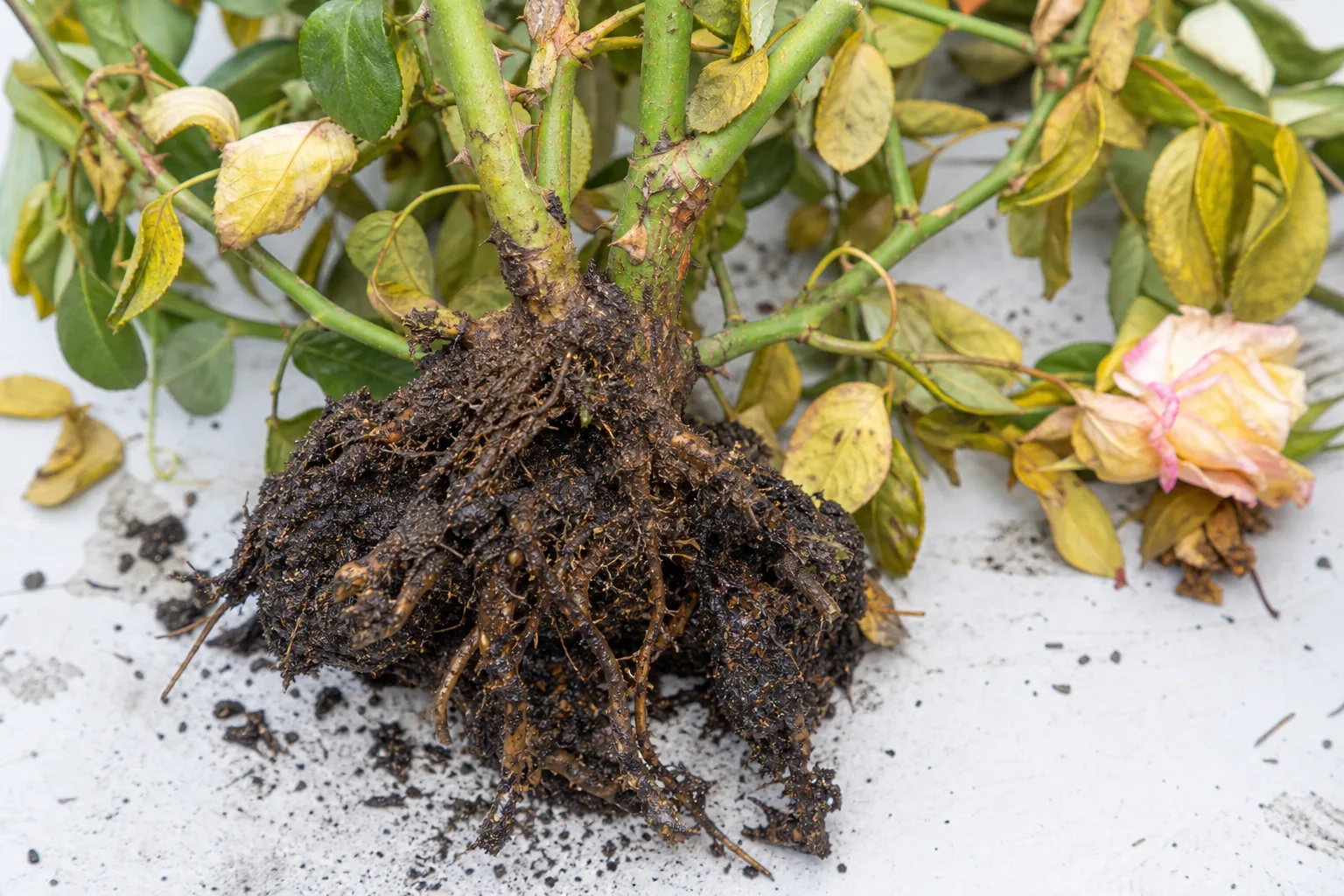
Root Rot on Rose: Causes, Checks & Fixes
This guide covers root rot on Rose. See also the general Root Rot guide, watering, and light pages for this plant.
Root Rot on Rose: Causes, Checks & Fixes
Quick answer
Root rot on Rose (Rosa × hybrida and related garden hybrids) is a rescue guide for confirmed root decay-not early overwatering triage. If stems are still firm and you suspect too much water but have not inspected roots, start with the overwatering on Rose guide and its wilting-with-wet-soil checks first. Use this page once decay is likely or confirmed.
The signature mismatch is wilting canes on soil that still feels damp. Phytophthora and related water molds attack fine roots in saturated mix; once enough tissue rots, the bush cannot pull water upward even though the pot is wet. Lower leaves yellow, buds abort, and the mix may smell sour when you lift the container.
First step: stop watering and unpot gently to inspect the roots. Do not add more water hoping limp leaves will perk up. Mushy brown roots with a sour smell confirm rot; a dry lightweight pot with firm canes points to thirst instead.
Root rot vs. crown rot vs. overwatering on Rose
These three problems overlap on container hybrid teas, but the inspection target differs:
| Problem | Soil moisture | Graft union feel | Root feel | Where to go next |
|---|---|---|---|---|
| Overwatering (early) | Wet days after watering | Firm | Mostly firm, pale | Overwatering guide - dry-down and rhythm fix |
| Root rot | Wet, often sour-smelling | Firm | Brown, mushy, slipping apart | This page - trim and repot |
| Crown rot | Wet at soil line | Soft, dark, water-soaked | May be mushy too | Crown rot guide - crown rescue |
| Drought stress | Dry 3–4 cm down | Firm | Firm, pale | Rose watering guide - deep soak once |
| Black spot defoliation | Variable | Firm | Firm if checked | Black spots guide - fungal leaf disease |
On grafted hybrid teas, chronic wetness at the soil line can advance from root rot into crown rot at the union-often fatal. If the graft feels spongy, switch to the crown-rot page even if some roots still look partly firm.
What root rot looks like on Rose
Root rot shows above soil only after enough feeder roots have died. Watch for this progression:
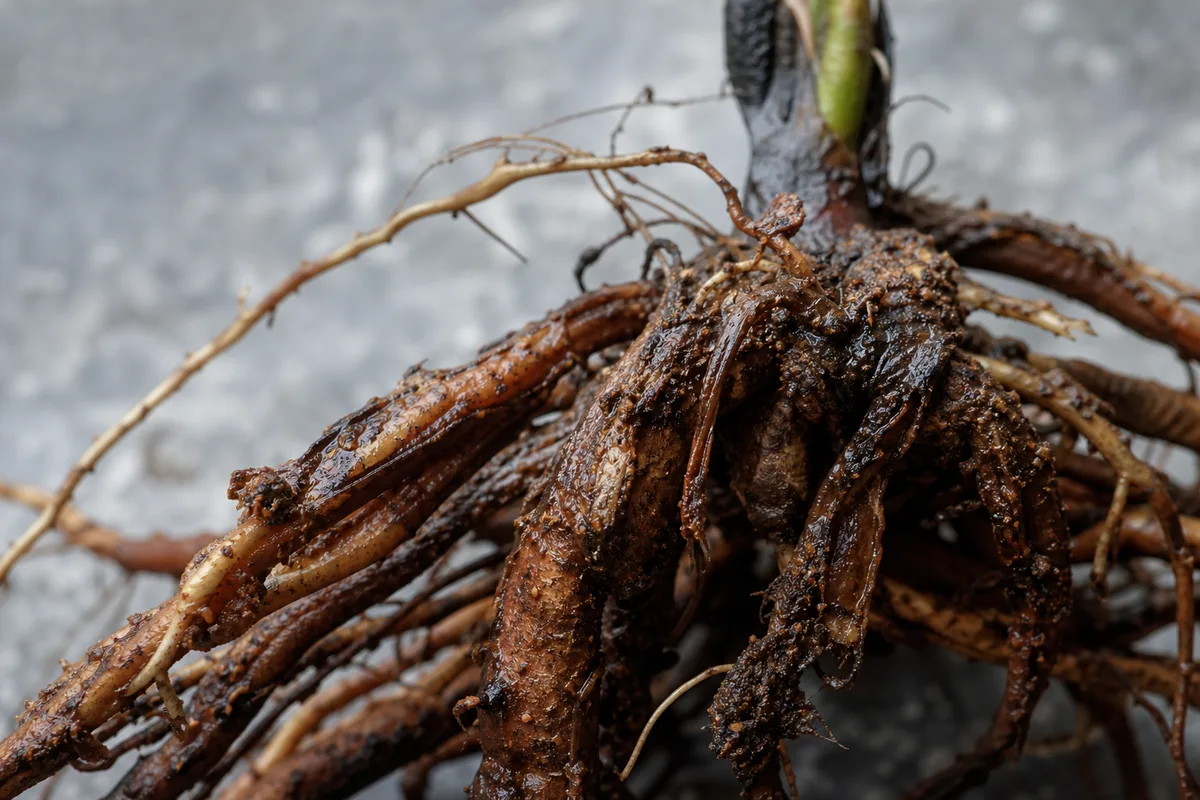
Root Rot symptoms on Rose - compare with healthy tissue on the same plant.
Early signs:
- Lower leaves turn yellow while mix stays wet for days
- Canes wilt mid-day despite damp soil-not crispy dry
- New buds drop before opening; fresh shoots stall
- Pot feels unusually heavy when lifted
- White mold, algae, or fungus gnats on the surface
Confirmed rot (inspect roots):
- Brown, black, or translucent roots that mush between fingers
- Sour or swampy smell when you slide the plant from the pot
- Wobbly bush that lifts easily compared with a healthy, anchored root ball
- Reddish-green or yellow leaves that curl and do not recover after you stop watering
Severity ladder:
- Mild - A few soft root tips; firm graft; no sour smell yet
- Moderate - Roughly one-third to half of roots mushy; graft still firm; sour smell present
- Severe - More than half of root mass decayed; graft beginning to soften; widespread wilting on wet mix
Yellow leaves alone are not proof of root rot. Black spot yellows spotted foliage on leaves that may still feel firm at the petiole, often without a sour pot smell. Root rot fits when yellowing pairs with persistent wetness and mushy roots, not with dry mix or spot-only patterns.
Why Rose gets root rot
Roses need rich, moist but well-drained soil. Container culture compresses that balance into a small pot where drainage failures show up fast.
Phytophthora and waterlogged mix
Phytophthora root rot is a water-mold disease that thrives when substrate stays saturated. Poorly drained, waterlogged soil or media and excess irrigation favor these organisms. Fine roots rot first, turning brown or black; aboveground drought stress appears even though you have been watering-because functional roots are already gone.
High soil moisture alone does not always cause disease, but water plays a key role in spread. Once tissue is oxygen-starved, pathogens finish what poor drainage started.
Container drainage failures
Common triggers on balcony and patio roses:
- Oversized pots where a small root ball sits in a large wet zone
- Heavy peat or garden soil without enough perlite or grit
- Saucers, cache pots, or blocked drainage holes trapping runoff
- Daily shallow watering in cool or shaded months when uptake slows
- Graft union buried below the soil line at repot
The thirsty bloomer trap from our overwatering guide matters here too: roses are marketed as heavy drinkers, but container roses in partial shade or winter rest use far less water than peak-summer bushes in full sun. The same schedule that worked in June keeps mix swampy in February.
Grafted hybrid tea vulnerability
Grafted hybrid teas and floribundas carry a delicate union between rootstock and scion. When wetness persists around the base, decay can climb from roots into the crown. Own-root patio roses still rot from saturated mix, but they lack a graft failure point-recovery sometimes means regrowth from the base rather than total loss.
In-ground border roses can also suffer root rot in heavy clay or low spots, but this guide focuses on container rescue where drainage mistakes are most common for home growers.
How to confirm the cause
Work through this checklist before you trim roots or repot:
- Soil moisture at depth - Stick your finger 3–4 cm into the mix. Wet several days after watering fits rot or chronic overwatering. Bone-dry soil with limp canes suggests drought instead.
- Wilting pattern - Wilting on wet soil strongly suggests root damage. UMN Extension’s rose wilt diagnose tool lists several wilt causes; on wet mix with mushy roots, rot outranks thirst.
- Pot weight and smell - Chronic heaviness plus sour odor points to anaerobic conditions in the root zone.
- Graft union firmness - Brush soil away from the base. Firm bark at the union with mushy roots below means root rot focus. Soft, dark, water-soaked bark means crown rot.
- Root inspection - Gently unpot the rose. Healthy roots are firm and pale tan or white. Brown, mushy, foul-smelling roots confirm rot from chronic saturation or poor drainage.
- Watering history - Have you watered before the top 3–4 cm dried, left the saucer full, or repotted into a much larger pot recently? That pattern fits root rot on container roses.
If soil dries normally within a few days, roots are firm, and only a few lower leaves yellow, you may be seeing normal senescence or early overwatering without full decay yet.
First fix for Rose
Stop watering and unpot gently to inspect the roots.
Move the bush to a clean work surface. Tilt the pot and slide the root ball out with minimal pulling on canes. Knock away wet mix so you can see root color, smell, and texture clearly. Do not water during this inspection.
If roots are mostly firm and pale with only a few soft tips, trim the damaged sections, let cut surfaces air-dry briefly, and repot into fresh airy mix without soaking the plant again first.
If more than one-third of roots are mushy, proceed immediately to the recovery steps below. Do not return the plant to the same wet mix hoping it dries out on its own-decay spreads in waterlogged, oxygen-poor soil.
Step-by-step recovery
After inspection confirms rot:
- Stop all water - Withhold irrigation until you finish trim and repot. Adding moisture to rotting tissue deepens damage.
- Rinse roots gently - Lukewarm water removes contaminated mix clinging to remaining roots. Note how much tissue is firm versus mushy.
- Trim decay with clean pruners - Cut away brown, soft roots back to firm, light-colored tissue. Disinfect blades between cuts with rubbing alcohol. Remove any blackened tissue at the root crown the same way.
- Check the graft union - If bark at the union is soft, follow the crown rot guide instead of treating this as root-only damage.
- Air-dry 24–48 hours (moderate to severe cases) - Lay the trimmed root ball on paper towels in bright indirect light so cut surfaces callus. Skip watering during this window.
- Repot into fresh airy mix - Use compost, cocopeat, and perlite in proportions similar to our rose soil guide-lighter than pure garden soil in pots. Choose a container only slightly larger than the trimmed root ball with open drainage holes. Set the graft union 2–3 cm above the new soil surface on hybrid teas. See the repotting guide for technique.
- Wait for dry-down before cautious watering - Resume base watering only when the top 3–4 cm of mix dries. Empty the saucer within 30 minutes.
- Hold fertilizer for two to three weeks - Stressed roots cannot handle salts. Resume rose feed only after new shoots look firm and green.
- Propagate backup cuttings - If more than half the roots were mushy or the base is questionable, take healthy cane cuttings from firm wood above the rot line per our propagation guide before the bush collapses.
Mild, moderate, and severe branches
Mild - Few soft root tips, firm graft, no sour smell. Trim tips, repot into dry airy mix in the same or slightly smaller pot. Expect stabilization within one to two weeks.
Moderate - Roughly one-third to half of roots mushy, graft still firm. Aggressive trim, 48-hour air-dry, smaller pot, backup cuttings started the same day. New breaks may take three to six weeks.
Severe - Soft graft union, more than two-thirds of roots mushy, sour smell returning within days of repot. Attempt propagation from any firm canes; the main bush rarely recovers once the union is hollow.
Home growers cannot identify Phytophthora species from appearance alone. Focus on removing decay, fixing drainage, and adjusting watering. Commercial fungicide drenches are mainly preventative and label-dependent; cultural rescue-trim, airy mix, dry-down rhythm-matters more for container roses. Contact your local extension office if rot returns after a correct repot.
Recovery timeline
Mild root damage with a firm graft: Canes should feel stiffer and new leaves should emerge clean within two to three weeks after trim, repot, and corrected watering.
Moderate stress with significant root loss: Expect four to eight weeks before the bush fills out again. Blooms may pause until roots rebuild.
Severe graft softness: Recovery is unlikely if the union is hollow or canes collapse at the base. Save healthy upper cane cuttings if tissue is still firm above the rot line.
Old yellow leaves will not turn green again-they drop as replacements appear. Judge progress by firm new breaks, stable roots on recheck, and stopped symptom spread-not by rehabilitating spotted foliage.
If the mix smells sour again within two weeks of repotting despite correct dry-down, decay has likely reached the crown. Inspect the graft and shift to propagation rather than repeated soaking.
When to worry
Escalate immediately if:
- The graft union feels soft or water-soaked when you brush soil away
- More than half the root mass is brown and mushy on inspection
- Canes wilt through the bush while mix stays wet after you have stopped watering for several days
- The mix smells sour again within two weeks of a fresh repot
- The bush wobbles and lifts with little root resistance
At that stage, treat as advanced root or crown rot. Partial root pruning may save the plant if firm tissue remains and the graft is still hard. A hollow crown on a grafted hybrid tea often means propagation from upper canes is your best salvage path.
For mild damage with firm graft and only soft root tips, calm correction-trim, airy repot, dry-down rhythm-usually works. Roses recover when oxygen returns before decay reaches the union.
What not to do
Do not keep watering limp leaves when soil is wet-that drives rot deeper into roots and toward the graft.
Do not repot into a giant pot “to help recovery.” Excess wet mix around a trimmed root ball repeats the problem.
Do not bury the graft union deeper at repot for stability. Keep it above the soil line on hybrid teas.
Do not fertilize a rotting bush hoping to push growth. Stressed roses need oxygen and dry-down cycles, not nitrogen.
Do not stack fungicide, hard pruning, and a new oversized pot on the same day before confirming how much tissue is firm.
Do not confuse black spot defoliation with root failure-spotted leaves on firm roots and a firm graft need fungicide and foliage management, not root trim.
How to prevent root rot on Rose
Prevention aligns with our rose watering guide and soil guide:
- Finger test 3–4 cm deep before every major watering-never on a fixed calendar alone
- Water at the base until a little drains out; skip routine overhead sprays
- Empty saucers within 30 minutes of watering
- Match pot size to the root ball-repot when roots circle, not preemptively into huge containers
- Use well-draining mix with compost and perlite; refresh collapsed peat that holds water unevenly
- Keep the graft union above soil at planting and after every repot
- Reduce frequency in cool, shaded, or dormant months when growth slows
- Give six or more hours of direct sun when possible so the bush uses moisture predictably
Container roses in hot summer sun may need water every two to three days when the top layer dries; the same plant on a cool shaded balcony may need water only once a week or less. The finger test bridges both seasons.
Related Rose guides
- Overwatering on Rose - Early wet-soil triage before roots decay
- Crown rot on Rose - When the graft union fails
- Rose watering - Dry-down rhythm and prevention
- Rose soil - Mix and drainage for containers
- Rose repotting - Pot sizing after root trim
- Rose propagation - Cane salvage when the base is gone
- Black spots on Rose - Leaf disease vs. root stress
Conclusion
Root rot on Rose is a drainage and watering failure centered on oxygen-starved roots-not a random wilt disease. Stop watering, inspect roots honestly, trim decay, and repot into airy mix with the graft union above soil. The wilt-on-wet-soil paradox tells the truth when leaves lie. Catch damage early, fix how you water, and keep cane cuttings as insurance when decay has already spread toward the base.