Leaf Drop on Rose: Causes, Checks & Fixes
Quick answer
Leaf drop on Rose usually means black spot defoliation, soggy roots from overwatering, drought stress, or spider mites in hot dry weather-not normal aging alone. First step: inspect fallen and remaining leaves for black spots, then probe soil moisture 3–4 cm deep before you water again or spray.
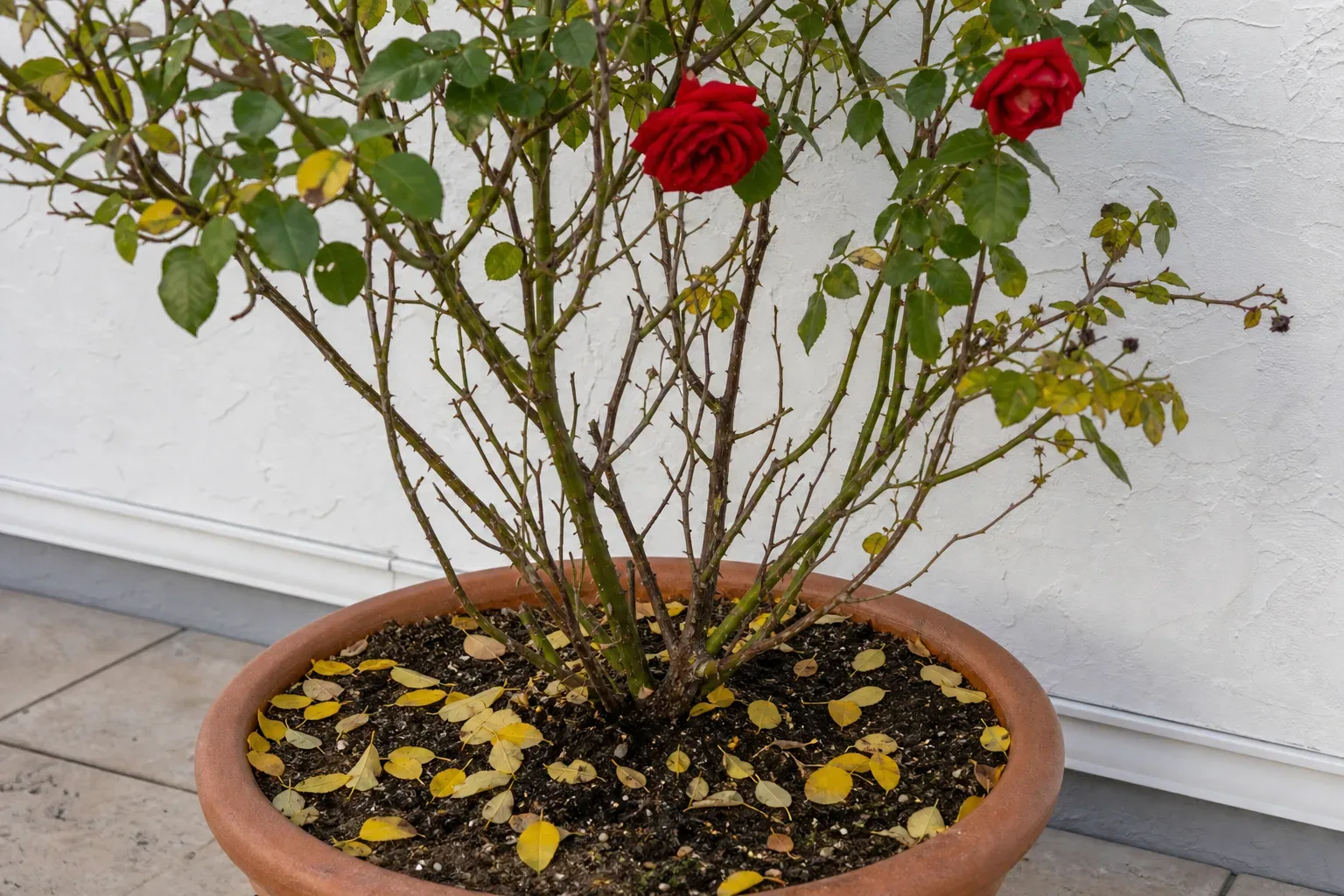
Leaf Drop on Rose: Causes, Checks & Fixes
This guide covers leaf drop on Rose. See also the general Leaf Drop guide, watering, and light pages for this plant.
Leaf Drop on Rose: Causes, Checks & Fixes
Quick answer
Some lower leaf fall on an established bush is normal as older foliage ages out. Problematic leaf drop on Rose is continuous shedding-especially yellow or spotted leaves falling in clusters, or a bush going nearly bare mid-season. On container and garden roses, the most common triggers are black spot fungus (Diplocarpon rosae) defoliation, overwatering that suffocates roots, underwatering during hot bloom weather, spider mites in dry heat, transplant shock after Rose repotting guide, and natural winter dormancy.
First step: inspect fallen and remaining leaves for black or purple spots with yellow halos, then probe soil moisture 3–4 cm deep at the base before you water again or reach for spray. Spotted leaves need sanitation and dry foliage-not more water on leaves. Wet heavy soil with no spots needs a dry-down before the next drink. Treating both the same way is the fastest way to lose another flush of leaves.
What leaf drop looks like on Rose
Normal renewal shows one or two older leaves at the very base turning dull and dropping after flowering-canes stay firm, new buds keep opening, and the rest of the bush looks full. Stress-related drop looks different: leaves detach with little resistance, often several at once from the same cane section.
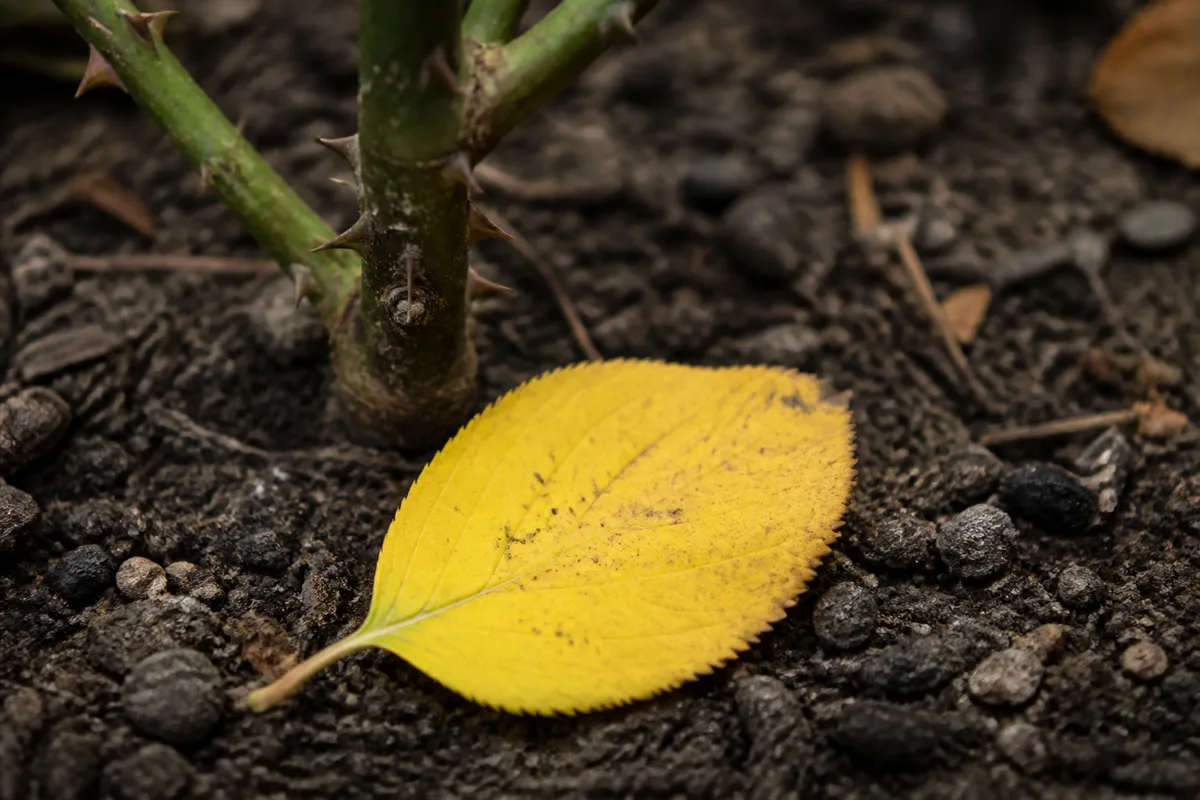
Leaf Drop symptoms on Rose - compare with healthy tissue on the same plant.
Typical patterns:
- Black spot drop: Purple-black spots on upper leaf surfaces, yellow halos around lesions, leaves fall even when only partly spotted; bare lower canes with foliage clustered near tips
- Overwatering drop: Lower leaves yellow first, pot or bed stays wet for days, may follow heavy rain or daily watering in cool weather; no spot pattern, sometimes sour smell at soil line
- Underwatering drop: Leaves curl, feel dry and brittle, wilt mid-morning in summer; soil dry 3–4 cm down, flowers smaller and pale before leaves fall
- Heat stress drop: Sudden leaf shed during sustained heat above 38°C combined with dry soil or root-zone heat from dark containers on hot pavement
- Spider mite drop: Fine stippling on upper leaf surfaces, bronzing, fine webbing on undersides in hot dry weather; defoliation accelerates without visible insects to the naked eye
- Aphid stress drop: Distorted new tips, sticky honeydew on buds and young leaves; heavy colonies weaken shoots enough to shed foliage
- Transplant shock: Shedding starts within one to two weeks after bare-root planting, repotting, or a major move; moisture may be normal, canes still firm
- Winter dormancy: Leaves yellow and fall naturally from autumn onward as growth slows; expected on most bush roses in cool climates, not a crisis if canes stay green and plump
Because roses carry compound leaves on thorny canes and bloom heavily from new wood, defoliation shows up fast-buds may still open while the bush looks stripped below. That uneven pattern is common with black spot or root stress.
Why Rose drops leaves
Black spot defoliation
Black spot is the most serious foliar disease of roses. Infected leaves develop purple or black patches; tissue may yellow around spots and the leaf often drops early, even when only part of the blade is affected. The fungus spreads in splashing water and needs wet leaf surfaces to infect-exactly why watering should hit the soil at the base, not the foliage.
Infected leaves produce ethylene, which triggers premature fall; badly affected plants can shed almost all their leaves, weakening vigour and cutting bloom. High humidity with poor airflow around crowded balcony pots makes this worse on hybrid tea and floribunda roses.
Overwatering and crown stress
Roses need moist but well-drained soil-they are heavy feeders, not bog plants. Yellow leaves that drop can signal insufficient oxygen in the soil, often from overwatering, plugged drainage holes, or heavy clay that stays saturated after monsoon rains. Saturated roots cannot breathe; the plant sheds leaves it can no longer support. Container roses on saucers that hold runoff are especially prone. Chronic wetness at the crown also invites crown rot, where canes collapse at the base-a separate emergency from simple leaf shed.
Underwatering and drought stress
Roses in Rose light guide use water quickly during the flowering season. Established roses may need a thorough weekly soak in high summer; container roses can need daily checks in hot weather. When the top 3–4 cm dries completely for too long, leaves wilt, edges crisp, and the bush drops foliage to reduce water loss. Underwatering and overwatering can both yellow and drop leaves-soil depth tells them apart.
Heat stress
Roses prefer roughly 15°C to 28°C and full sun, but dark pots on hot terraces can cook roots even when leaves get six hours of light. Combined heat and drought triggers rapid shed before black spot or mites appear. Heat-stressed drop often follows a sudden heat wave without adjusted watering.
Spider mites and aphids
Spider mites cause stippling, bronzing, and defoliation in hot dry weather-extremely common on roses. Fine webbing on leaf undersides and forceful water sprays are first-line controls per American Rose Society guidance. Aphids cluster on soft new growth and buds; heavy sap loss distorts shoots and can cause leaf fall on stressed plants. Sticky residue on petals or new leaves points to aphids, not black spot.
Transplant and repot shock
Bare-root roses planted in late winter or spring, or container roses repotted mid-season, often shed leaves while roots re-establish. Avoid planting when ground is frozen or waterlogged. Shock drop with firm canes and reasonable moisture usually settles within two to four weeks if light and watering stay stable.
Nutrient stress
Roses are heavy feeders. Severe nitrogen shortage or iron chlorosis on alkaline soil weakens new growth; chronically starved bushes shed older leaves and push fewer blooms. Nutrient stress rarely causes sudden mass drop alone-look for pale new leaves with green veins or overall stunting before feeding a shedding plant.
Winter dormancy
In cool climates, roses naturally lose leaves as they enter dormancy from autumn onward. Canes should stay firm and green-brown beneath the thorns; this is seasonal, not a care failure. Resume hard pruning in January (or local equivalent) and expect new basal breaks in spring.
How to confirm the cause
Work through these checks in order:
- Leaf pattern on the ground - Pick up fallen leaves. Black-purple spots with yellow edges confirm black spot. Uniform yellow without spots on wet soil points to water stress. Stippling and bronzing suggest mites.
- Soil moisture at depth - Push your finger 3–4 cm into the mix at the base. Wet several days after watering confirms overwatering. Dry throughout with limp canes confirms thirst.
- Where leaves fall from - Lower-canopy loss with spots is classic black spot. Whole-bush shed after repotting with firm canes suggests shock. Tip-heavy loss with webbing suggests mites.
- Cane firmness - Pinch the base of the main cane. Soft, mushy tissue at the graft or crown means stop watering and inspect for crown rot-do not wait.
- Recent weather and care - Heavy rain, daily overhead splashing, heat wave, new pot, or move to less sun? Match timing to cause.
- Underside scan - Hold leaves up to light. Mite stippling and webbing, aphid clusters, or black spot lesions on upper surfaces narrow the diagnosis.
- Season - Autumn leaf fall on an otherwise healthy bush is often dormancy. Mid-spring or humid-summer bare canes are not normal aging.
If spots are present, black spot is the working diagnosis regardless of soil moisture-fix sanitation and keep foliage dry. If no spots and soil is soggy, hold water. If no spots, dry soil, and wilt-water deeply at the base once.
First fix to try
Do not stack treatments on day one. Inspect fallen leaves for black spot lesions and probe soil 3–4 cm deep before your next action.
- If spots are present: Remove and bag fallen leaves from around the pot or bed. Pick off heavily spotted leaves still on the bush. Do not compost them-spores overwinter on fallen leaves. Hold overhead watering permanently; switch to base watering only.
- If no spots and soil is wet: Stop watering until the top 3–4 cm dries. Empty saucers after any future drink.
- If no spots and soil is dry with limp foliage: Water deeply once at the base until excess runs from drainage holes, then wait for the top 3–4 cm to dry before watering again.
- If stippling and webbing appear in hot dry weather: Blast leaf undersides with a strong jet of water three to four times per week before considering spray.
Do not repot, hard-prune, or fertilize during active unexplained shedding unless canes are softening or roots are clearly failing.
Step-by-step recovery
Once the first fix matches your diagnosis:
- Black spot path: Continue removing fallen debris weekly. Improve airflow by thinning crowded inner growth after bloom. Water at the base in morning so foliage stays dry. Expect new leaves to emerge clean only after spore pressure drops-often when weather turns drier. Resistant cultivars help but new fungal strains often overcome resistance.
- Overwatering path: Let soil dry through the top 3–4 cm between drinks. Confirm drainage holes are open. Move pots off standing water. If yellowing continues on a heavy pot after one full dry-down cycle, unpot and trim mushy roots, then repot into fresh well-draining mix with compost and perlite.
- Underwatering path: Establish a moisture-check rhythm-every 2–3 days in summer for containers, less in cool months. Mulch the surface to slow evaporation but keep mulch off the crown.
- Mite path: Repeat forceful underside rinses. Avoid broad pesticides that kill mite predators during hot weather. Improve airflow around the bush.
- Aphid path: Knock colonies off new growth with water or remove by hand on small bushes. Check ants that farm aphids on stems.
- Shock path: Keep light, placement, and watering stable for three to four weeks. Do not move the pot again or feed until new leaves unfurl.
- Nutrient path: After shedding slows and roots are healthy, resume rose-specific fertilizer during active growth-not while the plant is bare and stressed.
Judge recovery by clean new leaves opening from buds, fewer leaves dropping each week, and firm canes-not by whether every fallen leaf regrows on old bare sections.
Recovery timeline
Mild black spot or one overwatering episode may slow within one to two weeks once foliage stays dry and debris is cleared. Repeated defoliation weakens plants and reduces flowering for the rest of the season-full canopy refill can take four to eight weeks. Transplant shock drop usually eases within two to four weeks with stable care. Severe root damage or crown rot may take a full season; replace the bush if more than half the crown is mushy. Winter dormancy leaf fall is replaced by spring flush after pruning-not a recovery problem.
Causes to rule out / lookalikes
Leaf drop is easy to confuse with normal renewal, yellow leaves from nutrient shortage, or wilting from one-day thirst.
- Normal aging affects only occasional lower leaves-not rapid bare-caned defoliation mid-bloom.
- Yellow leaves without detachment on Rose mean the problem is still developing; active drop means the plant already shed unsustainable foliage. See the yellow-leaves guide if color change precedes fall.
- Rose rosette disease produces abnormal red, clustered “witches’ broom” growth and excessive thorns-not generic spotty defoliation alone. Do not assume every bare bush has rosette; confirm the distinctive shoot pattern before destroying plants.
- Powdery mildew causes white coating and distortion; leaves may curl but full defoliation is less common than with black spot.
- Wilting without drop on dry soil is thirst; wilting with wet soil and drop together strongly suggest root failure.
What not to do
Do not overhead-water or mist leaves to “cool” a shedding rose-wet foliage fuels black spot. Do not pour extra water on a defoliating bush whose soil is already wet. Do not fertilize heavily to force leaf regrowth on a stressed or diseased plant. Do not compost spotted fallen leaves. Do not ignore spider mites because you cannot see insects without close inspection. Do not hard-prune a shock-dropping rose mid-recovery unless removing clearly diseased wood. Do not assume autumn leaf fall always means failure-check the calendar and cane health first.
How to prevent leaf drop on Rose
Pair six or more hours of direct sun with rich, well-drained mix and base-only watering when the top 3–4 cm dries. Feed every two weeks during active bloom season. Prune for open centres so air moves through canes. Rake or collect fallen leaves promptly-especially in autumn-to reduce black spot carryover. Scout undersides weekly in hot dry months. Avoid crowding multiple pots where splash spreads spores. Repot every two to three years before roots circle and water rhythm becomes unpredictable. Mulch in winter to protect crowns, but keep mulch from smothering the graft.
Rose care cross-check
If leaf drop keeps returning, verify the basics Rose overview demands:
- Light: Full sun for maximum flowering; weak light produces spindly canes and disease-prone foliage.
- Water: Deep drinks at the crown; never wet leaves. Containers dry faster than ground beds-adjust by pot weight, not calendar alone.
- Soil: pH roughly 6.0–7.0, compost-rich, with perlite for drainage. Heavy pure cocopeat holds moisture too long for many balcony setups.
- Feeding: Regular rose fertilizer during February through October; pause when dormant or actively shedding.
- Airflow: Moderate humidity (40–60%) with movement through the canopy-not stagnant damp corners.
- Season: Reduce water in winter dormancy; resume hard pruning and feeding as new basal breaks appear.
A rose that drops leaves repeatedly while buds fail and canes thin is telling you the whole routine-not one spray-needs correction.
When to worry
Treat as urgent when canes soften at the graft or soil line, when soil smells sour during continued leaf fall, or when the bush goes nearly bare twice in one growing season. Premature defoliation decreases energy reserves and winter hardiness. A dry pot with firm canes and gradual lower-leaf drop in late autumn is less urgent-stabilize watering and watch for three weeks.
Replace or cut back hard only when crown tissue is mushy through most of the base, graft failure is obvious, or roots are mostly rotten after inspection. Otherwise firm canes and clean new spring growth after corrective care often restore a usable bush within one season.
Conclusion
Leaf drop on Rose almost always traces to black spot in wet weather, water stress at the roots, heat and mites in dry weather, or seasonal dormancy-not random bad luck. Inspect fallen leaves for spots, check soil moisture at depth, and match one first action to what you find. That diagnostic step separates a bush that refoliates in weeks from one that stays bare through bloom season.
When to use this page vs other Rose guides
- Rose watering guide - Use for routine moisture checks before assuming leaf drop is the main issue.
- Rose problems hub - Browse all 7 common issues on this species.
- Yellow Leaves on Rose - Different entry point when symptoms overlap with leaf drop.
- Root Rot on Rose - Different entry point when symptoms overlap with leaf drop.