Yellow Leaves on Rose: Causes, Checks & Fixes
Quick answer
Yellow leaves on Rose usually mean iron or magnesium shortage, black spot defoliation, overwatering, or sap-sucking pests-not one cause fits all. First step: scan for purple-black spots with yellow halos, then probe soil moisture 3–4 cm deep and check vein color on the newest leaf.
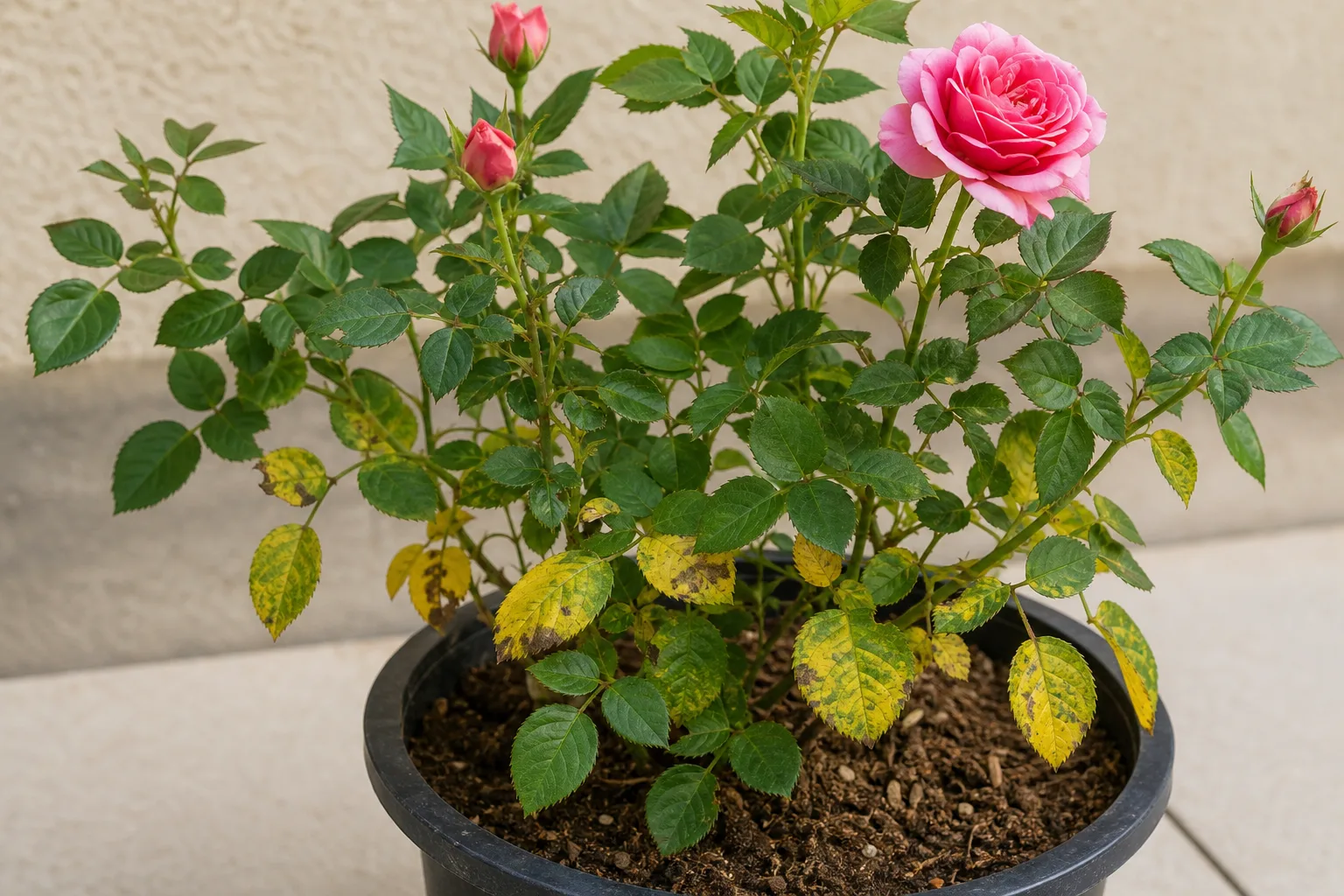
Yellow Leaves on Rose: Causes, Checks & Fixes
This guide covers yellow leaves on Rose. See also the general Yellow Leaves guide, watering, and light pages for this plant.
Yellow Leaves on Rose: Causes, Checks & Fixes
Quick answer
Yellow leaves on Rose (Rosa × hybrida and related repeat-blooming hybrids) are a symptom, not a single diagnosis. On container and garden roses, the same pale foliage can mean iron lockout on alkaline tap water, magnesium shortage on sandy or leached soil, black spot defoliation, soggy roots, salt burn from over-feeding, or sap loss from aphids and spider mites. Roses are heavy feeders that push successive bloom flushes-when something blocks uptake or damages tissue, yellowing shows fast on compound leaves while buds may still try to open.
First step: scan leaves for purple-black spots with yellow halos, then probe soil moisture 3–4 cm deep at the base and check whether veins stay green on the newest leaf. Spotted tissue needs sanitation and dry foliage-not more water on leaves. Wet heavy mix with uniform lower yellow needs a dry-down before the next drink. Green veins on pale new growth on firm roots points to iron correction once you rule out waterlogging.
Yellow leaves vs. leaf drop on Rose: This page is a multi-cause triage hub for chlorosis, halo yellowing, and wet-soil patterns. If your bush is shedding leaves rapidly and you need broader defoliation rescue, start with the leaf drop on Rose guide. For purple-black lesions specifically, see black spots on Rose.
Why Rose leaves turn yellow
Iron and manganese shortage (new growth, green veins)
Iron is immobile in plant tissue-when uptake fails, the youngest leaves at shoot tips show interveinal chlorosis: yellow or pale tissue between veins that stay green. Severe cases shrink new leaves and can yellow stems. On roses, iron and manganese shortages are among the most common micronutrient problems, especially where alkaline soil or hard tap water binds iron into forms roots cannot absorb.
Container roses on balconies fail faster than in-ground bushes in amended beds: small root zones, repeated irrigation with alkaline city water, and exhausted peat-based mix drift pH upward over one to two seasons. Excess phosphorus from bloom-boost fertilizers without soil testing can also block iron uptake-see our rose fertilizer guide before loading more phosphorus.
Magnesium shortage (older leaves)
Magnesium is mobile-deficiency appears on older, lower leaves first with yellowing between veins, sometimes with reddish-brown tints, before edges brown and leaves drop prematurely. Sandy or light soils leach magnesium quickly; heavy potassium feeds (tomato formulas, repeated bloom boosters) can push roses toward magnesium shortage by favoring potassium uptake over magnesium.
Do not reach for Epsom salts because leaves are yellow somewhere on the bush-confirm the leaf age pattern matches magnesium, not iron on new tips or black spot halos after wet weather.
Black spot defoliation
Black spot (Diplocarpon rosae) is the most serious foliar disease of outdoor roses. Infected leaves develop purple-black spots; chlorosis often spreads around each lesion until the whole leaflet yellows. Infected leaves produce ethylene, which triggers premature leaf drop-sometimes after only one or two spots-leaving bare lower canes while buds cluster at tips.
Black-spot yellowing mimics nutrient stress on the same bush because defoliation starves the plant and interrupts normal feeding rhythm. Wet foliage from overhead watering or rainy weeks accelerates both spotting and yellow halos. Full disease management lives on our black spots guide; here the key distinction is spots plus halos, not uniform vein-pattern chlorosis.
Overwatering and root stress
Roses need moist but well-drained soil-they are not bog plants. When mix stays saturated for days, fine roots suffocate and the plant sheds leaves it can no longer support. Yellow leaves that drop can signal insufficient oxygen in the soil, often from overwatering, plugged drainage, or saucers holding runoff.
The classic trap is wilting canes on soil that still feels damp-damaged roots cannot move water upward, so the bush looks thirsty while sitting in a wet pot. Lower leaves yellow first; upper growth may limp without crisp drought edges. Our overwatering on Rose guide covers the wilt-on-wet-soil check and dry-down rhythm in depth.
Sap-sucking pests
Spider mites cause stippling, bronzing, and faded yellow foliage in hot dry weather-extremely common on roses. Fine webbing on undersides and forceful water sprays as first-line control are typical responses per American Rose Society guidance. Aphids cluster on soft new growth and buds; heavy sap loss distorts shoots and can yellow or fade leaves on stressed plants. Sticky honeydew on petals points to aphids, not nutrient shortage.
Pest yellowing often mixes stippling or distortion with otherwise firm roots and reasonable soil moisture-underside inspection separates it from chlorosis.
Normal lower-leaf aging and seasonal senescence
One or two older leaves at the very base turning dull yellow after a bloom flush, on an otherwise full bush with firm canes and clean new growth, is often normal renewal-not a crisis. Autumn yellowing as growth slows toward dormancy is expected in cool climates. Problematic yellowing is continuous, patterned (veins, halos, wet soil), or paired with spot spread, wilt on wet mix, or canopy thinning mid-season.
Salt burn from over-fertilizing
Heavy or repeated fertilizer on dry roots, especially in small pots, can burn margins and yellow tissue. White crust on soil surface, sudden leaf drop despite moist mix, and soft leggy shoots with few buds suggest salt stress-not deficiency. Stop feeding, flush with plain water if roots are firm, and resume at half strength only after new growth stabilizes-details in our fertilizer guide.
What yellow leaves look like on Rose
Roses carry compound leaves on thorny canes-yellowing rarely hits every leaflet the same way at once. Learn these patterns:
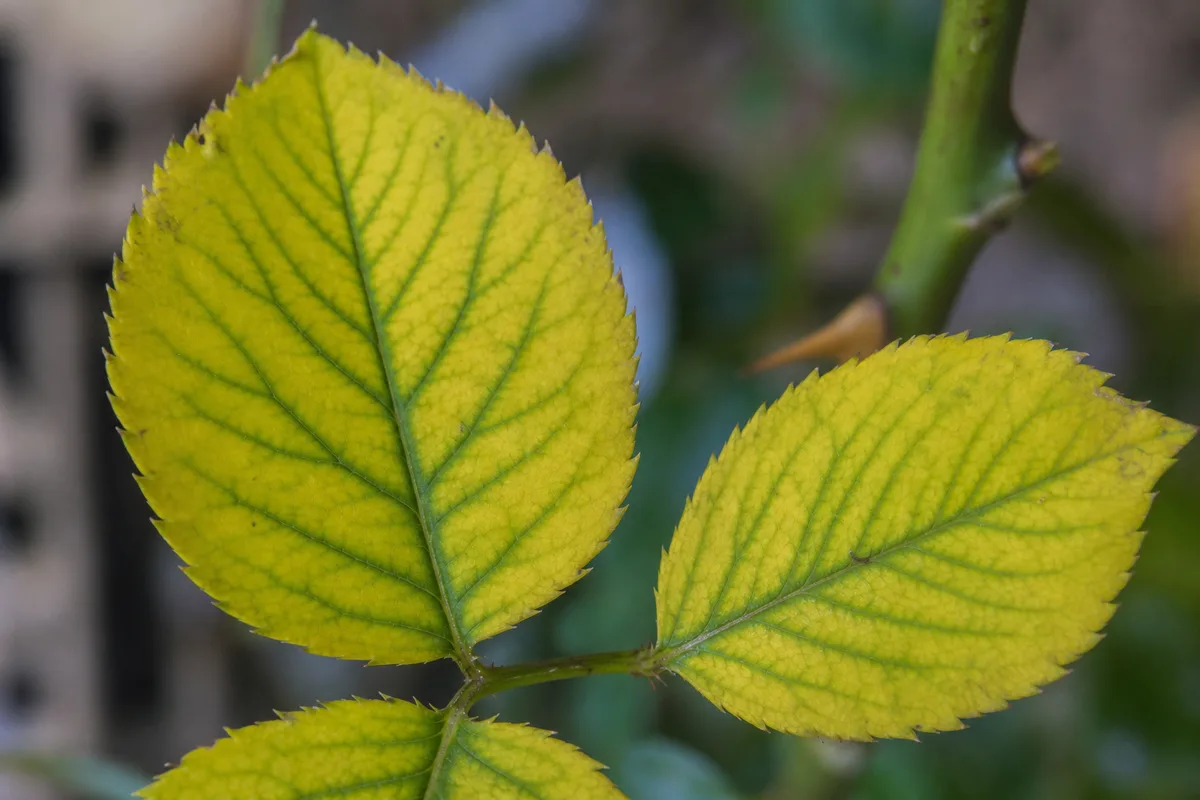
Yellow Leaves symptoms on Rose - compare with healthy tissue on the same plant.
- Iron chlorosis: Pale or yellow between veins on newest leaves at tips; veins stay green; may follow repotting into alkaline mix or a season of hard tap water
- Magnesium shortage: Interveinal yellow on older lower leaves, sometimes reddish tints before brown edges; sandy soil or heavy potassium feeding in background
- Black spot halos: Purple-black circular spots on upper surfaces with yellow tissue around lesions; leaves drop early; bare lower canes, foliage clustered near tips
- Overwatering: Lower leaves yellow uniformly without spot pattern; soil wet 3–4 cm down for days; pot heavy; may wilt despite moisture
- Spider mites: Fine stippling, bronzing, webbing on undersides in hot dry weather; fade accelerates without visible insects to the naked eye
- Aphids: Distorted new tips, sticky residue, clustered soft insects on buds; yellowing follows heavy colonies on stressed shoots
- Salt burn: Brown or yellow margins on otherwise green leaves; crust on soil; follows recent heavy feeding
Because roses bloom from new wood, you may see clean buds above yellowing lower foliage-especially with black spot or root stress. That uneven silhouette is a clue, not proof of nutrients.
How to confirm the cause
Step-by-step triage checklist
Work through these checks in order-do not fertilize or spray until the dominant pattern is clear:
- Spot scan - Purple-black spots with yellow halos on upper leaf surfaces confirm black spot as the working diagnosis regardless of soil moisture. Remove spotted debris; keep foliage dry.
- Soil moisture at depth - Push your finger 3–4 cm into mix at the base. Wet several days after watering points to overwatering. Dry throughout with limp canes points to thirst-not this page’s main focus, but soil depth rules it in or out.
- Vein color on the newest leaf - Green veins on pale new tissue with firm roots suggests iron or manganese shortage on alkaline mix-not black spot.
- Leaf age - Yellow on old lower leaves only with correct moisture may be magnesium or normal aging. Yellow on new tips only is iron-pattern, not magnesium.
- Underside inspection - Hold leaves to light. Mite stippling and webbing, aphid clusters, or spot lesions on upper surfaces narrow the cause.
- Cane firmness - Soft tissue at graft or base means crown or root failure-escalate to crown rot or root rescue guides, not chelated iron.
- Recent care - Hard tap water season, exhausted container mix, overhead watering after rain, heat wave without adjusted drinks, or heavy fertilizer? Match timing to cause.
If spots are present, treat black spot first and hold feed until new growth stays clean. If no spots and soil is soggy, dry down before any nutrient spray. If no spots, dry soil, and green-vein chlorosis on new leaves with firm roots, iron chelate is reasonable once water stress is ruled out.
Lookalikes: black spot vs. nutrients vs. wet roots vs. mites
| Symptom pattern | Likely cause | Key difference |
|---|---|---|
| Yellow between veins on newest leaves; veins stay green | Iron or manganese shortage | No purple-black lesions; often alkaline water or exhausted pot mix |
| Interveinal yellow on older lower leaves; reddish tints possible | Magnesium shortage | Old leaves first; sandy or leached soil; not tip-only chlorosis |
| Purple-black spots with yellow halos; early leaf drop | Black spot | Fungal lesions after wet weather; starts lower, moves up |
| Uniform lower-leaf yellow; soil wet for days; wilt on damp mix | Overwatering | No halo spots; sour smell or heavy pot possible |
| Fine stippling, bronzing, webbing on undersides in hot dry weather | Spider mites | Insect damage in dry heat; not splash-borne spots |
| One or two base leaves dull yellow after bloom; bush otherwise full | Normal aging | Firm canes; clean new growth; no spot spread or wet-soil trap |
First fix for Rose
Fix one dominant stressor at a time. Do not stack iron chelate, Epsom salts, fungicide, and repotting on day one.
- If black spot halos are present: Remove fallen and heavily spotted leaves into the bin-not compost. Switch permanently to base watering only. Hold nitrogen until new leaves stay clean for two weeks per our fertilizer guide.
- If soil is wet and roots are still firm: Stop watering until the top 3–4 cm dries. Empty saucers. Follow the dry-down path on our overwatering guide.
- If new leaves show green-vein chlorosis on firm roots in alkaline mix: Apply sequestered iron chelate per label-soil drench or foliar on healthy roots only. Do not feed iron on waterlogged roots.
- If older lower leaves match magnesium pattern and iron is ruled out: Epsom salt soil drench only when the pattern fits; confirm with soil context, not guesswork.
- If stippling and webbing appear in hot dry weather: Blast leaf undersides with a strong water jet three to four times per week before considering spray-see our spider mites guide.
Do not pour more water on a yellow, wilting rose whose soil is already wet. Do not assume every yellow leaf needs fertilizer.
Recovery timeline
Old yellow or spotted leaves rarely re-green-recovery means the pattern stops spreading and new leaves or blooms emerge clean.
- Iron correction on firm roots: Expect deeper color on new growth within two to three weeks once uptake improves; old chlorotic leaves may persist until replaced.
- Magnesium correction: Older affected leaves may still drop; watch the next flush of lower foliage for improved color.
- Black spot defoliation: Canes may need a full flush cycle-several weeks to a season on heavily stripped hybrid teas-to refill the canopy; old spots never heal.
- Overwatering recovery: Firmer new leaves often appear within 10–14 days after soil dries and drainage improves if roots were not mushy.
- Mite clearing: Stippling fades on new growth within one to two weeks of consistent rinsing if populations drop.
Judge success by new wood and buds, not by waiting for damaged leaflets to turn perfect green again.
What not to do
Do not pour more water on a yellow, wilting rose whose soil is already wet-the wilt-on-wet-soil trap means root damage, not thirst.
Do not assume every yellow leaf needs Epsom salts-confirm magnesium patterns on older leaves first; iron hits new tips.
Do not apply iron chelate or any fertilizer on waterlogged roots-fix oxygen first.
Do not ignore black spot while chasing nutrients-ethylene-driven drop can strip a bush while you feed.
Do not overhead-water while correcting chlorosis-wet foliage feeds fungus and wastes the dry-foliage discipline black spot requires.
Do not push heavy nitrogen during active spotting or unexplained yellowing-wait until new growth stabilizes.
How to prevent yellow leaves on Rose
Water at the base when the top 3–4 cm dries per our rose watering guide-never wet foliage on purpose. Roses need rich, moist but well-drained soil and at least six hours of direct sun for predictable moisture use.
Feed during active growth with a complete formula that includes micronutrients-iron, magnesium, and manganese-not nitrogen alone. Container roses need lighter, more frequent feeds than in-ground bushes; see our fertilizer guide for bloom-flush rhythm.
Refresh exhausted container mix every one to two years or top-dress with compost to slow pH drift and iron lockout from alkaline tap water.
Scout weekly for spots, stippling, and aphids during warm dry weather. Remove the first spotted leaves before spores splash upward.
Improve airflow through open-centre pruning on bush types so leaves dry after rain-see our pruning guide.
Test soil in garden beds before heavy phosphorus applications; excess P worsens iron chlorosis on limestone-influenced soils.
When to worry
Act quickly if canes soften at the graft or base-that overlap with crown rot and advanced root failure, not simple chlorosis.
Treat as urgent if the bush loses most foliage twice in one growing season, buds drop in clusters while soil stays wet, or black spot spreads through the canopy within two weeks.
Fine webbing with stippling across multiple stems in a heat wave points to spider mites-defoliation accelerates fast without treatment.
Mild interveinal chlorosis on a few new leaves in hard-water regions is manageable once roots are healthy and iron chelate is applied correctly-not a panic if upper blooms and firm canes continue.
Chronic unexplained yellowing after correcting water, spots, and feed may warrant a soil test or local extension office review-especially on long-established garden beds with high pH.
Related Rose guides
- Black spots on Rose - Halo spots and sanitation when fungus drives yellowing
- Overwatering on Rose - Wet-soil lower yellow and wilt-on-damp-mix trap
- Leaf drop on Rose - Broader defoliation triage including dormancy and drought
- Rose fertilizer - Iron, magnesium, salt burn, and feed-hold during disease
- Spider mites on Rose - Stippling and webbing in hot dry weather
- Rose watering - Base-only rhythm and dry-down checks
Conclusion
Yellow leaves on roses demand pattern matching before treatment: green veins on pale new growth point to iron lockout on alkaline mix; older-leaf interveinal yellow suggests magnesium; purple-black spots with halos mean black spot-not feed; uniform lower yellow on wet soil means root stress; stippling and webbing mean mites. Scan spots first, probe moisture second, read vein color on the newest leaf third, then fix one dominant cause. Old tissue rarely re-greens-watch new leaves and buds for proof the bush is recovering.