How to Prune Roses: Timing, Cuts, and Deadheading by Type
How to Prune Roses: Timing, Cuts, and Deadheading by Type
How to Prune Roses: Timing, Cuts, and Deadheading by Type
Quick Answer - Check for Dead Wood Before Anything Else
First, walk the plant and remove only dead, diseased, or damaged canes - cutting back to white or pale green live pith, or removing the entire cane at the base. That single inspection tells you whether the bush is healthy enough for shaping cuts or needs conservative cleanup only. Modern repeat-blooming roses - hybrid teas, floribundas, and grandifloras - produce their best flowers on relatively young wood, and the Royal Horticultural Society notes that unpruned bush roses become tangled with very few flowers.
Once problem wood is out, the seasonal rhythm splits into two jobs. Structural pruning reshapes the plant once per year - late winter to early spring in temperate zones (February through April, often when forsythia blooms), or October before the cool-season flush in much of India. Deadheading removes spent blooms during the active season, cutting about one-quarter inch above an outward-facing bud at the first five-leaflet leaf below the flower. Match cut severity to rose type: hybrid teas tolerate the hardest spring cut; floribundas stay taller with more buds retained.
What Pruning Does for Repeat-Blooming Roses
Left alone, garden roses accumulate thin twiggy growth in the center, crossing canes that rub and wound each other, and old stems that flower weakly. Annual structural pruning renews the cane framework so new shoots carry larger blooms. Opening the center to light and air also reduces the humid conditions where black spot and botrytis thrive - a practical health benefit, not just cosmetic shaping.
Deadheading solves a different problem mid-season. When spent flowers stay on the plant, the rose shifts energy toward rose hip development. Removing faded blooms on repeat-flowering cultivars redirects that energy into new buds. Iowa State University Extension describes deadheading as optional for appearance but valuable for encouraging additional summer blooms on modern roses.
Pruning cannot fix chronic shade, root rot on Rose, or nutrient starvation. If a rose blooms on thin stems in poor light, correcting placement matters more than cutting harder.
Structural Pruning vs Deadheading
Structural pruning is the once-a-year reshape: remove whole canes, shorten remaining stems by one-third to two-thirds, and reduce the plant to three to six strong canes. The goal is architecture and cane renewal.
Deadheading is ongoing bloom-season maintenance. You snip individual spent flower stems back to a strong leaf node without restructuring the bush. Illinois Extension treats deadheading as summer pruning rather than the major seasonal cut.
The cut depth differs sharply. Spring structural pruning may take hybrid tea canes down to 12–18 inches. Deadheading usually removes only the flower stem above the first five-leaflet leaf, leaving most of the cane intact. Hard-pruning in July because you missed spring, or deadheading so aggressively that you strip half the foliage, is a common reason roses stall mid-season.
When to Prune Roses by Climate
Timing follows local temperature patterns and dormancy signals, not a universal calendar date.
Temperate Gardens (Late Winter to Early Spring)
Across much of the United States, Canada, the United Kingdom, and continental Europe, the main structural prune happens in late winter to early spring - typically February through April by latitude. The RHS advises pruning when growth is just resuming, often mid-February in mild southern areas and March in colder northern zones. Illinois Extension suggests using forsythia bloom as a practical signal that pruning season has arrived in many Midwest gardens.
The sweet spot is bud swelling - live, plump buds visible but not yet opened into tender shoots. Prune too early before hard late-winter freezes and freshly cut canes may die back. Prune too late after significant soft growth has pushed and you waste energy the plant already committed.
India and Cool-Season Bloom Climates (October Reset)
In much of India and similar tropical-to-subtropical climates where roses peak in the cool dry season, the major structural prune typically happens in October, preparing plants for the winter bloom flush from November through February. Kerala Agricultural University’s rose cultivation guidance recommends pruning during the second week of October, with flowering following about six to seven weeks later. This is the functional equivalent of spring pruning in temperate zones - resetting the plant before its strongest blooming period.
A lighter February touch-up after the winter flush removes spent flowering wood and weak stems, cutting back roughly 20 to 25 percent to encourage a spring flush in March and April. Deadheading remains continuous throughout the bloom season regardless of hemisphere.
What to Inspect Before You Cut
Before any live-wood removal, check four things:
Live vs dead pith. Scrape bark on suspect canes: healthy tissue is white or pale green inside; dead wood is brown or gray. Keep cutting lower on a cane until you reach live tissue or remove the whole cane at the base.
The three Ds. Dead, diseased, and damaged wood plus crossing canes that rub bark. Remove these before assessing shape.
Cane thickness. Stems thinner than a pencil rarely support quality blooms on bush roses. Mark weak twigs for removal during thinning.
Graft union on budded plants. All desirable growth must originate above the swollen graft point. Anything vigorous from below the union is rootstock and should be removed regardless of how healthy it looks.
If the plant is heat-stressed, recently transplanted, or fighting active black spot, limit yourself to sanitation cuts and postpone hard shaping until conditions improve.
Tools for Clean Rose Cuts
Roses punish dull tools. Crushing a cane with worn bypass pruners creates ragged tissue that heals slowly and invites infection. The minimum kit includes bypass hand pruners for canes up to about half an inch, long-handled loppers for thicker stems, and a curved pruning saw for old base wood. Bypass blades slice like scissors; anvil pruners crush live rose wood and are a poor choice.
Wear thick gloves - thorns cause puncture wounds that are easy to dismiss but slow to heal. Keep rubbing alcohol or a 10-percent bleach solution nearby to wipe blades between plants and after cutting diseased wood. Oregon State University Extension emphasizes clean, sharp equipment as the first rule of rose pruning because disease spreads on tools more often than beginners expect.
You do not need wound sealants. Clean open cuts on healthy wood heal best without tar-based dressings that trap moisture.
Where and How to Make Every Cut
Every rose cut - structural or deadheading - follows the same anatomy. Choose an outward-facing bud (a swelling growth point pointing away from the plant center) and cut about one-quarter inch above it at a 45-degree angle slanting away from the bud. Illinois Extension and OSU Extension specify this combination because it minimizes moisture pooling while leaving enough stem above the bud to prevent dieback into the growth point.
Outward-facing buds shape the bush as it grows. Inward-facing buds produce stems that cross through the center, reducing airflow. Consistent outward selection builds an open vase or goblet shape.
On deadheading cuts, count leaflets. Leaves immediately under flowers often have three leaflets; lower leaves typically have five or seven. Oregon State University Extension recommends cutting above a five-leaflet leaf because nodes associated with three leaflets are less likely to produce strong flowering shoots.
Annual Structural Pruning Step by Step
After removing dead, diseased, and crossing wood, work through these steps in order:
Thin the center. Aim for three to six strong, evenly spaced canes around the plant. Remove weaker growth at the base or just above the graft union.
Shorten remaining canes to type-appropriate height, each cut above an outward-facing bud.
Strip old leaves lingering from the previous season - they can harbor overwintering fungal spores.
Step back after every few cuts. Roses look different from six inches away than from across the garden.
Hybrid Tea and Grandiflora Roses
Hybrid tea and grandiflora roses produce large flowers on strong new canes and tolerate the hardest annual prune among repeat bloomers. Iowa State Extension and OSU Extension recommend keeping three to six vigorous canes and cutting them back to roughly 12 to 18 inches, or about one-third of pre-prune height on established plants.
The finished shape is an open vase: canes radiate outward from a clear center with no thin twigs cluttering the interior. On older bushes, remove one or two of the oldest canes entirely at the base each year to encourage fresh basal shoots and prevent wood older than three years from dominating.
Floribunda Roses
Floribundas bloom in clusters on slightly longer, more branched stems. They receive a moderate spring prune - OSU Extension suggests 24 to 36 inches, keeping more buds per cane so the plant can produce its characteristic mass of flowers. Remove interior weak growth and crossing wood, but do not strip the plant to stubby sticks unless renovating a neglected specimen over multiple seasons.
When an entire floribunda cluster has finished, remove the whole flowering head above the uppermost strong five-leaflet leaf. On young first-year plants, lighter deadheading above a three-leaflet leaf is acceptable because aggressive foliage removal slows establishment.
Deadheading for Continuous Bloom
Deadheading is the highest-return task during the bloom season on repeat-flowering roses. Wait until petals have dropped or the flower is clearly spent. Follow the stem downward and count leaf nodes until you reach the first five-leaflet leaf. Position bypass pruners one-quarter inch above the outward-facing bud in that leaf axil and make one clean angled cut.
On strong established plants, deadhead consistently to five-leaflet nodes throughout summer. On weak or recently transplanted roses, remove only the faded flower and uppermost node while keeping maximum foliage to rebuild vigor. Each aggressive deadheading cut removes photosynthetic tissue; on a struggling plant, food production matters more than forcing another immediate flush.
For cut-flower harvesting, use the same outward-bud logic but cut lower on the cane when you want longer stems - provided enough foliage remains to sustain regrowth.
When to Stop Deadheading
Stop removing spent blooms in late summer to early autumn - late August through September in many temperate zones, or when your local cool-season bloom cycle winds down in tropical climates - so the plant can slow growth and prepare for winter or dormancy. Iowa State Extension notes that developing rose hips slows vegetative growth and helps harden wood for winter in cold climates.
Skip deadheading on rugosa roses, species roses, and certain shrub cultivars if you want ornamental hips for winter interest or wildlife. In India, deadhead actively through the November-to-February flush, then ease off as temperatures rise and the plant shifts toward summer stress management.
Pruning Climbing, Shrub, and Once-Blooming Roses
Not every rose is a hybrid tea in a vase shape.
Climbing roses need horizontal or angled training so lateral shoots produce flowers. After flowering, remove dead and weak growth and shorten bloomed side shoots, but preserve the main structural canes. Hard-cutting a climber to the ground destroys years of framework.
Shrub roses - including Knock Out and landscape cultivars - are pruned moderately in spring by removing dead wood and shortening canes by about one-third. Removing finished clusters still improves appearance and can speed the next flush on tired plants.
Once-blooming old garden roses - Alba, Gallica, Damask, Moss, and many ramblers - flower on old wood. Prune these after they finish blooming in early to midsummer, not in spring. Spring pruning on a once-bloomer removes the wood that would have carried this year’s flowers. Illinois Extension is explicit that all pruning on these classes should wait until after flowering.
If you inherit an unknown rose, observe one bloom cycle before committing to hard spring cuts. One season of watching prevents years of wrong timing.
Container and Balcony Roses
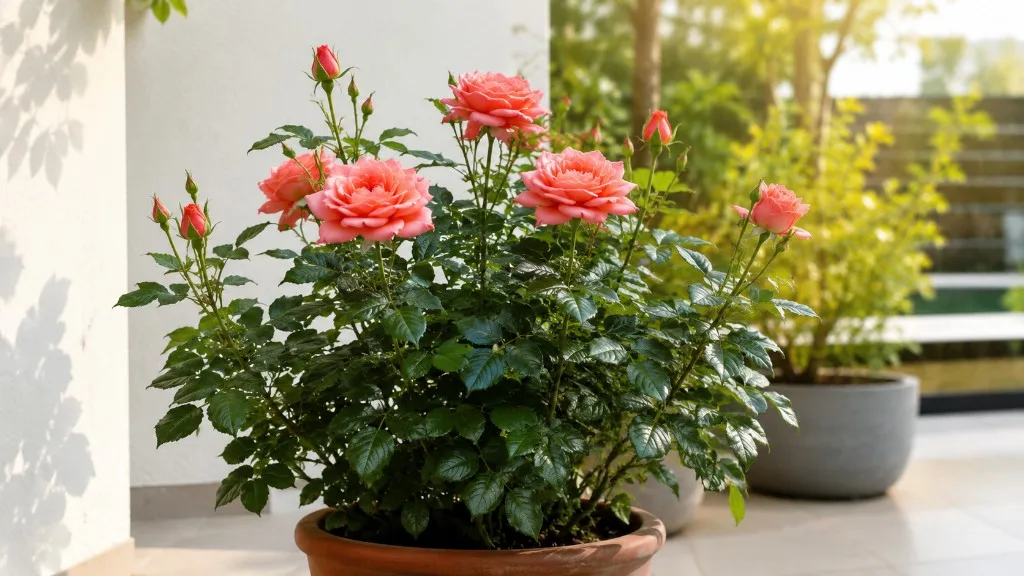
Container roses - including miniatures and patio hybrids - follow the same cut-angle and bud-orientation rules but usually receive a lighter structural prune. Confined roots produce naturally smaller top growth, and aggressive hard pruning on a pot-grown miniature can leave too little leaf area to recover before heat stress. Target one-quarter to one-third height removal on healthy container specimens, prioritizing dead and crossing wood over dramatic height reduction.
Check the graft union on budded patio roses: it should sit at or slightly above the soil line, never buried. Prune only above the union. Balcony growers in hot cities should deadhead on cool mornings and avoid stripping foliage during peak summer when pot heat already stresses the plant.
When Not to Prune
No hard structural pruning in fall in cold-climate gardens. Autumn hard cuts stimulate tender growth that frost destroys and waste stored energy. Limit fall work to light cleanup - shortening wind-whipped canes and removing dead tips.
No spring pruning on once-blooming types - wait until after their single flush.
No hard cuts on heat-stressed or recently transplanted roses mid-summer. Use deadheading only until the plant recovers.
No pruning rose rosette–infected plants hoping to save them. Witch’s-broom growth, excessive thorniness, and malformed red foliage indicate rose rosette disease, which is not fixable by cutting. Remove infected plants entirely in sealed bags.
After Pruning - Feed, Water, and Recovery
A rose after major structural pruning has fewer leaves but is about to push significant new growth. Water deeply after spring pruning if soil is dry, then maintain consistent moisture without waterlogging. KAU guidance suggests withholding irrigation briefly before October pruning in India to reduce sap flow, then resuming normal watering as new growth appears.
Hold off on heavy nitrogen fertilizer immediately after a hard prune. Wait until new shoots are several inches long with healthy unfurling leaves - typically two to three weeks after spring pruning in temperate zones - before applying balanced or rose-specific fertilizer.
After a properly timed spring prune, repeat-blooming roses typically push new shoots within two to four weeks, depending on temperature and cultivar vigor. First blooms on hybrid teas often arrive six to eight weeks after pruning in favorable weather. After deadheading, the next bud on a strong plant may appear within two to three weeks during peak summer. Out-of-season hard pruning in July heat can leave a rose largely static for six weeks or more while it rebuilds leaf area.
Common Rose Pruning Mistakes
Hard pruning at the wrong season - especially autumn in cold climates or midsummer on heat-stressed containers - triggers growth the plant cannot sustain.
Cutting too high above buds leaves dead stubs that blacken unpredictably. Cutting too low damages the bud. One-quarter inch above an outward-facing bud is the repeatable standard.
Keeping too many weak canes produces thin stems that cannot support quality blooms. Three strong canes beat eight weak ones.
Deadheading to three-leaflet nodes on established plants when five-leaflet nodes are available often yields thin, slow regrowth.
Using dull or dirty tools spreads disease and crushes stems.
Ignoring the graft union allows rootstock suckers to take over budded roses.
Pruning once-blooming roses in spring removes the year’s flowers with no recovery until next season.
Conclusion
Rose pruning and deadheading are two tools on two schedules. Structural pruning resets the plant before its main growth phase - March bud swell in Ohio or October renewal before a winter bloom peak in Bengaluru. Deadheading keeps repeat bloomers flowering on that framework, cutting spent blooms above outward-facing buds at five-leaflet nodes while the plant still has vigor to respond. Match severity to rose type, keep tools sharp and clean, open the center to light and air, and stop forcing new blooms when hips and winter hardening should take priority. A rose pruned with those principles produces stronger stems, cleaner foliage, and more of the flowers you planned for - without the long recovery that follows a bush cut in the wrong season with the wrong technique.
When to use this page vs other Rose guides
- Rose overview - Start here for whole-plant context before deep-diving this topic.
- Rose problems hub - Jump to symptom-specific fix guides when this care topic does not resolve the issue.