Spider Mites on Rose: Causes, Checks & Fixes
Quick answer
Spider mites on Rose cause fine stippling on leaflets in hot dry weather-extremely common on terrace and container roses. First step: blast leaf undersides with a strong water jet early in the morning and repeat every two to three days.
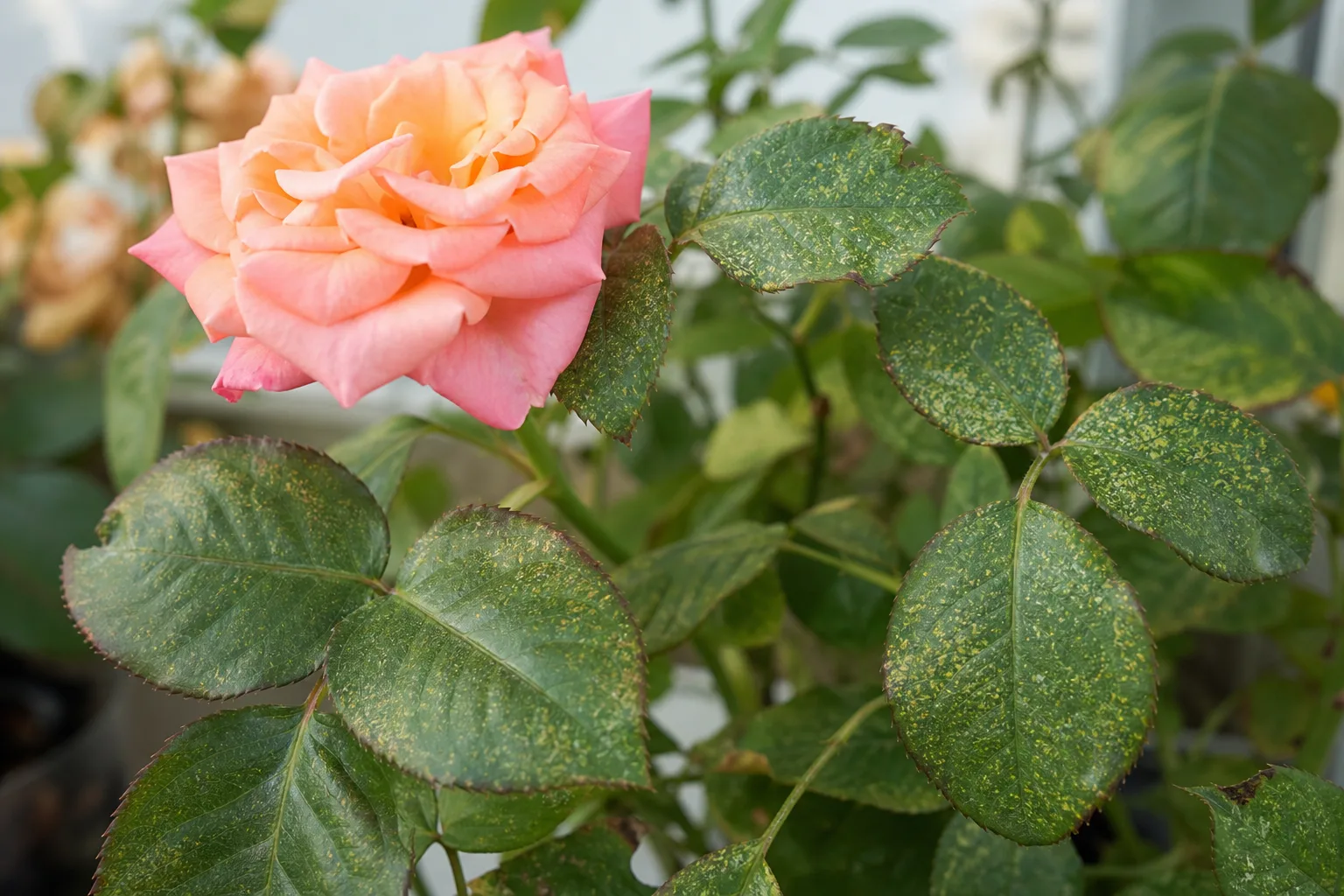
Spider Mites on Rose: Causes, Checks & Fixes
This guide covers spider mites on Rose. See also the general Spider Mites guide, watering, and light pages for this plant.
Spider Mites on Rose: Causes, Checks & Fixes
Quick answer
Spider mites on rose (Rosa spp.) look like pale speckling, bronze patches, or fine webbing on leaflets-most often on hybrid teas, floribundas, and patio roses in hot, dry summer weather. Balcony and terrace pots against heat-reflecting walls are prime targets because dry air and dusty foliage let colonies build fast while roses push soft growth for the next bloom flush.
First step: shower the whole bush early in the morning with a strong water jet aimed at leaf undersides and bud axils. Repeat every two to three days before reaching for soap or oil. Do not judge recovery on old stippled tissue-watch whether new buds and leaflets emerge clean.
What spider mites look like on Rose
Rose leaflets are thin and packed along arching canes, which makes mite damage easy to spot once you know the pattern on Rose overview.
Spider Mites symptoms on Rose - compare with healthy tissue on the same plant.
Early feeding:
- Tiny pale yellow or white dots scattered across individual leaflets-the classic stippling pattern
- Upper surfaces look sandblasted or dull while neighboring leaflets still look green
- Damage often starts on lower, inner canes where air stagnates against a wall
Established infestation:
- Bronze or yellow stippling merging across leaflet sections
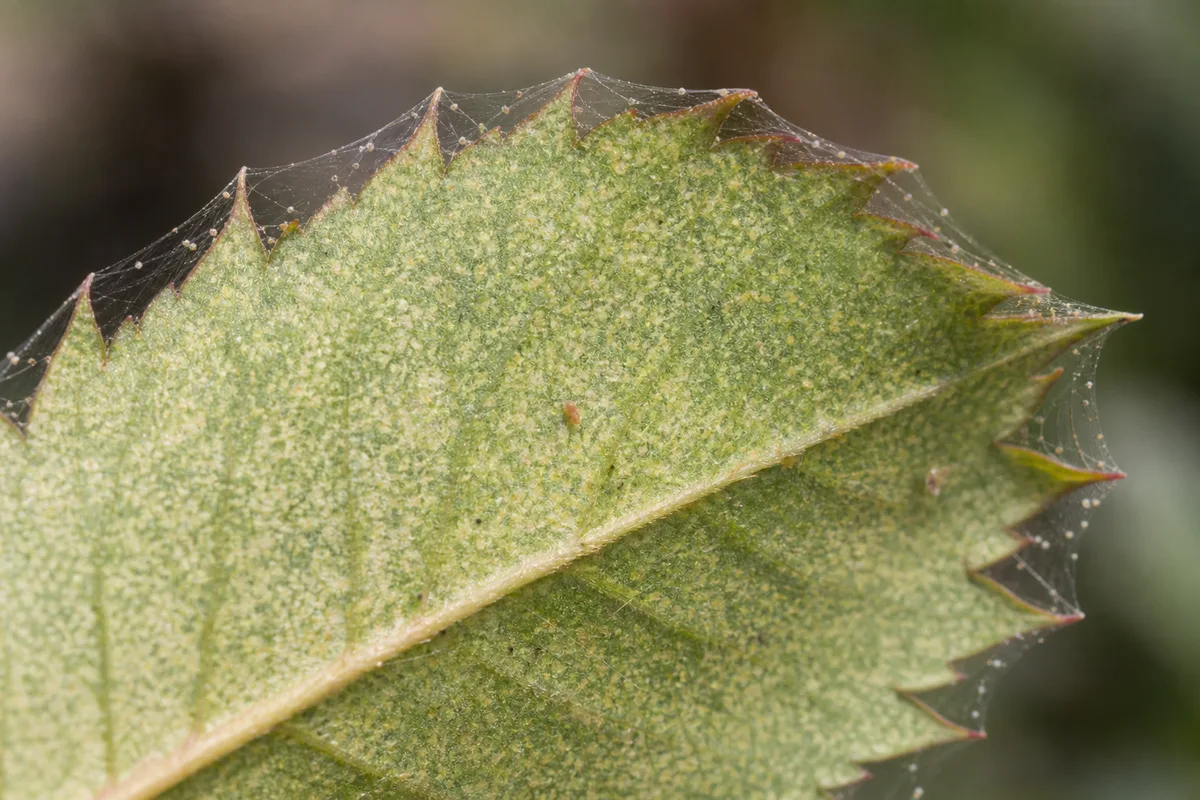
- Fine silk webbing at bud axils, stem joints, and where side shoots meet the main cane
- Leaflets curling, bronzing, and dropping early in severe cases
- Swelling buds failing to open or dropping before bloom when mites peak during a flush
The tap test: Hold a stippled leaflet over white paper and slap it firmly. Wait a few seconds. Two-spotted spider mites fall as pinhead specks that crawl-often yellow-green with two dark saddle spots on the back. Red or orange fast-moving specks may be predatory mites; plant-feeding mites usually look greenish or yellowish.
Webbing at a single bud axil can mean an early colony; sheets of silk across multiple canes mean the population is well established and needs immediate, repeated treatment.
Why Rose gets spider mites
Roses transpire heavily in full sun. When humidity drops near heat-reflecting glass, concrete, or south-facing walls, two-spotted spider mites reproduce fastest-exactly when your bush is pushing tender shoots and buds for the next flush.
Hot, dry air is the main outdoor trigger. Mite generations can complete in as little as seven days in warm weather. Terrace pots dry faster than in-ground beds at the same air temperature because reflected heat bakes foliage while the small root zone goes dry on its own schedule.
Rose-specific risk factors:
- Container roots on a sun-baked sill - Foliage can look dusty and drought-stressed even when you watered yesterday; stressed hosts show mite damage sooner. Match deep base watering to our rose watering guide rather than misting leaves.
- Bloom-flush soft growth - New shoots and swelling buds are easy feeding sites. Mites often peak just as flowers should open, which overlaps with bud drop stress patterns.
- Predator loss after insecticide sprays - Outbreaks often follow treatments aimed at aphids or beetles because carbaryl, pyrethroids, and imidacloprid destroy predatory mites and lady beetles. If you recently sprayed for aphids, scout for stippling within two weeks.
- High-nitrogen feeding - Excess nitrogen in leaves can increase spider mite reproduction rates. Soft, lush growth after heavy bloom fertilizer is easier mite food-see our fertilizer guide for balanced feeding during active growth.
- Dry bed edges and dusty paths - In-ground roses at pathway margins and bed edges dry first; mites often appear there before the center of a well-mulched bed.
- Dense hybrid tea canopies - Hundreds of leaflets per cane give mites abundant feeding sites. Miniature and patio roses have smaller canopies but heat up faster in small black pots.
Overwatering is not the typical mite driver on roses-that pattern leads to soggy roots and crown trouble instead. If soil stays wet for days and canes soften at the base, look at roots before blaming mites.
How to confirm the cause
Work through these checks in order so you do not treat drought bronzing, black spot, or thrips scrape marks as mites.
- Stippling pattern - Mite damage is pinprick speckles on individual leaflets. Uniform yellowing with purple-black angular lesions and halos points to black spot, not mites.
- Webbing - Fine silk at bud axils and stem joints strongly supports mites. Black spot does not produce moving specks or web strands.
- Tap test - Confirm crawling specks on white paper after slapping a suspect leaflet.
- Underside inspection - Use a hand lens on lower leaflets and inner canes where colonies start before damage shows on outer tips.
- Soil moisture at 3–4 cm - Push your finger deep at the base. Completely dry mix with limp canes by midday suggests drought bronzing overlapping with mite risk; wet mix with soft canes points away from mites as the primary problem.
- Recent sprays - Note any aphid, beetle, or broad-spectrum insecticide applied in the last three weeks. Post-spray mite flares are common on roses.
- Neighbor plants - Check other pots on the same terrace. Shared stippling means treat the whole group on the same rinse schedule.
If stippling is mild, no webbing appears, the tap test is negative, and new buds look firm, wait and re-check in three days before spraying-some lower-leaf yellowing on shaded interior canes is normal senescence, not pests.
First fix for Rose
Shower the whole bush early in the morning with a strong water jet, targeting leaf undersides, bud axils, and stem joints.
Hold the pot at an angle or use a hose with enough pressure to knock mites and webbing loose. Work cane by cane from below so water hits undersides directly. Finish by mid-morning so foliage dries before evening-this matches the dry-foliage approach in our watering guide and reduces black spot risk compared with routine overhead watering at dusk.
Washington State University extension ranks a strong water stream as a first-choice non-chemical control for rose spider mites. This single step physically removes mites, eggs, and protective webbing before any spray.
Do not apply horticultural oil or insecticidal soap in the same session as your first heavy rinse unless the label allows it-you need dry leaflet surfaces for even soap coverage on the follow-up day. Do not fertilize a mite-hit bush hoping to push new growth; soft tender shoots are easier mite targets.
Step-by-step recovery
After the initial morning rinse:
- Repeat water rinses every two to three days for at least two weeks. Mite eggs in webbing hatch on a cycle; one shower rarely clears an established colony on a dense hybrid tea.
- Apply insecticidal soap or horticultural oil if live mites persist after a full week of rinsing. Coat all leaflet surfaces and stem joints; mites must be contacted directly because these products leave no residual kill. Repeat at five- to seven-day intervals for at least three applications.
- Time sprays for cool hours. Clemson HGIC notes that horticultural oils can damage drought-stressed foliage when temperatures reach 90°F or higher-apply in early morning or mid- to late evening and skip oil on heat-wave afternoons.
- Keep roots evenly hydrated at the base while fighting foliar mites. Deep watering when the top 3–4 cm dries supports pest tolerance without wetting crowns overnight.
- Improve airflow without soaking foliage. Open-centre pruning on bush types and spacing pots away from walls help leaflets dry after rinses-see our pruning guide for summer structure.
- Scout neighboring roses daily for the first two weeks. Terrace collections share mites quickly when pots touch or sit in stagnant air pockets.
- Hold high-nitrogen feeds until new leaflets stay clean for two weeks. Switch to slow-release or balanced formulas per WSU guidance rather than pushing soft growth during active mite pressure.
Outdoor in-ground roses in summer rarely need chemical escalation-a strong hose spray on a cool morning plus natural predators often suffices. Reserve repeated soap courses for persistent terrace outbreaks or when predator loss after aphid sprays has already triggered a flare.
Recovery timeline
You should see fewer live specks on the tap test within three to five days of the first thorough rinse when the infestation is moderate. A full soap or oil course typically runs two to three weeks with label-interval repeats.
Old stippled leaflets stay marked-expect bronze patches on prior damage even after mites die. New leaflets and swelling buds should emerge clean within two to four weeks once stippling stops spreading and webbing stays gone.
If webbing returns within a week of three soap applications, the colony may be reinfesting from a nearby pot or eggs are surviving in dense inner canes-escalate isolation and inspect the whole terrace before a fourth spray round.
Lookalike symptoms to rule out
| What you see | Likely cause | How to tell it apart |
|---|---|---|
| Pinprick stippling plus fine webbing; moving specks on paper | Spider mites | Underside colonies; hot dry weather; spreads up the bush |
| Silvery streaks on petals; crinkled buds; no silk webbing | Thrips | Damage concentrated in flowers; common on light-colored blooms |
| Uniform bronzing on exposed leaflets; soil dry 3–4 cm deep; no specks | Drought stress | Deep soak fixes wilt over days; tap test negative |
| Purple-black spots with yellow halos; angular lesions | Black spot | Fungal spots after wet weather; not pinprick stipple |
| Soft-bodied clusters on tender shoots; sticky honeydew | Aphids | Visible insects on stems; no fine sheet webbing |
Leafhopper stippling produces larger, more widely spaced dots than spider mite feeding-usually a minor issue on roses unless populations are heavy.
Mistakes to avoid
Do not spray only the top of the leaflet canopy-mites colonize undersides and bud axils first.
Do not stop after one rinse or one soap application. Eggs hatch on a cycle; incomplete courses are the main reason mites bounce back on repeat-flowering roses.
Do not use broad-spectrum insecticides during active mite outbreaks-they kill predatory mites and lady beetles and commonly worsen infestations one to two weeks later.
Do not apply horticultural oil when afternoon highs exceed 90°F on drought-stressed terrace roses-foliage burn is a real risk.
Do not overhead-water leaves every evening for “humidity”-that pattern favors black spot more than it discourages mites. Use directed morning rinses only during active treatment.
Do not judge recovery on old stippled leaflets. Watch new buds and fresh leaflets at cane tips.
Do not assume yellow leaves mean mites without the tap test. Nutrient stress, black spot, and normal lower-leaf drop all yellow rose foliage without webbing.
Rose care cross-check
Mite recovery sticks better when baseline care matches what roses expect-full details live on our rose overview.
- Light - At least six hours of direct sun daily for predictable growth and bloom. Weak shade produces soft shoots mites prefer. See our light guide.
- Water - Deep drinks at the base when the top 3–4 cm dries per our watering guide. Container roses on terraces may need daily checks in July heat even when mites are not present.
- Feed - Balanced fertilizer during active growth; avoid heavy nitrogen while mites are active. High nitrogen increases mite reproduction on rose foliage.
- Airflow - Space pots away from walls, prune for open centres on bush types, and avoid crowding multiple roses in stagnant corners.
Fixing mites without adjusting a heat-wall placement or post-aphid spray habit usually means reinfestation within weeks.
How to prevent spider mites next time
Scout leaflet undersides and bud axils weekly from late June through August on terrace roses-mites are easier to rinse off when only one cane shows stippling.
Rinse foliage with a directed morning jet every seven to ten days during dry heat waves even when no damage is visible yet. This disrupts early colonies before webbing spreads.
Keep roots evenly hydrated with base watering; drought-stressed container roses show mite damage sooner than well-watered neighbors in the same sun.
Avoid routine broad-spectrum sprays for aphids or beetles when a strong water knockdown suffices-preserving predatory mites and lady beetles is your best long-term prevention on outdoor roses.
Use slow-release or balanced feed rather than repeated high-nitrogen bloom boosters through dry summer weeks.
Quarantine new rose pots for two weeks before placing them beside established terrace bushes. Tap a leaflet over white paper during quarantine even if foliage looks clean.
When to worry
Treat as urgent when fine webbing spans most of the bush, buds abort across a flush despite correct watering, lower leaflets drop in clusters during a heat wave, or stippling appears on every cane of a container rose within a week. Shared terrace collections can lose multiple pots within two mite generations if nothing is isolated.
A single stippled cane on an otherwise firm bush with a positive tap test is serious but not hopeless-start rinsing today and scout neighbors before the colony walks to the next pot.
Consider replacing a severely webbed container rose that stays bare at the tips after three weeks of disciplined rinsing and soap intervals if it sits beside healthy bushes you need to protect. In-ground specimens rarely need removal unless drought stress and repeated predator-killing sprays have let populations explode across the whole plant. For resistant populations after proper IPM, contact your local extension office or a licensed applicator-several effective miticides are labeled for professional use when homeowner soaps fail.
Conclusion
Spider mites on rose are a hot-weather, dry-air problem as much as a pest problem-especially on terrace and container bushes pushing bloom flushes against heat-reflecting walls. Confirm with stippling plus a tap test, not yellow leaves alone. Shower undersides early in the morning, repeat every two to three days through the mite life cycle, and add soap or oil only when rinsing alone fails. Old stippled leaflets may stay bronze; clean new buds and gone webbing mean you are winning. Keep base watering, balanced feeding, and predator-friendly pest control in mind next summer and mites are far less likely to take over before your next flush.
For routine culture, see our watering, light, and fertilizer guides. For overlapping symptoms, compare black spots, aphids, and bud drop before you spray.
When to use this page vs other Rose guides
- Rose watering guide - Use for routine moisture checks before assuming spider mites is the main issue.
- Rose problems hub - Browse all 7 common issues on this species.
- Leaf Drop on Rose - Different entry point when symptoms overlap with spider mites.