Mealybugs on Christmas Cactus: Causes, Checks & Fixes
Quick answer
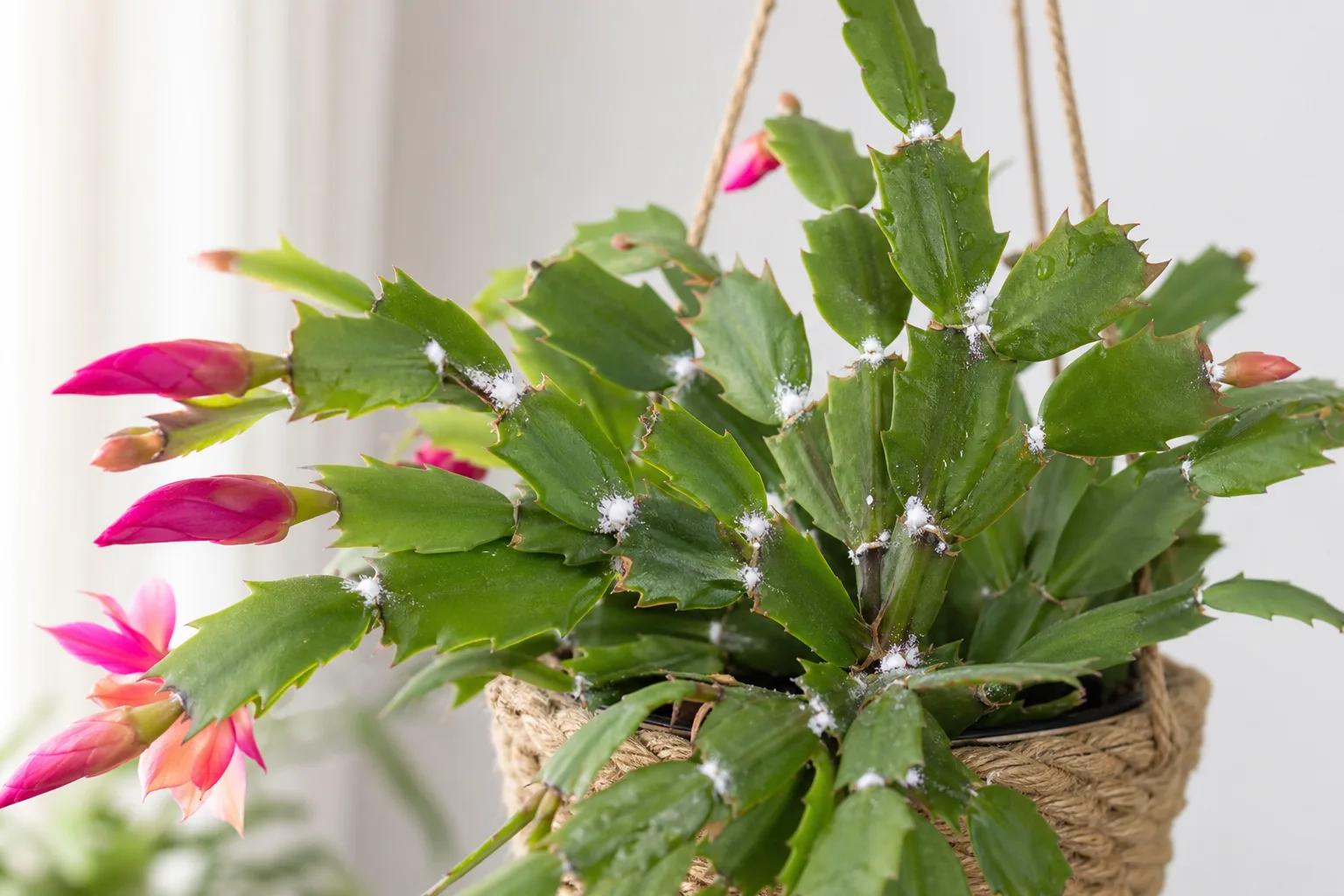
Mealybugs on Christmas cactus show as white cottony clusters tucked into cladode segment joints, the crown center, and the soil line of hanging baskets-often with sticky honeydew on flat green segments. First step: isolate the plant and dab every visible wax cluster with a cotton swab dipped in 70% isopropyl alcohol, touching only the pest.
Mealybugs on Christmas Cactus: Causes, Checks & Fixes
This guide covers mealybugs on Christmas Cactus. See also the general Mealybugs guide, watering, and light pages for this plant.
Mealybugs on Christmas Cactus: Causes, Checks & Fixes
Quick answer
Mealybugs on Christmas cactus (Schlumbergera × buckleyi) show up as white cottony clusters tucked into cladode segment joints, the crown center where arching branches emerge, along segment undersides, and sometimes at the soil line or drainage holes of hanging baskets. They suck sap from plant tissue and excrete sticky honeydew from flat green segments, leaving residue that can coat stems and drip onto lower branches before you notice a single speck from above.
First step: isolate the plant the same day you spot cottony wax. Move it away from other holiday cacti, succulents, and shared shelves before you dab, rinse, or spray anything. Once isolated, dab every visible wax cluster with a cotton swab dipped in 70% isopropyl alcohol, touching the pest directly-not pooling liquid on developing flower buds or wet segments in direct sun.
Christmas cactus grows as flattened, segmented cladodes on a pendulous epiphyte that prefers bright indirect light and moderate humidity. Judge recovery by clean new segments without fresh wax, not by expecting old damaged cladodes to look perfect again. Full species context: Christmas cactus overview.
Why Christmas cactus gets mealybugs
Mealybugs are common sap-sucking pests on houseplants that usually arrive on new nursery stock, shared tools, or nearby infested pots-not because Schlumbergera is uniquely prone, but because its growth form gives pests protected hiding spots. Clemson Extension lists mealybugs among the common pests on Thanksgiving and Christmas cacti, and NC State notes mealybugs as a routine insect problem on holiday cacti.
Several traits of Christmas cactus culture make mealybug problems easy to miss. The plant grows as flattened, overlapping cladode segments in a cascading habit, giving mealybugs sheltered feeding sites at joints and on segment undersides you rarely see from above a hanging basket. Indoor ornamentals are especially vulnerable because year-round mild temperatures favor populations and natural enemies are absent. Slow inspection during pre-flowering dormancy means you may not notice insects until they move onto developing buds-the most valuable tissue on a holiday cactus.
Over-fertilized Christmas cactus with soft, fast segment growth in spring and summer is especially attractive. Excess nitrogen stimulates tender new growth where mealybugs prefer to lay eggs. Crowded hanging baskets and shelves also spread pests: tight groupings make it easier for crawlers to move pot to pot without you noticing during casual watering. Mealybugs on a healthy, well-spaced plant in bright indirect light are manageable; the same colony on an underlit specimen with soggy epiphytic mix at the crown can weaken segments faster than on a forgiving pothos vine.
What mealybugs look like on Christmas cactus
Early infestations hide in segment joints, so check these patterns together-not just the outer segments facing the window:
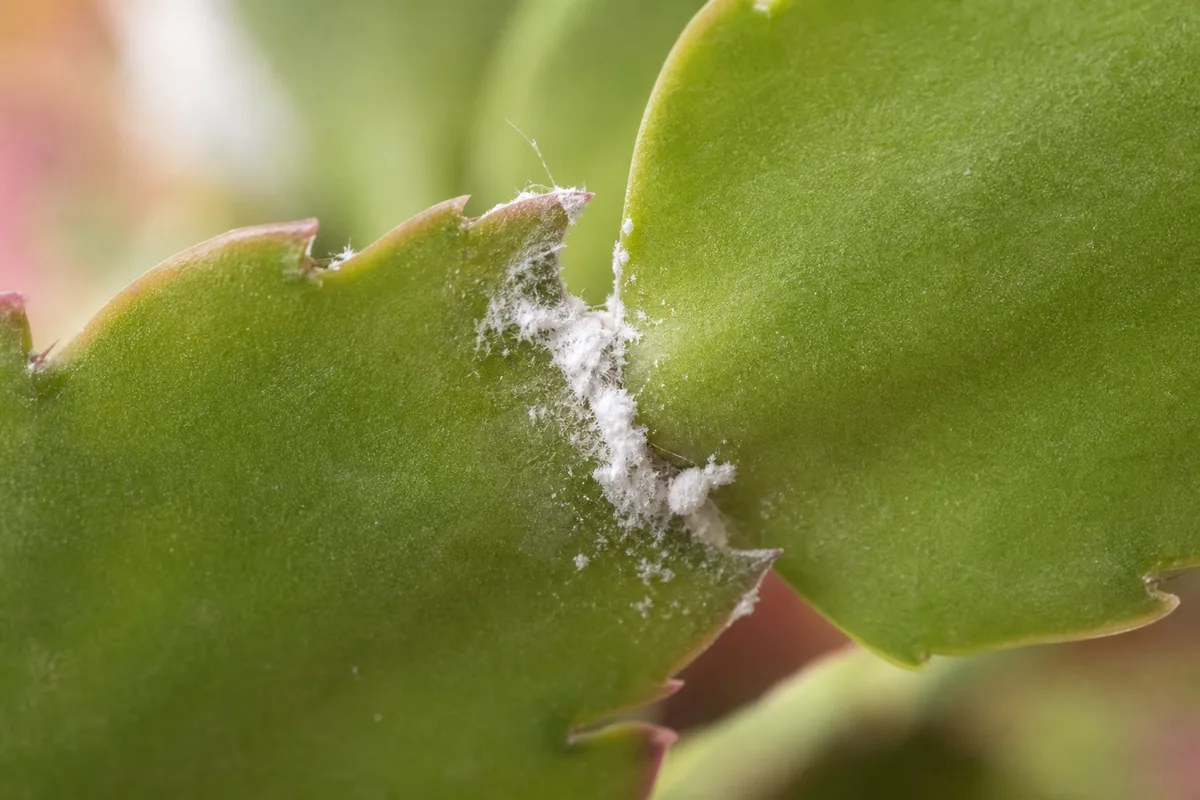
White cottony wax tufts tucked into a segment joint where flat cladodes overlap - crush test: waxy filaments smear pink when mealybugs are live, not mineral crust.
- White fluffy tufts in cladode segment joints where one flat segment meets the next-not hard-water crust on the green surface
- Cottony patches at the crown center where multiple arching branches emerge from the base
- Waxy clusters on segment undersides and along the soil line in shallow epiphytic mix
- Sticky, shiny honeydew on flat green segments, pot rims, or surfaces below a hanging basket
- Black sooty mold on honeydew-coated tissue once mold spores colonize the sugar residue
- Yellowed or limp segments when feeding is heavy, though mature cladodes do not always show damage until colonies are established
- White cottony material at drainage holes or just below the mix surface-possible root-zone mealybugs in bark-based cactus media
- Ants on the pot rim or shelf farming honeydew from crown colonies
Do not mistake normal plant features for pests. Christmas cactus (S. × buckleyi) has rounded segment margins; Thanksgiving cactus (S. truncata) has pointed projections-these are permanent plant features, not moving wax. Mineral deposits from hard tap water leave crusty white patches that wipe off dry; mealybugs leave waxy filaments that smear pink when crushed.
How to confirm the cause
Do not treat from one white speck on perlite. Use this inspection order:
- Isolate first - Move the plant away from other pots before handling so crawlers do not walk to neighboring holiday cacti on the same shelf or hook.
- Segment joints - With bright sidelight, inspect every gap where one flat cladode meets the next. Most Christmas cactus mealybugs concentrate here before they spread to segment tips.
- Crown center and undersides - Lift or tilt hanging baskets and inspect from below. Follow each arching branch to the base and check both sides of overlapping segments.
- Soil line and drainage - Check where mix meets the stem base, the inside rim of plastic pots, and drainage holes. Some mealybug species feed on roots as well as shoots.
- Developing buds - Inspect flower bud initials in autumn; mealybugs move onto buds as bloom season approaches and can contribute to bud drop when combined with other stress.
- Disturbance test - Touch a white patch with a dry cotton swab. Mealybugs smear pinkish or yellowish body fluid when crushed; mineral deposits, perlite, or dried water spots do not.
- Neighbor check - Inspect holiday cacti, succulents, and houseplants that shared a windowsill, nursery shipment, or hanging row for segment wax or honeydew.
If segments feel firm and turgid, mix smells neutral, and the only issue is cottony wax with stickiness, mealybugs fit. If segments are mushy at the base while mix stays saturated and sour-smelling, rule out root rot from overwatering before aggressive treatment.
Lookalike symptoms to rule out
| What you see | Likely cause | Key difference |
|---|---|---|
| White cottony tufts in segment joints | Mealybugs | Waxy filaments; pink smear when crushed; honeydew |
| Immobile brown or tan bumps on older segments | Scale insects | Hard shell; no fluffy wax; does not smear pink |
| Fine stippling and webbing, especially in dry air | Spider mites | No cottony wax; mites move when tapped onto paper |
| Soft pear-shaped insects on new segment tips | Aphids | Exposed bodies on tender growth, not hidden wax in joints |
| White powdery film on segment surfaces | Powdery mildew | Flat fungal coating; no individual cottony tufts |
| Crusty white patches that wipe off dry | Mineral deposits from tap water | No waxy filaments; no pink smear; no honeydew |
If you see sticky segments but no wax, check for ants farming aphids on nearby plants before assuming the Christmas cactus is clear.
First fix for Christmas cactus
Isolate the plant away from your collection first. Isolation stops crawlers from spreading to other pots on the same shelf or hanging hook before you treat.
Then dab visible mealybugs with a cotton swab dipped in 70% isopropyl alcohol. Touch the cottony mass directly-the alcohol dissolves the waxy coating and kills the insect on contact. Work segment by segment through every joint, crown fold, and underside you can reach without soaking the whole plant.
Test the alcohol on one segment first and wait 24 to 48 hours before treating the entire plant. Christmas cactus segments are generally tolerant of spot dabs, but alcohol on wet tissue in direct sun can scorch. Avoid pooling liquid on open flower buds during bloom season-dab only the wax itself.
Repeat alcohol dabs weekly for at least three to four weeks to catch newly hatched crawlers. Mealybug nymphs hatch on staggered schedules, so one treatment rarely clears an established colony.
If alcohol dabs are not enough
For persistent colonies after two weeks of weekly dabs, use a product labeled for houseplants-typically insecticidal soap-and test one segment first. Wait 48 hours before treating the whole plant. Apply in the evening or away from windows, cover segment joints thoroughly, and never use homemade dish soap, which can burn foliage. Avoid soap when temperatures exceed 90°F or on drought-stressed plants.
Remove a heavily infested segment tip with clean scissors if wax is buried in tissue you cannot reach-better to lose one branch end than spread crawlers across the collection. For root-zone mealybugs at drainage holes, consider a careful repot into fresh mix after clearing above-ground colonies, discarding heavily infested soil from the outer root zone.
Step-by-step recovery
- Day 1: Isolate the plant. Photograph affected joints for comparison. Dab every visible wax cluster with 70% alcohol on a cotton swab.
- Day 2–3: Recheck crown center and segment undersides with a magnifier. Dab any missed clusters.
- Week 1: Repeat full inspection and alcohol dabs. Wipe honeydew from segment surfaces with a damp cloth-do not leave the plant sitting in a full saucer afterward.
- Week 2: If wax persists in tight joints, add insecticidal soap on a test segment, then treat remaining colonies if no burn appears.
- Weeks 3–4: Continue weekly dabs even if visible wax declines-crawlers hatch in waves. Check drainage holes and soil line.
- Week 4+: Return to the collection only after two consecutive weekly checks find no live wax, no fresh honeydew, and clean new segment tips forming.
During recovery, hold fertilizer until new growth looks clean. Resume light feeding only after insects are gone for two weeks-see Christmas cactus fertilizer for normal timing.
Recovery timeline
Light infestations often show visible wax decline within one to two weeks of consistent alcohol dabs. Check segment joints and crown folds weekly for at least a month because nymphs hatch on staggered schedules.
Judge success by clean new segments from branch tips, no fresh honeydew on flat stems, intact flower buds where bloom season matters, and no live wax-not by whether an old yellowed segment returns to perfect form. Badly damaged segments may never fully recover; trim them once the plant is insect-free and producing healthy new growth.
Signs the problem is worsening include sooty mold spreading across multiple segments, ants visiting the pot, stunted new segments, dropped buds before bloom, and mealybugs appearing on plants within a few feet of the original host.
What not to do
Do not apply insecticidal soap or alcohol sprays in direct sun or when the room is hot-wet Christmas cactus segments in harsh light scorch easily, and heat plus soap increases phytotoxicity risk.
Do not fertilize while the plant is under pest stress. Soft new segment growth from extra nitrogen gives mealybugs more food exactly when you want the plant to recover slowly and preserve bloom energy.
Do not leave the plant sitting in a full saucer after rinsing or wiping honeydew. Christmas cactus needs drainage between waterings; soggy mix at the crown invites root problems on top of pest stress.
Do not return the plant to a shared shelf until you have checked it clear for two full weeks. Do not assume one alcohol pass finished the job-indoor mealybug populations rarely collapse without repeated treatment.
Do not compost infested prunings indoors where crawlers can spread to other pots.
Christmas cactus care cross-check during treatment
While fighting mealybugs, keep baseline care steady so the plant can push clean new segments:
- Light: Bright indirect light-not direct sun on wet or alcohol-treated segments. See Christmas cactus light for placement.
- Water: Let the top 2–3 cm of mix dry between waterings; never leave the pot in standing water. Watering guidance applies during recovery.
- Humidity: Moderate humidity (50–60%) supports recovery without the dry air that favors spider mites.
- Bloom season: If buds are forming, prioritize spot dabs over whole-plant sprays. Mealybug stress plus treatment timing can interact with bud drop-watch bud initials closely.
How to prevent mealybugs next time
Quarantine every new Christmas cactus for at least two weeks before placing it near your collection. Inspect segment joints and the crown center under magnification during that period, matching the buying check this species already needs: firm segments, no sticky residue, no collapsed stems at the base.
Fold pest checks into your normal watering routine. When you test whether the top 2–3 cm of mix is dry, scan segment joints and any forming buds from below the hanging basket. Give pendulous plants enough space so segments do not rub walls or neighboring pots-crowding reduces airflow and makes colonies harder to see.
Feed lightly during active growth only-every two to four weeks at half strength in spring and summer, then hold back during pre-flowering dormancy. Steady, moderate growth is less attractive than over-fertilized soft shoots. When buying, examine branch ends and crown folds closely; clean outer segments can hide wax inside a dense hanging basket.
When to worry
Escalate immediately if mealybugs cover flower buds before bloom, honeydew coats multiple segments, sooty mold is spreading, ants are climbing the pot, or wax appears on several plants in the same room. A few tufts in one segment joint can wait for isolation and alcohol dabs if caught early.
If dense colonies persist after three to four weeks of consistent weekly treatment, or if new segments stop forming entirely, consider pruning the worst affected branch tips, Christmas Cactus repotting guide to address root-zone mealybugs, or discarding a severely compromised plant before the infestation spreads through a holiday cactus collection. Contact your local extension office if reinfestation continues after multiple treatment cycles.
Conclusion
Mealybugs on Christmas cactus are an isolation-and-spot-treatment problem more than a mystery disease. Confirm them in cladode segment joints and at the crown center-especially from below a hanging basket-isolate, dab every visible wax cluster with 70% alcohol weekly for at least three to four weeks, and only then add labeled soap if needed, testing first because wet segments in direct sun scorch easily. Prevent recurrence with quarantine, weekly joint checks, and moderate feeding so the next arching branch and bloom display stay clean.
When to use this page vs other Christmas Cactus guides
- Christmas Cactus watering guide - Use for routine moisture checks before assuming mealybugs is the main issue.
- Christmas Cactus problems hub - Browse all 21 common issues on this species.
- Yellow Leaves on Christmas Cactus - Different entry point when symptoms overlap with mealybugs.
- Slow Growth on Christmas Cactus - Different entry point when symptoms overlap with mealybugs.
- Spider Mites on Christmas Cactus - Different entry point when symptoms overlap with mealybugs.