Spider Mites on Burro's Tail: Causes, Checks & Fixes
Quick answer
Spider mites on Burro's Tail show as fine stippling and webbing on plump blue-green beads along pendulous stems-often after hot, dry air near south or west glass. First step: isolate the hanging basket and inspect bead undersides with a hand lens before spraying; this succulent drops leaves when bumped.
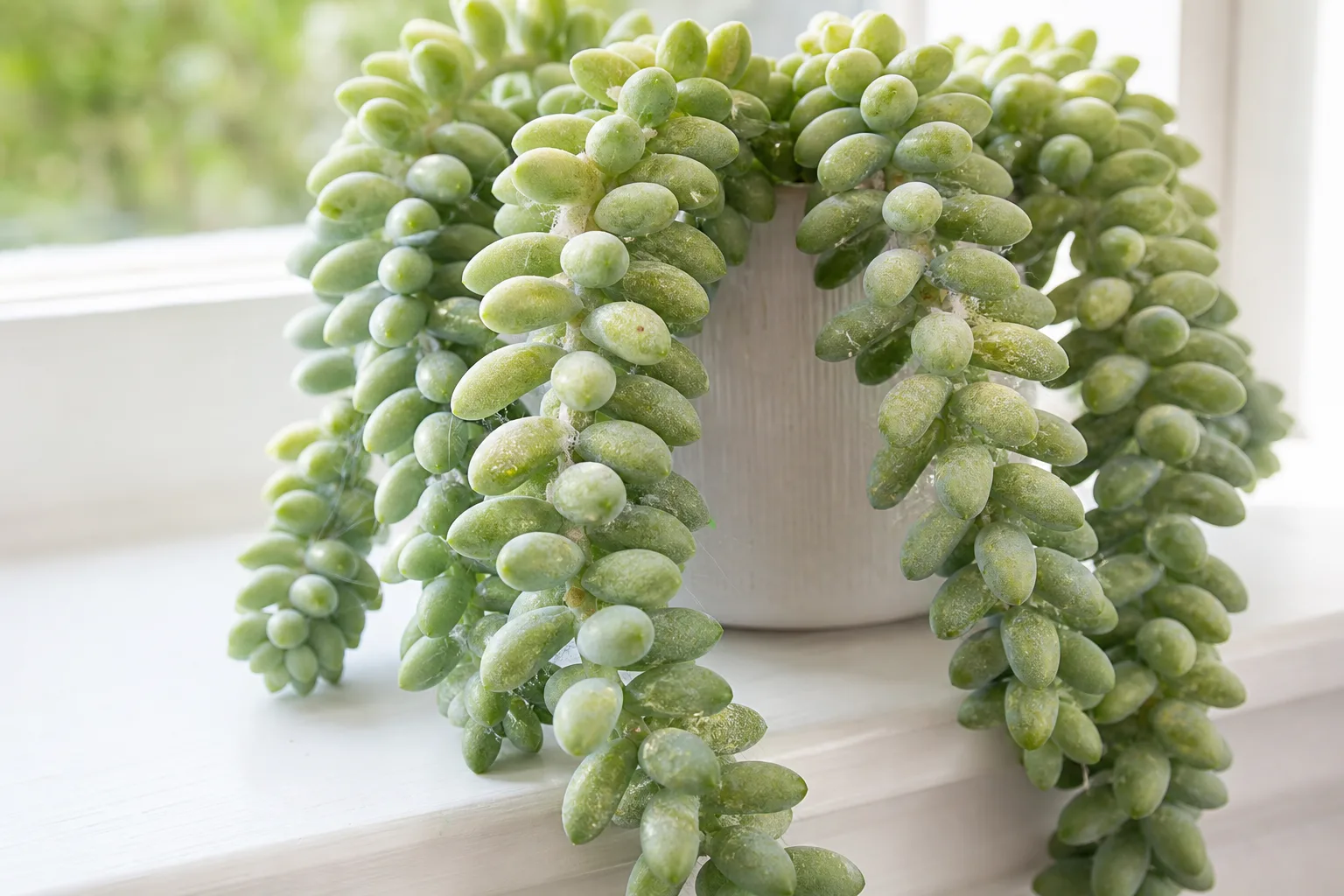
Spider Mites on Burro's Tail: Causes, Checks & Fixes
This guide covers spider mites on Burro's Tail. See also the general Spider Mites guide, watering, and light pages for this plant.
Spider Mites on Burro's Tail: Causes, Checks & Fixes
Quick answer
Spider mites on Burro’s Tail (Sedum morganianum, donkey’s tail) are tiny arachnids that pierce leaf tissue and cause stippling on plump blue-green beads along trailing stems. Outbreaks usually trace to hot, dry microclimates-south- or west-facing hanging baskets pressed against warm glass, heater drafts, or dusty beads in bright windows-not to “low room humidity” the way tropical houseplants fail.
First step: isolate the hanging basket and inspect bead undersides with a hand lens before spraying anything. Burro’s Tail leaves detach easily when bumped-confirm mites, then use a supported, sectional rinse rather than a forceful shower that strips half the cascade.
For baseline care rhythm-light, watering, soil, and seasonal expectations-see the Burro’s Tail overview. For the same gentle-handling philosophy on sap-sucking pests, see the companion mealybugs guide and aphids guide.
What spider mites look like on Burro’s Tail
Healthy Burro’s Tail beads are firm, powdery blue-green, and packed tightly along cascading stems. Spider mite damage reads differently:
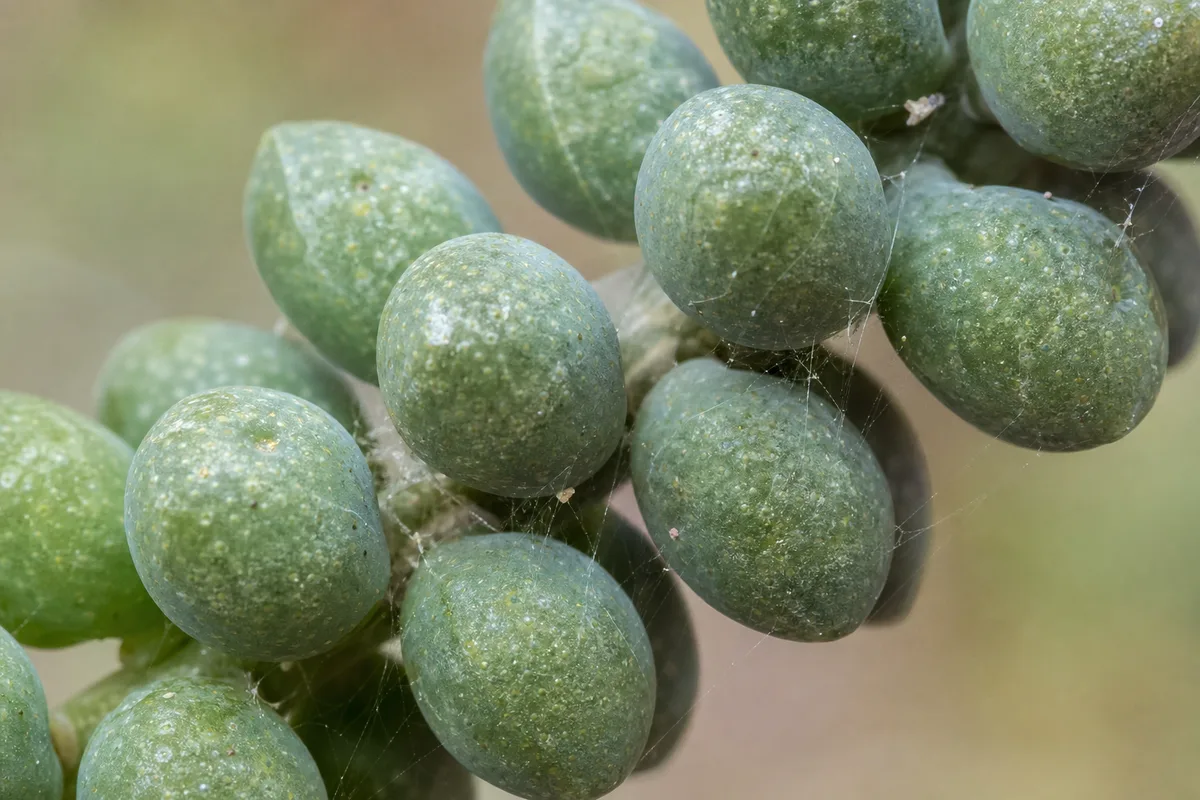
Spider Mites symptoms on Burro’s Tail - compare with healthy tissue on the same plant.
- Fine yellow or white stippling on plump teardrop beads-light dots that merge into bronze patches
- Delicate silk webbing at bead bases and along pendulous stem undersides
- Crisp, dull beads on heavily fed sections while neighboring beads still look plump
- Tiny moving specks on white paper after tapping a suspect stem
- Amber eggs and black fecal dots on undersides with a 10× lens
Farina vs. mite stippling: what to look for
This distinction trips up many Burro’s Tail owners because both can look pale on the bead surface. Use pattern and texture, not color alone:
| Feature | Healthy farina | Mite stippling |
|---|---|---|
| Pattern | Even powder across the bead face | Irregular pitting and yellow dots, often worse on undersides |
| Texture | Dry, uniform bloom that wipes smooth | Feeding dots that do not rub off cleanly |
| Webbing | None | Fine silk at bead bases and stem joints |
| Paper-tap test | No moving specks | Slow crawlers on white paper |
Healthy beads carry farina-an even powdery bloom evolved to reflect harsh sun. Mite stippling is irregular pitting that does not wipe off. Mechanical farina rub-off after Burro’s Tail repotting guide or brushing looks like clean smudges, not feeding dots.
Lookalike symptoms to rule out
| Sign | Spider mites | Underwatering | Sun scorch | Mealybugs | Mechanical leaf drop |
|---|---|---|---|---|---|
| Pattern | Stippling + webbing on undersides | Uniform wrinkling on light dry pot | Bleached patches on sun-facing side | Cottony clumps in axils, sticky honeydew | Firm green beads on floor after bump |
| Soil cue | Can be wet or dry | Bone dry 2+ inches down | Usually well watered | Any moisture state | Any moisture state |
| Webbing | Fine silk at bead bases | None | None | None | None |
| Location | Pendulous undersides, crowded whorls | Whole cascade limp | One window side | Bead axils and stem joints | Random after handling |
Wrinkled beads on a light, dry pot point to underwatering-not mites. Yellow mushy beads on a heavy wet pot suggest overwatering or root stress. White cotton in axils with honeydew on the shelf below is mealybugs-not stippling. Loose stretched stems in dim rooms are not enough light-etiolation, not pest stippling.
Why Burro’s Tail gets spider mites
Trailing sedum stems create sheltered undersides where mites colonize out of sight. The species is not humidity-demanding-our Burro’s Tail overview and low-humidity guide both note low to average indoor RH is fine-but mites still explode in hot, dusty, drought-stressed microclimates.
Common triggers on this plant:
- South- or west-facing glass amplifying heat on hanging baskets-see the light guide for safer placement
- Heater or AC vents blowing dry air across pendulous beads
- Dust on farina-coated leaves in bright windows-spider mites favor hot, dusty, water-stressed plants
- Neglected soak-and-dry cycles leaving beads chronically stressed-check the watering guide before assuming pests alone caused decline
- New cuttings or store plants introduced without quarantine
Increasing whole-room humidity is the wrong default for this succulent. Target the window microclimate instead: pull the basket back from hot glass, dust beads with a dry soft brush, and keep soil on proper dry-down-not steamy bathrooms or pebble trays aimed at tropicals.
How to confirm the cause
Work through these checks before you spray:
- Underside scan - Lift trailing stems gently and check bead bases along pendulous undersides
- White-paper tap test - Hold paper under a stem section and tap; slow-moving specks confirm mites
- Webbing check - Fine silk distinguishes mites from aphid damage or mineral residue
- 10× lens - Amber eggs and eight-legged adults on undersides
- Soil cross-check - Wrinkling plus dry soil two inches down is thirst, not mites
- Collection scan - Inspect pots on the same hanging display shelf; mites crawl between neighbors in dry air
If stippling, webbing, and a positive paper-tap test align, spider mites are confirmed.
First fix for Burro’s Tail
Isolate the hanging basket away from other plants, support each trailing stem with one hand, and rinse bead undersides with gentle lukewarm water in sections.
Why isolation first? Mites disperse on air currents when populations spike-a basket dripping above a shelf of succulents spreads crawlers fast.
Supported rinse technique (hanging basket)
- Slide a towel under the pot to catch runoff
- Cup one stem section in your palm so beads do not swing
- Aim lukewarm flow at undersides only-low pressure, not a shower head blast
- Work stem by stem; pause if beads rain off excessively
- Let beads dry fully in bright indirect light before any oil or soap
After knockdown, apply horticultural oil or insecticidal soap labeled for mites and houseplants, coating undersides thoroughly. Shop by active ingredient and label claims, not brand pictures-Mississippi State Extension advises checking that the label lists spider mites and indoor ornamental plants. Common effective actives include refined horticultural oil (petroleum or mineral oil) and insecticidal soap (potassium salts of fatty acids). Oils smother on contact with no residual effect-one spray rarely ends an infestation.
Farina and spray adhesion: The powdery farina on S. morganianum beads is hydrophobic-it repels water and can reduce how evenly oil or soap coats the leaf face compared with smooth-leaf succulents. That is why underside coverage and the 48-hour spot-test matter more here than on a plain jade leaf. Wisconsin Extension notes farina rubs off on contact-oils can also mark beads; test one stem section near the growing tip and wait 48 hours for spotting before wider application.
Repeat every five to seven days for two to three cycles-two to three foliar treatments at five-day intervals for spider mites. Stop when webbing stops appearing and new beads at stem tips emerge clean.
Treatment cadence (typical indoor hanging-basket infestation):
| Day | Action |
|---|---|
| Day 0 | Isolate; supported underside rinse; apply oil or soap if mites confirmed |
| Day 5–7 | Sectional rinse again; reapply oil or soap |
| Day 10–14 | Third rinse plus spray |
| Day 19–21 | Optional fourth pass if webbing persists on multiple stems |
Apply sprays in early morning or evening. Avoid horticultural oil above 90 °F or on water-stressed plants-phytotoxicity risk rises on heat-stressed farina-coated foliage.
Do not reach for insecticides labeled only for insects-mites are arachnids and need miticidal contact products. Systemic imidacloprid does not control spider mites on houseplants.
Step-by-step recovery
- Isolate - Move the basket; inspect neighbors on the same display
- Supported rinse - Sectional undersides knockdown
- Oil or soap pass - Full underside coverage; bag pot if spraying indoors
- Move off hot glass - Reduce the dry heat microclimate per the light guide
- Resume soak-and-dry - Do not overwater during recovery; stressed roots slow rebound
- Monitor new tip beads - Clean plump growth at stem ends means control
Recovery case: 12-inch hanging basket (March 2026)
A south-window Burro’s Tail in a 12-inch hanging basket showed yellow-white stippling on the lower third of three trailing stems and fine silk at bead bases-confirmed with a paper-tap test. The owner isolated the basket, moved it 18 inches back from the glass, and ran a supported palm-cup rinse every five days for three cycles, followed by horticultural oil on undersides only after a 48-hour spot-test on one stem tip passed.
Timeline: Webbing stopped reappearing after the second cycle (day 10). Stippling did not spread to upper stems. By week three, clean plump beads emerged at the tips of two treated strands; bronzed lower beads stayed cosmetic. Total bead loss from handling was under a dozen-far less than a forceful shower would have caused. The lesson: judge success by new tip growth, not re-greening of old stippled tissue.
Recovery timeline
Stippling stops spreading within one to two weeks of consistent treatment. Bronze or pitted beads do not re-green-they stay marked until they senesce. Recovery signal is clean new beads at growing tips, not old damage reversing. Three weekly cycles are typical because mite generations complete in less than a week in warm conditions.
Signs recovery is working:
- Fewer specks on paper-tap tests
- Webbing not reappearing between treatment cycles
- New beads emerge clean at stem tips
- Beads stay plump with normal farina on untreated sections
Signs the problem is worsening:
- Webbing bridges multiple trailing stems within a week
- Stippling jumps to neighboring pots on the same shelf
- Three treatment cycles pass with no clean new tip growth
- Beads bronze and crisp despite correct soak-and-dry rhythm
What not to do
- Do not blast the trailing cascade with a forceful shower-you lose beads, not just mites
- Do not shake the basket to “dislodge” pests
- Do not raise room humidity with pebble trays or tropical grouping as your main mite strategy-see low humidity for why this species tolerates dry air
- Do not use insect-only pesticides that kill mite predators-broad-spectrum sprays can spike mite outbreaks
- Do not leave beads wet overnight-farina-coated succulents mark and rot when leaf clusters stay damp
- Do not apply oil above 90 °F or on water-stressed plants-test variegated or recently repotted specimens first
- Do not skip the spot-test on insecticidal soap-some succulents spot when soap sits on farina in hot window sun; the 48-hour wait on one stem section is non-negotiable on S. morganianum
Burro’s Tail is non-toxic to cats and dogs per ASPCA-but ventilate the room during oil or soap treatment and keep pets away from wet beads until sprays dry. Avoid applying pesticides where curious pets can lick treated foliage.
How to prevent spider mites on Burro’s Tail
- Quarantine new succulents two weeks before hanging near established baskets
- Scout pendulous undersides during weekly soak-and-dry checks
- Pull back from hot glass in summer; filter harsh afternoon sun
- Dust beads lightly with a soft dry brush in bright windows
- Keep soak-and-dry rhythm so beads stay plump without chronic drought stress
- Isolate at first stippling before webbing bridges multiple stems
When to worry
Escalate when webbing covers most trailing stems, beads bronze and crisp despite correct watering, or three weekly treatment cycles fail to produce clean new tip growth. Hanging baskets directly above other plants need same-day neighbor checks. Severe infestations may require healthy tip cuttings per the propagation guide and discarding heavily webbed lower sections.
Conclusion
Spider mites on Burro’s Tail are an isolate, inspect undersides, supported rinse, repeat oil or soap every five to seven days problem-not a humidity crisis. Stippling plus silk at bead bases on pendulous undersides confirms mites; uniform wrinkling on dry soil points to thirst instead. This species drops beads under rough handling-support each stem, work in sections, and judge recovery by clean new tip beads, not re-greening of bronzed tissue. Before next summer, pull hanging baskets back from hot glass and scout undersides during weekly watering checks.
Related Burro’s Tail problems
- Overview - trailing habit, farina, low-humidity biology
- Light - hot south/west window placement
- Watering - soak-and-dry rhythm
- Low humidity - why room humidification is rarely the answer
- Mealybugs - cottony axil pests on the same plant
- Aphids - soft-bodied sap feeders on stem tips
FAQs
Will rinsing my Burro’s Tail make leaves fall off?
Yes, if you blast the cascade. Sedum morganianum beads detach easily when stems are shaken or hit with forceful water. Support each trailing stem with one hand, use gentle lukewarm flow aimed at bead undersides, and work in sections. A few dropped beads are normal; a shower that rattles the whole basket is the wrong approach.
Should I increase humidity for spider mites on a succulent?
Not as a blanket fix. Burro’s Tail prefers low to average indoor humidity per our overview-pebble trays and grouping with tropicals can encourage rot. Spider mites do favor hot, dry microclimates at sunny windows, but the better response is moving off hot glass, dusting beads, and repeat oil or soap on undersides-not room humidification.
How can I confirm spider mites on Burro’s Tail?
Look for yellow-white stippling on plump beads, bronzing on older leaves, and fine silk at bead bases along pendulous stems. Tap a suspect stem over white paper-slow-moving specks confirm mites. Dry wrinkling without stippling is usually underwatering; uniform farina rub-off after handling is mechanical, not mites.
Can I treat mites without taking down my hanging basket?
Often yes. Leave the basket on its hook, slide a towel under the pot, and mist or rinse bead undersides in sections while supporting stems. For oil or soap, bag the pot and spray through a small hole in clear plastic so runoff does not soak neighbors below. Repeat weekly for two to three cycles.
When is spider mites urgent on Burro’s Tail?
Act within days if webbing spreads across multiple trailing stems, beads bronze and crisp despite correct watering, or mites appear on plants hanging directly above other succulents. Three weekly treatment cycles with no clean new beads at stem tips mean escalate-consider tip cuttings per the propagation guide and discard heavily webbed sections.
When to use this page vs other Burro’s Tail guides
- Burro’s Tail watering guide - Use for routine moisture checks before assuming spider mites is the main issue.
- Burro’s Tail problems hub - Browse all 16 common issues on this species.
- Low Humidity on Burro’s Tail - Different entry point when symptoms overlap with spider mites.
- Slow Growth on Burro’s Tail - Different entry point when symptoms overlap with spider mites.