Overwatering on Burro's Tail: Causes, Checks & Fixes
Quick answer
Overwatering on Burro's Tail shows as mushy or translucent leaves, a heavy wet pot, and sometimes a squishy stem base-while drought shrivel happens on dry soil. First step: stop watering and confirm the full root zone is dry before the next drink.
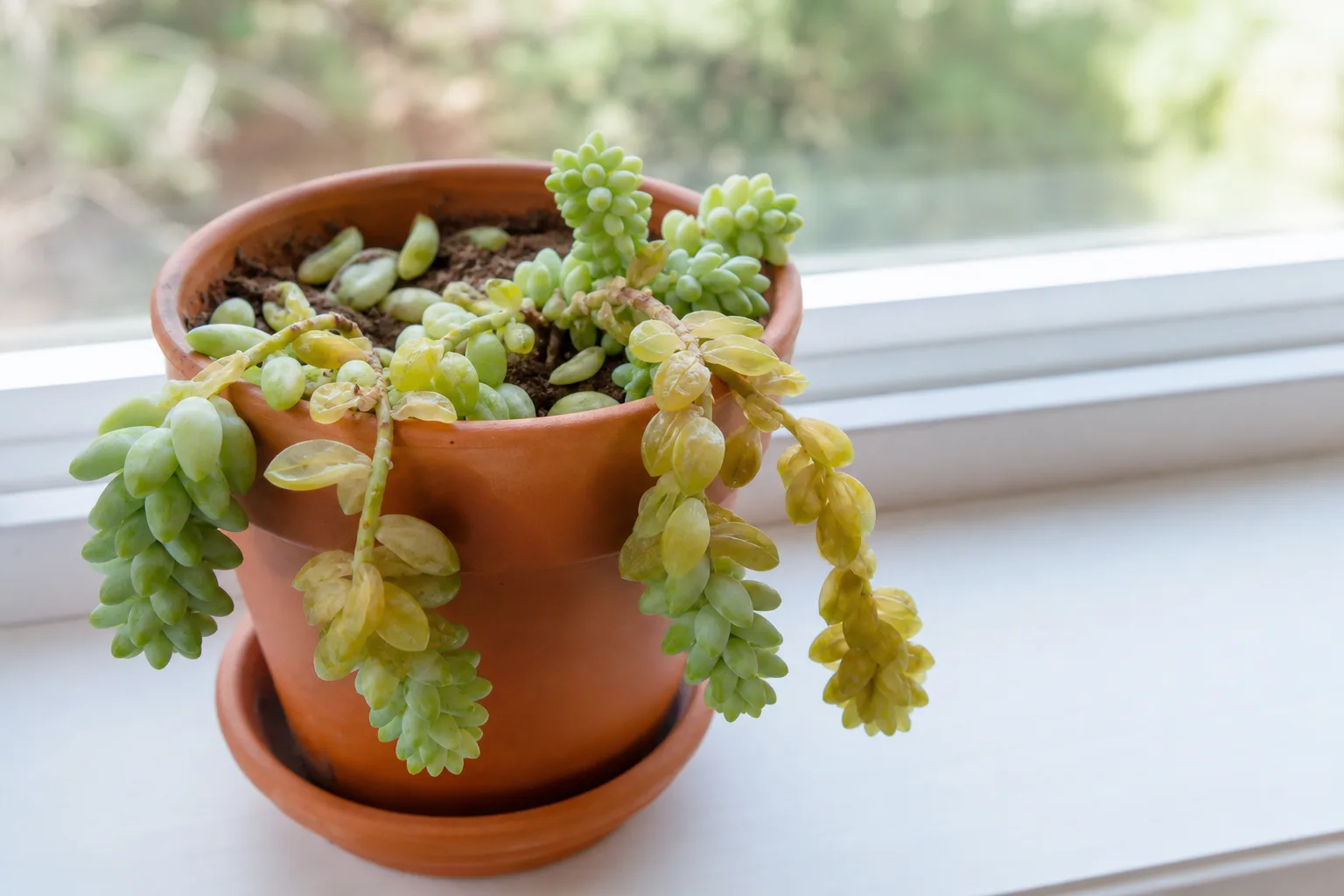
Overwatering on Burro's Tail: Causes, Checks & Fixes
This guide covers overwatering on Burro's Tail. See also the general Overwatering guide, watering, and light pages for this plant.
Overwatering on Burro's Tail: Causes, Checks & Fixes
Quick answer
Overwatering on Burro’s Tail (Sedum morganianum) is the most common way these trailing succulents die indoors. This Mexican stonecrop stores water in thick overlapping leaves, so it tolerates drought far better than constant wetness. When the root zone stays saturated, leaves turn mushy, translucent, or yellow before they fall-and the stem base near the soil line can go squishy while the pot still feels heavy.
First step: stop watering immediately. Do not add another drink because leaves look wilted on wet soil-that wilt means damaged roots cannot move water, not that the plant is thirsty. Confirm dryness with a skewer or pot-weight check before you resume. For the full dry-down rhythm, see our Burro’s Tail watering guide.
Overwatering vs. underwatering on Burro’s Tail
The soft-leaf trap confuses almost every Burro’s Tail owner. Both overwatering and drought can make leaves feel less firm, but the pot and soil tell opposite stories.
| Signal | Overwatering | Underwatering |
|---|---|---|
| Leaf texture | Mushy, translucent, yellowing | Wrinkled, deflated, still firm |
| Pot weight | Heavy for days after watering | Noticeably light |
| Soil | Cool, damp at depth; surface may look dry | Bone dry throughout root zone |
| Stem base | May feel squishy or dark | Firm and green |
| Smell | Sour or swampy from drainage hole | None |
| After one careful soak | No improvement; more leaves mush | Leaves re-plump within 24–48 hours |
Wisconsin Extension lists root rot from overwatering as the primary cultural problem for Burro’s Tail overview. If stems at the soil line are black and mushy, escalate to our root rot guide. For drought shrivel on a light dry pot, see underwatering.
What overwatering looks like on Burro’s Tail
Burro’s Tail hides root stress longer than thin-leaved houseplants because stored leaf water keeps foliage looking acceptable while roots decline underground.
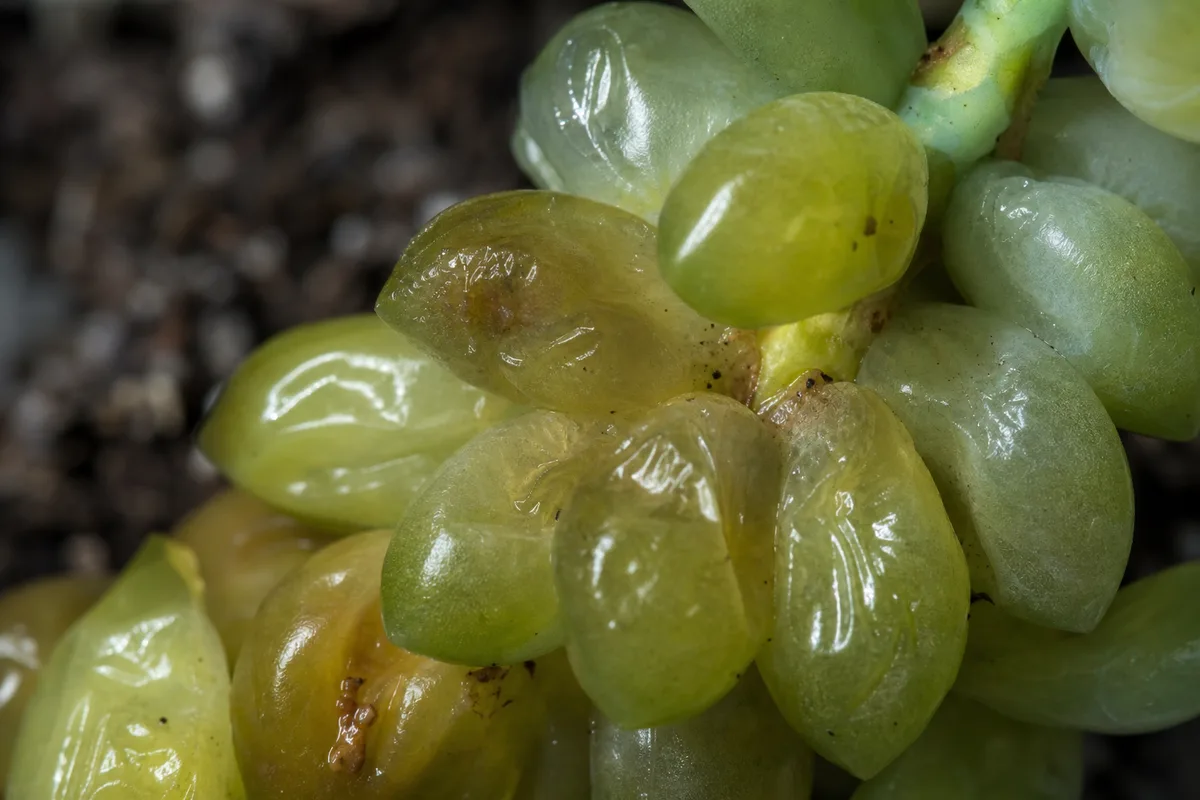
Overwatering symptoms on Burro’s Tail - compare with healthy tissue on the same plant.
Early signs:
- Leaves become soft, mushy, or slightly translucent-especially lower leaves near the soil
- Yellowing before leaves drop in clusters
- Soil stays dark and cool several days after watering
- Pot remains heavy when you expect it to be drying
- Fine webbing or fungus gnats near the surface on constantly wet mix
Progressive signs:
- Wilting or soft leaves despite wet soil on Burro’s Tail-roots cannot absorb water even though the mix is saturated
- Squishy stem base where the trailing stems enter the pot
- Sour smell from drainage holes or soil surface
- Blackened or dark brown tissue climbing from the base
- Leaves detach easily when you move the pot-handling stress plus rot weaken attachment
Damaged mushy leaves do not re-firm. Judge recovery by a firm stem above the soil line and new plump leaves emerging along stem tips, not by old yellow tissue greening up.
Why Burro’s Tail gets overwatered
Burro’s Tail is a drought-adapted succulent from southern Mexico and Honduras. It uses CAM photosynthesis and stores water in thick leaves that swell when hydrated and shrivel when dry. Most houseplant watering advice-keep soil slightly moist, water weekly-does not apply here.
The winter trap. In fall and winter, growth slows and water use drops sharply. Wisconsin Extension notes indoor Burro’s Tail may need water no more than once a month in cool, low-light rooms. The summer rhythm that worked in July becomes chronic overwatering in January.
Low light plus wet soil. A Burro’s Tail in a dim corner evaporates slowly. The same watering volume that drains in a bright east window can leave the root zone anaerobic for weeks in shade.
Oversized pots. Large pots hold excess wet mix around a modest root system. Burro’s Tail does well slightly potbound-an oversized container is a hidden overwatering machine.
Heavy peat mix without grit. This species needs well-drained cactus or succulent mix with perlite, pumice, or baked clay. Dense peat retains moisture at the pot center even when the surface looks dry.
Calendar watering and leaf-drop anxiety. Burro’s Tail sheds leaves when bumped or tilted during top watering. That habit makes owners water cautiously and frequently-or avoid checking soil until damage is advanced.
Standing water in saucers and cachepots. Hanging baskets in decorative outer pots trap runoff. Roots never recover if the bottom of the ball sits in water.
How to confirm overwatering
Work through these checks in order:
- Skewer or finger depth test - Surface soil can look dry while the center stays damp. Insert a dry wooden skewer near the pot edge; a cool, darkened skewer means wait. For small pots, the top inch is a reasonable proxy; deep hanging baskets need the skewer method.
- Pot weight - Lift the pot. Heavy heft days after the last watering strongly suggests the root zone is still holding moisture.
- Leaf feel with context - Mushy translucent leaves on a heavy wet pot confirm overwatering. Wrinkled firm leaves on a light dry pot mean drought instead.
- Stem base press - Gently squeeze the stem where it meets the soil. Squishy or dark tissue means advancing rot-see root rot.
- Smell - Sour or rotten odor from drainage holes confirms anaerobic breakdown in wet mix.
Confirmed overwatering: heavy pot, damp soil at depth, mushy or translucent leaves, and no rebound after you stop watering.
First fix for Burro’s Tail
Stop watering until the full root zone has dried.
Move the plant to bright light with good air movement so remaining moisture evaporates faster-but understand that brighter light helps dry-down; it does not fix roots that are already rotting.
Mild case (a few mushy lower leaves, firm stem above them, no sour smell):
- Withhold water for two to three weeks
- Let the mix go fully dry throughout
- Resume with a light bottom watering only when skewer and weight confirm dryness
- Expect new tip growth, not old leaf recovery
Moderate case (wilting on wet soil, sour smell, or squishy lower stem):
- Unpot carefully-Burro’s Tail sheds leaves when jostled
- Rinse roots and trim brown, black, or mushy tissue with a clean blade
- Let cut surfaces callous for a day
- Repot into fresh gritty mix per our soil guide in a clean pot with drainage
- Wait five to seven days before the first cautious drink
Severe crown mush at the stem base may be fatal. If healthy firm stem sections remain above the rot, cut them as cuttings, callous two to three days, and restart in dry mix per our propagation guide. A clean restart is often more reliable than nursing a rotted base.
Recovery timeline and success signs
Burro’s Tail does not “perk up within days” like a tropical foliage plant. Recovery is slow and measured at the stem tips.
- Week 1–2: No new mush; soil dries fully; stem above soil line stays firm
- Week 3–6: First plump new leaves along healthy stem sections after a cautious watering
- Months: Trailing length rebuilds as new segments root and lengthen
Worsening signs: spreading black tissue up the stem, more translucent leaves on a still-heavy pot, or sour smell returning after repot. Those mean reassess roots or restart from cuttings.
What not to do
- Do not water because leaves look wilted on wet soil-that is the classic overwatering misread on succulents
- Do not fertilize a waterlogged plant; stressed roots cannot use nutrients
- Do not repot into a larger pot to “help drying”-more wet mix worsens the problem
- Do not top-water aggressively during recovery; tilting sheds leaves and soaks foliage
- Do not mist-humidity on leaves does not fix wet roots
How to prevent overwatering next time
Follow the rhythm from our watering guide:
- Water only when the full root zone is dry-roughly every 10–14 days in active summer growth and every three to four weeks or longer in winter
- Combine finger, skewer, and pot-weight checks before every drink
- Use gritty succulent mix and a pot sized to the root mass
- Bottom water routinely to avoid jostling brittle stems, but only on fully dry mix
- Empty saucers and cachepots within 30 minutes of every session
- Reduce frequency in cool, low-light winter rooms-never compensate for gray light with more water
When to escalate to root rot
Treat as urgent when the stem base is squishy, tissue is blackening above the soil line, or sour smell persists after a two-week dry-down. Those patterns mean rot has advanced beyond a simple pause in watering. Open our root rot guide for trim-and-repot rescue steps and when to restart from healthy cuttings instead.
When to use this page vs other Burro’s Tail guides
- Burro’s Tail watering guide - Use for routine moisture checks before assuming overwatering is the main issue.
- Burro’s Tail problems hub - Browse all 16 common issues on this species.
- Root Rot on Burro’s Tail - Different entry point when symptoms overlap with overwatering.
- Yellow Leaves on Burro’s Tail - Different entry point when symptoms overlap with overwatering.
- Wilting on Burro’s Tail - Different entry point when symptoms overlap with overwatering.