Yellow Leaves on Burro's Tail: Causes, Checks & Fixes
Quick answer
Yellow leaves on Burro's Tail almost always trace to water stress or failing roots-not fertilizer. First step: stop watering, squeeze a mid-stem leaf for mush vs. wrinkle, and check whether the hanging pot is heavy and wet before changing anything else.
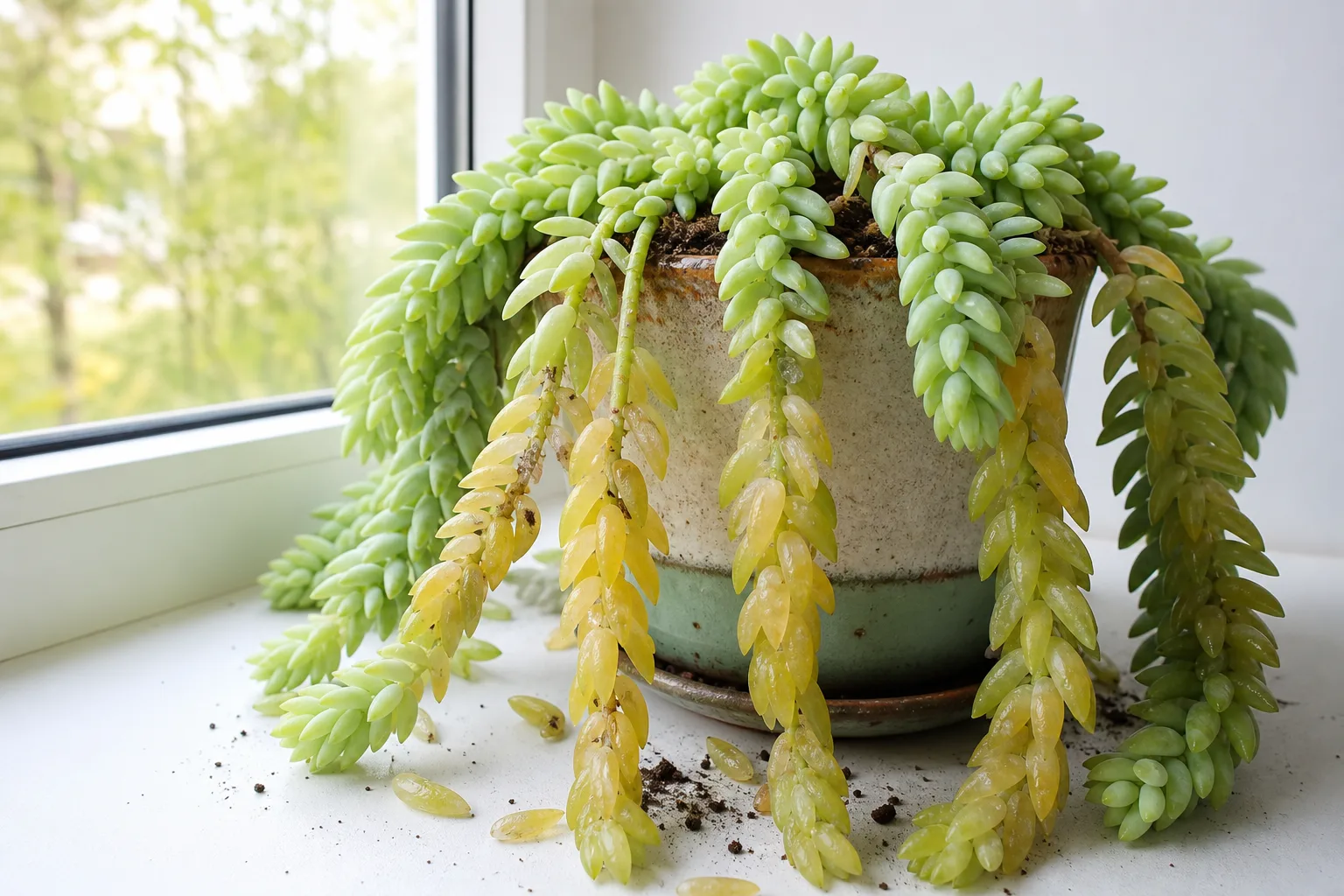
Yellow Leaves on Burro's Tail: Causes, Checks & Fixes
This guide covers yellow leaves on Burro's Tail. See also the general Yellow Leaves guide, watering, and light pages for this plant.
Yellow Leaves on Burro's Tail: Causes, Checks & Fixes
Quick answer
Yellow leaves on Burro’s Tail (Sedum morganianum) look alarming on a fragile hanging succulent, but color change here is almost always a water or root problem-not a nutrient shortage. Each teardrop leaf stores moisture along trailing stems up to two feet long; when roots sit in wet mix or cannot take up water, leaves lose their blue-green and turn yellow, translucent, or pale before they drop.
First step: stop watering and check leaf texture plus soil moisture deep in the pot. Soft, squishy yellow leaves on a heavy wet hanging basket mean overwatering or root rot-the most common indoor failure mode. Firm wrinkled leaves on a light dry pot mean drought stress. Patchy yellow with white cottony deposits at dense stem nodes points to mealybugs. Do not fertilize, repot, or soak the plant until you know which pattern you have.
For mushy stems on chronically wet soil, see overwatering. For wrinkled drought yellow-brown, see underwatering.
What yellow leaves look like on Burro’s Tail
On this trailing succulent, overlapping teardrop leaves pack densely along pendulous stems. Yellowing shows up differently depending on cause:
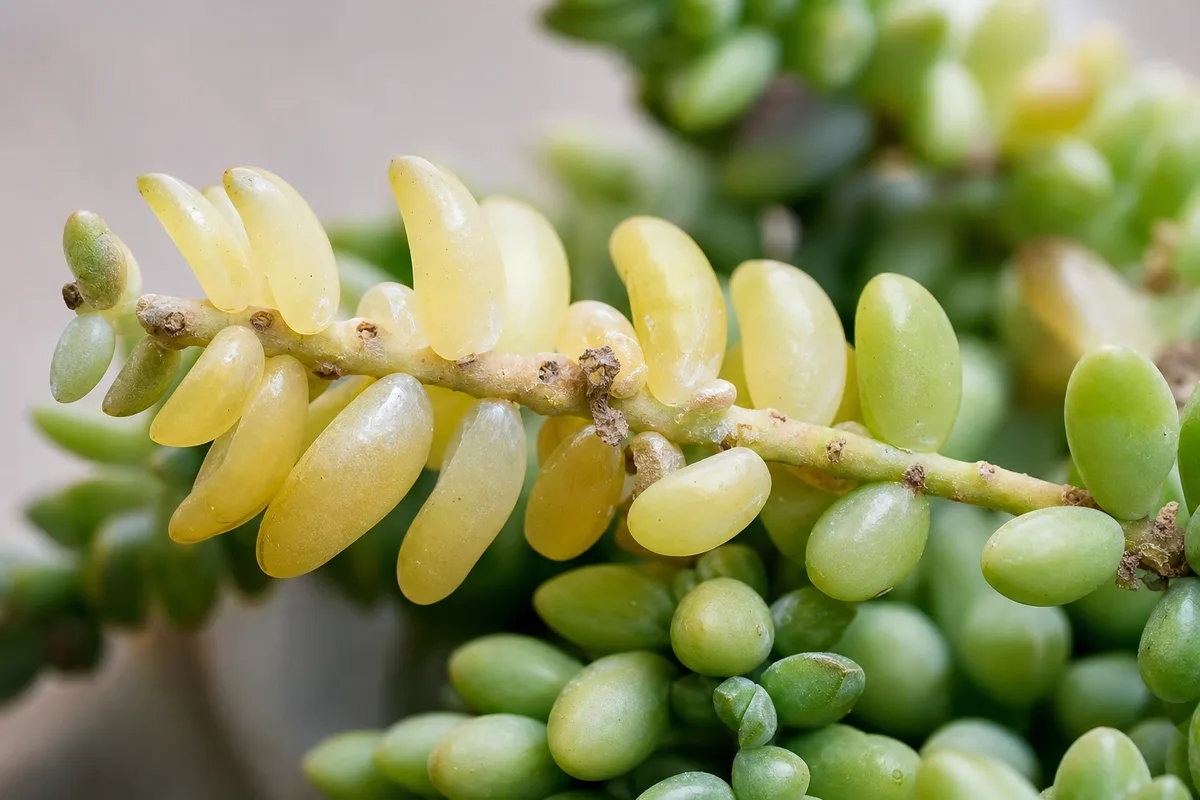
Yellow Leaves symptoms on Burro’s Tail - compare with healthy tissue on the same plant.
Overwatering or root trouble (most common):
- Leaves turn translucent yellow or pale green and feel soft or mushy
- Leaves may detach with the slightest touch while mix is still damp
- Strands hang limply even though soil feels wet-damaged roots cannot move water upward
- Stem tissue near the soil surface may darken; mix may smell sour
- Pattern often starts on lower portions of trailing strands and moves upward
Underwatering (less common for yellow, but possible):
- Leaves look wrinkled, deflated, and dull yellow-brown rather than mushy
- Pot feels light; mix is dry throughout at least two inches down
- Stems stay firm; leaves feel dry-firm, not wet-soft
Insufficient light:
- Uniform pale or yellow-green leaves along stretched stems with longer gaps between leaves
- Mix stays wet longer than expected because the plant uses water slowly in dim rooms
- In insufficient light, internodes lengthen and leaves are less dense on the stems
Pest damage:
- Patchy yellow leaves, not uniform across the whole plant
- White cottony mealybug clusters tucked where overlapping leaves meet the stem
- Fine webbing or stippling from spider mites on stressed plants in dry heated rooms
Sun scorch:
- Bleached or yellow-brown crispy patches on the sun-facing side of leaves after a sudden move to harsh afternoon glass
- In too intense light, leaves bleach out and become yellowish instead of blue-green-not the same as mushy rot on wet soil
Normal aging:
- One or two fully yellow leaves at the oldest end of a long trailing strand while the rest of the plant stays firm and blue-green
- No wet soil, no pests, no stem-base softening
Unlike many leafy houseplants, Burro’s Tail rarely yellows from nitrogen deficiency indoors. Over-watering is the most common issue on this species-overcare kills it far more often than starvation.
Why Burro’s Tail gets yellow leaves
Sedum morganianum evolved on cliff faces in Mexico with sharp drainage, strong light, and long dry intervals. Its thick leaves use CAM photosynthesis to conserve water-but roots still need oxygen in fast-draining mix. When soil stays soggy, roots decay; above ground, leaves yellow and collapse even though water is present in the pot.
Overwatering tops the list: watering on a calendar, using peat-heavy potting soil, hanging baskets with saucers left full, or oversized pots that hold excess wet mix all keep roots wet. Allow the soil to dry out between watering and reduce watering in the winter. Cool winter rooms and short days slow growth, so the same summer watering rhythm becomes excessive.
Low light compounds wet soil. In dim corners, the plant photosynthesizes slowly, so mix dries slowly. Yellowing from chronic dampness in a dark spot is a common indoor pattern-see not enough light if stems are pale and stretched.
Underwatering can yellow leaves when reserves empty, but the signature is wrinkling and firm dryness, not translucence on wet mix. Extended drought stresses roots and older leaves may bleach before dropping.
Pests drain sap from tender growth. Mealybugs hide where overlapping leaves trap moisture and shade at stem nodes-especially on plants that have been overwatered.
Mechanical leaf drop is normal: leaves break off easily if manipulated, so firm green leaves on the floor after Burro’s Tail repotting guide or a bump are not disease. Yellow mushy leaves still attached tell a different story.
Dense overlapping leaves on hanging strands trap moisture at stem bases when airflow is poor-another reason overwatering hits this species harder than upright succulents.
Lookalike symptoms to rule out
| What you see | Likely cause | Key check |
|---|---|---|
| Soft translucent yellow on heavy wet pot | Overwatering / early rot | Stop water; inspect stem base |
| Firm wrinkled yellow-brown, light dry pot | Underwatering | One deep soak, then dry-down rhythm |
| Firm green leaves on floor, stems healthy | Mechanical drop (normal) | No treatment if soil moisture is fine |
| Pale stretched stems, damp mix, uniform yellow-green | Low light + slow dry-down | More bright light; water less often |
| Patchy yellow with cottony white at nodes | Mealybugs | Isolate; alcohol swab at nodes |
| Crisp bleached patches on sun-facing leaves | Sun scorch | Filter afternoon glass |
| One or two yellow leaves at strand tip only | Normal aging | No change if rest of plant is firm |
Drooping strands without yellow often mean underwatering first-wrinkled firm leaves, not mushy translucence. See wilting if strands collapse on wet mix-that usually means root failure, not thirst.
Wilting with wet mix means root failure, not thirst. Adding water to wet rotting roots worsens yellowing. See root rot if the stem base turns black and mushy.
How to confirm the cause
Work through these checks in order-texture and pot weight matter more than leaf count on a hanging succulent:
- Leaf squeeze test - Gently roll a yellow leaf between fingers. Mushy or detaching easily on damp soil = overwatering or rot. Firm and raisin-wrinkled = underwatering.
- Pot weight - Lift the hanging basket. Heavy days after watering with soft leaves confirms excess moisture. Very light with wrinkled leaves confirms dry-down.
- Moisture at depth - Push a finger or wooden skewer two inches into the center of the mix. Wet deep soil with yellow soft leaves is an emergency stop-watering situation. Dust-dry throughout with wrinkled firm leaves means thirst.
- Stem-base inspection - Part trailing strands at the soil surface. Black mushy stems, white mealybug fluff, or sour smell change the diagnosis away from simple watering.
- Light honesty - If leaves are pale, spaced far apart on stretched stems, and mix stays damp for two weeks, low light is part of the problem.
- Recent changes - New pot without drainage, repot into heavy mix, moved to a dim room, saucer left full after watering, or doubled watering in winter are high-probability triggers.
- Floor-leaf check - Firm green leaves scattered after handling = mechanical drop. Yellow mushy leaves still on stems = active stress.
If mix is wet and stem-base tissue is soft, treat as root trouble until inspection proves otherwise. If mix is dry and leaves are merely wrinkled, a single deep watering is the right test-not a repot.
First fix for Burro’s Tail
Stop watering and assess leaf texture plus soil moisture.
Move the hanging basket to bright light with airflow-handle the pot by its rim, not the trailing stems. Do not fertilize. Do not repot on day one unless the stem base is already black and mushy.
- Wet mix + soft yellow leaves: Hold all water. Let the plant dry completely. If stems soften at the base within a few days, unpot carefully, trim mushy roots and black tissue, air-dry, and repot into dry gritty mix-see the root rot recovery path.
- Dry mix + wrinkled firm leaves: Water thoroughly once until excess drains from the holes, then empty the saucer. Wait 24–48 hours for leaves to plump.
- Patchy yellow with pests: Isolate the plant. Dab visible mealybugs with 70% isopropyl alcohol on a cotton swab at stem nodes before any spray. See mealybugs if infestation spreads.
- Pale stretched leaves on damp mix: Improve light first-move closer to a bright window with morning sun-while correcting watering to dry-down only.
One correction at a time. Stacking repot, fertilizer, and increased watering on a stressed Burro’s Tail usually accelerates stem-base collapse-and every handling strips more leaves.
Step-by-step recovery
If overwatering or early rot is confirmed
- Stop watering immediately.
- Gently unpot if the stem base feels soft or mix smells sour-support stems at the crown; do not lift by trailing growth.
- Trim brown, black, or mushy roots and stems back to firm green tissue with clean scissors.
- Air-dry the plant 24–48 hours in bright indirect light.
- Repot into dry, fast-draining cactus mix with added perlite or pumice in a shallow pot only slightly larger than the root ball.
- Wait 7–10 days before the first light watering. Resume soak-and-dry rhythm once the plant stabilizes.
If underwatering is confirmed
- Water deeply once until water runs from drainage holes.
- Discard saucer water; never leave the hanging basket standing in it.
- Resume normal dry-down rhythm: water when leaves start to look slightly soft or wrinkled, not on a fixed schedule.
If low light is contributing
- Move to bright light with some morning direct sun-four to six hours daily supports dense growth per the light guide.
- Reduce watering frequency to match slower dry-down in the brighter spot.
- Remove only fully yellow leaves that detach easily; keep partially green leaves for photosynthesis.
If pests are confirmed
- Isolate from other plants.
- Remove mealybugs manually with alcohol-dabbed swabs at nodes where leaves overlap.
- Monitor weekly; repeat treatment until no new insects appear.
- Correct any overwatering that made dense stem junctions attractive to pests.
Recovery timeline
- 24–48 hours: Underwatered leaves should plump after one proper watering; soft wet leaves should not get worse once water stops.
- 1–2 weeks: Stem-base firmness stabilizes; yellow spread halts if the cause was caught early.
- 3–6 weeks: New firm blue-green leaves appear at stem tips along trailing strands when roots are healthy again.
- Already-yellow leaves: Do not expect them to green up. They drop or stay pale; judge success by new growth at strand tips.
Severe rot with black mushy tissue through most of the stem base may not recover. Take healthy stem cuttings from firm upper strands before the last tissue fails-see propagation guidance on the Burro’s Tail overview.
Mistakes to avoid
- Fertilizing yellow leaves on wet soil - salts stress damaged roots and cannot fix drowning.
- Watering more because leaves look sick when the mix is already damp - the classic killer on trailing succulents.
- Misting leaves or using humidity trays - surface moisture promotes rot on a plant that prefers dry air.
- Repotting into standard potting mix - peat-heavy soil stays wet too long. Use cactus or succulent mix with grit.
- Handling the plant repeatedly during inspection - leaves break off easily; each touch strips foliage.
- Assuming every yellow leaf means overwatering on Burro’s Tail without checking - dry wrinkled drought and patchy pest yellow look different once you squeeze a leaf.
- Ignoring light while only adjusting water - dim rooms keep soil wet and produce pale, yellow-green stretched growth.
Burro’s Tail care cross-check
Healthy Burro’s Tail culture prevents most yellowing:
| Factor | Target for this species |
|---|---|
| Light | Bright light to several hours of direct sun daily; morning sun through east glass is ideal |
| Water | Soak-and-dry; mix fully dry at least two inches down before each thorough watering |
| Soil | Fast-draining cactus mix amended with perlite or pumice; shallow pot with drainage holes |
| Pot | Hanging basket or elevated container; empty saucer after every watering |
| Winter | Reduce watering sharply; indoor plants may need water only once a month in cool dim months |
| Handling | Minimize movement; expect some mechanical leaf drop after repotting |
When basics are right, occasional yellow leaves at the oldest end of a long strand are normal turnover-not a crisis.
How to prevent yellow leaves next time
Water by dry-down, not calendar. Lift the hanging pot, check leaf plumpness, and confirm mix is fully dry before each drink. Empty saucers after every watering. Use gritty mix and avoid oversized pots that hold moisture around modest roots. Keep the plant in enough light that soil dries predictably within a week after watering in the growing season.
Scout dense stem nodes monthly for mealybugs where overlapping leaves trap moisture. Remove yellow debris from the soil surface so decay does not harbor fungus gnats or rot. In winter, treat reduced growth as a signal to water far less-see the full watering guide.
When to worry
Treat yellowing as urgent when:
- Leaves turn translucent and soft across multiple trailing strands
- Stems blacken and soften at the base while mix is wet
- Soil smells sour or rotten
- Yellowing spreads rapidly over 7–10 days despite stopping water
A few isolated yellow leaves on firm blue-green strands with appropriate dry soil is lower priority-confirm whether it is normal aging at a strand tip before intervening.
When fallen leaves accumulate on the floor, remember Burro’s Tail is non-toxic to dogs, cats, and horses per the ASPCA-though large ingestions can still cause mild digestive upset. Keep the plant out of reach of persistent chewers regardless.
For the full care picture-light, soil, propagation, and seasonal rhythm-see the Burro’s Tail overview.
When to use this page vs other Burro’s Tail guides
- Burro’s Tail watering guide - Use for routine moisture checks before assuming yellow leaves is the main issue.
- Burro’s Tail problems hub - Browse all 16 common issues on this species.
- Overwatering on Burro’s Tail - Different entry point when symptoms overlap with yellow leaves.
- Underwatering on Burro’s Tail - Different entry point when symptoms overlap with yellow leaves.
- Not Enough Light on Burro’s Tail - Different entry point when symptoms overlap with yellow leaves.