How to Propagate Burro's Tail: Leaf and Stem Cuttings
How to Propagate Burro's Tail: Leaf and Stem Cuttings
How to Propagate Burro's Tail: Leaf and Stem Cuttings
Burro’s Tail (Sedum morganianum) is one of the few houseplants that practically propagates itself. Brush past a mature stem and a dozen plump leaves scatter across the floor - each one a potential new plant if you know what to do with it. That fragility frustrates new owners until they realize it is the plant’s superpower. In its native cliff habitats of southern Mexico and Honduras, animals and weather knock leaves loose; those leaves root in rocky crevices below and start the cycle again. Your job indoors is not to fight that habit but to channel it with clean breaks, dry calluses, and soil that drains fast enough to keep succulent tissue from rotting before roots form.
This guide covers the two methods that actually work at home: leaf cuttings and stem cuttings. Both rely on the same underlying rules - let wounds heal, keep early moisture controlled, give Burro’s Tail light guide, and resist the urge to water on day one. Where they differ is speed and scale. Leaves are easier and more forgiving; stems give you a trailing plant months sooner. The sections below walk through selection, callusing, planting, anchoring, watering, and the failure signs that mean you should start fresh rather than nurse rotting tissue.
How Burro’s Tail Reproduces Naturally
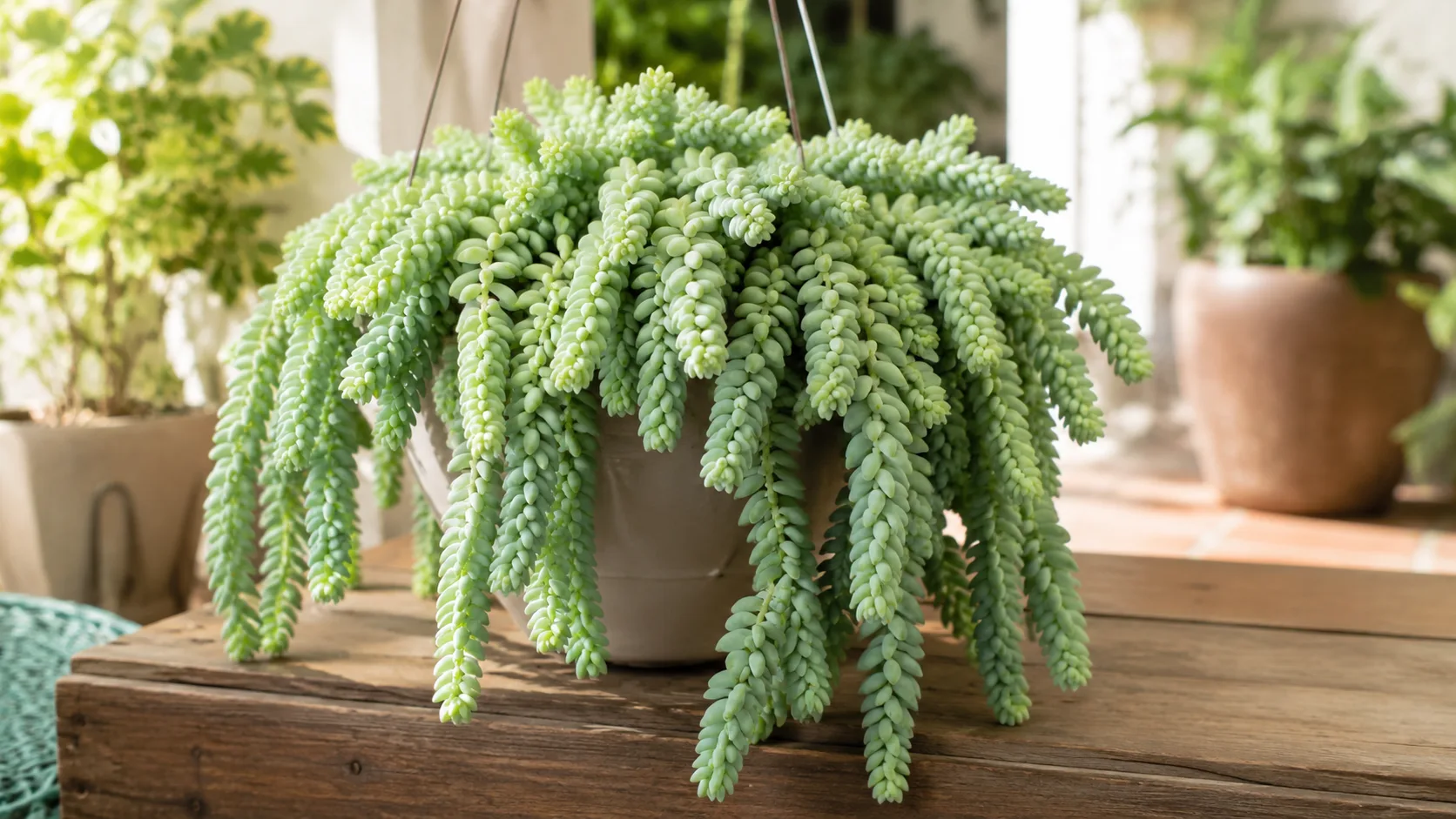
Sedum morganianum belongs to the stonecrop family, Crassulaceae, a group famous for regenerating from detached leaves and stem fragments. Burro’s Tail - sometimes called Donkey’s Tail when referring to the closely related Sedum ‘Burrito’ with rounder leaves - grows as cascading stems packed with overlapping, water-storing leaves. Each leaf connects to the stem at a narrow base; when that junction breaks cleanly, the leaf carries enough meristematic tissue to sprout adventitious roots and a tiny plantlet at the scar end.
That biology explains the shower of leaves after Burro’s Tail repotting guide, pruning, or even a strong draft. NC State Extension notes that cuttings and dropped leaves root easily - an evolutionary adaptation, not necessarily a sign of poor health. In the wild, detached leaves land on thin soil pockets in rock faces, callus in dry air, then root when occasional rain arrives. Indoor propagation mimics that sequence: dry healing first, soil contact second, moisture only after roots show interest.
Stem sections work differently but follow the same family logic. A cut stem exposes cambium and leaf nodes along the stripped portion; given dry conditions and a gritty medium, those nodes push roots into soil while the stem tip resumes upward growth. Because Burro’s Tail stems become heavy with mature leaves, gravity pulls unanchored cuttings out of loose mix before roots grip - a practical detail many generic propagation articles skip.
Leaf Cuttings vs Stem Cuttings: Choosing Your Method
The easiest way to propagate burro’s tail is from leaf cuttings, especially leaves that have already fallen or twisted off cleanly. You need no tools beyond a tray of dry soil and a bright windowsill. Success rates for healthy, intact leaves handled correctly are generally high when leaves are plump and undamaged at the base, making Burro’s Tail one of the most reliable succulents for leaf propagation. The trade-off is time. A single leaf may root in two to four weeks, but a recognizable trailing plant can take six to twelve months because growth starts from a microscopic plantlet, not a full stem.
Stem cuttings suit you when you want shape and length faster - after leggy growth, accidental breakage, or intentional pruning to thicken a sparse plant. A 4–6 inch stem tip rooted in gritty mix can anchor and resume trailing growth in four to eight weeks, with a fuller cascade in two to four months under good light. Stem propagation demands more technique: stripping lower leaves, longer callus time, anchoring weight, and stricter dry-down discipline at the start. It also costs you leaves at the cut site, which is normal and slightly heartbreaking the first time.
| Method | Difficulty | Time to visible roots | Time to trailing display | Best for |
|---|---|---|---|---|
| Leaf cutting | Low | 2–4 weeks | 6–12 months | Beginners, free plants from fallen leaves |
| Stem cutting | Moderate | 3–5 weeks | 2–4 months | Faster fill, leggy rescue, intentional shaping |
If you have both options, run them in parallel. Lay fallen leaves in a shallow tray beside a pot of callused stem cuttings and let the plant do what it evolved to do.
Best Timing for Burro’s Tail Propagation
Spring through early summer - roughly March through July in the Northern Hemisphere - is the best window for burro’s tail propagation. During active growth, wounds callus faster, roots initiate sooner, and the mix dries between waterings at a healthy pace. Houseplant 101, Joy Us Garden, and Healthy Houseplants align on warm-season timing for succulent cuttings generally, and Burro’s Tail responds noticeably better when daytime temperatures sit in the 65–80°F (18–27°C) range with decent light.
You can propagate in fall if your home stays warm and bright, but expect slower rooting and a higher rot risk when cool nights and shorter days keep soil damp longer. Winter attempts in dim, cool rooms often stall for weeks - not because the cutting is dead, but because metabolism has slowed. Avoid taking material from a plant that was just shipped, repotted, or recovering from root rot on Burro’s Tail unless you are performing a rescue propagation from clearly firm tissue.
Material quality matters as much as the calendar. Choose firm, plump leaves without shriveling or translucent yellowing. For stems, select healthy segments with tight leaf attachment and no mushy base. A stressed parent plant can still yield viable cuttings, but clean active growth roots faster and fails less often.
Tools and Setup
Propagation does not require specialty gear, but a few basics prevent the infections that kill succulent cuts. Gather clean, sharp scissors or snips wiped with 70% isopropyl alcohol, a shallow propagation tray or small pots with drainage holes, and a succulent or cactus potting mix amended for extra drainage. Joy Us Garden recommends succulent and cactus mix light enough that emerging roots push through easily; if your bagged mix feels heavy or peaty, add perlite, pumice, or coarse sand until water runs through almost immediately.
Optional but useful items include floral pins, bent wire, or chopsticks for anchoring stem cuttings, a spray bottle for later misting once roots appear, and newspaper or a baking sheet to catch the inevitable leaf avalanche when you handle stems. Rooting hormone is optional for Burro’s Tail; clean breaks and proper dry-down matter more than powder. Some growers dust callused stem ends with cinnamon as a mild antifungal - anecdotal, harmless, not a substitute for callusing.
Work over a stable surface where bumped stems will not crash to the floor. If you are propagating after pruning a hanging basket, lower the pot to waist height before cutting so you control where the leaves land.
Propagating from Leaf Cuttings
Leaf propagation is the entry point for most Burro’s Tail owners because the plant supplies the material whether you planned it or not.
Selecting Healthy Leaves
A propagatable leaf must detach with its base intact - the crescent-shaped scar where it joined the stem. Gently twist plump leaves sideways until they pop free; never yank upward in a tearing motion. Houseplant 101 stresses that a torn or incomplete base will not root because the meristematic tissue tore away with the stem. Fallen leaves already on your shelf or soil surface are fair game if they landed within the last few days and still feel firm. Older desiccated leaves on the floor are spent.
Collect five to ten leaves per attempt even if you only want one plant. Not every leaf roots, and grouping them in one tray lets you keep winners without restarting. Avoid leaves from the lowest, oldest section of a declining stem unless they are still turgid; mid-stem and upper leaves root more reliably.
Callusing Before You Plant
Set selected leaves on a dry plate, tray, or paper towel in bright indirect light away from direct sun. The cut end needs to form a dry, papery callus before soil contact. Most sources recommend 24 hours to 3 days for leaves; Joy Us Garden notes leaves callus faster than thick stem cuts and can go into mix sooner when humidity is low and temperatures are warm. In a humid bathroom or rainy week, extend to 3 days and confirm the scar end feels dry and matte, not moist or shiny.
Skipping callus is the fastest route to a leaf that swells, turns translucent, and rots without ever rooting. The leaf holds plenty of internal water; it does not need external moisture during healing.
Placing Leaves on Soil
Fill a shallow tray or small pot with completely dry amended succulent mix. Lay each leaf flat on the surface with the callused end touching the mix - do not bury leaves upright or wedge them deep into soil. Buried leaves rot; NC State Extension lists leaf cutting and stem cutting as recommended propagation strategies.
Move the tray to bright indirect light. A east-facing window or a few feet back from a south window works well. Do not water at planting time. The leaf’s stored moisture fuels the first root initials. After two to four weeks, look for pink or white root threads at the base and a tiny bump that will become the new plantlet. Only then begin light misting every few days to keep the top layer barely damp, not wet. The original leaf will slowly shrivel as it donates water and sugars to the baby - that shriveling is normal and not a sign of failure.
When the plantlet has two to three pairs of new leaves and a visible root mass, gently transplant it into its own small pot with the same gritty mix and transition toward a normal soak-and-dry Burro’s Tail watering guide.
Propagating from Stem Cuttings
Stem cuttings turn a pruning session or broken cascade into a new hanging plant on a faster timeline than leaves alone.
Cutting and Stripping the Stem
Using clean snips, cut a healthy stem segment 4–6 inches long, ideally from the tip or upper portion where leaves are tightly packed. Make one smooth perpendicular cut; crushed stems heal poorly. Expect several leaves to fall off during handling - collect them for the leaf tray rather than treating it as a disaster.
Strip leaves from the bottom one-third to one-half of the cutting, exposing 1–2 inches of bare stem for burial. Those removed leaves are propagation material too. Set aside any that broke cleanly. If the stem base looks soft, dark, or smells sour, cut higher until tissue is firm and green inside the cut face.
Callusing Stem Ends
Lay stripped cuttings horizontally or stand them upright on a dry surface in bright shade - no direct sun on the open wound. Stem cuts need a longer callus than leaves: 3 to 7 days is typical, with up to 10 days for thick older stems or humid homes. Joy Us Garden allows as little as one day in hot, dry climates; Sacred Elements recommends checking at day three and waiting until the cut end is visibly dry and hardened.
The callus should look corky and pale, not wet. A stem that still looks freshly sliced will absorb soil moisture too fast and rot before roots form.
Planting and Securing Long Stems
Fill a small pot with dry succulent mix. Use a chopstick or pencil to poke a narrow hole about 1 inch deep, insert the callused end, and firm the mix around the buried stem. Do not water yet. The weight of remaining leaves will pull a long cutting out of loose soil, so anchor it: Joy Us Garden uses floral pins pressed over the stem; chopsticks, bent wire, or small stones along the stem work similarly. The goal is to keep the buried section in contact with mix until roots grip.
Place the pot in bright indirect light with no direct sun on the cutting for the first two to three weeks. Maintain the dry period for 5 to 14 days depending on temperature - warmer and drier rooms lean shorter; cool humid rooms lean longer. After that waiting window, give the first light watering, enough to moisten the upper mix without saturating the whole pot. Increase gradually to full soak-and-dry only after the cutting resists a gentle tug and you see new growth at the tip.
Soil Mix and Containers
Burro’s Tail roots are fine and fragile; heavy, water-retentive soil smothers them. Start with a commercial cactus and succulent mix and amend with 30–50% perlite, pumice, or coarse sand for very sharp drainage - the same principle Wisconsin Extension recommends for container culture. - the same principle LeafyPixels uses across Burro’s Tail care guides. The mix should feel gritty, not spongy. When you water a test pot, excess should exit the drainage hole within seconds, not pool on the surface.
Container choice shapes drying speed. Shallow trays suit leaf propagation because you monitor many leaves at once. Stem cuttings do better in small individual pots - 3–4 inches - with drainage holes. Terracotta dries faster than plastic, which helps beginners who tend to overwater. Avoid oversized pots; a large volume of wet mix around a single unrooted cutting invites rot.
Standard indoor potting soil is a poor substitute. It holds moisture too long for callused succulent tissue. If that is all you have, blend at least 50% mineral grit and still expect slower drying and higher rot risk.
Light, Temperature, and Humidity
During rooting, bright indirect light is the target. A spot that receives several hours of gentle morning sun after roots establish is fine, but harsh midday sun on unrooted cuts accelerates leaf dehydration before roots can replace water. Grow lights work if they deliver bright, even illumination 12–14 hours daily without overheating the tray.
Temperature between 65 and 80°F (18–27°C) supports steady root formation. Below 60°F (15°C), progress slows sharply. Heat mats are rarely necessary for Burro’s Tail unless you are propagating in a cold garage; room temperature on a bright shelf is usually enough.
Humidity should stay moderate to low. Burro’s Tail prefers dry air; enclosed domes and plastic bags that stay saturated cause fungal problems on succulent leaves. If you use a loose cover for stem cuttings in very dry climates, vent it daily and remove it once roots start. Misting is for the soil surface after roots appear, not for wrapping the cutting in a humid greenhouse indefinitely.
Water Propagation: Why Soil Wins
Search results disagree on water propagation for Burro’s Tail. Some guides show stems suspended in glass jars; others, including Plant Scryer and Houseplant 101, warn that stems often rot before they root in water - unlike jade (Crassula ovata), which tolerates water rooting more readily. The honest summary: soil propagation is the default and the safest choice for both leaves and stems.
Water exposes cut ends to constant moisture without the airflow gritty mix provides. Burro’s Tail stems are thick and leaf-heavy; submerged tissue softens, turns translucent, and attracts rot organisms. If you experiment with water for stem tips, submerge only the bottom third of the stripped stem, change water weekly, and move the cutting to dry mix the moment white roots reach half an inch. Treat water as a short observation phase, not a permanent growing method.
Leaves should never root in water for Burro’s Tail overview. They will bloat and decay. Lay them on dry soil instead.
First Six Weeks of Aftercare
The first six weeks after planting share one rule across both methods: moisture discipline beats enthusiasm.
Week 1: Keep mix dry for leaves; keep stem cuttings dry for 5–14 days after planting depending on callus strength and room conditions. No fertilizer. No repotting. No daily digging to check roots.
Weeks 2–3: Watch for root initials on leaves - pink threads or a green bump at the base. On stems, resist watering until the cut end feels stable in the mix. If the stem looks shriveled but firm, it is using internal water; that is acceptable.
Weeks 4–6: Begin light misting for rooted leaves every 3–5 days, or a small soak for stem cuttings followed by full dry-down. Transition established stem cuttings toward the parent plant’s soak-and-dry schedule: water deeply only when soil is completely dry, then drain fully. Expect summer intervals near 14 days and winter intervals of 21–28 days or longer in cool dim conditions - always verify with pot weight, not a calendar alone.
Do not fertilize until new growth is obvious and roots are clearly working. Dilute succulent fertilizer can wait until the plantlet or cutting has been in its own pot for at least one month after the first normal watering cycle.
Keep propagated plants separate from the parent for a few weeks if pests or rot were recent issues. Quarantine is cheap insurance.
Signs Your Propagation Is Working
Success has a timeline; patience is part of the method.
Leaf cuttings - weeks 2–4: Root hairs or a small green nub at the leaf base. The parent leaf may begin slight shriveling while staying firm, not mushy.
Leaf cuttings - months 2–6: A recognizable rosette with multiple tiny leaves. The original leaf may be nearly spent; the plantlet should feel anchored when you lift it gently with tweezers.
Stem cuttings - weeks 3–5: Resistance to a gentle tug, indicating roots gripping mix. Tip growth resumes with tighter new leaves.
Stem cuttings - weeks 6–10: Visible trailing extension and stable watering rhythm without base softening.
Failure signals include translucent mush at the base, black spreading spots, sour smell from mix, or leaves that collapse while soil stays wet. Firm shriveling in dry mix during week two is less alarming than soft rot in wet mix during week one. When in doubt, check the base with a clean knife; firm green or white tissue means wait longer; brown mush means discard and restart with cleaner material.
Common Mistakes to Avoid
Most failed burro’s tail propagations trace to a short list of fixable errors.
Watering too soon after planting tops the list. Fresh cuts are open wounds; moisture invites rot before defense forms. Wait the full dry window even if the cutting looks thirsty.
Skipping or shortening callus is second. A shiny wet cut end in damp soil fails predictably. Give leaves at least a day and stems several days in dry air.
Using heavy potting soil without amendment keeps the root zone saturated for a week - long enough to kill succulent tissue.
Burying leaves instead of laying them on the surface smothers the base and causes fungal collapse.
Leaving long stem cuttings unanchored lets gravity pull them free before roots establish. Pin them down.
Bright direct sun on unrooted material dehydrates leaves faster than roots can replace water. Start in indirect light.
Torn leaf bases from rough removal never root. Twist cleanly or use already-fallen intact leaves.
Propagating in cold, dim winter without supplemental light and warmth stalls progress and blurs the line between slow and dead.
Treating water propagation as the primary method leads to stem rot more often than soil success for this species.
Conclusion
Burro’s tail propagation rewards growers who respect how Sedum morganianum evolved: detached leaves and stem pieces heal in dry air, then root in gritty soil with restrained water. Leaf cuttings are the easiest path - especially from leaves that fall naturally - with high success rates but a long climb to a full trailing display. Stem cuttings demand more setup, longer callus time, and anchoring for heavy stems, but they deliver a cascade months sooner.
Propagate in spring or early summer when warmth and light support active growth. Callus every cut. Use cactus mix amended with perlite or coarse sand. Keep new material in bright indirect light and delay the first watering until the dry window passes. Watch for firm tissue and new growth, not daily root inspections. When leaves shower off during repotting or pruning, sweep them into a tray instead of apologizing to the plant - you just stocked your next propagation batch.
When to use this page vs other Burro’s Tail guides
- Burro’s Tail overview - Start here for whole-plant context before deep-diving this topic.
- Burro’s Tail problems hub - Jump to symptom-specific fix guides when this care topic does not resolve the issue.
Related Burro’s Tail guides
- Burro’s Tail overview
- Burro’s Tail watering
- Burro’s Tail light
- Burro’s Tail soil
- Burro’s Tail fertilizer
- Burro’s Tail repotting
- Burro’s Tail problems
Related tool
Try the Propagation Success Calculator with burros-tail pre-selected to estimate needs for your setup.