Burro's Tail Fertilizer: When, How Much, and Mistakes
Burro's Tail Fertilizer: When, How Much, and Mistakes
Burro's Tail Fertilizer: When, How Much, and Mistakes
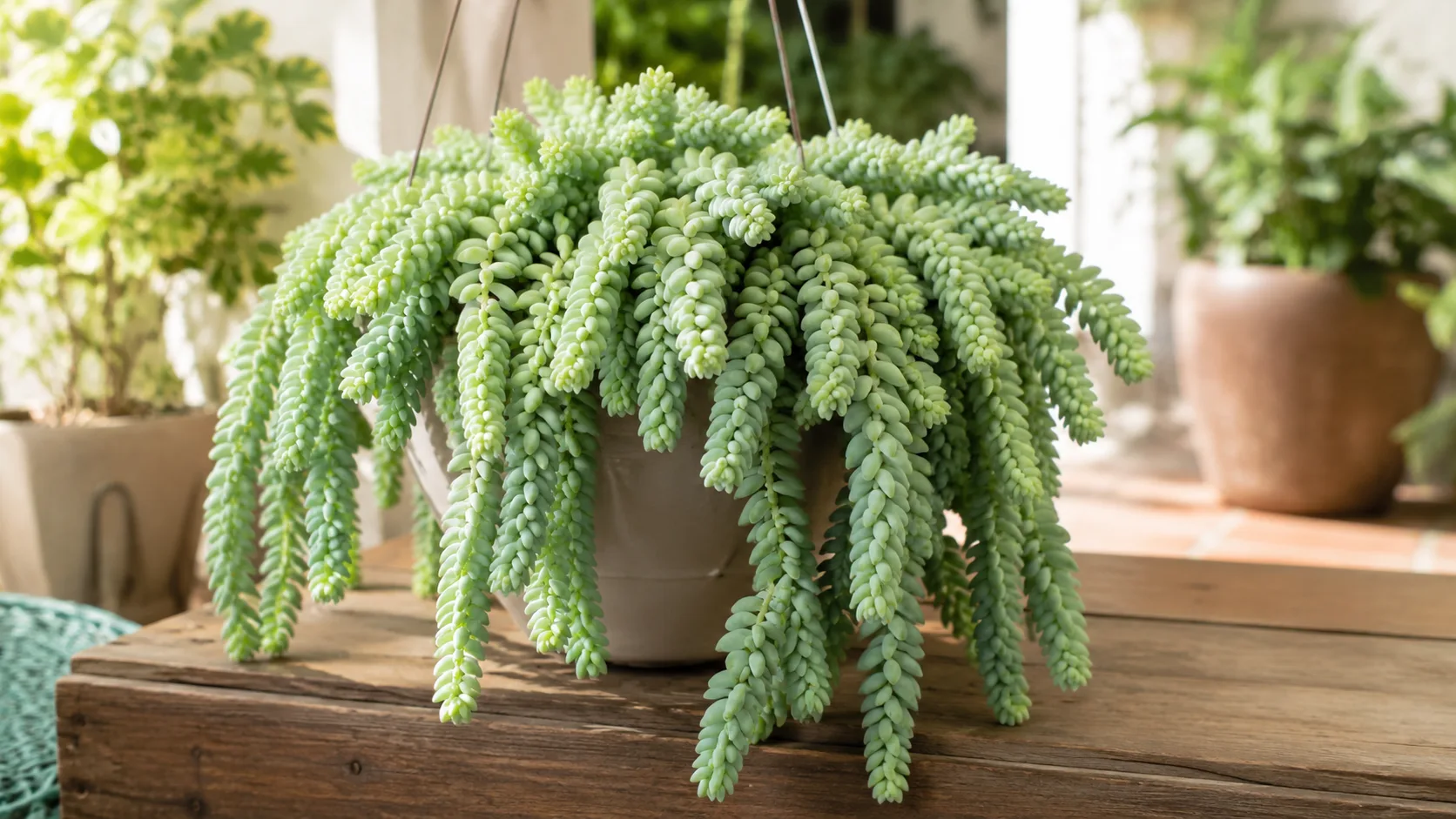
Burro’s Tail (Sedum morganianum, sometimes classified as Hylotelephium morganianum) is one of the few houseplants where the fertilizer question is not “how much food does it need?” but “does it need any at all?” This trailing succulent evolved on rocky cliffs in Mexico and Honduras, rooting in thin, fast-draining, nutrient-poor soil. Its plump blue-green leaves store water for drought, and its growth habit favors compact, bead-like foliage on cascading stems - not the lush, nitrogen-driven expansion you might associate with leafy houseplants. Burro’s Tail fertilizer decisions should respect that biology: light, infrequent, and tied to active growth, not a monthly calendar you apply to every plant on the shelf.
That does not mean feeding is useless. A Burro’s Tail in the same potting mix for two or three years, watered repeatedly with tap water, and growing in bright light will eventually deplete what little nutrition the soil held at Burro’s Tail repotting guide. Periodic diluted feeding during spring and summer can support steady stem extension, firmer leaf color, and occasional flowering on mature plants. The mistake most growers make is treating Burro’s Tail overview like a hungry tropical foliage species and then wondering why leaves shower off the pot after every feed. The sections below walk through what the plant actually uses, what products fit, how little is enough, and how to recover when salts get ahead of you.
What Burro’s Tail Needs From Fertilizer
Burro’s Tail pulls nitrogen, phosphorus, potassium, and trace micronutrients from its root zone to build new leaves, extend stems, and maintain the photosynthetic machinery inside each water-storing cell. Unlike fast-growing herbs or tropical foliage plants, it does not strip nutrients from soil at a high rate. Its native habitat offered sparse organic matter and sharp drainage, so the species developed a metabolism that thrives on lean conditions. Fertilizer for Burro’s Tail is maintenance nutrition for an already adapted plant - not a growth accelerator you pour on to force size.
The practical goal is steady health, not maximum length in one season. Overfed Burro’s Tail often produces soft, elongated internodes and leaves that detach at the slightest bump. Underfed plants in very old, leached mix may grow slowly with pale or slightly smaller new leaves, but that pattern also mimics low light, root crowding, and chronic overwatering on Burro’s Tail. Before you reach for the bottle, confirm the plant has bright light, a gritty succulent mix, and a Burro’s Tail watering guide that lets the soil dry fully between drinks. Fertilizer supports a plant that is already winning those three battles.
How Sedum morganianum Uses Nutrients in Low-Nitrogen Soils
Nitrogen drives chlorophyll production and leaf expansion. Burro’s Tail needs some nitrogen for green color and new bead leaves along trailing stems, but excess nitrogen is the nutrient most likely to cause trouble. High nitrogen pushes soft, weak tissue that stores less water structurally and breaks off easily - a serious problem on a plant famous for shedding leaves when disturbed. Phosphorus supports root function and energy transfer; mature Burro’s Tail can produce small pink or red star-shaped flowers when conditions align, and phosphorus plays a background role in that process, though most indoor plants bloom rarely. Potassium helps regulate water movement inside cells, which matters for a succulent that depends on turgor pressure to keep leaves plump.
Because the plant’s natural soils were mineral-rich but organic-matter-poor, a balanced formula - where nitrogen, phosphorus, and potassium appear in similar ratios such as 5-5-5 or 10-10-10 - matches how the species encounters nutrients in the wild better than a high-nitrogen lawn or foliage booster. Micronutrients like iron and manganese rarely need separate products if you use a complete cactus or houseplant liquid with micronutrients listed on the label. Problems more often come from concentration and frequency than from missing a exotic ratio.
Why This Trailing Succulent Is a Light Feeder
Extension and horticultural sources consistently describe stonecrop succulents as modest feeders relative to typical houseplants. The Old Farmer’s Almanac notes that Burro’s Tail may not need fertilizer at all, and if you choose to feed, a liquid organic product at one-quarter label strength once or twice a year in spring and summer is sufficient. (The Old Farmer’s Almanac - Burro’s Tail plant care) That guidance tells you something important about expectations: skipping fertilizer entirely is a valid strategy, especially after repotting into fresh mix that often includes starter nutrients.
Burro’s Tail also carries a powdery leaf coating called farina, which protects against sun and moisture loss. The plant does not need foliar feeding, and spraying fertilizer on those delicate leaves risks damaging the coating and triggering leaf drop - one of the plant’s signature stress responses. Root feeding through diluted liquid applied to moist soil is the standard approach. Treat food as an optional fine-tuning tool once light, drainage, and watering are correct, not a rescue tonic for every pale bead.
Best Fertilizer for Burro’s Tail Plants
The best fertilizer for Burro’s Tail in most homes is a complete, water-soluble product labeled for cacti and succulents or balanced houseplants, diluted well below the printed rate. You do not need a Burro’s Tail-specific bottle. You need a formula that dissolves cleanly, includes all three macronutrients, and lets you control dose precisely in a small hanging basket where salt buildup happens fast.
Avoid two extremes: high-nitrogen “grow” formulas applied at full strength, and slow-release pellets scattered on top of an already enriched succulent mix without reading the bag. Burro’s Tail responds to small, occasional doses you can skip entirely during dormancy rather than a steady drip of nutrients it cannot use in winter.
Balanced Liquid and Succulent-Specific Formulas
Balanced liquid fertilizers - 5-5-5, 10-10-10, or 20-20-20 - work because Burro’s Tail uses all three macronutrients during vegetative growth without needing one pushed far above the others. Cactus and succulent blends from reputable brands are formulated with lower overall salt content and ratios that discourage the soft leggy growth high nitrogen creates. Either category is acceptable if you dilute.
If the label offers a single strength for “outdoor containers” and another for “houseplants,” use the houseplant rate as your starting point, then cut it in half again. A 20-20-20 product at quarter strength is often gentler in practice than a 10-10-10 product at full strength because the actual grams of salt per liter of applied solution matter more than the marketing numbers on the front of the bottle. For hanging baskets where evaporation concentrates minerals at the soil surface, leaner is safer.
| Fertilizer type | Best for | Typical use | Main risk |
|---|---|---|---|
| Cactus/succulent liquid | Most indoor Burro’s Tail pots | Quarter to half strength monthly in active growth | Still too strong if undiluted |
| Balanced houseplant liquid (10-10-10) | Growers who already own general fertilizer | Half strength monthly, or quarter strength twice yearly | High nitrogen labels used at full rate |
| Organic liquid (e.g., fish emulsion, 5-1-1) | Outdoor summer placement, edible-adjacent gardens | Quarter strength; infrequent | Odor indoors; nitrogen push if too often |
| Slow-release granular | Large outdoor containers only | Mixed in at repot per label | Unpredictable release in small indoor pots |
| Worm castings top dress | Repotting refresh | Thin layer at transplant | Hard to dose in shallow hanging baskets |
Organic Options vs Synthetic Salts
Organic liquids like fish emulsion or compost tea can feed Burro’s Tail when heavily diluted, and they release nutrients more gradually than synthetic salts. They fit outdoor summer placements where the plant receives morning sun and regular plain-water rinses that leach residues. Indoors, synthetics and organics both work; the deciding factor is dilution and frequency, not organic status alone.
Synthetic water-soluble fertilizers act quickly and are easier to measure consistently in a small watering can - useful when you want one monthly feed at a known half-strength dose. Organics vary more in brew strength. If you use fish emulsion on a hanging Burro’s Tail, treat the first application as a test at quarter strength, watch new growth for two to three weeks, and only then decide whether another dose is warranted. Burro’s Tail forgives a missed feeding more easily than an extra one.
Why Slow-Release Pellets Are Risky in Small Pots
Slow-release granular fertilizer seems convenient, but Penn State Extension warns that improper use of slow-release products - especially combined with liquid feeding - is a common cause of excessive soluble salts in container media. (Penn State Extension - Over-fertilization of potted plants) Burro’s Tail often lives in relatively small pots or shallow hanging baskets with limited soil volume. A handful of osmotic-release granules can keep dumping nutrients through months of warm weather while you also add liquid feed, creating a salt load the plant never signaled it wanted.
If your succulent mix already contains slow-release fertilizer - many commercial bags do - delay liquid feeding for the first two to three months after repotting and read the mix label first. When in doubt, plain water and good light sustain Burro’s Tail longer than an extra product you cannot remove once it is in the soil.
When to Fertilize Burro’s Tail
Timing matters more than brand. Feed Burro’s Tail only when it is actively growing: producing new leaves along stems, showing firm plump tissue, and sitting in soil that dries on a normal summer schedule. Skip fertilizer when the plant is drought-stressed, recently repotted, recovering from leaf drop, or entering the short-day slowdown of fall and winter.
For most indoor growers, the active window runs from mid-spring through late summer, roughly when nights stay consistently warm and daylight lengthens. Outdoor plants moved to a bright patio for summer may grow slightly longer into early fall; indoor plants under average room conditions often stall earlier as autumn light drops.
Spring and Summer Active Growth Windows
Start feeding when you see consistent new bead formation at stem tips, not merely the first warm day in March. If the plant spent winter in a cool room with little new growth, wait until stems resume extension and the pot weight cycle returns to your normal summer dry-down rhythm. A practical starting schedule for growers who want some feeding: once monthly from late spring through August with half-strength cactus or balanced liquid, or once or twice total across the whole growing season at quarter strength if you prefer minimal intervention. Both approaches appear in reputable care guidance; the right tier depends on how fast your plant grows and how long the mix has been in the pot.
Plants in fresh repotting mix often need no supplemental fertilizer the first growing season. Commercial succulent soils frequently include starter nutrition, and new roots are still establishing - adding strong feed too soon stresses tissue that should be settling in. Wait four to six weeks after repotting, confirm new growth, then begin at quarter strength if you feed at all.
Burro’s Tail moved outdoors for summer bright light may use nutrients slightly faster than the same plant in a dimmer indoor spot. Increase frequency only when new growth is clearly vigorous and the plant is not showing salt crust or tip browning. Never increase dose and frequency at the same time.
Why Fall and Winter Feeding Should Stop
When days shorten and growth slows - typically late fall through early spring - Burro’s Tail enters a rest period even indoors. Metabolism drops, water use falls, and roots take up fewer nutrients. Fertilizer applied during this window sits in soil unused, concentrating as water evaporates from the top of the mix. That is how white salt crust forms on the surface and how roots encounter damaging soluble salt levels while the plant above ground looks nearly static.
The Old Farmer’s Almanac explicitly recommends no fertilizer during the colder half of the year for Burro’s Tail. (The Old Farmer’s Almanac - Burro’s Tail plant care) Resume only when new growth returns in spring - and even then, ramp up gradually over two to three weeks rather than hitting a full monthly schedule on the first warm afternoon. If you overwinter the plant cool on purpose (some growers use 50–60°F to encourage flowering), feeding is especially inappropriate until temperatures and growth rate rise again.
How Much Fertilizer to Use
The most reliable rule for Burro’s Tail is less than the label suggests. Many fertilizer bottles assume large outdoor containers or heavy-feeding foliage plants. A trailing succulent in a 6-inch hanging pot experiences the same printed dose as a harsh salt shock relative to its tiny root volume and drought-adapted physiology.
More fertilizer will not fix etiolated stems from low light, and it will not reattach leaves that already fell. It can produce a brief flush of soft growth that cascades off the hanger at the first touch. Your goal is firm beads on sturdy stems, not the longest possible trail in one summer.
Quarter- vs Half-Strength Dilution
Half strength means using half the fertilizer volume the label recommends per gallon or liter of water. If the label says 1 teaspoon per gallon, use ½ teaspoon per gallon. Quarter strength uses one-quarter of the label volume - ¼ teaspoon per gallon in that same example. Mix thoroughly and apply to moist soil until a modest amount drains from the bottom, then discard runoff rather than letting the pot sit in it.
For aggressive general-purpose labels, quarter strength once or twice during the entire growing season aligns with conservative expert guidance for this species. For cactus-specific formulas already marketed at moderate concentration, half strength monthly during active growth is a common middle path used by succulent growers. If you are unsure which tier to choose, start at quarter strength, observe new leaves for four weeks, and only increase if growth is clearly pale and stems are firm under good light - not if the plant is dropping leaves or stretching.
Commercial production references for stonecrops emphasize balanced ratios at reduced concentration rather than nitrogen-heavy pushes. That matches what home growers see: Burro’s Tail looks best when growth is slow and dense, not fast and fragile.
Monthly vs Minimal Feeding Schedules
Choose a schedule based on pot age, light intensity, and water quality:
Minimal feeding (once or twice per year at quarter strength): Best for plants repotted within the last 12 months, growers who want low-maintenance care, or plants that already look deep blue-green and plump under strong light. This mirrors Almanac-style guidance and keeps salt risk low.
Moderate feeding (half strength monthly during spring and summer): Best for older pots where leaching from frequent watering has depleted nutrients, plants in bright outdoor summer placement, or specimens that showed slow pale new growth despite correct water and light. Skip months if new growth looks unnaturally dark, soft, or leggy.
No feeding: Valid for the first season after repot into quality mix, or anytime the plant is stressed. Burro’s Tail can look excellent on light and water alone.
Hard tap water high in dissolved minerals adds to soil salt load over time. If you water with hard tap water, lean toward the minimal tier and flush the pot with plain water periodically, even when you are not fertilizing. Rainwater or distilled water for occasional flushing reduces mineral accumulation without changing your feed schedule.
How to Apply Fertilizer Safely on Burro’s Tail
Safe feeding on Burro’s Tail comes down to moist soil, precise dilution, and protecting fragile leaves. This species is notorious for dropping beads when handled or stressed; pouring concentrate on dry roots or splashing fertilizer on farina-coated leaves adds unnecessary shock.
Read the label every time you mix. Products differ by brand and formulation. A “bloom booster” with elevated phosphorus is not a meaningful upgrade for a plant you grow for trailing foliage, and a general houseplant food at full strength is the wrong tool entirely.
Moist Soil, Delicate Leaves, and Clean Drainage
Water before fertilizing if the pot is dry. Apply plain water first, let it drain, then follow with the diluted fertilizer solution on the same day or the next. Pouring fertilizer onto dry roots increases osmotic stress and burn risk - the same mechanism Penn State Extension describes when soluble salts damage roots by disrupting water uptake. (Penn State Extension - Over-fertilization of potted plants)
Apply solution slowly at the soil surface, directing the stream away from cascading stems where possible. Do not use foliar feeding as your routine method. Burro’s Tail leaves are easily knocked off, and residue on farina reduces the plant’s natural protection. If a few beads fall during feeding, set them aside for propagation rather than panicking - but repeated showering after every feed is a sign your method is too harsh.
After feeding, ensure excess drains freely and empty the saucer or outer cachepot. Hanging baskets with drip trays need the same discipline. Never leave fertilizer runoff sitting where evaporation reconcentrates salts right at the root crown.
Once monthly during active feeding months, consider a plain-water flush: water thoroughly until excess runs out, repeat once, and discard all runoff. PlantTalk Colorado describes this leaching process as the standard fix when soluble salts from fertilizer and hard water accumulate in houseplant pots. (PlantTalk Colorado - Leaching salts from potting mixes) For Burro’s Tail, prevention through flushing beats recovering from crusted soil and brown tips later.
Signs of Under- and Over-Fertilizing Burro’s Tail
Read the plant before you read the calendar. Under-fertilized Burro’s Tail in very old, washed-out mix may show slow extension, slightly pale new beads, or smaller than usual new leaves while older leaves remain plump. Stems stay firm and spacing between leaves stays tight if light is adequate. Confirm the problem is hunger only after ruling out low light, root crowding, and chronic overwatering - all three mimic nutrient shortage.
Over-fertilized Burro’s Tail tells a louder story. Watch for brown or black leaf tips, a white or yellowish crust on the soil surface, rapid soft growth that breaks easily, and wilting or limp leaves even though the soil is moist - a classic sign that salt-damaged roots cannot move water properly. Some plants respond with a sudden leaf drop within days of feeding, especially if fertilizer hit dry soil or full strength was used.
| Symptom | Likely cause | First action |
|---|---|---|
| Pale slow new growth, firm stems | Old leached mix or low light | Confirm bright light; then mild feed |
| Brown tips after feeding | Too strong or applied to dry soil | Flush; pause feeding 4–6 weeks |
| White crust on soil | Salt buildup from feed + hard water | Scrape crust; flush twice; reduce strength |
| Soft leggy stems | Excess nitrogen | Cut back feed; improve light |
| Leaf shower after feeding | Root burn or physical knock | Flush; handle gently; pause feed |
| Yellow lower leaves, wet soil | Overwatering, not hunger | Fix drainage before feeding |
Yellow or shriveled beads alone are not a fertilizer diagnosis. underwatering on Burro’s Tail, sun scorch, cold drafts, and the plant’s natural habit of shedding older dry leaves all cause similar visuals. Check moisture, light, and recent handling before adding nutrients.
Common Burro’s Tail Fertilizer Mistakes
Feeding on a calendar without looking at the plant tops the list. Burro’s Tail in a bright summer outdoor spot may use a monthly half-strength dose; the same plant indoors in October may need none for months. Calendar feeding through winter is how salt crust forms on a plant that was not growing enough to use the input.
Using full label strength because “it is just one teaspoon” ignores pot volume. Penn State Extension lists excessive soluble fertilizer at one time and repeated applications with little leaching as primary causes of container salt damage. (Penn State Extension - Over-fertilization of potted plants) Half or quarter strength exists for species like this.
Double feeding happens when succulent mix already contains slow-release granules and the grower also adds monthly liquid. Read the soil bag before you supplement.
Fertilizing dry or recently stressed plants after drought, leaf drop, or repotting pushes salts into roots that are not ready. Rehydrate with plain water, wait for new growth after repot, then consider quarter strength.
Chasing leaf drop with more food makes things worse. Leaf showering after feeding usually means pull back, not double down.
Using high-nitrogen “grow” formulas to lengthen trails quickly produces weak stems that lose beads when you move the hanger. Burro’s Tail looks best with moderate, firm growth.
Ignoring hard tap water while also feeding monthly concentrates minerals even when you dilute fertilizer correctly. Flush periodically or collect rainwater for rinses.
Foliar spraying or pouring through dense foliage knocks off beads and damages farina. Feed the soil, not the leaves.
Feeding during dormancy because the plant “looks fine” wastes product and loads soil with salts the roots will not touch until spring - exactly when you wonder why tips are browning on a plant you “barely fed.”
Recovering After Over-Fertilization and Salt Buildup
If you suspect over-fertilization, act quickly but gently - this plant does not appreciate rough handling even when you are trying to help. Stop all feeding immediately. Remove any visible white crust from the soil surface carefully without disturbing roots; PlantTalk Colorado recommends scraping one-half to one inch of top mix if crust is heavy, replacing it with fresh succulent mix afterward. (PlantTalk Colorado - Leaching salts from potting mixes)
Move the pot to a sink or outdoor hose area where water can drain freely. Flush by running room-temperature plain water through the soil until it runs from the drainage holes, wait for the pot to drain, then repeat the full rinse a second time - Penn State Extension advises repeating leaching once more a few hours later or the next day for severe cases. (Penn State Extension - Over-fertilization of potted plants) Empty all saucers and drip trays. Do not let the plant sit in standing water after flushing; wet crown plus damaged roots invites rot.
Pause fertilizer for four to six weeks minimum while you monitor new growth. Burro’s Tail often pushes new beads once salt levels drop, though leaves that browned or blackened at tips will not revert to green - focus on the next wave of growth as your recovery signal. If the mix still smells sour, roots feel mushy, or flushing did not stop tip burn on fresh leaves, repot into fresh gritty succulent mix, trimming only clearly dead roots, and withhold feed for another month.
Badly overfed plants may shed dozens of beads. Collect healthy fallen leaves for propagation if you want, but resist fertilizing the parent “to help it recover.” Recovery is water, light, and time, not another dose. When you resume, drop to quarter strength and consider feeding only once or twice for the rest of that growing season.
Conclusion
Burro’s Tail fertilizer success comes down to respecting a simple truth: this trailing succulent evolved for lean soil and slow, firm growth. Use a complete balanced or cactus-specific liquid at quarter to half label strength, feed only during active spring and summer growth, and choose between a minimal schedule (once or twice per season) and a moderate schedule (monthly half strength) based on pot age, light, and whether your mix is fresh or depleted. Skip feeding entirely after repotting until new growth stabilizes, and never feed in fall and winter when the plant rests.
Moisten soil before every application, pour at the soil line rather than over cascading leaves, and flush with plain water periodically to keep salts from hard water and fertilizer from crusting the surface. Watch new beads - firm, evenly spaced, blue-green growth means your feeding matches the plant’s pace. Brown tips, white crust, soft leggy stems, or a leaf shower after feeding mean stop, flush, and fix light and water before you try again. Burro’s Tail tolerates skipped meals far better than burned roots, and it looks most beautiful when you almost forget the fertilizer bottle exists.
When to use this page vs other Burro’s Tail guides
- Burro’s Tail overview - Start here for whole-plant context before deep-diving this topic.
- Burro’s Tail problems hub - Jump to symptom-specific fix guides when this care topic does not resolve the issue.
Related Burro’s Tail guides
- Burro’s Tail overview
- Burro’s Tail watering
- Burro’s Tail light
- Burro’s Tail soil
- Burro’s Tail propagation
- Burro’s Tail repotting
- Burro’s Tail problems
Related tool
Try the Fertilizer Dilution Calculator with burros-tail pre-selected to estimate needs for your setup.