Underwatering on Burro's Tail: Causes, Checks & Fixes
Quick answer
Underwatering on Burro's Tail shows as shriveled, deflated leaves and bone-dry soil in a noticeably light pot. First step: bottom-water in a tray until the mix rehydrates, then drain fully before resuming a soak-and-dry rhythm.
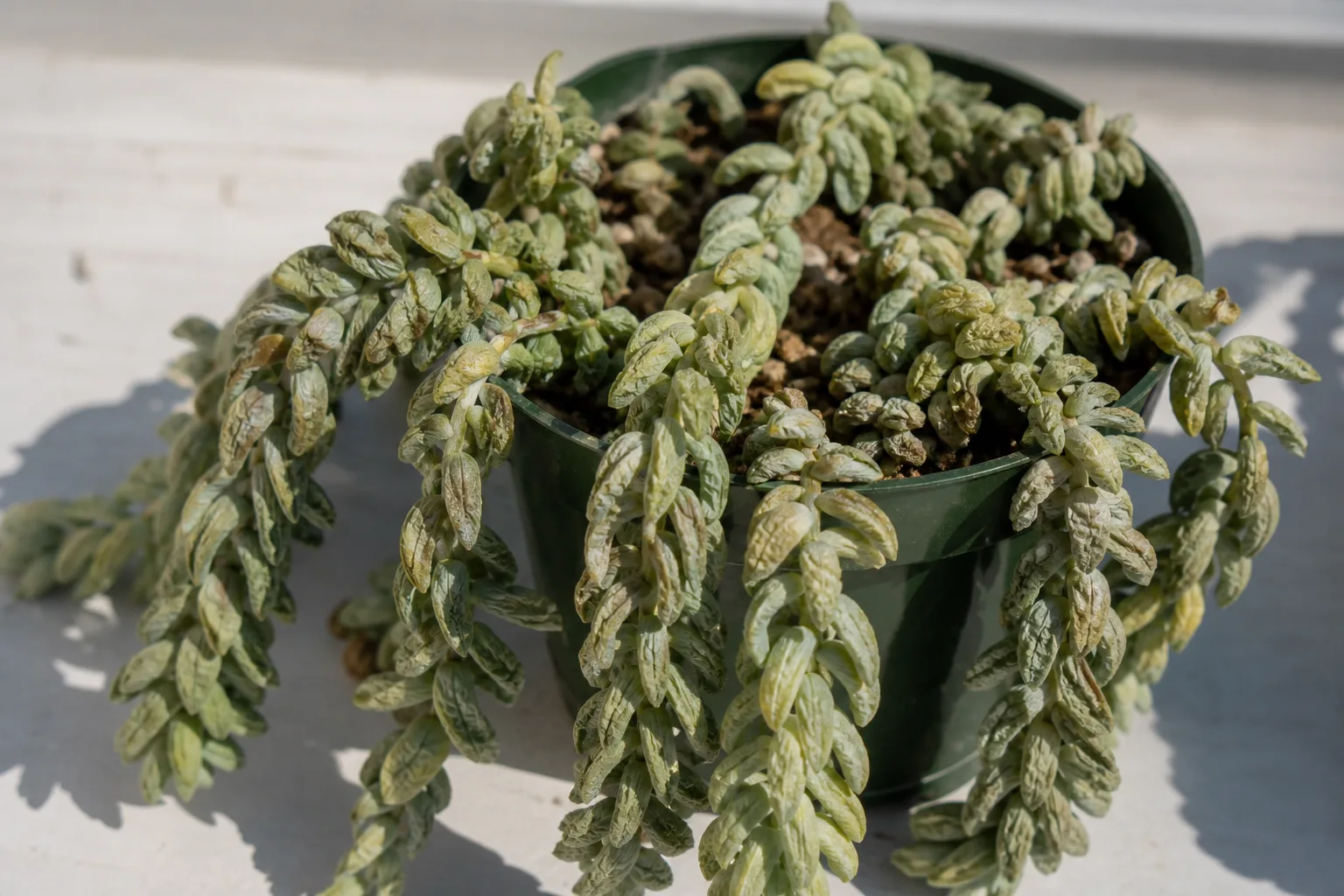
Underwatering on Burro's Tail: Causes, Checks & Fixes
This guide covers underwatering on Burro's Tail. See also the general Underwatering guide, watering, and light pages for this plant.
Underwatering on Burro's Tail: Causes, Checks & Fixes
Quick answer
Underwatering on Burro’s Tail (Sedum morganianum) means the plant has drawn down its leaf-stored water reserves because the root zone stayed dry too long. The classic picture is shriveled, deflated blue-green leaves on trailing stems above bone-dry, lightweight soil-not mushy translucent tissue with a heavy wet pot.
First step: bottom-water the pot in a tray until the top of the mix feels lightly moist, then drain completely. Burro’s Tail leaves detach at the slightest bump, so soaking from below rehydrates roots without showering fragile stems. Once the mix is wet through, wait until it dries fully before the next drink-the same soak-and-dry cycle Iowa State Extension recommends for succulents.
What underwatering looks like on Burro’s Tail
Burro’s Tail stores water in thick, overlapping leaves that swell when well watered and shrivel when dry. That visible change is your best early signal-more reliable than waiting for dramatic wilting.
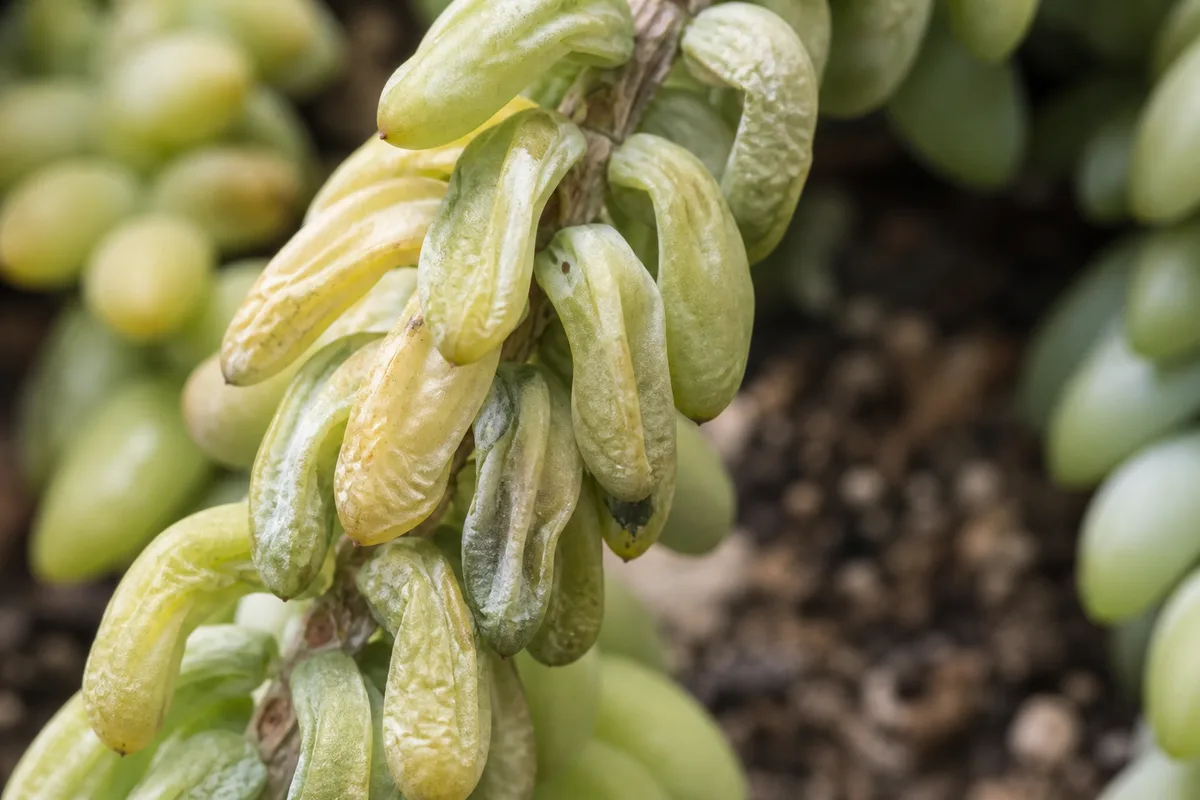
Underwatering symptoms on Burro’s Tail - compare with healthy tissue on the same plant.
Typical underwatering signs:
- Leaves lose their plump, braided look and appear wrinkled, deflated, or slightly accordion-textured
- Leaf color dulls from blue-green to gray-green; tips or older leaves may crisp brown
- Soil pulls away from the pot edge; surface dust blows off when you breathe on it
- Pot feels noticeably light compared with its weight right after watering
- Growth along stem tips slows or stops; new leaves look smaller than usual
- Occasional leaf drop from the lowest, oldest whorls-normal aging accelerated by drought
What underwatering does not look like: Mushy, translucent, or yellowing leaves with damp soil point to overwatering on Burro’s Tail or root rot on Burro’s Tail, not thirst. Iowa State Extension notes that shriveled succulents with wet soil often have damaged roots that cannot absorb water-the opposite fix from drought.
The leaf squeeze test separates the two quickly. Underwatered leaves feel soft but dry, like a deflated balloon. Overwatered leaves feel squishy and may release moisture under gentle pressure.
Why Burro’s Tail gets underwatered
Burro’s Tail tolerates drought better than most houseplants-growers often hear “don’t overwater” so loudly that they underwater instead, especially after a scare from mushy leaves or a leaf-drop incident during top watering.
Several Burro’s Tail–specific factors push pots dry faster than a calendar suggests:
Bright light and hanging placement. This species wants bright light to full sun. A south-facing window or summer porch increases transpiration and evaporation from a hanging basket where air wraps the whole container. A plant that needed water every three weeks in a dim corner may need it every ten days in strong light.
Small or potbound roots. Wisconsin Extension notes Burro’s Tail does well when slightly potbound. A dense root ball in a modest pot dries through quickly-sometimes in a week during active summer growth. That is normal, not a sign the plant needs a larger pot.
Sharp drainage mix. Succulent mix with perlite or pumice is correct for rot prevention, but it also dries fast. Pairing gritty mix with a terra-cotta or unglazed clay pot accelerates dry-down further.
Hydrophobic dry spells. When peat-heavy mix goes completely dry for weeks, water can run down the pot sides without rewetting the center. The surface looks briefly damp while the root ball stays dry-chronic underwatering disguised as regular watering.
Seasonal misreads. In winter, growth slows and you should water less often-but Wisconsin Extension still recommends enough water in cool months to prevent the medium from drying out completely. Withholding all water for six weeks in a heated, bright room can still desiccate a trailing basket.
Fear of touching the plant. Because leaves fall off when jostled, some growers avoid watering until the plant is visibly shriveled. Bottom watering solves the handling problem without skipping drinks.
How to confirm the cause
Work through these checks before you soak:
- Pot weight - Lift the container. Very light = dry throughout. Heavy = do not water yet.
- Soil at depth - Insert a wooden skewer or chopstick near the pot wall. If it emerges clean and dry several inches down, the root zone needs moisture. Iowa State Extension uses the chopstick method for succulents-a dark, moist skewer means wait.
- Leaf texture - Pinch a mid-stem leaf. Wrinkled and dry with confirmed dry soil = underwatering. Soft and translucent with damp soil = overwatering or rot.
- Water absorption test - Pour a small amount on the surface. If it beads and runs off, the mix is hydrophobic; plan a longer bottom soak or a full immersion rehydration.
- Smell and stem base - Sour odor or black mush at the soil line rules out simple thirst. Firm pale roots after a gentle unpot confirm drought; brown mush confirms rot.
- Recent care history - Travel, “I skipped it because leaves kept falling,” or a new bright window all raise underwatering odds.
If the pot is light, soil is dry throughout, leaves are wrinkled but stems remain firm, and roots look pale and intact, underwatering is confirmed.
First fix for Burro’s Tail
Bottom-water the pot until the mix rehydrates, then drain fully.
Place the container in a sink or tray with 2–3 inches of room-temperature water. Let it sit 15 to 30 minutes until the top of the soil feels lightly moist to your finger. Remove the pot, allow excess to drain for at least 30 minutes, and empty any saucer. Do not mist leaves, fertilize, or repot the same day.
This single step protects fragile foliage while delivering water where roots can absorb it. Iowa State Extension advises wetting the entire root ball until water drains, then discarding excess-bottom watering achieves that without tilting trailing stems.
Step-by-step recovery
After the first bottom soak, follow this sequence based on severity:
Mild shriveling (recent dry spell, firm stems):
- Complete the bottom soak above.
- Move the plant back to its bright spot-good light helps leaves refill once roots take up water.
- Wait until the mix is fully dry before the next watering. Do not water again “just in case” while soil is still damp.
- Expect visible plumping within 24 to 48 hours.
Moderate drought (weeks dry, widespread wrinkling, some crisp edges):
- Bottom-soak 30 minutes. If the top still feels dry, repeat once after the first drain cycle.
- For hydrophobic mix, soak the entire pot in water for one to two hours as Missouri Botanical Garden recommends for shrunken dry soil, then drain completely.
- Trim only fully brown, papery leaves at the base for appearance-living tissue may still rehydrate.
- Resume normal soak-and-dry checks; avoid daily sips that never reach the root core.
Severe drought (paper-thin leaves, limp stems, long dry period):
- Rehydrate with bottom soak or immersion as above.
- If leaves stay shriveled 48 to 72 hours after two proper soaks with dry-down between them, unpot gently and inspect roots. Iowa State Extension warns that prolonged drought kills roots, leaving too small a root mass to recover even after watering resumes.
- Trim any dead roots, let cuts callus one to two days, and repot into dry gritty mix without watering for several days.
- Take stem cuttings from firm upper sections as backup-Burro’s Tail roots easily from healthy cuttings if the parent plant fails.
Do not repot into a larger container to “help watering” unless the plant is genuinely rootbound and you understand that extra soil volume slows drying-a common overwatering trigger on Burro’s Tail overview.
Recovery timeline
24 to 48 hours: Most healthy Burro’s Tail plants show visibly plumper leaves after one thorough rehydration. The change starts at the leaf center and spreads outward.
One to two weeks: New growth at stem tips resumes in warm, bright conditions. Older leaves with crisp brown margins stay damaged- that tissue will not revert.
Three to six weeks: If fine roots were killed by a long dry spell, recovery is slower. Watch for new leaves spaced normally along stems rather than a single flush followed by stall.
Worsening signs after watering: Continued shriveling with wet soil, stems softening at the base, or sour smell means rot-not ongoing drought. Stop watering and inspect roots.
Lookalike symptoms
- Overwatering / root rot - Wrinkled or yellow leaves with heavy, damp soil and mushy stem bases. More common on Burro’s Tail than drought. Do not add water.
- Normal leaf drop - Older lowest leaves dry and fall in a healthy plant. Drought accelerates the pattern across many whorls at once.
- Sun scorch - Bleached yellow patches on leaves exposed to sudden intense sun, often after moving outdoors without acclimation. Soil moisture may be fine.
- Mealybugs - White cottony patches on stem joints; leaves may look dull but not uniformly deflated. Wipe and treat pests, not drought.
- Post-Burro’s Tail repotting guide stress - Temporary limpness after root disturbance with evenly moist new mix; differs from chronic bone-dry soil.
What not to do
Do not top-water aggressively over cascading stems-expect a leaf shower on the floor. Do not drench daily after one dry period; swinging to constant moisture invites rot on a succulent built for dry cycles.
Avoid misting instead of soaking roots; surface humidity does not refill leaf reserves. Do not fertilize a drought-stressed plant until leaves plump and new growth appears for two weeks.
Skip cold water straight from the tap on a heat-shocked dry plant-room-temperature water absorbs more evenly. Do not assume shriveled always means water without checking soil; wet-soil shriveling needs rot protocol.
How to prevent underwatering next time
Build a pot-weight habit: lift the container every five to seven days during spring and summer. Water only when it feels light and a skewer confirms dryness at depth.
Match frequency to conditions:
- Bright south window or outdoor summer hang - Often every 10 to 14 days in active growth
- Cool dim winter room - Every three to four weeks, but never let mix go dust-dry for a full month in heated air
- Small terra-cotta pot - Check more often; surface dryness appears before the calendar says so
Continue bottom watering as your default method to protect stems. After every soak, empty saucers so roots never stand in water-even drought-stressed succulents rot in standing water.
Refresh peat-heavy mix that repels water, and flush salts from the top occasionally if you mostly bottom-water. Pair watering checks with your light season: longer days and stronger sun mean faster dry-down.
When to worry
Treat same-day if all leaves along multiple stems look paper-thin, the plant sat dry in hot direct sun for weeks, or stems feel brittle and limp rather than merely soft.
Escalate to root inspection if two thorough soaks separated by full dry-down cycles fail to plump leaves within 72 hours-fine root death from prolonged drought may require repotting and cuttings.
Simple underwatering rarely kills a mature Burro’s Tail quickly; decline from extended drought can become hard to reverse once the soil has been dust-dry so long that roots die back. Early weight checks beat emergency recovery.
Conclusion
Underwatering on Burro’s Tail is a dry root zone problem visible first in shriveled leaves, not a mystery disease. Confirm it with a light pot, dry skewer, and firm-not mushy-stems, then bottom-water once thoroughly and return to soak-and-dry rhythm. The plant forgives short dry spells better than wet feet, but trailing baskets in bright light still need regular checks. Judge success by plump new leaves within two days and steady tip growth in the weeks after-not by old crisp foliage at the base.
When to use this page vs other Burro’s Tail guides
- Burro’s Tail watering guide - Use for routine moisture checks before assuming underwatering is the main issue.
- Burro’s Tail problems hub - Browse all 16 common issues on this species.
- Wilting on Burro’s Tail - Different entry point when symptoms overlap with underwatering.
- Brown Tips on Burro’s Tail - Different entry point when symptoms overlap with underwatering.
- Yellow Leaves on Burro’s Tail - Different entry point when symptoms overlap with underwatering.