Brown Tips on Burro's Tail: Causes, Checks & Fixes
Quick answer
On Burro's Tail, brown tips usually mean underwatering tip shrivel, sun scorch on exposed leaves, mechanical bruising from handling, or-less often-overwatering mush that yellows before browning. First step: lift the pot and pinch a leaf-light dry pot with wrinkled dry leaves needs bottom water; heavy wet pot with mushy tissue needs water withheld.
Brown Tips on Burro's Tail: Causes, Checks & Fixes
This guide covers brown tips on Burro's Tail. See also the general Brown Tips guide, watering, and light pages for this plant.
Brown Tips on Burro's Tail: Causes, Checks & Fixes
Quick answer
On Burro’s Tail (Sedum morganianum), what growers call “brown tips” is usually tip shrivel from underwatering, sun scorch on exposed leaves, mechanical bruising from handling brittle stems, or-less often-overwatering damage that turns leaves mushy or yellow before they brown. This is not the tropical “crispy tip from low humidity” pattern you see on calatheas or dracaenas; Burro’s Tail is a drought-built succulent whose leaves swell when well watered and shrivel when dry.
First step: lift the pot and gently pinch one mature leaf. A light, dry pot with soft wrinkled leaves means bottom-water until the mix rehydrates. A heavy, damp pot with mushy translucent tissue means stop watering and inspect roots-see our overwatering guide. Brown patches on the sun-facing side after a recent move outdoors or to a south window mean shade the plant and acclimate gradually.
What brown tips and tip shrivel look like on Burro’s Tail
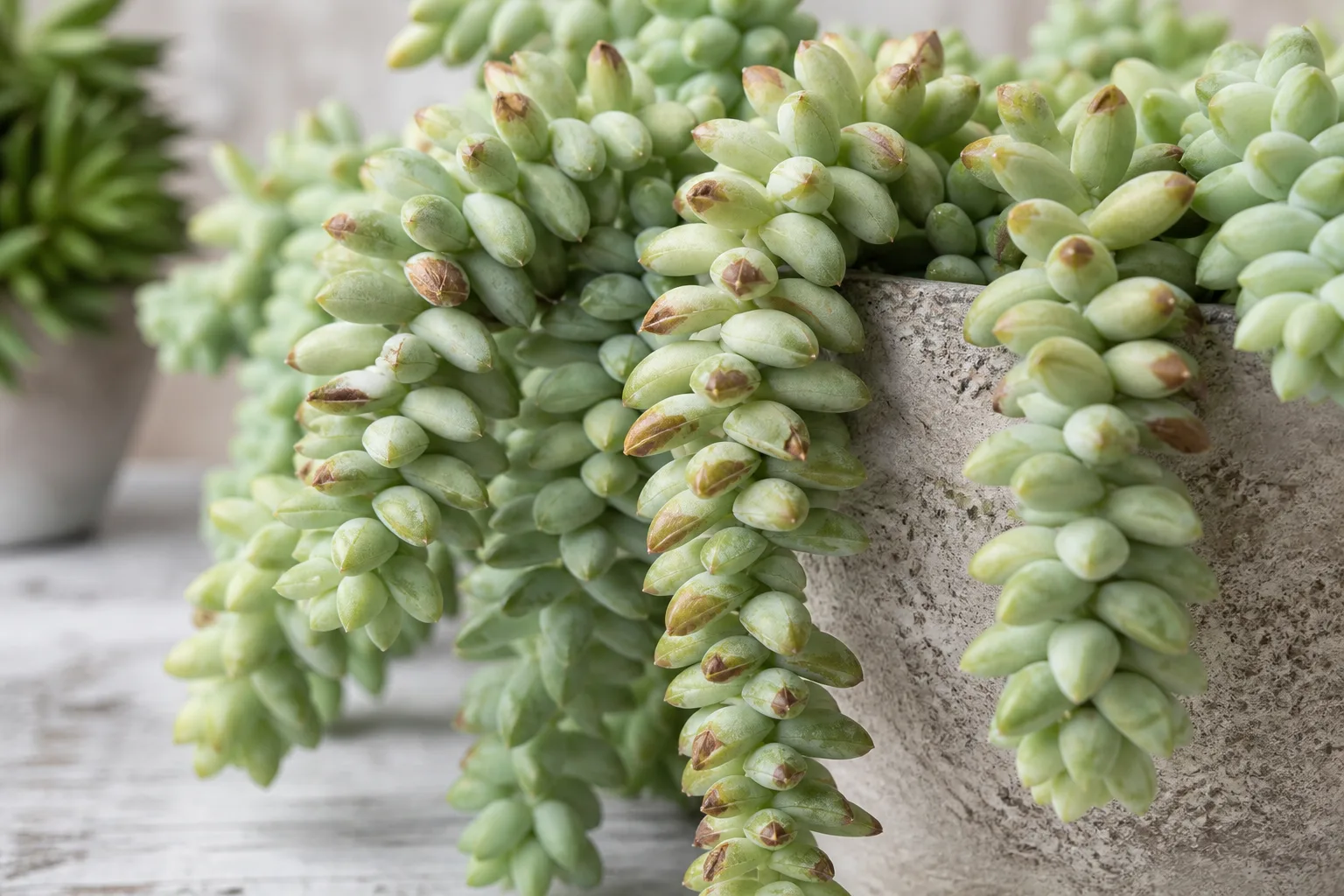
Burro’s Tail leaves overlap in tight whorls along trailing stems. Damage usually shows on older outer leaves first, because they sit farthest from the stem and lose internal water reserves earliest.
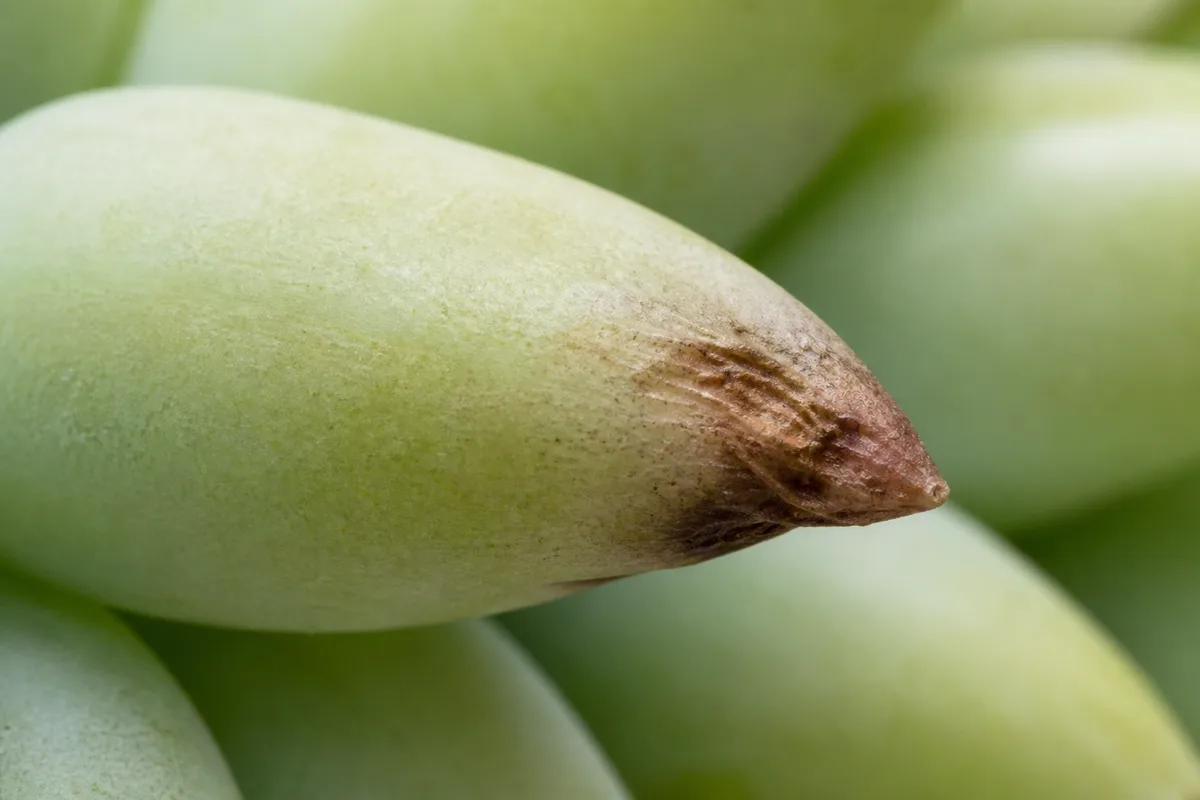
Brown Tips symptoms on Burro’s Tail - compare with healthy tissue on the same plant.
Typical underwatering pattern:
- Tips or entire leaf edges look wrinkled, deflated, or accordion-textured before turning tan-brown
- Color dulls from blue-green to gray-green; crisp brown appears at the very tip or along the thin leaf margin
- Soil is bone dry and the pot feels noticeably light
- Lower whorls on long stems show damage while newer leaves near the crown may still look plump
Typical sun scorch pattern:
- Bleached yellow or tan patches on the side facing the window or afternoon sun-not always confined to the tip
- Damage appears days after moving to harsh direct sun without acclimation
- Soil moisture is often normal; leaves may still feel firm
- Outdoor summer baskets on west- or south-facing hooks show scorch on the outermost exposed whorls
Typical overwatering lookalike:
- Leaves turn soft, mushy, or translucent, often yellowing before browning
- Stem base near soil may feel squishy; pot stays heavy for days after watering
- Not a dry crispy tip-more like cell collapse from rot
Mechanical damage:
- Sudden brown scars or knocked-off leaves right after Burro’s Tail repotting guide, watering, or brushing past the plant
- No consistent pattern with soil dryness; scattered damage on touched stems only
Normal aging: The lowest leaves on very long trailing stems occasionally dry and drop in a healthy plant. Drought or handling accelerates that pattern across many whorls at once.
Why Burro’s Tail gets brown or shriveled tips
Burro’s Tail evolved on dry rocky slopes in southern Mexico and Honduras, storing water in thick leaves rather than drawing constantly from moist soil. When the root zone stays dry too long, the plant draws down leaf reserves-tips and older outer leaves show stress first because they are farthest from the water supply path.
Several Burro’s Tail–specific factors make tip damage common:
Skipped dry-down checks. Growers often hear “do not overwater” so loudly that they let pots go dust-dry, especially in bright hanging baskets that dry faster than a calendar suggests. A trailing basket in a south window may need water every 10 to 14 days in summer while a dim-corner plant needs far less-but both still need a full soak when dry.
Bright light without matching water rhythm. This species wants bright light to full sun. More light increases water use. Tip shrivel in a sunny spot often means the soak-and-dry cycle lagged behind evaporation-not that the plant hates sun.
Sudden sun exposure. Moving outdoors for summer or placing a basket in unfiltered afternoon sun without gradual acclimation burns exposed tissue. Wisconsin Extension recommends acclimating gradually to brighter outdoor conditions to avoid sunburn.
Brittle stems and leaf drop. Leaves detach at the slightest bump. Inspecting damage by lifting trailing stems bruises tips and knocks leaves loose-creating brown scars that look like a care problem but are physical injury.
Overwatering confusion. Mushy yellowing leaves with wet soil are rot, not drought. Adding water because tips look “dry” when the real issue is root damage makes browning worse. Shriveled succulents with wet soil often have damaged roots that cannot absorb water-the opposite fix from tip shrivel on dry soil.
Cold window edges in winter. Leaves pressed against cold glass can show brown crisp margins on the contact side-a draft and temperature stress pattern, not underwatering.
Lookalike symptoms to rule out
| What you see | Soil / pot | Leaf feel | Likely cause | First direction |
|---|---|---|---|---|
| Wrinkled tips turning brown | Light, dry throughout | Soft but dry, not mushy | Underwatering | Bottom-water |
| Yellow-tan patches on sun side | Normal moisture | Firm | Sun scorch | Shade and acclimate |
| Mushy translucent leaves | Heavy, damp days | Squishy, may weep | Overwatering / rot | Stop water, inspect roots |
| Scattered tip scars after handling | Any | Firm, localized damage | Mechanical bruising | Stop jostling; no extra water |
| Lower leaves dry and drop only | Normal dry-down | Plump upper leaves | Normal aging | None if isolated |
| Uniform dull stretch, weak tips | Often stays wet in dim spot | Soft stems, sparse leaves | Not enough light | Brighten placement first |
How to confirm the cause
Work through these five checks before you change care:
-
Pot weight - Lift the container. Very light means dry throughout; heavy means do not add water yet.
-
Skewer at depth - Insert a dry wooden skewer near the pot wall. Clean and dry several inches down confirms drought; dark moist skewer means wait-even if tips look stressed.
-
Leaf pinch test - Underwatered leaves feel soft and dry, like a deflated balloon. Overwatered leaves feel squishy and may release moisture under gentle pressure.
-
Light history - Did you move the plant to stronger sun, outdoors, or a new south window in the last two weeks? Sun-side patchy discoloration with normal soil moisture points to scorch, not thirst.
-
Handling history - Did damage appear immediately after repotting, top watering, or brushing the trailing stems? Localized scars on touched sections suggest mechanical injury.
If the pot is light, soil is dry throughout, leaves are wrinkled but stems remain firm, and roots look pale when you spot-check-underwatering is confirmed. If the pot is heavy, soil is damp, and tissue is mushy-overwatering or rot takes priority over any tip-browning appearance.
First fix for Burro’s Tail (by confirmed cause)
Make one change, then wait 48 hours before stacking treatments.
If underwatering is confirmed
Bottom-water the pot until the mix rehydrates, then drain fully. Place the container in a sink or tray with 2–3 inches of room-temperature water for 15 to 30 minutes until the top feels lightly moist. Remove, drain at least 30 minutes, and empty the saucer. Burro’s Tail leaves detach when jostled, so soaking from below protects fragile stems while delivering water to roots. Full recovery steps are in our underwatering guide.
If sun scorch is confirmed
Move the plant to bright indirect light or filtered morning sun-not deep shade and not the same harsh exposure. Acclimate gradually over one to two weeks if you want more sun later. Do not water extra “to cool” scorched leaves; match water to actual soil dryness only.
If overwatering or rot is suspected
Stop watering immediately. Let the mix dry completely before any next drink. If stems soften at the base or smell sour, unpot and inspect roots per our overwatering and root rot guides. Do not bottom-soak a heavy wet pot because tips look crisp-that worsens rot.
If mechanical damage is confirmed
Leave the plant alone for a week aside from normal soak-and-dry watering. Do not prune aggressively or repot again. New growth at stem tips in good light confirms the plant is otherwise healthy.
Recovery timeline
24 to 48 hours: After correct underwatering correction, most healthy Burro’s Tail plants show visibly plumper leaves. Crisp brown tips on old leaves stay brown-they will not green up.
One to two weeks: New overlapping leaves at stem tips resume normal size and spacing in warm, bright conditions. Sun-scorched patches remain on damaged tissue; judge success by undamaged new growth, not old burns.
Three to six weeks: If fine roots were damaged by chronic overwatering or prolonged drought, recovery is slower. Watch for steady new leaves rather than a single flush followed by stall.
Worsening signs: Continued shriveling with wet soil, stems softening at the base, or sour smell means rot-not ongoing drought. Stop watering and inspect roots.
What not to do
Do not top-water aggressively over cascading stems-expect a leaf shower and new bruised tips. Do not water on surface-dry alone; confirm full root-zone dry-down per our watering guide.
Avoid misting instead of soaking roots; surface humidity does not refill leaf reserves on a succulent built for dry air.
Do not fertilize a stressed plant until leaves plump and new growth appears for two weeks.
Do not assume every brown tip means add water-wet-soil mushiness needs the opposite protocol.
Skip trimming every damaged leaf immediately; wait until the plant is stable, then remove only fully papery brown tissue if appearance matters.
Do not move from shade to harsh afternoon sun in one day when trying to “fix” pale stretched growth-that trades one problem for scorch.
How to prevent brown tips next time
Build a pot-weight habit: lift the container every five to seven days during spring and summer, aligned with our Burro’s Tail watering guide. Water only when the root zone is fully dry-often every 10 to 14 days in active indoor growth, and every three to four weeks or longer in cool winter months when Wisconsin Extension notes indoor plants may need water no more than once a month.
Bottom-water as your default method to protect brittle stems. After every soak, empty saucers so roots never stand in water-even drought-stressed succulents rot in standing water.
Acclimate before sun moves: increase exposure over one to two weeks when shifting to outdoor summer hang or a brighter south window.
Handle the pot, not the tails during checks. Rotate the hanger or shelf instead of lifting stems.
Match frequency to conditions: small terra-cotta pots and bright south windows dry faster; cool dim rooms need longer dry-down but should not go dust-dry for a full month in heated air.
When to worry
Treat same day if:
- All leaves along multiple stems look paper-thin with bone-dry soil in hot direct sun for weeks
- Stems feel mushy at the base with damp soil and sour smell
- Tips keep browning 48 to 72 hours after two proper bottom soaks separated by dry-down (possible fine root death)
Simple tip shrivel from a missed watering rarely kills a mature Burro’s Tail quickly, but decline from extended stress can become hard to reverse once roots die back.
Conclusion
Brown tips on Burro’s Tail are a succulent water-and-light signal, not a generic houseplant humidity problem. The diagnosis starts with pot weight and leaf texture: dry and wrinkled needs a bottom soak; wet and mushy needs water withheld; sun-side patches need shade and acclimation; scattered scars after handling need calm, not crisis watering.
Judge success by plump new leaves within two days and steady tip growth in the weeks after-not by old crisp margins at the base. Get the soak-and-dry rhythm right, protect trailing stems from bumps, and acclimate sun moves gradually, and this species forgives short dry spells far more willingly than wet feet.
Related Burro’s Tail problems
- Burro’s Tail overview - Light, soil, and general care
- Watering Burro’s Tail - Soak-and-dry schedule and moisture checks
- Underwatering - Tip shrivel, bottom-water recovery, and dry-soil confirmation
- Overwatering - Mushy yellow leaves that mimic drought stress
- Not enough light - Weak etiolated growth that complicates watering reads
- Root rot - When wet soil and browning persist despite withholding water
- Yellow leaves - Often the stage before overwatered tissue browns
When to use this page vs other Burro’s Tail guides
- Burro’s Tail watering guide - Use for routine moisture checks before assuming brown tips is the main issue.
- Burro’s Tail problems hub - Browse all 16 common issues on this species.
- Low Humidity on Burro’s Tail - Different entry point when symptoms overlap with brown tips.
- Underwatering on Burro’s Tail - Different entry point when symptoms overlap with brown tips.
- Overwatering on Burro’s Tail - Different entry point when symptoms overlap with brown tips.