Low Humidity on Burro's Tail: Causes, Checks & Fixes
Quick answer
Low humidity is rarely the primary problem on Burro's Tail-a cliff-dwelling succulent built for dry air. Typical indoor winter humidity of 30–50% is fine. Wrinkled, shriveled leaves usually mean underwatering, heat drafts, or recent handling-not a need for misting or humidifiers. First step: check whether the potting mix is completely dry at least two inches down before raising humidity.
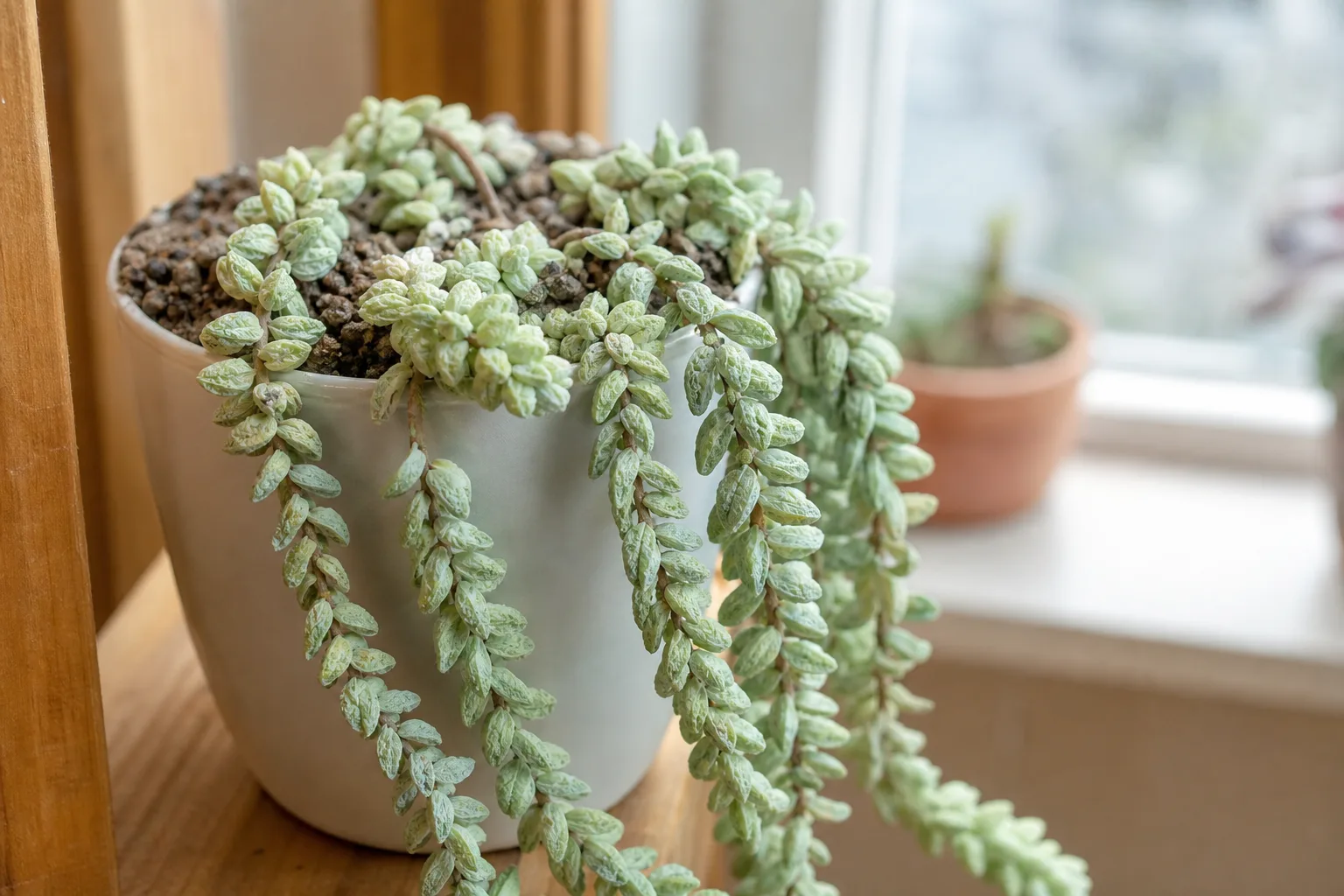
Low Humidity on Burro's Tail: Causes, Checks & Fixes
This guide covers low humidity on Burro's Tail. See also the general Low Humidity guide, watering, and light pages for this plant.
Low Humidity on Burro's Tail: Causes, Checks & Fixes
Quick answer
Low humidity is rarely the primary problem on Burro’s Tail - Sedum morganianum. This cliff-dwelling Mexican succulent evolved for sharp drainage, strong light, and dry air, not rainforest humidity. Iowa State Extension notes that succulents thrive in the low indoor humidity common during winter, and our Burro’s Tail overview lists low to average indoor humidity as ideal - avoid steamy bathrooms long-term.
Typical heated-room humidity of 30–50% RH is acceptable. Wrinkled, shriveled leaves almost always mean underwatering, root stress from wet soil, heat drafts near vents, or mechanical leaf drop after handling - not a call for misting or humidifiers.
First step: check whether the potting mix is completely dry at least two inches down before raising humidity. If dry and leaves are wrinkled, follow the soak-and-dry rhythm in our watering guide until a little drains, then wait until fully dry again. If wet and leaves are yellow or mushy, you have overwatering - a far more common Burro’s Tail killer than dry air.
Does Burro’s Tail need high humidity?
Usually no. Burro’s Tail is a drought-adapted trailing succulent, not a moisture-loving tropical. Wisconsin Extension describes leaves that swell when well watered and shrivel when dry - the plant stores water internally and reads thirst through leaf turgor, not through ambient humidity the way a fern does.
Most homes already sit in the 30–50% RH band this species tolerates without intervention. You do not need pebble trays, grouping tricks, or a humidifier dedicated to Burro’s Tail unless you are also raising tropical plants in the same room and want shared ambient moisture for those species.
The humidity mistake that actually hurts this plant runs in the opposite direction: misting, overwatering because “dry air” feels stressful, or placing the basket in a steamy bathroom where wet leaf clusters and stagnant air invite rot. NC State Extension warns to avoid wet or poorly drained conditions on Sedum morganianum - high humidity plus damp soil is the dangerous pairing, not winter dryness alone.
What low humidity looks like on Burro’s Tail (and what does not)
True low-humidity stress on this species is uncommon indoors. When searchers land on “low humidity,” they are usually seeing one of the lookalikes below.
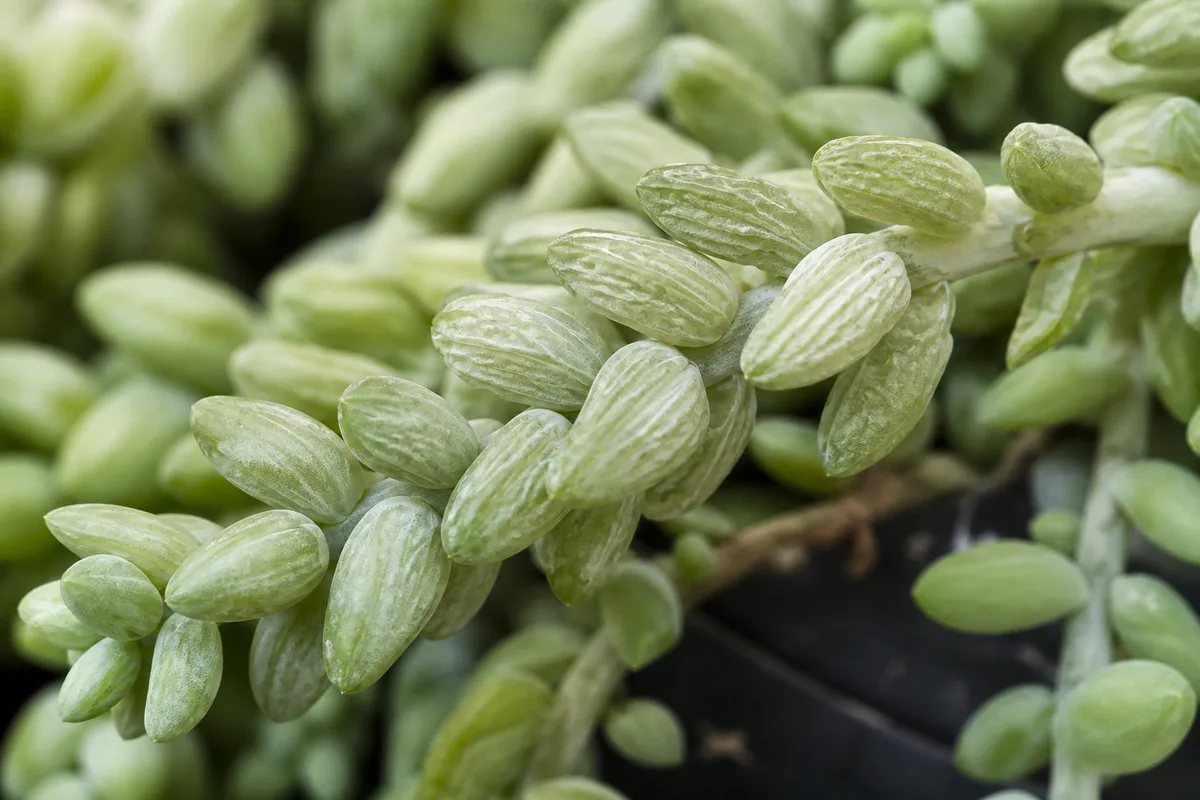
Wrinkled Burro’s Tail beads in dry indoor air - thirst at the root zone, not a humidity problem, re-plumps after one proper soak.
Early signs people misread as “dry air”
- Wrinkled, deflated leaves along pendulous stems - classic underwatering, especially in bright hanging baskets
- Dull gray-green color and slightly soft leaf feel with a very light pot
- Crisp brown tips on oldest leaves after weeks of bone-dry soil - drought at the root zone, not RH alone
- Leaf scatter on the floor after Burro’s Tail repotting guide or a bump - mechanical drop, not humidity failure
What healthy Burro’s Tail looks like in dry air
Firm blue-green leaves with powdery farina intact. Stems cascade normally from the basket. No humidifier running. Soil cycles fully dry between thorough soaks per the watering guide.
What is NOT low humidity
- Yellow, translucent, or black mushy leaves that drop at a touch - overwatering or root rot, especially when growers water more thinking winter dryness is the issue
- Bleached papery patches on the window-facing side - sun scorch, not dry air; see light requirements
- Stretched sparse stems with widely spaced leaves - insufficient light (not enough light), not humidity
There is no classic “crispy tip burn from dry air only” pattern like on areca palms or calatheas. Succulent leaves store water internally; margin burn on Burro’s Tail usually traces to drought, salts, or sun - not RH sitting at 35%.
Symptom patterns to recognize
Pattern A - wrinkled leaves in a heated winter room: Trailing stems look deflated. Pot feels very light. Skewer pulled from two inches down is clean and dry. Room may be 25–35% RH near a radiator, but the plant still re-plumps within 24–48 hours after one bottom soak. Dry air may be present, but thirst is the actionable problem - humidity changes alone would not have fixed it.
Pattern B - mushy leaves with damp soil after “helping” the plant through dry air: Leaves turn translucent or yellow. Mix stays cool and damp for days. Pot remains heavy. Grower misted or watered more because leaves looked sad in January. This is overwatering - the opposite fix from raising humidity.
Why Burro’s Tail rarely suffers from low humidity
Native cliff habitat
Wild Sedum morganianum grows on vertical cliffs in tropical deciduous forest in Mexico, where air is warm and dry between rain events. NC State Extension lists the species as drought and dry-soil tolerant with succulent leaves built for arid exposure. Our overview notes the Veracruz cliff logic: sharp drainage, long dry intervals, low humidity - every indoor rule flows from that habitat.
CAM photosynthesis and leaf storage
Like other Crassulaceae succulents, Burro’s Tail uses CAM photosynthesis - opening stomata at night to conserve water during hot, dry conditions. Thick leaves hold reserves. Transpiration stress shows as wrinkling from root-zone drought, not ambient humidity alone, unless you are in extreme desert conditions below roughly 15–20% RH with adequate soil moisture - uncommon in heated apartments.
Farina protection - and why misting backfires
The silvery bloom on each leaf reduces water loss and sun damage. Wisconsin Extension notes the bloom rubs off when handled. Misting washes farina away, wets overlapping leaf whorls where airflow is poor in dense trailing stems, and keeps tissue damp long enough for rot in hanging baskets. Smooth-leaf succulents tolerate occasional misting better; farina-coated Burro’s Tail does not.
Trailing density and airflow
Hanging baskets pack hundreds of leaves along pendulous stems. Humidity trapped between overlapping leaves plus wet foliage is a rot recipe - Iowa State Extension recommends good air circulation for indoor succulents to help soils dry and reduce pest pressure. Dry winter air with gentle airflow is usually safer than misting into a dense leaf mass.
Low humidity vs. underwatering vs. heat drafts
| What you see | Soil state | Pot weight | RH context | First fix |
|---|---|---|---|---|
| Wrinkled, deflated leaves | Dry 2+ inches down | Light | Any - even 40% RH | Deep soak; see underwatering |
| Mushy yellow/black leaves | Wet, cool | Heavy | Often high humidity + overwater | Stop watering; inspect roots - overwatering |
| Wrinkled leaves on radiator ledge | Dry | Light | Low RH + hot draft | Move off vent; soak when dry |
| Firm leaves on floor after bump | Any | Any | N/A | Mechanical drop - normal |
| Stretched pale stems | Varies | Varies | N/A | More light - not enough light |
| Wilting with dry soil | Dry throughout | Light | Dry winter air | Soak; if persists see wilting |
| Drooping soft stems, wet mix | Damp | Heavy | Humid room possible | Root stress - not humidity increase |
Underwatering is the primary lookalike for “low humidity” searches. Iowa State Extension states that wrinkled or drying lower leaves mean conditions are too dry - on succulents, that almost always means soil moisture, not air moisture.
Heat-draft stress stacks on winter dryness: a basket above a radiator loses leaf turgor from combined hot air and neglected watering. Fixing placement and one thorough soak beats a humidifier.
How to confirm the real cause
Work through these checks before buying a humidifier or misting:
- Soil dryness at depth - Insert a dry skewer two inches down. Dry throughout + wrinkled leaves = underwater. Wet + mushy = overwater.
- Pot weight - Lift the container. Light pot confirms drought; heavy wet pot confirms excess water.
- Leaf texture - Soft wrinkled (drought) vs. mushy translucent (rot) vs. firm with mechanical drop on the floor.
- Optional hygrometer - Reading below 20% RH at the basket with adequately moist soil and firm leaves is rare true dry-air edge case. Reading 30–45% with wrinkled leaves points to thirst, not RH.
- Recent handling - Leaves on the floor after moving? Burro’s Tail leaves detach easily by design. Mechanical, not humidity.
- Vent and window audit - One-sided shriveling on the stem half facing a heat vent implicates hot dry blasts plus faster soil dry-down - move the basket, then soak if dry.
- Seasonal rhythm - Winter dormancy slows growth; water even less frequently per the watering guide. Do not increase humidity instead of checking soil.
If RH is 30–50%, soil cycles normally, and new leaves stay plump after soaks, low humidity is not your problem - look at underwatering, overwatering, or light instead.
First fix for Burro’s Tail
Deep soak when the mix is completely dry two inches down, then empty the saucer and do not water again until fully dry.
This addresses the actual problem - underwatering - far more often than humidity ever does. Place in bright light with morning direct sun if possible per the light guide. Do not mist. Do not run a humidifier solely for this plant.
If the basket sits on a radiator cover or in a forced-air blast, move it 60–90 cm (2–3 feet) from the vent before you change anything else. Heat accelerates soil dry-down and leaf desiccation faster than room RH alone.
Step-by-step recovery
After the first soak (or vent move), add steps in this order:
- Water thoroughly when dry - bottom watering avoids knocking leaves off fragile stems; see underwatering recovery steps.
- Move to brighter exposure if stems are etiolated - four to six hours bright light daily.
- Inspect roots if soil was wet and leaves mushy - repot into dry gritty mix, remove rot; do not mist during recovery.
- Stop touching stems - handling knocks off healthy leaves and strips farina.
- Wait two weeks between soak cycles in winter; leaves re-plump as reserves refill within three to seven days after one proper drink.
- Propagate fallen healthy leaves if mechanical drop occurred - lay on dry mix to callus; only if propagation is part of recovery from handling damage.
Hold repotting, fertilizer, and humidifier purchases until new leaves along the stems stay firm for two to three weeks after corrected watering.
Recovery timeline
Rehydration from underwatering shows firmer leaves within 24–48 hours to one week after one proper soak - the same window Wisconsin Extension describes for plump vs. shriveled leaves. Rot recovery takes weeks and may require stem cuttings from healthy tissue above damage.
Humidity changes alone produce no visible improvement on this species when soil was the limiter. If a humidifier runs for two weeks and leaves stay wrinkled on bone-dry soil, the humidifier was never the fix.
Already crisp brown tips on old leaves will not green again - judge success by new firm leaves, not repaired base tissue.
What not to do
Do not mist Burro’s Tail for “humidity.” Wet leaf clusters rot; farina washes off.
Do not group it with tropical plants and overwater because the fern needs moisture - Burro’s Tail wants the opposite watering rhythm.
Do not use pebble trays expecting succulent benefit - negligible RH lift and zero help when soil is dry.
Do not increase winter watering when leaves wrinkle without confirming soil is dry - soggy mix in a humid bathroom kills faster than dry air.
Do not move the basket daily between a steamy bathroom and a dry living room - stable light and soak-and-dry beats humidity hunting.
Do not buy a humidifier for this species alone when wrinkled leaves and a light pot point to thirst.
How to prevent problems in dry winter air
Maintain soak-and-dry rhythm: fully dry between thorough soaks per the watering guide. Use hanging baskets with drainage. Provide bright light. Accept that 30–40% indoor humidity is fine - Iowa State Extension confirms succulents thrive in low winter humidity indoors.
Keep baskets off vent paths and radiator ledges. Handle minimally - every bump sends leaves to the floor.
Check pot weight every five to seven days in bright rooms during heating season; dry air plus strong light dries gritty mix faster than a calendar suggests.
If you grow tropicals nearby and run a room humidifier for them, Burro’s Tail tolerates the bump - just do not water more often because the air feels moister.
When to worry
Treat as urgent when:
- Stems go black and mushy at the base - rot, not humidity; see root rot
- Wrinkled leaves on bone-dry soil persist after two proper soaks separated by full dry-down - possible fine root death
- Soft wilted stems with wet soil - overwatering emergency, not dry air
Lower urgency when a few lower leaves wrinkle after a missed watering and re-plump within 48 hours of one soak. Burro’s Tail in average dry homes often shows minor drought signals that correct quickly - judge health by newest leaves along the stem tips, not every older whorl.
Burro’s Tail care cross-check
Low-humidity worries resolve faster when the rest of the routine matches cliff-succulent logic:
| Factor | Risk when wrong |
|---|---|
| Humidity | Mistaking thirst for dry air; misting dense trails |
| Water | Overwatering in winter when leaves look “stressed” |
| Light | Dim rooms slow recovery after drought |
| Placement | Heat vents drying soil and leaves together |
Cross-link your routine: overview hub for habitat and humidity baseline; watering for seasonal soak-and-dry; underwatering when the pot is light and dry; wilting and drooping leaves when stem posture confuses the diagnosis.
Conclusion
Low humidity on Burro’s Tail is usually a mislabel, not a diagnosis. Sedum morganianum prefers dry air, stores water in thick leaves, and punishes misting and soggy soil far more than a 35% RH winter room. Searchers worried about dry air should first rule out underwatering and heat-draft placement, then soak when fully dry, provide bright light and sharp drainage, and skip the humidifier. Old shriveled leaves may stay cosmetic; firm new growth tells you the fix worked.
Related Burro’s Tail problems
- Burro’s Tail overview - Low to average humidity baseline and cliff-succulent habitat
- Watering Burro’s Tail - Soak-and-dry schedule and moisture checks
- Underwatering - Primary lookalike for “low humidity” searches
- Overwatering - Mushy leaves when growers water more in dry air
- Wilting - Stem limpness when wet-soil and dry-soil branches diverge
- Drooping leaves - Overlapping trailing-stem symptoms
- Not enough light - Etiolation that slows post-drought recovery
- Brown tips - Crisp margins from drought or salts, not RH alone
When to use this page vs other Burro’s Tail guides
- Burro’s Tail watering guide - Use for routine moisture checks before assuming low humidity is the main issue.
- Burro’s Tail problems hub - Browse all 16 common issues on this species.
- Brown Tips on Burro’s Tail - Different entry point when symptoms overlap with low humidity.