Leggy Growth on Burro's Tail: Causes, Checks & Fixes
Quick answer
Leggy growth on Burro's Tail is etiolation-long internodes, thin trailing strands, and leaves that drop at a touch-because usable light is not reaching the crown and stems. First step: move the entire pot, crown included, within one to two feet of your brightest east- or filtered south-facing window, then increase brightness gradually over seven to fourteen days.
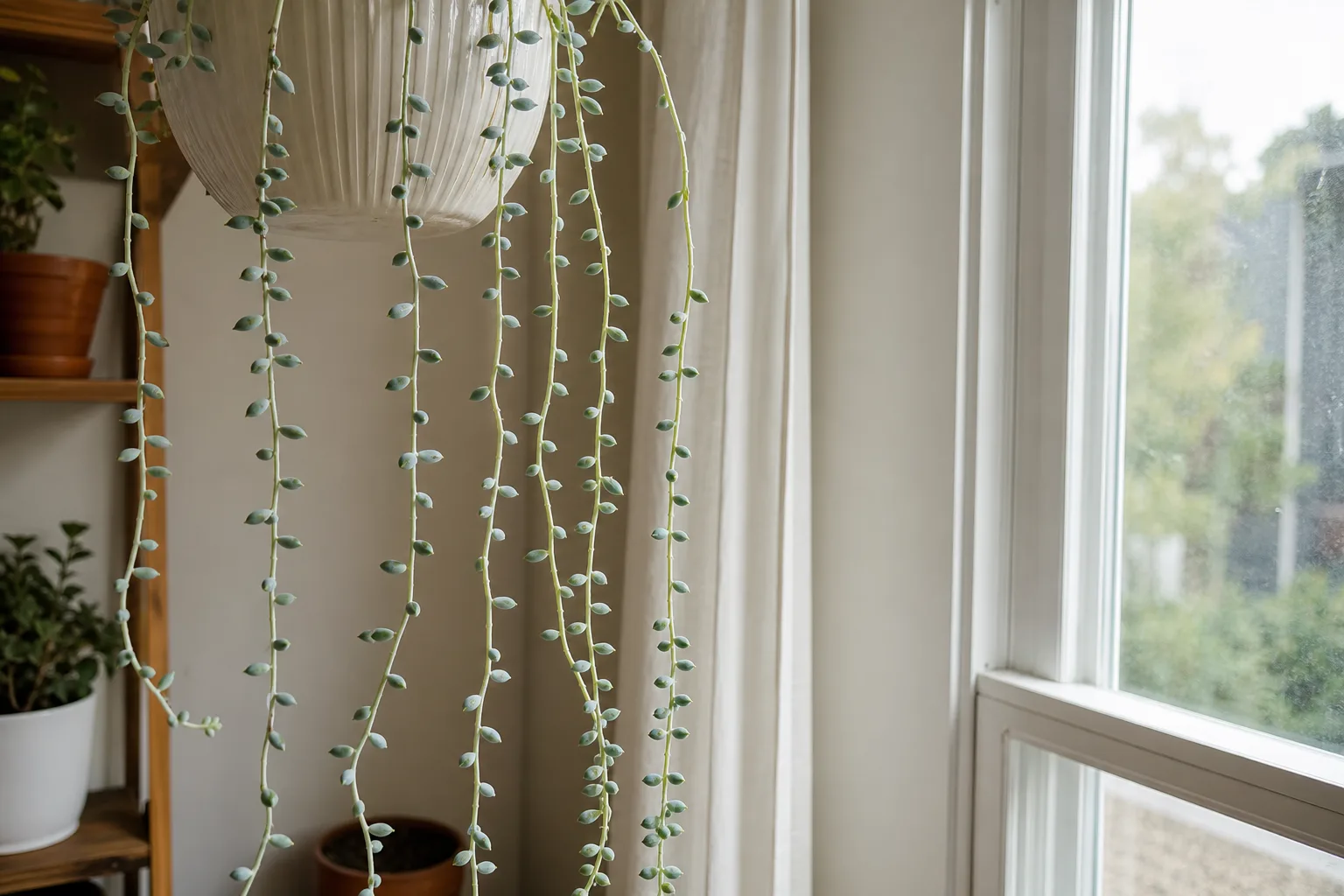
Leggy Growth on Burro's Tail: Causes, Checks & Fixes
This guide covers leggy growth on Burro's Tail. See also the general Leggy Growth guide, watering, and light pages for this plant.
Leggy Growth on Burro's Tail: Causes, Checks & Fixes
Quick answer
Leggy growth on Burro’s Tail (Sedum morganianum) is etiolation-the plant stretching toward usable light. Trailing strands develop long gaps between leaves, the crown thins, powdery farina dulls, and stems shed leaves when brushed or watered. Burro’s Tail is a high-light trailing succulent, not a low-light survivor; hanging baskets often hide the problem when only dangling tails catch a sunbeam while the crown sits in room shadow.
First step: move the entire plant, crown included, within one to two feet of your brightest east- or filtered south-facing window. Increase brightness gradually over seven to fourteen days so you fix stretch without sunburning shade-adapted tissue. Stretched internodes already on the plant will not compact again-judge success by plump, closely spaced new leaves at stem tips, and prune stringy sections only after the plant stabilizes.
For window placement, grow-light setup, and the crown-above-window-beam trap in depth, see not enough light on Burro’s Tail. This page is the reshape and pruning anchor-how to confirm stretch, trim etiolated strands after light correction, and tell leggy etiolation from rot or healthy long tails.
Leggy growth vs. not enough light on Burro’s Tail
Both pages address etiolation from insufficient usable light, but they serve different reader intents:
| Your question | Start here |
|---|---|
| Where should I put the pot? Grow-light distance and hours? Crown vs. tail light trap? | Not enough light |
| Should I cut stretched strands? When? How much? | This page |
| Is gappy spacing etiolation, rot, or just a long healthy tail? | This page (confirmation table below) |
| Baseline light needs and seasonal shifts | Light guide |
Leggy growth is what etiolation looks like on trailing Sedum-widening internode gaps, thin crown, dull farina. The not-enough-light guide walks through the first light correction; this page picks up at recognition, confirmation, post-light pruning, and realistic reshape timelines.
What leggy growth looks like on Burro’s Tail
A healthy Burro’s Tail forms dense, rope-like cascades with plump blue-green leaves packed tightly along each trailing strand. Leggy growth breaks that texture into loose, stringy tails. Compare against the overview for normal trailing habit and farina on compact beads.
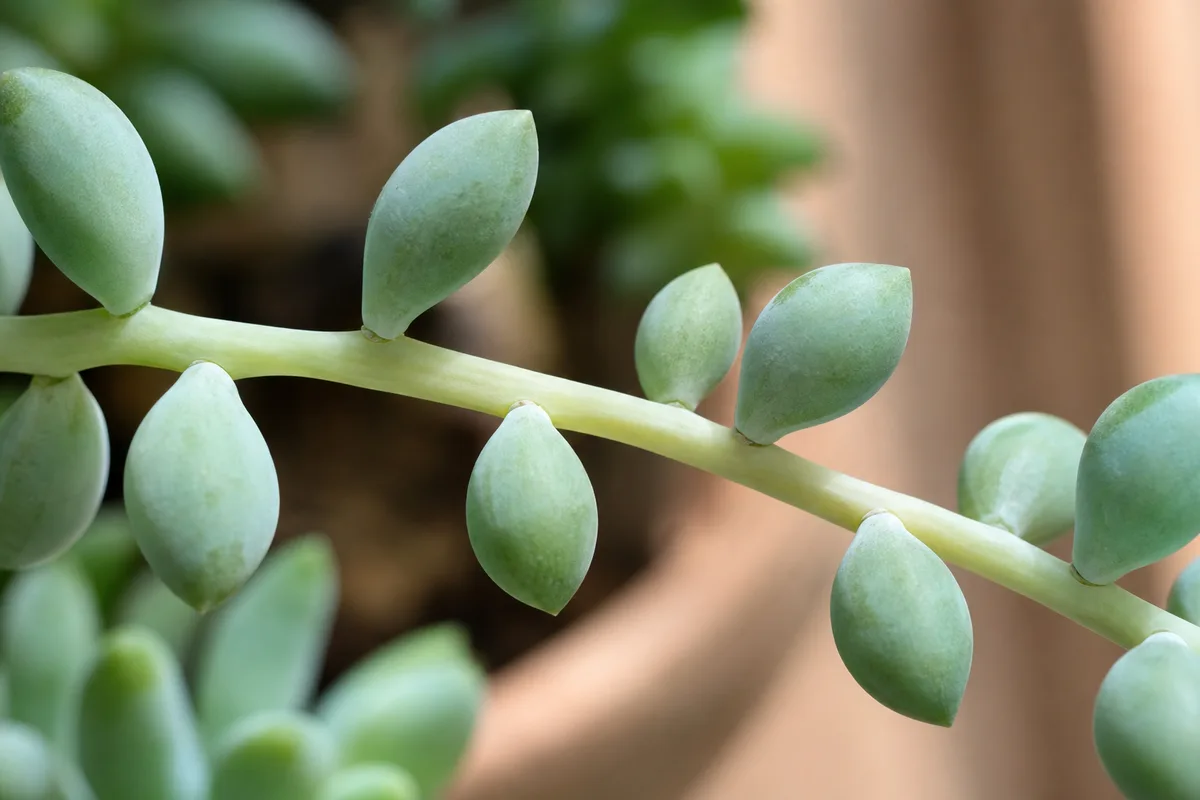
Etiolated Burro’s Tail stem - visible gaps between powdery blue-green beads where internodes stretched toward insufficient light.
Gappy trailing strands
The clearest sign is elongated internodes-visible spaces between leaves along each hanging stem. The braided, rope-like form thins into sparse tails. In insufficient light, internodes lengthen and leaves are not as dense on the stems.
Thin crown and weak new growth
Fresh leaves at stem tips look smaller and paler than older compact sections. The powdery farina may appear dull rather than crisply silver-blue. The soil-line crown thins while lower strands still look green enough to mask the problem.
Touch-triggered leaf drop
Burro’s Tail already loses leaves when handled; light-starved stems shed more readily during watering or when the basket sways. Weak etiolated tissue cannot hold leaves as firmly as compact growth.
Strong lean toward windows
The plant grows toward the brightest source rather than filling evenly around the pot-common when a basket hangs above the window frame and only one side receives meaningful brightness.
What leggy growth usually is not
Leggy etiolation rarely produces bleached or crispy sun-facing patches-that pattern fits too much direct sun, not too little. Soft, mushy stems with sour wet soil point to overwatering or root rot on Burro’s Tail, often overlapping in dim corners where soil never dries. Evenly wrinkled leaves on bone-dry soil suggest underwatering; stems stay compact rather than stretched.
Why Burro’s Tail gets leggy growth
Burro’s Tail evolved on bright Mexican cliff faces where strong ambient light keeps stems compact. Indoors, window glass cuts intensity, and light drops sharply with distance from the glass. A spot that looks bright to your eyes may deliver far less usable energy than this species needs for dense trailing growth.
The trailing habit creates a placement trap. Hanging baskets are often positioned for display height, leaving the crown above the window beam while only lower strands catch light. Over months the tips stay green enough to hide stretch, but the base weakens and new growth spaces out.
Dim light also slows transpiration, so soil stays wet longer-creating a second stress layer that can look like overwatering when the root cause is still insufficient light. Unlike snake plants or pothos, Burro’s Tail does not maintain its signature form in those conditions-it merely survives long enough to stretch for light before leaf drop becomes obvious. Match watering to light level once you correct placement.
Lookalike symptoms to rule out
Overwatering and root rot produce soft, mushy leaves and stems, sour soil, and sometimes yellowing-not elongated gappy spacing on firm tissue. Watering too much can lead to root rot, especially when dim light slows water use. These often overlap in dark corners where soil never dries; fix light and dry-down together. Full numbered recovery steps live on overwatering.
Underwatering shrivels plump leaves evenly along strands and leaves soil bone dry and the pot very light. Stems stay compact rather than stretched; leaves wrinkle instead of sitting far apart. See underwatering if pot weight and leaf squeeze point to drought.
Healthy mature tail length can confuse owners-a well-lit Burro’s Tail trails two to four feet with tight leaf spacing throughout. Etiolation shows widening gaps and thinning near the crown, not just long compact ropes.
Too much light too fast bleaches or scorches sun-facing leaves after a sudden move to harsh direct sun. Damage is one-sided on window-facing tissue, not evenly spaced etiolation throughout. The light guide covers safer south- and west-window placement.
How to confirm the cause
Work through these checks before Burro’s Tail repotting guide, fertilizing, or heavy pruning:
-
Crown light test. At midday, look at the soil surface and upper stems. Does strong light fall on the crown, or only on dangling lower strands? Shadow on the pot rim while tips glow means a crown light problem.
-
Distance from glass. Measure how far the pot sits from the window. More than two feet back in most homes is marginal for Burro’s Tail unless supplemented with grow lights per the light guide.
-
Shadow sharpness. Hold your hand between the plant and the window around noon. Almost no shadow on the leaves means the spot is too dim for long-term compact growth.
-
Internode spacing. Compare new growth at stem tips to older sections lower on the strand. Widening gaps on firm tissue point to etiolation, not rot.
-
Soil dry-down speed. Soil that stays wet for two weeks or more in a dim corner suggests the plant is not using water-consistent with low photosynthesis, not necessarily overwatering alone.
-
Two-week brightness trial. Move the plant to the brightest safe window without changing watering, fertilizer, or pot size. If new leaves emerge closer together and firmer, light was the primary limiter.
-
Rule out root rot. Soft, mushy stems, sour-smelling soil, and blackened roots mean wet-soil failure-urgent and separate from pure etiolation. Firm stems with stretched spacing but dry soil point back to light.
If the trial brightens new growth but old sections stay gappy, you have confirmed leggy etiolation-not a nutrient deficiency or pot-bound stress.
Etiolation vs. rot vs. mature length
| Pattern | Internode spacing | Leaf/stem texture | Pot/soil | Urgency | Next step |
|---|---|---|---|---|---|
| Leggy etiolation | Widening gaps on firm stems | Plump or pale beads; dull farina | Normal dry-down or slow in dim light | Low-correctable | Improve light; prune later |
| Overwatering / rot | May stretch in dim corners too | Mushy, translucent beads; soft crown | Heavy, wet, sour mix | High | Overwatering dry-down |
| Healthy long tail | Tight spacing throughout | Firm blue-green beads | Matches watering rhythm | None | No fix needed |
| Sun scorch after sudden move | Normal spacing | Bleached/crispy window-facing leaves | Unrelated | Medium | Filter light; acclimate slowly |
First fix: improve light safely
Move the whole plant to the brightest safe indoor exposure, keeping the crown at window height within one to two feet of the glass.
Burro’s Tail prefers high light interior environments such as a windowsill with at least partial sun. An east-facing windowsill is the default target: strong ambient brightness plus gentle morning direct sun without harsh afternoon heat. A south-facing window works well in winter or when the pot sits slightly back from hot midday glass. Filter west-window afternoon sun with a sheer curtain until the plant is acclimated.
If natural light cannot reach that level-north rooms, interior offices, ceiling hooks above the window frame-add a full-spectrum LED grow light 12–18 inches above the crown and upper stems. Run it 12–14 hours daily on a timer-within the 16-hour daily maximum most houseplants tolerate under supplemental light-angled so trailing portions receive meaningful brightness, not only the top inch of the plant. Placement details and seasonal adjustments are in the light guide and not-enough-light page.
Do not jump straight to unfiltered south or west midday sun on a plant that has lived in dim light for months. Increase brightness in steps over seven to fourteen days to avoid bleaching farina and triggering mass leaf drop-moving from shade to bright sun too quickly can sunburn even sun-loving plants.
Do not fertilize, repot, or heavily prune on the same day you change light. Burro’s Tail stalls when stacked with stress; one correction at a time makes the plant’s response readable.
Pruning and reshaping after light improves
Leggy growth cannot be reversed on existing stem sections-stretched internodes never shrink. Reshaping happens through new compact growth and selective cuts, not by waiting for old tails to tighten.
Once new leaves at stem tips look plump and closely spaced for two to three weeks:
-
Identify the worst strands. Target sections with the widest gaps, bare crown stems, or tails that look stringy rather than rope-like.
-
Trim above healthy leaves. Shorten long etiolated strands with clean scissors just above a cluster of firm leaves. Leave enough stem that the cut end does not desiccate.
-
Propagate healthy tips. Dropped leaves and trimmed stem sections root easily in dry succulent mix if you want to fill gaps-but wait until the parent plant is stable before handling it heavily. See the propagation guide for soil mix and dry-down timing.
-
Shape gradually. Remove no more than one-third of total strand length in one session. This species sheds leaves when disturbed; staged trims over several weeks beat one aggressive haircut.
-
Reposition the basket. After reshaping, hang or place the pot so the crown sits at window height, not above the light beam, so new growth stays compact.
Pruning before light improves wastes healthy tissue-the plant will stretch again from the same dim corner. Fix photons first, then sculpt.
Recovery timeline
Expect visible improvement in new leaf spacing within two to four weeks after usable light reaches the crown. A full grow-light setup may need four to six weeks before new leaves match older compact growth in color and density.
Old stretched internodes will not compact again-success is measured at stem tips and the crown, not by waiting for existing gappy sections to shorten. Mild leaf drop during acclimation is common; ongoing bare stems at the soil line after six weeks in corrected light suggests placement still misses the crown or brightness remains below threshold.
Full visual density after heavy pruning may take one growing season because Burro’s Tail adds length slowly even in good light.
What not to do
Do not leave Burro’s Tail in a north window long term without grow lights and expect the dense tail form to return on its own.
Do not hang the basket so high that only trailing strands reach the window while the crown sits in room shadow.
Do not compensate for dim light with extra fertilizer-Burro’s Tail needs photons, not nitrogen, to tighten leaf spacing.
Do not water on the same schedule after moving to brighter light without checking soil dryness first. Brighter spots dry the pot faster than dim corners-recalibrate against the watering guide.
Do not relocate, repot, prune, and fertilize the same week. Each change can trigger leaf drop independently.
Do not assume survival equals adequate light. Burro’s Tail can linger pale and stretched for months before collapse.
How to prevent leggy growth next time
Place new plants with the crown at or below the top third of the brightest east or filtered south window, not on interior shelves chosen for décor.
Rotate the pot or basket weekly so growth does not lean permanently toward one side.
Clean windows seasonally and keep sheer curtains open during peak daylight when possible.
Run grow lights 12–14 hours daily through winter or in permanently dim rooms, positioned to illuminate the crown as well as hanging tails.
Reassess placement when outdoor shade trees leaf out in summer or when furniture moves-ambient room brightness changes even if the pot never moved.
Choose trailing displays at sill height or wall shelves over ceiling hooks that lift the crown above the light beam.
Match watering to light: allow the soil to dry out between waterings every ten to fourteen days in warm active growth under bright light. Dim light slows metabolism-extend dry intervals and never keep soil moist on a calendar built for a sunny windowsill.
When to worry
Pure etiolation is slow and reversible with better light-no panic required if stems are firm and soil dries normally between waterings.
Treat as urgent when the crown thins to mostly bare stems at the soil line, soil stays saturated for weeks in a dim spot, or stems feel soft and collapse-that pattern suggests root rot compounded by low light and excess moisture, and needs overwatering dry-down assessment before more water.
Prune vs. propagate from tips: If light correction produces compact new growth at stem tips for three to four weeks but the base stays bare and hollow, trim healthy tips for propagation and retire the parent crown rather than waiting for impossible backfill on stretched tissue. If the base is firm and only mid-strand sections are gappy, selective pruning after stabilization is enough-no need to restart from cuttings.
Replace or propagate from healthy tips if the base is hollow and new growth fails after six to eight weeks in corrected bright conditions. Burro’s Tail propagates easily from fallen leaves and stem sections when the parent is beyond recovery.
Related Burro’s Tail problems
- Overview - trailing habit, farina, touch-sensitive leaf drop
- Light - east vs. south placement, seasonal shifts
- Not enough light - crown trap, grow-light setup, first light correction
- Watering - soak-and-dry rhythm matched to brightness
- Overwatering - mushy crown in dim wet corners
- Underwatering - wrinkled beads on a light dry pot
- Propagation - restart from trimmed healthy tips
FAQs
Will stretched Burro’s Tail stems fill in again with more light?
No. Existing elongated internodes on Burro’s Tail do not shorten or refill with tight leaves after you improve light. Judge recovery by new growth at stem tips and the crown-plump leaves with normal spacing mean the fix is working. Trim bare or stringy sections once the plant is stable if you want a denser cascade.
Should I cut off leggy Burro’s Tail strands?
Wait until new growth looks compact for two to three weeks after light improves, then shorten the longest etiolated strands with clean scissors just above a cluster of healthy leaves. Dropped leaves and trimmed stem tips root easily if you want to fill gaps. Do not prune heavily on the same day you move to brighter light-handle this touch-sensitive succulent minimally during acclimation.
Can I put a leggy Burro’s Tail outside in full sun?
Only after gradual acclimation. Burro’s Tail tolerates gentle morning direct sun but scorches under harsh unfiltered afternoon rays, especially on tissue that adapted to dim indoor light. Move to a bright east exposure or filtered south spot outdoors over seven to fourteen days, and bring the pot inside before frost-this species is not cold-hardy in most of North America.
Is leggy growth the same as not enough light on Burro’s Tail?
Leggy growth is the visible shape of etiolation from insufficient light-gappy strands, thin crown, dull farina. The not-enough-light guide covers placement, grow lights, and watering overlap in depth; this page focuses on recognizing stretch on trailing Sedum, reshaping with pruning, and separating leggy etiolation from overwatering mush or healthy mature tail length.
How long until a leggy Burro’s Tail looks compact again?
Usable light on the crown often produces tighter new leaves within two to four weeks. A full grow-light setup may need four to six weeks before new growth matches older compact sections in color and density. Shape recovery after pruning can span one growing season because old stretched sections stay long until you cut them-plan on tip growth and selective trims, not overnight density.
When to use this page vs other Burro’s Tail guides
- Burro’s Tail watering guide - Use for routine moisture checks before assuming leggy growth is the main issue.
- Burro’s Tail problems hub - Browse all 16 common issues on this species.
- Not Enough Light on Burro’s Tail - Different entry point when symptoms overlap with leggy growth.
- Slow Growth on Burro’s Tail - Different entry point when symptoms overlap with leggy growth.
- Yellow Leaves on Burro’s Tail - Different entry point when symptoms overlap with leggy growth.