Slow Growth on Burro's Tail: Causes, Checks & Fixes
Quick answer
Burro's Tail is a naturally slow-growing trailing succulent; little or no new leaf growth for weeks in cool, dim winter months is often normal semi-dormancy-not a crisis. Worry when no new leaves appear through a warm bright summer, stems feel mushy at the base, or leaves shrink while soil stays wet. First step: confirm the season, then check light (bright with some direct sun) and whether the pot has fully dried since the last watering.
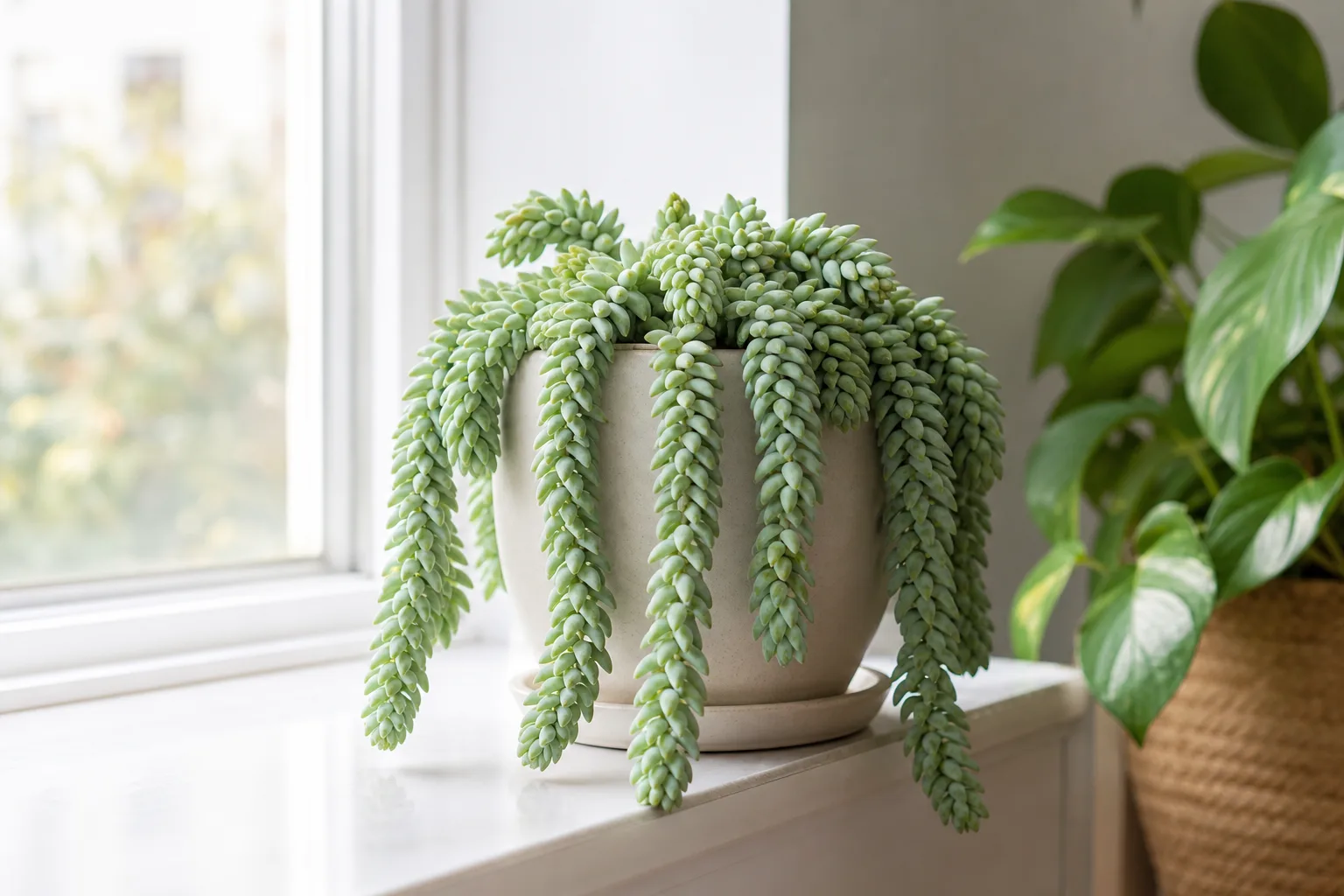
Slow Growth on Burro's Tail: Causes, Checks & Fixes
This guide covers slow growth on Burro's Tail. See also the general Slow Growth guide, watering, and light pages for this plant.
Slow Growth on Burro's Tail: Causes, Checks & Fixes
Quick answer
Slow growth on Burro’s Tail (Sedum morganianum) is few or no new leaf pairs along trailing stems-not the same as the stretched internodes of leggy growth or the wrinkled deflation of underwatering. This cliff-dwelling succulent is naturally slow compared with pothos or tradescantia; owners often panic during winter when the plant looks frozen in place while leaves stay firm and blue-green.
First step: confirm the calendar. From late fall through early spring, Burro’s Tail enters semi-dormancy-growth slows, watering should drop to roughly once a month in cool rooms, and fertilizer stops. That pattern is normal rest, not failure. If growth stalls for six or more weeks during warm spring or summer while stems stay firm, check whether the plant gets bright light with some direct sun, whether the pot has fully dried since the last watering, and whether an oversized container is holding moisture too long. For dim-light stretch with wide leaf spacing, see not enough light.
This page focuses on pace and stall-reassurance plus diagnosis. For mushy stems on wet soil, see overwatering. For repot timing when rootbound becomes a problem, see repotting.
Is slow growth normal on Burro’s Tail?
Yes-often. Burro’s Tail is a long-lived trailing succulent built for cliff habitats with irregular rain and strong light. It stores water in overlapping leaves, uses CAM photosynthesis, and pushes new growth mainly when days are long and bright. Indoor specimens commonly add only modest stem length each year; mature plants may trail three to four feet over many seasons, not one summer.
Winter pause is expected. When light drops and room temperatures cool, metabolism slows. You may see no new leaf pairs for eight to twelve weeks while existing foliage stays plump and stems remain firm. That differs from summer stall, where the same plant that added leaves in June produces nothing in July despite warm air and long days.
Abnormal slow growth means the plant should be actively growing but is not: no new leaves through a warm bright summer, shrinking leaf size on firm stems, yellowing lower leaves on persistently damp soil, or a soft mushy stem base while growth stops entirely. Those patterns point to root stress, chronic overwatering, or insufficient light-not healthy succulent pacing.
What healthy slow growth looks like vs. abnormal stall
Understanding baseline rhythm prevents repotting a resting winter plant or fertilizing one that only needs brighter light.
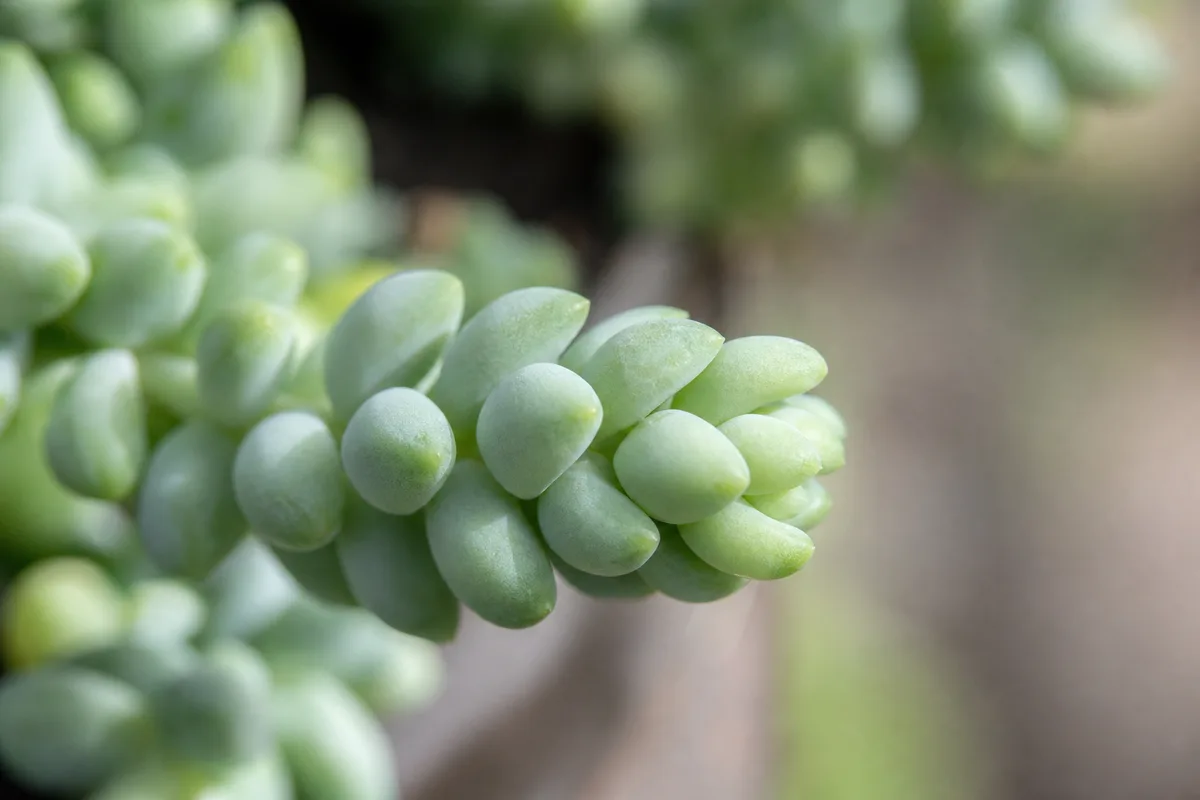
Slow Growth symptoms on Burro’s Tail - compare with healthy tissue on the same plant.
On a thriving Burro’s Tail you should see:
- Tight overlapping leaf pairs along trailing stems, creating a braided rope look
- New leaves emerging at stem tips every two to four weeks during active warm months in good light
- Firm, plump leaves that feel slightly springy when gently pinched
- Gradual stem lengthening-inches per season, not feet per month
- Winter stillness with firm foliage and bone-dry soil between infrequent waterings
Abnormal stall signals:
- No tip growth for six-plus weeks in spring or summer despite warm room and adequate watering rhythm
- Shrinking or dull leaves on stems that are not visibly etiolated
- Yellowing, translucent lower leaves while the pot stays heavy and cool
- Mushy stem tissue near the soil line-growth stops because roots are failing, not because the species is slow
- Persistent damp mix more than a week after watering in a dim room
| Pattern | Likely meaning | First branch to check |
|---|---|---|
| Firm leaves, no growth, January, north window | Winter semi-dormancy | Season; reduce water; wait for spring light |
| Firm leaves, no growth, July, dim shelf | Low light stall without stretch | Light hours; see light guide |
| Wide leaf spacing, pale stems reaching window | Leggy etiolation, not simple slow growth | Leggy growth |
| Wrinkled leaves, light dry pot | Underwatering | Watering guide |
| Mushy base, wet heavy pot | Overwatering / root rot | Overwatering |
| Huge pot, damp center, stalled tips | Oversized container trap | Pot size vs. root mass |
Why Burro’s Tail grows slowly
Several factors are biology, not mistakes. Others are care imbalances that mimic “normal slowness” until roots or light fail.
Natural succulent pacing. Burro’s Tail prioritizes water storage over rapid elongation. NC State lists a medium growth rate for Sedum morganianum-faster than a haworthia rosette, far slower than a vine in the same window. Trailing stems can reach up to four feet in cultivation, but Wisconsin Extension notes stems grow upright at first, then become pendulous and heavy as leaves store water-that weight limits how fast the plant visibly lengthens.
Winter semi-dormancy. Cooler temperatures, shorter photoperiods, and reduced watering needs slow cell division. Wisconsin Extension advises reducing fall watering and providing just enough moisture in winter to prevent the medium from drying out completely-often no more than once a month indoors. NC State Extension also recommends reducing watering in winter. Growth near room-temperature windows may continue slowly; plants in cool rooms may look static for months.
CAM photosynthesis. Like other stonecrops, Burro’s Tail opens stomata mainly at night to conserve water. In dim, cool conditions, photosynthetic output drops and new leaf production pauses even when the plant looks otherwise healthy. Adding water or fertilizer does not replace the light signal the plant waits for.
Insufficient light without obvious stretch. Burro’s Tail can stall before stems visibly etiolate. Wisconsin Extension states that in insufficient light, internodes lengthen and leaves are less dense-but early-stage low light may show as simply “not growing” while existing leaves stay plump. Compare against light requirements before assuming dormancy.
Oversized pot and wet soil. Burro’s Tail does well when slightly potbound; Wisconsin Extension recommends repotting in spring only when the plant has completely filled its pot. A too-large container holds moisture around a small root ball, slowing growth and inviting rot-the mix stays damp while the plant stops pushing new leaves.
Chronic overwatering. Wet soil drives out oxygen; damaged roots cannot support new growth even when leaves look acceptable for weeks. NC State Extension warns to avoid wet or poorly drained conditions on Sedum morganianum. Soft leaves on heavy pots are the classic misread-owners see “slow” and wait, while roots decline underground.
Under-fertilization in shade. Light feeding once or twice during the growing season can support active plants in bright windows. Fertilizer in a dim winter corner does not accelerate growth and can weaken roots.
Hanging-basket placement. Trailing stems shaded by their own upper growth or sitting below a window sill may receive less light than the room overall, slowing tip growth on lower stems while the top looks fine.
Lookalike symptoms to rule out
Leggy growth vs. slow growth - Leggy Burro’s Tail shows long internodes, pale widely spaced leaves, and stems reaching toward the brightest direction. Slow growth keeps tight leaf packing but adds few or no new pairs. If spacing is opening up, see leggy growth before treating this as a pace issue.
Underwatering shrivel vs. stall - Thirsty leaves wrinkle and deflate while the pot is light and soil is bone dry. A stalled but hydrated plant has firm plump leaves and may sit in dry soil appropriately. Shrivel on dry mix needs water; shrivel on wet mix needs root inspection.
Overwatering stall vs. winter rest - Both can show little new growth. Overwatering adds yellow mushy lower leaves, heavy cool pots, and soft stem bases. Winter rest shows firm leaves, dry soil, and seasonal timing. Never assume dormancy if soil has stayed damp for weeks.
Potbound stall vs. healthy potbound - Slightly root-filled pots are normal and preferred. True root-bound stall shows water running straight through dry mix, roots circling tightly, and no new growth despite bright summer light-see repotting for timing.
How to confirm the cause
Work through these checks in order so you do not water a dormant plant, repot a resting one, or fertilize a specimen that only needs light.
- Season and room temperature - Note month and whether the plant sits in a cool room (50s–60s °F) or warm bright space. Eight to twelve weeks of no growth from November through February with firm leaves often fits normal rest.
- Newest stem tips - Inspect the last inch of trailing stems. Tiny leaf buds or fresh overlapping pairs mean active growth; bare firm tips with no buds for six-plus weeks in summer suggest stall.
- Leaf firmness and color - Plump blue-green leaves support a pacing or dormancy read. Shrinking dull leaves, yellowing bases, or translucency on wet soil point to root stress.
- Light exposure - Count hours of bright light including direct morning sun. Burro’s Tail grows best in bright light to full sun; compare placement against the light guide. Lower stems in a hanging basket may be darker than the top.
- Soil moisture and pot weight - Lift the pot. Heavy cool weight a week after watering suggests chronic dampness. Light weight with firm leaves on a winter schedule fits dormancy. Use the watering checks before changing rhythm.
- Pot size vs. root mass - Slide the plant partway out if safe. Modest roots in a large pot confirm the oversize-container trap. Dense root mat filling the pot with summer stall may need spring repot only-not a winter upsize.
- Stem base feel - Press gently near the soil line. Firm is reassuring; soft or dark tissue means stop watering and inspect for rot.
- Recent changes - Repotting, a move to a dim corner, vacation overwatering, or a switch to a much larger pot narrows cause quickly.
Confirmed winter rest: cool season, firm leaves, appropriate dry-down, no mushy base. Confirmed light stall: summer, dim placement, no new tips for six-plus weeks, tight but static foliage. Confirmed wet-soil stall: heavy pot, damp mix, yellowing lower leaves, or soft base.
First fix for Burro’s Tail
Apply one correction matched to your confirmed branch-not a stack of repot, feed, and prune on the same day.
If winter semi-dormancy fits (firm leaves, cool season, appropriate dry soil): Do not force growth. Reduce watering toward once a month or less in cool low-light rooms, withhold fertilizer, and wait for lengthening days. Moving to a slightly brighter cool spot is fine; do not move suddenly to hot afternoon sun.
If spring or summer light stall fits (dim shelf, firm leaves, dry soil on schedule): Move the plant to brighter light with some direct morning sun-an east window or filtered south exposure. Acclimate over one to two weeks to prevent sunburn and leaf drop. This is the highest-impact fix for stalled active-season growth. Do not increase watering or fertilizer until new leaf pairs appear at stem tips.
If wet-soil stall fits (heavy pot, damp mix, yellowing lower leaves, firm stem still): Stop watering until the mix is fully dry throughout. Confirm drainage holes are open and no saucer holds runoff. Let the root zone dry completely before the next soak-and-dry cycle. See overwatering if the stem base softens.
If oversized pot fits (small root ball, large damp container): Do not upsize further. Wait until spring and repot into a container only slightly larger with gritty succulent mix-only if roots have genuinely filled the current pot. Until then, water sparingly by weight and extend dry-down intervals.
If confirmed root-bound summer stall fits (water runs through, circling roots, good light): Repot in spring into the next pot size with sharp-draining mix; wait about a week before the first light watering per Wisconsin Extension repot guidance. Do not repot in winter unless rot is confirmed.
Recovery timeline
Recovery pace follows succulent physiology and season, not houseplant fertilizer timelines.
- Winter rest ending: When days lengthen in March or April, new leaf pairs may appear within two to four weeks after light increases-without any repot or feed.
- Light correction in summer: After a gradual move to brighter exposure, first new tight leaves often show in two to four weeks; full stem density rebuilds over the remainder of the growing season.
- Dry-down after mild overwatering: Once watering stops and soil fully dries, tip growth may resume in three to six weeks if roots are mostly intact. Yellowed lower leaves may not green up again-judge success on new firm leaves at tips.
- Severe root damage: Mushy stems or widespread rot may take months to recover or may require stem cuttings from healthy upper growth. Stalled plants with soft crowns need escalation, not patience.
Signs of improvement: fresh overlapping leaf pairs at stem tips, firmer leaf turgor, stable stem color, and pot weight cycling predictably between soak and dry-down.
Signs of worsening: spreading yellow or mushy leaves, softening stem base, sour soil smell, or leaf drop accelerating after a care change.
What not to do
- Do not repot into a larger container hoping to “give roots room to grow faster”-oversized pots stall Burro’s Tail and trap moisture.
- Do not fertilize a winter-dormant or low-light specimen expecting growth acceleration; feed lightly only in active bright months per the fertilizer guide.
- Do not increase watering because growth is slow-wet soil on a CAM succulent is more dangerous than dry soil.
- Do not stack repotting, heavy pruning, and fertilizer on the same day; make one change and read the plant for two to three weeks.
- Do not jostle stems during inspection-leaves detach easily; use bottom watering when possible to avoid disturbing trailing growth.
- Do not confuse slow dense growth with leggy stretch-treating low light as “normal slowness” lets etiolation progress for months.
How to prevent abnormal slow growth next time
Match everyday care to how Burro’s Tail actually grows in your home:
- Light: Four to six hours of bright light daily with some direct morning sun during active months; grow light in dim rooms.
- Water: Soak-and-dry rhythm-fully dry between thorough waterings; roughly every 10–14 days in summer and every three to four weeks or longer in winter per the watering guide.
- Pot size: Stay slightly potbound; repot only when roots fill the container.
- Feed: Light fertilizer once or twice in spring and summer only when the plant is in adequate light.
- Seasonal expectations: Plan for winter stillness; judge health on leaf firmness and spring resumption, not weekly length gains.
- Placement: Hang or elevate so trailing stems receive light-not tucked under a dark shelf overhang.
Inspect stem tips monthly during the growing season; catch light stall before internodes stretch.
When to worry
Escalate if the stem base softens, lower leaves turn yellow and mushy on persistently wet soil, new tips blacken after starting, or the plant collapses despite your dry-down efforts. Those patterns point to advancing root rot-not passive slow growth. See overwatering and inspect roots if decline continues.
Summer stall longer than two months after light, watering, and pot-size corrections warrant unpotting for a direct root inspection-even if upper stems still look acceptable.
Conclusion
Slow growth on Burro’s Tail is often healthy succulent pacing or winter semi-dormancy, not a crisis. Confirm the season, distinguish tight stalled stems from leggy stretch, run the eight-step checklist, apply one targeted fix, and judge recovery on new leaf pairs at stem tips in warm bright months. Prevent abnormal stalls with bright light, soak-and-dry watering, and slightly potbound containers-not bigger pots and extra feed.
Related Burro’s Tail guides
- Burro’s Tail overview - CAM biology, trailing habit, and baseline care rhythm
- Watering - soak-and-dry checks and winter once-a-month cadence
- Light - bright light and direct sun for active growth
- Fertilizer - when feeding helps vs. hurts
- Repotting - potbound preference and timing
- Leggy growth - stretch vs. stall
- Not enough light - dim-light stall before obvious etiolation
- Overwatering - wet-soil stall and root damage
- Underwatering - shrivel vs. slow pace