Not Enough Light on Burro's Tail: Causes, Checks & Fixes
Quick answer
Burro's Tail needs bright light at both the crown and trailing stems-not a dim shelf. First step: move the pot within one to two feet of your brightest east- or south-facing window, or add a full-spectrum grow light 12–18 inches above the crown for 12–14 hours daily.
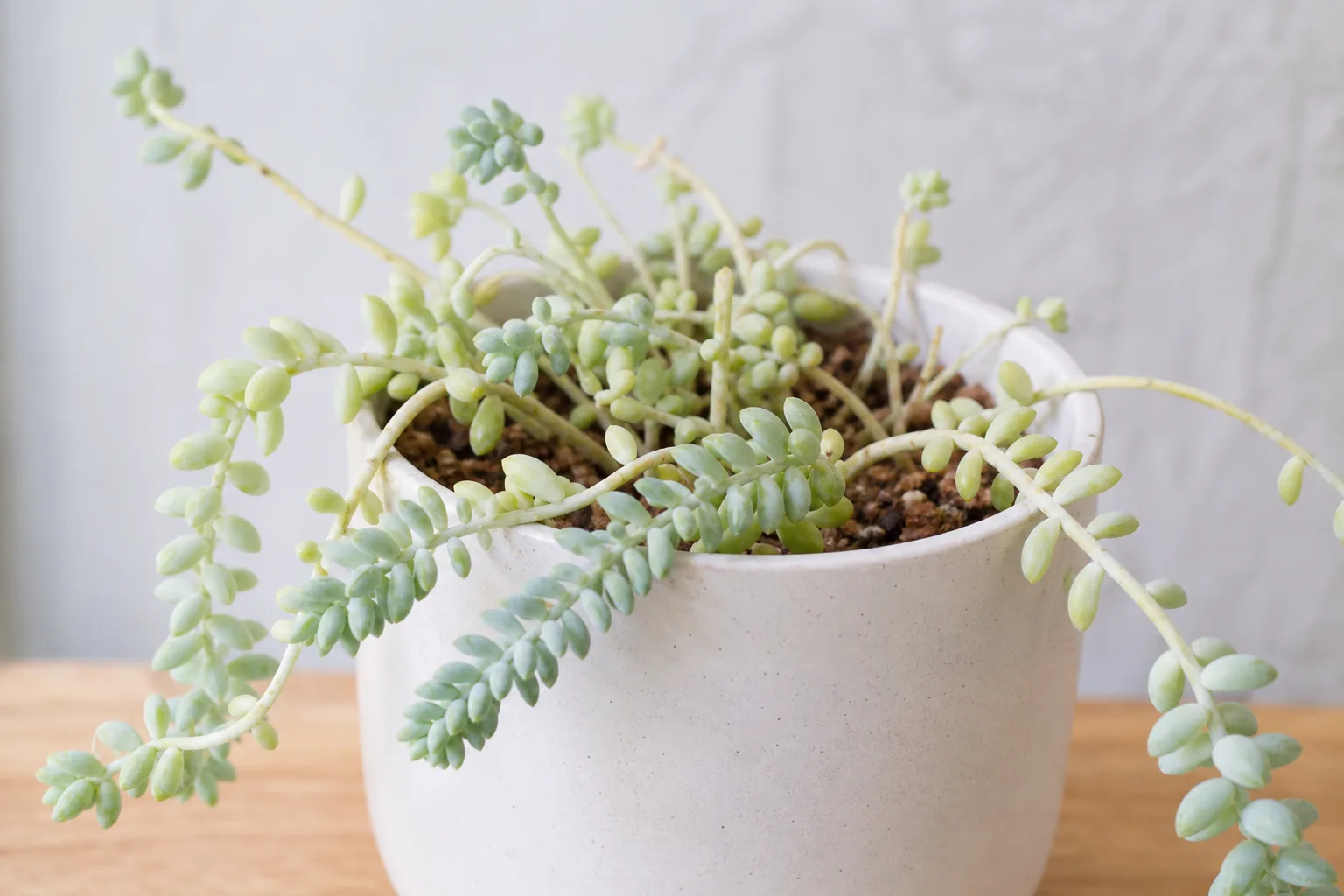
Not Enough Light on Burro's Tail: Causes, Checks & Fixes
This guide covers not enough light on Burro's Tail. See also the general Not Enough Light guide, watering, and light pages for this plant.
Not Enough Light on Burro's Tail: Causes, Checks & Fixes
Quick answer
Burro’s Tail (Sedum morganianum) is a high-light trailing succulent, not a low-light survivor. In dim rooms it stretches between leaves, thins at the crown, and sheds leaves at the slightest touch. The problem is often placement-the pot sits in shadow while only the hanging tails reach a sunbeam, or the basket hangs too high above the window frame.
First step: move the entire plant, crown included, within one to two feet of your brightest east- or south-facing window. If no window delivers enough brightness, add a full-spectrum LED grow light 12–18 inches above the crown for 12–14 hours daily. Increase light gradually over seven to fourteen days so you fix etiolation without sunburning tissue that adapted to shade.
Why Burro’s Tail runs out of light indoors
Burro’s Tail evolved on bright Mexican cliff faces where strong ambient light and short bursts of gentle direct sun keep stems compact. Indoors, window glass cuts intensity sharply, and light drops even faster with distance from the glass. A spot that looks bright to your eyes may deliver far less usable energy than Burro’s Tail overview needs for dense, rope-like growth.
The plant’s trailing habit makes low light easy to miss. Hanging baskets are often placed for display height, leaving the crown above the window beam while only the lower strands catch light. Over months the tips stay green enough to hide the problem, but the base thins and new growth weakens. Burro’s Tail also transpires less in dim conditions, so soil stays wet longer-creating a second stress layer that can look like overwatering on Burro’s Tail when the root cause is still insufficient light.
Winter short days, north-facing rooms, tinted or dirty windows, and sheer curtains drawn for furniture comfort all reduce the daily light budget. Unlike snake plants or pothos, Burro’s Tail does not maintain its signature form in those conditions-it merely survives long enough to stretch for light before leaf drop becomes obvious.
What not enough light looks like on Burro’s Tail
Low light on this species shows up as structural change, not just pale color. Watch for these patterns together:
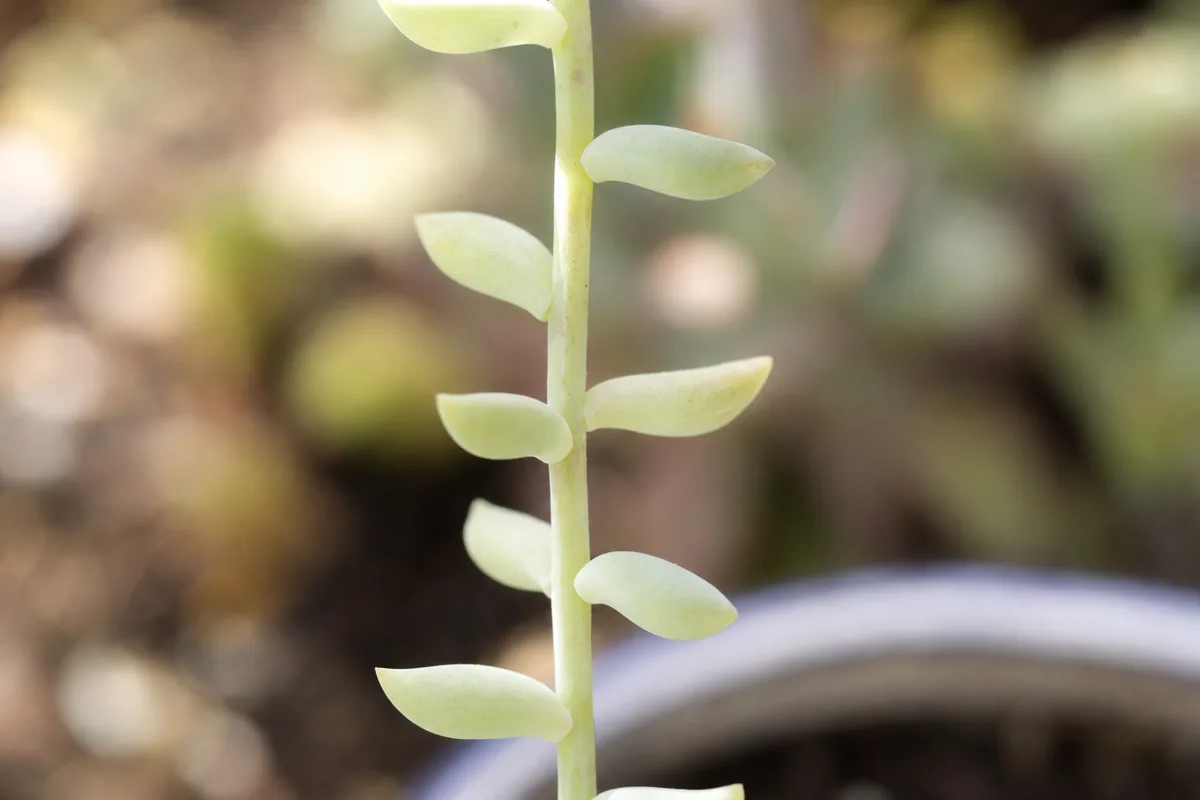
Not Enough Light symptoms on Burro’s Tail - compare with healthy tissue on the same plant.
Etiolation and gappy stems. Internodes stretch so leaves sit farther apart along each trailing strand. The braided, rope-like texture thins into loose, stringy tails. In insufficient light, internodes lengthen and leaves are not as dense on the stems.
Smaller, paler new leaves. Fresh growth at stem tips looks washed-out blue-green compared with older compact sections. The powdery farina may look dull rather than crisply silver-blue.
Thin, weak strands that drop leaves easily. Burro’s Tail already loses leaves when handled; light-starved stems shed more readily during watering or when the basket sways.
Strong one-sided leaning. The plant grows toward the brightest source-often a distant window-rather than filling evenly around the pot.
Slow or absent growth through spring and summer, when a well-lit plant would add noticeable length with tight leaf spacing.
No terminal flower clusters. Mature plants rarely bloom indoors, but low light makes summer flowers essentially impossible even on older specimens.
Low-light stress does not usually produce bleached or crispy sun-facing patches-that pattern points to too much direct sun, not too little.
How to confirm the cause
Work through these checks before Burro’s Tail repotting guide, fertilizing, or pruning:
-
Crown light test. At midday, look at the soil surface and upper stems. Does strong light fall on the crown, or only on dangling lower strands? Shadow on the pot rim while tips glow means a crown light problem.
-
Distance from glass. Measure how far the pot sits from the window. More than two feet back in most homes is marginal for Burro’s Tail unless supplemented with grow lights.
-
Shadow sharpness. Hold your hand between the plant and the window around noon. Almost no shadow on the leaves means the spot is too dim for long-term compact growth.
-
Soil dry-down speed. Push a finger into the mix or lift the pot. Soil that stays wet for two weeks or more in a dim corner suggests the plant is not using water-consistent with low photosynthesis, not necessarily with overwatering alone.
-
Two-week brightness trial. Move the plant to the brightest safe window without changing watering, fertilizer, or pot size. If new leaves emerge closer together and firmer, light was the primary limiter.
-
Rule out root rot on Burro’s Tail. Soft, mushy stems, sour-smelling soil, and blackened roots mean wet-soil failure-urgent and separate from pure etiolation. Firm stems with stretched spacing but dry soil point back to light.
If the trial brightens new growth but old sections stay gappy, you have confirmed insufficient light-not a nutrient deficiency or pot-bound stress.
First fix for Burro’s Tail
Move the whole plant to the brightest safe indoor exposure, keeping the crown at window height within one to two feet of the glass.
Burro’s Tail prefers high light interior environments such as a windowsill with at least partial sun. An east-facing windowsill is the default target: strong ambient brightness plus gentle morning direct sun without harsh afternoon heat. A south-facing window works well in winter or when the pot sits slightly back from hot midday glass. Filter west-window afternoon sun with a sheer curtain until the plant is acclimated.
If natural light cannot reach that level-north rooms, interior offices, high ceiling hooks above the window frame-add a full-spectrum LED grow light 12–18 inches above the crown and upper stems. Run it 12–14 hours daily on a timer-within the 16-hour daily maximum most houseplants tolerate under supplemental light-angled so trailing portions receive meaningful brightness, not only the top inch of the plant.
Do not jump straight to unfiltered south or west midday sun on a plant that has lived in dim light for months. Increase brightness in steps over seven to fourteen days to avoid bleaching farina and triggering mass leaf drop-moving from shade to bright sun too quickly can sunburn even sun-loving plants.
Do not fertilize, repot, or heavily prune on the same day you change light. Burro’s Tail stalls when stacked with stress; one correction at a time makes the plant’s response readable.
Step-by-step recovery
After the initial move or grow-light setup:
-
Days 1–4: Place at double your intended final distance from the window, or behind a sheer curtain. Water only when soil is fully dry. Handle the pot minimally.
-
Days 5–9: Move halfway to the final position, or remove one filtering layer. Rotate a quarter turn every few days if growth leans strongly.
-
Days 10–14: Settle at final placement with the crown in the beam. Continue watching for bleaching or heavy leaf drop-hold at the current step if damage appears.
-
Adjust watering. Brighter light increases transpiration. A plant that needed water every three to four weeks in a dim corner may need a ten-to-fourteen-day dry-down rhythm in a bright window. Always check soil, never copy an old calendar from the dark spot.
-
Optional trim. Once new growth looks compact for several weeks, shorten the longest etiolated strands with clean scissors if you want a denser silhouette. Dropped leaves and stem tips root easily if you want to fill gaps-but wait until the parent plant is stable.
-
Winter maintenance. Extend grow-light hours or move closer to the glass when days shorten. Do not push fertilizer to compensate for seasonal dimness.
Recovery timeline
Expect visible improvement in new leaf spacing within two to four weeks after usable light reaches the crown. A full grow-light setup may need four to six weeks before new leaves match older compact growth in color and density.
Old stretched internodes will not compact again-success is measured at stem tips and the crown, not by waiting for existing gappy sections to shorten. Mild leaf drop during acclimation is common; ongoing bare stems at the soil line after six weeks in corrected light suggests placement still misses the crown or brightness remains below threshold.
Lookalike symptoms to rule out
Overwatering and root rot produce soft, mushy leaves and stems, sour soil, and sometimes yellowing-not elongated gappy spacing on firm tissue. Watering too much can lead to root rot, especially when dim light slows water use. These often overlap in dim corners where soil never dries; fix light and dry-down together.
underwatering on Burro’s Tail shrivels plump leaves evenly along strands and leaves soil bone dry and the pot very light. Stems stay compact rather than stretched; leaves wrinkle instead of sitting far apart.
Too much light too fast bleaches or scorches sun-facing leaves and may cause sudden drop after a move to harsh direct sun. Damage is one-sided on window-facing tissue, not evenly spaced etiolation throughout.
Spider mites cause stippling and fine webbing, usually in hot dry bright conditions-not typical of dim rooms, though weak light-stressed plants are less resilient overall.
Mistakes to avoid
Do not leave Burro’s Tail in a north window long term without grow lights and expect the dense tail form to return on its own.
Do not hang the basket so high that only trailing strands reach the window while the crown sits in room shadow.
Do not compensate for dim light with extra fertilizer-Burro’s Tail needs photons, not nitrogen, to tighten leaf spacing.
Do not water on the same schedule after moving to brighter light without checking soil dryness first.
Do not relocate, repot, prune, and fertilize the same week. Each change can trigger leaf drop independently.
Do not assume survival equals adequate light. Burro’s Tail can linger pale and stretched for months before collapse.
Burro’s Tail care cross-check
Light drives Burro’s Tail watering guide on this succulent. Strong appropriate light pairs with sharp-draining mix and dry-down watering-allow the soil to dry out between waterings every ten to fourteen days in warm active growth. Dim light slows metabolism-extend dry intervals and never keep soil moist on a calendar built for a sunny windowsill.
Burro’s Tail prefers low humidity and tolerates normal indoor air. Humidity trays will not replace missing light. Keep the pot where pets and children will not knock fragile stems; leaf loss increases on weak etiolated growth.
How to prevent low-light stress next time
Place new plants with the crown at or below the top third of the brightest east or filtered south window, not in interior shelves chosen for décor.
Rotate the pot or basket weekly so growth does not lean permanently toward one side.
Clean windows seasonally and keep sheer curtains open during peak daylight when possible.
Run grow lights 12–14 hours daily through winter or in permanently dim rooms, positioned to illuminate the crown as well as hanging tails.
Reassess placement when outdoor shade trees leaf out in summer or when furniture moves-ambient room brightness changes even if the pot never moved.
Choose trailing displays at sill height or wall shelves over ceiling hooks that lift the crown above the light beam.
When to worry
Pure etiolation is slow and reversible with better light-no panic required if stems are firm and soil dries normally between waterings.
Treat as urgent when the crown thins to mostly bare stems at the soil line, soil stays saturated for weeks in a dim spot, or stems feel soft and collapse- that pattern suggests root rot compounded by low light and excess moisture, and needs dry-down assessment before more water.
Replace or propagate from healthy tips if the base is hollow and new growth fails after six to eight weeks in corrected bright conditions. Burro’s Tail propagates easily from fallen leaves and stem sections when the parent is beyond recovery.
Conclusion
Not enough light on Burro’s Tail is one of the most common indoor failures because the plant tolerates dim corners long enough to look alive while losing the dense cascades that define the species. The fix is not a generic “brighter spot”-it is usable brightness on the crown and trails together, with gradual acclimation and watering adjusted to match new metabolism.
Move to an east or filtered south window within one to two feet of the glass, or add a timed grow light aimed at the pot rim. Judge success by plump, closely spaced new leaves at stem tips, accept that old stretched sections will not shorten, and change one variable at a time so this touch-sensitive succulent can settle without shedding half its tail on the way to better light.
When to use this page vs other Burro’s Tail guides
- Burro’s Tail watering guide - Use for routine moisture checks before assuming not enough light is the main issue.
- Burro’s Tail problems hub - Browse all 16 common issues on this species.
- Leggy Growth on Burro’s Tail - Different entry point when symptoms overlap with not enough light.
- Slow Growth on Burro’s Tail - Different entry point when symptoms overlap with not enough light.
- Yellow Leaves on Burro’s Tail - Different entry point when symptoms overlap with not enough light.