Mold on Soil on Burro's Tail: Causes, Checks & Fixes
Quick answer
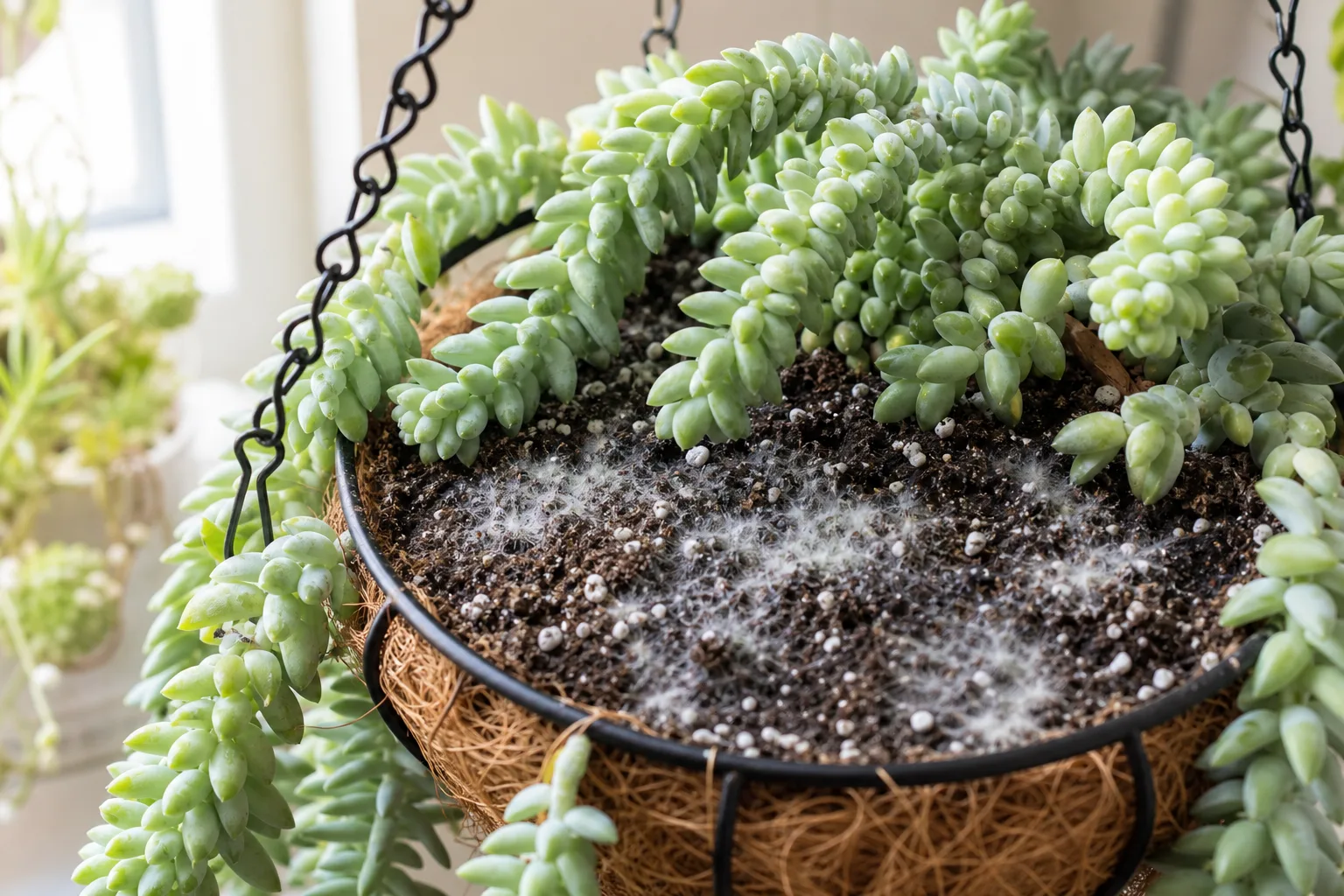
Fluffy white or gray mold on Burro's Tail soil is usually harmless saprophytic fungus feeding on organic matter in a wet surface layer-not a leaf disease. First step: stop watering, scrape off the top layer, and let the mix dry completely before the next drink.
Mold on Soil on Burro's Tail: Causes, Checks & Fixes
This guide covers mold on soil on Burro's Tail. See also the general Mold on Soil guide, watering, and light pages for this plant.
Mold on Soil on Burro's Tail: Causes, Checks & Fixes
Quick answer
White or gray fuzzy growth on Burro’s Tail potting mix is usually saprophytic fungus feeding on decaying organic matter in a surface layer that has stayed damp too long. The trailing stems and plump leaves often look fine because the mold is on the soil, not the living tissue.
First step: stop watering and scrape off the top half-inch to inch of affected mix. Let the surface dry completely, remove any fallen leaves sitting on the soil, and confirm the stem base is still firm before you water again. Surface mold on a healthy Burro’s Tail is a moisture warning-not a reason to drench the plant with fungicide.
This page covers cosmetic fungus on wet topsoil. If stems are mushy, the pot smells sour, or leaves stay soft on heavy wet mix, the deeper problem is chronic wetness-start with our overwatering and root rot guides. For baseline soak-and-dry rhythm, see the Burro’s Tail overview and watering guide.
Why Burro’s Tail soil grows mold
Burro’s Tail (Sedum morganianum) is a drought-built succulent from dry rocky slopes in southern Mexico and Honduras. It cannot tolerate overwatering, and root rot from wet roots is its most common failure indoors. Mold on the soil surface is often the visible early chapter of the same story: the mix is holding moisture longer than this species can safely use.
Several habits push Burro’s Tail toward a chronically wet surface:
Calendar watering instead of dry-down checks. Many growers water weekly because the plant looks fine, but Burro’s Tail may need two to four weeks between drinks in cool winter rooms. Indoor plants may not need watering more than once a month in winter when growth slows. Adding water before the root zone dries keeps the surface soggy.
Fallen leaves as fungal food. Burro’s Tail drops leaves easily when bumped, watered from above, or moved. Those thick leaves decay on the soil surface and give saprophytic fungi exactly what they want. A hanging basket with a carpet of fallen foliage under the stems is a common mold setup.
Dense or oversized pots. Burro’s Tail does well slightly potbound, but an oversized container holds a large volume of wet mix around a modest root system. Standard peat-heavy potting soil also stays moist longer than fast-draining succulent mixes, especially in dim corners where evaporation is slow.
Pot material and cachepot traps. Clay or terracotta pots are porous and allow quicker soil drying, which helps a trailing succulent in a hanging basket lose surface moisture faster. Glazed ceramic and plastic retain water longer because moisture exits mainly through the drainage hole. A Burro’s Tail in a plastic nursery pot sitting inside a tight decorative sleeve is especially prone to mold: UMN Extension recommends removing the plant from the decorative pot to water, draining fully, and never letting water sit in double pots.
Low airflow at the soil line. Trailing stems can shade the pot surface in hanging baskets. Crowded plant shelves and decorative cachepots without airflow trap humidity at the rim where mold appears first.
Top watering on brittle stems. Pouring water over the soil often knocks leaves loose and wets the surface heavily. That wet layer dries slowly compared with bottom-watering routines that keep the top drier while still hydrating roots.
What mold on soil looks like on Burro’s Tail
Typical harmless surface mold:
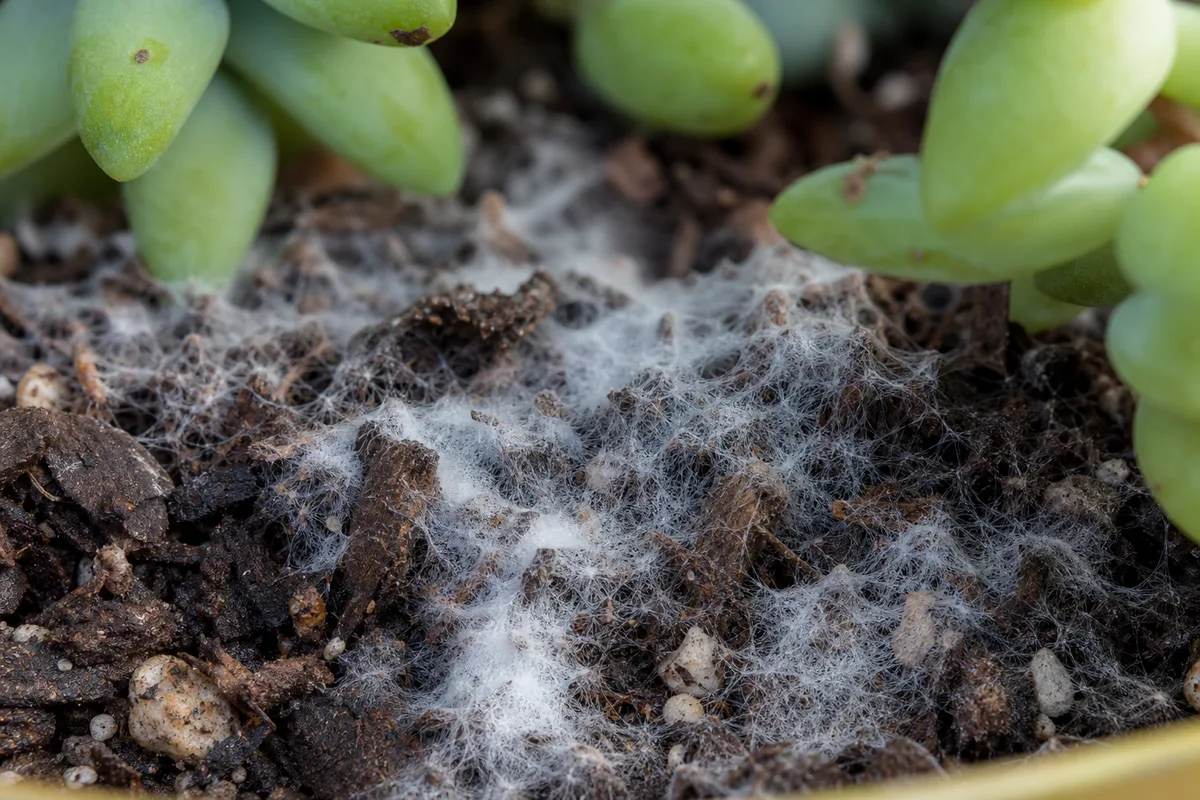
Surface mold on Burro’s Tail soil - fluffy white fungus on a chronically damp top layer, usually harmless to firm stems above.
- White, gray, or occasionally greenish fuzzy film on the top of the mix
- Thread-like or cottony growth across the soil surface, sometimes after recent watering
- Soil surface that stays dark and cool for many days
- Plant stems still firm; leaves plump and blue-green with no widespread yellowing
- Musty smell near the pot, especially when the surface is disturbed
Signs the moisture problem is deeper than cosmetic mold:
- Stem base near the soil turning soft, dark, or translucent
- Leaves going mushy or yellowing while the pot still feels heavy
- Small black flies hovering when you touch the soil-fungus gnats thrive in damp organic mix; see our fungus gnats guide when flies and mold appear together
- Sour or rotten smell from drainage holes
- Mold returning within two to three days every time you scrape it off
Fungal mats on potting media are usually not directly harmful to plants, but a thick crust can interfere with water soaking in evenly. On Burro’s Tail, the bigger risk is what the mold indicates: roots sitting in oxygen-poor wet mix long enough to rot.
How to confirm the cause
Work through these checks before you change pots or spray anything:
- Stem base test - Gently press the lowest inch of stem where it meets the soil. Firm and dry-feeling tissue with only surface fuzz suggests cosmetic mold. Soft, squishy, or blackened tissue means investigate roots-route to root rot.
- Pot weight - Lift the container. A heavy pot days after watering confirms slow dry-down. Burro’s Tail in a properly dried pot feels noticeably lighter.
- Surface moisture - Push a finger or dry skewer into the top inch. If it comes out cool and clinging, the surface is too wet for a succulent.
- Leaf litter check - Look for decaying fallen leaves buried in the surface. Remove them and see whether mold was concentrated around that organic debris.
- Watering history - Review the last three to four weeks. Did you water on schedule while the plant was in a cool, low-light room? Winter dormancy dramatically slows water use.
- Gnat check - Tap the pot rim. Flying insects plus mold strongly suggest the surface has stayed wet long enough to support a whole moist-soil ecosystem.
- Root spot-check (if stems feel soft) - Slide the plant partway out of the pot. Healthy succulent roots are pale and firm. Dark, mushy roots that strip away from a thin core indicate rot.
If the plant is firm, leaves are plump, and only the soil surface is fuzzy, you are likely dealing with saprophytic mold on wet topsoil-not an active leaf or stem pathogen.
First fix for Burro’s Tail
Stop watering immediately and scrape off the top half-inch to one inch of moldy mix.
Use a spoon or fork, working slowly so you do not jostle brittle stems and trigger a leaf shower. Discard the removed soil in the trash-not the compost pile. Replace the scraped area with dry, gritty succulent mix if you want a clean surface, but replacement is optional if you leave a bare dry layer.
Do not water again until the root zone has dried. For Burro’s Tail, that often means waiting one to three weeks indoors depending on season, pot size, and light-not a few days. Let the growing media surface dry between waterings before the next session.
Pick up fallen leaves from the soil surface the same day. They are both mold fuel and a nuisance when you need to inspect moisture later.
Do not mist leaves or foliar-spray while treating surface mold. Extra moisture on foliage and the rim slows the dry-down you need and can knock more beads loose on brittle stems.
Step-by-step recovery
After the initial scrape and dry-down:
- Move to brighter light if the plant is in a dim spot. Burro’s Tail grows best in bright light to full sun. Better light increases water use and helps the surface dry faster without changing your watering volume.
- Improve airflow around the pot rim. Give hanging baskets space from curtains and neighboring plants so the soil line is not sealed in stagnant air.
- Switch to bottom watering for the next few cycles. Set the pot in a tray of water for 15 to 20 minutes so roots drink from below while the surface stays drier-bottom watering helps keep the soil surface dry.
- Empty saucers and cachepots within 30 minutes so the mix is never sitting in drained water.
- Address fungus gnats if present. Yellow sticky traps catch adults; letting the surface stay dry breaks the larval cycle. Severe cases may need a Bacillus thuringiensis israelensis (BTI) drench-only after you confirm larvae in wet top mix. Full gnat protocol is in the fungus gnats guide.
- Repot only if mold returns quickly, mix smells sour, or roots are mushy. Use fresh gritty succulent mix per our soil guide in a pot only slightly larger than the root ball. Wait about a week after repotting before watering, then resume sparingly until the plant re-establishes.
Do not repot on day one for cosmetic white fuzz on an otherwise healthy plant. Unnecessary repotting disturbs brittle stems and can worsen stress.
Recovery example (editorial observation)
January 2026, cool east-facing room: A 20 cm hanging Burro’s Tail in plastic showed white fuzz across the top inch three days after a calendar top-water. Stems were firm; a carpet of fallen beads sat on the mix. We scraped the surface, removed litter, stopped watering, and bottom-watered only after 18 days when the pot felt light. No new fuzz appeared in three weeks. The lesson matches what extension sources describe-surface fungus retreats once the top layer stays dry-but your dry-down interval depends on pot material, light, and season.
Recovery timeline
Surface mold should stop spreading within a few days once the top layer dries. You should not see new fuzzy growth for at least one to two weeks if moisture habits have actually changed.
If mold reappears within three to five days of scraping, the underlying problem-oversized pot, dense mix, or too-frequent watering-has not been fixed yet.
Stem and leaf recovery depends on root health. Plants with firm roots and only surface mold show no lasting foliage damage. If overwatering has already caused rot, new growth may take several weeks to resume after roots stabilize-and severely mushy stems will not firm up again and should be cut back to healthy tissue.
Lookalike symptoms to rule out
| What you see | Likely cause | What to do |
|---|---|---|
| White or gray cottony fuzz on soil only; firm stems | Harmless surface mold | Scrape, dry surface, fix watering-stay on this page |
| Flat green film on soil | Algae in low light + constant surface moisture | Dry surface; brighten light slightly |
| Tiny flies, larvae in top inch; may or may not see fuzz | Fungus gnats on wet mix | Dry surface; see fungus gnats |
| Dry white powder on leaf surfaces | Powdery mildew (uncommon indoors on Burro’s Tail) | Treat foliage issue, not soil scrape alone |
| Hard flat white crust on soil | Mineral or lime deposits from hard water | Flush mix or top-dress with gritty media |
| Soft stem base, heavy wet pot, no visible fuzz | Root rot / overwatering | See overwatering and root rot |
| Wrinkled firm leaves on a light dry pot | Underwatering, not mold | See underwatering |
Excess water reduces soil oxygen and damages fine roots, producing wilt and yellowing that mimic drought. Always feel the stem base and check roots when leaves decline on a heavy wet pot.
Mistakes to avoid
Do not spray fungicide on harmless surface mold. It does not fix the moisture habit and adds unnecessary stress to a succulent.
Do not keep watering lightly to “comfort” a moldy plant. Overwatering is the main driver of fungal growth on houseplant soil.
Do not scrape mold and immediately water again because the plant “looked dry on top.” The surface can look pale while the root zone is still wet in a deep pot.
Do not repot into a larger container hoping it will dry faster-it usually keeps more mix wet for longer around Burro’s Tail’s relatively small root mass.
Do not leave decorative pot covers or moss toppers on the soil. They trap humidity exactly where mold starts.
Do not ignore fallen leaves because they “will compost themselves.” On Burro’s Tail, leaf litter is the most common local fuel for surface fungus in hanging baskets.
How to prevent mold on Burro’s Tail soil
Water only when the root zone is fully dry-confirmed by pot weight, a dry skewer near the pot edge, and slightly soft leaves if you know the plant’s normal firmness. In winter, that may mean watering no more than once a month in cool indoor conditions. Follow the full rhythm in our watering guide.
Use a gritty succulent mix with perlite, pumice, or baked clay-not fine sand, which can reduce pore space in containers. Pair it with a pot that has drainage holes and is only slightly larger than the root ball. Mix details are in the soil guide.
Bottom-water as your default routine to limit surface wetness and reduce leaf drop from top pours.
Remove fallen leaves weekly from hanging baskets. A soft brush or tweezers works without shaking the whole stem.
Give enough bright light that the mix dries within a few days after a thorough watering in the growing season. A Burro’s Tail in a dim corner and one in a bright east window are different plants from a watering standpoint.
Keep pots spaced for airflow, especially on crowded shelves where trailing stems from upper baskets shade lower pots.
When to worry
Surface mold alone on a firm, plump plant is not an emergency. Treat it as a correction prompt.
Escalate when mold keeps returning within days, fungus gnats are constant, the stem base goes soft, leaves turn translucent on a heavy pot, or the soil smells sour. Those patterns suggest chronic wet conditions that can lead to root rot-a much harder problem than cosmetic soil fungus.
If more than half the stem base is mushy and roots pull away as dark sludge, salvage firm stem cuttings after letting cut ends callus, and discard rotted tissue rather than fighting to save a collapsed root system.
Related Burro’s Tail guides
- Overview - trailing habit, hanging-basket placement
- Watering - soak-and-dry rhythm and dry-down checks
- Soil - gritty mix for fast surface dry-down
- Overwatering - mushy leaves on heavy wet pots
- Root rot - soft stem base and mushy roots
- Fungus gnats - flies plus damp surface mix
- Underwatering - wrinkled beads on a light dry pot
Conclusion
Mold on Burro’s Tail soil looks alarming but is usually a saprophytic fungus telling you the surface has stayed wet too long. Scrape, dry, remove leaf litter, and adjust watering to match how fast your pot actually dries in your light and season. Reserve repotting and root inspection for cases where stems soften, gnats persist, or mold returns immediately. When escalation signs appear, switch to the root rot guide-on this succulent, fixing moisture at the soil line prevents both the fuzzy surface and the root rot that follows if wet habits continue.