Aphids on Burro's Tail: Causes, Checks & Fixes
Quick answer
Aphids on Burro's Tail show up as soft clusters on new stem tips, often with sticky honeydew. First step: isolate the plant and inspect growing tips with a hand lens before spraying anything-Burro's Tail leaves drop easily under rough handling.
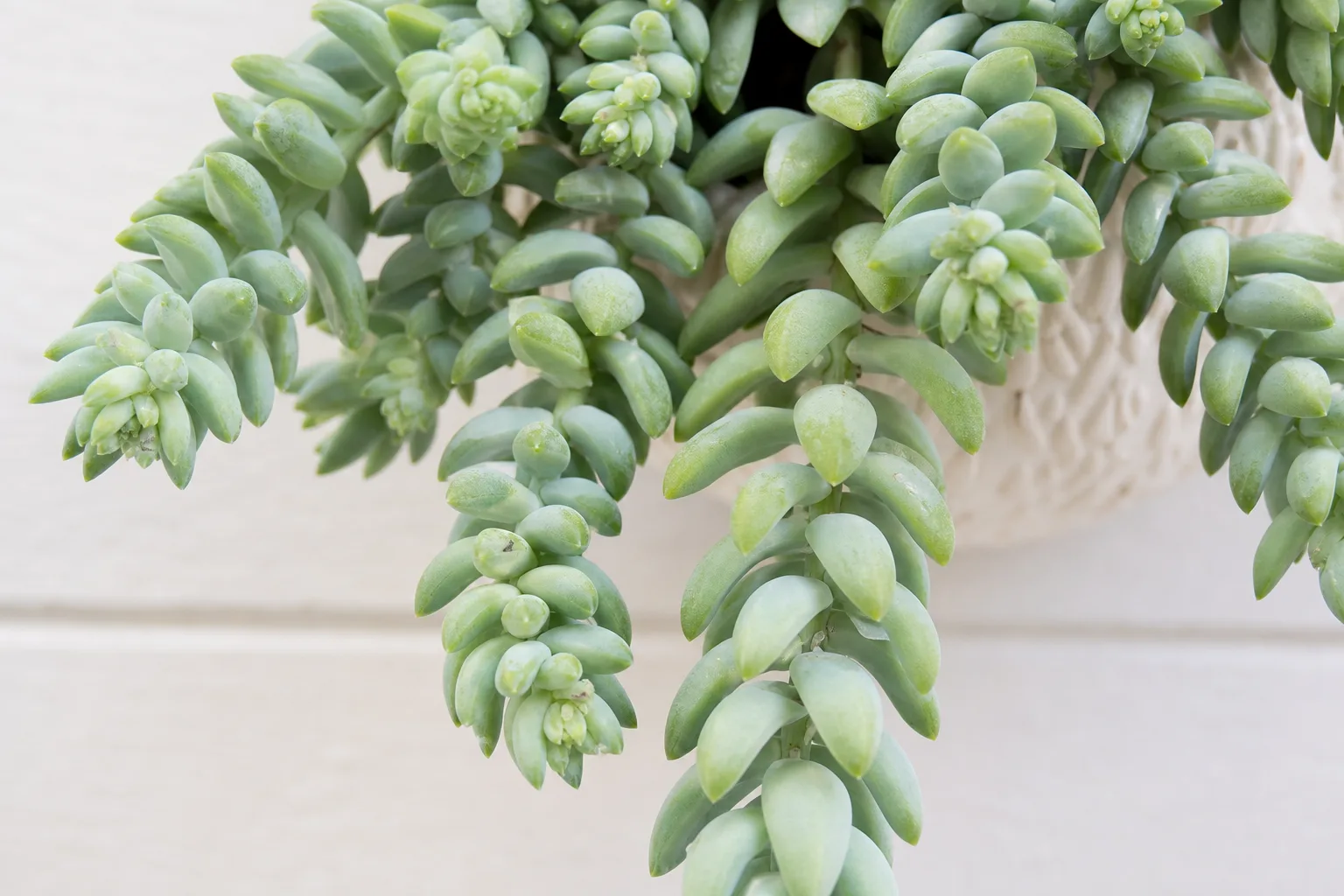
Aphids on Burro's Tail: Causes, Checks & Fixes
This guide covers aphids on Burro's Tail. See also the general Aphids guide, watering, and light pages for this plant.
Aphids on Burro's Tail: Causes, Checks & Fixes
Quick answer
Aphids on Burro’s Tail (Sedum morganianum) are small soft-bodied sap feeders that colonize the plant’s newest, most tender tissue. On a trailing donkey’s tail, that usually means the pale green beads at active stem tips, the joints where leaves attach, and any summer flower stalks-not the older, fully plump leaves farther down the chain.
First step: move the pot away from other plants and inspect the growing tips with a hand lens. You need to confirm live aphids before you spray soap, oil, or alcohol. Burro’s Tail is notorious for shedding beads when bumped, shaken, or hit with a forceful water stream, so confirmation comes before any physical knockdown.
Sticky upper leaves, ants on the hanger, or black sooty film on beads below a colony mean honeydew is already present. That is aphid damage, not normal succulent texture.
What aphids look like on Burro’s Tail
Healthy Burro’s Tail beads are firm, powdery blue-green, and attached tightly along cascading stems. Aphid damage looks different:
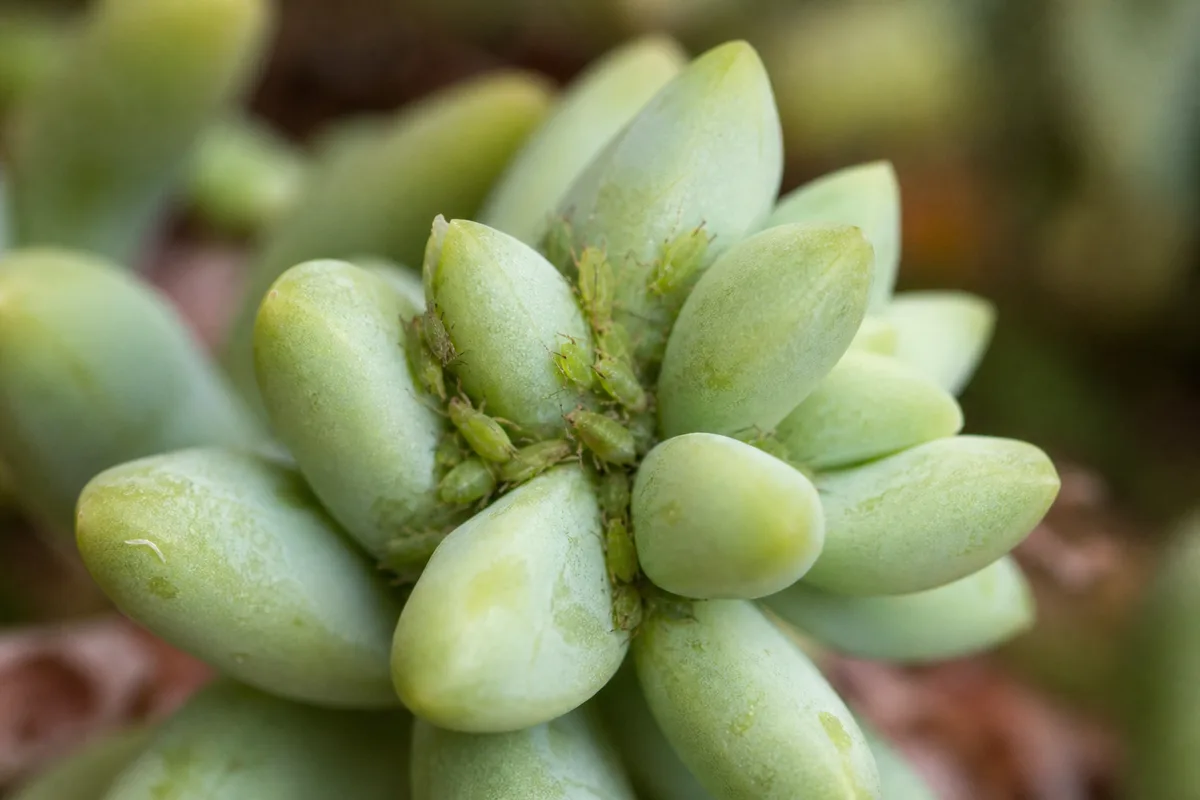
Aphids symptoms on Burro’s Tail - compare with healthy tissue on the same plant.
- Soft clusters of tiny pear-shaped insects on the newest beads and stem tips-often green, but sometimes black, brown, or pink depending on species
- Sticky, shiny patches on beads or the pot rim below feeding sites (honeydew from sap feeding)
- Slightly curled or twisted new leaves when feeding is heavy; older beads may yellow but stay attached longer than you’d expect
- Whitish shed skins stuck to stems near colonies
- Ant activity on basket hooks, shelves, or neighboring pots-ants protect aphid colonies in exchange for honeydew
- Black sooty mold on beads beneath dense colonies; it wipes off and is not a separate fungal infection of the succulent tissue
Aphids on Burro’s Tail rarely hide deep inside the plant the way mealybugs nest in leaf axils. They sit in plain view on exposed tender growth-which makes early detection easy if you look at stem tips during weekly care.
Why Burro’s Tail gets aphids
Burro’s Tail is not especially pest-prone, but its growth habit creates predictable feeding sites. The plant pushes new beads at stem ends during bright spring and summer growth. Aphids prefer tender new growth and cluster just below opening leaf buds or on young stems-exactly where your trailing succulent adds length.
Most indoor outbreaks start with introduction, not weak culture. Aphids hitchhike on newly purchased succulents, cuttings from a friend’s collection, or plants summered outdoors near infested garden beds. They spread by crawling or flying between pots on a shelf or hanging display.
Soft, nitrogen-rich growth makes the problem worse. Burro’s Tail fed heavily during active growth produces lush tips that aphids colonize faster than the slow, tight beads on a lean plant. overwatering on Burro’s Tail does not cause aphids directly, but stressed succulents in stagnant air can still host pests if insects are already present.
Low humidity-the normal indoor condition Burro’s Tail overview prefers-does not prevent aphids the way it limits spider mites. Aphids are a separate pest group; dry air is not your shield here. Good light and sharp drainage still matter because a vigorous plant outgrows minor feeding faster than a leggy, weak specimen in dim corners.
How to confirm the cause
Work through these checks before treating:
- Stem-tip focus - Follow the trailing stems to their active ends. Aphids cluster on the last few inches of growth, not randomly across mature beads.
- Movement test - Touch a suspect cluster with a toothpick. Aphids move slowly. Mealybugs leave white waxy residue; scale insects have hard shells and do not wander.
- Honeydew check - Rub a bead above a colony between your fingers. Sticky residue that glazes your skin confirms sap feeding. Dust alone feels dry and powdery.
- Ant trails - Ants marching up a hanger toward stem tips strongly suggest aphids or other honeydew producers above.
- Sooty mold wipe - Black film that smears off with a damp cloth is mold growing on honeydew, not sunburn or rot.
- Neighbor scan - Check other succulents on the same shelf. Aphids colonize a wide range of houseplants; one infested Echeveria or jade can seed your Burro’s Tail.
If you find no insects, no stickiness beyond normal dust, and no ant activity, yellowing beads may trace to overwatering or light stress instead-confirm soil dryness and placement before assuming pests.
First fix for Burro’s Tail
Isolate the plant and dab visible aphids with a cotton swab dipped in 70% isopropyl alcohol.
This single step kills insects on contact without showering the plant or soaking fragile beads. Support the stem with one hand while you work with the other so beads do not cascade off. Target clusters on stem tips and leaf joints where a fine swab reaches better than a spray.
Why alcohol first instead of a hose blast? Donkey’s tail leaves detach easily with rough handling-a well-known trait of Sedum morganianum. Extension guidance for aphids often recommends forceful water sprays, but on Burro’s Tail that tradeoff usually costs you dozens of healthy beads for every aphid dislodged. Alcohol dabs on confirmed colonies are the safer opening move.
After the first pass, wait 24 hours and re-inspect. If colonies remain on tips you cannot reach with a swab, move to a dilute insecticidal soap or neem oil mist labeled for houseplants. Spray must contact insects directly-these products have no residual effect. Mist lightly in early morning or evening, not in hot direct sun above 90°F, and test one bead first; wait 48 hours to check for spotting before treating the whole plant.
Repeat alcohol dabs or soap mist every five to seven days for two to three cycles to catch newly hatched nymphs. Aphids reproduce quickly in warm conditions, so one treatment rarely clears an active colony.
Step-by-step recovery
Once isolation and the first alcohol pass are done, follow this sequence:
- Prune only if necessary - Snip a heavily infested flower stalk or tip into a bag if swabs cannot reach every insect. Sterilize scissors and accept that trimmed sections will not regrow from that cut point; new branches emerge elsewhere on healthy stems.
- Wash honeydew off lower beads - Wipe sticky beads with a damp cloth or rinse gently in a sink with lukewarm water, supporting the stem so beads stay attached. Wrap the pot in plastic if you rinse to keep soil contained.
- Apply soap or neem if needed - Use for colonies beyond what alcohol reached. Cover stem tips and bead undersides thoroughly; aphids on curled tips may need those sections pruned because curled leaves shelter pests from contact sprays.
- Break ant highways - Wipe ant trails and sticky residue from hangers and shelves. Ants protect aphids from predators; removing them helps natural control if the plant goes outdoors briefly in shade.
- Hold fertilizer - Do not feed while pests are active. Aphids thrive on lush new growth; resume quarter-strength succulent fertilizer only after two weeks with no live insects.
- Re-check neighbors - Inspect every succulent within three feet. Treat or isolate any secondary colonies before returning the Burro’s Tail to the display.
Recovery timeline
Expect visible aphid numbers to drop within three to seven days of consistent alcohol or soap treatment. Plan two to three weekly follow-up passes minimum; skipping a week often lets nymphs rebuild the colony.
Signs recovery is working:
- No live insects on stem tips when you inspect with a lens
- Honeydew stops accumulating; beads feel dry and powdery again
- New beads emerge clean at stem ends
- Sooty mold stops spreading and wipes off existing coating
Signs the problem is worsening:
- Colonies appear on multiple stems or neighboring pots
- Winged aphids show up (a signal to disperse when overcrowded)
- New growth stays twisted despite treatment
- Ant activity increases across the collection
Distorted beads from heavy feeding do not uncurl, but the stem continues producing new beads once sap pressure normalizes. A mature Burro’s Tail rarely dies from aphids alone unless combined with rot from honeydew keeping beads wet too long in a poorly ventilated spot.
Lookalike symptoms
Mealybugs - White cottony masses in leaf axils and stem crotches, not exposed pear-shaped clusters on tips. Alcohol still works, but mealybugs hide deeper and need repeated crown inspection.
Spider mites - Fine stippling and webbing in dry, warm conditions-not sticky honeydew clusters. Mites favor bead undersides in hot window bays; aphids sit on top of tender tips.
Scale insects - Immobile brown or tan bumps on stems. They do not move when poked and lack the soft pear shape of aphids.
Normal leaf drop - Burro’s Tail sheds beads with any bump or Burro’s Tail repotting guide. Random fallen beads without stickiness, insects, or clustering on remaining stems point to handling stress, not aphids.
Sunburn - Bleached or brown patches on sun-exposed beads are dry and crisp, not sticky or colonized by insects.
Mistakes to avoid
- Blasting the plant with a shower - Dislodges aphids and half your beads at once. Support stems and use targeted swabs or light misting instead.
- One-and-done spraying - Single soap applications miss nymphs that hatch within days. Schedule repeats.
- Homemade dish soap mixes - Commercial insecticidal soap is formulated for plants; harsh detergents can scar succulent cuticles.
- Treating in midday sun - Soap and oil on beads in hot direct light increases burn risk. Treat in early morning or evening.
- Returning the plant too soon - Keep it isolated until two weeks pass with no live aphids on inspection.
- Repotting on day one - Soil aphids are uncommon on Burro’s Tail. Foliage treatment comes first unless you also see insects at the soil line.
- Heavy fertilizer during recovery - Soft new tips invite reinfestation.
Burro’s Tail care cross-check
While treating aphids, keep baseline care steady-do not stack repotting, relocation, and heavy pruning in the same week.
- Light - Bright indirect to some direct morning sun keeps growth compact. Leggy pale stems with wide bead spacing suggest light stress, which slows recovery even after pests clear.
- Water - Water only when soil is completely dry. Honeydew plus overwatering in a dim spot can rot beads at the stem base.
- Handling - Move the pot by supporting the basket, not the trailing stems. Every touch risks bead drop during an already stressful pest period.
- Airflow - Low humidity is fine; stagnant air around damp, honeydew-coated beads is not. A gentle fan in the room helps beads dry after rinsing.
How to prevent aphids next time
- Quarantine new plants for at least two weeks before hanging them near your Burro’s Tail. Inspect regularly during isolation and treat before mixing collections.
- Scout stem tips weekly during active growth-aphids are easiest to dab when colonies are small.
- Check outdoor summer placements before bringing pots back inside in fall; wash and inspect trailing stems at the transition.
- Feed lightly - Quarter-strength succulent fertilizer once at spring start is enough. Avoid overfertilizing that pushes soft aphid-friendly shoots.
- Control ants on hangers and shelves so they cannot farm aphids across your display.
- Preserve beneficial insects outdoors - If you summer Burro’s Tail in shade, lady beetles and lacewings naturally reduce aphid numbers without chemical sprays.
When to worry
Escalate treatment if colonies cover most active stem tips, winged aphids appear on multiple plants, or sooty mold coats large sections of trailing stems. At that point, combine alcohol dabs, soap mist, and pruning of the worst tips rather than hoping one pass suffices.
Discard the plant only if stems are mushy from rot combined with pest stress, or if reinfestation returns after three full treatment cycles despite isolation. Burro’s Tail propagates easily from fallen beads and stem cuttings-salvage firm sections rather than fighting a collapsed specimen.
Ants throughout the room, not just on one pot, mean honeydew sources may span several plants. Inspect the whole collection before focusing on the Burro’s Tail alone.
Conclusion
Aphids on Burro’s Tail are manageable when you respect the plant’s fragile beads and treat stem tips early. Confirm soft-bodied clusters and honeydew, isolate immediately, and start with alcohol swabs-not a shower. Repeat treatment weekly, rinse sticky residue, and hold fertilizer until new growth emerges clean. Prevention is mostly quarantine and tip inspection during the growing season, not humidity tweaks or repotting.
When to use this page vs other Burro’s Tail guides
- Burro’s Tail watering guide - Use for routine moisture checks before assuming aphids is the main issue.
- Burro’s Tail problems hub - Browse all 16 common issues on this species.
- Mealybugs on Burro’s Tail - Different entry point when symptoms overlap with aphids.
- Spider Mites on Burro’s Tail - Different entry point when symptoms overlap with aphids.
- Yellow Leaves on Burro’s Tail - Different entry point when symptoms overlap with aphids.