Slow Growth on Boston Fern: Causes, Checks & Fixes
Quick answer
Boston fern grows at a moderate pace-not pothos speed-when bright indirect light, even moisture, and 50–70% humidity align. Worry when no new fronds emerge across a warm bright season, or new croziers stay small and widely spaced for months. First step: check new frond size and crown spacing before fertilizing or repotting.
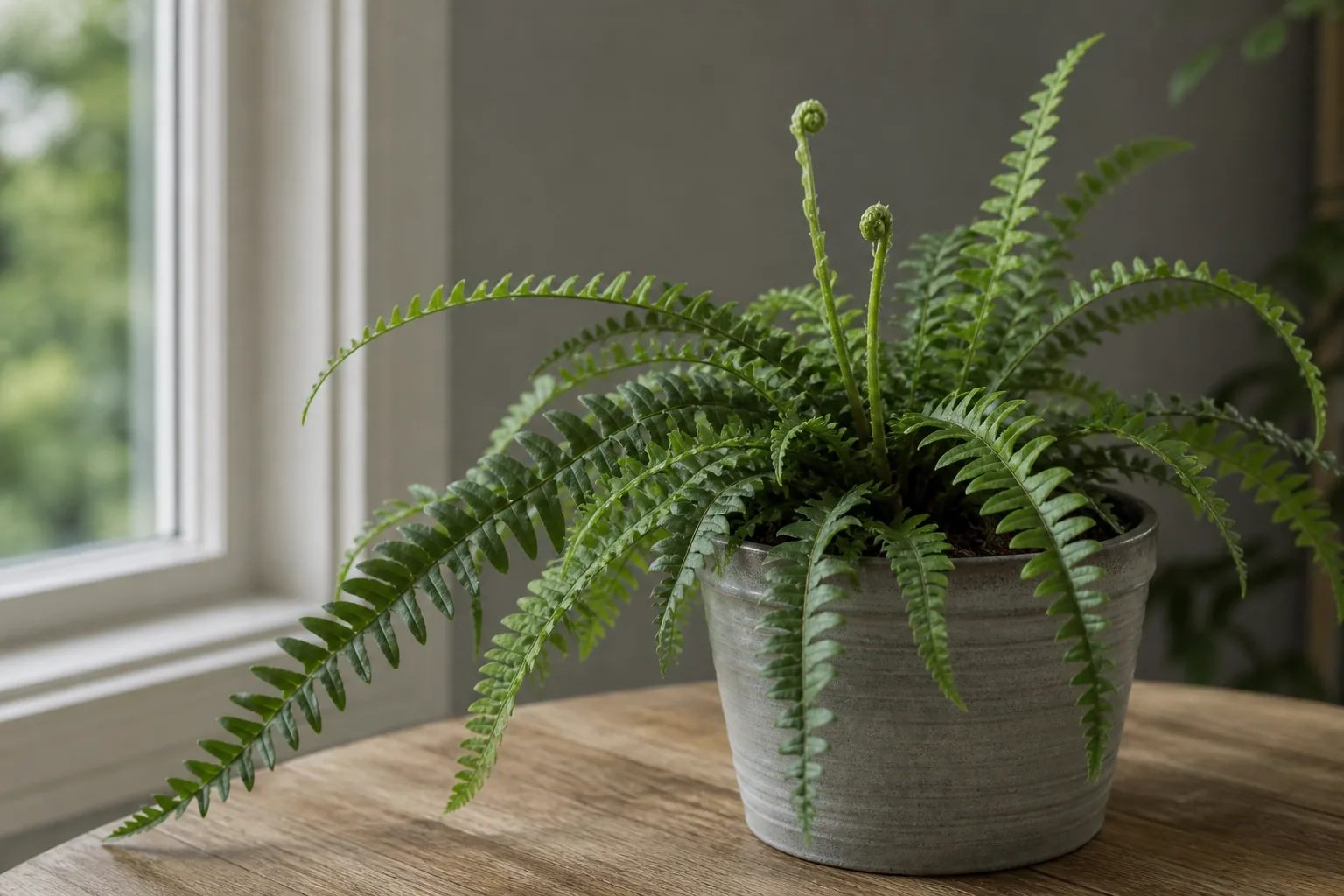
Slow Growth on Boston Fern: Causes, Checks & Fixes
This guide covers slow growth on Boston Fern. See also the general Slow Growth guide, watering, and light pages for this plant.
Slow Growth on Boston Fern: Causes, Checks & Fixes
Quick answer
Boston fern (Nephrolepis exaltata, usually the cultivar ‘Bostoniensis’) grows at a moderate pace when bright indirect light, even soil moisture, and high humidity align. It is not a fast vining houseplant. In a well-placed home, expect small flushes of new arching fronds every two to four weeks during active growth-not daily visible change.
Slow growth becomes a problem when no new croziers emerge across an entire warm bright season, when new fronds stay small and widely spaced on the crown for months, or when croziers stall mid-unfurl despite moist soil. Those patterns usually trace to insufficient light, low humidity, root-bound conditions, or chronic overwatering in dim corners-not a mysterious “lazy fern.”
First step: inspect the crown for new frond size and spacing before changing fertilizer or repotting. Compare the last two growth flushes. Tight, proportional new fronds mean the plant is healthy at its natural pace. Tiny widely spaced croziers in a dim corner mean light is limiting; stalled unfurling with moist soil and dry air points to humidity. Full species context: Boston fern overview.
What normal slow growth looks like on Boston fern
Many owners worry because Boston fern does not visibly lengthen every week. That moderate rhythm is normal when the plant is otherwise healthy.
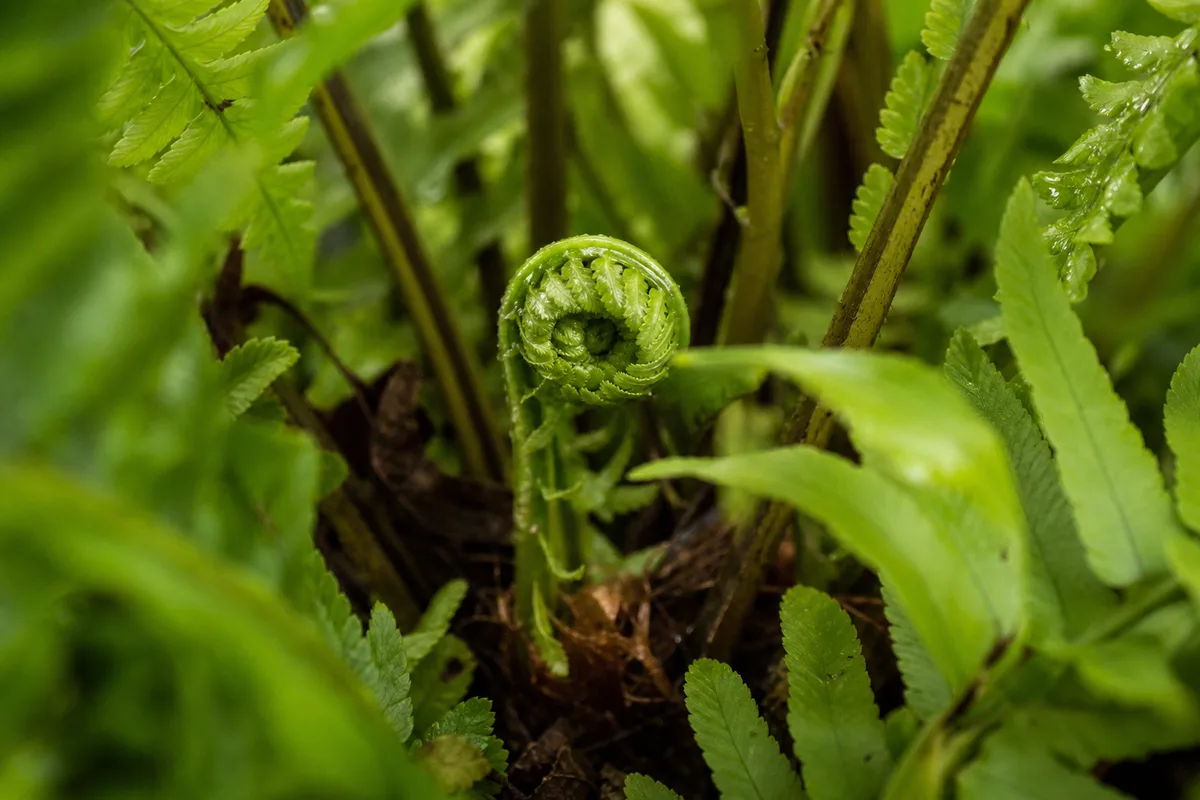
Slow Growth symptoms on Boston Fern - compare with healthy tissue on the same plant.
Expected frond flush frequency indoors:
- Spring through early fall: Small clusters of new croziers unfurl every two to four weeks in bright indirect light with stable moisture and humidity above ~50%
- Winter: Growth often slows noticeably as daylight shortens, even indoors-fewer new fronds, smaller flushes, and a pause that can last weeks without indicating failure
- Mature size: Indoor specimens typically reach 2 to 3 feet (60–90 cm) in height and spread over time-not overnight
Signs the pace is healthy despite feeling “slow”:
- New croziers emerge firm and green, unfurling at a size proportional to mature fronds on the same plant
- Pinnae spacing along new fronds is even and tight, not stretched with long gaps
- Older fronds stay arching and intact while the crown keeps producing occasional new growth
- Soil dries at a steady rhythm-neither bone dry for days nor wet for a week without use
Boston fern does not flower indoors. All growth signals come from frond production at the crown, not from stem elongation or leaf enlargement on a single frond. An old frond that emerged last year will not grow longer; only new croziers add mass.
When slow growth is actually a problem
Not every pause is pathology. These patterns warrant investigation:
No new fronds across a warm bright season. If daylight is strong, temperatures sit in the 60–75°F comfort band, and the crown produces zero croziers for eight weeks or more, something is limiting growth beyond normal winter slowdown.
New fronds small and widely spaced. Croziers emerge but stay miniature, with long gaps between them on the crown, and the basket leans toward the brightest window. That is a light stall-see not enough light on Boston fern.
Croziers stall mid-unfurl. Fiddleheads emerge then stop, unfurl with brown edges, or open smaller than prior flushes while soil moisture is normal. Low humidity is a common driver-see low humidity on Boston fern.
Wet soil plus stall in a dim corner. Soil stays damp for a week or more, fronds look dull, and new growth stops. Dim light slows water use, which can suffocate fine roots in stale wet mix-a compound stall that looks like slow growth but starts with placement and watering rhythm. See overwatering and root rot.
Root-bound pot with fading color. Growth stalls, water runs straight through, and new fronds emerge pale despite good light and humidity. The root ball may be circling the pot-see repotting Boston fern.
Cold or draft stress. Sustained exposure below ~55°F (13°C) or hot dry air from heating vents can halt crozier production even when watering is correct.
Why Boston fern grows at a moderate pace
Boston fern evolved in tropical and subtropical forest understory across the Americas, where humidity stays high, light is filtered, and moisture is steady. Growth is continuous but not explosive-it is the steady production of soft arching fronds, not rapid shoot extension.
Several factors explain why growth feels slow or stalls indoors:
Light, moisture, and humidity must align
Boston fern needs bright indirect light, consistently moist but never waterlogged soil, and high humidity to sustain continuous frond production. When any one variable falls short, the plant conserves energy rather than pushing new croziers. Owners often expect pothos-like speed in a dim bathroom with dry winter air-that mismatch is the most common source of “my fern never grows.”
Fine roots suffocate in saturated stale mix
Boston fern’s fine roots require oxygen as much as moisture. In dim light, the plant uses less water, so soil stays wet longer. Stale, airless wet mix slows or stops root function, which stalls crown growth even though the surface looks adequately watered. This is why the low-light overwatering trap produces slow growth that fertilizer cannot fix.
Low light beyond tolerance
Boston fern tolerates shade outdoors but indoor dim corners often fall below what sustains full frond production-tropical ferns used as houseplants grow poorly in low-light locations. The plant may survive while new croziers emerge smaller and farther apart-a growth stall that looks like slow pace but is actually light limitation.
Root-bound conditions
A pot filled with circling roots has less fresh mix to hold moisture and nutrients. Water runs through quickly, new fronds emerge small, and flush frequency drops until the plant is repotted into a slightly larger container with fresh mix.
Seasonal winter slowdown
Shorter winter days reduce photosynthetic hours even when the pot never moved. Growth pauses or slows to occasional small flushes-NC State Extension notes winter dormancy and reduced watering needs. This is normal if fronds stay firm and the crown is not soft. Resume active flush frequency in spring as light strengthens.
How to confirm the cause
Work through this checklist before repotting, fertilizing, or pruning heavily. One clear diagnosis beats stacking treatments.
Normal vs. abnormal checklist:
| Pattern | Likely meaning | Next step |
|---|---|---|
| Occasional new fronds every few weeks, proportional size, firm crown | Healthy moderate pace | Maintain current care; see overview |
| Zero new croziers 8+ weeks in warm bright season | Abnormal stall | Check light, humidity, roots |
| Tiny widely spaced new fronds, lean toward window | Light stall | Move to brighter indirect light |
| Stalled unfurling, moist soil, RH below 40% | Humidity stall | Humidifier + draft protection |
| Wet soil 7+ days, dim spot, dull fronds | Root stress from overwatering in low light | Check roots; improve light and watering rhythm |
| Water runs through instantly, pale new growth | Root-bound | Inspect root ball; repot if circling |
| Long gaps between flushes only Nov–Feb, firm fronds | Winter slowdown | Normal; resume checks in spring |
Lookalikes to rule out:
- Leggy growth - long thin frond stems reaching for light; different from compact slow growth
- Not enough light - sparse thin crown with small spaced fronds; overlaps with slow growth but the fix is placement
- Low humidity - crisp tips and stalled unfurling; can slow growth without obvious tip burn at first
- Root rot - soft crown, frond collapse, sour soil smell; urgent, not a pace issue
- underwatering on Boston Fern - crispy fronds with bone-dry soil; growth stops from drought, not moderate pace
Confirmation steps in order:
- Count new croziers - Note how many emerged in the last 30 days and their size relative to mature fronds
- Shadow test at frond height - Soft fuzzy shadow = usable indirect light; no shadow = likely too dim
- Hygrometer at foliage height - Below 40% RH for extended periods supports humidity as a limiter
- Soil moisture at depth - Finger or skewer to mid-pot; wet for a week in dim light suggests root stress
- Root peek - Slide the plant partway from the pot; white firm roots and visible mix mean roots are healthy; brown mushy roots need root-rot protocol
First fix for Boston fern
Inspect new frond size and crown spacing, then correct the most likely single limiter-do not fertilize, repot, and prune on the same day.
Based on what you found:
If new fronds are small and widely spaced (light stall): Move the fern to bright indirect light-east window, or filtered south/west within a few feet. That single placement change is the first fix. Details: Boston fern light guide and not enough light.
If croziers stall with moist soil and dry air (humidity stall): Measure RH at frond height. Move off heating vents, then run a humidifier to reach 50–70% before adding more water. Details: low humidity guide.
If soil stays wet in a dim corner: Improve light and stretch the watering interval. Let the top 2 cm of mix begin to dry before rewatering. Inspect roots if fronds are yellowing-see watering guide.
If growth stalled but light, humidity, and moisture are good: Check whether roots circle the pot. Repot in spring into a container one size larger with fresh well-draining mix-only after confirming roots are firm, not rotting.
If everything checks out and growth is simply moderate: Do nothing aggressive. Boston fern at a steady moderate pace is succeeding.
Recovery timeline
Recovery follows Boston fern’s moderate biology-not overnight turnaround.
After a light correction: First proportional new croziers usually appear within two to four weeks. Old small fronds will not enlarge; judge progress only on new crown growth.
After humidity improvement: Stalled croziers often resume unfurling within two to four weeks once RH stabilizes above 50%. Crisp pinnae tips on old fronds do not revert to green.
After fixing overwatering in dim light: Root recovery takes four to eight weeks before flush frequency normalizes. Yellowed fronds may be trimmed once new growth is firm.
After repotting from root-bound stall: Expect three to six weeks before the plant settles and resumes regular frond flushes. Avoid fertilizer for four weeks post-repot.
Winter pause: A slowdown from November through February with occasional small croziers and firm fronds is normal. Resume active growth expectations in spring-not emergency intervention.
What not to do
- Do not fertilize a stalled fern before confirming light, humidity, and root health. Nutrient burn on stressed fine roots worsens stall.
- Do not repot and fertilize the same week on a plant that is not growing. Pick one stressor to address first.
- Do not remove healthy fronds because “nothing is happening.” Boston fern adds mass through new croziers, not by repairing old fronds. Stripping foliage reduces photosynthetic capacity on a moderate grower.
- Do not soak the pot to fix slow growth when air is dry. Extra water without humidity raises root-rot risk without speeding unfurling.
- Do not expect summer flush speed in a dim winter corner. Seasonal slowdown is normal; year-round stall in good conditions is not.
How to prevent abnormal slow growth next time
Match everyday care to how Boston fern actually grows:
- Light: Keep in bright indirect light year-round-see light guide
- Water: Check when the top 2 cm of mix begins to dry; avoid calendar watering-see watering guide
- Humidity: Maintain 50–70% RH at frond height, especially in heated winter air
- Feeding: Light balanced fertilizer only during active growth when light and humidity are already adequate-see fertilizer guide
- Repotting: Refresh mix every two to three years or when roots circle the pot-see repotting guide
- Weekly crown check: Note new crozier count and size during watering so stalls are caught early
Related problem pages when growth pattern shifts: leggy growth, yellow leaves, drooping leaves, wilting.
When to use this page vs other Boston Fern guides
- Boston Fern watering guide - Use for routine moisture checks before assuming slow growth is the main issue.
- Boston Fern problems hub - Browse all 16 common issues on this species.
- Not Enough Light on Boston Fern - Different entry point when symptoms overlap with slow growth.
- Leggy Growth on Boston Fern - Different entry point when symptoms overlap with slow growth.
- Yellow Leaves on Boston Fern - Different entry point when symptoms overlap with slow growth.