Watering Boston Fern: Schedule, Soil Checks & Mistakes
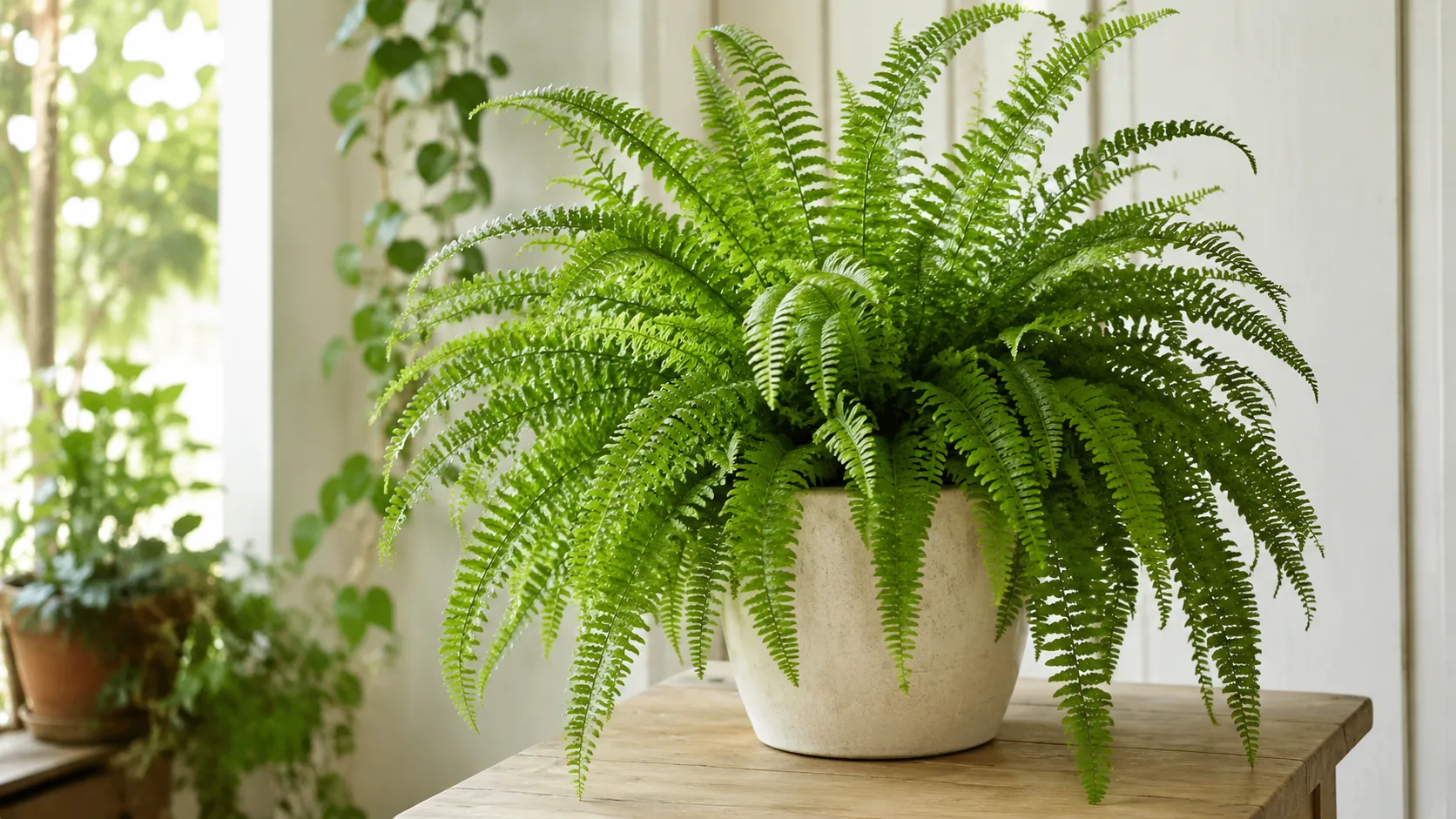
Watering Boston Fern: Schedule, Soil Checks & Mistakes
Watering Boston Fern: Schedule, Soil Checks & Mistakes
Boston fern watering comes down to one habit: check the pot before you pour, not the calendar on your phone. Nephrolepis exaltata, the classic sword fern sold in hanging baskets and porch planters, evolved in humid tropical forests where fine roots stay lightly moist between rain showers but never sit in stagnant water. When you match that rhythm with room-temperature water, good drainage, and humidity above 50%, the plant rewards you with arching green fronds that soften a room instantly. When you miss it, the same plant sheds leaflets, browns at the tips, and wilts in ways that send you chasing the wrong fix. This guide covers the full system: how often to water in each season, how to read soil moisture reliably, what kind of water to use, and how to recover when something goes wrong.
Why Boston Fern Watering Feels Harder Than It Should Be
Most beginner houseplants tolerate a wide margin of error. Snake plants can go weeks without water. Pothos wilts dramatically and bounces back after a drink. Boston ferns sit in a narrower band because their fine fibrous roots and delicate fronds respond badly to two extremes at once: bone-dry peat that repels water, and soggy mix that suffocates roots. The plant does not want a swamp, and it does not want a desert. It wants steady moisture with oxygen in the root zone, which sounds simple until your living room drops to 25% humidity in January and your hanging basket dries out in two days.
The University of Wisconsin–Madison Extension describes Boston fern as needing well-drained but consistently moist soil, especially when grown in hanging baskets where the long fronds hang downward. That combination is the whole puzzle. Moist means the root ball never fully desiccates. Well-drained means excess water leaves the pot and air can re-enter the mix between waterings. Many owners succeed at one half and fail at the other, either keeping the surface wet while the center stays stale, or letting the plant go dry so often that the peat becomes hard to rewet.
Boston ferns also give confusing signals. Limp fronds can mean the plant is thirsty, but they can also mean roots are damaged from too much water. Brown tips can come from underwatering on Boston Fern, low humidity, cold drafts, salt buildup, or fluoride in tap water. Yellowing can follow overwatering on Boston Fern, underwatering, or a pot that has been sitting in a full saucer for a week. The diagnostic move is always the same: feel the soil at depth, lift the pot, smell the mix if something seems off, and inspect drainage before you change anything else.
The Moisture Goal: Evenly Damp Soil With Air in the Root Zone
The standard instruction for Boston fern watering is to keep the soil consistently moist but not waterlogged. Fairfax Gardening, drawing on North Carolina State Extension and Missouri Botanical Garden guidance, recommends watering when the soil surface becomes slightly dry, then keeping the potting medium evenly moist without saturation. The goal is not permanently wet soil. It is soil that holds moisture the roots can reach while still allowing air to move through the pores between peat, perlite, and bark.
Think of the root zone as a sponge that should feel cool and slightly springy, not dripping and not stiff. When you water thoroughly, water displaces air in the mix. As the upper layer dries over the next day or two, air re-enters. That breathing cycle is what tropical fern roots expect between rain events. When a pot stays saturated because drainage is blocked, a cachepot holds runoff, or the mix has compacted, oxygen drops and fine roots begin to fail. Once roots are damaged, the fronds may wilt even though the soil feels wet, which is the trap that sends most owners to add more water.
The useful dry-down signal for most indoor Boston ferns is the top inch of soil beginning to feel less than lightly damp. Gardener’s Path recommends a daily soil examination: if the surface feels dry and a moisture meter reads dry in the upper two inches, it is time to water. For metric-minded growers, that top zone is roughly 2 to 2.5 centimeters. You are not waiting for the entire pot to go dry. You are waiting for the surface to shift from cool and damp to slightly dry while the lower root ball still holds moisture.
How Often to Water Boston Fern in Spring, Summer, Fall, and Winter
There is no calendar that survives every home. Frequency depends on light, temperature, humidity, pot size, basket type, and how airy your mix is. That said, a healthy Boston fern in a 6- to 10-inch hanging basket, in Boston Fern light guide, with a peat- or coco-based mix containing perlite, typically follows this pattern:
- Spring (March–May): about every 4 to 6 days. Growth is picking up, daylight is lengthening, and the mix dries at a moderate pace. Water when the top inch begins to feel less than lightly damp.
- Summer (June–August): about every 3 to 5 days. Warmer temperatures, stronger light, and air conditioning or open windows increase evaporation. Check the soil every two to three days rather than waiting for a weekly reminder.
- Fall (September–November): about every 5 to 7 days, gradually stretching. Shorter days and the start of indoor heating slow growth and extend dry-down time.
- Winter (December–February): about every 7 to 10 days. Growth slows, but the fern still needs evenly moist soil. Never let it go fully dry just because it is not pushing new fronds. Extend the interval because the mix holds water longer in low light, not because the plant has stopped needing moisture.
These ranges assume a typical indoor environment with humidity between 40 and 60%. A fern in a bright bathroom with a humidifier may need water less often. A fern in a dry, heated living room with strong light may need water every two to three days in summer. Adjust the range to your room, not the other way around. Purdue University Cooperative Extension notes that fern watering frequency varies according to pot size, mix, drainage, temperature, and humidity, which is why extension guides emphasize checking soil moisture by touch rather than following a fixed schedule.
Reading the Soil: Three Reliable Moisture Checks Before You Pour
The best Boston fern watering routine is built on observation, not memory. Three checks, used together, beat any single method: the finger test for surface moisture, a skewer or meter for deeper reads, and the pot weight test for hanging baskets where reaching the soil is awkward. You do not need all three every time, but learning all three helps you diagnose problems when the plant looks unhappy and the surface tells a misleading story.
The Finger Test for the Top Inch or Two
The finger test remains the most accessible tool because it checks the actual potting mix, not an estimate on a chart. Touch the soil surface, then press gently into the top inch. If it feels cool, soft, and clearly damp, wait. If it feels lightly dry but not dusty or hard, it is time to water. If it is crusty, pale, and pulling away from the pot edge, the plant has gone too dry and needs careful rehydration rather than a careless flood.
The finger test works best when you learn the difference between surface dryness and root-zone dryness. Peat-based mixes can look dark while moisture has already dropped, or feel dry on top while staying wet below. That is why the finger test is a starting signal, not the final authority. When in doubt, combine it with the pot weight test or a skewer near the pot wall before you pour.
Avoid jamming your finger deep into a dense root ball because you can break fine roots. A gentle top-layer check is enough for routine watering. For hanging baskets mounted high, keep a small step stool nearby so the check takes ten seconds instead of getting skipped.
Skewer Tests, Pot Weight, and Moisture Meters
A wooden skewer inserted near the edge of the pot, left for a minute, and withdrawn gives a deeper moisture read without disturbing the center of the root ball. If the skewer comes out with mix clinging and looking dark, the lower zone is still moist. If it comes out clean and dry, the plant likely needs water even if the surface still looks acceptable.
The pot weight test is especially valuable for hanging baskets. Lift the pot right after a thorough watering and notice the heavy, full feel. Lift it again every day or two as it dries. A moist basket has obvious weight; a dry one feels noticeably lighter. Many experienced fern growers rely on weight more than touch because Boston ferns in baskets often have a thick frond canopy that makes surface access inconvenient.
Moisture meters can help, but they are not always accurate in loose peat-based mixes and can give false readings near salts or compacted zones. Use a meter as a support tool, not the final judge. If the meter says wet but the fronds are crisping and the pot feels light, trust the plant and the weight over the dial.
Choosing the Right Water: Rain, Filtered, Distilled, or Tap?
Boston ferns are less forgiving about water quality than many tough foliage plants. They prefer room-temperature water that is low in problematic salts and not harshly treated. Missouri Botanical Garden and multiple extension sources note that ferns benefit from consistent moisture without chemical stress from water additives. In practice, that means rainwater, distilled water, or filtered tap water often outperform straight cold tap water over months of growing.
In order of best to most problematic for a typical home grower:
- Rainwater is the gold standard when collected cleanly. It is naturally soft and free of municipal chlorine and fluoride.
- Filtered tap water through an activated carbon filter removes much of the chlorine and some minerals, which reduces leaf tip burn in sensitive plants.
- Distilled or reverse-osmosis water is mineral-free and safe, but also nutrient-free. If you use it exclusively, maintain a light, regular fertilizer during active growth so the plant still receives essential elements.
- Tap water rested to room temperature works for many growers, especially where the supply is moderately soft and not heavily fluoridated. Letting water stand can allow chlorine to dissipate, though chloramine does not evaporate as easily.
- Cold tap water straight from the faucet is one of the easiest mistakes to avoid. Cold water shocks roots adapted to warm tropical soil and can contribute to stress on fronds already struggling with low humidity.
If brown tips and white crust on the pot rim recur despite correct watering timing and good humidity, switch the water source before you change the schedule. Mineral and salt buildup is a watering-related problem even when the calendar looks perfect.
Top Watering vs Bottom Watering for Boston Fern
There is no single best method for every Boston fern, but each approach has trade-offs worth understanding. Top watering at the sink is the method most extension guides describe: carry the pot to a tap, let a tepid stream flow through the mix until water runs from the drainage holes, then let the pot finish dripping before returning it to its spot. Gardener’s Path emphasizes that thorough saturation is the only reliable way to water Boston ferns because partial top-ups leave dry pockets in the root ball while the surface looks wet.
Top watering also lets you flush soluble salts from the mix occasionally, which matters when you fertilize during spring and summer. The main risk is splashing crowns and foliage repeatedly, which is less dangerous for ferns than for African violets but still worth minimizing. Water the soil evenly, not the frond cascade.
Bottom watering works well for smaller pots and for growers who want to avoid wetting foliage. Place the pot in a basin of room-temperature water for 15 to 30 minutes, let the mix wick moisture upward, then remove the pot and allow full drainage. The risk is leaving the pot in water too long, which can saturate the lower zone while the owner assumes the plant has had enough. Always check that the top inch has become moist, then drain completely.
For hanging baskets, top watering at the sink remains the most practical choice for most homes. Bottom watering a large basket requires a tub large enough to submerge the container and enough clearance to hoist a wet plant back onto its hook without dripping through the house.
Humidity and Watering: Two Sides of the Same Problem
Humidity is not a separate topic from watering. It directly changes how fast your Boston fern pulls moisture from the soil. The University of Wisconsin–Madison Extension notes that Boston fern adapts to container culture indoors but still reflects its tropical origin in its response to dry air, where pinnae tips and edges may brown. When relative humidity drops, fronds lose water through transpiration faster, the mix dries quicker, and leaflets shed even if you watered two days ago. When humidity is adequate, the same plant needs less frequent watering and holds green tips longer.
Humidity Targets That Change How Fast the Mix Dries
Most Boston fern guides recommend 50 to 70% relative humidity for indoor growing, with 40 to 50% as a workable minimum if watering and soil checks stay consistent. Gardener’s Path lists 40 to 50% ambient humidity as a baseline, while many tropical fern references push higher for peak frond quality. In heated winter homes that drop to 25 to 30%, the fern may need a humidifier, a pebble tray, grouping with other plants, or a bright bathroom spot to stay stable.
Misting can raise humidity briefly around the fronds, but it does not replace watering and it does not fix dry soil. Light misting a few times per week may reduce tip browning in dry rooms, yet water on leaves evaporates quickly and does nothing for roots sitting in desiccated peat. Treat misting as a humidity supplement, not a substitute for checking the pot. If you mist, use room-temperature water and avoid soaking fronds late in the evening when airflow is low.
When humidity is low, err on the side of checking the pot more often rather than watering on autopilot. The plant may need water sooner. When humidity is high, wait for the top inch to dry rather than assuming a calendar interval still applies.
Drainage, Cachepots, and the Standing Water Trap
Even perfect watering timing fails if water has nowhere to go. Boston fern needs a pot with drainage holes and a mix that lets excess water escape freely. NC State Extension warns that overwatering can lead to root rot when the pot sits in standing water or mix stays saturated too long. That sounds obvious until you account for decorative cachepots, lined hanging baskets, and saucers that never get emptied because the plant hangs too high to check.
The failure pattern looks like this: the owner waters thoroughly, water drains into the saucer or outer pot, the decorative container holds it, and the bottom inch of mix stays saturated for days. The surface may dry on schedule, so the owner waters again on schedule. Roots in the bottom zone suffocate while the owner believes the plant is drying normally.
The fix is mechanical and non-negotiable. After every watering, empty saucers and cachepots once dripping slows. If the basket is too high to reach daily, water at the sink and only remount it after drainage is complete. Never let a Boston fern sit in runoff overnight. If you use a pebble tray for humidity, keep pebbles above the water line so the pot base is not submerged.
Pot Size, Hanging Baskets, and Why Both Change the Schedule
Pot size changes watering immediately, often more than season or room temperature. An oversized pot holds a large volume of wet mix around a relatively small root ball. The extra mix stays damp long enough to damage fine roots even when the owner waits for the top inch to dry. An undersized pot in strong light dries so fast that the plant swings between drought and flood if the owner checks only once a week.
Hanging baskets add another variable: more air circulation around the pot, faster drying on the sides, and sometimes a coir or moss liner that holds moisture differently from a plastic nursery pot. A fern in an 8-inch plastic hanging pot may need water every three days in summer, while the same root mass in a larger decorative basket with a slow-draining liner may need a longer interval but sharper attention to bottom drainage.
If you recently repotted, expect the mix to dry more slowly until roots explore the new space. Do not keep watering on the old schedule just because the calendar says so. If the plant was moved from a table pot to a hanging basket, recalibrate using weight checks for the first two weeks rather than assumptions.
Signs You Are Overwatering Boston Fern
Overwatering is one of the most common Boston fern problems because the plant likes moisture, and owners often interpret that as permission to keep the pot wet. Overwatering signs include:
- Yellowing fronds that start from the base or spread through older growth while the mix stays damp
- Wilting or limp fronds despite wet soil on Boston Fern, because damaged roots cannot move water even though moisture is present
- Soft, mushy root tips or a sour smell from the drainage hole when you lift the pot
- Darkening or blackening stems near the soil line in advanced cases
- Green algae or fungal growth on the soil surface when the mix never dries
- Musty odor from stagnant mix in a cachepot that holds runoff
The telltale combination is wet soil plus unhappy foliage. If the fronds look limp and the pot feels heavy with cool, saturated mix, stop watering. Inspect drainage, empty standing water, and let the top two inches dry before the next drink. Cafe Planta and multiple fern care sources note that Boston ferns want consistent moisture but not soggy conditions, and that balancing humidity with proper drainage prevents the root rot that overwatering invites.
Signs You Are Underwatering Boston Fern
Underwatering is equally damaging over time because repeated dry cycles stress fine roots and make peat go hydrophobic, repelling water even when you finally pour. Underwatering signs include:
- Crispy brown tips on leaflets, often starting at the outer arch of fronds
- Overall frond droop with a light, dry pot and dusty surface mix
- Leaflet shedding in dry, heated rooms, sometimes mistaken for a pest problem
- Slow or stunted new growth during spring and summer when the plant should be expanding
- Dry, compacted mix that shrinks away from the pot wall and channels water down the sides without wetting the root ball
A single dry episode is usually recoverable with a thorough soak and improved humidity. Repeated drought teaches the plant to shed foliage defensively, and recovery takes weeks even after watering returns to normal. If the mix has gone hard, do not assume a quick splash fixes it. The rehydration section below covers the safer approach.
How to Fix an Overwatered Boston Fern Without Making It Worse
If you suspect overwatering, the goal is to stop root damage from spreading before you repot or trim anything dramatic. Work through these steps in order:
- Stop watering immediately and remove the pot from any cachepot or saucer holding water.
- Empty all standing water and place the plant in bright indirect light with good airflow, not direct sun that adds stress.
- Let the top two inches of mix dry while you monitor fronds daily. Do not fertilize a stressed root system.
- Inspect drainage holes for blockage by roots, compacted peat, or liner material in hanging baskets.
- Slide the plant partly out of the pot if decline continues. Healthy fern roots are fibrous and white to tan. Brown, mushy, or hollow roots confirm rot.
- Trim only clearly dead roots with clean scissors, repot into fresh, airy mix if more than a third of the root system is compromised, and water lightly once after Boston Fern repotting guide rather than soaking a damaged root ball.
- Resume normal thorough watering only when new growth appears or when the remaining roots can handle a full dry-down cycle without wilting again.
Recovery is slow. Boston ferns do not bounce back overnight like a peace lily. Expect several weeks of stable care before you judge success. If half the fronds are lost but roots are healthy, the plant can still rebuild with patience and consistent humidity.
How to Rehydrate a Dry Boston Fern Without Shock
A dried-out Boston fern needs more than a teacup of water poured on the surface. When peat pulls away from the pot wall, water runs down the sides and leaves the center dry. Rehydrate deliberately:
- Submerge the pot base in a basin of room-temperature water for 20 to 30 minutes if the plant is small enough, or top water slowly in several passes at the sink if it is not.
- Water until the mix expands and darkens evenly, not until water merely exits the drainage hole in one rush.
- Let the pot drain fully before returning it to a hanger or saucer.
- Raise humidity for the next week with a humidifier or pebble tray so fronds are not losing moisture to dry air while roots recover.
- Remove severely crisp fronds only if they are clearly dead, not merely browned at tips, so the plant does not waste energy on tissue that will not green up.
Do not fertilize immediately after drought stress. Give the plant one to two weeks of stable moisture and improved humidity before returning to a diluted feed schedule in spring or summer.
Common Boston Fern Watering Mistakes That Kill Healthy Fronds
Even careful owners hit the same errors repeatedly. The most damaging ones are worth naming plainly:
- Watering on a calendar without checking soil. Your fern does not know it is Tuesday.
- Misting instead of watering. Fronds may look fresher for an hour; roots still dry out.
- Using cold tap water straight from the pipe, especially in winter.
- Leaving the pot in a full saucer or cachepot because the basket is inconvenient to drain.
- Repotting into an oversized container that stays wet too long after every drink.
- Giving tiny daily sips that wet the surface but leave dry pockets below.
- Letting the plant go dry repeatedly because “ferns like moisture” sounded like overwatering advice.
- Changing water, light, pot, and fertilizer at once when something goes wrong, making it impossible to know which fix helped.
The through-line is inconsistency. Boston ferns tolerate less swinging between extremes than marketing copy suggests. Steady checks, thorough watering when needed, and full drainage beat clever shortcuts.
A Simple Weekly Check Routine You Can Actually Keep
You do not need a complicated spreadsheet to water a Boston fern well. Build a routine you will follow:
- Twice a week, on fixed days that serve as reminders rather than rules, check the top inch of soil and lift the pot.
- When the top inch is slightly dry and the pot feels lighter, water thoroughly at the sink until runoff, then drain completely.
- Once a week in dry months, look at frond tips and soil color for early brown or yellow signals.
- Once a month, confirm saucers and cachepots are empty after watering and that drainage holes are clear.
- When seasons change, adjust your expected interval by two to three days in either direction rather than keeping summer frequency through winter.
If the plant hangs where checks are annoying, keep a lightweight hook or pulley system that makes lowering the basket easy. The most common reason ferns fail is not lack of knowledge. It is skipping checks because the pot is hard to reach.
Conclusion
Boston fern watering is not about memorizing how many days pass between drinks. It is about keeping evenly moist, airy soil in a pot that drains fully, using room-temperature water that does not load the roots with salts, and reading the plant’s signals before they turn into crispy fronds or soggy roots. Check the top inch, lift the basket, water thoroughly when the pot is ready, and empty every saucer. Stretch the interval in low-light winter months, tighten it when summer heat and dry air pull moisture faster, and treat humidity as part of the same system rather than a separate chore. When something goes wrong, decide whether the mix is too wet or too dry before you repot, fertilize, or move the plant to a new window. Most Boston ferns recover readily when watering steadies out, and the reward is a full, arching plant that makes the routine worth keeping.
When to use this page vs other Boston Fern guides
- Boston Fern overview - Start here for whole-plant context before deep-diving this topic.
- Boston Fern problems hub - Jump to symptom-specific fix guides when this care topic does not resolve the issue.
- Overwatering on Boston Fern - Escalate here when watering adjustments are not enough.
- Underwatering on Boston Fern - Escalate here when watering adjustments are not enough.
- Root Rot on Boston Fern - Escalate here when watering adjustments are not enough.
Related Boston Fern guides
- Boston Fern overview
- Boston Fern light
- Boston Fern soil
- Boston Fern propagation
- Boston Fern fertilizer
- Boston Fern repotting
- Overwatering on Boston Fern
- Underwatering on Boston Fern
- Root Rot on Boston Fern
- Wilting on Boston Fern
- Drooping Leaves on Boston Fern
- Mold on Soil on Boston Fern
Related tool
Try the Plant Watering Calculator with boston-fern pre-selected to estimate needs for your setup.