Wilting on Boston Fern: Causes, Checks & Fixes
Quick answer
Boston fern wilting usually means underwatering, overwatering with root damage, or low humidity-not always thirst. First step: stick your finger 2–3 cm into the mix and lift the pot before you add water.
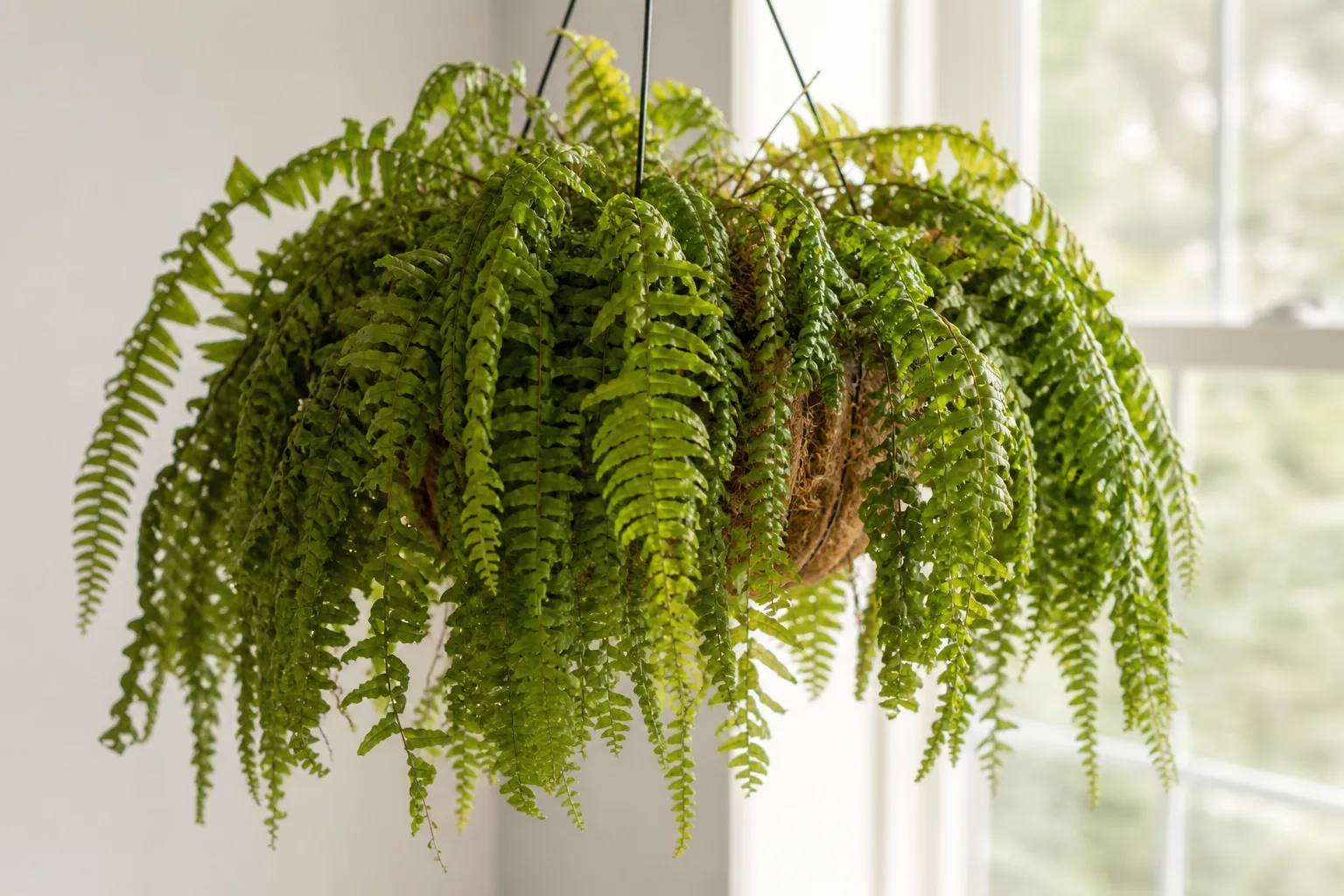
Wilting on Boston Fern: Causes, Checks & Fixes
This guide covers wilting on Boston Fern. See also the general Wilting guide, watering, and light pages for this plant.
Wilting on Boston Fern: Causes, Checks & Fixes
Quick answer
Wilting on Boston fern (Nephrolepis exaltata) is the fronds losing turgor-the arching sword-shaped leaves hang limp instead of forming their usual fountain. On this species, that collapse almost always traces to a water-pathway problem (too little moisture at the roots, too much stagnant water damaging fine roots, or air so dry the plant cannot keep up) rather than a mysterious disease.
First step: check soil moisture at depth and pot weight before you pour any water. Stick your finger 2–3 cm into the mix, or lift the hanging basket to feel whether it is light and dry or heavy and wet. Boston fern is famous for the wet-soil wilt paradox-fronds droop while the pot feels saturated because damaged roots cannot absorb moisture. Adding water without checking makes that worse.
What wilting looks like on Boston Fern
Boston fern shows wilt through its broad, finely divided fronds-not thick waxy leaves like a pothos. When turgor drops, the whole arch loses structure and the plant looks flattened or collapsed, especially in hanging baskets where gravity exaggerates the droop.
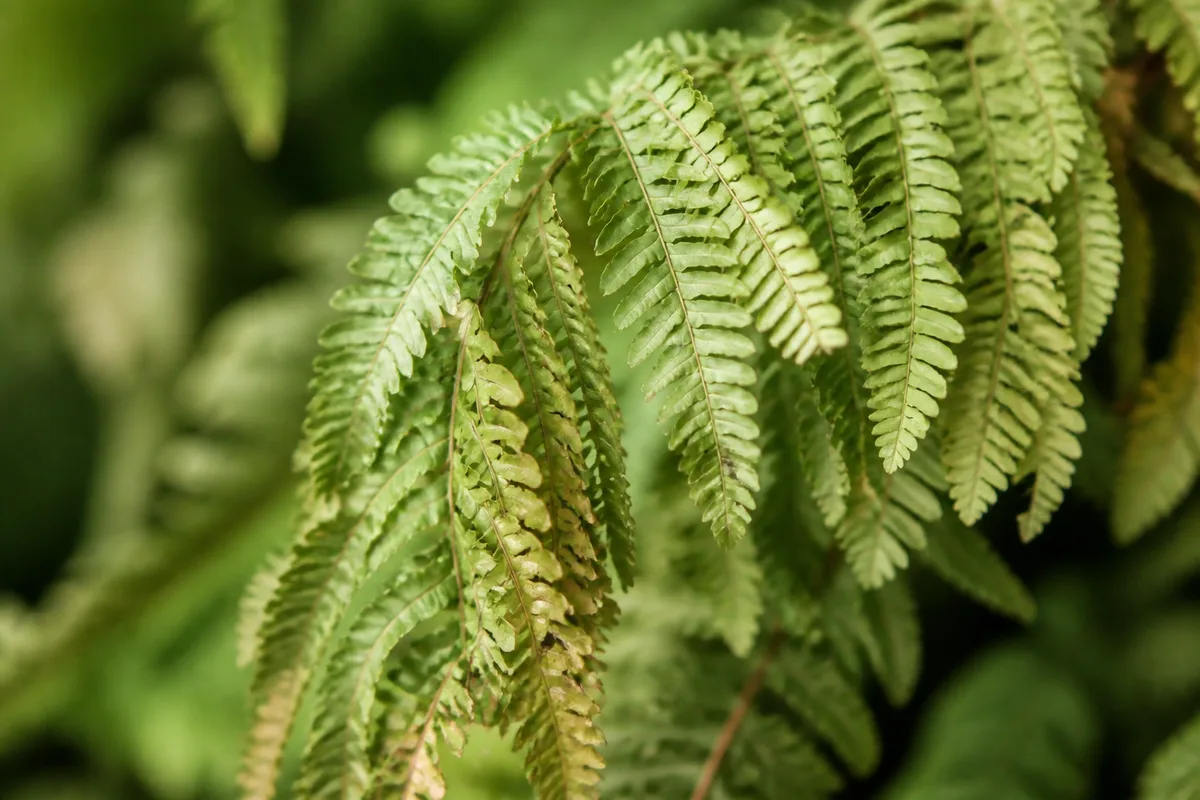
Wilting symptoms on Boston Fern - compare with healthy tissue on the same plant.
Typical wilt signals:
- Limp, hanging fronds that lose the usual cascading fountain shape
- Dull gray-green color on foliage when drought has progressed-commercial growers describe graying as a classic insufficient-water signal on Boston fern
- Dry, crispy pinnae along outer frond segments, sometimes before the entire frond collapses
- Premature frond shed when the root ball has gone too dry-Missouri Botanical Garden notes Boston fern will shed fronds if soils dry out
- Yellowing lower fronds paired with limp tissue when roots sit in wet, airless mix
What wilt is not on Boston fern:
- Brown tips only with otherwise firm fronds-usually low humidity, fluoride, or drafts (see brown tips guide)
- Gradual stretch with wide gaps between crown fiddleheads-low light etiolation (leggy growth), not acute wilt
- Dark brown sori on frond undersides-normal reproductive structures on Nephrolepis, not pest damage (NC State Extension describes these round spore clusters as a natural pattern)
Diagnostic photos: Compare a thirsty fern (light pot, dry top inch, gray-dull fronds) with a waterlogged fern (heavy pot, wet mix, limp bright-green fronds) side by side when you troubleshoot. Original symptom photos will be added to this guide in a future update.
Why Boston Fern wilts
Boston fern evolved in humid tropical forests with fine fibrous roots that expect steady moisture and oxygen in the mix-not swings between desert dryness and stagnant wet. Indoors, four causes cover most wilt cases.
Underwatering and peat dry-out
Hanging baskets and small pots dry fast in bright light, near heating vents, or during summer air conditioning. When the mix goes dry several centimeters down, fine roots cannot supply the large frond surface. UF/IFAS notes that if Boston fern gets too dry, foliage develops a gray cast and growth slows. Old peat that dries completely can turn hydrophobic-water runs down the sides while the core stays dry.
Overwatering, poor drainage, and root damage
NC State Extension warns that in winter dormancy, overwatering can lead to root rot-and the same risk applies whenever mix stays saturated. Clemson HGIC notes that water standing in pots can lead to root damage. Once roots fail, the plant wilts despite wet soil because the vascular pathway is broken. Cachepots, blocked drainage holes, and oversized pots that stay cold and wet are common triggers.
Low humidity and draft stress
Boston fern needs high humidity and moist soil that should never be allowed to dry out in ideal culture. In heated homes below 40% relative humidity, fronds lose water faster than roots can replace it. Wisconsin Extension notes that in dry interiors, pinnae tips and edges may turn brown-and midday limpness can appear even when soil moisture is acceptable. Forced-air vents, air conditioners, and frequently opened doors accelerate the loss.
Heat, light shock, and sudden environmental change
Moving a fern from a shaded shop to a bright window, placing it in direct sun, or exposing it to hot afternoon heat can spike transpiration beyond what roots deliver. Wisconsin Extension recommends medium bright light without direct sun for indoor Boston fern. A recent repot, division, or cross-country shipment can produce temporary wilt until roots re-establish-especially if humidity dropped at the same time.
Lookalike symptoms to rule out
| What you see | More likely cause | Quick check |
|---|---|---|
| Limp fronds + light dry pot + gray cast | Underwatering | Mix dry 2–3 cm down; fronds dull-not bright green |
| Limp fronds + heavy wet soil + sour smell | Overwatering / root rot | Inspect overwatering patterns |
| Afternoon droop, perks by morning, soil moist | Low humidity / heat | Near AC vent or dry winter room; fronds still bright green |
| Limp + bleached fronds after window move | Sun scorch / heat stress | Direct sun on fronds; see light guide |
| Limp + webbing on undersides | Spider mites (dry-air pest) | Mites surge when humidity is low-spider mite page |
| Only lower fronds yellow, crown firm | Natural aging or slight chronic wet feet | Slow change; compare with acute collapse |
Low humidity and underwatering overlap often on Boston fern. Always confirm root-zone moisture first, then address humidity if tips keep browning on otherwise turgid fronds.
How to confirm the cause
Work through these checks in order-one pass usually separates thirst from wet-root failure:
- Pot weight - Lift the basket or pot. Light and dry supports underwatering; heavy and wet rules thirst out.
- Moisture at depth - Probe 2–3 cm into the mix. Dusty dry throughout fits drought; cool damp or soggy wet fits overwatering or humidity wilt.
- Frond color and texture - Gray-dull limp fronds with dry soil match drought. Bright green limp fronds with wet soil match root uptake failure.
- Smell and drainage - Sour odor, algae on soil surface, or water sitting in saucers for days points to chronic wetness.
- Location scan - Note heating vents, AC blowers, south-facing glass, and how fast the basket dries in your room compared to your watering rhythm.
- Time-of-day pattern - Afternoon limpness with overnight recovery on moist soil suggests humidity or heat, not necessarily dry roots.
- Root spot-check (if still unclear) - Slide the plant out. Firm pale roots fit drought or humidity stress; mushy brown roots fit rot-see root rot guide.
If the pot is heavy, mix is wet 2 cm down, and fronds still wilt, do not add water. Move to the overwatering branch below.
First fix for Boston Fern
Before any water, fertilizer, or repot: check soil moisture at depth and pot weight.
That single diagnostic step prevents the most expensive Boston fern mistake-pouring water onto a wilted plant that is already waterlogged. Once you know which branch you are on, apply one corrective action:
- Dry soil + light pot → Carry the fern to a sink and soak the root ball thoroughly with tepid water until it drains freely; let it drip dry before returning.
- Wet soil + heavy pot → Stop watering, empty saucers and cachepots, and let the top 2 inches dry while you improve airflow at the crown.
- Moist soil + afternoon limpness → Raise humidity with a humidifier or pebble tray and move the plant away from AC or heating vents-misting alone does not rehydrate roots.
Wait 24–48 hours before stacking a second treatment so you can read the plant’s response.
Step-by-step recovery
After the first fix above, follow the branch that matches your diagnosis.
If underwatering caused the wilt
- Run tepid water through the mix until drainage flows steadily-several minutes for dense root balls.
- If water channels through dry peat, bottom-water 20–30 minutes until the surface darkens, then drain fully.
- Return to bright indirect light-not direct sun on stressed fronds.
- Reset rhythm: check the top inch every few days; water when it begins to dry per Boston fern watering guidance.
- Trim only fully brown, crisp fronds at the base; leave partially green tissue in place.
If overwatering or root damage caused the wilt
- Stop all watering until the top 2 inches of mix dry.
- Remove standing water from saucers, cachepots, and decorative outer pots.
- Confirm drainage holes are open; poke gently if compacted mix blocks flow.
- If fronds stay limp after 48 hours with corrected drainage, unpot and inspect roots-trim mushy tissue, repot into fresh airy mix only if rot is confirmed.
- Hold fertilizer until new croziers appear and soil rhythm is stable.
If low humidity or heat caused the wilt
- Move the fern away from heating vents, air conditioners, and hot windows.
- Target 50–70% relative humidity with a humidifier, pebble tray, or bright bathroom spot.
- Keep soil evenly moist-not extra wet-while humidity improves.
- Consider double potting with moist sphagnum between containers to slow basket dry-out and raise local humidity.
Recovery timeline
Mild thirst wilt-one missed cycle with still-green limp fronds-often shows improvement within 12 to 24 hours after a full soak. Fronds regain arch first; existing brown tips do not reverse.
Moderate drought or humidity stress-gray cast, multiple drooping fronds-typically needs one to two weeks of steady moisture and humidity before new croziers unfurl reliably.
Wet-soil root stress-limp fronds with heavy pot-may take two to four weeks after drainage correction before new growth proves roots are functioning. Severe rot can take longer or fail entirely.
Warning signs recovery is failing: fronds stay limp 48 hours after the correct branch fix, crown tissue softens, or new growth blackens. Inspect roots and consider division from any healthy runners that remain firm.
What not to do
- Pour water on every wilted fern - Wet-soil wilt worsens with more water.
- Mist fronds instead of checking roots - Surface moisture does not fix dry peat or rotting roots.
- Fertilize a collapsed fern - Salts on stressed roots cause further damage.
- Repot on day one - Unnecessary unless hydrophobic mix or confirmed rot; repotting adds shock.
- Move to direct sun to “perk it up” - Clemson HGIC warns direct sunlight damages fern foliage; heat increases wilt.
- Stack soak + repot + prune + pesticide - One correction at a time keeps the diagnosis readable.
How to prevent wilting next time
Build a rhythm around this basket in your home, not a generic houseplant calendar:
- Check the top inch of mix every few days; water when it begins to dry, following Boston fern watering.
- Lift hanging baskets weekly to learn how heavy “properly moist” feels versus dry.
- Use a peat- or coco-based mix with perlite and a drainage hole-see soil guidance.
- Keep humidity at 50–70% and avoid drafty vent placement.
- Empty saucers within 30 minutes of watering.
- In winter, reduce frequency because mix holds water longer-but never let the root ball go dust-dry for weeks.
- Before travel, soak and drain thoroughly, then move away from heating vents.
When to worry
Wilting is urgent when the crown feels soft, soil has been waterlogged for days with spreading yellow fronds, or the plant stays limp 48 hours after you applied the correct first fix for your branch. Unpot and inspect roots-if most fine roots are mushy and the crown collapses, recovery may be partial; propagate any firm runners if present.
Conversely, if fronds firm up within a day after a confirmed soak, or new croziers emerge within two weeks after drainage and humidity fixes, the crisis is passing. Boston fern rewards steady moisture and humidity more than dramatic rescue treatments.
Boston Fern care cross-check
| Factor | Healthy target | Wilting mistake |
|---|---|---|
| Soil moisture | Consistently moist; top inch dries slightly between drinks | Calendar watering; wet center with dry surface |
| Pot weight | Predictable heavy-after-water, lighter-as-dry cycle | Never lifting hanging baskets |
| Humidity | 50–70% RH | Winter heating at 25–30% with no supplement |
| Drainage | Water exits holes; saucers emptied | Cachepots holding runoff |
| Light | Bright indirect; no direct sun | Hot window after move from shade |
| First response | Check depth + weight before water | Automatic soak on every limp frond |
Related Boston Fern guides
- Boston fern watering - moisture rhythm, wet-soil wilt FAQ, soak-and-drain technique
- Underwatering on Boston Fern - gray cast, hydrophobic peat, full soak recovery
- Overwatering on Boston Fern - heavy pot, sour mix, drainage fixes
- Root rot on Boston Fern - when limp fronds persist in wet soil
- Low humidity on Boston Fern - afternoon limpness, tip browning, humidifier targets
- Boston fern light needs - placement after wilt recovery
- Boston fern care overview - humidity, temperature, and basket basics
Conclusion
Wilting on Boston fern is a diagnostic puzzle, not a single fix. The fronds collapse when roots cannot supply water-whether because the mix is dry, because roots are damaged in wet soil, or because dry air pulls moisture faster than roots can replace it. Check depth and pot weight before you pour. Match one branch-soak, drain, or humidify-and measure recovery by new croziers and firm arching fronds, not by old brown pinnae that have already died back.